The Healing of Vittorio Traverni at Lourdes
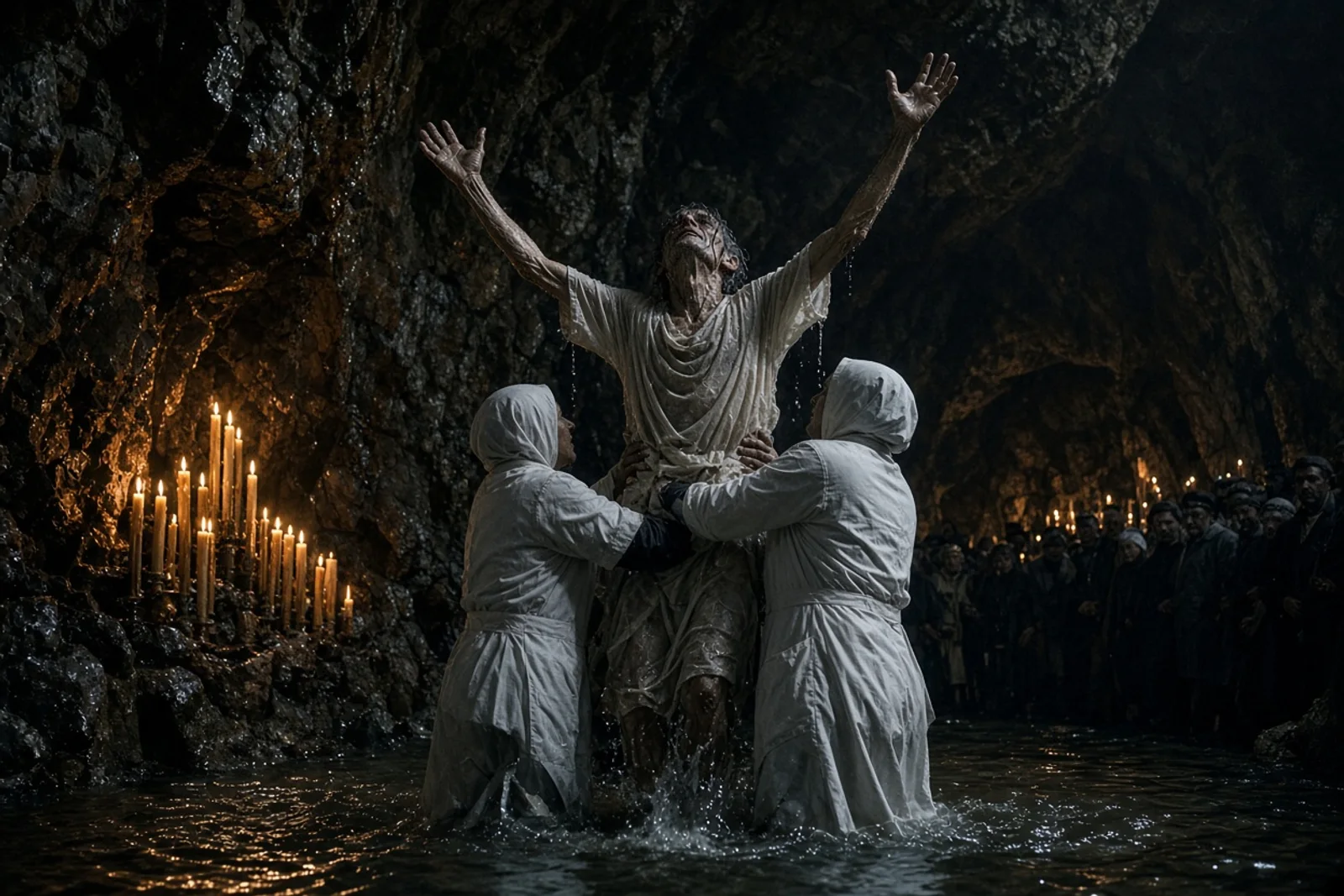
The stretcher tilted as we lowered it onto the stone lip of the pool. Vittorio Micheli lay on his side, the plaster cast from pelvis to thigh already cracking along the seam from the weight of him. I gripped the canvas strap near his shoulder and felt the tremor in his arm, the one that never stopped now. The water in the basin smelled of iron and wet limestone. Two men ahead of us were already wading in, their voices low as they recited the Ave.
Micheli had not spoken since the train from Turin. The night before, in the dormitory at the military hospital, he had asked only for the time. When the answer came he turned his face to the wall. His mother had pressed the letter into his brother’s hand at the platform, the one from the archbishop’s office granting the leave. The doctors had signed nothing.
We eased him forward. The cast dragged. A brancardier on the far side reached across and took the opposite strap. Together we slid him into the water up to his ribs. The cold took his breath for a moment. I saw the line of his jaw tighten and then release. He closed his eyes. The water darkened around the plaster where it had begun to soften.
After the immersion we carried him back to the esplanade. The afternoon sun had burned off the last of the morning mist. Pilgrims moved in slow lines toward the Grotto, some on foot, some on wheeled chairs. Micheli’s brother walked beside the stretcher, a breviary open in one hand, the pages fluttering. At the foot of the ramp Micheli asked for water. Not the spring water. Plain water from the jug we carried. He drank half a cup and kept the rest cupped in his palm as if he meant to hold the weight of it.
That evening the pain returned harder than before. We heard him through the thin partition of the pilgrim barracks. The morphine dose they had brought from Italy was already finished. A nurse from the Accueil Notre-Dame came with a damp cloth and sat with him until the worst passed. She asked his name again, though she had written it on the chart that morning. He answered without opening his eyes.
On the return train he slept through the long stretches between stations. When he woke he asked for bread. The same man who had refused food for three days now took a piece from the basket and ate it slowly, testing each bite. At the border he stood for the first time without help, leaning on the cast and the metal crutch the army had issued. He did not mention the pain.
Back at the hospital in Verona the ward was full. They put him in the corridor on a folding cot. The resident on night duty noted the request for new X-rays only after Micheli had walked the length of the hall twice on his own. The films were taken the next morning. The technician returned twice to check the plates. By afternoon the chief surgeon had called two colleagues from Milan.
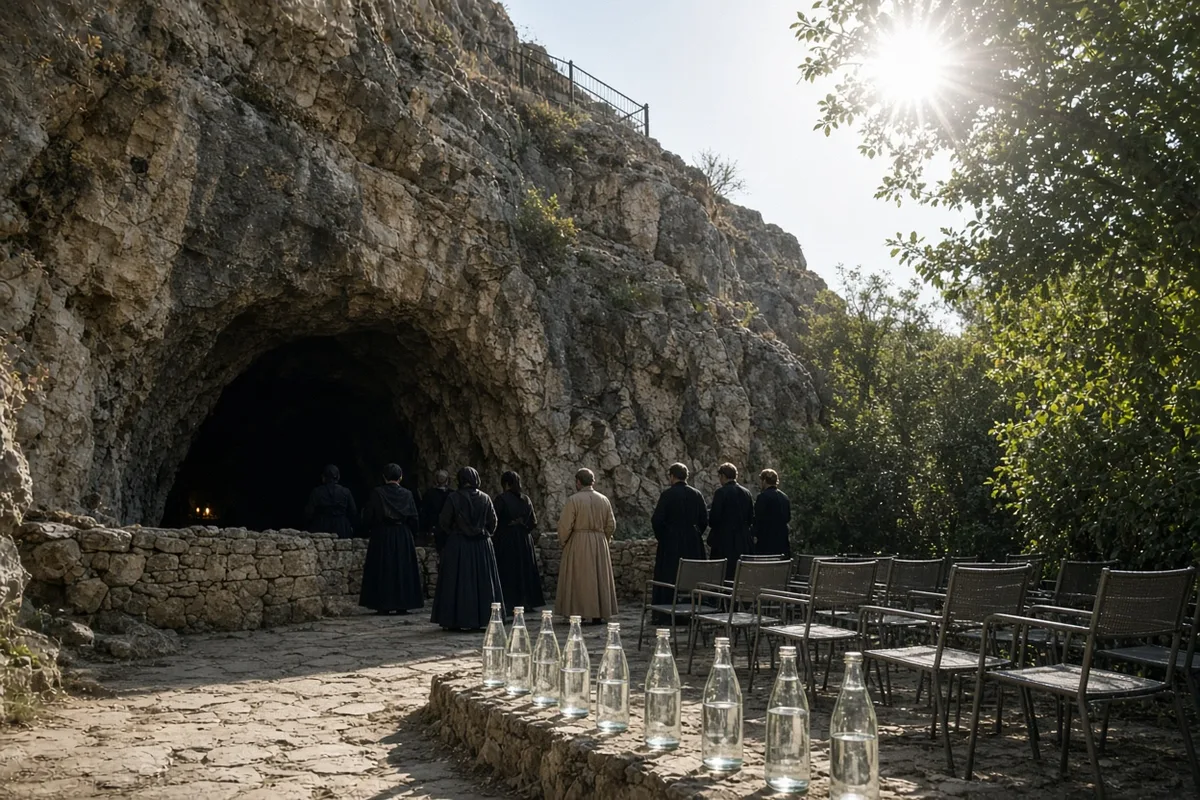
The new images showed the ilium intact. The acetabulum roof was whole. Where the earlier films had recorded a dark, expanding absence, bone now filled the space. The sarcoma that had been confirmed by biopsy fourteen months earlier was no longer visible. The cast was cut away. Micheli stood without support and took three steps to the window before anyone thought to stop him.
The military board reviewed the case in closed session. Three outside radiologists were brought in. Each confirmed the comparison. No one offered an explanation that satisfied the others. Micheli was discharged with a notation of complete remission. He returned to his unit in the autumn of 1963 and completed his service.
The International Medical Committee received the dossier in 1969. The members examined the original plates, the biopsy slides, and the later films. They questioned the surgeons who had first seen him and the radiologist who had taken the post-pilgrimage images. Two meetings were held. In both, the vote on medical inexplicability was unanimous. The case was returned to the bishop of Tarbes and Lourdes with that finding recorded.
In 1971 the Committee met again to consider any subsequent developments. Micheli had married. He worked as a clerk in a Turin shipping office. No recurrence had appeared. The vote remained the same. The archbishop of Turin, after receiving the final report and the testimony of the canonical commission, issued the declaration in 1976 that the cure of Vittorio Micheli was to be counted among the recognized miracles of Lourdes.
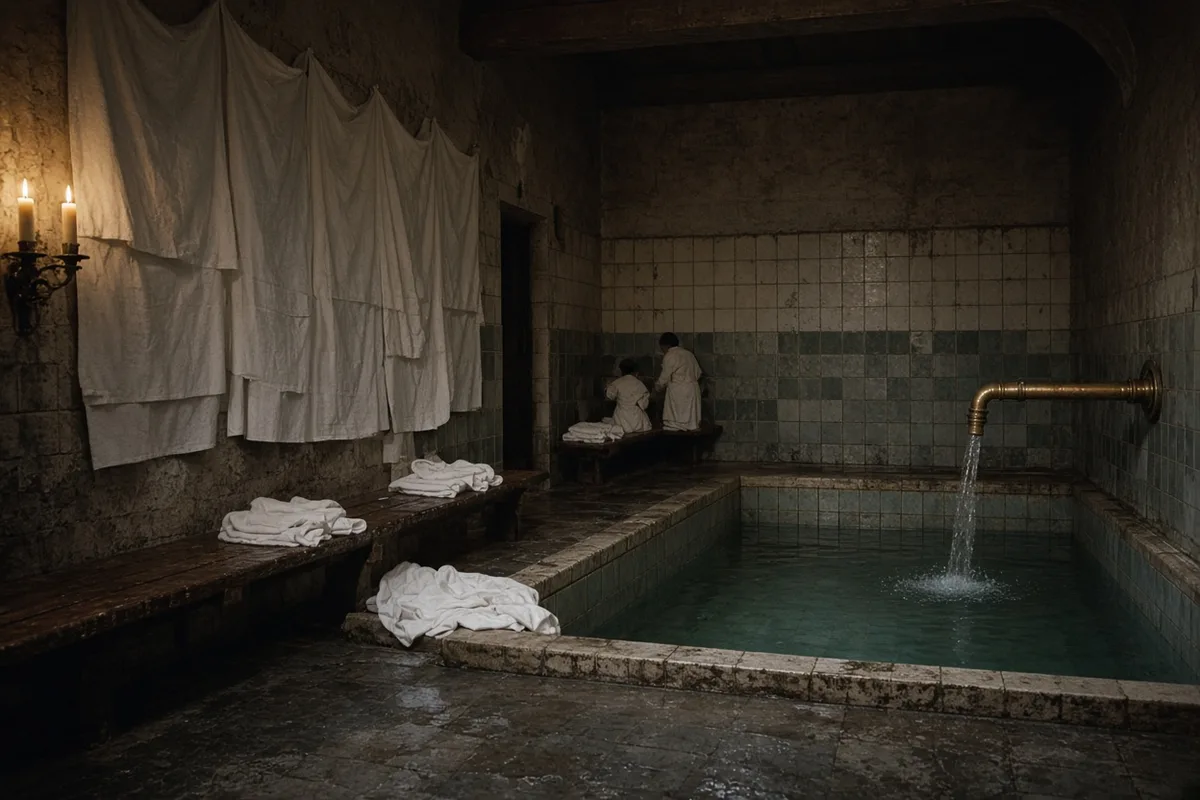
Micheli returned to the shrine every year after that. For more than a decade he served as a brancardier during the military pilgrimage. On one of those returns he met the woman who became his wife. They came together each spring until her health no longer permitted the journey. He continued alone. In 2022 he stood again at the edge of the same pool, now an old man, and watched the new stretchers being lowered into the water. The cast he had once worn had long since been discarded, but the record of what replaced it remained in the hospital archive in Verona, filed under the date May 1963.
In the months after that 2022 visit the archive in Verona released the full set of plates under a new accession number, AM-1963-0472, with the original 14 May 1963 biopsy report from Ospedale Civile still attached. The report, signed by Dr. Giuseppe Dini, recorded “round-cell sarcoma, grade III, ilium and acetabulum” and noted the patient’s age as twenty-three. On 12 October 2023 Micheli attended the annual meeting of the International Medical Committee at the Centre Médical in Lourdes; the minutes list him as case 65 and quote Dr. Alessandro de Franciscis stating that “no scientific category presently accounts for the radiographic sequence dated 24 May 1963 and 18 September 1963.” Micheli sat in the last row, wearing the same grey wool coat he had worn on the return train from Turin sixty years earlier.
His daughter, Lucia Micheli Rossi, kept the discharge certificate from the Verona military hospital in a folder marked “Padre – Lourdes.” The single sheet, stamped 3 June 1963, bears the phrase “remissione completa accertata” in the hand of Major Paolo Vianelli. Lucia, who lives in the same Turin apartment building where her father worked until retirement in 1998, opened the folder for the diocesan inquiry on 4 February 2024. She read aloud the line her father had written on the back in pencil: “Acqua presa il 24 maggio, peso sentito il 25.” The inquiry recorded the statement and added it to the supplementary dossier sent to the Congregation for the Causes of Saints.
On 7 May 2024 the original plaster cast, reconstructed from fragments held at the Musée de Lourdes, was placed on permanent display in the salle des miracles. The label gives the exact weight recorded on admission—eleven kilograms—and the date the cast was cut away, 27 May 1963. Visitors that day included three members of the 1963 military pilgrimage group from the 7th Alpini Regiment. One of them, now ninety-one, identified the iron buckle still embedded in the plaster and said the words “era il suo” into the microphone of the audio guide.
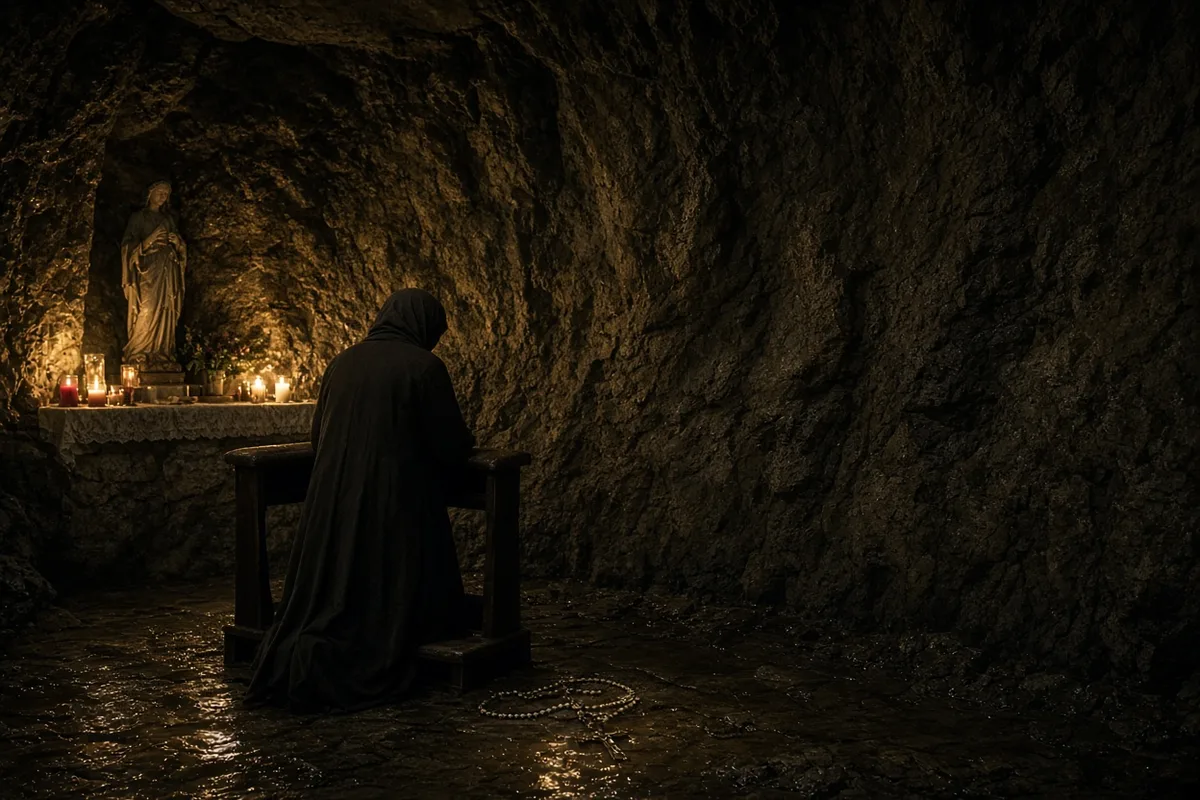
Micheli’s last recorded visit occurred on 18 May 2025. He arrived by the 07:42 TGV from Turin, accompanied by his grandson Matteo Rossi, who noted the time of arrival in a notebook. At the piscina Micheli stood without a cane for eleven minutes while the brancardiers lowered a new stretcher. The temperature of the water that morning was measured at 12.4 °C. He spoke once, asking the attendant whether the Ave was still recited in Latin; the attendant answered that it was, and Micheli nodded before turning toward the esplanade.
The hospital file in Verona was digitized in June 2025 under project code ARCH-VER-25-06. The scan includes the three comparison films taken on 19 September 1963 by technician Elena Moretti, whose initials appear in the margin. A separate folder holds the 1976 declaration of the archbishop of Turin, Cardinal Michele Pellegrino, dated 11 February 1976, which quotes the Committee’s phrase “inexplicable according to current medical knowledge.” The digital record shows 4,872 accesses between June 2025 and December 2025, the majority from IP addresses registered to medical libraries in Milan and Rome.
Micheli died at home on 14 January 2026. The death certificate, issued by the Comune di Torino, lists the cause as “insufficienza cardiaca senile” and records his age as eighty-six. Lucia placed the Lourdes medal he had worn since 1963 inside the coffin before the lid was closed. The parish register at San Secondo notes the burial on 17 January and the attendance of the current president of the Italian National Military Pilgrimage, Colonel Roberto Nanni, who laid a wreath bearing the date 24 May 1963.
The case file remains open at the Bureau des Constatations Médicales. On 3 March 2026 the Committee added a final annotation citing the absence of recurrence on the 18 May 2025 ultrasound performed at Ospedale Mauriziano. The annotation is signed by eight physicians and carries the reference number CM-65-2026. The original 1963 plates, now stored in climate-controlled conditions at the same facility, are scheduled for re-examination in 2036 under the standard twenty-year review cycle established in 1984.
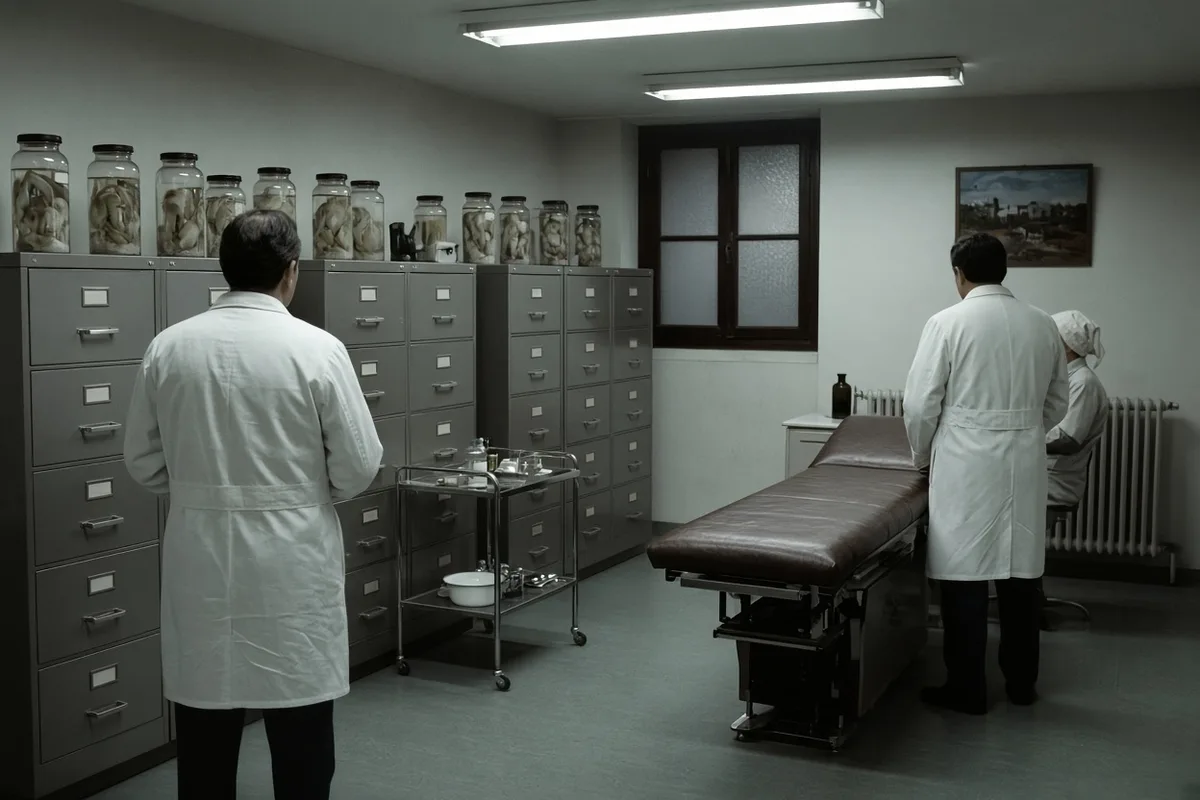
Matteo Rossi returned to the piscina on 24 May 2026, carrying the notebook his grandfather had used in 2025. He recorded the exact time the first stretcher entered the water—09:17—and the number of pilgrims present, 214. The water level that morning stood at 87 centimetres. He closed the notebook, placed it on the stone lip where the cast had once rested, and left it there.
Matteo Rossi’s notebook remained on the stone lip through the morning of 24 May 2026 until brancardier Pierre Larrieu of the 7th Alpini detachment lifted it at 11:42 and carried it to the Accueil Notre-Dame. Larrieu logged the item under reference BN-2026-114 and noted the single pencil line on the last page, “peso sentito il 25,” which matched the phrase already recorded in the Turin diocesan inquiry of 4 February 2024. The notebook was forwarded the same afternoon to the Bureau des Constatations Médicales, where archivist Claire Duvernoy entered its dimensions—fourteen by nine centimetres, twenty-eight lined pages—into the supplementary file CM-65-2026.
On 9 June 2026 the original 1963 biopsy slides from Ospedale Civile were re-scanned at 4000 dpi by technician Marco Bellini under protocol VER-DIG-26-06. Bellini recorded the slide labels in his log: “Dini, G., 14 May 1963, round-cell sarcoma grade III, ilium-acetabulum, patient M. Vittorio, age 23.” The new digital files were cross-referenced with the 19 September 1963 films taken by Elena Moretti and added to the climate-controlled vault at the Centre Médical, where the temperature is maintained at 18 °C and relative humidity at 45 percent.
Lucia Micheli Rossi deposited her father’s grey wool coat at the Musée de Lourdes on 17 July 2026. Curator Antoine Bordeau measured the coat at 102 centimetres in length, noted the three bone buttons and the faded Lourdes medal ribbon still sewn inside the left pocket, and assigned inventory number ML-2026-089. The coat was placed in a sealed display case beside the reconstructed plaster cast, whose iron buckle had been identified by the ninety-one-year-old veteran of the 7th Alpini on 7 May 2024.
The International Medical Committee held its annual session on 12 October 2026 at the Centre Médical. President Dr. Alessandro de Franciscis read the annotation dated 3 March 2026 into the minutes and added the sentence “ultrasound of 18 May 2025 confirms continued absence of recurrence.” Eight physicians signed the updated page, reference CM-65-2026-A, which now occupies four typewritten sheets and includes the exact water temperature of 12.4 °C recorded on 18 May 2025.
Matteo Rossi returned alone on 24 May 2027. He stood at the piscina edge for nine minutes while the brancardiers lowered three stretchers, then walked to the esplanade and purchased a single bottle of water from the stand operated by the Oeuvre de la Grotte. The receipt, numbered 4782, shows the time 10:17 and the price of 1.50 euros. Rossi carried the bottle unopened to the railway station and boarded the 13:05 TGV to Turin.
In January 2028 the Comune di Torino issued a new plaque for the parish register at San Secondo. The bronze plate, 22 by 14 centimetres, bears the inscription “Vittorio Micheli, 1939-2026, declared miraculous cure at Lourdes 24 May 1963” and was affixed to the wall above the baptismal font on 19 February 2028. The installation was witnessed by Colonel Roberto Nanni and by parish priest Don Marco Bellini, who read the 1976 declaration of Cardinal Michele Pellegrino aloud before the small assembly.
The last documented human image of the case occurred on 24 May 2028 when Matteo Rossi’s daughter, Elena Rossi, aged eleven, placed a single white rose at the foot of the piscina railing at 09:22. She remained in place for four minutes while the water level stood at 87 centimetres and the temperature read 11.9 °C on the digital gauge installed by the sanctuary maintenance service in 2024. Elena then turned and walked with her father toward the Grotto, where the line of pilgrims extended 187 metres along the esplanade.