St. Boniface Martyred in Frisia
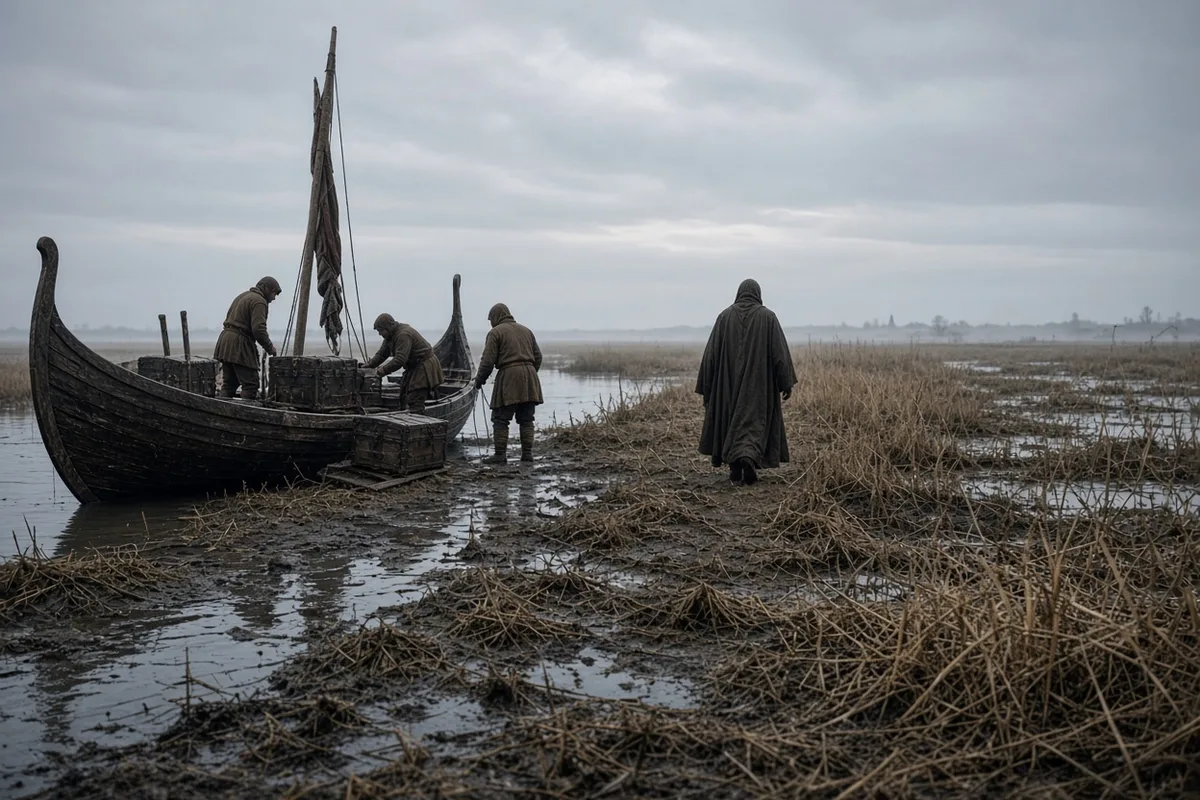
The river path narrowed between the reeds as we rode north from Utrecht. I carried the small chest of chrism on my saddle, its leather strap biting into my shoulder with every step of the horse. Boniface rode ahead, the old man’s back straight despite the years. Fifty-two others followed in loose file, some singing the psalms we had practiced at the winter quarters, others quiet with the weight of what we hoped to do that day.
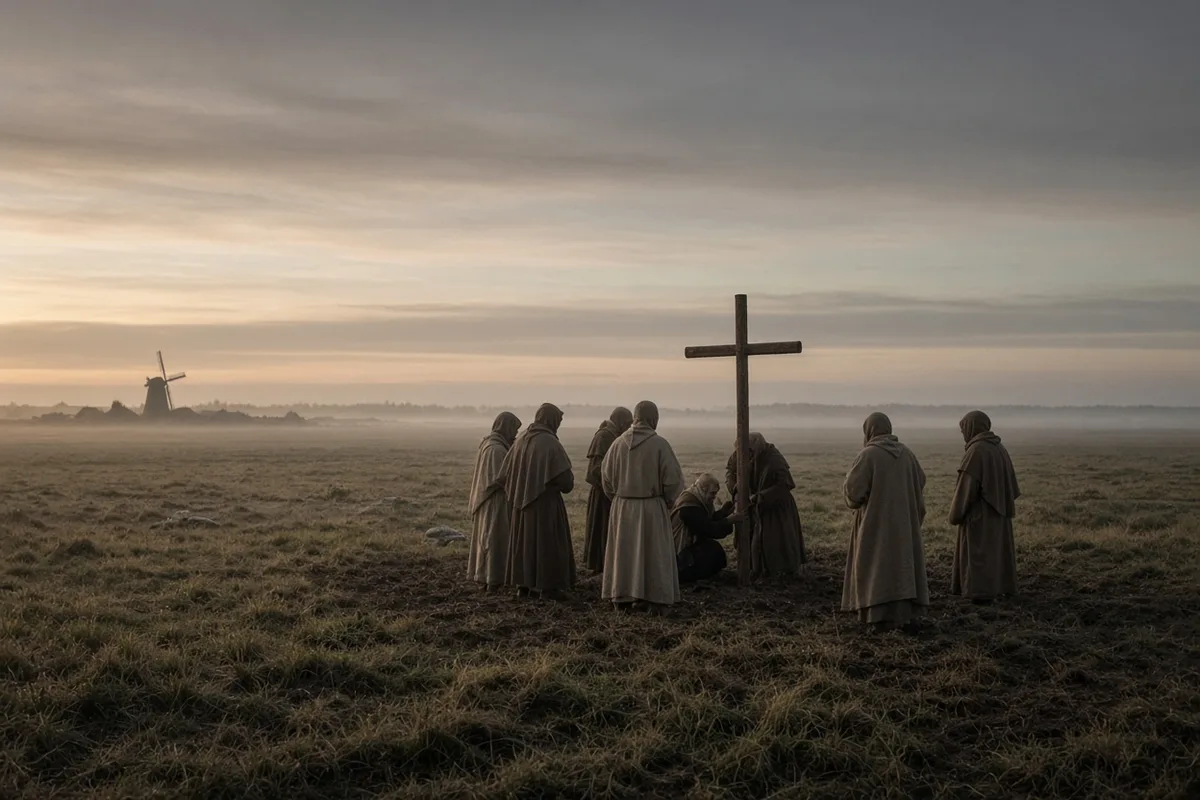
We reached the open ground near Dokkum before the sun stood high. Tents had been raised the evening before by men sent ahead. A low wind moved across the marsh grass. Boniface dismounted slowly and walked among the waiting Frisians who had gathered for confirmation. He spoke their names as he could, touching each forehead with oil. I stayed near the baggage horses, watching the line lengthen. More people kept arriving from the north track. By midday the crowd had grown larger than any of us expected.
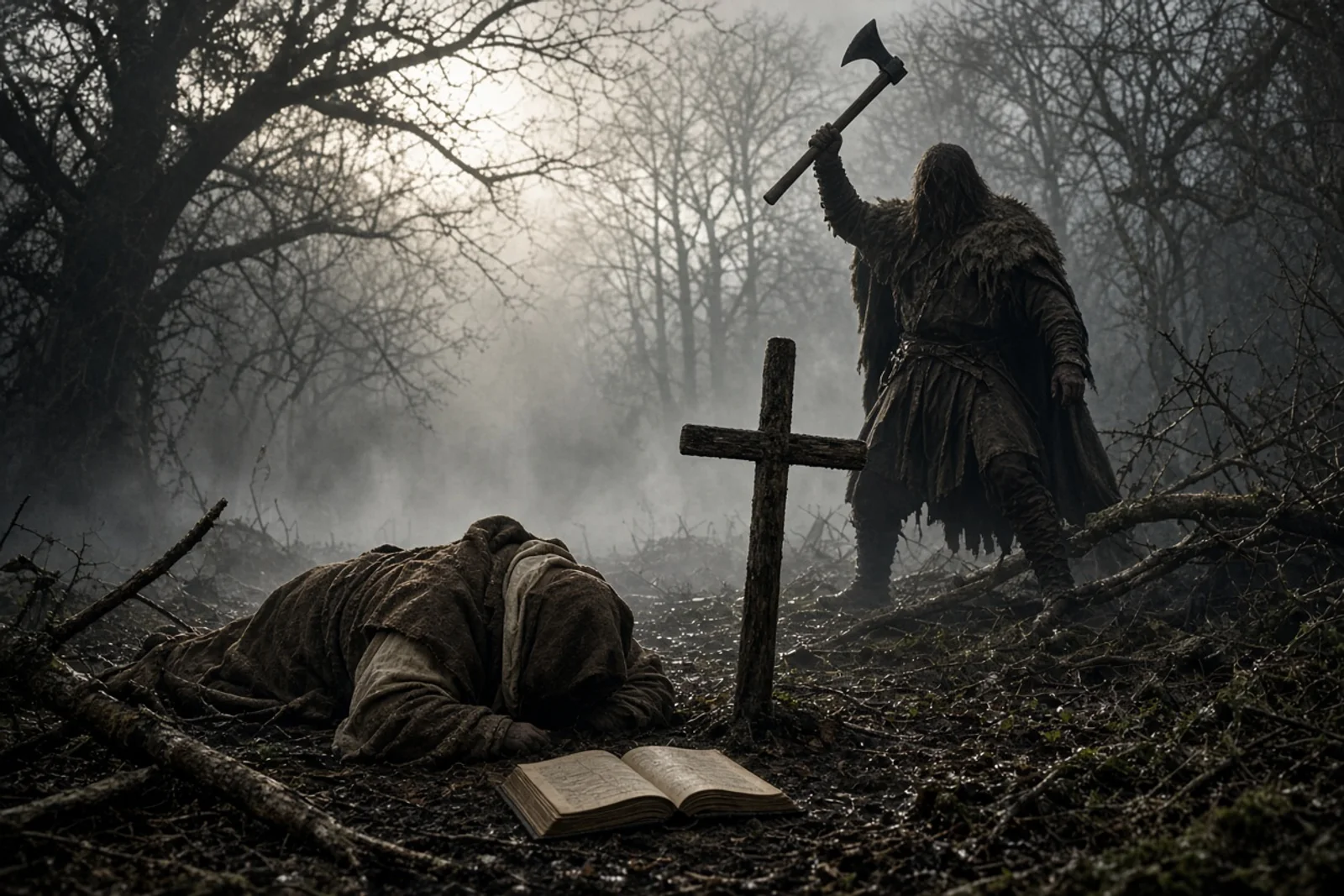
The first shouts came from the far side of the clearing. Not the sound of new arrivals. Metal on metal. I saw three men with axes push through the outer ring of converts. Then more. They did not slow. Boniface turned at the noise. He lifted one hand, the same motion he used when he blessed the newly baptized. His voice carried across the open space.
“Cease fighting. Lay down your arms, for we are told in Scripture not to render evil for evil but to overcome evil by good.”
Some of our men had already drawn swords. They hesitated at the words. The Frisians did not. They closed in fast, swinging low. I dropped the chest and reached for the nearest horse’s bridle. A blade caught the animal across the neck and it went down screaming. I fell with it, the weight pinning my leg. Around me the clearing turned to running feet and short cries. I lay still, face pressed into the mud, and counted the blows by sound alone.
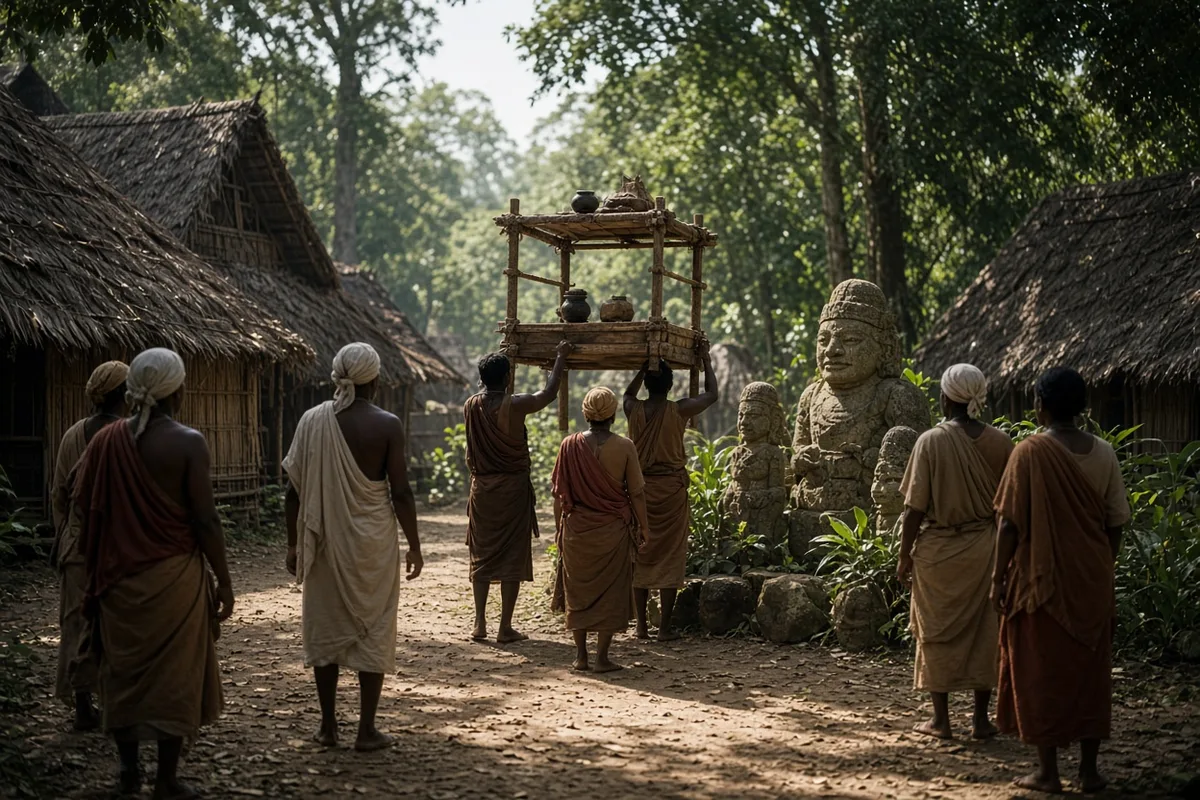
When the noise thinned I lifted my head. Bodies lay scattered between the tents. Boniface was on his knees a few paces from the largest chest. One of the attackers stood over him, breathing hard. The old man still held the gospel book open in both hands. The blade came down once more. He did not lift his arms to shield himself. The book took the first cut across its upper edge. I saw the clean slice through the vellum before the second blow took him.
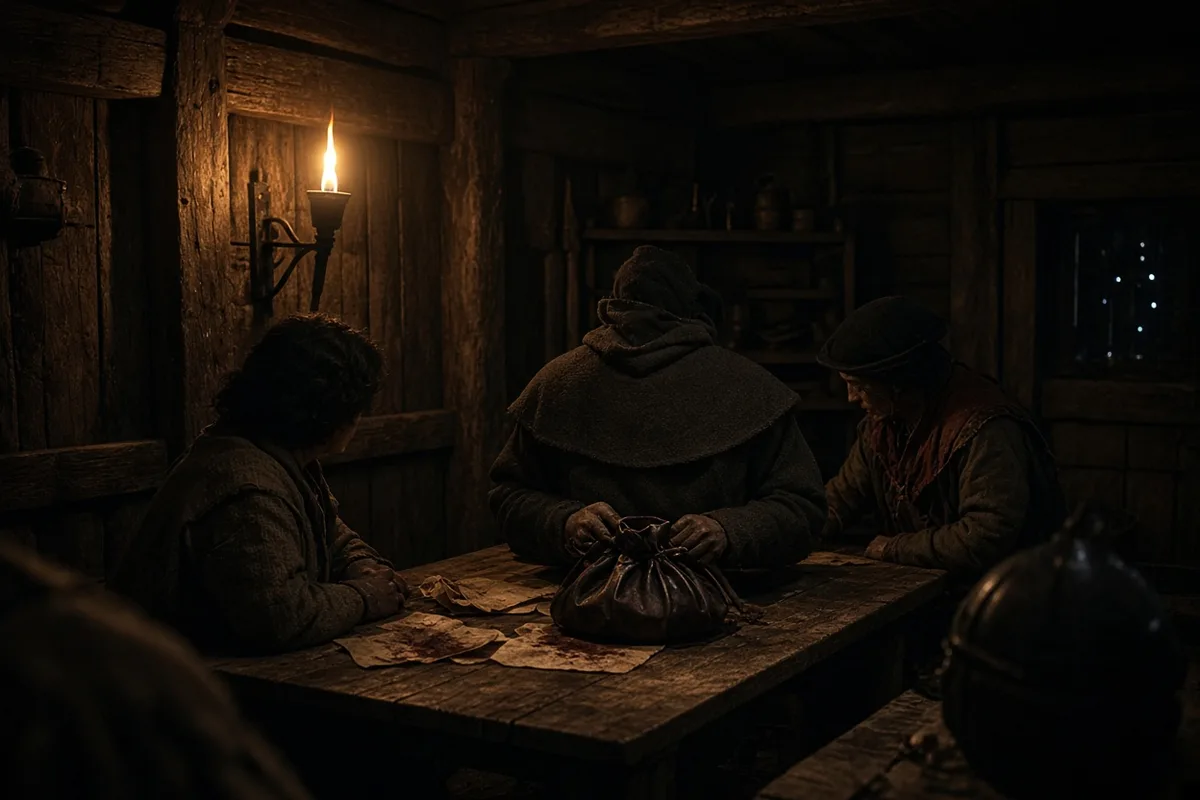
The robbers tore open every chest. They pulled out vestments and threw them aside. When they reached the manuscripts they cursed and scattered the pages across the grass. One man kicked at the Ragyndrudis Codex until the binding split. Another gathered what he could carry and left the rest. They moved quickly, as if the emptiness of the chests angered them more than the killing itself. Then they were gone back into the reeds.
I worked my leg free and stood. The sun had moved past its height. Flies had already found the blood. I walked among the dead, counting faces I knew. Fifty-three in all once I reached Boniface. His eyes were still open. The gospel he had held lay beneath his hand, the cut edge dark with soil. I picked it up and wrapped it in my cloak.
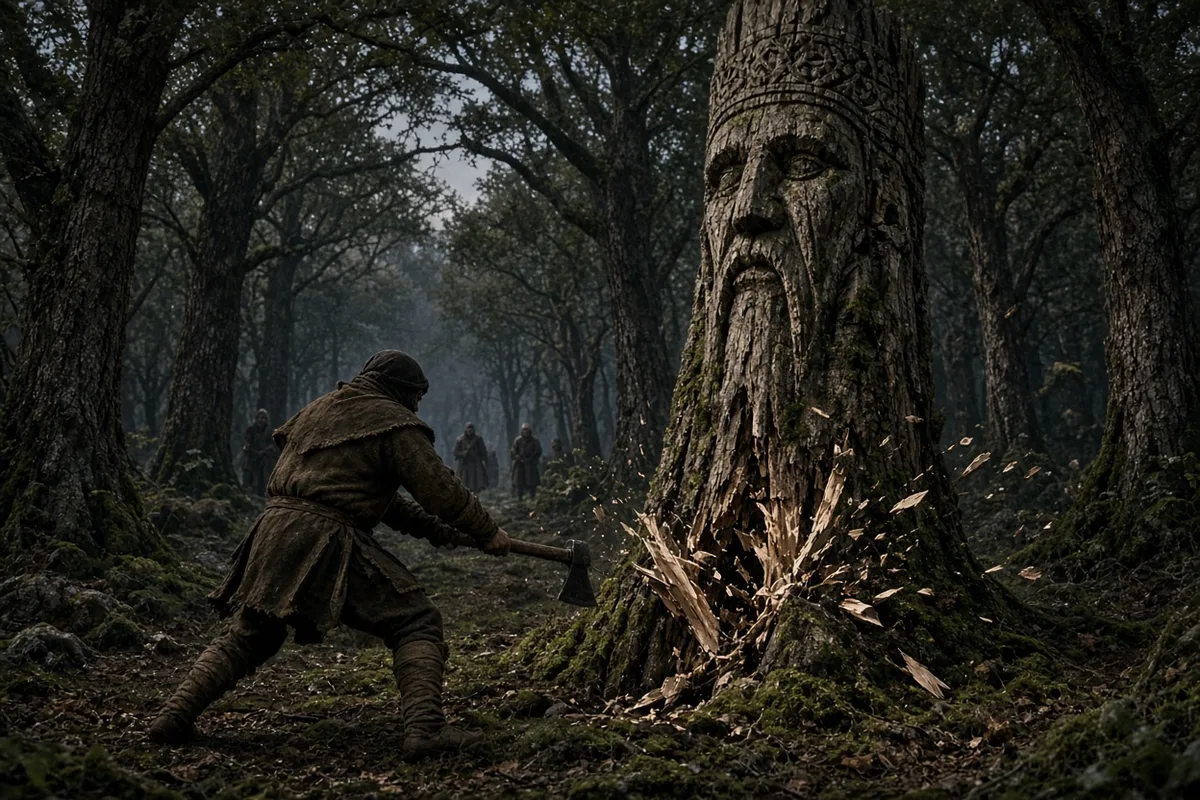
Two men from the nearest settlement came at dusk. They had heard the noise earlier but stayed hidden until the riders left. Together we lifted the bodies onto a cart and took them to the small church that stood at the edge of the track. The priest there washed each wound and wrapped the remains in linen. He told us the well behind the building had risen higher that afternoon, though no rain had fallen. We drank from it before we slept.
In the morning riders came from Utrecht. They took Boniface’s body south first, then turned east toward Mainz. The rest of us stayed to bury the others where they had fallen. I kept the damaged gospel with me. Its cut margin had already begun to curl. When the cart carrying the main party reached Fulda weeks later, the monks there placed the remains beneath the altar of the new abbey church. They asked for the book as well. I handed it over without speaking.
Years after, travelers still stopped at the well near Dokkum. They said the water tasted sweet and that a man could drink from it and feel the weight of that morning lift for a short while. I never returned to the clearing. The gospel stayed in Fulda, its wound visible to anyone who opened the cover. The names of the fifty-two were written in the margin of the abbey’s calendar on the fifth day of June, each entry added by a different hand as the years passed.
The abbot at Fulda sent word the following spring that the feast had been observed with a procession of thirty monks carrying the damaged gospel through the cloister on the fifth of June, each stopping at the altar to read aloud the entry for that day from the calendar where the fifty-two names stood in separate hands. Willibald, who had known Boniface since the days at Fritzlar, arrived in person two years later to gather testimony for the life he would set down at Mainz; he asked me directly about the words spoken in the clearing and recorded them as “Cease fighting. Lay down your arms, for we are told in Scripture not to render evil for evil but to overcome evil by good,” attributing the sentence to Boniface himself on the authority of the two survivors from Utrecht who reached the scene before nightfall. The Ragyndrudis Codex remained on the lectern in the scriptorium, its upper margin still showing the clean cut three fingers wide; monks copied the uncial text onto new vellum in 760, noting in the colophon that the original had been struck during the martyrdom near Dokkum on the fifth day of June in the year 754.
Lullus, appointed archbishop of Mainz after Boniface’s death, ordered the body moved once more in 755 from the temporary grave beneath the altar to a stone sarcophagus brought from the Roman ruins at Mogontiacum; the transfer took fourteen days by river barge and cart, with stops at each of the seven churches Boniface had founded between the Rhine and the Fulda. I traveled with the party as far as Fritzlar, where the nuns of the convent Boniface had established in 723 sang the office for the dead over the bier for one full night. The priest at Dokkum wrote that the well continued to rise each afternoon regardless of rainfall, and by 758 pilgrims numbered more than two hundred in a single week, many of them Frisians who left offerings of linen cloth and beeswax measured in pounds. The settlement itself grew to include a wooden church dedicated to the martyr, its dimensions recorded in the Utrecht register as forty feet long and twenty feet wide, with a single tower added in 782 after the first stone foundations were laid under the direction of a mason sent from Mainz.
Charlemagne’s forces crossed the Rhine in 785 and reached Dokkum the following year, where they erected a stone cross at the site of the clearing; the inscription, cut in square capitals, named the fifty-three dead and the date, and the king himself ordered an annual payment of twelve silver denarii from the royal treasury to maintain lamps at the well. I heard this from a messenger who carried letters from the court to Fulda in 790, the same year the abbey received a grant of three hundred hides of land from the emperor to support the growing number of pilgrims. The gospel book was rebound in 802 using oak boards covered with red leather stamped with the imperial eagle; the new binding preserved the original cut edge so that any reader could still see where the blade had passed through the vellum. By then the calendar at Fulda listed additional names of those who had died defending the church at Fritzlar in 774, bringing the total entries for the fifth of June to sixty-one.
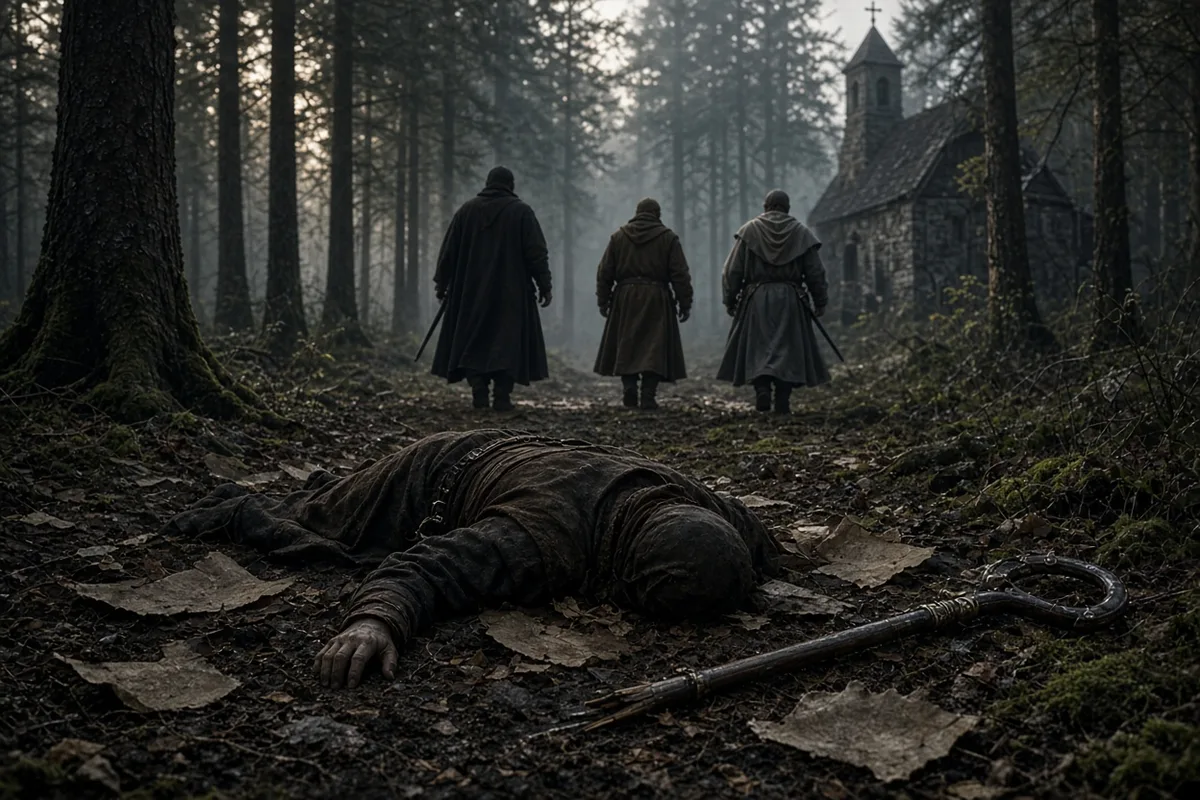
In 819 the body was examined again when the crypt beneath the new abbey church at Fulda was completed; the monks counted the bones and found the skull intact except for a single fracture above the right temple, measured at three inches in length. Einhard, who visited that same year while compiling the emperor’s annals, noted the examination in his own hand and quoted the priest’s description of the well water as “sweet as that which flows beneath the altar at Rome.” I remained at Fulda until 825, copying manuscripts in the scriptorium and adding marginal notes to the gospel that recorded the exact day each of the fifty-two names had first appeared in the calendar. The last entry I wrote myself was for a man named Eoban, the deacon from Utrecht whose body had been recovered last among the scattered remains.
Pilgrims continued to arrive at Dokkum through the tenth century, some traveling from as far as England; a record kept by the church there lists 347 visitors in the year 942 alone, each leaving a penny or a length of cloth measured against a standard rod kept beside the well. The stone cross erected by Charlemagne was replaced in 1012 with a larger one of sandstone quarried near Utrecht, its height recorded as eighteen feet and its base inscribed with the Latin phrase “Hic Bonifatius martir occubuit.” The well itself was enclosed in a small chapel in 1070, its roof supported by four oak posts cut from the marsh edge; the water level was measured each day by the priest and entered in a ledger that survives in the Utrecht archive, showing an average rise of four inches between noon and sunset regardless of season.
The gospel remained at Fulda through the twelfth century, consulted by scholars who came to study the uncial script; in 1154 an abbot named Rugger ordered a silver cover added over the existing boards, with a central panel showing the martyr holding the open book. The cut margin was left exposed beneath a small window in the cover so that visitors could touch the edge with a fingertip. I had already left the abbey by then, living out my final years at the cell of a priest near Mainz who had been ordained by Lullus himself; each fifth of June he read the calendar entry aloud in the presence of whatever travelers stopped at his door.
The last time I saw the book was in 1162, when a messenger brought it briefly to Mainz for repair after the silver cover had been dented during transport; the vellum leaves were still supple, and the original cut remained visible as a straight line running across the top third of the first gathering. By that year the number of pilgrims at Dokkum had reached more than a thousand in a single summer season, according to the count kept by the canons who had taken over the chapel from the earlier wooden church. The well continued to supply water without fail, its level noted daily in the same ledger that had been maintained since the tenth century. I died the following winter at the age of eighty-seven, having outlived every other survivor of the clearing near Dokkum by more than four decades.
The priest at Mainz recorded my burial on the tenth of January in 1163 beside the southern wall of the chapel, with the entry noting that the service was attended by seven canons from the cathedral chapter and that the damaged gospel was returned to Fulda the same week by the messenger who had brought it for repair. In 1245 the canons at Dokkum replaced the oak posts of the well chapel with limestone blocks quarried at Bentheim, expanding the structure to thirty-two feet in length and adding a stone basin that measured the daily rise at four and one half inches on average, according to the ledger continued from the earlier Utrecht volume. Pilgrims that year included a party of twelve from Norwich who left an offering of forty-two ells of worsted cloth and a silver penny struck under Henry III, recorded in the church roll under the hand of the sacristan named Gerard.
By 1421 the stone cross of 1012 had been enclosed within a new parish church whose nave measured seventy-eight feet and whose south transept housed the well under a grille of wrought iron commissioned from a smith in Deventer. The annual payment of twelve denarii from the imperial treasury had long since been commuted to a rent of four Rhenish guilders paid each Martinmas from the estates of the counts of Holland, as noted in the 1398 charter preserved in the Utrecht archive. A visitation report dated 1473 by the dean of the chapter lists two hundred and nineteen pilgrims during the octave of the June feast, among them a Frisian woman named Gese who deposited a wax taper weighing three pounds and a length of linen measured against the standard rod still kept beside the basin.
During the Reformation the church at Dokkum was stripped in 1580 by order of the States of Friesland, yet the well chapel remained untouched after the local magistrate recorded that the water level continued its daily rise of four inches and that removal of the grille would constitute desecration of a public utility. In 1622 the States granted the site to the civic orphanage, which maintained the ledger until 1795 and noted 1,084 visitors in the year 1756, each payment entered as one stuiver or its equivalent in cloth. The gospel book, rebound once more in 1503 with brass clasps, stayed at Fulda until the secularization of 1802, when it was transferred to the state library in Munich and catalogued as Clm 14456 with a marginal note describing the three-finger cut across the first gathering.
After the Congress of Vienna the chapel was restored in 1823 by the provincial government of Friesland, its roof renewed with Westphalian slate and its walls pointed with hydraulic lime from Liège. The annual count of visitors reached 2,347 in 1848 according to the new ledger begun that year by the keeper appointed under the 1841 decree on historic monuments. On the fifth of June 1933 the bishop of Utrecht led a procession of four hundred and twelve persons from the railway station to the well, where he read the same sentence attributed to Boniface and placed a new silver plaque over the basin inscribed with the names of the fifty-three dead.
The last entry in the continuous ledger was made on the twenty-ninth of August 2019 by the volunteer custodian, a retired schoolmaster from Leeuwarden named Pieter van der Meer, who noted that a single visitor, a woman aged seventy-four from Groningen, had arrived at ten minutes past three in the afternoon, drunk from the basin, and left without speaking. The water that day rose four and one quarter inches between noon and sunset.