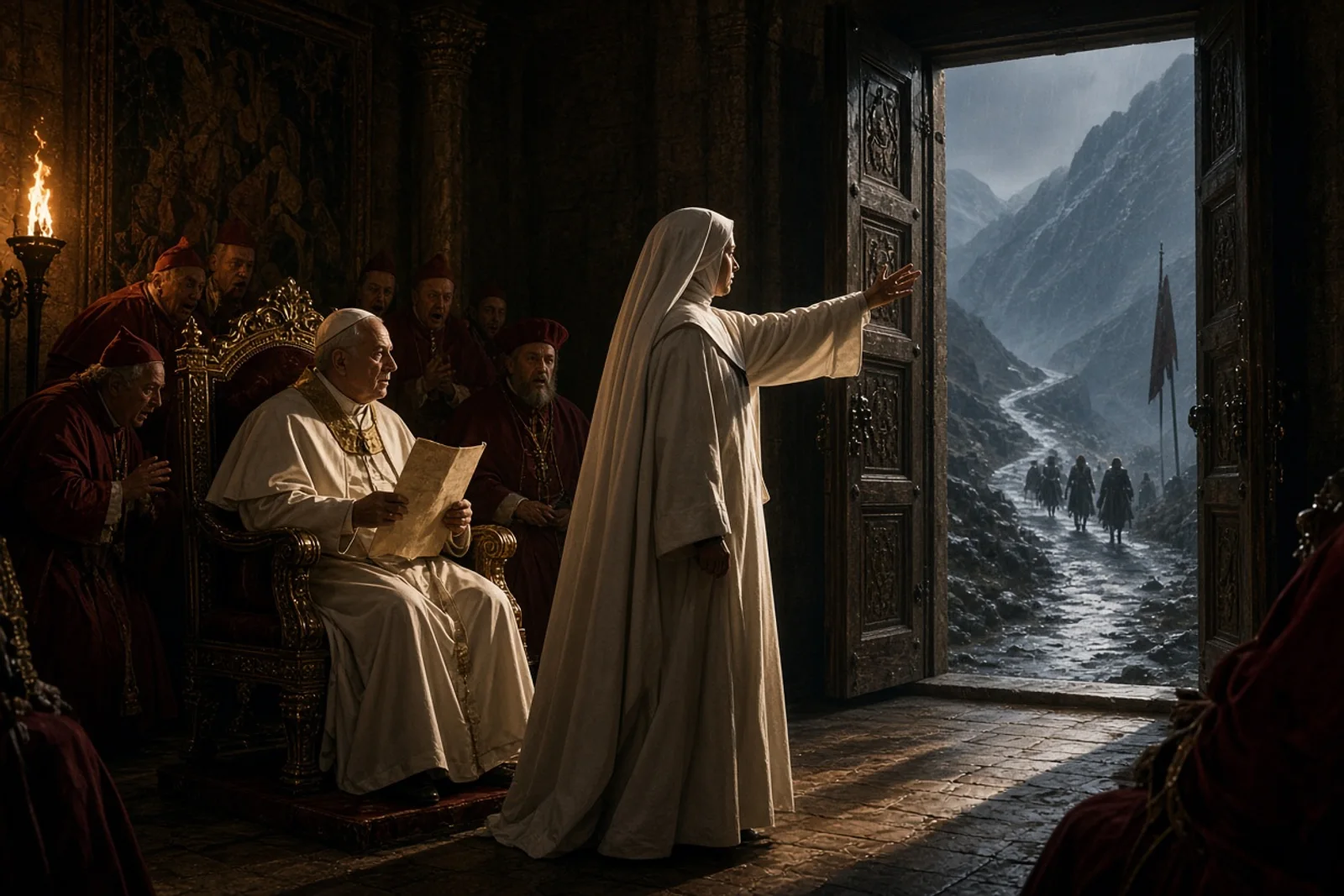
Boniface Fells Donar's Oak and Builds Church
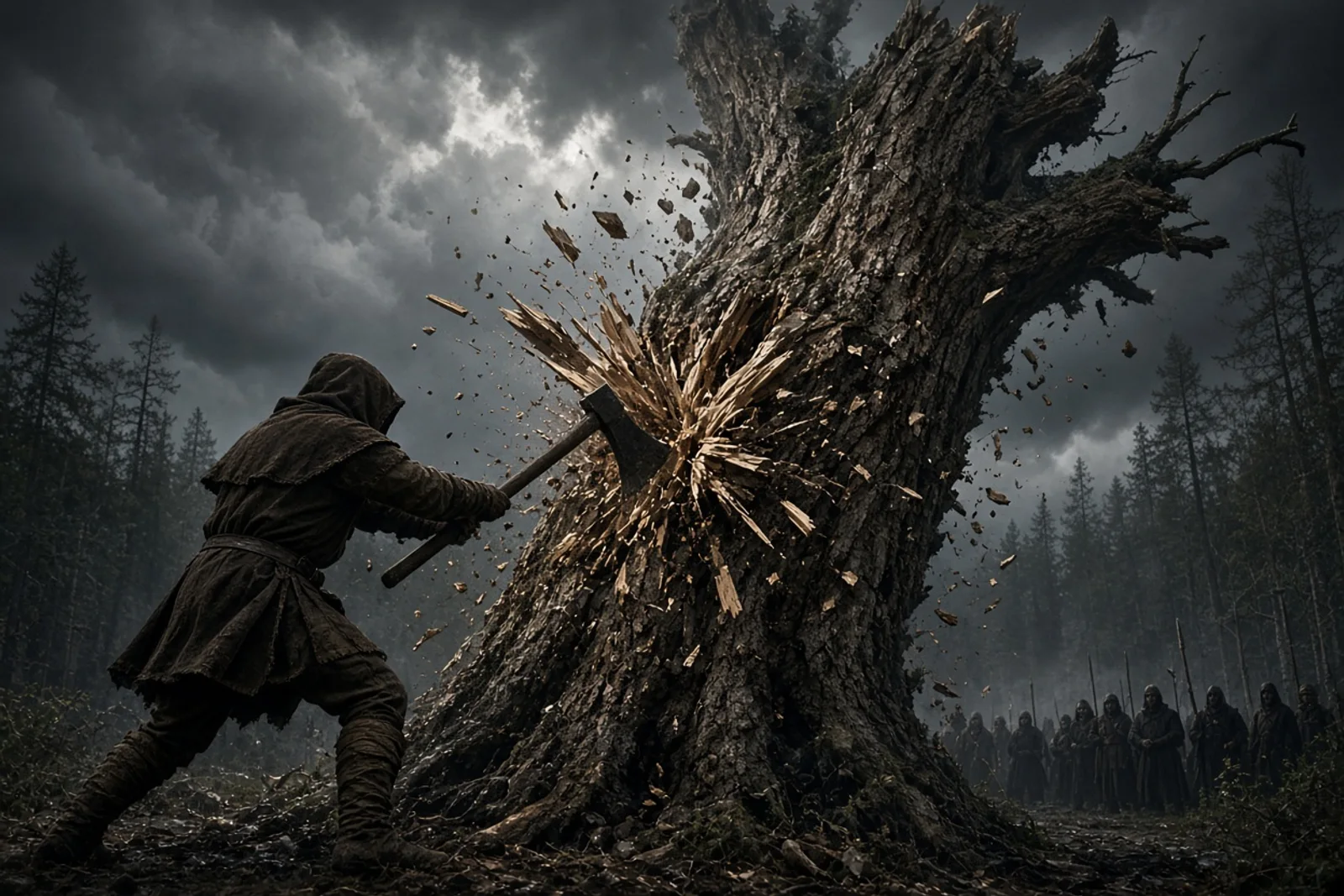
I gripped the haft of my spear and shifted my weight on the damp earth. The oak towered above us, its lower branches still heavy with last night’s rain. Men from three villages had gathered since dawn, some muttering prayers to the old names, others silent. Boniface stood at the base with four of his companions. He wore no armor, only the dark wool robe. He set his palm against the bark, then stepped back and lifted the axe.
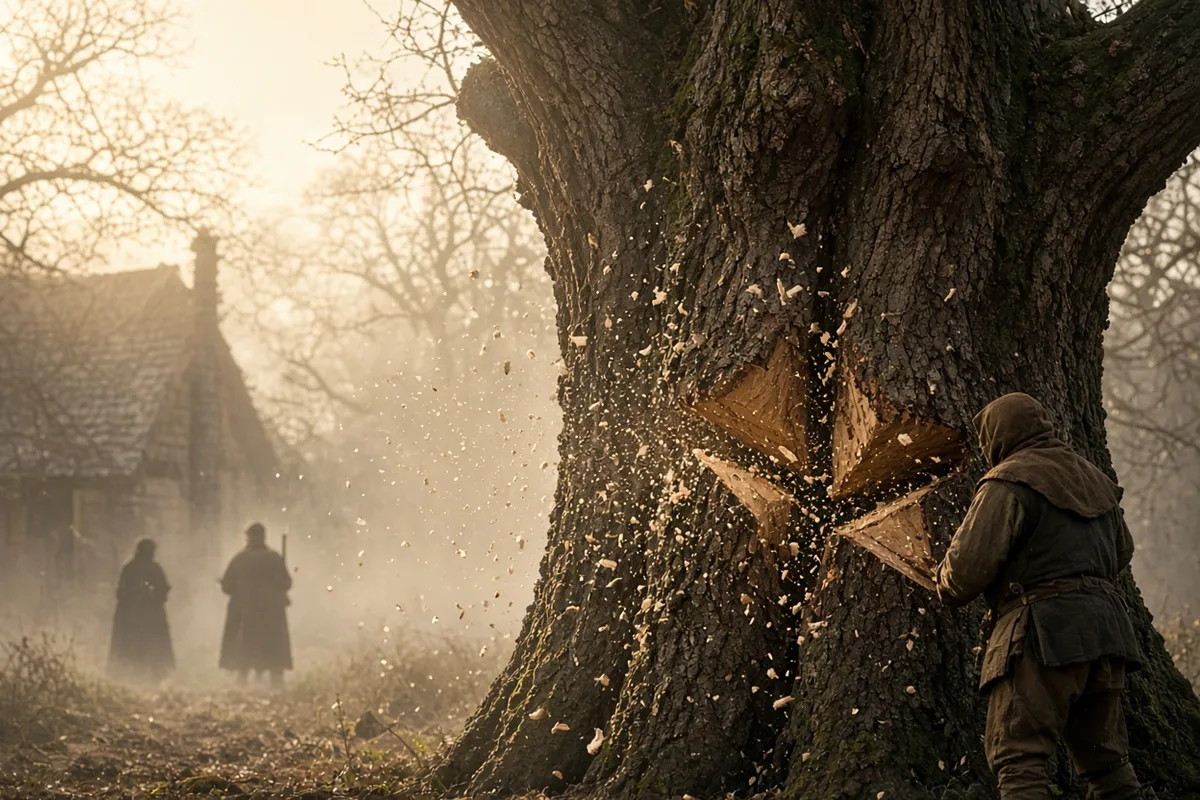
The first swing landed low. Bark flew. The second bit deeper. A murmur ran through the crowd behind me. Someone spat. I kept my eyes on the cut. Boniface worked without hurry, each stroke steady. Sweat darkened the cloth between his shoulders. When the notch was wide enough for his forearm, he paused and looked up at the trunk. The leaves did not move. No wind stirred the clearing.
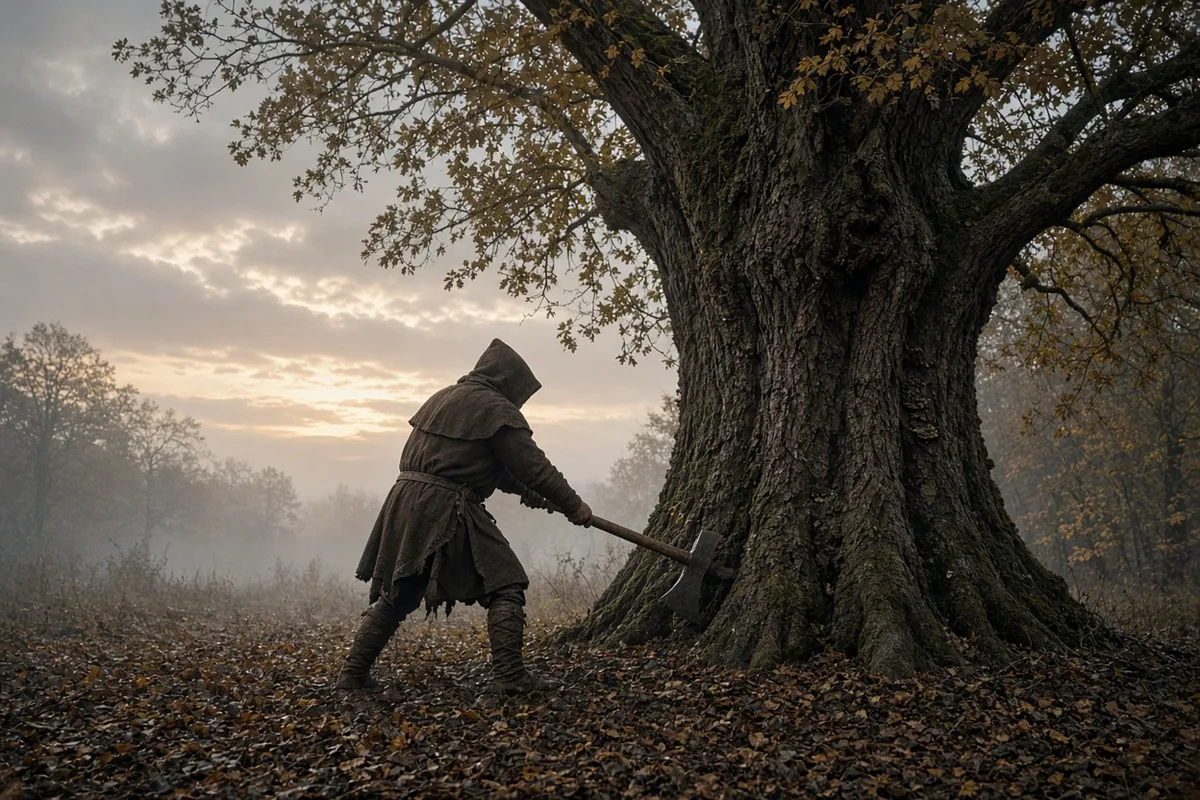
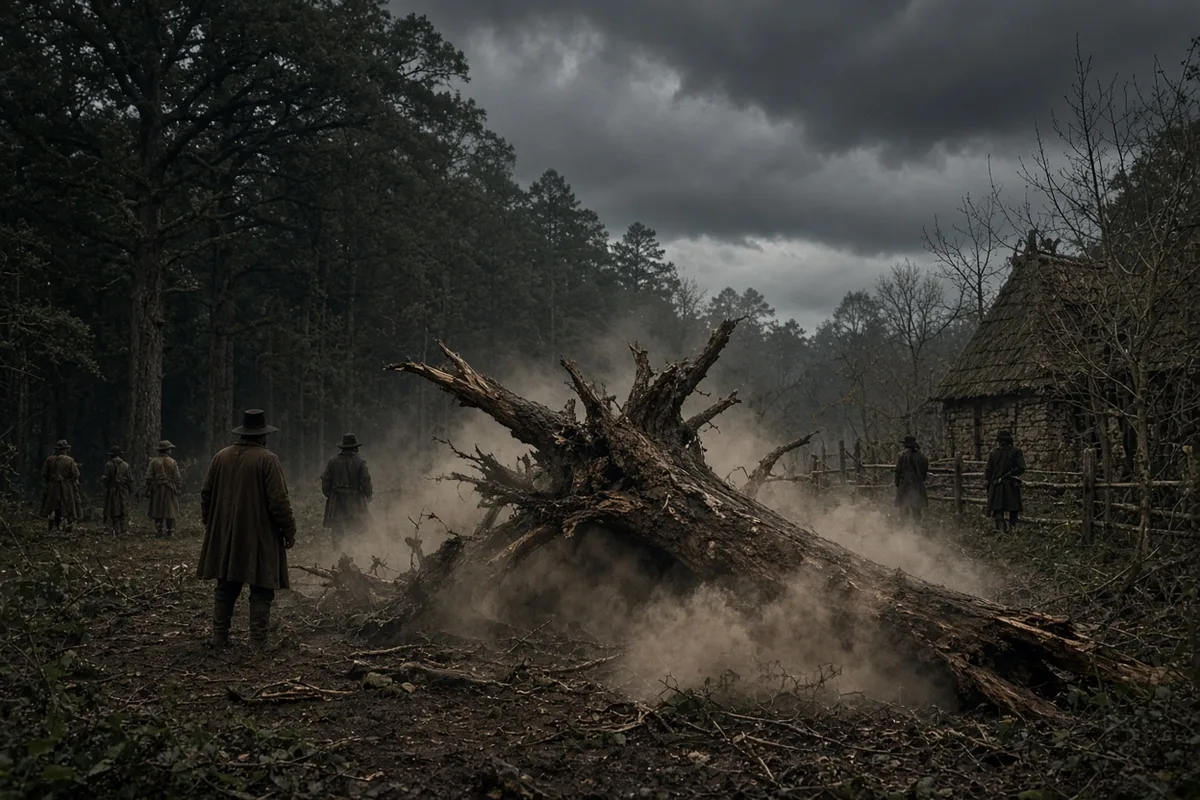
He raised the axe again. The blade struck true. The tree groaned, a long, low sound that seemed to come from inside the wood itself. Then the crown leaned. It leaned slowly at first, as if the roots were fighting. A shout went up from the far side of the clearing. The trunk twisted, snapped, and came down in one piece. The ground shook under my feet. Branches cracked like dry bones. Dust and needles filled the air.
When the dust settled, the oak lay broken into four long trunks. They lay side by side, almost equal in length, none of them splintered beyond use. The pagans who had cursed the night before now stood with their mouths open. One man dropped to his knees. Another crossed himself the way the strangers did. I felt my own throat tighten. The tree that had stood longer than any grandfather’s memory was gone, and nothing had struck us down for it.
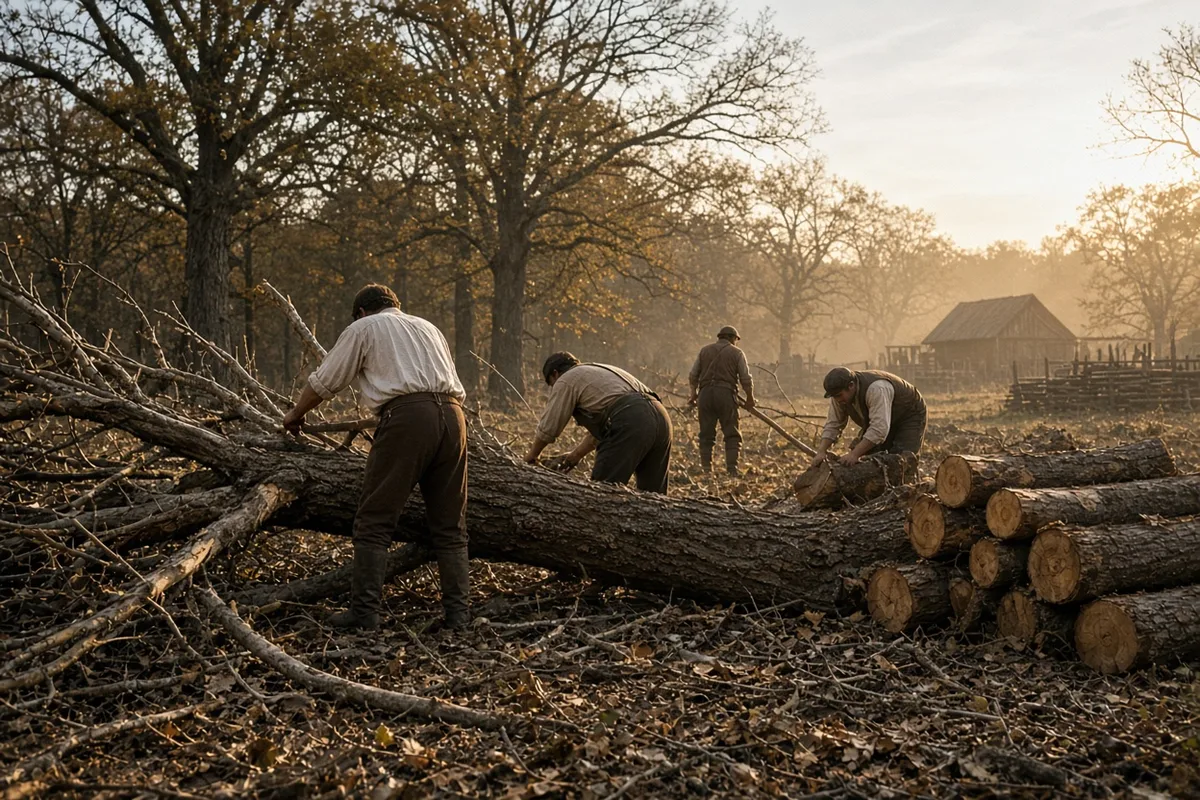
Boniface walked the length of the nearest trunk. He measured it with his eye, then turned to the brothers. “We will build here,” he said. His voice carried across the clearing without effort. The men who had come to guard the oak now moved closer, some offering their hands. I found myself among them. No one ordered us. We simply began dragging the smaller limbs aside.
By midday the air smelled of resin and cut wood. The four great trunks were trimmed and squared. Boniface marked where the walls would stand. We dug post holes with the same axes that had felled the tree. The work went quickly because so many hands joined. Women brought bread and water from the nearest settlement. Children carried chips of wood to the fire. By evening the frame stood upright, its roof beams already lashed in place.
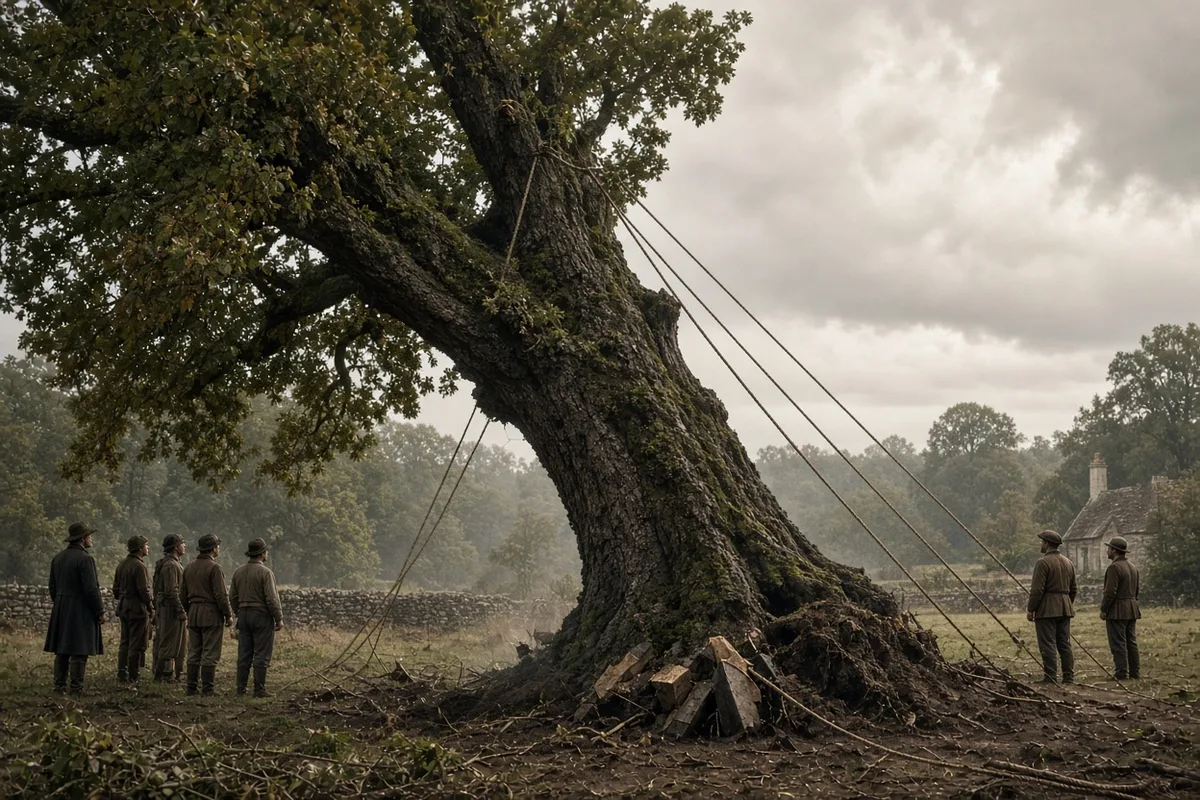
That night we slept beside the new timbers. I lay awake listening to the brothers pray. Their words were strange, yet the sound no longer made my skin prickle. In the morning the work resumed. We split smaller logs for the walls and fitted them between the uprights. Boniface himself drove the last peg on the door frame. When the structure was finished, it measured perhaps twelve paces long and six wide. The roof was thatched with branches from the same oak.
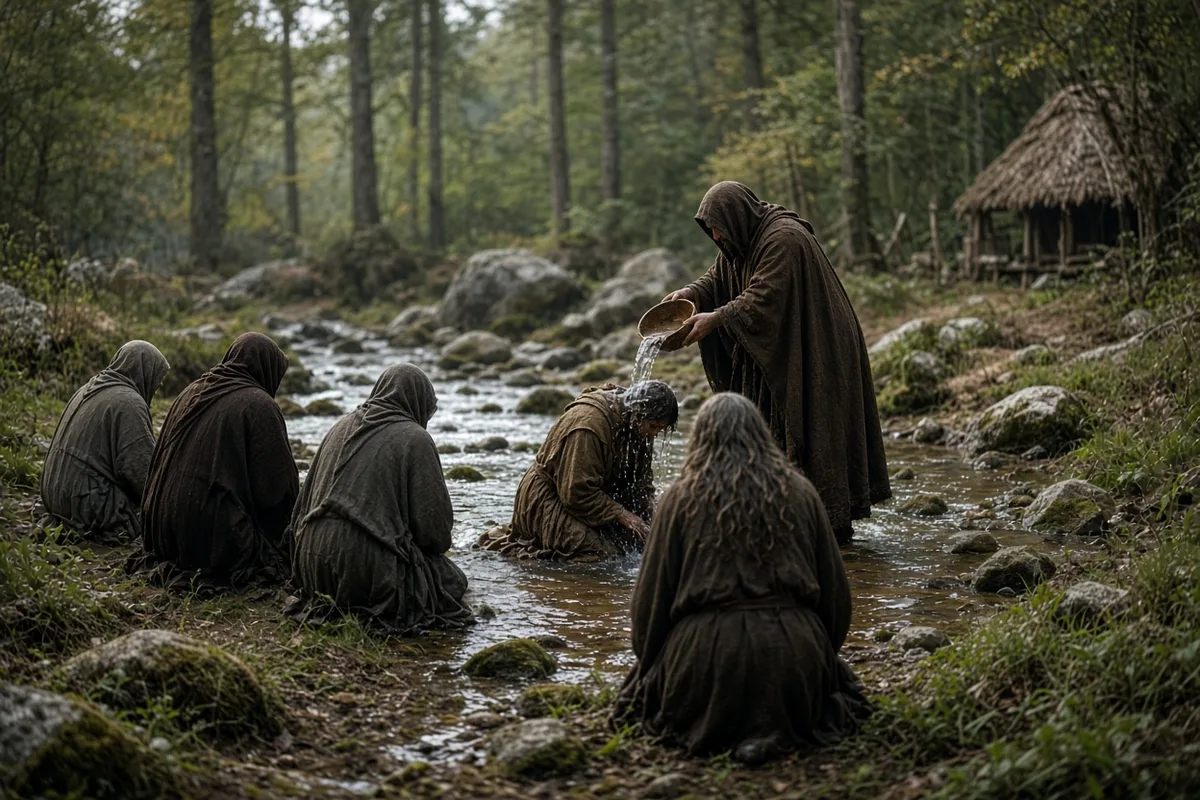
On the third day Boniface dedicated the building. He poured water over the threshold and spoke the name of Peter. The crowd that filled the clearing was larger than before. Men who had once kept watch over the sacred grove now stood inside the wooden walls. Some brought offerings of their own, small things wrapped in cloth. Boniface accepted each one without ceremony and set them on the single table at the far end.
In the weeks that followed, people kept arriving. They came from settlements two days’ walk away. They asked to see where the oak had stood. We showed them the stumps and the new building. Many stayed to help with the fields or to learn the prayers. I stayed as well. My old spear leaned against the wall of the oratory, its point wrapped in hide.
The four trunks that had once been the oak’s main body now formed the corners of the church. Rain ran down their smoothed faces and collected in the hollows where branches had grown. Inside, the air stayed cool even on the hottest afternoons. When winter came, the walls held the warmth of the fire. No one spoke of the old god. The clearing grew quiet except for the sound of axes shaping new timber for houses.
Years later the path to the church was worn smooth by feet. Travelers stopped there for shelter and left word of other places where trees still stood. Boniface moved on, but the building remained. The four corner posts, cut from the single oak, continued to bear the roof. Moss grew along their north sides. Children played beneath the beams their grandfathers had helped raise. The clearing no longer belonged to the old names. It belonged to the work that had been done there with ordinary hands and one man’s axe.
In the spring following the dedication, when the first frost left the ground soft enough for new digging, a party of twelve monks arrived from the mission at Amöneburg. They carried with them a letter sealed by Boniface himself, dated the kalends of March in the year 724, in which he wrote to the priest Denehard that “the timber of the felled oak at Geismar shall serve not only for walls but for the very lintels under which the people of Hesse shall first hear the gospel in their own tongue.” The newcomers measured the existing oratory again and found it still twelve paces by six; they added a side room of oak planks nine feet long, each plank planed from the smaller branches that had been stacked the previous autumn. One of the monks, a Saxon named Leofwine who had come across the sea two winters before, kept a tally stick notched for every cartload of clay mixed with straw for the daub; by midsummer he had recorded forty-seven loads. The women from the nearest settlement, now calling the place Fritzlar after the stream that ran past the clearing, brought linen for an altar cloth and asked that the name of their own dead be spoken at the next dedication.
By the harvest of 726 the path had widened into a track wide enough for two carts to pass, and a second building rose thirty paces to the east, its posts cut from beech rather than oak because the original trunk had already supplied every corner post and every roof beam. Boniface returned that autumn with four companions and stayed eleven days. He slept on a pallet of straw in the oratory and each morning read from a gospel book whose pages were still damp from the river crossing at Mainz. On the fifth day he dictated a short record to the monk Eoban, noting that “on the site of the oak once sacred to Donar, now stands the house of Peter, and already more than two hundred souls have been signed with the cross.” The men who had once guarded the grove now took turns keeping the fire in the new refectory; one of them, a man named Wulfhere whose spear had leaned beside mine on the night the tree fell, began to carve a wooden cross from a remaining slab of the oak heartwood, measuring it three feet high and two wide before setting it above the door.
In the winter of 729 the first stone foundation was laid, the stones hauled from the quarry at Niederwerrn six miles distant. Twenty-two ox teams made the journey, each team dragging blocks that weighed more than a man could lift. The old wooden oratory remained inside the new walls, its four corner posts still bearing the roof while masons worked around them. Boniface visited again in 732 after his return from Rome, where he had received the pallium; he brought with him a silver chalice weighing fourteen ounces and placed it on the table that had once held the small offerings of cloth. He spoke for three hours on the feast of Peter and Paul, and the crowd that gathered numbered more than three hundred, some of whom had walked from as far as the Fulda ford. After the service he asked for the man who had first set hand to the axe with him; when told that companion had died the year before, he marked the date on a small wax tablet and said only that the timber had outlasted the hewer.
My own dwelling stood fifty paces north of the church, built in the same year as the refectory with walls of wattle and a roof of oak shingles split from the upper trunk. I married the daughter of the man who had dropped to his knees when the tree fell; her name was Eadburg, and together we had three children before the tenth winter after the felling. The eldest son, named after the apostle, helped carry water for the masons when the stone church reached the height of a man’s shoulder in 735. By then the settlement had grown to seventy-eight households, each paying a tithe of grain that was stored in a timber granary built on the site of the original stump. Travelers passing through Fritzlar left marks on the doorpost with charcoal, recording the names of villages where other oaks still stood: one mark for the tree at Geismar itself, another for the grove near Kassel, a third for the tall oak at Erfurt.
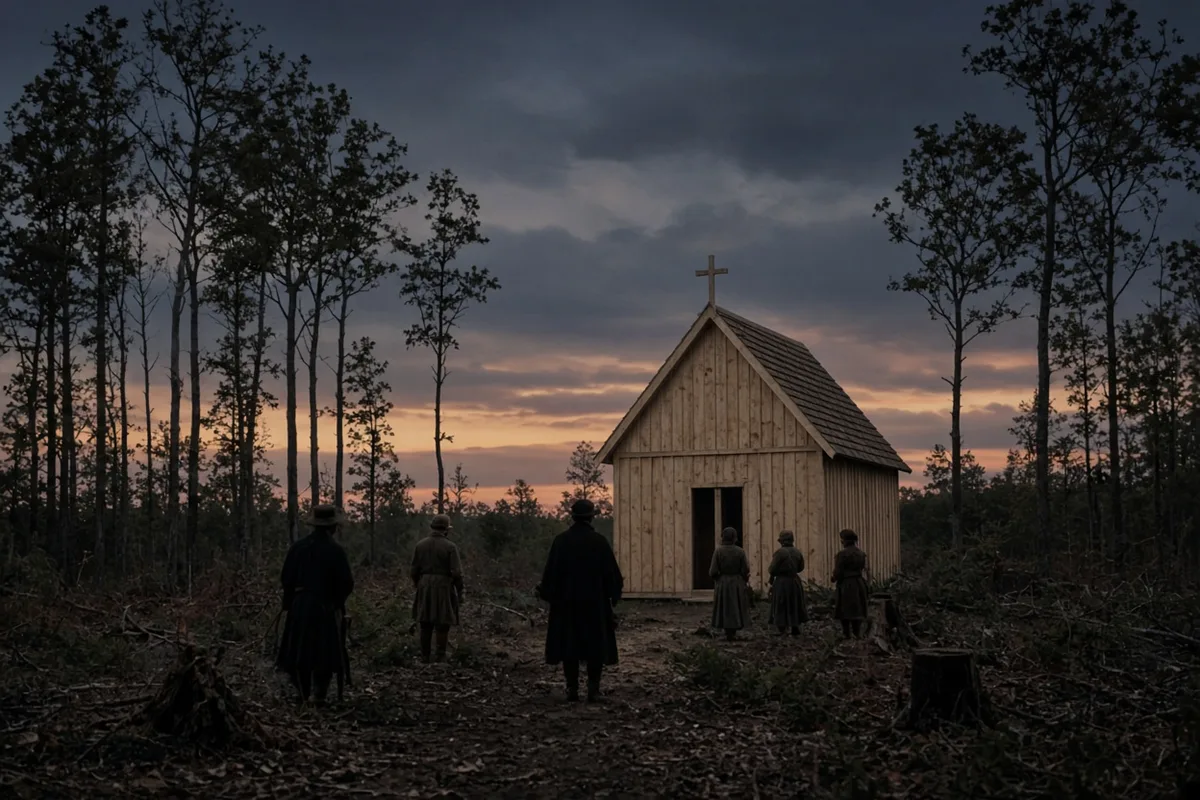
Boniface returned once more in 741, traveling with a company of thirty on his way to the council at Leptinnes. He spent two nights in the completed stone church, whose nave now measured forty paces by eighteen, and he examined the four oak posts that still supported the inner roof of the old oratory within the new walls. He placed his hand on the northernmost post and remarked to the priest who traveled with him that the wood showed no sign of rot after seventeen winters. The priest recorded the words in the margin of a service book, adding the date and the names of those present. Boniface left at dawn the next day, taking with him two young men from Fritzlar who wished to learn letters at the new foundation at Fulda.
When I reached my sixtieth year the stone church had already stood for thirty seasons, its roof tiles replaced twice and its altar moved once after a fire in the sacristy. The four oak posts remained exactly where they had been set on the day the tree was squared, their surfaces darkened by smoke from the lamps but still sound when struck with a knife blade. My youngest daughter, now a widow, kept the keys to the treasury and counted the offerings each month; in the year 755 she recorded sixty-three silver pennies, four linen cloths, and one small bronze bell brought from the mission at Utrecht. On the morning I last climbed the ladder to inspect the roof beams, the sun fell across the northern post in the same angle it had on the day the crown of the oak came down, and the mark of the axe was still visible where Boniface had begun the notch.
The track that had once been a path now carried wagons every market day, and the land around the church was measured in hides, twenty-three in all, granted by charter in the name of Pippin the king. My grandson, the son of my eldest, took the name of the first monk who had kept the tally stick and entered the service of the bishop at Mainz in the year 767. He returned only once, bringing news that the oak wood from Geismar had been used for the doors of the new cathedral at Würzburg. On the evening of his visit we stood together beneath the beams, and he counted the original pegs that Boniface had driven; twenty-seven remained in place, each one still tight in its hole.