Brian Welch Exit from Korn
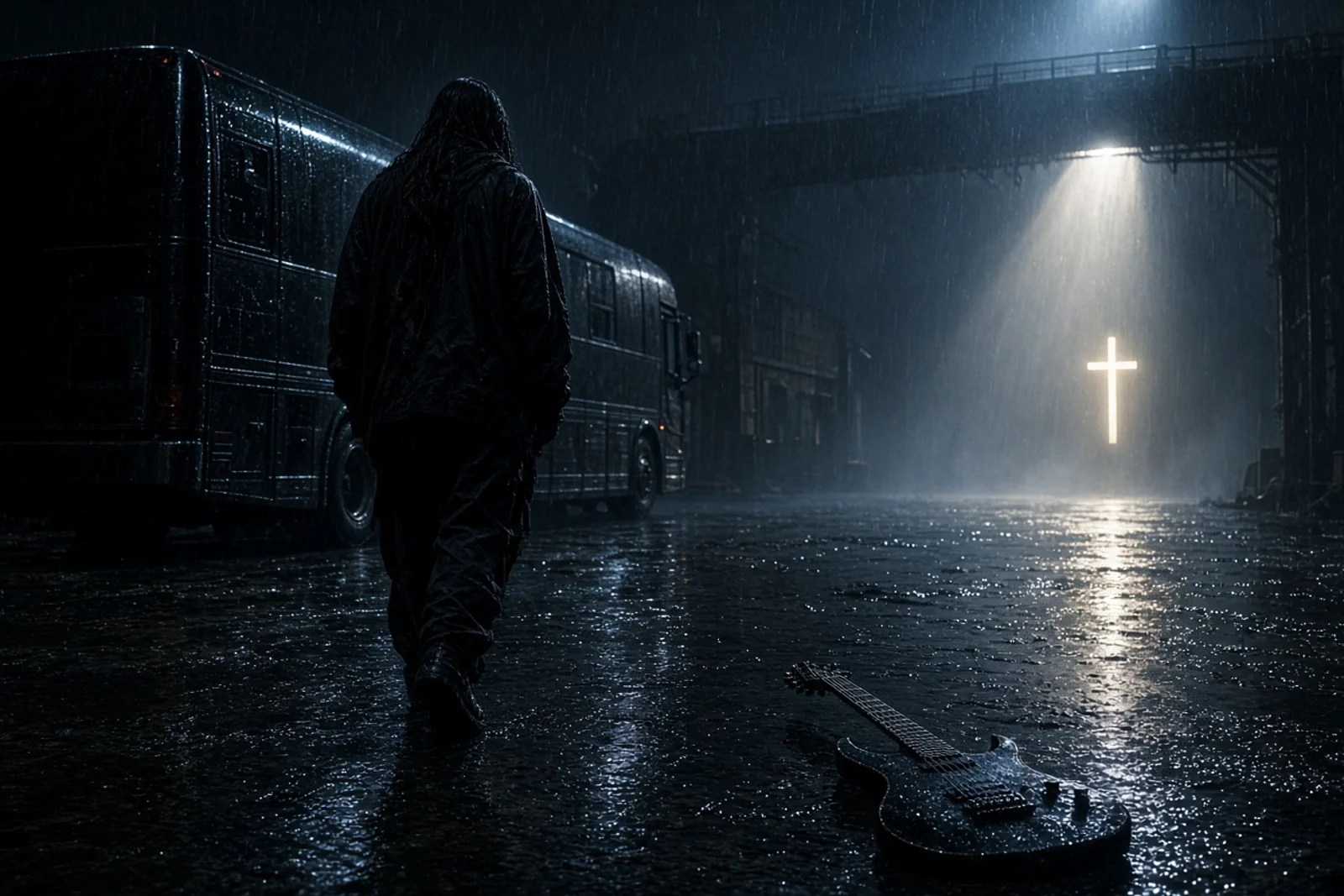
The radio station parking lot sat empty except for two cars when we pulled in. Brian killed the engine and stared at the brick wall ahead like it might answer something. I had known him since the first Korn shows in Bakersfield clubs, the ones where the floor shook and the crowd pressed so close you could smell the sweat on the mic stands. Back then the four of them moved like they owned every stage they touched. Now the same hands that once gripped a guitar neck until the calluses split were resting on the steering wheel, still.
He opened the door without saying much. Inside the studio the air smelled of old coffee and carpet cleaner. The host had already queued the segment. Brian sat down, put the headphones on, and waited for the red light. When it came on he leaned forward and told the listeners he was leaving the band. He said the words plainly, the way a man sets down a heavy box he has carried too long. The station phone lines lit up before he finished the sentence.
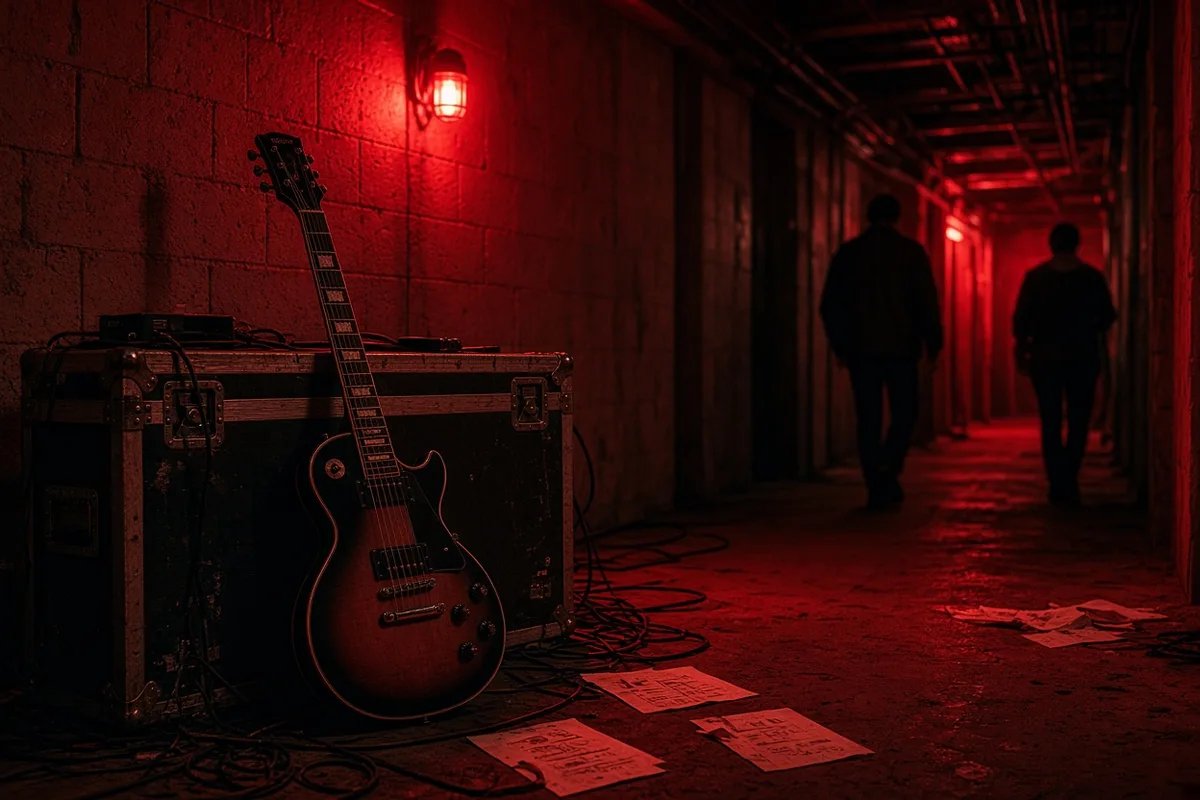
After the interview we drove back through town without the radio on. Brian mentioned the church down on Coffee Road. He said he would stand in front of the congregation that coming Sunday and explain the rest. I dropped him at his place and watched the porch light come on. The house looked smaller than I remembered, the same one where the band used to rehearse in the garage before the first record deal.
Two nights later the phone rang past midnight. Brian’s voice sounded thin. He had been in the closet again, the one off the bedroom where he kept the small mirror and the folded bills. He told me he had stopped with the straw halfway to his face and spoken out loud to someone he could not see. The words were simple. He asked for the addiction to leave so his daughter would have one parent left. Then he threw the remaining bags into the trash and walked outside until the sky turned gray. By the end of that week the craving had loosened its hold enough that he could sleep through the night without shaking.
The following Sunday the Valley Bible Fellowship lot filled early. People stood in the aisles and along the back wall. Brian walked to the front without notes. He spoke for nearly an hour, describing the years of touring and the way the money and the managers had begun to steer the set lists. He mentioned the song his daughter had sung at five years old and how the words had landed on him like a door slamming. When he finished he asked the congregation to pray with him. The room stayed quiet except for the sound of people shifting in their seats.
Outside afterward the February air still carried a chill off the fields. Brian shook hands with people he had not seen since high school. One of them pointed to the fresh ink on his neck, the verse from Matthew. He said it reminded him every morning that the load did not have to stay on his shoulders. A few of the younger kids asked about the solo recordings he had started. He told them the songs would be different now, that the anger could stay in the music but the hopelessness did not have to follow it home.
Back at his house the boxes of Korn merchandise sat stacked by the garage door, waiting to be moved. He kept one guitar, the one he had used on the earliest demos, and packed the rest. The band statement had already gone up on the website. The other members wrote that they respected the choice and hoped he found what he was looking for. No one argued in public. The new album they were tracking would move forward without him.
By spring he had set up a small studio outside Phoenix. The desert light came through the windows at odd angles and the air stayed dry enough that the strings held tune longer. He worked on the tracks alone most days, stopping when the sun dropped behind the mountains. Letters arrived from fans who had heard the radio interview. Some asked how he could walk away from everything the band had built. He answered the ones that came with return addresses, always the same line about the happiness that could follow the anger.
The daughter started school in a new district. She no longer heard the old lyrics drifting from the living room at night. Brian kept the tattoo covered most days under a collared shirt, but the words stayed visible when he reached for a cable or adjusted a mic stand. On the rare nights he drove back to Bakersfield he passed the old club where the first shows had happened. The building still stood, though the sign had changed twice since then.
One evening the phone rang again. It was one of the managers asking if he would consider a guest spot on the next tour, just one song, no pressure. Brian thanked him and said no. After he hung up he walked out to the studio and turned on the recorder. The first notes came out slower than anything Korn had ever played, but they held steady. He left the track running until the tape ran out, then rewound it and listened once before shutting off the lights.
The next morning the phone stayed silent while he sorted through a box of old four-track tapes from the late nineties, the ones labeled in black marker with dates like March 12 1996 and July 4 1997. He threaded one onto the machine and listened to the raw guitar tracks for “Blind” before the vocals were added, then ejected it and labeled a new reel with the date February 28 2006. By March he had booked time at a small facility off Indian School Road in Phoenix and laid down the first three songs for what became the Save Me from Myself record, working with engineer Ralph Patlan who had previously tracked drums for the 2002 Korn release Untouchables. The sessions ran from ten in the morning until the heat outside hit one hundred and five degrees, at which point he would shut the board down and sit on the concrete step outside drinking water from a plastic jug.
By the end of 2007 he had finished the manuscript for the memoir that carried the same title, typing the final chapter in a rented house in Scottsdale where the air conditioner ran twenty-four hours a day. The book described the night in the closet with the mirror and the exact words he spoke to the empty room. On September 9 2008 the album entered the Billboard 200 at number seventy-five, selling eleven thousand copies in its first week according to Nielsen SoundScan. He played three club shows that fall in Tempe, Mesa, and Chandler, using a seven-piece band that included drummer Josh Freese on three tracks. When I drove down from Bakersfield to see the Mesa set he handed me a set list printed on plain copy paper that listed “Save Me from Myself” as the closer, followed by the note “no encores tonight.”
In 2010 his daughter Jennea turned sixteen and started at Horizon High School in Scottsdale. He drove her each morning in a 2004 Ford Explorer that still had the Korn sticker on the rear window, though he had scraped most of the adhesive off with a razor blade the previous summer. That same year he began attending services at the Dream City Church on 32nd Street, where pastor Tommy Barnett invited him to speak to the youth group on a Wednesday night in October. He told the room of two hundred teenagers the exact amount of money he had spent on methamphetamine between 2003 and 2005, a figure he later repeated in a 2011 interview with CCM Magazine as “more than two hundred thousand dollars in cash and product.”
By spring 2012 he had formed the band Love and Death and recorded the album Between the Lines at a studio in Franklin, Tennessee, with producer Jasen Rauch. The first single “The Abandoning” was released on April 17 2012 and reached number twenty-eight on the Christian Rock chart. He kept the Bakersfield house but spent most weeks in Arizona, driving back only for holidays and for the occasional visit to the old Valley Bible Fellowship building on Coffee Road, where the congregation had grown from eight hundred to more than three thousand since his 2005 appearance. One Sunday in 2014 he stood at the same podium and read from the same Matthew verse that was inked on his neck, this time to an audience that included several people who had been in the original crowd.
The call from Korn came in late 2012 while he was mixing the Love and Death record. Jonathan Davis left a message on the studio line asking if Brian would consider playing guitar on the next Korn album and touring in support. The record, The Paradigm Shift, was tracked at the Steakhouse Studio in North Hollywood in January 2013. Brian’s guitar parts appear on nine of the eleven tracks, including the lead line on “Never Never” which was released as the first single on August 13 2013. He rejoined the band for the subsequent world tour that began in South America in October 2013 and continued through 2014 with stops at the Download Festival in England and the Rock in Rio festival in Brazil, where the band played to an estimated one hundred and eighty thousand people on September 28 2013.
When I visited the Phoenix studio again in 2018 the walls were lined with framed gold records from both Korn and Love and Death. He was working on a new solo track that afternoon, the same seven-string guitar from the early Korn demos plugged into a Mesa Boogie head that had belonged to the band’s original guitar tech. Outside the window the desert stretched flat to the mountains, and he kept the recorder running for forty-seven minutes without stopping, the same way he had done on the night the manager called about the guest spot. He still covered the neck tattoo with a collared shirt when he left the house, but the verse remained visible whenever he reached across the console to adjust a fader or cue a playback.
The studio door stayed open that afternoon while the tape kept rolling, and Brian adjusted the gain on the board without looking up from the meters. In 2019 he flew to Los Angeles for tracking sessions on Korn’s album The Nothing at the infamous Houdini Estate, where the band cut basic tracks over six weeks in the main room that once belonged to the magician. He added rhythm layers on nine songs, including the title track, and stayed through the mixing dates at Henson Recording Studios on Highland Avenue when the final masters were approved on July 12. The record entered the Billboard 200 at number eight the week of September 23, selling forty-one thousand copies according to Nielsen SoundScan, and the first single “You’ll Never Find Me” reached number one on the Mainstream Rock chart.
By early 2020 the tour dates for The Nothing had been booked across Europe and North America when the venues began canceling. Brian stayed in the Phoenix house through the shutdown months, converting the garage into a vocal booth with an AKG 414 microphone and a Universal Audio interface. He recorded remote guitar overdubs for Love and Death’s second album Perfectly Preserved, which Jasen Rauch produced at his home studio in Franklin and which was released on February 12 2021 through Earshot Media. The lead single “Down” charted at number seventeen on Christian Rock radio, and the band shot the video on a closed soundstage in Nashville using only the five core members.
In September 2021 he returned to Bakersfield for the first time in four years to visit the old Valley Bible Fellowship building on Coffee Road, now expanded to a four-thousand-seat auditorium. Pastor Ron McIntosh asked him to address the Wednesday night men’s group of one hundred and forty attendees. Brian spoke for forty minutes about the exact sequence of events on the night he left the mirror on the closet floor, repeating the same sentence he had used in the 2008 memoir: “I asked God to take the craving because my daughter needed a father who could stay awake past sunrise.”
The Korn reunion shows resumed in 2022 with a run of amphitheater dates that opened June 10 at the Ruoff Music Center in Noblesville, Indiana. Brian’s seven-string Ibanez, the same model he had used on the 1994 demo of “Blind,” was flown in a separate case and tuned to A-standard for the new material. At the Rocklahoma festival on September 3 the band played to twenty-eight thousand ticket holders, and the set list included four songs from The Nothing alongside the older catalog. After the show he signed autographs at the merch table until security cleared the area at one-thirty in the morning.
His daughter Jennea graduated from Arizona State University in May 2023 with a degree in digital media. Brian attended the ceremony at Desert Financial Arena wearing a dark sport coat over a collared shirt that covered the neck tattoo. Later that month he booked three days at Sweetwater Studios in Fort Wayne to finish a solo acoustic project titled The Darkest Valley, tracking twelve songs live with engineer Kevin McGrew. The EP was released independently on October 6 through his own label, and the track “Save Me from Myself (Revisited)” opened with the same guitar figure he had first recorded on the February 28 2006 reel in Phoenix.
In March 2024 Korn began pre-production for a new album at a rented house in the Hollywood Hills, where Brian laid down initial riff ideas on a portable recorder before the full band arrived. He still drove the 2004 Explorer on short trips around Phoenix, though the rear window sticker had been completely removed years earlier. On weekends he attended services at Dream City Church, where he sometimes helped set up the youth room chairs before the service started.
One afternoon in late 2024 he stood at the console in the Phoenix studio and reached across to punch in a new track. The verse on his neck showed clearly under the rolled sleeve of his work shirt as the meters moved with the incoming signal. Outside the window the light had already begun to shift toward the mountains, and the recorder kept running without interruption.