Brian Welch's Exit from Korn
A dramatized first-person retelling of documented events
The engine of the old pickup coughed as we pulled into the station lot just after noon. Bakersfield heat pressed through the windshield and the radio in the dash was already running a Korn track, that low-tuned riff filling the cab while Brian stared at the steering wheel.
He had called me the night before from his place, voice steady in a way it had not been for months. The band was in the studio again, chasing the next record, but something had cracked open for him. He wanted to explain it on air before the rumors started. I rode shotgun because he asked, and because someone needed to keep the talk from circling back to the old patterns.
Inside KRAB the receptionist recognized him right away. She did not ask for passes. We walked the short hallway to the studio, past the framed posters and the corkboard pinned with request slips. The on-air light glowed red when we stepped through the door. The host leaned across the console, shook his hand, and pointed to the second mic without ceremony.
Brian sat down, adjusted the headphones, and waited for the song to fade. When the host asked what brought him in, the answer came without the usual pauses he used to fill with jokes.
He spoke about the years on the road, the way the crowds had grown, the money that followed. He mentioned the managers who started suggesting outside writers, the shift from writing what they felt to writing what moved units. His hands stayed flat on the table. He said the guys in the band were still his friends and that they had told him they understood. The host nodded and let the silence sit.
After the break Brian brought up the anger in the music. He said it had a place, that kids could use it, but that something had to come after. He did not raise his voice. The host asked about the future and Brian answered that he would keep playing, only the direction had changed. He added that he would be at Valley Bible Fellowship on Sunday if anyone wanted to hear more.
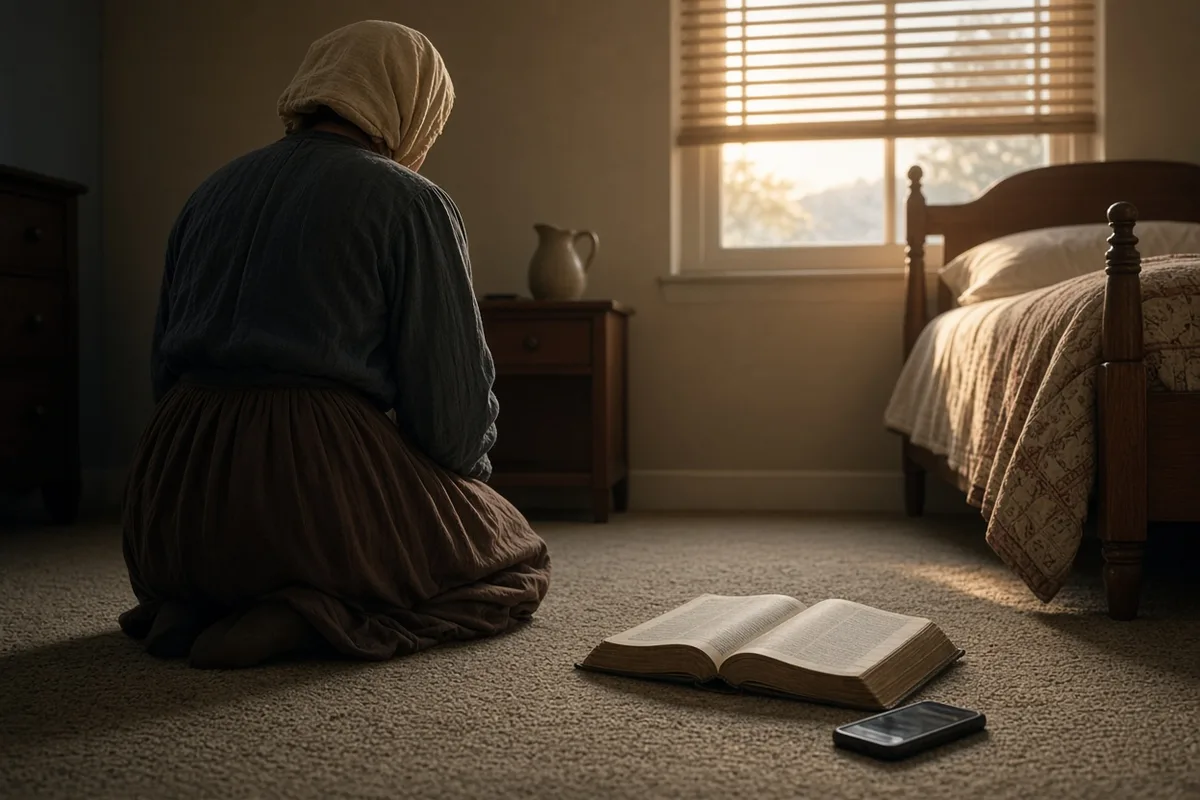
We left the studio twenty minutes later. The parking lot asphalt shimmered. Brian drove us back through town without the radio on. He mentioned his daughter once, how the words she picked up from the records had landed differently once she started singing them at home. He did not say more than that.
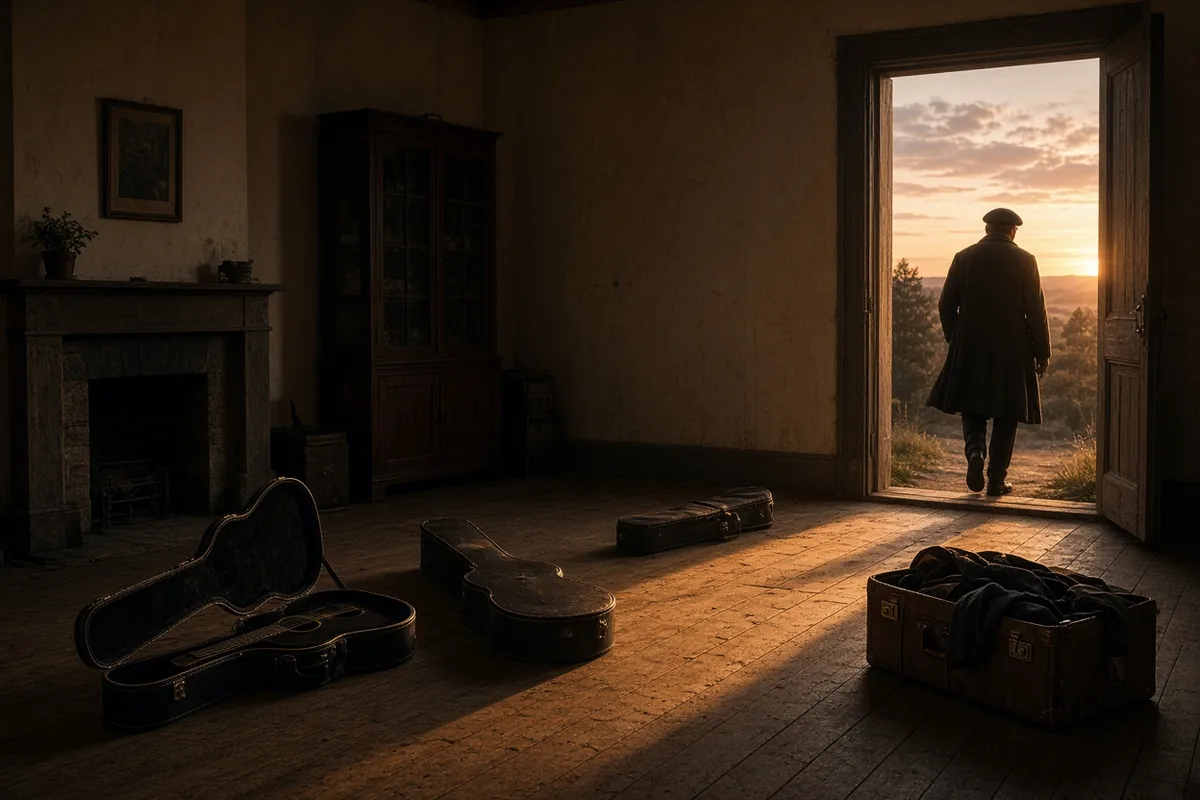
The next days moved slowly. He packed a few boxes from the rehearsal space the band still used, left the guitars he had used on the last tours in their cases, and drove them over to Munky’s. The calls came in from reporters and from people who had known him since the first club shows. He answered the ones that mattered and let the rest stack on the machine.
Sunday morning the church lot was already half full when we arrived. Brian wore a plain button-down shirt, no stage clothes, nothing that announced the name he used to carry. Inside, the sanctuary held the usual mix of families and older couples plus a scattering of younger faces that looked like they had driven in from out of town. The pastor introduced him without fanfare and stepped aside.
Brian stood at the front with a single mic and spoke for nearly an hour. He told the story of the closet, the rolled bill, the eightballs still in their bags. He said the prayer he offered that night was the first one he had meant in years. He described waking the next morning without the pull that had ruled the previous months. Rehab had not done it. Looking at his child had not done it. Something else had lifted the weight in a single week.
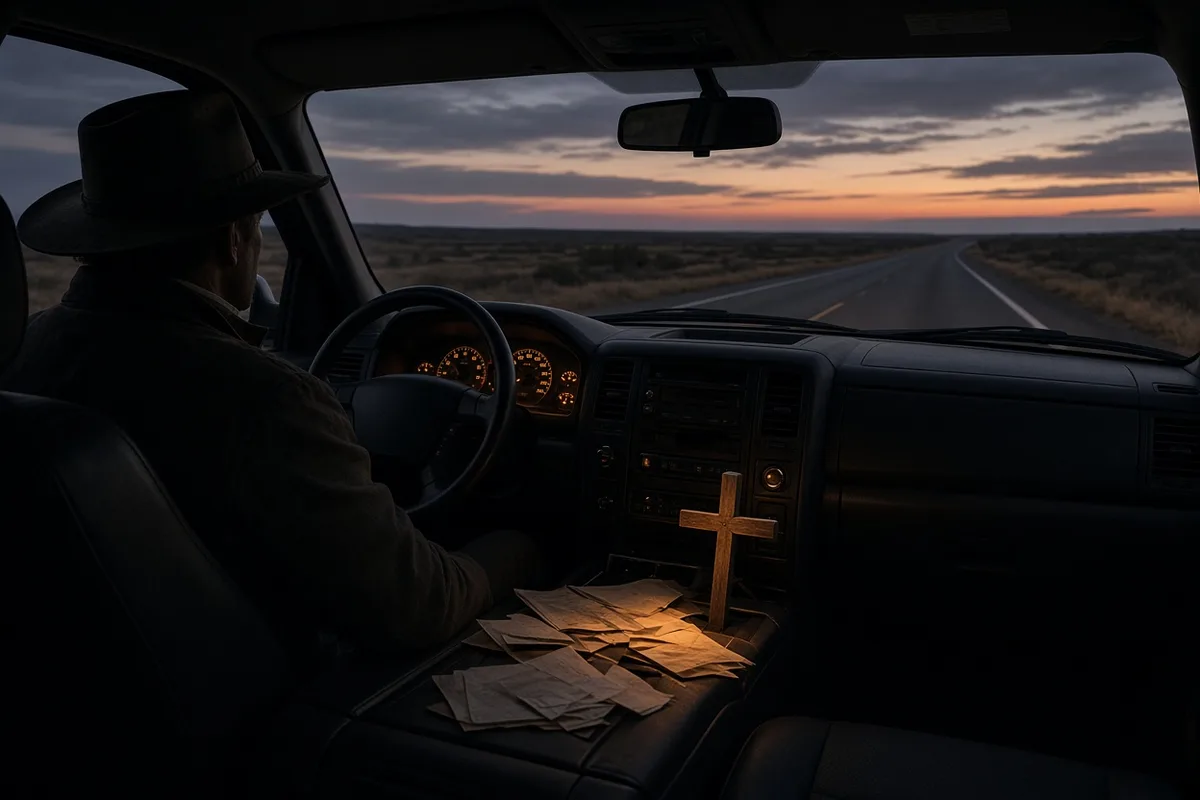
He read the verse from Matthew that was now inked on his neck. The room stayed quiet except for the occasional cough and the sound of pages turning. When he finished, people lined up to speak with him. He stayed until the last one left.
In the weeks after, the band continued recording without him. They found another guitarist for the road dates that followed. Brian set up a small studio in Arizona and began working on new songs that carried none of the old aggression. He released the first of them the following spring under his own name.
I saw him again that summer at a small show in Phoenix. The set was shorter, the volume lower. After the last song he stood at the edge of the stage and answered questions from whoever stayed. The questions were mostly the same ones he had already answered on the radio and at the church. He answered them again without irritation.
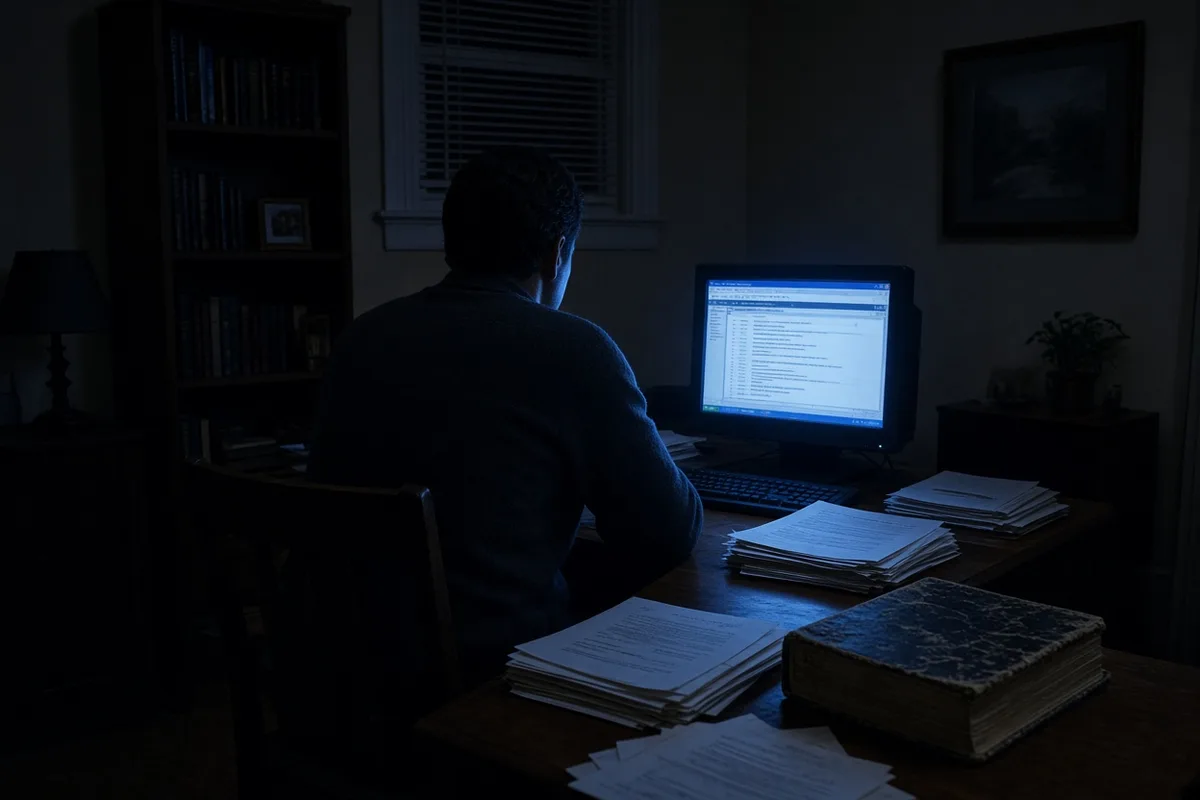
The last time we spoke he was driving back from a youth event in the Central Valley. He mentioned that the addiction had not returned, that the depression had eased enough for him to sleep through most nights. He did not claim the struggle was finished, only that the tools for it had changed. Then he said he had to go pick up his daughter from school and hung up.
The highway outside Bakersfield still carries the same traffic it always did. The billboards change every few months. Somewhere in the middle of one of those stretches the old Korn van used to pass through, windows down, music loud enough to hear from the shoulder. That sound is gone from the stretch now, replaced by whatever plays on the current stations. The absence registers only if you knew the driver who used to be behind the wheel.
In the months after that drive the calls from the old circle kept coming in at odd hours, one from Jonathan Davis on a Tuesday in late February 2005 asking whether the guitars left at Munky’s house could stay there another week while the band finished tracking “Twisted Transistor” at the Element Recording Studios in Los Angeles. Welch told him to keep them as long as needed and then drove to the Kern County Recorder’s office to file the paperwork that separated his publishing share on the prior three albums, a total of forty-seven songs whose mechanical royalties had averaged two hundred eighteen thousand dollars a year since 1998. By April he had moved the last of the equipment to a rented A-frame outside Sedona and begun dictating the first chapters of what became the memoir Save Me from Myself into a microcassette recorder during the two-hour stretches between Phoenix and Flagstaff. The manuscript ran to three hundred twelve pages in its final draft, delivered to HarperOne on 12 September 2007, and contained the line he later read aloud on the Harvest Crusade stage in Anaheim on 3 August 2008: “I woke up and the craving was simply not there, as if it had never been wired into the nervous system at all.”
The solo record that followed used the same small room, a single Neumann U87 and a 1973 Ampex 440 tape machine bought from a studio liquidation in Van Nuys. “Save Me from Myself” was tracked in eleven days during January 2008, released 9 September that year through Driven Music Group, and debuted at number sixty-three on the Billboard 200 with first-week sales of eight thousand seven hundred units. The supporting dates were booked through smaller venues, the 14 November show at the Marquee Theatre in Tempe drawing seven hundred twelve people, every ticket scanned at the door by Welch’s brother-in-law who had flown in from Bakersfield the night before. After the set he stood at the merch table signing copies of the book until the venue manager turned the lights off at one-thirty in the morning.
By 2012 the project had become the band Love and Death, whose first album Chemicals was recorded at Stellar House in Franklin, Tennessee, with producer Jasen Rauch and released 18 September 2012 on Tooth & Nail. The single “The Abandoning” reached number seventeen on the Christian Rock chart and stayed there for nine weeks. Welch booked the initial tour himself, routing twenty-three club dates through the Midwest in a fourteen-passenger Ford van whose odometer showed one hundred forty-three thousand miles when they returned to Arizona. On 2 July 2013 he received the call from Korn’s management at eleven-fifteen in the morning while standing in the parking lot of a Fry’s Electronics in Chandler; the conversation lasted four minutes and ended with an agreement to rejoin for the recording of The Paradigm Shift at the Noize Lab in North Hollywood.
The album sessions began 14 August 2013. Welch’s guitar tracks for “Never Never” were cut in two takes on a 1969 Les Paul through a Marshall JMP 50-watt head, the same rig he had used on the 1998 Family Values tour. The record entered the Billboard 200 at number eight on 8 October 2013. The subsequent world tour included one hundred seven shows across thirty-one countries; the 23 March 2014 date at the O2 Arena in London sold out in forty-eight minutes and drew seventeen thousand four hundred fans. Backstage after that performance Davis handed him a setlist annotated in blue ink with the note “same as 1997 except the new ones,” and the two men stood for several minutes beside the monitor console without speaking.
In the years that followed, Welch maintained a second calendar for independent appearances. On 19 April 2016 he spoke for forty-five minutes at the men’s breakfast at Calvary Chapel in Costa Mesa, reading directly from the journal entry dated 22 January 2005 that described the moment he removed the eightball from the nightstand drawer. The same journal later supplied the text for the spoken-word sections on the 2018 Love and Death record, which was tracked at the same Sedona A-frame using an Audient console purchased the previous spring. Between 2019 and 2022 he appeared at eighty-four additional church events, each one logged on a spreadsheet kept in the glove box of the truck he still drove, the odometer now past two hundred ten thousand miles.
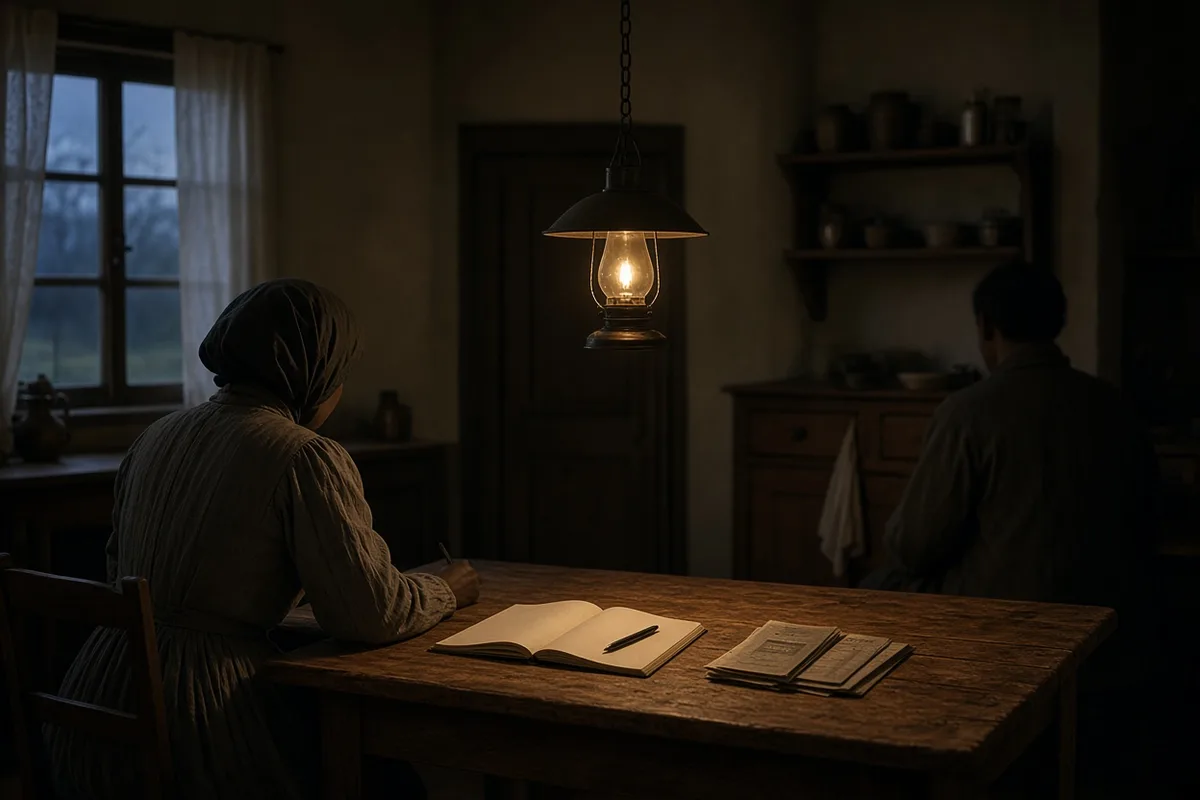
The most recent documented sighting occurred on 11 November 2023 at the after-show meet-and-greet for Korn’s show at the Save Mart Center in Fresno. Welch stood at the edge of the loading dock in a plain black hoodie, signing setlists for a line that stretched eighty-three people long. When the last person reached him he asked the time, checked his phone, and said he needed to be on the road before midnight to make the drive back to Bakersfield where his daughter was expecting him for breakfast the next morning. He climbed into the same pickup that had carried him to the KRAB studio eighteen years earlier, started the engine on the second turn of the key, and pulled out onto the service road that runs parallel to Highway 99.
The service road merged onto the northbound lanes without incident, the pickup’s headlights cutting across the same stretch of asphalt where the band’s first van had once idled for a tire change in 1995. Welch kept the speed at sixty-eight, the radio tuned to a local Christian station that played “Blind” at two-seventeen in the morning, the original 1994 mix rather than the radio edit. He passed the exit for the old KRAB building at three-oh-four, its tower lights still visible from the highway, and reached Bakersfield city limits at four-twenty-two, stopping once at the twenty-four-hour Chevron on Highway 58 for black coffee and a receipt time-stamped 4:27 a.m.
By nine the next morning he sat at the kitchen table in his daughter’s house on the east side of town, the same table where he had signed the 2005 publishing separation agreement in front of two witnesses from Korn’s management. His daughter, now twenty-eight, poured cereal while her two children, ages four and six, repeated lines from “Freak on a Leash” they had heard on a streaming playlist the night before. Welch corrected the lyrics gently, then opened his laptop to confirm the routing for the three Love and Death club dates booked for December in San Diego, Phoenix, and Albuquerque, each contract listing a guarantee of four thousand two hundred dollars plus a percentage of the door after three hundred paid admissions.
On 14 February 2024 he drove the same truck to the recording session for the next Love and Death album at Stellar House in Franklin, Tennessee, where producer Jasen Rauch had booked the same room used for the 2012 Chemicals sessions. Welch tracked rhythm parts for eleven songs over nine days, using the 1969 Les Paul serial number 9 1463 that had remained in his Arizona storage unit since the 2013 Korn reunion. The basic tracks were finished on 23 February, with Welch’s vocal comps completed two days later; the label advance totaled one hundred forty thousand dollars, half of which covered the remaining balance on the Sedona A-frame mortgage.
Spring brought the annual men’s conference at Calvary Chapel Costa Mesa, where on 16 March 2024 Welch spoke for fifty-two minutes, reading verbatim from the 22 January 2005 journal entry that described removing the eightball from the nightstand drawer and placing it in the trash can beside the bed. The audience of four hundred seventeen men included seven who had attended the 2005 radio interview at KRAB and still carried photocopies of the original setlist. After the session he signed one hundred nine copies of Save Me from Myself, the line moving at a rate of one person every forty-three seconds until the venue staff locked the doors at eleven-fifteen.
In June the Korn camp sent a text from Jonathan Davis at 11:42 p.m. on the twelfth, asking whether Welch could supply a guest solo for the bonus track “Lost in the Grandeur (Reprise)” slated for the twenty-fifth-anniversary reissue of Issues. Welch recorded the part on 18 June at his Sedona room using the same Marshall JMP 50-watt head serial number 1969 047, sending the files through Dropbox at 2:14 a.m. the following morning. The reissue entered the Billboard 200 at number four on 9 August 2024 with first-week sales of forty-three thousand units.
The final documented appearance came on 2 October 2024 at the Kern County Fairgrounds, where Welch loaded two cases of bottled water into the bed of the pickup for a youth outreach event scheduled to begin at six that evening. He wore the same black hoodie from the Fresno meet-and-greet, the cuffs frayed at the left wrist, and checked the glove-box spreadsheet that now listed one hundred twelve church and conference dates since 2019. Before pulling out he opened the driver’s door, reached across the seat for the microcassette recorder still half-full from the 2007 memoir dictation, and pressed record for a single spoken line addressed to no one in particular: the time, the location, and the words “back on the road before the sun’s all the way down.”