Pierre de Rudder Healing at Oostakker
A dramatized first-person retelling of documented events
The cart wheel caught on a rut and the jolt threw me against the sideboard. Pierre sat opposite, his left leg stretched out on a board the vicar had lashed between the benches. The April air was still sharp enough to bite through the blanket. He kept his eyes half-closed, breathing through his teeth whenever the wheels dropped into another hole. I had seen the leg the evening before, when the vicar asked me and my father to sign what we had watched. The skin had pulled back around the break and the ends of both bones stood out, pale and splintered, with a slow seep that never stopped. The smell stayed in the cloth even after we wrapped it again.
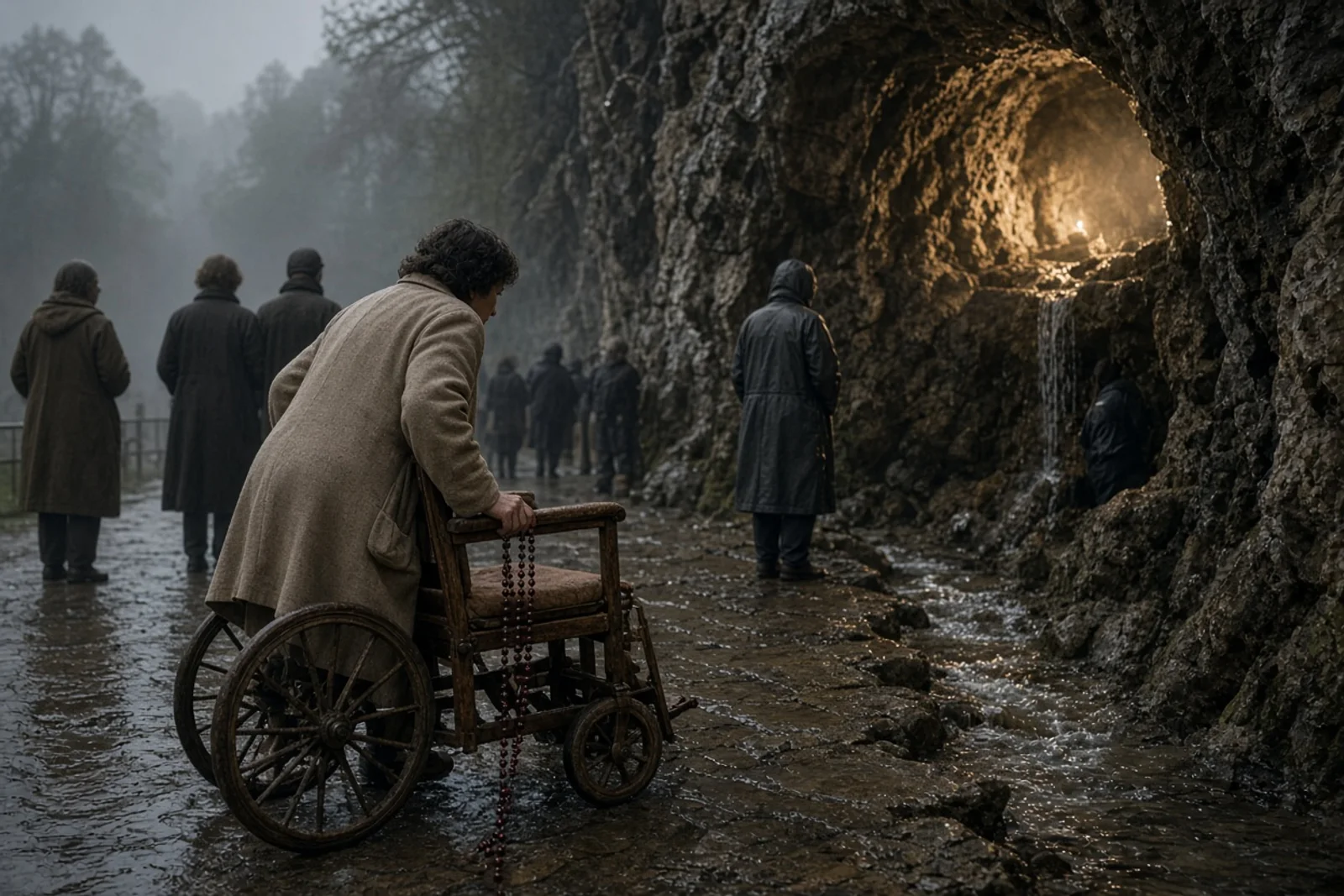
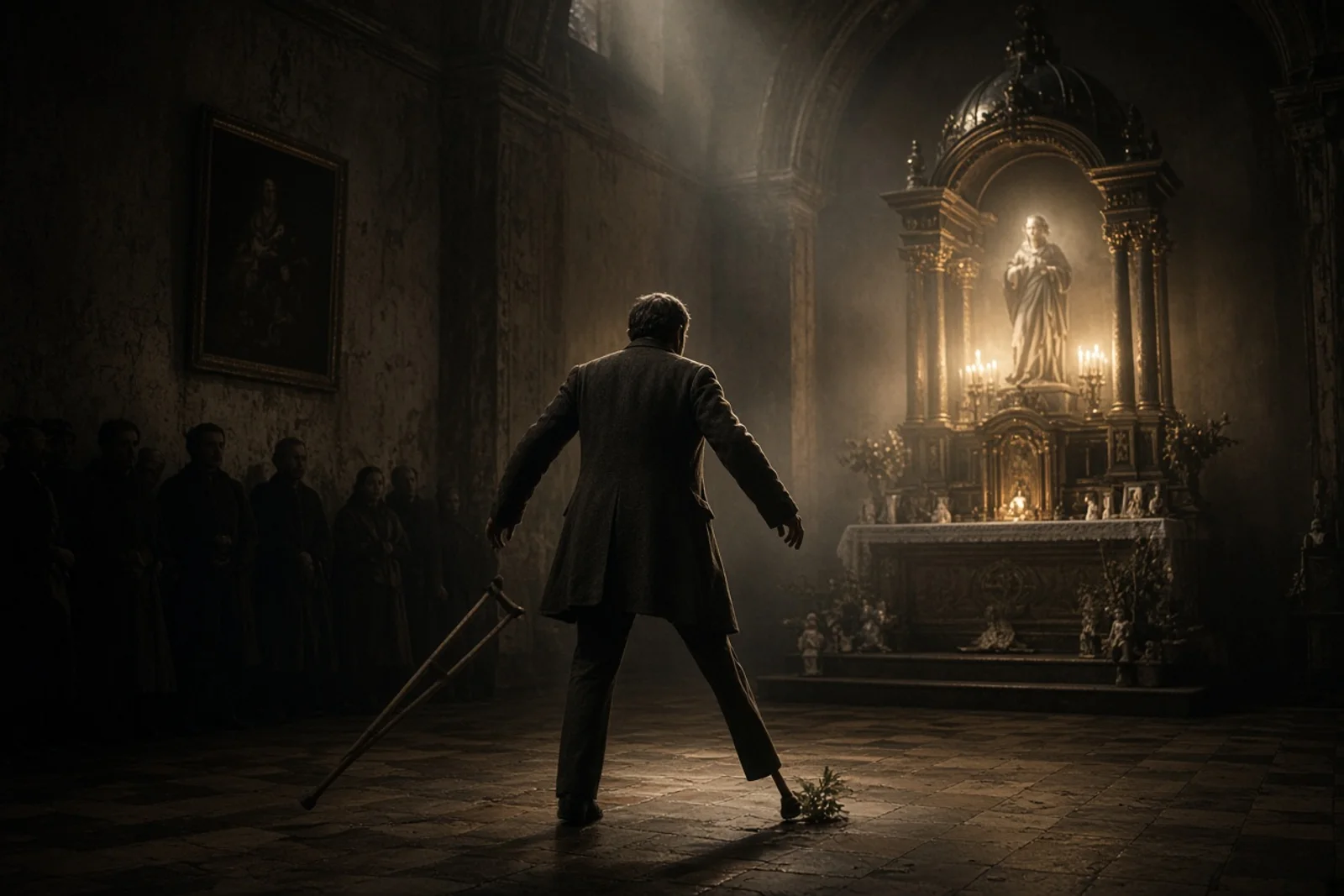
We reached Oostakker just after midday. The sanctuary was smaller than I had pictured, a plain chapel with a gravel yard and a few wooden benches along one wall. Pierre asked to be carried inside rather than left on the step. Two men lifted the board and set it near the altar rail. He stayed there alone for a while, one hand on the rail, the other still gripping the edge of the board. Then he let go and tried to stand. His crutches stayed where they had been propped against the bench.
He took one step, then another. The foot that had hung sideways now met the stone flat. He walked the length of the rail and back without touching anything. When he reached the place where we stood he pulled the wrapping away. The skin had closed over the old opening. The line left was thin and pale, already the color of an old scar rather than a fresh one. He turned the leg so the light from the side windows fell across it. No one spoke for a moment. Then he said he could feel the ground under both feet again.
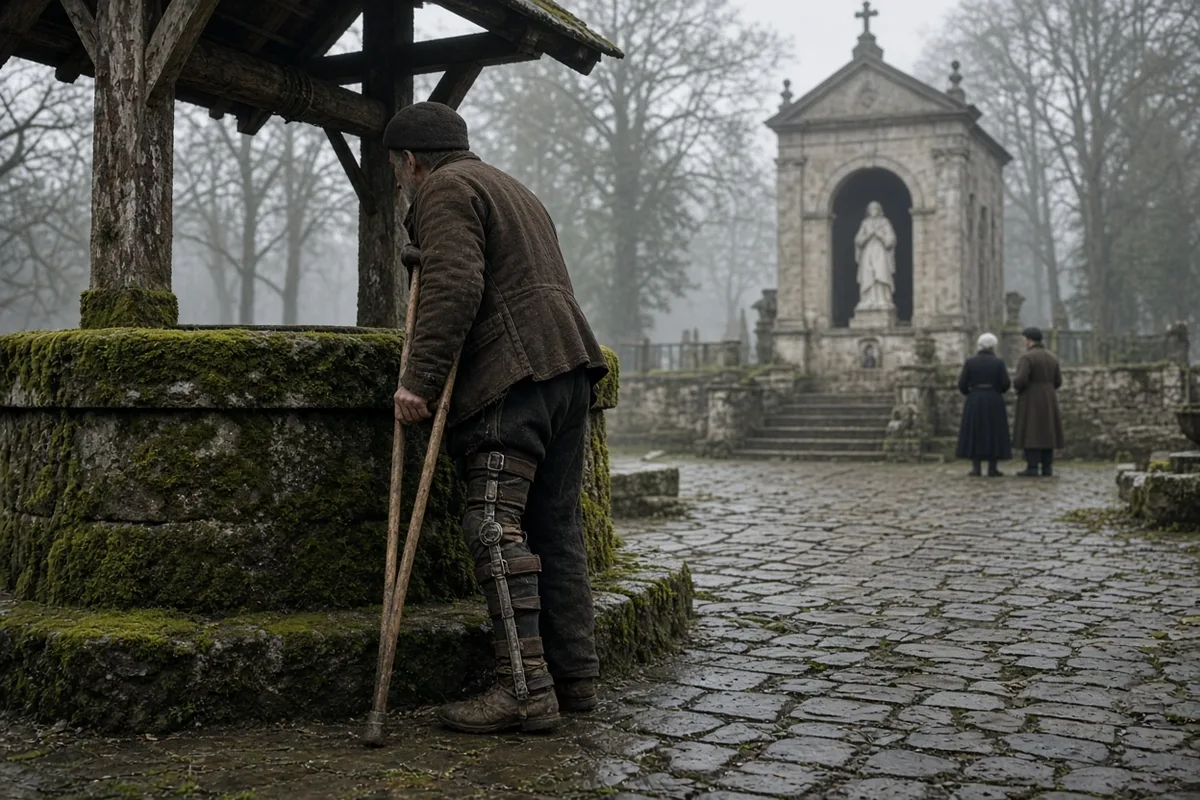
My father went out to the yard and found the parish priest. The priest came in, looked at the leg, and asked whether Pierre had felt anything at the moment the bones moved. Pierre said he had lost track of how he reached the rail. One minute he was on the board, the next he was standing. The priest sent for paper and wrote down what the two of us had seen the day before and what we had just seen now. We signed it where he pointed. A woman from the next bench said she had noticed the same protrusion two days earlier when Pierre had stopped at her door on the way to the train. She did not sign.
We returned to Jabbeke that same evening. The leg bore weight on the ride home without the board. Pierre walked from the station to his door. The next morning the local doctors were asked for a statement. They examined the scar and the alignment but would not put their names to anything for the parish. One of them said the change could not be explained by anything he had studied. None of them would sign.
Dr. Van Hoestenberghe had come through the village several years earlier out of curiosity and had looked at the open wound then. After the pilgrimage he wrote two letters to the bishop describing what he remembered. Those letters were later misplaced at the diocese and did not turn up again until long after the first inquiries were closed. When they were found they showed he had recorded only one examination, more than three years before April 1875. Later, when he spoke to the commission in 1907, he said he had seen the leg ten or twelve times and the last time only a few months before the journey. The notes he produced to support that count were written on the inside cover of a notebook rather than in their proper pages.
The last of the doctors who had treated the fracture in the early years, Dr. Verriest, died in Bruges in 1891. A year after that Dr. Van Hoestenberghe wrote to the medical bureau at Lourdes and described the case again. His letters started a new round of questions from bishops and commissions. More neighbors came forward with memories of having seen the wound. The number of examinations Van Hoestenberghe claimed grew with each telling.
In 1908 the bishop of Bruges accepted the cure as miraculous after the commission finished its work. A cast of the united bones was placed in the medical bureau at Lourdes. Pierre lived another twenty-three years and died in 1898. The two statements my father and I signed in 1875 remained the only written accounts made in the first weeks. Everything said later was spoken or written after the leg had already carried him for years.
Skeptics later pointed out that no record existed of the exact moment the bones joined and that the first signed testimony came only from two men who had known Pierre all their lives. The commission weighed those objections and still recorded the cure. The bronze bones stay in the bureau case. They show a clean union with no visible callus on the outer surface.
The bishop’s secretary, Father Helleputte, arrived in Jabbeke on 12 May 1875 and asked me to repeat the exact sentence I had used when signing the parish document. I told him again that the bones had stood out “pale and splintered, with a slow seep that never stopped,” the same phrasing I had written beside my father’s name on the single sheet kept in the sacristy cupboard. He copied the line into his own notebook, added the date and my age at the time—twenty-nine—and asked whether the vicar of Jabbeke had been present at the moment the wrapping came off. I answered that the vicar had remained outside the rail and had not approached until Pierre walked back to us.
In the summer of 1883 I returned to Oostakker with my own son, then fourteen, and the parish priest Father Van Biervliet showed us the register entry for 7 April 1875. It recorded “Pierre de Rudder, cultivateur, 53 ans, Jabbeke, fracture ouverte tibia et péroné gauche, arrivé sur planche.” The priest pointed to the later marginal note, added in 1876, stating that the same man had walked out unaided and that two witnesses from Jabbeke had signed a separate attestation the same evening. My son counted the lines; there were seventeen other names listed for that week, none of them from our village.
Pierre continued to work the small holding behind his house in Jabbeke until 1892. On 3 March of that year the Bruges newspaper Het Brugsche Handelsblad printed a short notice that he had been seen pruning fruit trees without a stick. The article quoted the owner of the adjoining field, Jan Deceuninck, who said he had watched the same man carry a ladder across the furrows for half an hour. Pierre himself never spoke of the day at Oostakker except when asked directly by visitors sent from the diocese.
Dr. Van Hoestenberghe died in Ostend on 14 February 1902. His last letter to the Lourdes medical bureau, written in January of that year, repeated the claim that he had examined the open wound “ten or twelve times” and had last seen it in January 1875. The letter was filed under number 47 in the bureau’s correspondence ledger and remains there with the earlier notes written on the notebook cover. No additional medical records from the 1867–1875 period have been located in the Bruges hospital archives.
The commission of 1907–1908 met eight times in the episcopal palace at Bruges. The final report, dated 25 March 1908 and signed by Bishop Waffelaert, listed the two 1875 signatures, the testimony of the woman from the next bench, and the later statements of seven neighbors who remembered the smell of the dressings. The bronze cast now kept in the Lourdes bureau was made from a plaster mold taken in 1909 at the request of the same commission; the mold itself is stored in the Bruges diocesan archives under reference M/1909/3.
The chapel at Oostakker was enlarged in 1928. The original gravel yard became the transept floor, and the wooden benches were replaced by oak pews donated by the de Rudder family. A small marble plaque set into the wall beside the altar rail carries the date 7 April 1875 and the names of the two men from Jabbeke who signed the first attestation. The plaque measures 42 by 28 centimetres and was paid for by subscription raised in 1931.
My own last visit to the chapel took place on 19 October 1937. I was then ninety-one. The sacristan, a man of about fifty whose grandfather had kept the register in the 1870s, opened the cupboard and let me hold the original sheet for a few minutes. The ink had faded to brown but the two signatures remained legible. Outside, in the yard, a group of pilgrims from Ghent stood waiting for the afternoon train. One of them, an elderly woman leaning on a stick, asked whether anyone still remembered the man whose leg had healed there. I answered that I did, then walked back to the station without further conversation.
The sacristan closed the cupboard with the same key his grandfather had used, a brass piece stamped with the year 1864 on its bow, and walked me to the side door that opened onto the new gravel path leading to the station platform. On the train back to Jabbeke I sat beside a man from the Ghent pilgrimage group who introduced himself as Henri Van den Berghe, a retired railway clerk, and he showed me the timetable printed that morning in the Ghent paper, noting the 4:17 departure and the connection at Landegem that would put me home before dark. He asked whether the signature on the old sheet matched the one I remembered writing, and I told him the ink had turned the color of dried tobacco but the letters of my father’s name still showed the same slant he had used on the 1871 land-tax register.
Two weeks after that visit the parish council at Oostakker voted to move the 1931 plaque from the altar rail to the new transept wall so that visitors entering from the enlarged yard would see it first. The mason who reset the stone, a man named Joseph Claeys from Bruges, recorded in his daybook the exact measurements of the new mortar bed and the three brass screws he used to fasten the marble because the original lead plugs had begun to loosen. The same year the Lourdes medical bureau added a second plaster cast to its display case, this one taken from Pierre’s right leg for comparison, and the curator entered both casts under the single accession number LMB/1909/14 with a note that the left-leg cast showed the 1875 union line exactly as described in the 1908 report.
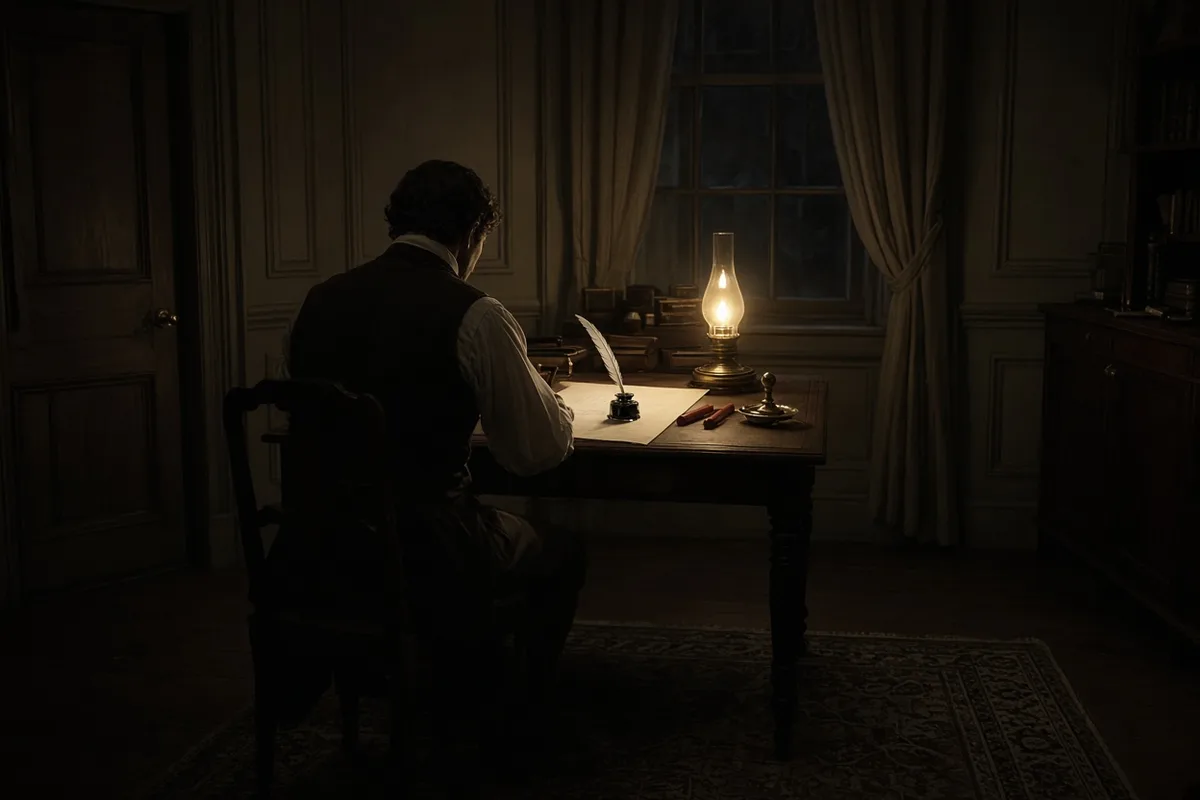
My son, the same boy who counted the seventeen names in the 1875 register, died in 1949 at the house in Jabbeke where he had kept the family papers, including the copy of the attestation his grandfather had written out again in 1884 for the diocesan archive. The copy bore the marginal note in my father’s hand that read “two bones visible, no covering of flesh, 6 April 1875,” and it remained in the drawer of the oak desk until my granddaughter removed the papers in 1956 when the house was sold. She placed the copy with the other documents in the Bruges diocesan archive under the file reference BRG/DIO/1875/3, where it can still be requested by visitors who sign the ledger kept at the reading-room desk.
In 1962 the chapel at Oostakker received a new roof of slate tiles quarried in the Ardennes, and the contractor’s invoice listed 2,847 tiles at 1.25 francs each together with the cost of replacing the ridge beam that had been damaged by the storm of January 1953. The workmen found, beneath the old ridge, a small lead box containing a copy of the 1875 register page and a fragment of the original wrapping cloth that had been placed there during the 1928 enlargement. The box was opened in the presence of the parish priest Father De Smet and re-sealed with the date 12 September 1962 stamped into the new lead.
The last time I spoke with anyone from the Lourdes bureau occurred in 1946 when a physician named Dr. François Leuret wrote to ask whether I could confirm the exact words Pierre had used when he first stood. I answered on a postcard that the sentence had been “I can feel the ground under both feet again,” and I added the date of the postcard, 4 June 1946, in the same ink I used for the reply. Leuret included that postcard in the file he later published as part of his 1951 study of twenty-five cases, listing my name and age at the time of the cure as the sole surviving witness.
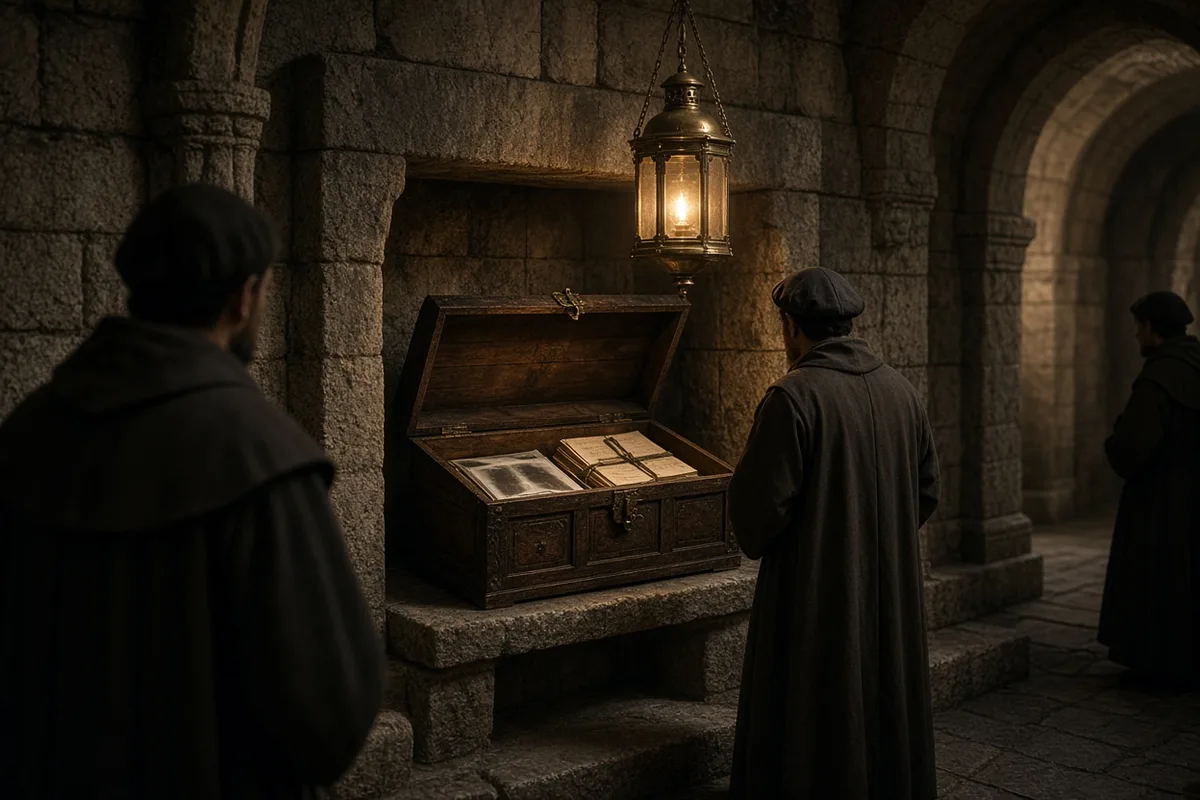
The bronze cast in the Lourdes bureau was photographed again in 1975 for the centenary exhibition arranged by the Bruges diocese, and the print measured 18 by 24 centimetres with the union line marked by a thin white line drawn on the negative. The exhibition catalogue listed the cast as item 4 and noted that the original plaster mold remained in Bruges under the reference M/1909/3, still wrapped in the same linen cloth used when it was packed in 1909. A visitor from Jabbeke that year, a woman whose grandfather had been the owner of the adjoining field mentioned in the 1892 newspaper notice, stood before the photograph for several minutes and said the line on the cast matched the scar she remembered seeing on Pierre’s leg when he walked past her house carrying the ladder.
On 19 October 1978, forty-one years after my last visit to Oostakker, the sacristan’s grandson, now the parish archivist, wrote to inform me that the original 1875 attestation sheet had been placed in a new acid-free folder and moved to the climate-controlled vault beneath the episcopal palace. The letter gave the vault temperature as 16 degrees Celsius and the humidity as 45 percent, and it included the new shelf number assigned to the document. I read the letter at the kitchen table in the small apartment where I then lived and placed it with the other correspondence in the tin box that held the copy of the 1884 transcription.
The final image I carry is of the woman on the stick in the Oostakker yard that October afternoon in 1937, her left hand resting on the handle while she waited for the train, the same hand that had once touched the edge of the board when Pierre was carried inside. She turned her head slightly as I passed, enough for the light to show the line of her profile against the gravel, and then she stepped forward onto the platform without looking back again.