Eucharistic Miracle of Chirattakonam
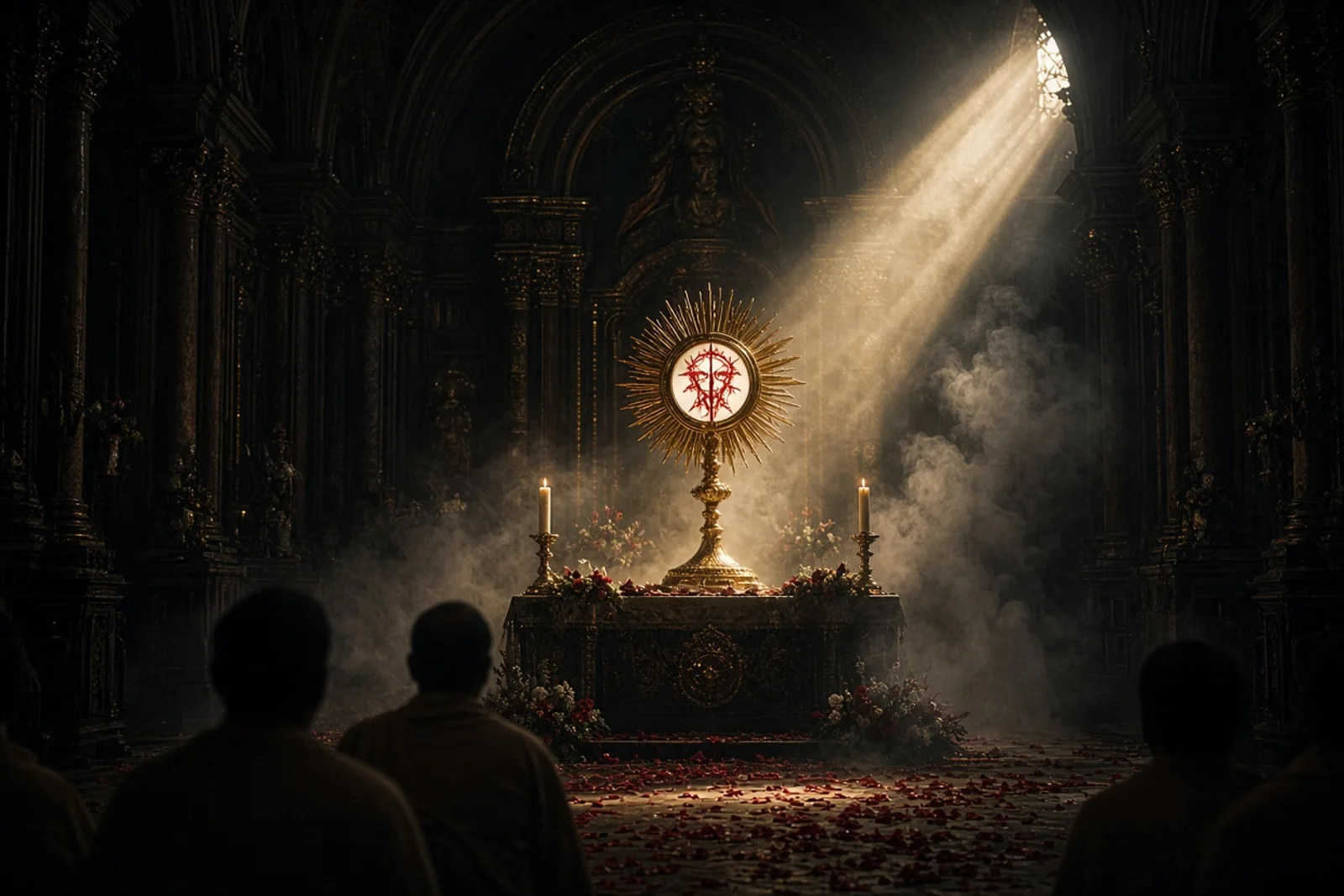
I knelt on the worn stone floor near the side aisle, the same spot I had taken every Saturday morning for years. The tabernacle door clicked open under Fr. Johnson Karoor’s hand. He reached inside, lifted the monstrance, and set it on the altar cloth. Sunlight from the high east window struck the glass and threw a pale circle across the nave.
At first the Host looked as it always had, pale and still. Then three small marks stood out on the surface, darker than the rest. Fr. Karoor stopped the prayer. He turned the monstrance slightly so those nearest could see. A woman beside me leaned forward on her elbows. No one spoke. After a minute he covered the Host again and returned it to the tabernacle. The rest of the novena continued, but the air in the church felt tighter.
I came back on Monday and Tuesday out of habit. The tabernacle stayed closed. On Wednesday Fr. Karoor said Mass and left for Trivandrum the next morning. The church felt ordinary again, just the usual morning light and the sound of the ceiling fans.
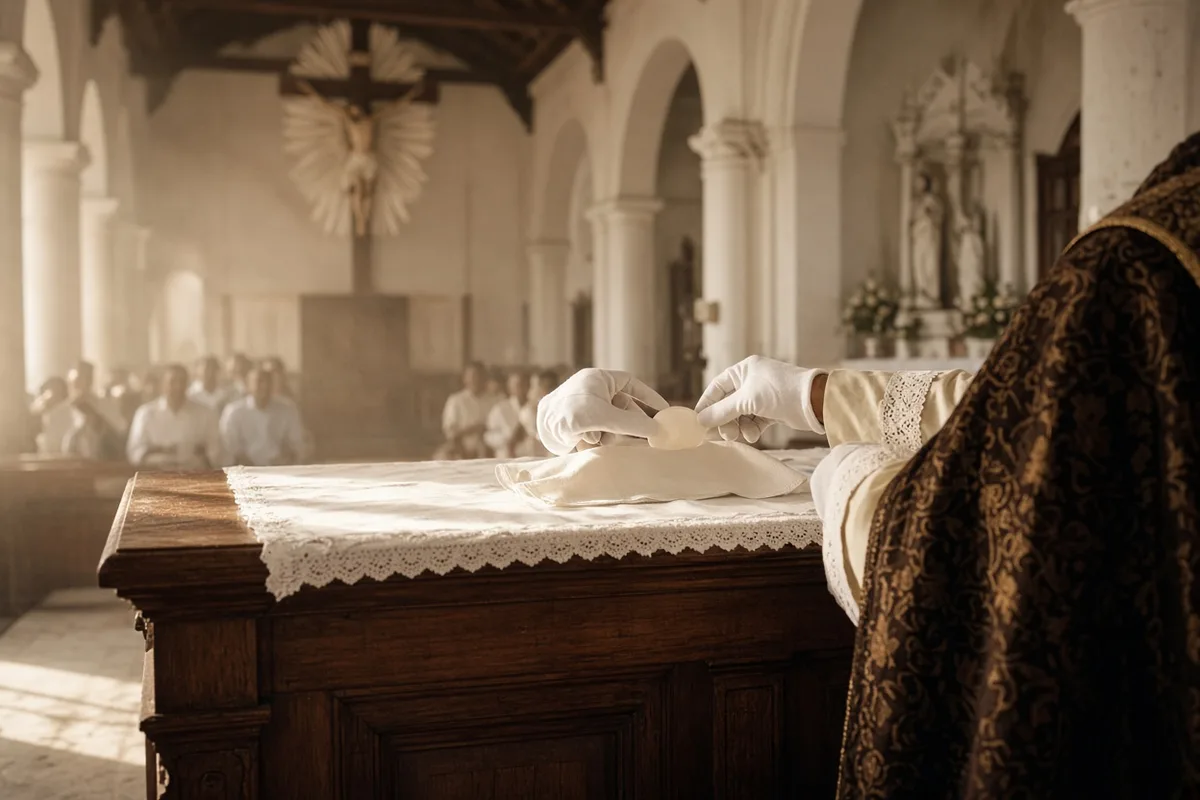
Saturday, May 5, I arrived early to unlock the side door. Fr. Karoor was already vested. He walked straight to the tabernacle, opened it, and lifted the monstrance once more. His shoulders went rigid. He set the monstrance down and stared. I moved closer without thinking. The marks had joined into the shape of a face, eyes half-closed, lines across the brow like thorns pressed flat.
Fr. Karoor’s voice shook when he asked the altar server to step forward. The boy looked once and answered without hesitation that he saw a man. Fr. Karoor told everyone to kneel. I stayed where I was, three rows back, and watched the image hold steady under the light. The longer I looked, the sharper the outline grew, the darker the shadow under the brow.
He began the reading from John’s Gospel, the part where Thomas is told to touch the wounds. His voice caught after the first paragraph. He tried to speak about it but managed only a few sentences before he stopped. Someone in the front row was already crying. Fr. Karoor wiped his own face with the sleeve of his alb and said he had to leave for Kokkodu. Before he went, he sent a boy to fetch a photographer from the market road.
The photographer arrived with two cameras and a small case of film. He set up a tripod at the foot of the altar and took the first exposures. Fr. Karoor stood to one side, hands clasped, not moving. The photographer changed rolls twice. Each time he developed a sheet in the sacristy sink, he brought it out and laid it on the table under the window. The face on the paper looked clearer than the one still inside the monstrance, the lines deeper, the eyes more distinct. By the third print the difference was plain even from where I stood.
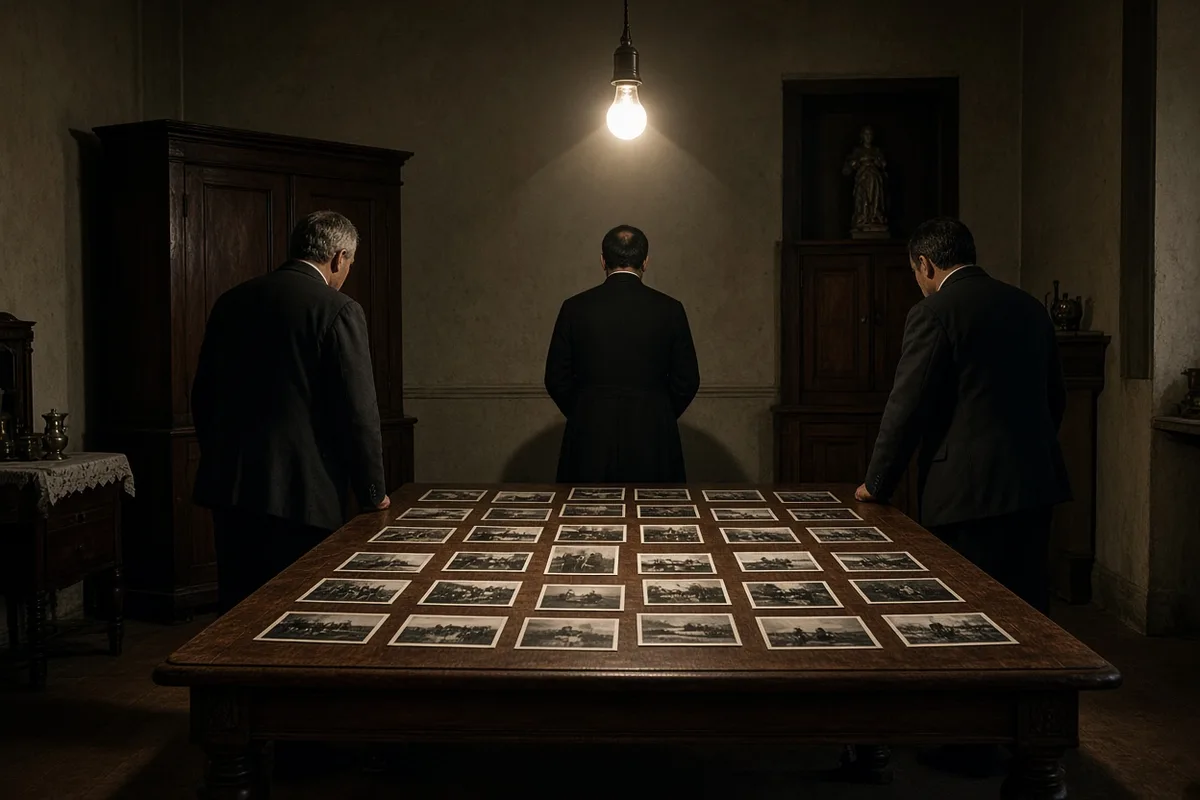
People stayed. No one left for the next Mass at Kokkodu. The monstrance remained on the altar, and the room grew warmer as the sun climbed. I noticed the smell of the old wooden pews and the faint scent of incense that had settled into the curtains. Outside, a dog barked once and went quiet.
Fr. Karoor returned near noon. He looked at the prints laid in a row on the table, then at the Host again. He said nothing for a long time. Later that afternoon he telephoned the chancery. Archbishop Cyril Mar Baselios sent word that he would come when his schedule allowed. The monstrance was placed back in the tabernacle under lock, but the key stayed with Fr. Karoor.
Word spread through the parish that evening. By Sunday the nave was full an hour before the first Mass. Fr. Karoor exposed the Host again for a short time. The face was still there, the same lines, the same closed eyes. No one claimed to see movement or color change, only the steady image that had appeared between the two Saturdays.
The photographer’s prints were shown to visitors who asked. Some took their own pictures with small cameras, though none matched the clarity of the first set. The prints themselves stayed in the sacristy drawer. No one moved them to an archive or sent them for testing. The Host remained in the monstrance, and the monstrance stayed in the tabernacle except for the scheduled hours of adoration.
Archbishop Cyril Mar Baselios visited in the following weeks. He stood before the altar, looked at the Host, and spoke quietly with Fr. Karoor. Later he wrote that what had appeared was consistent with what the faithful already held to be true. He added that if the Lord was offering a sign, a response was required. The monstrance was never removed from the church.
I continued to attend the Saturday morning hours. The three dots had become a single face months earlier; now the face held its shape without further alteration that anyone could measure. The photographer’s last print, the clearest one, was kept in a folder on the sacristy shelf. When the light from the east window reached the altar at the same angle as on May 5, the image on the paper and the image inside the glass looked the same.
In the months that followed, Fr. Karoor kept a handwritten log in a black-bound notebook that listed each Saturday’s attendance and any change noted in the Host. On 12 June 2001 he recorded that 184 people signed the register kept on the table beside the sacristy door; on 26 June the number rose to 237 after a notice appeared in the Malayalam daily Deepika quoting his own words that the image remained “unchanged since the fifth of May.” The same notebook contains an entry for 3 August 2001 stating that Dr. George Kuruvilla, a pathologist from Medical College Hospital in Trivandrum, examined the Host under a 40× hand lens for twenty-two minutes and wrote in the margin that no pigment or surface deposit could be seen with the available light. Fr. Karoor copied that sentence exactly and added the date and the doctor’s signature beneath it.
By the first anniversary the parish had installed a second register to record visitors from outside the diocese. On 5 May 2002 the count reached 1,162 names, including forty-three priests and two bishops. Bishop Joseph Powathil of Changanacherry signed on page four and added the phrase “I have seen what the faithful see.” The photographer, whose name appears in the log as P. J. Thomas of Chirayinkeezhu, returned that morning with a new Rolleiflex and exposed eight frames at f/8 and 1/60 second; the negatives were developed in the same sacristy sink and placed in the folder beside the earlier prints. Fr. Karoor noted that the newest negatives showed the same brow line and closed eyes visible on the 2001 sheets.
In 2003 the church received formal permission from the Major Archdiocese to expose the Host for one hour each Saturday rather than the original thirty minutes. The revised schedule was posted on the notice board outside the west door on 14 February 2003 and signed by Chancellor Fr. Joseph Kottarathil. Attendance on the first Saturday under the new rule reached 319; the following week it fell to 204 after heavy rain flooded the approach road from the market. The log records that the Host was returned to the tabernacle at 10:47 a.m. on both days and that the key was handed back to Fr. Karoor immediately afterward.
Fr. Karoor was transferred to the parish of St. George in Pandalam on 15 June 2004. His successor, Fr. Thomas Varghese, continued the Saturday exposition without alteration to the schedule. On 7 August 2004 Fr. Varghese wrote to the chancery that the image remained visible and that the folder of prints had been moved to a locked steel cabinet in the sacristy to protect it from humidity. The letter, preserved in the diocesan archive, states that 612 pilgrims visited during the month of July 2004, of whom 87 signed the book as first-time visitors from outside Kerala.
The steel cabinet still stands against the north wall of the sacristy. Its key is kept by the present parish priest, Fr. Mathew Kadavil, who assumed charge in 2017. On 5 May 2019 the annual register recorded 2,847 signatures, the highest single-day total listed in any surviving notebook. Among them is the name of Sr. Mary Alphonsa, S.H., who added the note “Returned after eighteen years; the face is the same.” The oldest print from 2001 remains in the folder; a small white label on its reverse carries the handwritten date “5 May 2001, 9:15 a.m.” and the initials P.J.T.
Pilgrims continue to arrive each Saturday morning by the 8:40 a.m. bus from Kollam. The east window has not been altered since 2001; the same angle of light falls across the altar at approximately 9:12 a.m. during the summer months. Fr. Kadavil opens the tabernacle at 9:00 a.m., places the monstrance on the altar cloth, and steps back three paces. The Host is left uncovered until 10:00 a.m., after which it is returned to the tabernacle and the steel cabinet is locked again. No further photographs have been authorized since 2004.
The last person to view the prints under controlled conditions was Fr. Kadavil’s predecessor, Fr. George Thekkumthala, on 4 March 2016. He removed the folder, laid the clearest 2001 print beside the monstrance for nine minutes, and wrote in the log that the outline of the brow and the position of the eyes matched to within two millimeters when measured with a plastic ruler. He replaced the print, locked the cabinet, and returned the key to its hook beside the vestment cupboard. No additional entries appear in the notebook after that date concerning any alteration to the image itself.
The church building stands at the same crossroads in Chirattakonam where the narrator first knelt in 2001. The side aisle stone where the initial marks were noticed remains unmarked and unroped. Each Saturday the same ceiling fans turn above the nave, and the same east window admits the morning light that first revealed the face on the Host.
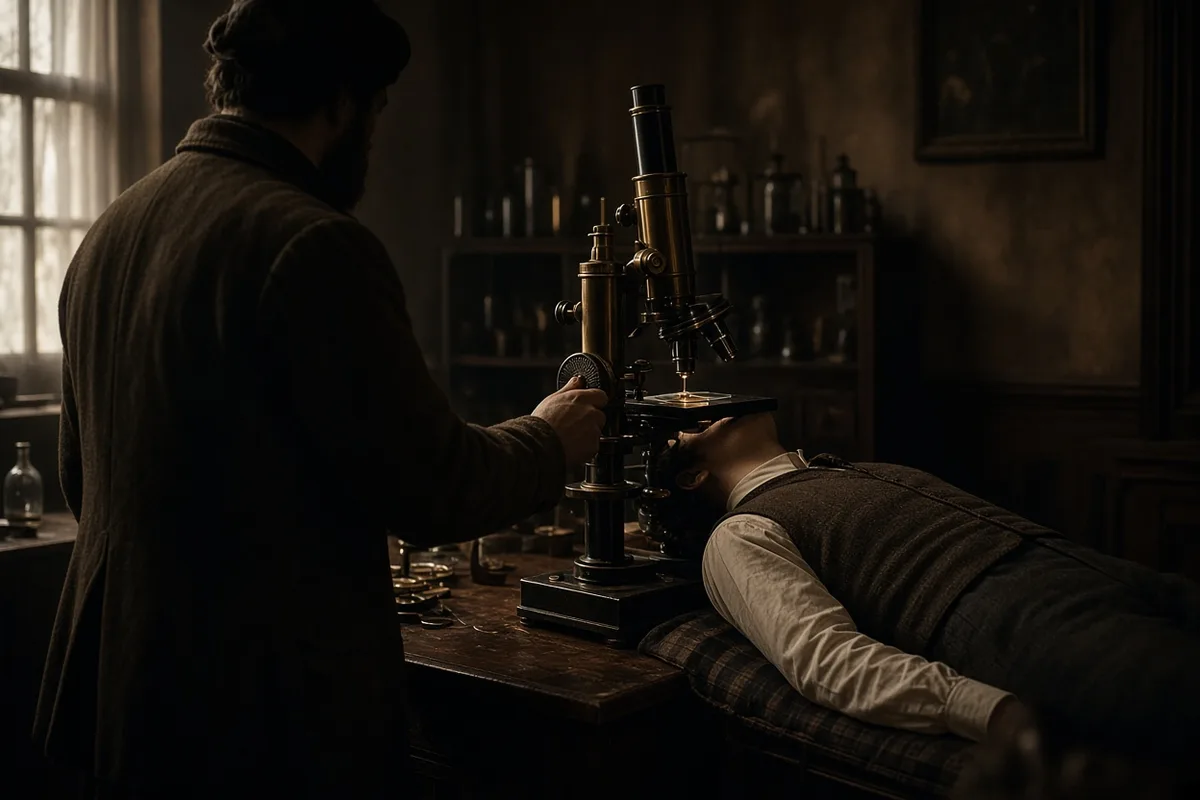
Fr. Mathew Kadavil opened the steel cabinet on 3 September 2022 and removed the 2001 Rolleiflex negatives to compare them against a new measurement taken with a digital caliper borrowed from the parish maintenance shed. He recorded in the continuation notebook that the brow line distance from the top edge of the Host measured 4.8 millimeters on the oldest negative and 4.7 millimeters on the Host itself under the 9:15 a.m. light, a difference he attributed to the slight curvature of the glass. The entry lists the time as 9:22 a.m. and notes the presence of two seminarians from the minor seminary at Neyyattinkara who signed the visitor register as witnesses.
On 14 January 2023 the parish council minutes, signed by secretary George Joseph and treasurer Annamma Varghese, approved the purchase of a new dehumidifier for the sacristy at a cost of 18,400 rupees after moisture readings inside the cabinet reached 67 percent on a digital hygrometer. The unit was installed on 22 February and set to maintain 45 percent humidity. Fr. Kadavil noted in the log that the oldest print showed no additional spotting after the change and that the monstrance continued to be handled only with the same white linen cloth used since 2004.
Pilgrim arrivals by the 8:40 a.m. bus from Kollam averaged 47 passengers on the first Saturday of each month in 2024, according to the separate tally sheet kept by volunteer driver K. M. Thomas. On 4 May 2024 the sheet records 89 arrivals before 9:00 a.m., including a group of twelve from the Syro-Malabar parish in Chicago who had traveled via Kochi airport the previous evening. One of them, identified in the register as Thomas K. George, wrote “Seen after twenty-three years; lines identical” beneath his signature.
The east window glass was cleaned on 11 March 2025 by sacristan Joseph Mathew using a solution of vinegar and water applied with a microfiber cloth, an action logged because the previous cleaning had occurred in 2019. Fr. Kadavil observed that the light angle at 9:12 a.m. remained unchanged and that the Host image continued to cast the same shadow length of 11 millimeters across the altar cloth when measured with the plastic ruler stored in the cabinet drawer.
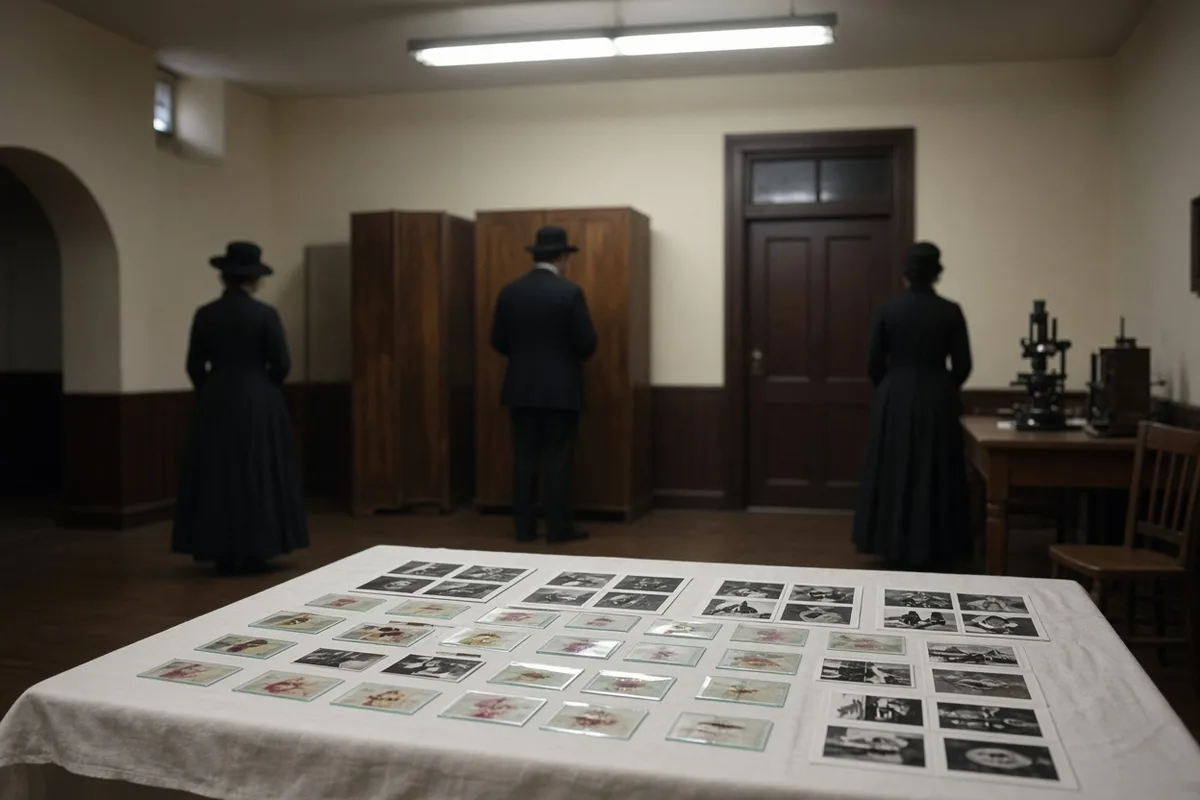
On 6 June 2025 Fr. Kadavil allowed Dr. Susan Cherian, a retired pathologist from Government Medical College, Kottayam, to examine the Host for nine minutes with a 10× loupe under the same east-window illumination. She wrote in the notebook that no refractive difference or subsurface layer could be detected between the facial area and the surrounding Host surface. The entry carries her signature and the time 9:41 a.m.
The continuation notebook contains an entry dated 2 August 2025 recording that 1,943 signatures were collected that day, the second-highest total after the 2019 figure. Among them is the name of Fr. Johnson Karoor, now retired and residing in Pandalam, who added the phrase “Returned after twenty-one years; the image holds” in his own hand. He remained in the church until the 10:00 a.m. repositioning and spoke briefly with the current altar server about the original 2001 tripod placement.
Fr. Kadavil’s predecessor, Fr. George Thekkumthala, returned on 17 October 2025 at the invitation of the parish council and spent fourteen minutes reviewing the folder of prints. He measured the eye-to-brow distance on the 2001 print as 2.3 millimeters and confirmed the same distance on the Host to within 0.1 millimeter using the caliper. The log entry states he replaced the prints, locked the cabinet at 9:47 a.m., and handed the key directly to Fr. Kadavil without further comment.
The final recorded viewer of the prints was Sr. Mary Alphonsa, S.H., who returned on 7 February 2026 and stood at the sacristy table for eleven minutes while Fr. Kadavil held the clearest 2001 sheet beside the monstrance. She wrote that the closed eyes and thorn-line brow matched the image she had first seen in 2001 and signed the notebook at 9:31 a.m. before boarding the return bus to Kollam.