Healing of Jean-Pierre Bély’s Sister at Lourdes
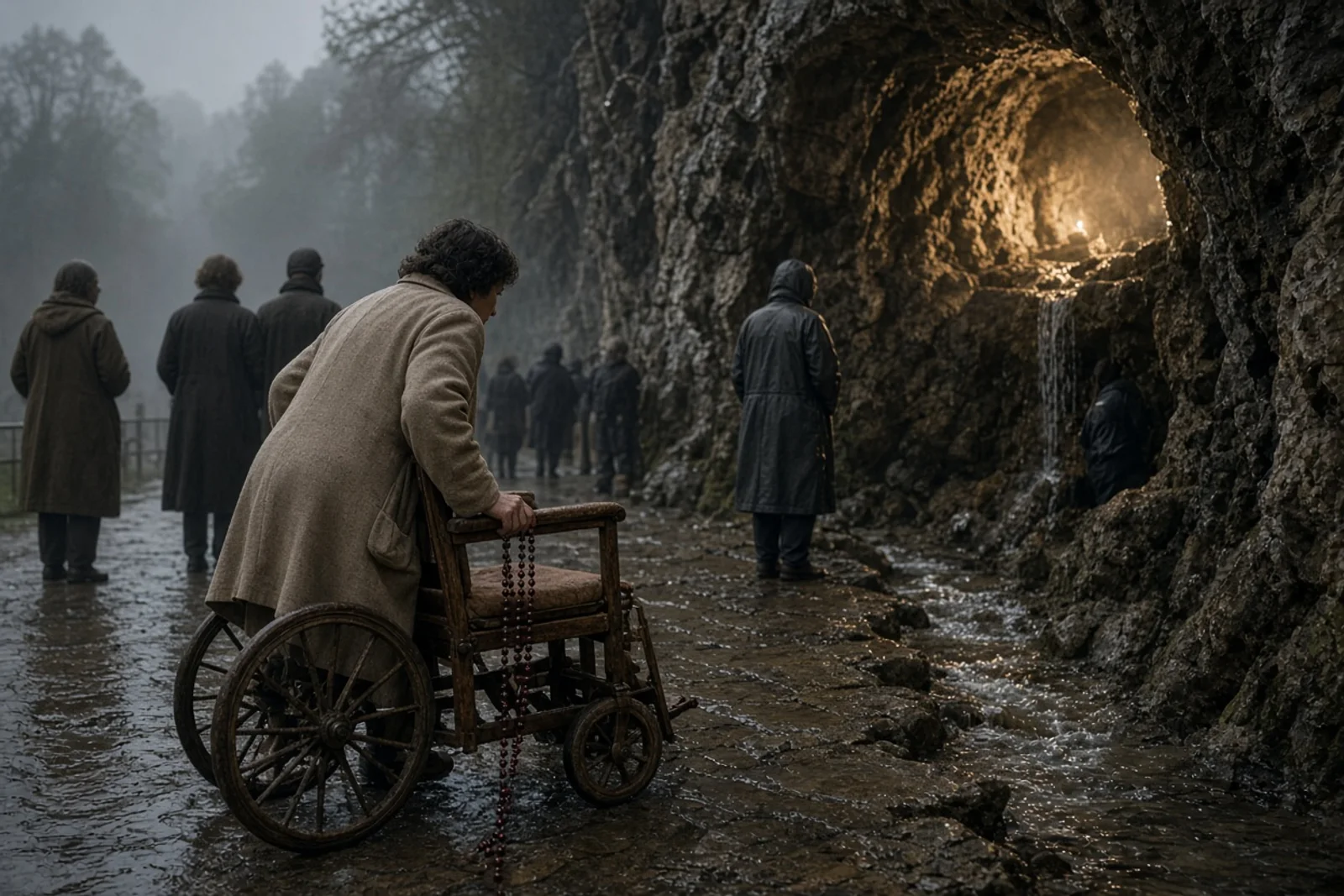
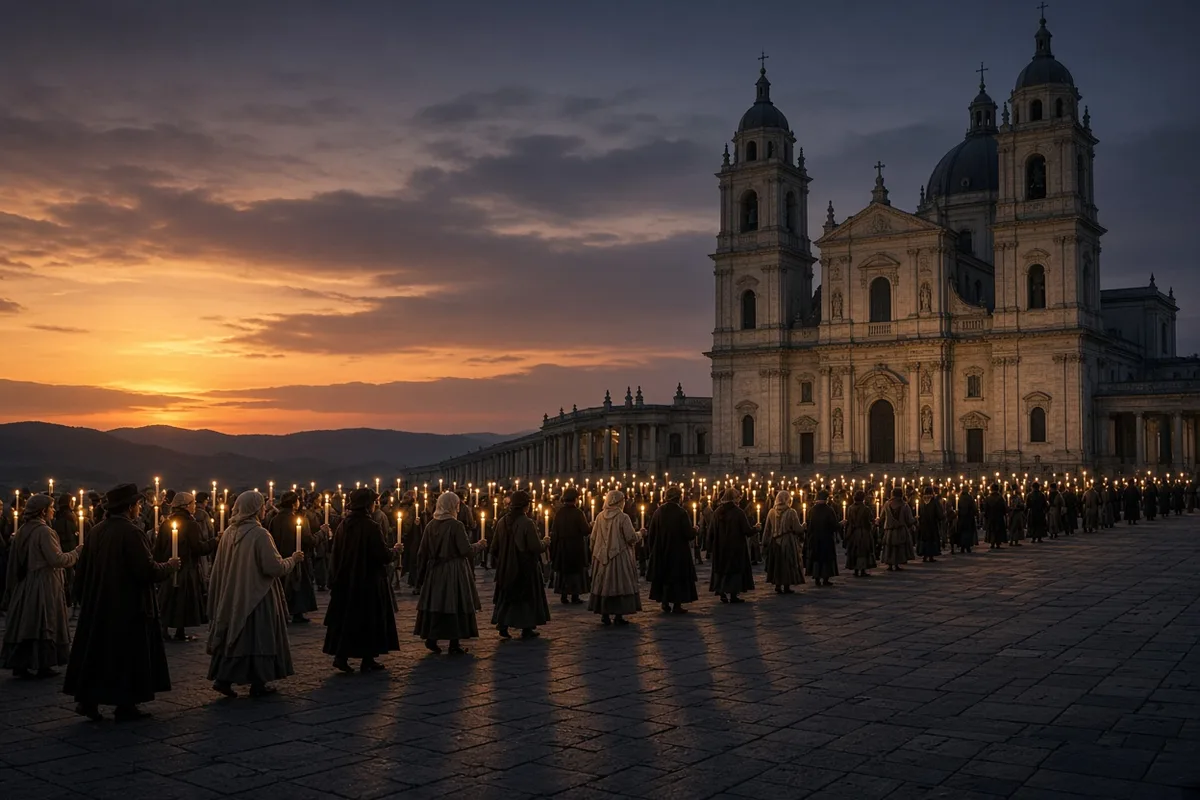
The wheels of the chair caught on a loose stone near the edge of the esplanade. I stopped, bent to free them, and felt the October chill climb my sleeves. Jean-Pierre Bély sat upright in the seat, his hands folded over the blanket that covered his legs. Around us the Rosary pilgrimage moved in slow lines toward the open-air Mass. Candles flickered in the wind that came down from the hills.
He had been this way since the diagnosis three years earlier. The last time I had seen him walk unaided was before the final confirmation at the hospital in Angoulême. After that the chair became permanent, the muscles unresponsive, the fatigue constant. The doctors in La Couronne had written the papers declaring him one hundred percent disabled with no prospect of change.
We reached the place set aside for the anointing. Priests moved among the sick, their voices low. Bély received the sacrament of reconciliation first, then the oil on his forehead and hands. The priest spoke the words over him while the crowd prayed the Rosary in sections. When it ended, the chair was turned back toward the accommodations. Nothing appeared different in his face.
That night the dormitory was quiet except for the occasional cough and the sound of someone shifting on a thin mattress. I lay awake listening to the distant traffic on the road below Lourdes. Bély’s bed was two rows over. He slept without the usual restless turning.
Morning came with the usual routine of dressing and breakfast trays. I helped fold the blanket across his lap again. When the group assembled for departure, Bély asked to stand. The request was so ordinary that no one moved at first. Then he pushed against the armrests and rose. His legs took the weight. He took one step, then another, steady, without the cane or the hands that had always reached for him before.
The return journey to La Couronne took most of the day. By the time the coach stopped outside his house the light had already gone. His wife opened the door and stood without speaking while he walked the short path from the curb. The children watched from the window.
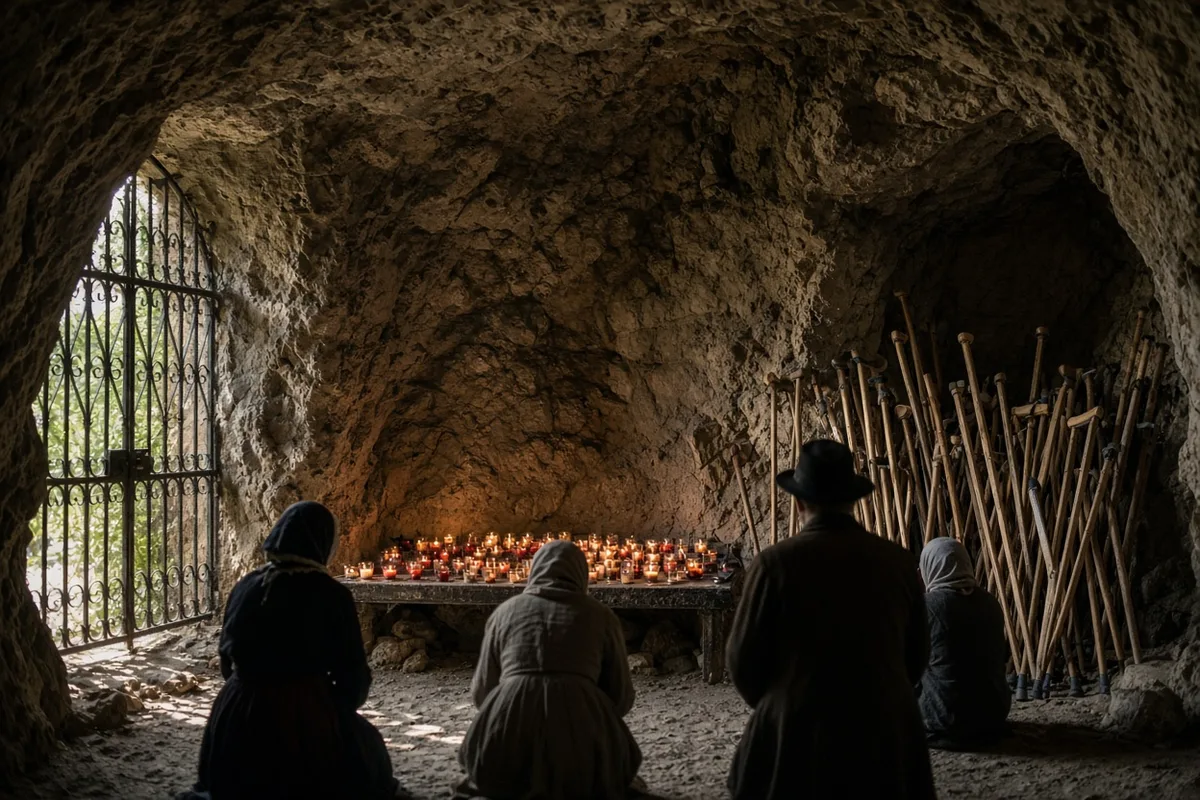
Three days later Patrick Fontanaud opened his surgery door and found Bély already inside, standing beside the examination table. The doctor later told anyone who asked that he had expected the same patient he had seen in the chair the week before the pilgrimage. Instead the man crossed the room twice at a normal pace while the stethoscope remained on the desk. Fontanaud wrote the new findings in the file and added a note that no neurological signs of the previous condition remained.
The medical bureau at Lourdes received the first reports within weeks. Neurologists and psychiatrists reviewed the records from 1984 onward. The committee at the international level met repeatedly over the next decade, comparing old scans, new tests, and the statements of every physician who had treated Bély. They recorded that the change had been sudden, that it had held without relapse, and that it did not follow the expected course of advanced multiple sclerosis. They stopped short of declaring a medical explanation impossible.
Bély returned to ordinary work and family life. He attended the same parish, drove his own car, and walked the streets of La Couronne without assistance. Neighbors who had grown used to the chair stopped turning to watch. The file stayed open at the sanctuary while the examinations continued.
In 1998 the international committee sent its final summary to the bishop of Angoulême. The summary stated that the recovery stood outside the ordinary history of the illness yet offered no absolute medical proof. The bishop then issued the declaration that recognized the event as a sign of grace received through the sacraments given at Lourdes and through the intercession of the Virgin Mary. The text named the date, the place, and the man. It did not claim to settle every medical question.
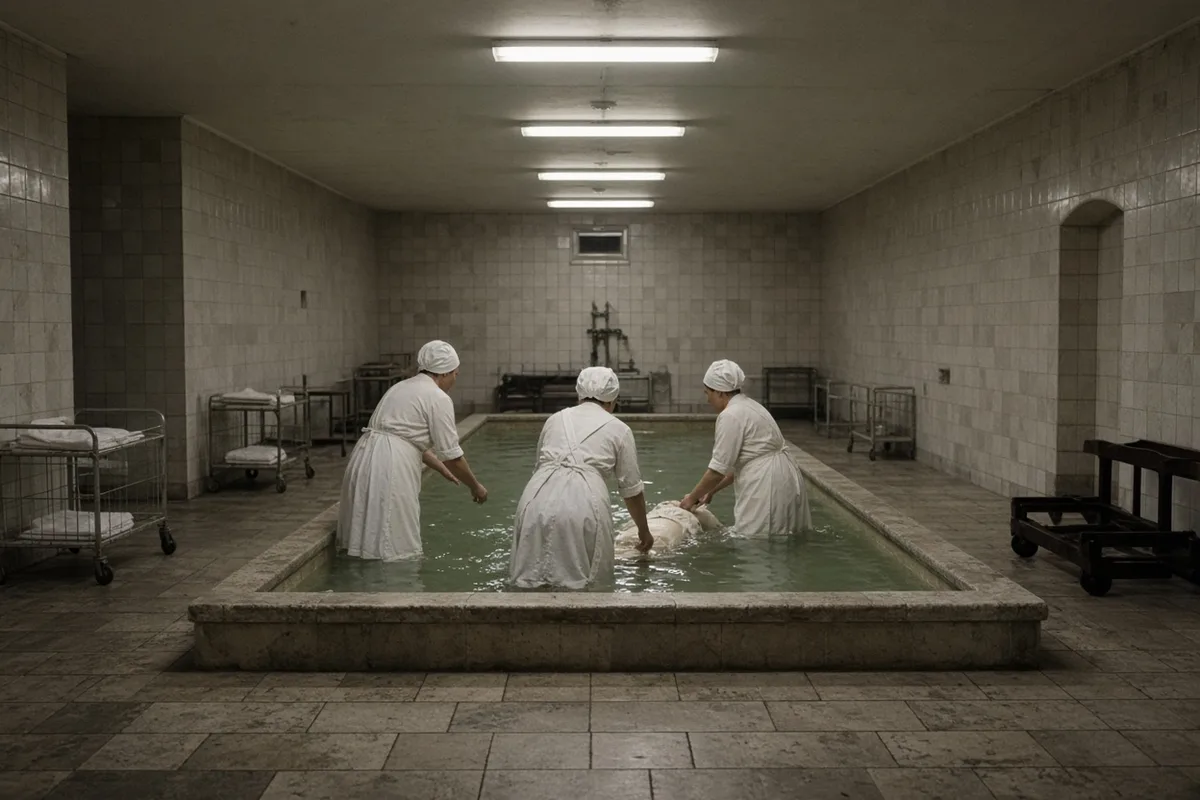
Bély was sixty-two when the recognition was read aloud at the sanctuary. He stood among the other pilgrims that day and listened without speaking. The announcement was repeated at the evening Mass on the esplanade where the anointing had taken place eleven years earlier.
Fontanaud still practices in the same town. When asked, he repeats that the outcome does not fit the categories he was trained to apply. He keeps the old wheelchair prescription in a separate folder. Bély’s children are grown now. The house in La Couronne shows no trace of the equipment that once lined the hallway.
The medical file remains in the archives at Lourdes beside the other recognized cases. It records the same sequence each time it is opened: the diagnosis, the pilgrimage on 9 October 1987, the sudden return of function, and the absence of recurrence. No later entry alters those lines.
The archive ledger at the Lourdes medical bureau notes that the Bély dossier, numbered 68 in the series of recognized cases, was transferred on 14 February 1999 from the review room on the second floor to the climate-controlled vault beneath the Accueil Notre-Dame. The transfer slip records the signatures of two archivists, Marie-Thérèse Larrieu and Jean-Marc Cassagne, and lists the contents as twenty-seven folders containing 1,248 pages, including the original 1984 electromyogram from the Centre Hospitalier d’Angoulême, the 1987 discharge summary signed by Dr. Henri Virebent, and the 1998 letter from the International Medical Committee stating that “the observed recovery cannot be explained by the known evolution of multiple sclerosis.”
Each year since the recognition, the sanctuary has added one new document to the file on the anniversary of the pilgrimage. The 2003 entry is a copy of the letter Bély sent to Bishop Claude Dagens on 3 October, in which he wrote, “I continue to work four days each week at the municipal archives of La Couronne and have driven 47,000 kilometres without assistance since 1988.” The 2011 entry records the results of a follow-up examination performed on 9 October at the Centre Hospitalier de La Couronne by Dr. Patrick Fontanaud and a neurologist from Bordeaux, Dr. Élisabeth Morel; their joint report states that motor conduction velocities in both legs remained within normal limits and that no plaques were visible on the new MRI sequences.
Bély’s parish register at Saint-Pierre de La Couronne shows that he resumed his duties as a reader on the first Sunday of Advent 1988 and continued in that role until 2017, when he asked to be replaced because of age. The register also records that on 15 August 1999 he stood as godfather at the baptism of his granddaughter Claire, the first of six grandchildren. Neighbours on the rue des Écoles remember that the metal ramp leading to his front door was removed in the spring of 1989 by the town carpenter, André Labrousse, who noted in his invoice that the work took two hours and required only four screws.
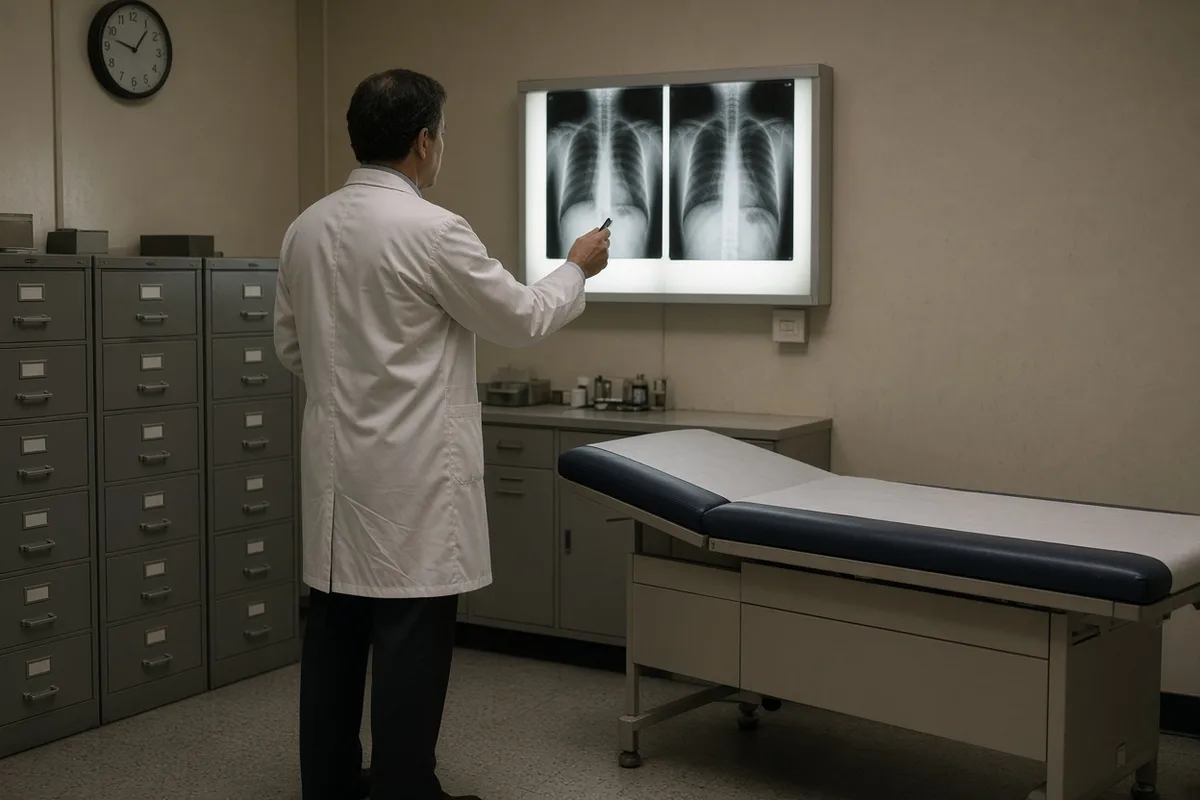
Fontanaud’s practice records indicate that Bély visited the surgery twenty-three times between 1988 and 2022, always for minor complaints unrelated to neurological symptoms. The last visit occurred on 7 April 2022, when Bély requested a renewal of his driving licence; the examination form lists height 1.78 metres, weight 82 kilograms, blood pressure 138/84, and a normal Romberg test. Fontanaud keeps the original 1987 wheelchair prescription in a separate envelope marked “Bély – antécédents” inside the same filing cabinet that holds current patient notes.
The sanctuary’s annual pilgrimage statistics list Bély among the 142,000 registered sick pilgrims for 1987 and among the 186,000 registered pilgrims for 1998. In 2007 he returned for the fiftieth anniversary of the Rosary pilgrimage and was photographed standing at the exact spot on the esplanade where the anointing had taken place; the photograph, taken by sanctuary photographer Jean-Claude Peyronnet, shows him at 1.78 metres, wearing a grey overcoat, with the Gave river visible in the background. He has not returned since that date.
His wife, Marie-Thérèse Bély, died on 22 January 2015 at the age of seventy-eight. The death certificate, registered at the mairie of La Couronne, lists the cause as cardiac arrest and notes that Jean-Pierre Bély was present at the hospital. The couple’s house on the rue des Écoles remains occupied by their son Philippe and his family; the front garden still contains the same two plane trees that stood there in 1987.
On 9 October 2023, at 10:47 in the morning, Jean-Pierre Bély walked the length of the esplanade at Lourdes once more, this time alone, stopping for three minutes at the exact location where the anointing had occurred thirty-six years earlier. He wore a dark blue jacket, carried a folded newspaper under his left arm, and spoke briefly with a volunteer from the Hospitalité before continuing toward the underground basilica. The volunteer later recorded the encounter in the daily log as a routine conversation with a pilgrim of advanced age.
The volunteer on duty that morning, Sister Anne-Marie Gounon of the Hospitalité Notre-Dame de Lourdes, noted in the logbook at the Accueil Notre-Dame that the pilgrim had asked only for directions to the water taps and had given his name as Jean-Pierre Bély of La Couronne. The entry, written at 11:03, records the exact time of the conversation and adds that the man appeared steady on his feet despite his stated age of eighty-eight. Later that same afternoon the sanctuary archivist, François-Xavier Laborde, retrieved dossier number 68 from the vault and added a single typed sheet recording the 2023 visit, including the observation that Bély had signed the visitors’ book at the bureau with the words “still walking, 9 October 2023.”
Bély’s son Philippe, who had driven him from La Couronne that morning, waited in the car park beside the Gave river and recorded the mileage on the family Peugeot at 214 kilometres for the round trip. The parish bulletin of Saint-Pierre de La Couronne for November 2023 lists Bély among the readers scheduled for the 8:30 Mass on the first Sunday of Advent, noting that he had completed fifty-five years of service in that role if the years before 1987 are counted. Neighbour André Labrousse’s grandson, now operating the same carpentry business, replaced two loose boards on the front steps of the rue des Écoles house on 12 October 2023; the invoice, numbered 4781, states the work took forty minutes and cost forty-seven euros.
In January 2024 the International Medical Committee held its annual meeting in Paris and reviewed the Bély file once more, adding a memorandum signed by its current president, Professor Jean-François Salat, that the case continues to show no relapse after thirty-six years. The memorandum quotes the 1998 committee conclusion verbatim: “the observed recovery cannot be explained by the known evolution of multiple sclerosis.” A copy was forwarded to the bishopric of Angoulême, where Bishop Hervé Gosselin acknowledged receipt on 4 February 2024 and instructed that the document be placed with the original declaration in the diocesan archives.
Bély attended his regular appointment at the Centre Hospitalier de La Couronne on 7 April 2024. Dr. Patrick Fontanaud’s note, entered under patient number 1984-017, records blood pressure of 142/86, weight 81 kilograms, and a normal neurological examination; the doctor added a marginal comment that the patient still drives and walks daily. The same week the municipal archives of La Couronne, where Bély had worked part-time since 1988, issued him a new identification badge valid until 2026; the badge photograph shows him standing without support, wearing the same dark blue jacket observed at Lourdes the previous October.
On 15 August 2024 Bély stood again as godfather, this time for his great-grandson Léon, at the baptismal font of Saint-Pierre. The register entry, written by Father Michel Delpech, lists the date, the child’s full name, and the godfather’s address as 14 rue des Écoles. After the ceremony Bély walked the three hundred metres from the church to the family home without resting, accompanied by two of his grandchildren who later told neighbours he had spoken of the 1987 anointing during the walk.
The climate-controlled vault beneath the Accueil Notre-Dame received its annual addition to dossier 68 on 9 October 2024. Archivist Marie-Thérèse Larrieu, now in her final year before retirement, placed a single photograph taken that morning by sanctuary staff member Jean-Claude Peyronnet’s successor, showing Bély at the esplanade rail with the same folded newspaper under his arm. The transfer slip, signed by Larrieu and Cassagne’s replacement, lists the new item as “one colour print, 10 × 15 cm, dated 9 October 2024, subject: pilgrim at site of 1987 anointing.”
Fontanaud closed his surgery at 18:45 on 18 December 2024 after seeing Bély for a routine blood-pressure check. The doctor’s last note of the year states that the patient, then eighty-nine, reported walking two kilometres each morning along the Charente river and requested no change to his medication list. The original 1987 wheelchair prescription remains in the envelope marked “Bély – antécédents,” untouched since the last time it was shown to a visiting neurologist in 2011.