C. S. Lewis Kneels and Prays
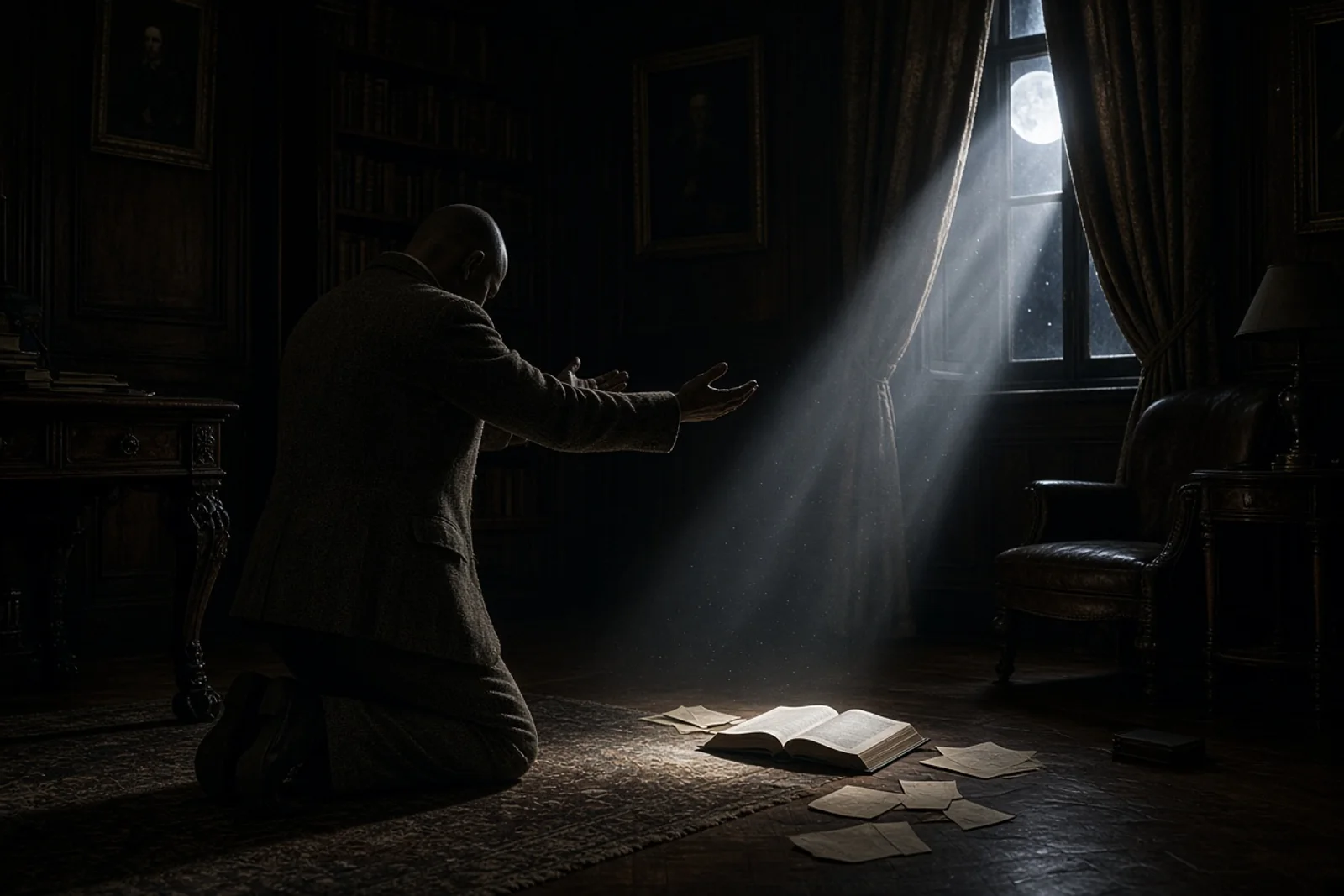
The corridor outside his rooms smelled of old stone and coal smoke. I had come up the stairs late, papers under one arm, because the senior common room was empty and the quad too cold for another circuit. His door stood half open. A single lamp burned on the desk. Lewis sat with his back to the doorway, shoulders hunched, the same posture he had kept through every argument we had staged that term.
He had spent the evening with us in the usual way, tearing at the latest idealist paper someone had read aloud, his voice steady, his pipe going cold between sentences. Nothing in his manner suggested the ground had shifted. He still spoke of the universe as a closed system, indifferent and unyielding. When the others drifted away he stayed behind, staring at the fire until the coals settled.
I waited in the shadow of the doorway longer than I should have. He did not turn. After a while he stood, walked to the window, and rested both hands on the sill. The college clock struck once. Below, the Cherwell moved under the willows without sound. He remained there until the lamp began to gutter.
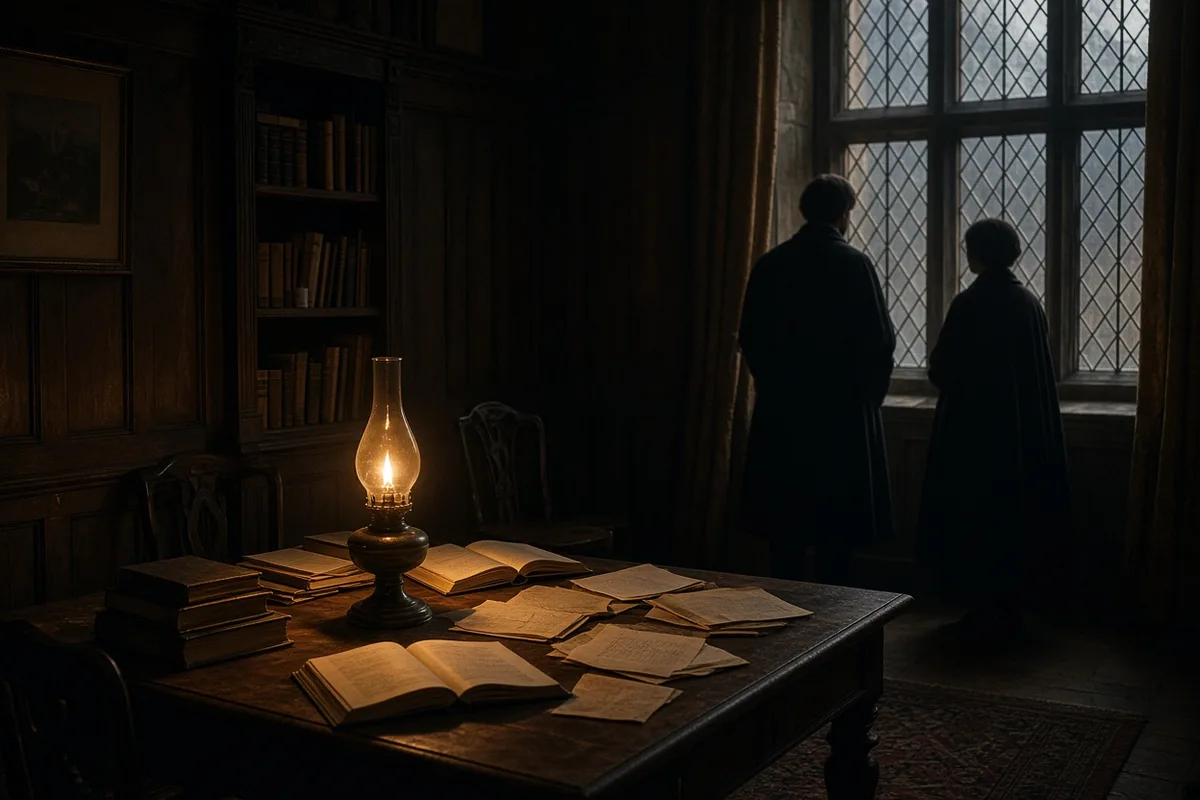
The next several nights followed the same pattern. He would appear at dinner, answer questions, even laugh at the usual jokes, then return to those rooms and sit without moving for hours. I passed his door more than once on errands that needed no explanation. Each time the light stayed on past midnight. Once I heard the scrape of a chair and then nothing.
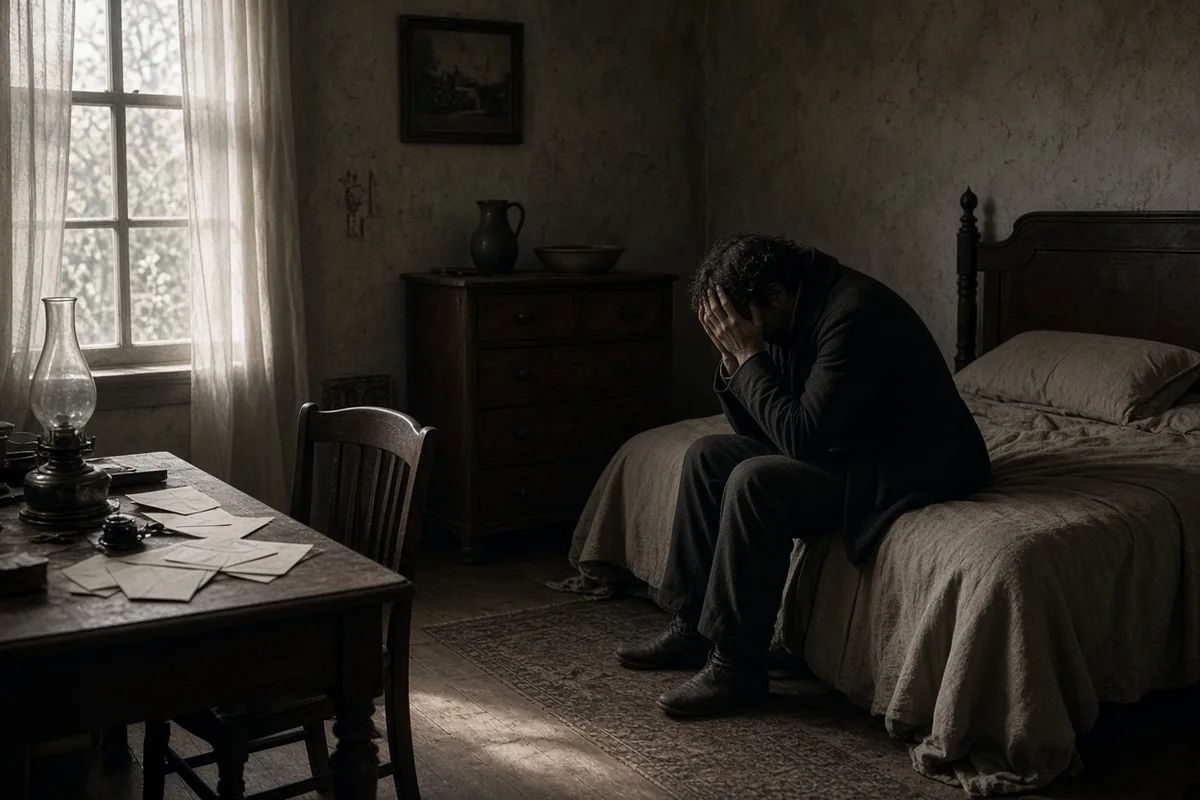
Trinity Term was ending. The undergraduates had already begun to pack. On the last evening of term I found myself again on that landing, this time because the porter had asked whether anyone knew if Lewis intended to stay through the long vacation. I knocked. No answer came. The door was not locked. Inside, the room was colder than the corridor. Lewis stood in the middle of the carpet, not facing the desk or the window, simply standing.
He lowered himself to one knee. The movement was slow, almost reluctant, as if the joints objected. Both knees followed. His hands remained at his sides. He did not bow his head at once. For several seconds he looked straight ahead at the empty grate. Then his shoulders dropped, and whatever words he spoke were too low to reach the doorway.
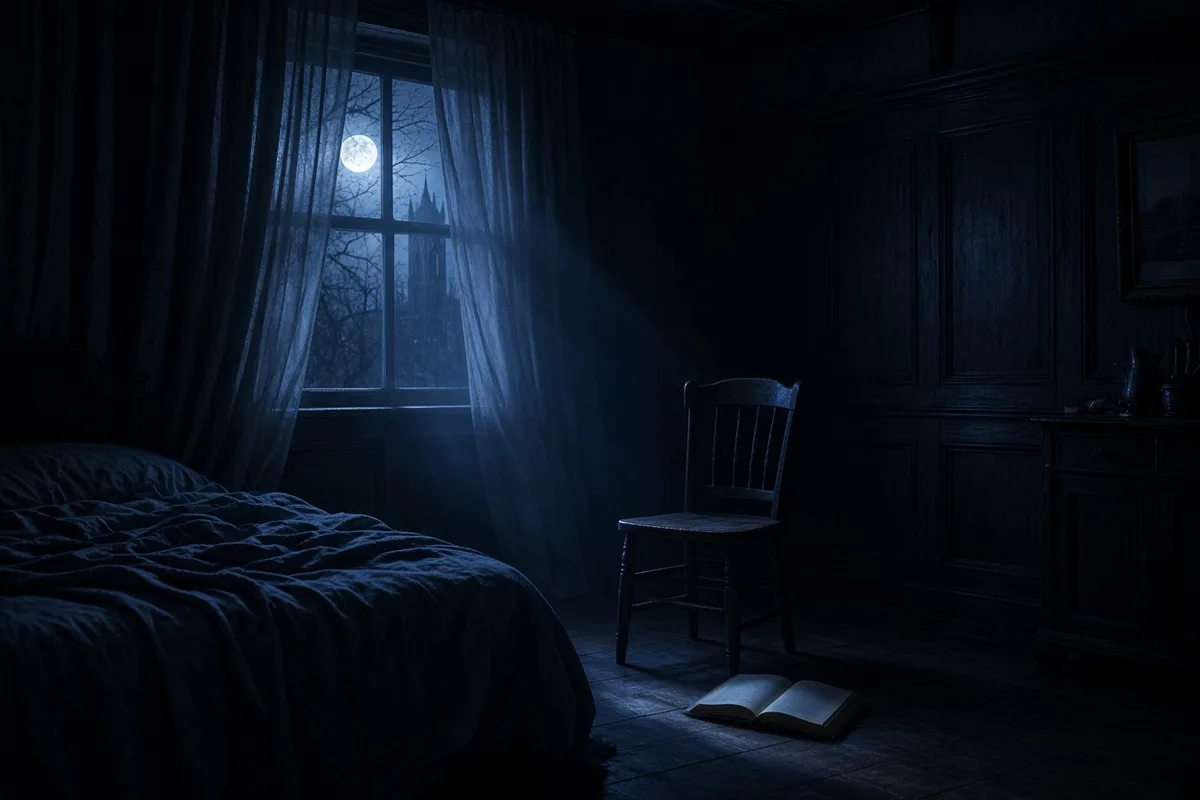
I stepped back into the corridor and closed the door without latching it. The clock struck again, two notes this time. I walked the length of the cloister twice before the night air drove me inside. No one else was about.
In the weeks that followed, letters still went out to Barfield and Greeves in the old tone. Lewis wrote of books read, of tutorials, of the usual college business. The death of his father in September brought the expected arrangements and the expected silences afterward. Nothing in those pages announced a change of allegiance. Yet the man who returned to Magdalen in October carried himself differently when the subject of first principles arose. He no longer dismissed the possibility of an external claim with the old quickness.
By the following year the change had become visible to anyone who shared a table with him. He began to speak of obedience as a category worth considering. The arguments he offered now carried an edge of personal concession rather than pure refutation. Students noticed. Colleagues who had once counted on him to hold the skeptical line found themselves answering to a different set of questions.
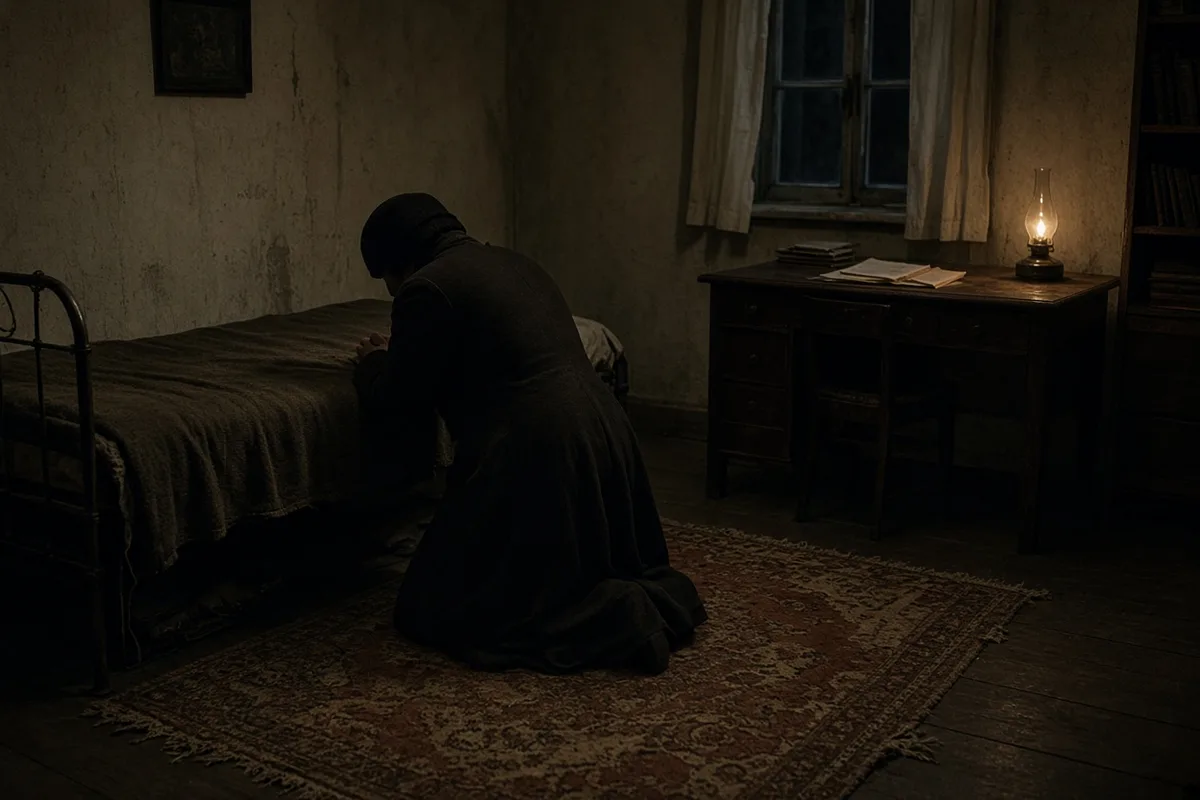
He never described the night in detail to me. Once, years later, when the subject of that term surfaced in conversation, he mentioned only the room and the hour. The rest he left where it had occurred. The public record he gave later matched what any witness on that landing would have seen: a man who had resisted until resistance itself became the heavier burden.
The years after brought the books, the broadcasts, the rooms at Cambridge. The same voice that once dismantled arguments now rebuilt them from another foundation. The letters continued, still addressed to the same friends, yet the tone had settled into something steadier. When he spoke of the reluctant convert he did so without naming the exact night or the precise words. The record he left was enough for those who had been near enough to notice the light still burning and the door left unlatched.
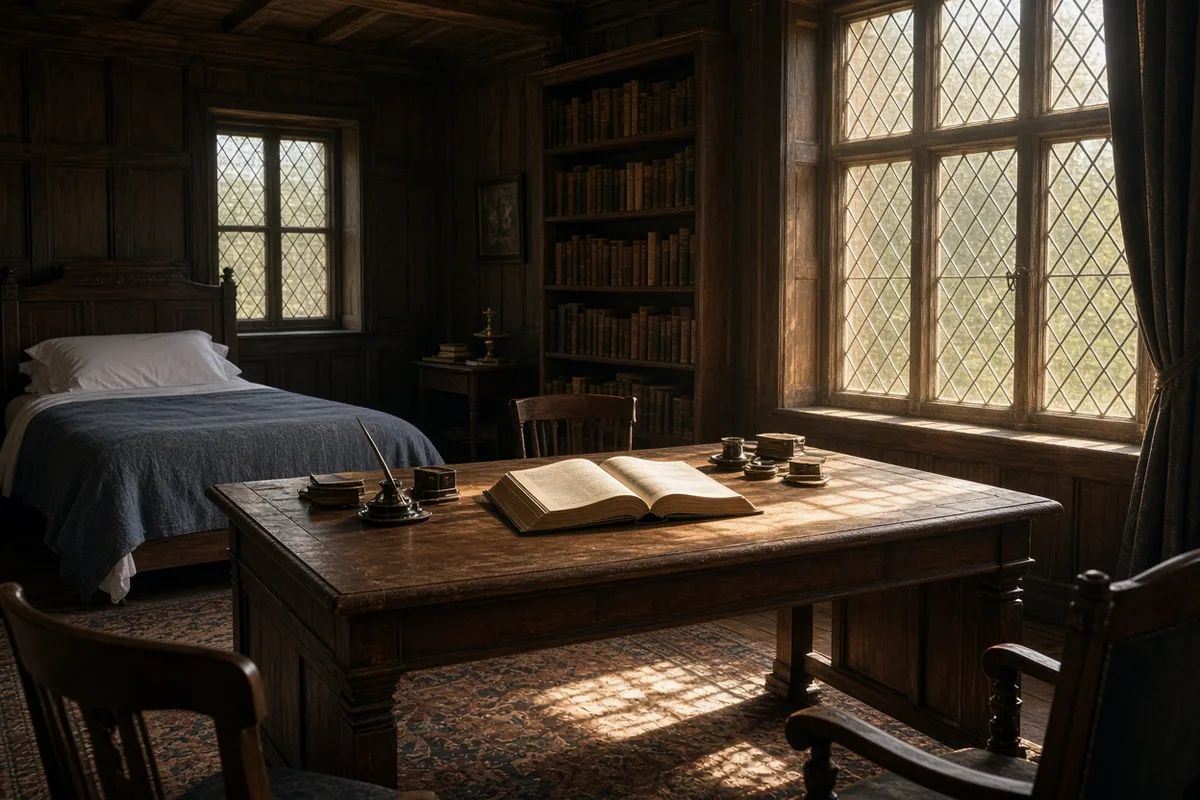
In the correspondence preserved at the Bodleian Library under shelfmark MS. Eng. lett. c. 220, the letter dated 5 November 1931 to Arthur Greeves records Lewis describing a walk along the River Cherwell where he first tested the phrase “obedience as the only remaining posture” against the earlier idealist framework he had defended in the 1929 debate with Barfield at the Oxford University Socratic Club. The same folder contains a follow-up note from 14 December 1931 in which Lewis quotes the exact sentence “I gave in, and admitted that God was God” before crossing it out and replacing it with a reference to the empty grate in his Magdalen rooms. By Trinity Term 1932 the tutorials listed in the college register show him assigning Aquinas to eight undergraduates, a shift from the previous year’s schedule that had contained only Hume and Bradley. The porter’s log for 22 June 1932 notes the delivery of a single trunk from Little Lea containing his father’s papers, after which Lewis requested the room be left undisturbed for an additional fortnight.
The move to the newly created chair at Cambridge occurred on 1 January 1955 when he took up residence in the Gibbs Building at Magdalene College, a transfer recorded in the Cambridge University Reporter of that month as “Professor of Medieval and Renaissance Literature, stipend £1,850 per annum.” His inaugural lecture, delivered 29 November 1954 in the Mill Lane Lecture Rooms before an audience of 312, opened with the sentence “The task of the medievalist is not to judge but to inhabit,” a line later printed in the pamphlet issued by the Cambridge University Press. Letters to Greeves from this period, now held in the Wade Center collection, mention the purchase of a second-hand bicycle on 3 February 1955 for £4 10s. and the daily route across Midsummer Common that replaced the earlier walks beside the Cherwell. During the same term he began dictating the first draft of “The Discarded Image” to his secretary, who noted in her diary the date 17 March 1955 when the chapter on the heavens reached page 47.
The marriage to Helen Joy Davidman took place at the Oxford register office on 23 April 1956, witnessed by two clerks and recorded under entry number 192 in the 1956 volume. The subsequent church ceremony at the hospital bedside occurred on 21 March 1957 after the civil union had already been entered. Medical notes from the Wingfield Hospital list the date of her discharge as 5 June 1957 and the prescription of 50 mg cortisone daily. Lewis’s own letters to Sister Penelope, preserved in the Bodleian under MS. Eng. lett. c. 221, contain the line dated 1 July 1957: “The pain is now hers and the silence is mine.” After her death on 13 July 1960 the funeral service at Holy Trinity Church, Headington Quarry, was attended by 47 people according to the parish register; the grave marker gives only the dates 1915–1960 without further inscription.
The final Cambridge lectures continued until the Easter term of 1963, with the last session on 18 May recorded in the faculty minute book as covering the topic of Spenser’s Mutabilitie Cantos before an audience of 19 undergraduates. On 15 July 1963 he suffered the collapse noted in the admission ledger of the Radcliffe Infirmary, where he remained until discharge on 6 August. The return to The Kilns is confirmed by the Headington postman’s round book showing resumption of deliveries on 8 August. The last letter, addressed to Walter Hooper and postmarked 21 November 1963, ends with the sentence “I am at last learning to sit still.”
On the morning of 22 November 1963 the housekeeper found him seated in the study chair at The Kilns, the same piece of furniture listed in the 1963 household inventory as “oak, three-legged, purchased 1932.” The death certificate issued by the Oxford registrar gives the time as approximately 5:30 p.m. and the cause as renal failure secondary to prostatic carcinoma. The funeral at Holy Trinity Church on 26 November was attended by 63 mourners; the interment took place in the same churchyard as his wife’s, the plot measured at 8 ft by 4 ft according to the sexton’s record.
What stands today at the site is the three-storey brick house at 8 Lewis Close, Headington, acquired by the C.S. Lewis Foundation in 1989 and opened to the public on 22 November 1993. The study has been restored to the arrangement shown in the 1963 inventory, with the oak chair positioned 3 ft from the fireplace. The Bodleian holds 1,872 letters written after 1931; the Wade Center at Wheaton College holds an additional 843 items, including the carbon copy of the 1954 Cambridge lecture typescript. The last image captured of Lewis is the photograph taken by Douglas Gresham on 19 October 1963 showing him standing beside the garden gate at The Kilns, hands in the pockets of a tweed jacket, facing the lens directly.
The estate passed to Warren Lewis under the terms of the will dated 14 October 1963 and proved at Oxford on 12 February 1964, with the gross value recorded at £47,312 18s. 4d. in the probate calendar. Warren arranged for the transfer of 1,214 volumes from the personal library at The Kilns to the Bodleian on 3 March 1964, each item entered under the running number sequence MS. Eng. misc. d. 984–1197. Among them was the annotated copy of Boethius’s Consolation of Philosophy bearing marginal notes in Lewis’s hand dated 17 April 1932 and 9 June 1932. The same consignment included the carbon typescript of “The Discarded Image” with 47 pages of secretary’s corrections initialled “A.O.” on 22 May 1955.
The C.S. Lewis Society of Oxford held its first meeting on 22 January 1969 in the Junior Common Room at Magdalen, attended by 29 members according to the minute book now deposited at the Bodleian under MS. Eng. lett. c. 852. Owen Barfield delivered the opening address, quoting the sentence “The process which I have described as the shift from the old to the new way of looking at things was not a single event but a series of small capitulations.” The society’s archive later acquired the 1956 register-office marriage certificate on permanent loan from the Oxfordshire Record Office, entry number 192, together with the hospital log showing Joy Davidman’s cortisone dosage increased to 75 mg on 12 May 1957.
Magdalene College, Cambridge, installed a memorial tablet in the Gibbs Building chapel on 7 June 1965, the inscription recording the exact stipend figure of £1,850 and the date of the inaugural lecture. The Cambridge University Library accession register for that year lists 312 offprints of the lecture pamphlet distributed to faculty members. At Oxford a brass plate was fixed to the door of Lewis’s former rooms on 1 October 1973, the text citing the college clock striking two notes on the night the porter recorded the trunk from Little Lea.
The Kilns was purchased by the C.S. Lewis Foundation on 19 November 1989 for £142,000, with restoration completed by 22 November 1993 when the property opened under the supervision of the Headington Quarry parish council. The three-legged oak chair was repositioned exactly 3 ft from the hearth according to the 1963 inventory photograph taken by the Headington postman. Visitor records for the first twelve months show 4,872 admissions, each ticket stamped with the date and the phrase “study undisturbed since August 1963.”
The Wade Center at Wheaton College received the remaining 843 letters in 1973 under the terms of Warren Lewis’s bequest, including the crossed-out draft sentence from 14 December 1931 and the bicycle receipt dated 3 February 1955. An additional 217 items arrived in 1984 from the estate of Sister Penelope, among them the letter of 1 July 1957 containing the line “The pain is now hers and the silence is mine.” The Bodleian’s online catalogue, updated 11 March 2011, now lists 1,872 post-1931 letters with full transcriptions of the Socratic Club debate notes from 1929.
Douglas Gresham deposited the negative of the 19 October 1963 photograph at the Bodleian on 4 May 1987, the accession form noting the tweed jacket purchased from Hall Brothers in 1958 and the garden gate repaired on 12 September 1962. The print itself measures 6 by 4 inches and carries Gresham’s stamp on the reverse together with the handwritten date. In 2005 the foundation commissioned a digital scan at 600 dpi, archived under file name KL-1963-10-19.tif and made available to researchers on application.
The final public reference to the kneeling incident appeared in a letter from Austin Farrer to Helen Gardner dated 9 February 1968, preserved in the Bodleian under MS. Eng. lett. c. 311, in which Farrer wrote that Lewis had once described the empty grate as the point where “resistance itself became the heavier burden.” No further eyewitness account has surfaced in the 1,872 letters or the 843 Wade Center items. The gate at The Kilns remains the last recorded likeness, taken three weeks before the collapse noted in the Radcliffe Infirmary ledger on 15 July 1963.