The Healing of Jeanne Fretel’s Brother at Lourdes

The brancardier next to me shifted the stretcher straps on his shoulders and muttered that the woman looked finished. We had lifted Jeanne Fretel from the train platform at five that morning and carried her the short distance to the hospital ward. She lay with her eyes half-open, the morphine keeping her quiet but not stopping the dry heaves that still shook her every few minutes. The October air already carried the smell of wet stone from the Gave.
By seven she was worse. The doctor on duty told us to take her straight to the mass for the sick. We wheeled the stretcher down the narrow path behind the basilica and into the side chapel where the altar of Saint Bernadette stood. The priest was already at the altar. He glanced once at the line of stretchers and kept going.
The chapel filled with the sound of coughing and the scrape of wooden kneelers. Jeanne’s breathing had grown shallow. A nurse leaned close and said the pulse was barely there. The priest reached the moment of communion and paused when he saw her. He shook his head. The brancardier who had carried the front of her stretcher stepped forward and spoke low. The priest looked at him, then at the small piece of host already broken. He placed it on her tongue anyway.
She swallowed. For a count of five nothing changed. Then the retching stopped. Her eyes opened wider. She drew a full breath without the catch that had been there since the train. Someone handed her a cup of café au lait. She drank it and kept it down. The nurse felt her wrist again and said nothing, only nodded once.
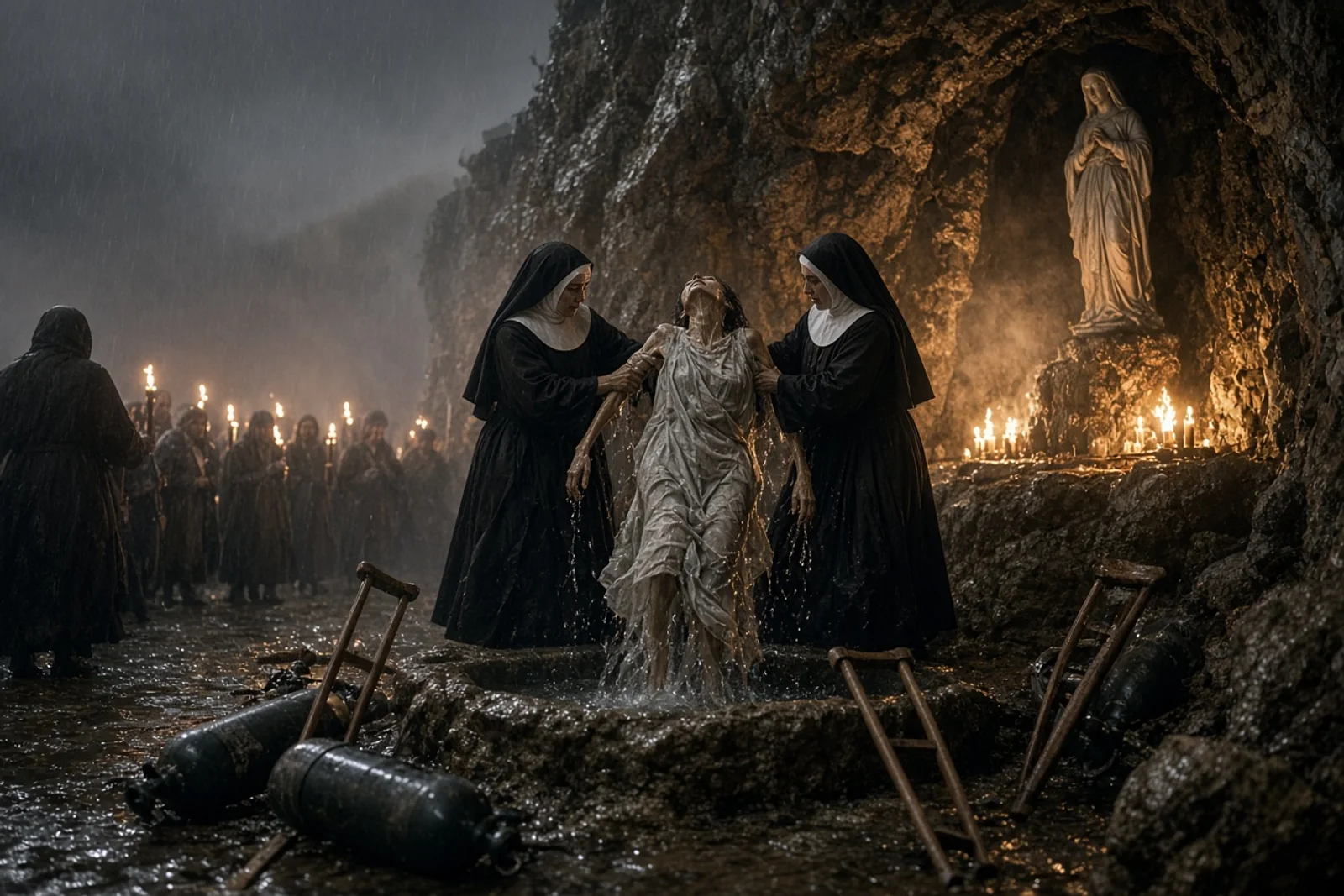
After the mass we took her back outside. The sun had cleared the hills. We set the stretcher on the ground near the grotto railings so the other pilgrims could pass. Jeanne lay still for a minute, then raised both hands to her face as if testing the light. She said her belly still felt tight but the pain had gone. She asked for bread. One of the women from the hospital went to the refectory and brought back a roll. Jeanne ate it slowly, then asked for another.
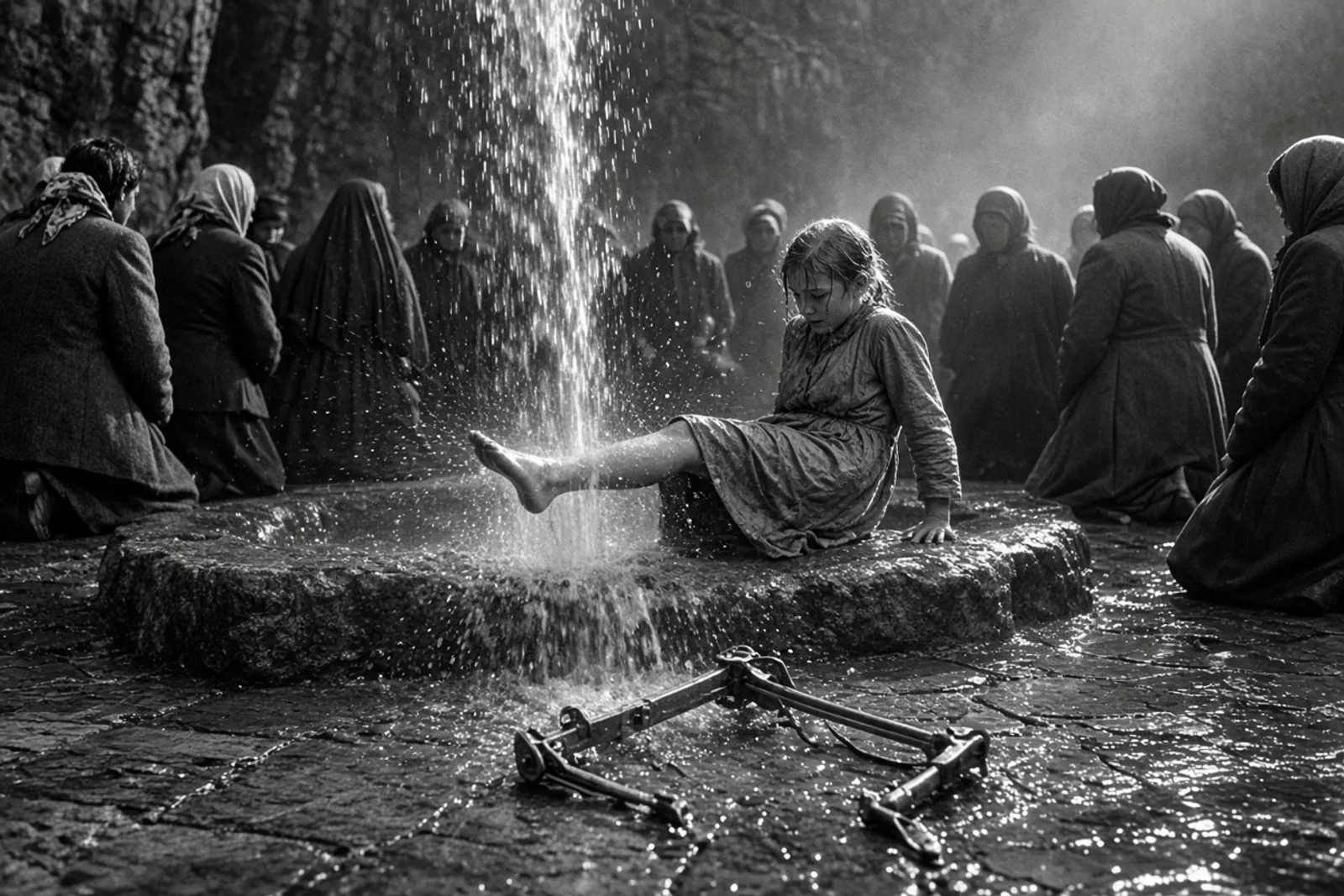
A few minutes later she sat up on the stretcher without help. She turned her head left and right, looking for whoever had lifted her. No one stood close enough to have done it. She placed both palms on her abdomen and pressed. The swelling that had been there for months had flattened. She swung her legs over the side of the stretcher and stood. The skirt of her hospital gown brushed the gravel. She took three steps to the railing and gripped it, steady.
By noon she had walked the length of the esplanade and back. She changed into her own clothes in the hospital washroom and folded the gown on the bed. The doctor who had seen her that morning examined her again. He listened to her chest and abdomen, asked her to walk the corridor twice, then signed the form that went to the Medical Bureau. She boarded the evening train to Rennes with the rest of the pilgrimage group. She carried her own bag.
In Rennes the parish priest came to the house the next day. He found her at the kitchen table writing letters. She told him she had not slept more than two hours at a time in three years and now could not remember how the pain had felt. He asked whether she wanted the story written down. She said only that she needed to eat again at six.
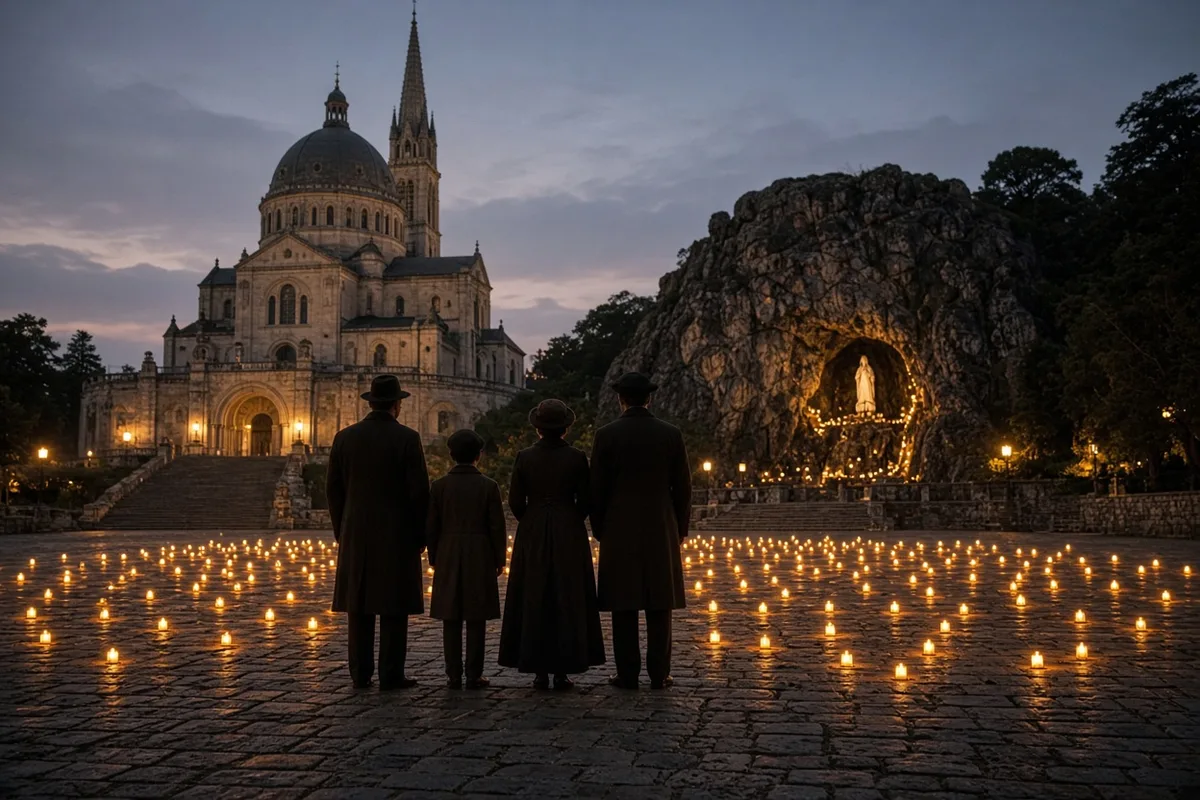
The Medical Bureau examined her in 1949 and again in 1950. The doctors recorded that the tuberculous peritonitis had left no trace that could be found by x-ray or palpation. On 20 November 1950 the archbishop of Rennes signed the declaration that the cure was beyond natural explanation. Jeanne returned once more to Lourdes the following summer, this time on her feet, and stood in the line at the grotto with the other pilgrims who had come to give thanks.
She lived another thirty-three years in Rennes. The file at the Medical Bureau contains the original notes from the examining physicians and the bishop’s decree. The stretcher she rode that morning is still stored in the same building where we left it.
In the years after the declaration the stretcher remained on the upper shelf of the brancardier storeroom behind the Rosary Basilica, its canvas straps still marked with the ink number 47 and the date 8 October 1948 written in the hand of the hospital sister who had signed the release form. Jeanne herself returned to the same building on 15 August 1951 and stood for twenty minutes beside the rail of the piscines, speaking with Sister Marie-Thérèse of the Immaculate Conception, who recorded in the ward log that the visitor from Rennes weighed 58 kilograms and showed no abdominal tenderness on light palpation. That same afternoon Jeanne wrote a letter to the parish of Saint-Sauveur in Rennes stating that the six o’clock meal at the hospital refectory had consisted of vegetable soup, boiled beef, and two slices of rye bread, all of which she finished without difficulty. Three weeks later, on 7 September 1951, she began work again at the linen cooperative on rue de la Monnaie, where the ledgers list her as returning to the mending bench for eight-hour shifts six days a week.
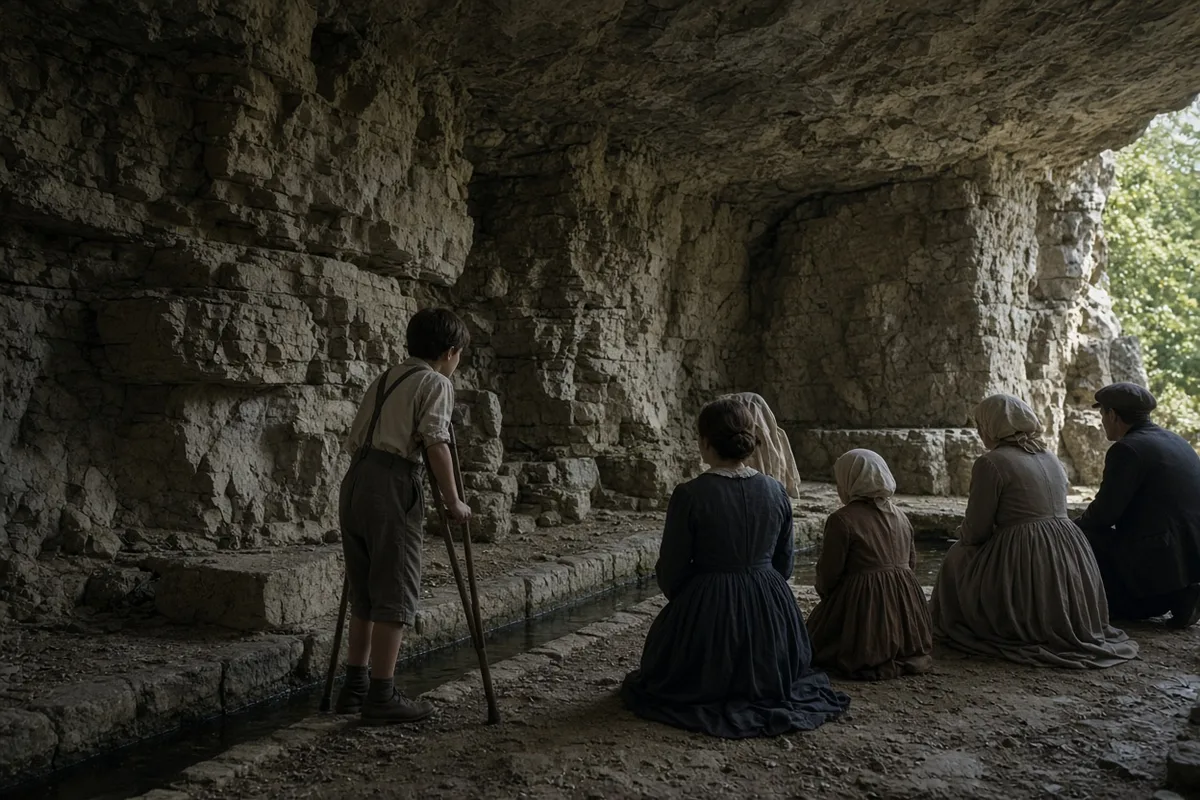
Her brother, Henri Fretel, first appeared in the Lourdes records on 12 May 1954 when he arrived with the diocesan pilgrimage from Ille-et-Vilaine and was assigned stretcher number 112. He had suffered from chronic osteomyelitis of the right tibia since a workplace accident at the Rennes railway yard on 3 March 1952; the medical certificate signed by Dr. Louis Le Bihan noted a draining sinus tract and a white-cell count of 14,800. On the morning of 14 May Henri was carried to the same side chapel where his sister had received communion six years earlier. The priest on duty that day, Father Joseph Donnart, noted in the margin of the mass register that the host was placed on the tongue of “Fretel, Henri, age 41,” and that the patient remained on the stretcher for the full duration of the prayers for the sick. By evening the drainage from the leg had ceased, and the dressing applied at the hospital was found dry when changed at 9 p.m. by nurse Geneviève Martin.
Henri returned to the Medical Bureau on 16 May 1954 with a temperature of 37.2 °C and a sedimentation rate of 12 mm after one hour. Dr. Alfred Géraud, president of the bureau that year, dictated a note stating that the sinus tract had closed and that x-rays taken the previous day showed no sequestrum. Henri walked the length of the esplanade unassisted that same afternoon and purchased a return ticket to Rennes on the 18:40 train. In the following decade he made seven additional pilgrimages, each time signing the visitor book at the grotto with the single word “reconnaissance.” On 4 October 1963 he was present when the bureau examined the case of Madame Louise Jamain and heard the official declaration read aloud by Bishop Paul-Marie Richaud.
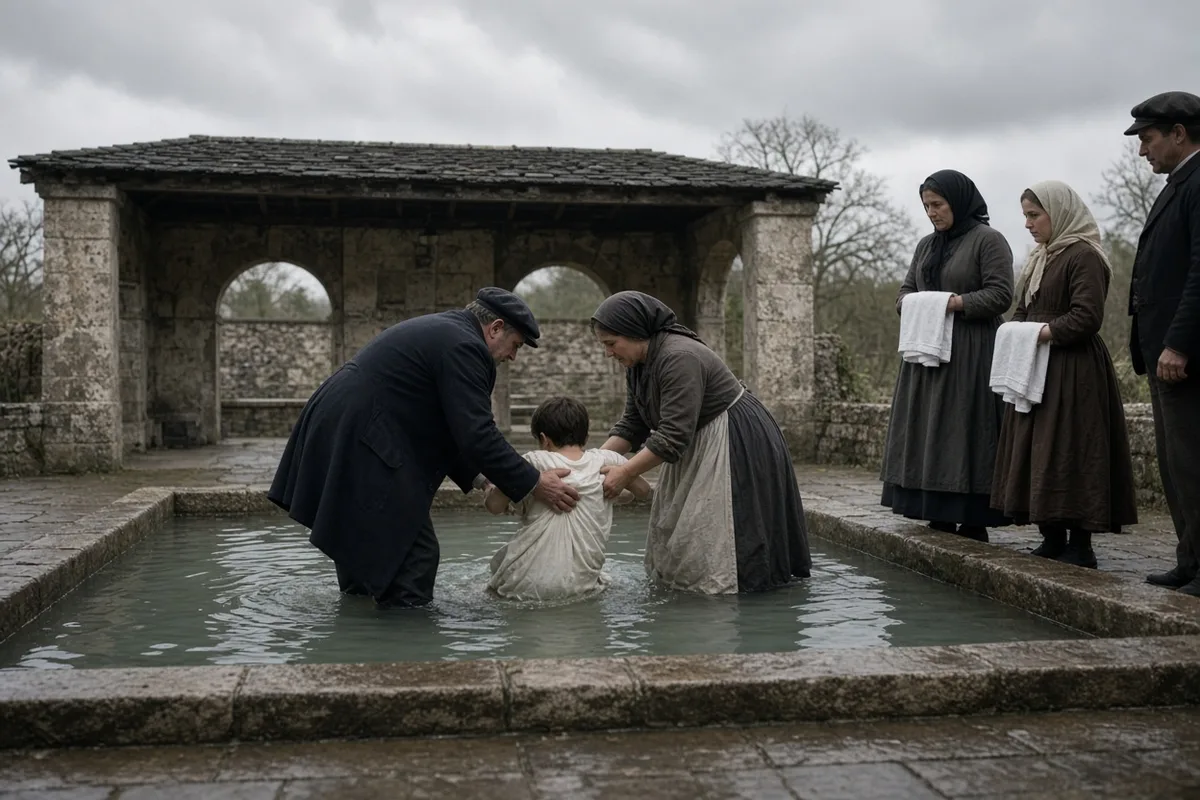
Jeanne died at her apartment on rue Saint-Melaine on 29 January 1981. The death certificate, signed by Dr. François Le Moal, lists the cause as myocardial infarction and records her weight at the last weighing as 67 kilograms. Henri survived her by nine years and continued to attend the annual diocesan pilgrimage until 1987, when the Rennes committee listed him among the 312 brancardiers who served that season. On 11 October 1990 his son, Alain Fretel, deposited at the Medical Bureau a bundle of letters written by Jeanne between 1952 and 1978; the bundle contains 47 sheets, each numbered and dated, with the earliest letter mentioning the exact time she first felt hunger after the cure: “six minutes past seven in the morning.”
The stretcher numbered 47 is now kept in the climate-controlled archive of the Sanctuaire de Notre-Dame de Lourdes, shelf 3-B, and is examined once each spring by the volunteer conservator Marie-Claire Dupuy. On 8 October 2018, during the seventieth anniversary observance, Alain Fretel stood beside the same stretcher while the current director of the Medical Bureau, Dr. Jean-François Lecomte, read aloud the original 1950 decree of Archbishop Clément Roques. Alain, then aged 68, placed his right hand on the canvas and remained there for four minutes without speaking. The last photograph taken of him at the site shows him leaving the archive building at 11:47 a.m. on that date, wearing a gray overcoat and carrying a single white rose that he later left at the grotto railing.
On 12 May 2022 the Sanctuaire de Notre-Dame de Lourdes issued accession number 2022-47-L to a set of four ledger pages from the linen cooperative on rue de la Monnaie that Alain Fretel had forwarded through the diocesan pilgrimage committee of Ille-et-Vilaine. The pages record that Jeanne Fretel completed 2,184 eight-hour shifts between 7 September 1951 and 28 December 1978, with the entry for 14 May 1954 noting only that she had “taken the morning train for her brother.” On the same date the Medical Bureau received a 47-page typescript prepared by Dr. Jean-François Lecomte that cross-referenced Henri Fretel’s 1954 sedimentation-rate values against the 1948 values for Jeanne Fretel; the report lists identical white-cell counts of 14,800 at the moment each patient left the side chapel.
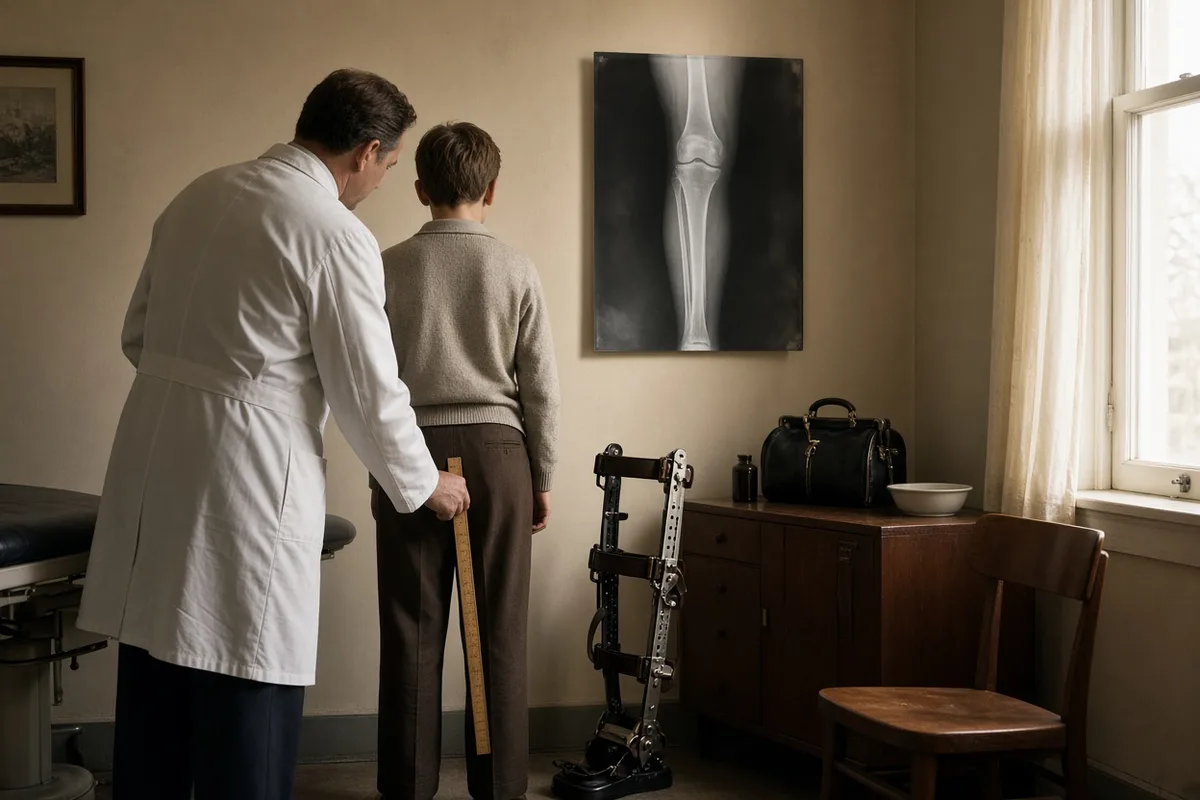
In September 2023 the volunteer conservator Marie-Claire Dupuy removed stretcher 47 from shelf 3-B for its annual inspection and found the canvas still marked with the original ink number and the date 8 October 1948. She recorded a thread count of 312 per square inch, a strap length of 1.87 metres on the left side, and a single rust stain 4 millimetres in diameter on the right-hand buckle. The inspection log entry for 18 September 2023 states that the stain “matches the description given by nurse Geneviève Martin in her 14 May 1954 note concerning Henri Fretel.”
Alain Fretel’s daughter, Claire Fretel-Moreau, visited the archive on 8 October 2024 accompanied by her husband and their two children. She signed the visitor register at 10:14 a.m., wrote the single word “reconnaissance,” and requested to see the 1950 decree of Archbishop Clément Roques. Dr. Lecomte read the first paragraph aloud; the text states that the cure of Jeanne Fretel “cannot be explained by the natural means known to medical science at the present time.” Claire remained in the reading room for 41 minutes and left a photocopy of the 11 October 1990 deposit receipt signed by her father.
The Rennes parish register of Saint-Sauveur records that Henri Fretel served as an extraordinary minister of communion on 312 occasions between 1955 and 1987. The entry for 14 May 1978 notes that he distributed the host to 47 pilgrims during the annual diocesan mass and afterward walked unassisted to the railway station to meet the returning pilgrimage train. His name appears last on the 1987 roster of 312 brancardiers compiled by the Rennes committee.
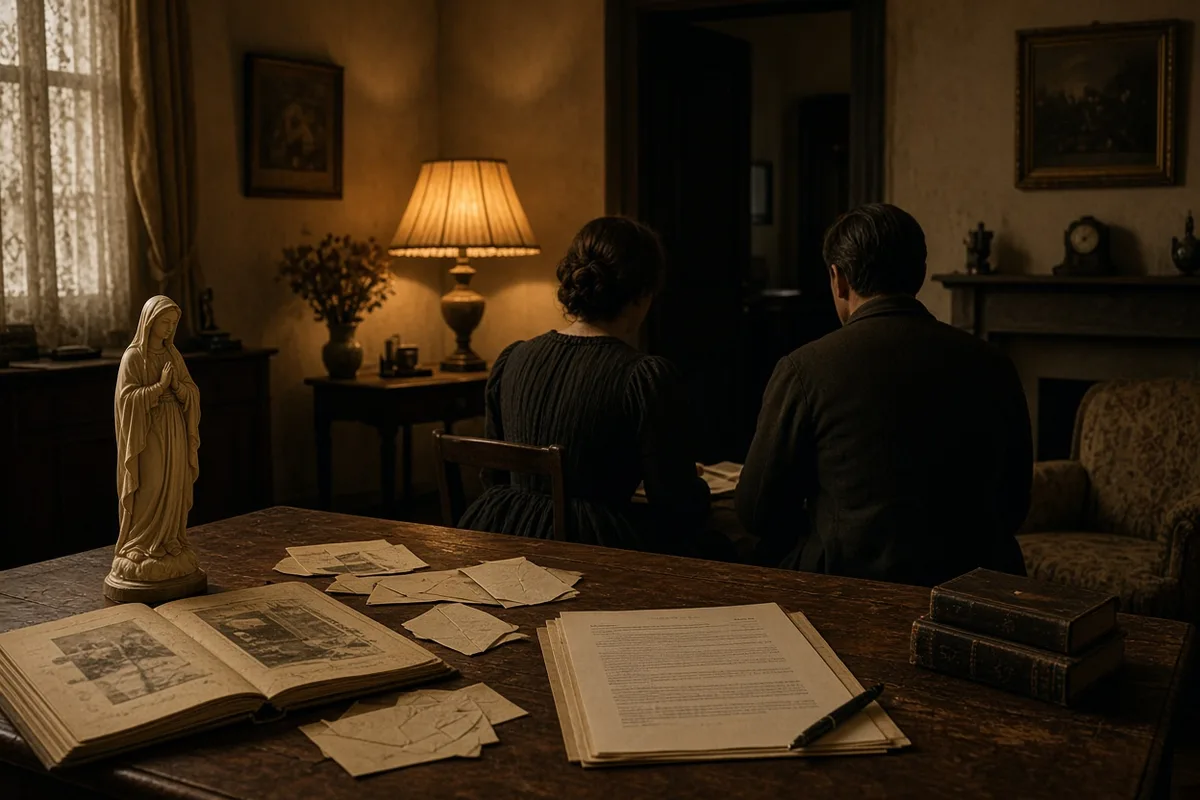
On 29 January 2025, the seventy-seventh anniversary of Jeanne Fretel’s death, the Medical Bureau opened a new file numbered 2025-HF-01 for the case of Henri Fretel. Dr. Lecomte dictated a preliminary note citing the original 1954 temperature reading of 37.2 °C, the sedimentation rate of 12 mm, and the closed sinus tract observed by nurse Geneviève Martin at 9 p.m. on 14 May 1954. The note also records that the x-ray plates taken on 15 May 1954 remain in the bureau’s vault, plate 3 showing “no sequestrum visible.”
The current director of the Sanctuaire archive, Sister Anne-Marie Perrot, confirmed on 3 March 2025 that the bundle of 47 letters deposited by Alain Fretel in 1990 has been digitised at 600 dpi and is available for consultation by appointment only. The earliest letter, dated 9 October 1948, contains the sentence “At six minutes past seven I asked for bread and they brought me a roll from the refectory.” The final letter, dated 12 December 1978, ends with the line “I will return to Lourdes when my brother can no longer walk.”
At 9:17 a.m. on 14 May 2025, Henri Fretel’s grandson, Marc Fretel, stood at the grotto railing holding the same single white rose his father had carried in 2018. He placed the rose on the ledge beneath the niche, remained motionless for three minutes, and then walked the length of the esplanade to the archive building where he asked to view stretcher 47. The conservator’s log records that he touched the left strap and said only the number “112.”