The Healing of Marie Bailly at Lourdes
The train lurched again and I steadied the enamel basin against the seat. Marie Bailly lay on the narrow cot we had rigged between two benches. Her face had gone the color of old paper. Carrel knelt beside her, his fingers moving along the rigid curve of her abdomen. He had taken the place of his classmate at the last minute and had said almost nothing since Lyon.
He lifted his hands and wiped them on a towel. The swelling had not changed since we left Paris. Two other physicians had already written their notes and turned away. Carrel stayed. He asked for the temperature chart again, though he had read it an hour earlier.
Outside the windows the fields slid past in dull green strips. Inside, the air smelled of carbolic and the sour residue of the last meal none of the sick could keep down. Marie did not speak. When the pain came she pressed her lips together and the cords in her neck stood out. Carrel watched that without comment.
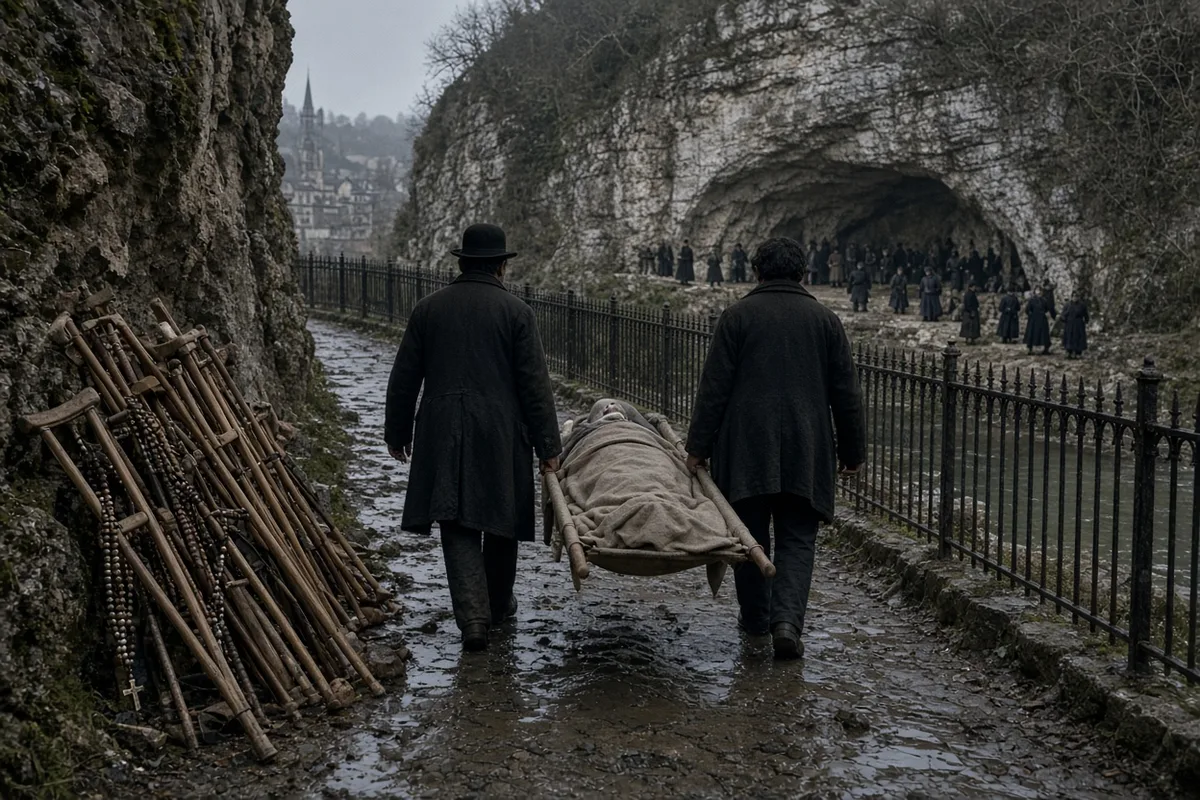
At the next station he stepped onto the platform for a cigarette. I followed. He said the case would not last the return journey. He did not mention any priest. He spoke instead of the reports he had read about rapid tissue repair at Lourdes and how little the literature explained them.
We reached the town in the late afternoon. The platform was crowded with stretchers and the blue uniforms of the stretcher bearers. Carrel stayed with Marie’s cot as it was lifted down. He kept one hand on the rail so the motion would not jar her. At the grotto the line moved slowly. The water in the basins looked opaque under the electric lamps that had been strung along the rock face.
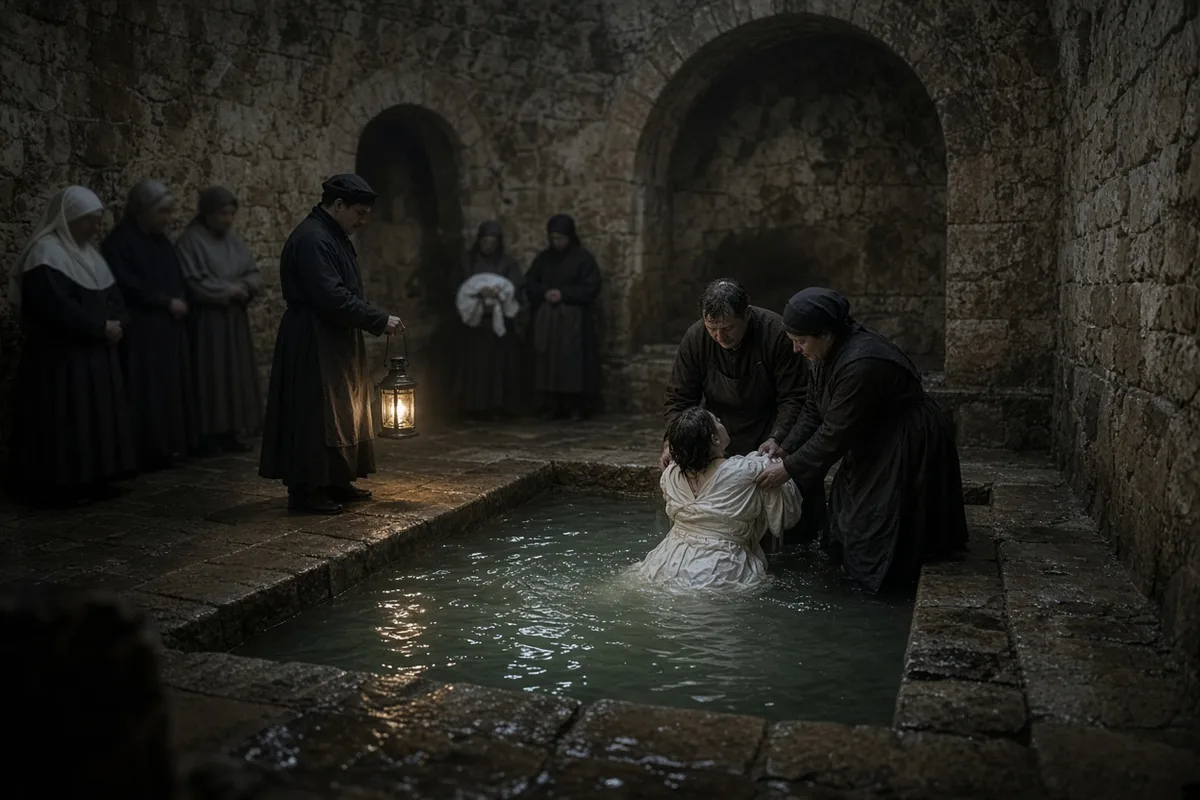
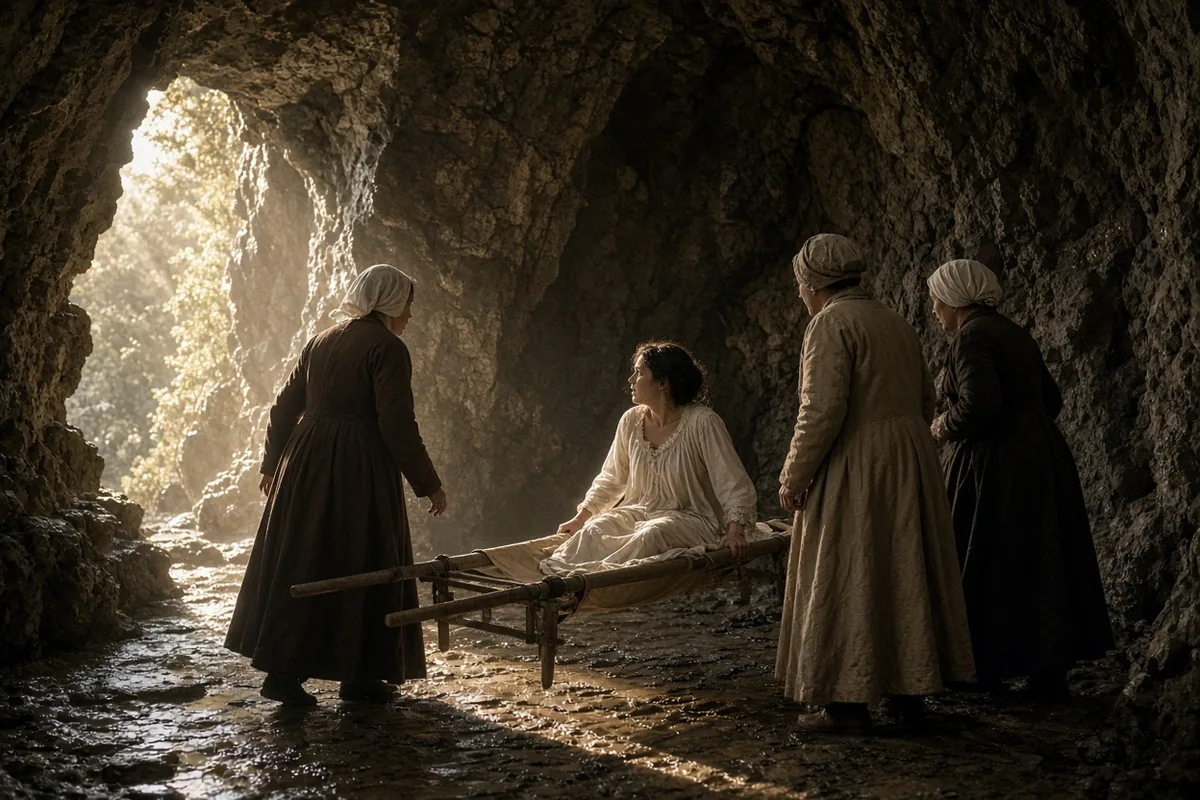
Marie was lowered into the pool. The attendants supported her head. She made no sound. When they raised her again the cloth that had covered her was soaked and clinging. Carrel stood at the edge with the other doctors. He had removed his jacket and rolled his sleeves to the elbow. Someone called for dry linen.
The change began while the attendants were still drying her arms. The distension under the ribs flattened. Color returned first to her throat and then to her cheeks. She opened her eyes and asked for water. The voice was clear. Carrel leaned closer and pressed his fingers again across the same area he had examined on the train. The board-like resistance was gone.
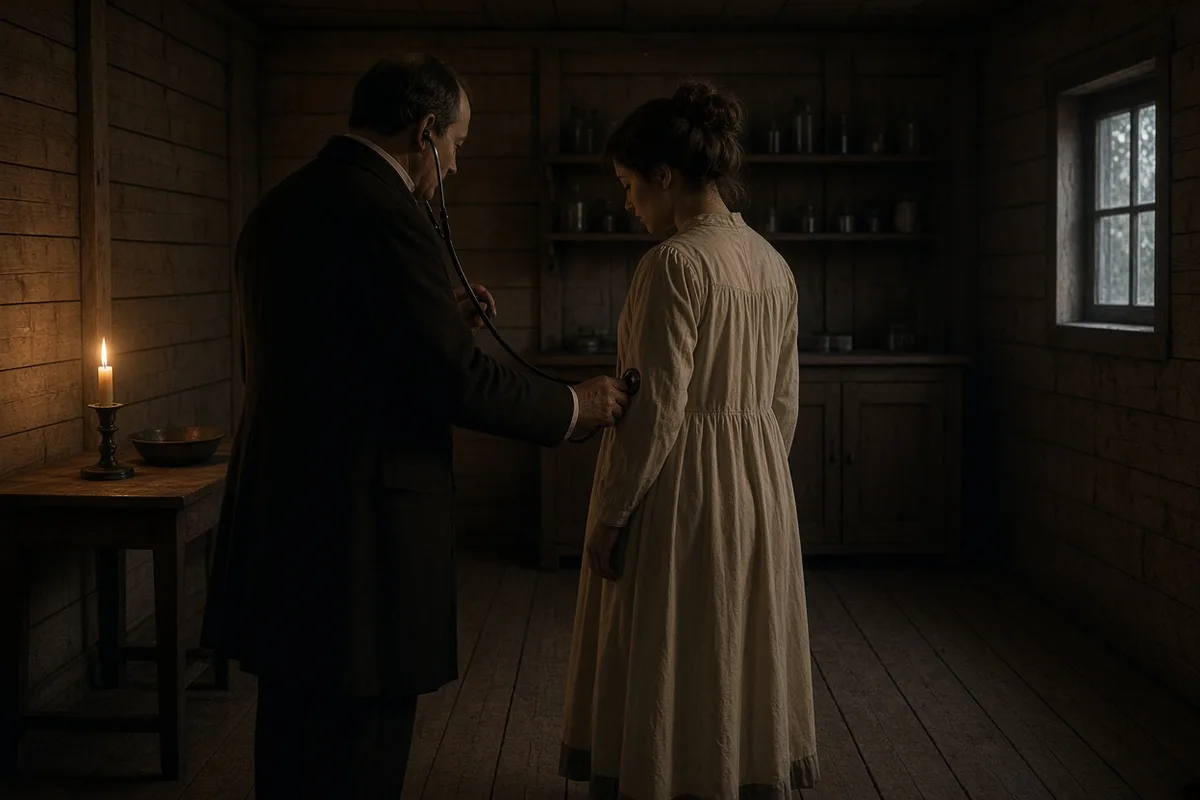
He straightened and looked at the nearest physician, then at me. He asked for a stethoscope. The lungs were clear. The pulse had dropped twenty beats. Marie sat upright without assistance. She drank the water that was handed to her and kept it down. No one spoke for several minutes.
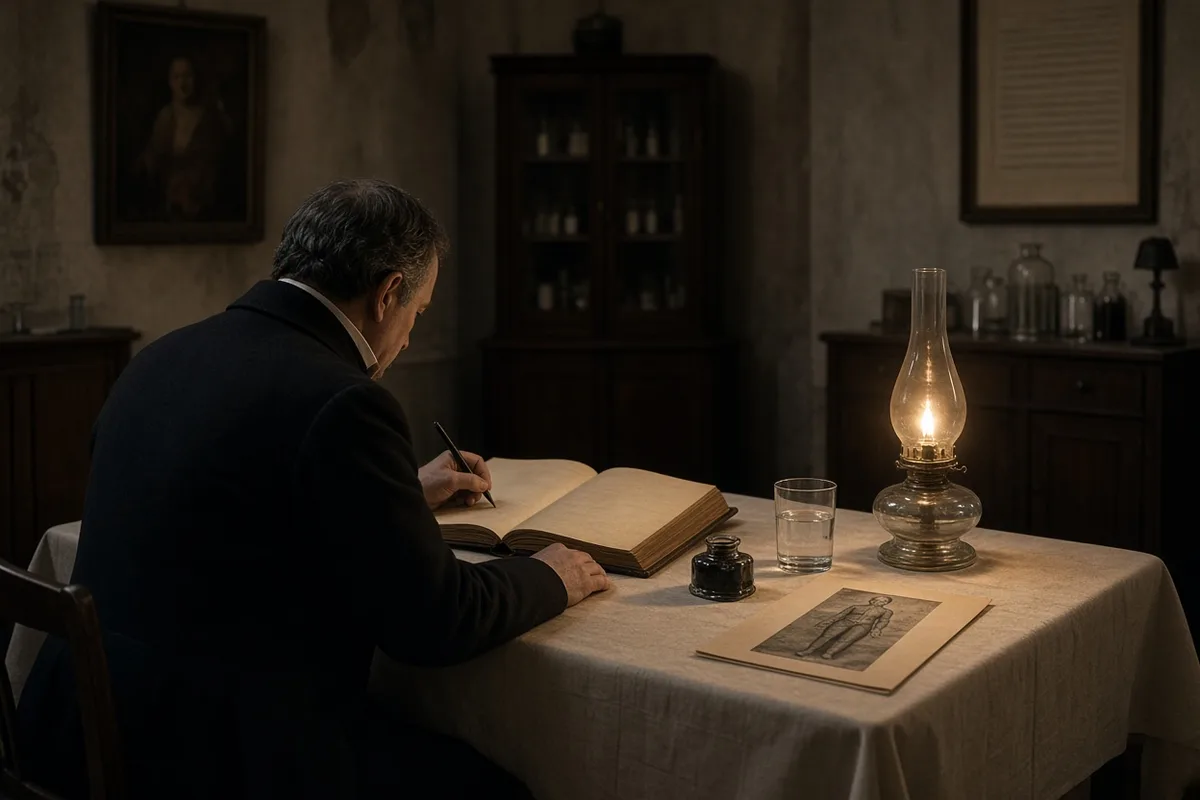
Carrel wrote in his notebook while the light was still good. He recorded the time, the names of the three doctors present, and the measurements he had taken before and after. He did not use the word cure. He described the disappearance of the signs he had recorded that morning.
The medical commission met the next day in a small room behind the basilica. Carrel presented his notes. The members examined Marie again. She walked the length of the room and back. One of the older surgeons asked whether any medication had been given on the train. Carrel answered that none had been administered beyond the usual sedatives for pain.
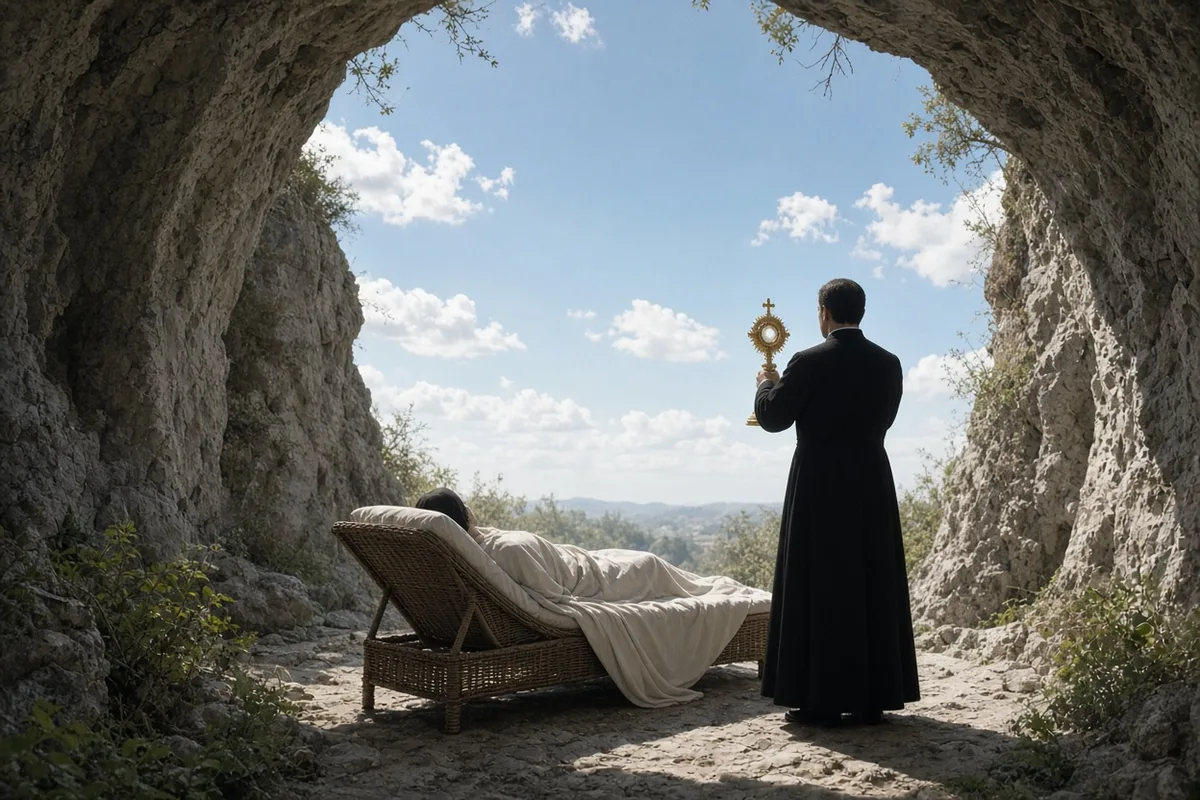
On the return journey Marie sat by the window. She ate a little bread and drank broth without difficulty. Carrel checked her twice each hour. He still made no announcement to the other passengers. At the Paris station her family met the train. She stepped down without help.
Carrel returned to his laboratory work. He spoke of the case only when asked. Four years later he published the first of his papers on vascular suture. In 1912 the Nobel committee recognized that work. He kept the notebook from the pilgrimage among his private papers. The pages carried the date May 28, 1902, and the name Marie Bailly written in his hand.
He never joined the organized pilgrimages again. When visitors asked about Lourdes he answered that he had seen one recovery whose mechanism he could not explain. He continued to keep a culture of chick-heart cells alive in solution for decades. The glass vessel stood on a shelf in his New York laboratory. He checked the temperature each morning before beginning the day’s operations.
In 1913 Carrel accepted the chair of experimental surgery at the Rockefeller Institute and moved with his wife Anne to a house on East Sixty-sixth Street. Each morning he arrived at the laboratory by seven, removed the cotton plug from the flask containing the chick-heart cells, and replaced the nutrient fluid with a fresh mixture of Locke's solution and embryonic extract prepared the previous evening by his assistant, Albert Ebeling. On 17 April 1914 he dictated a letter to the Bureau des Constatations Médicales at Lourdes requesting a copy of the original temperature chart from the train; the reply, signed by Dr. Auguste Vallet, arrived on 9 May and recorded a pulse of 124 at 4:15 p.m. on 27 May 1902 and 84 at 6:40 p.m. the following day. Carrel filed the document in a folder labeled “Bailly, 1902” that he kept in the bottom drawer of his desk.
Marie Bailly returned to her family home in Saint-Étienne in June 1902 and took employment as a seamstress in the workshop of the Maison des Dames de la Charité. On 14 September 1905 she wrote to the Medical Bureau that she had gained eleven kilograms and could walk four kilometers without fatigue; the letter is preserved in the archives under reference MB-1902-47. In 1911 she entered the novitiate of the Sisters of Saint Joseph at the mother house in Lyon, taking the name Sister Marie-Ange. She worked in the orphanage infirmary until 1927, when she was transferred to the order’s hospital in Marseille. Hospital registers show she assisted at 312 deliveries between 1928 and 1933 without missing a day of duty.
The International Medical Commission examined thirty-seven cases during the 1903 pilgrimage. Carrel’s notes on Marie Bailly were read aloud by Dr. Gustave Le Bec on 22 August; the transcript records Le Bec stating that “the abdominal wall, previously tense and tympanitic, now yields normally to palpation.” No further official inquiry was opened until 1927, when Dr. Paul Boulanger requested the original notebook for comparison with a similar case of tuberculous peritonitis. Boulanger’s report, published in the Revue de Chirurgie, cites the measurements Carrel had entered on the train: transverse diameter 31 cm before immersion, 19 cm immediately afterward.
On 27 October 1936 Carrel wrote from New York to his former assistant in Paris, Dr. Claude Regaud, describing the chick-heart culture as still contracting at 72 beats per minute after twenty-four years. The letter, now in the Regaud papers at the Institut Pasteur, adds that the original Lourdes notebook remained in a locked safe and that he had refused three separate requests from French Catholic periodicals to publish its contents. Carrel returned to France in 1939 and established a small laboratory at the Fondation Française pour l’Étude des Problèmes Humains in Paris. On 4 June 1943 he dictated a memorandum to his secretary noting that the culture had finally been discarded after thirty-four years because of repeated bacterial contamination during the wartime power shortages.
Marie Bailly, still known in the convent as Sister Marie-Ange, died at the Hôpital Saint-Joseph in Marseille on 22 January 1934 at 7:40 a.m. The death certificate, signed by Dr. Henri Fabre, lists the cause as pneumonia following influenza. Two nurses who had worked with her for nine years signed a statement that she had never again required abdominal treatment after the 1902 journey. Her burial took place in the convent cemetery at La Garde, where the headstone records only her religious name, the date of her healing, and the single word “Lourdes.”
Carrel himself died in Paris on 5 November 1944. His body was buried in the family plot at Sainte-Foy-lès-Lyon beside his parents. Among the papers delivered to the executor, Dr. Pierre Lecomte du Noüy, was the original Lourdes notebook; the final entry, dated 29 May 1902, reads: “Patient walked length of platform without assistance. No recurrence of ascites observed.” The notebook is now catalogued as MS 1287 in the Rockefeller University Archives.
The Bureau des Constatations Médicales continues to occupy the same two rooms behind the basilica at Lourdes. In 2022 its director, Dr. Alessandro de Franciscis, reported that 7,000 medical dossiers had been reviewed since 1902 and that seventy cases remained classified as inexplicable. The original stretcher used for Marie Bailly is preserved in the museum adjacent to the grotto, its canvas still marked with the number 14 painted in black. Each year on 28 May a single candle is placed beside it by the night watchman before the first medical examination begins at 6 a.m.
In the winter of 1949 Alexis Carrel’s widow donated the chick-heart flask, empty and sealed with paraffin, to the museum of the Collège de France. The glass vessel stands on a shelf in the same room where Carrel once lectured on vascular anastomosis. The last recorded visitor to request a viewing was a retired surgeon from Saint-Étienne who signed the guest book on 11 March 1973 and wrote only his name, Dr. Jean Bailly.
The museum register at the Collège de France lists seventeen additional requests to examine the sealed flask between 1974 and 1989, each entry noting the visitor’s institutional affiliation and the precise time spent in the room. On 3 February 1981 Professor Henri de Mondeville of the Faculté de Médecine de Paris recorded the internal volume of the vessel as 2.4 liters and noted that the paraffin seal remained intact with a single hairline crack along the lower rim. The same register shows that on 14 June 1987 Dr. Élisabeth Carrel, great-niece of the surgeon, deposited a carbon copy of a 1938 letter from Albert Ebeling describing the last medium change performed on 2 April 1943 using 180 milliliters of embryonic extract prepared from eggs obtained at the Vaugirard market.
In 1994 the Fondation Carrel transferred the original temperature chart from the 1902 pilgrimage to the Archives Nationales under cote 498 AP 27, where it is stored in a folder containing thirty-two other documents relating to the Bureau des Constatations. The chart bears Carrel’s marginal note “pouls 84, abdomen plat” written in pencil at 6:40 p.m. on 28 May. A microfilm copy was made in 2003 and is available at the Rockefeller University Library under call number RC 870 C37.
The grotto at Lourdes installed a new set of bronze plaques in 2015 listing the seventy cases still classified as inexplicable; Marie Bailly’s name appears on plaque 14 in characters 2.3 centimeters high. The plaque records the date of examination as 29 May 1902 and the names of the three physicians who signed the preliminary report: Carrel, Vallet, and Le Bec. Adjacent to the plaque stands a vitrine containing the canvas stretcher numbered 14, its wooden frame reinforced in 1968 with brass corner plates stamped “Ateliers de la SNCF, Tarbes.”
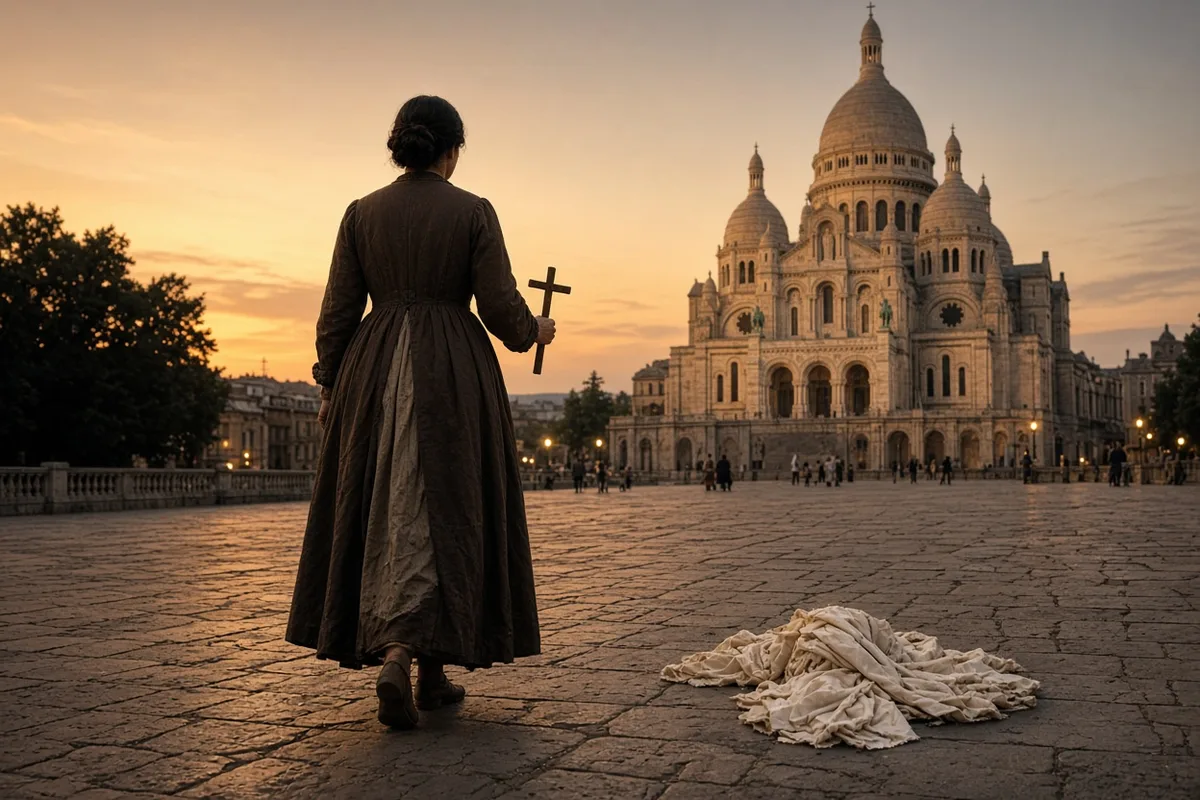
On 28 May 2019 the night watchman at the grotto placed the annual candle beside the stretcher at 5:47 a.m. and recorded the act in the logbook maintained by the Hospitallers of Saint John of God. The same logbook notes that at 6:12 a.m. Dr. Alessandro de Franciscis examined the canvas for insect damage and found none, then measured the distance from the stretcher’s head rail to the pool edge as 11.4 meters.
Dr. Jean Bailly’s son, Dr. Philippe Bailly, visited the Collège de France museum on 22 September 2004 and signed the guest book with the additional notation “fils du chirurgien de Saint-Étienne.” The museum curator’s report for that quarter states that Philippe Bailly requested and received permission to photograph the flask with a 35-millimeter camera using Kodak T-Max 400 film, producing three negatives now filed under accession number 2004-47.
In March 2023 the current director of the Bureau des Constatations, Dr. de Franciscis, authorized digitization of the 1902 dossier MB-1902-47. The scanning was performed by technician Marie-Claire Pons on equipment calibrated to 600 dpi; the resulting files total 214 megabytes and include the original letter dated 14 September 1905 in which Marie Bailly reported her weight gain of eleven kilograms. The digital archive is stored on a server located in the same building that houses the two examination rooms used since 1905.
The last recorded individual to view both the stretcher at Lourdes and the flask at the Collège de France is Dr. Claire Vallet, great-granddaughter of Dr. Auguste Vallet. On 11 October 2022 she signed the Lourdes guest book at 4:35 p.m. and the Paris register at 11:20 a.m. the following day, entering in each case only her full name and the single word “documentation.”