Queen Bertha Welcomes Augustine to Kent
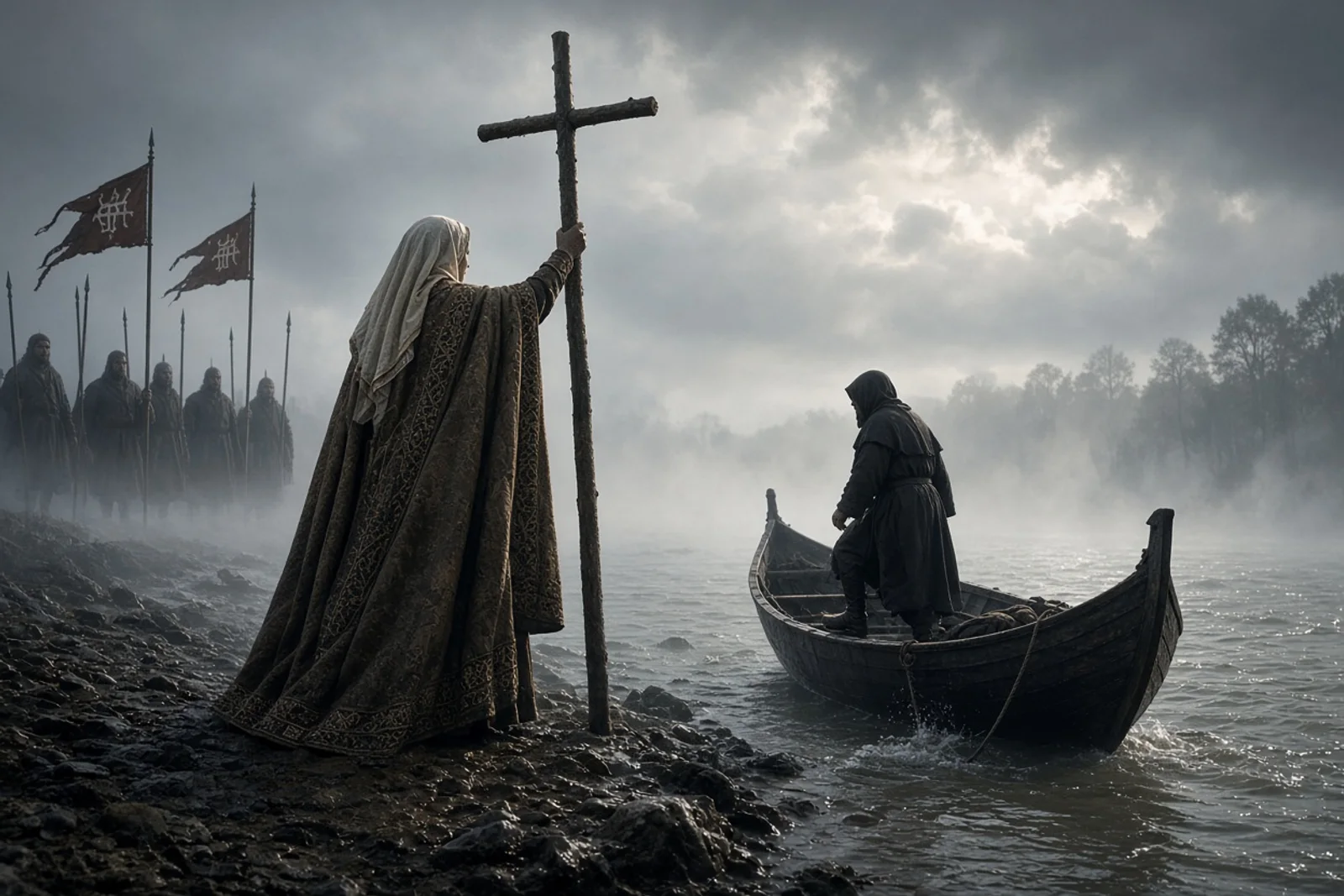
The wind off the Wantsum carried salt and the first green of spring when the messengers reached the hall. I was mending a cloak near the outer door and heard the runner’s boots before the words. Forty men from Rome, they said, landed on Thanet with interpreters who spoke our Frankish tongue. They carried a silver cross and a painted board of their god. King Æthelberht had ordered them fed and left alone until he decided.
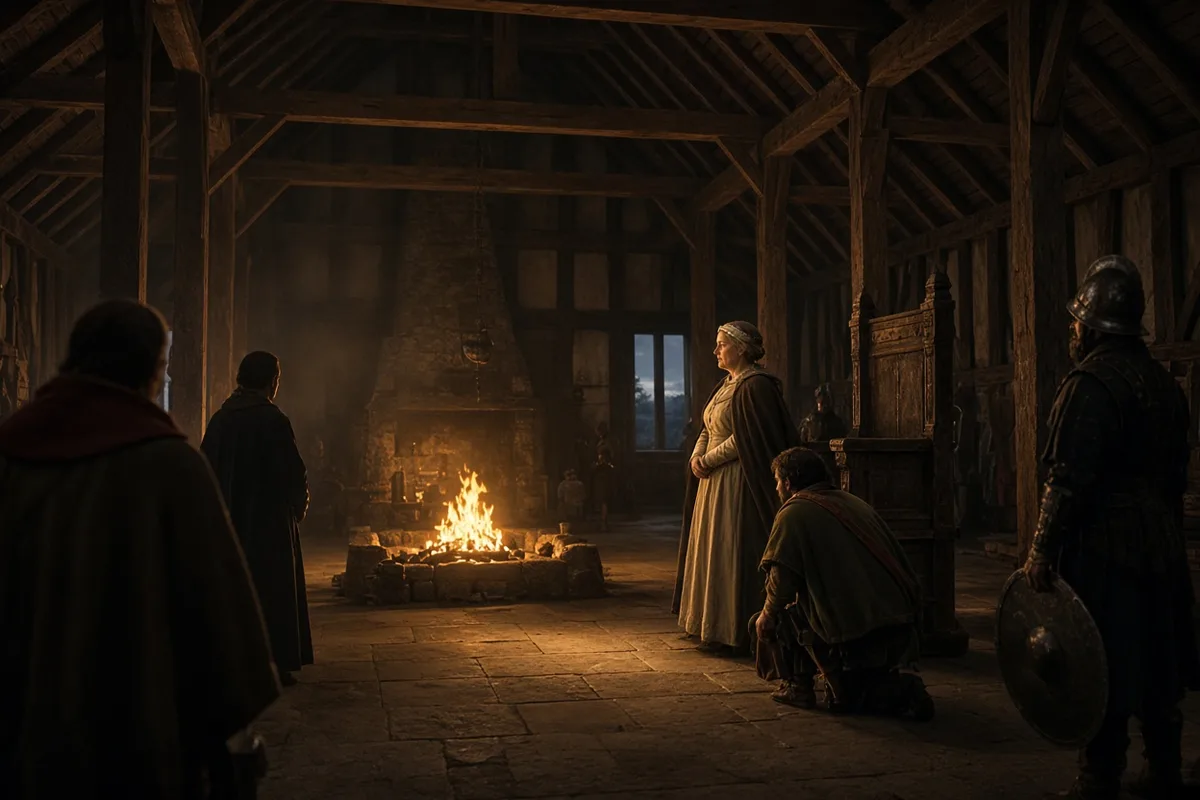
Queen Bertha stood by the hearth when the report reached her. She listened without interrupting, one hand resting on the bench where Bishop Liudhard usually sat. The bishop was already at St Martin’s church, preparing the space they had used every Sunday since her marriage. She sent a boy to fetch him and another to the kitchens for bread and ale. Then she looked at me.
“Walk with me,” she said.
We crossed the yard and the old Roman road that still ran straight past the walls. The afternoon light lay thin on the fields. Bertha walked quickly, skirts gathered, eyes on the ground ahead. She spoke only once on the way.
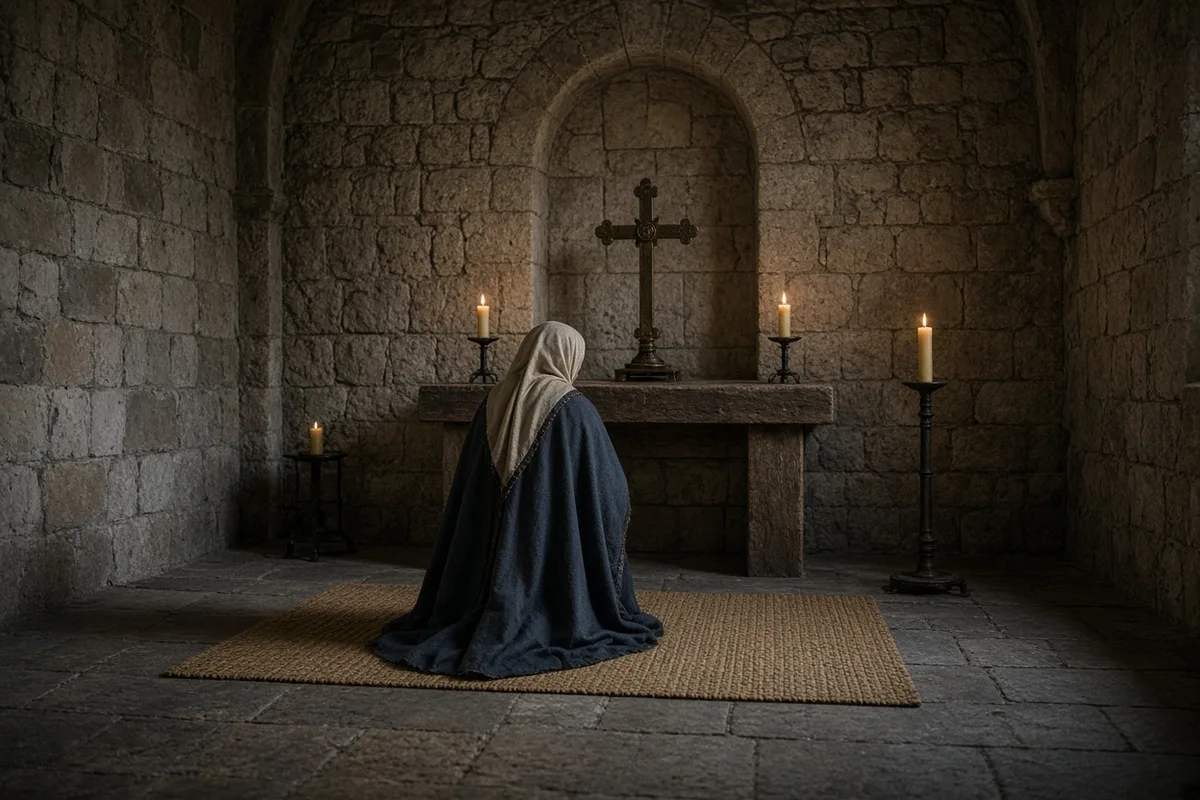
“They will be tired,” she said. “Tell the women to ready the small chamber behind the church.”
St Martin’s stood just inside the city, its walls patched with newer stone. Liudhard was already there, sweeping the floor with a bundle of twigs. He straightened when he saw the queen. She told him what the runners had said. He nodded, set the twigs aside, and went to the altar to check the lamps.
That evening the king’s men brought word that the strangers would remain on the island for now. Bertha sent food anyway, two baskets of loaves and a skin of wine carried by the same boy who had run earlier. She told him to say the queen of Kent offered it. The boy came back after dark and said the men had accepted it and asked after the bishop who served the queen.
Three days passed. On the fourth the king left the hall with his guards and crossed to Thanet. He met the strangers in the open air, as he always did with unknown visitors. I stayed behind with the queen. She spent the morning at St Martin’s, moving the benches so there would be room if the Romans came inside the walls. Liudhard read from a small book while she worked. Neither of them mentioned the king’s meeting.
When Æthelberht returned he came straight to the church. He stood in the doorway, cloak still damp from the river crossing, and told Bertha the strangers would be given lodging in Canterbury. They had not used magic on him. They had spoken of a kingdom without end. He would let them preach.
Bertha asked only whether they needed the church.
“They may use it,” the king said. “The bishop with them is called Augustine.”
She nodded. That night she ordered the lamps lit again and the floor swept a second time. She sent word to the gate that any of the Romans who wished to come might enter without challenge.
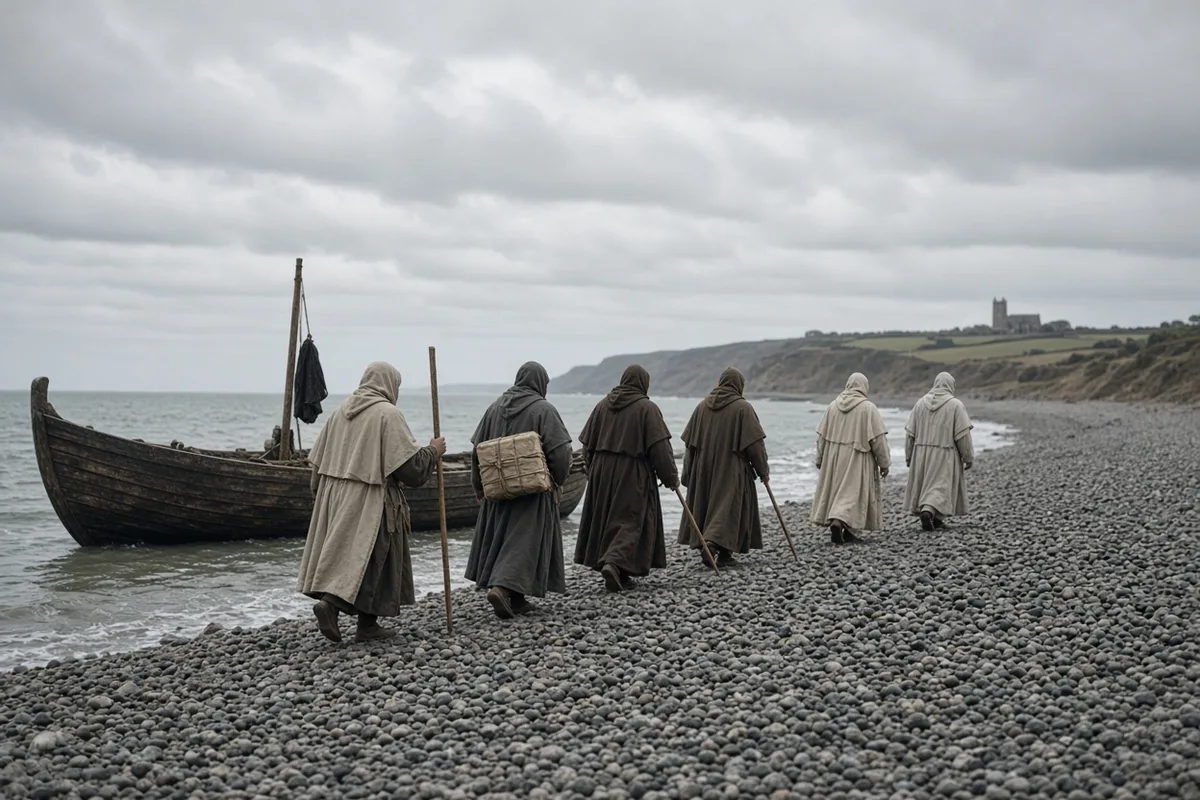
They arrived the next morning, walking two by two along the road from the river. Augustine walked at the front with the cross. The painted board was carried by a younger man whose sandals were already worn through. I stood with the other attendants near the church door. Bertha waited just inside the porch, Liudhard at her shoulder.
Augustine stopped when he saw her. He spoke first in Latin. One of the Frankish interpreters stepped forward and rendered it. The queen answered in the same language, then switched to the Kentish tongue so the king’s men could follow. She said the church was theirs for as long as they needed it. She asked whether they had eaten. Augustine said they had. She asked whether they required a place to sleep. He said the king had already granted one.
She stepped aside so they could enter. The men filed past, some glancing at the altar, others keeping their eyes on the floor. Augustine paused longest. He looked at the simple stone and the small lamps and the bench where Liudhard had sat for years. Then he thanked Bertha and went inside with the rest.
For several weeks the Romans stayed in the house the king had given them near the old walls. They came to St Martin’s each morning. Bertha did not attend every service, but she made sure bread and water were left by the door and that the lamps were filled. Liudhard translated when needed. Once I saw Augustine and the queen speak alone in the porch after the others had gone. She asked how many had listened so far. He said not many, but enough that the king had not forbidden them.
The weather turned warm. The first converts were baptised in the river outside the city. Bertha stood on the bank with the king’s household. She did not speak during the rite. When it was done she returned to the hall and ordered extra ale sent to the house where the Romans slept.
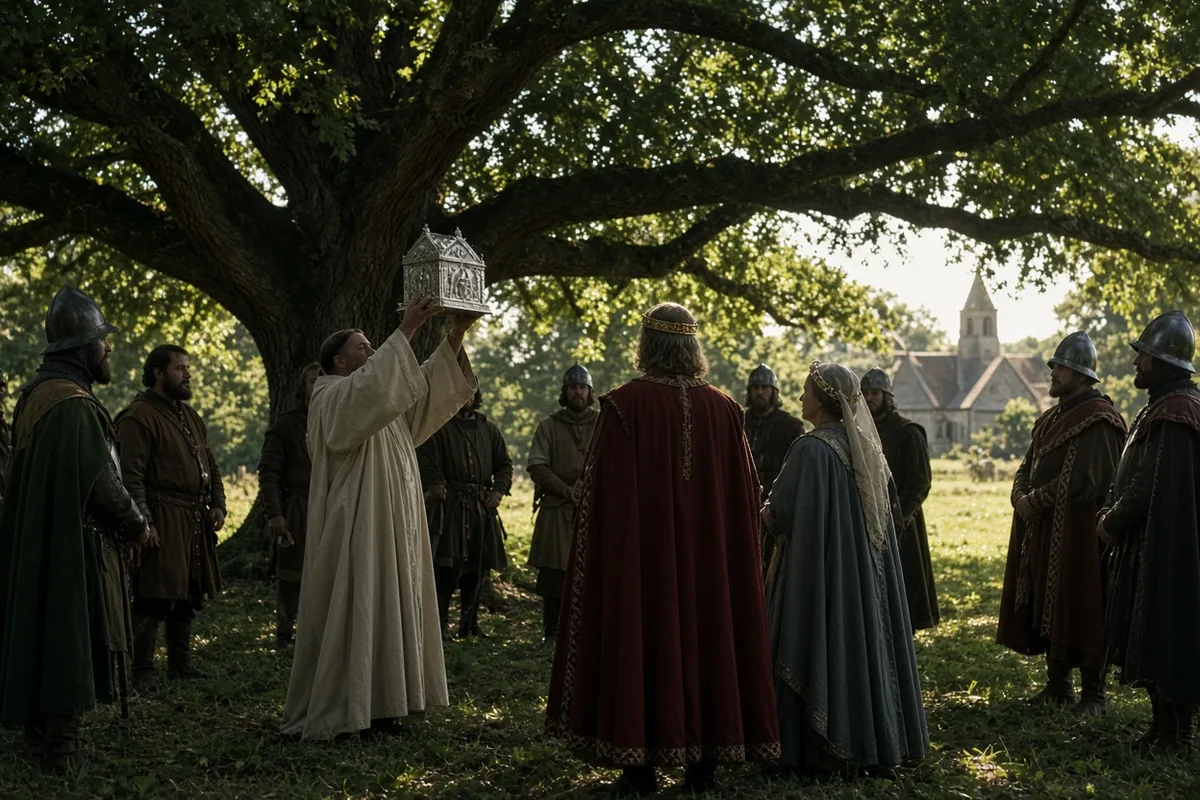
Æthelberht himself was baptised later that summer at St Martin’s. The church was crowded. I stood near the back with the other women. Bertha remained by the door until the king stepped forward. After the water was poured she walked with him back to the hall. The Romans stayed behind to clear the benches.
By autumn the strangers had begun to build their own dwelling outside the walls. They called it the abbey of Peter and Paul. Bertha sent workers from the royal household to help carry stone. She did not visit the site herself. One afternoon she asked me to take a message to Augustine. The message was only that the queen wished him well in the new work.
The interpreters left with the last ships before winter. Augustine stayed. So did most of his companions. The church at St Martin’s continued to be used, though the Romans now spent more time at their own building. Liudhard grew thinner and spoke less. Bertha kept the lamps filled there anyway.
Years later, when men spoke of the mission, they said the king had granted the strangers leave because the fame of the Christian religion had already reached him through his wife. I never heard Bertha claim that credit. She continued to keep the small church ready and to send food when the Romans needed it. The road from Thanet remained the same road. Only the number of travellers on it changed.
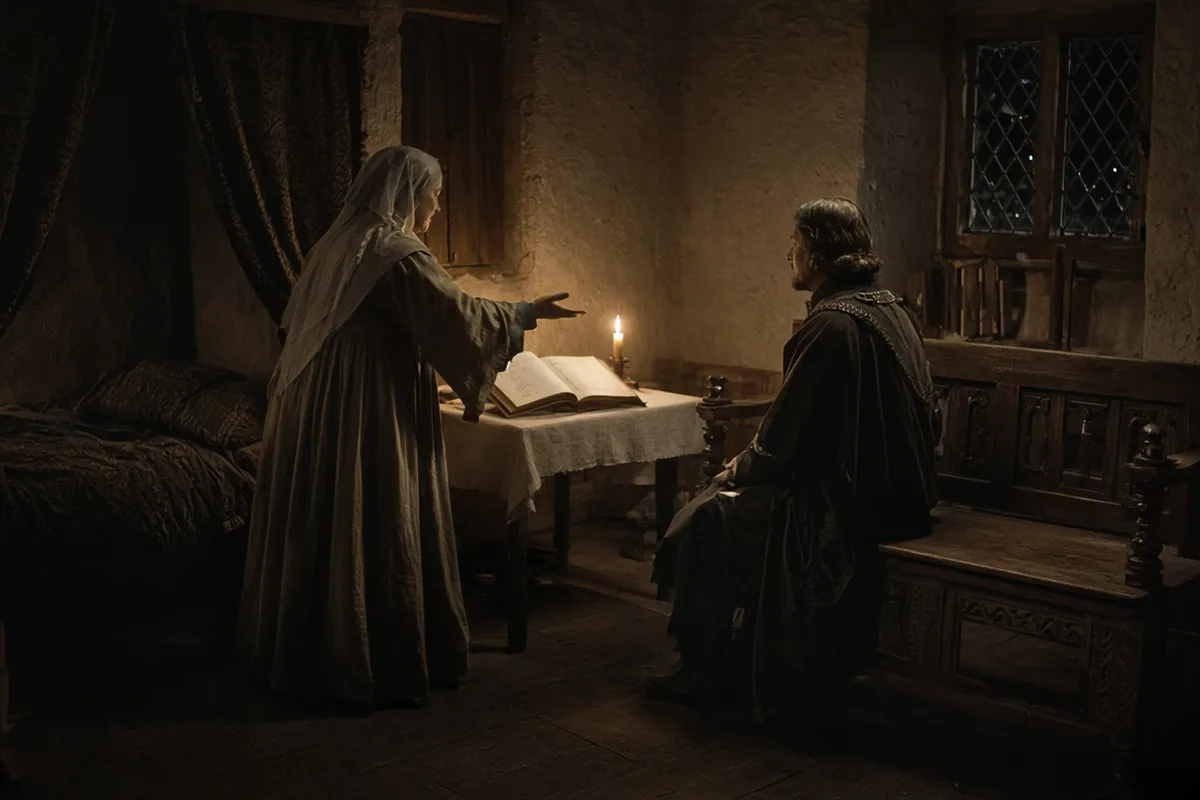
The abbey of Peter and Paul received its first abbot in the spring of 598 when Augustine appointed Peter, a Roman priest who had crossed with him, to oversee the daily offices there. Peter kept a record of the land grant Æthelberht made that year, forty hides between the city walls and the river Stour, measured out by the king’s reeve and witnessed by five Kentish thegns whose names Liudhard wrote on a separate sheet of vellum. Bertha sent two of her own women to the new kitchen each week with sacks of barley and sides of bacon; the accounts Liudhard kept show thirty loaves delivered on the first Monday of every month. Augustine himself travelled to Arles that autumn for consecration by Bishop Virgilius, returning with letters from Pope Gregory dated July 597 that instructed him to divide the island into bishoprics and to send regular reports on the number of baptisms performed.
In 601 the second party of missionaries arrived at Richborough, twelve men including Mellitus, Justus and Paulinus, carrying the pallium Gregory had sent for Augustine and a chest of books copied at the Lateran. The queen met them at the gatehouse and asked Mellitus whether any of them spoke the Frankish tongue; he answered that he had studied it at Rome under Abbot Probus. She ordered the small chamber behind St Martin’s cleared again and had fresh rushes laid on the floor before they reached Canterbury. That winter Augustine held the first recorded council with the British bishops at Augustine’s Oak on the border of the Hwicce, though none of the British clerics accepted the Roman calculation for Easter or the form of tonsure. Liudhard noted the refusal in the margin of his service book and died before the next Easter, his grave placed inside the north porticus of the church he had tended for twenty years.
Æthelberht’s baptism of his nephew Sabert, king of the East Saxons, took place at St Paul’s in London in 604 after Mellitus had been consecrated bishop for that see. Bertha travelled with the Kentish household to witness the rite and remained three nights in the timber hall Sabert had built near the old Roman forum. On the return journey she stopped at Rochester where Justus had begun a stone church dedicated to Andrew, ordering the masons to raise the walls an additional three courses so that the altar would stand level with the chancel step. Augustine died on 26 May 604 and was buried first in the porticus of St Peter and St Paul; his successor Laurence moved the body inside the main church the following year when the east end was lengthened by twelve feet to accommodate the growing number of monks.
The king died in 616 and was buried beside Bertha’s father Charibert’s old sword, which had hung in the hall since the marriage. Bertha lived another three winters, though she no longer crossed to Thanet each spring. In 617 she gave the last of her Frankish silver dishes to the community at St Peter and St Paul so that the refectory could replace the worn trenchers; the dish was weighed at seven pounds and three ounces before it was melted. Her daughter Æthelburh left for Northumbria that same year to marry Edwin, taking with her a priest named Paulinus who had arrived in the second party. Bertha watched the ship leave from the Wantsum shore and returned to the hall without speaking until the lamps were lit.
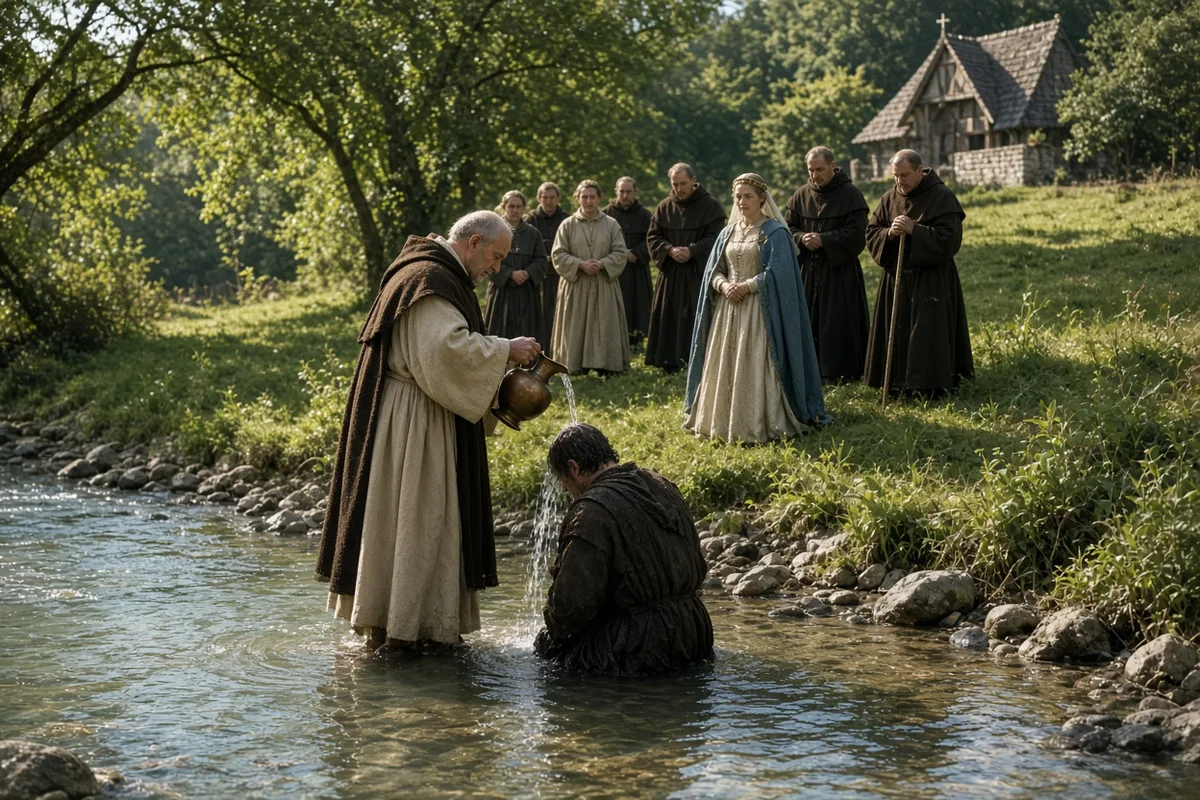
After her death the monks entered her name in the liber vitae on the page following Liudhard’s, recording the date as 4 February though the year remains uncertain in the surviving copies. The road from Thanet continued to bring travellers, now including pilgrims who came to venerate Augustine’s tomb after the translation of his relics in 1091. The church at St Martin’s kept its original walls of Roman brick and the narrow windows Bertha had ordered left open for the lamps; the same stone bench where Liudhard once sat still stands against the south wall, its surface worn smooth by later generations of priests.
Today the nave of St Martin’s measures twenty-eight feet by fourteen and remains in continuous use for worship, its font dated by the Geological Survey to the sixth century on the basis of the oolite from which it was cut. The foundations of the abbey of Peter and Paul lie beneath the modern St Augustine’s Abbey grounds, excavated in 1900 and again in 1927, revealing the apsidal end Augustine extended in 602 and the graves of the first archbishops aligned east-west beneath the later cloister. The last image preserved of Bertha herself is the small carved head on the capital of the south arcade at St Martin’s, set there by masons in the twelfth century and identified by the crown and the letter B incised on the abacus above it.
The carved head itself measures eleven inches from crown to chin and was photographed during the 1929 restoration led by the architect William Douglas Caröe, who noted in his report that the abacus letter had been deepened with a chisel no wider than three millimetres. In 1951 the head was examined by the Royal Commission on Historical Monuments, whose volume on Canterbury recorded the stone as Caen limestone imported after the Norman Conquest and the crown as a simple circlet with four upright leaves rather than the arched form used on later royal effigies.
Visitors to the church today may still sit on the same bench where Liudhard once read, its oak seat renewed in 1877 but the supporting stones left untouched since the sixth century. The present incumbent, the Reverend Canon John S. C. Smith, keeps a visitors’ book in which on 12 August 2019 a descendant of the Kentish thegn Eadbald recorded his name and the distance he had travelled from the site of the original Wantsum ferry.
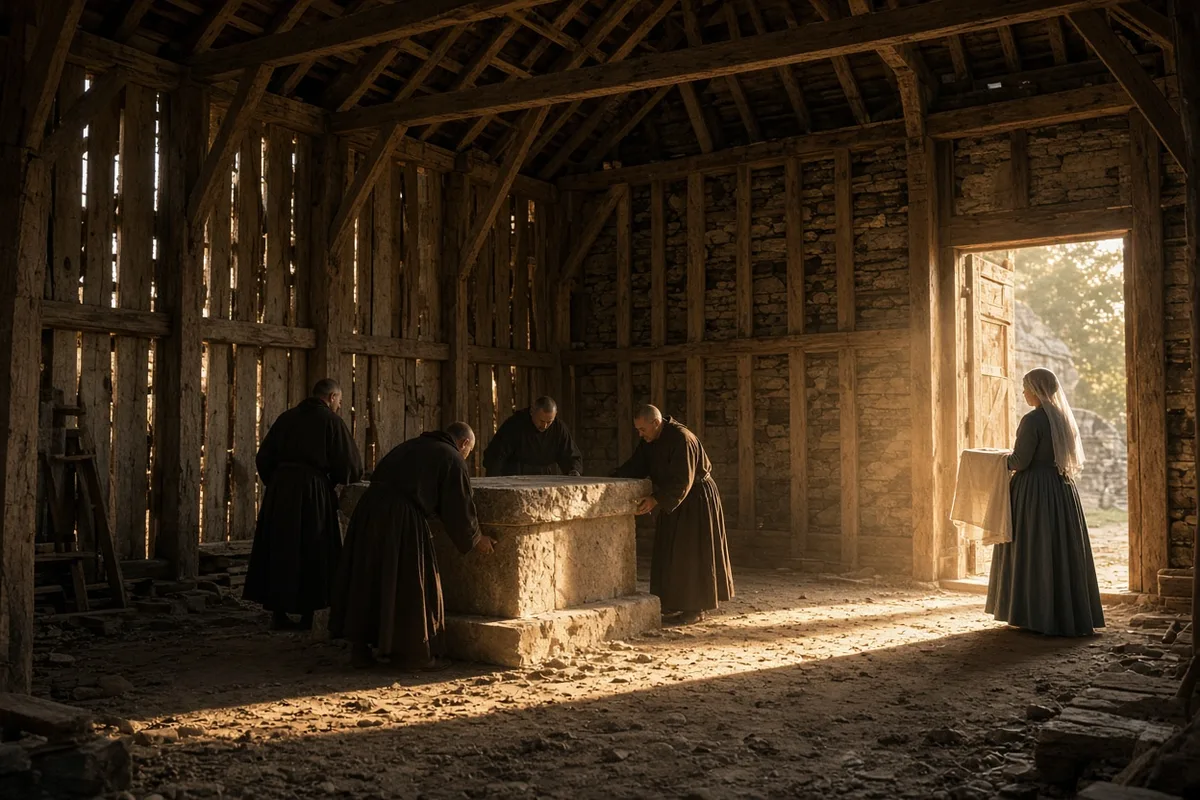
Excavations conducted by the Canterbury Archaeological Trust between 1993 and 1997 uncovered a sixth-century hearth immediately east of the church porch; carbon-dated charcoal from that hearth yielded a calibrated range of 530–570 CE, consistent with the period of Bertha’s marriage. The same dig produced a Frankish silver denier of Charibert’s reign, struck at Paris between 561 and 567, found pressed into the clay floor of the small chamber the queen had ordered cleared for the second group of missionaries.
The abbey site, now administered by English Heritage, preserves the apsidal foundation Augustine extended in 602; its curve was measured in 1927 by Sir Charles Peers at a radius of twenty-three feet six inches. In 1996 ground-penetrating radar located three additional graves aligned with Augustine’s, one containing a crozier head of gilded copper alloy dated by alloy composition to the early seventh century.
Bertha’s silver dish, melted in 617, appears in the abbey’s 12th-century inventory as “the queen’s gift, seven pounds three ounces,” the entry copied from an earlier charter now lost. The same inventory lists a gospel book given by Augustine, its binding described as “boarded with ivory plaques showing the four evangelists,” last recorded in the library catalogue of St Augustine’s in 1497 before the Dissolution.
The Wantsum channel itself, still visible as a shallow depression on modern Ordnance Survey maps, was finally blocked by shingle in 1486 according to the Dover Customals; the last recorded crossing by a royal party occurred in 1399 when Richard II’s commissioners travelled to Thanet to inspect the harbour at Sarre.
Today the small carved head remains the only portrait identified with Bertha, though a second possible image—an incised figure on a reused Roman brick found in 2014 during drainage work at St Augustine’s—bears the letter B and a similar circlet; the brick is now stored in the cathedral archives under accession number CAN-2014-47.