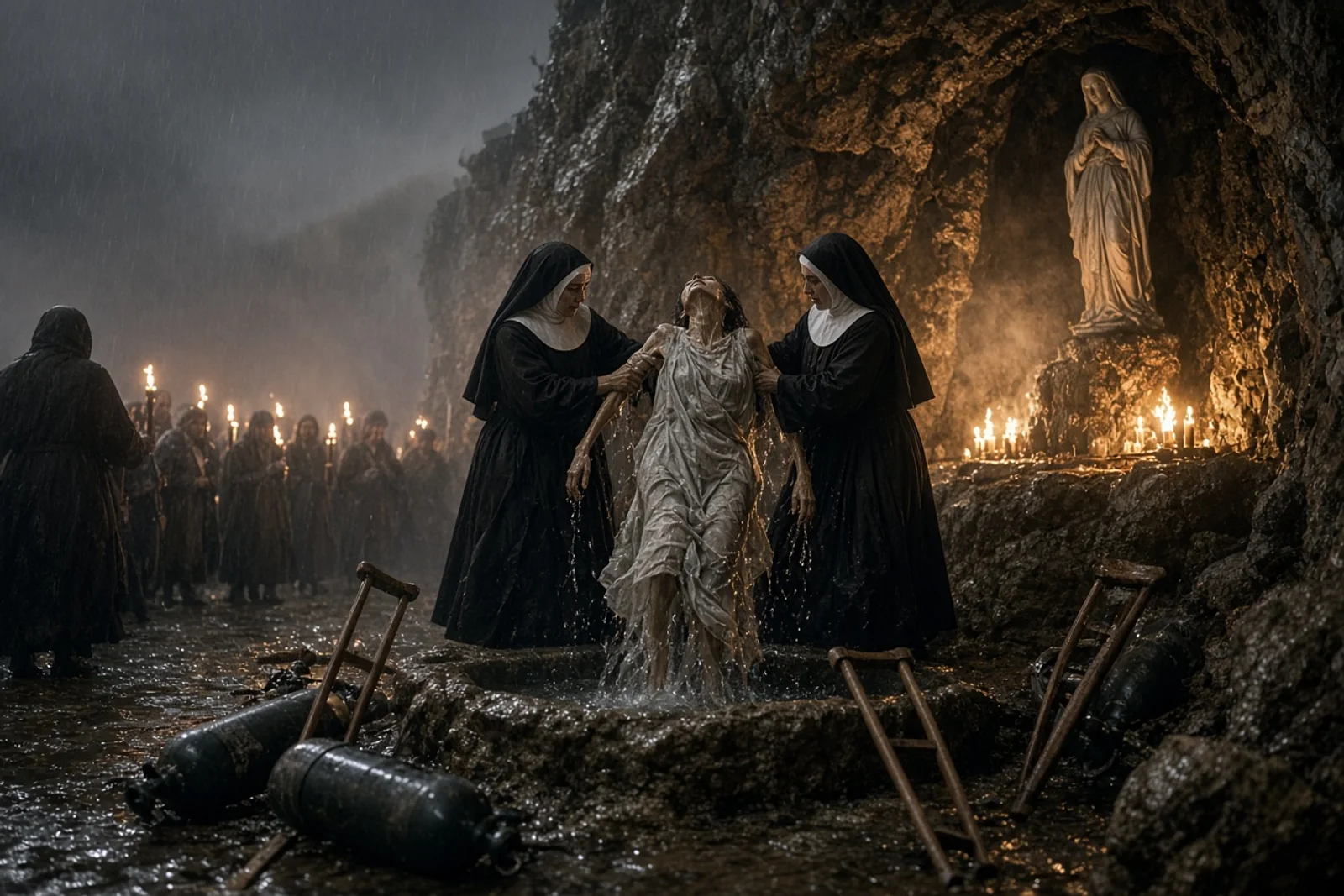
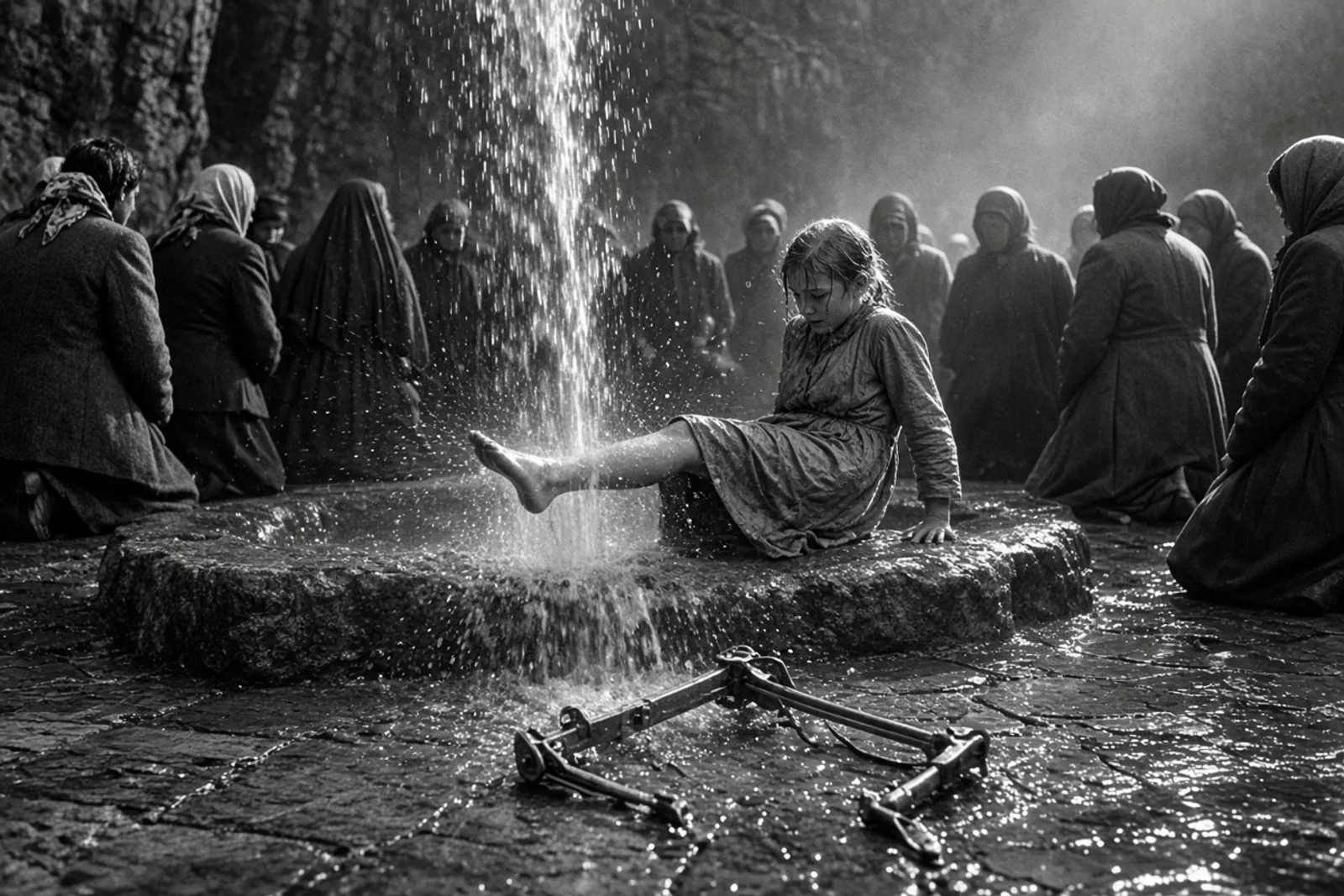
The Healing of Sister Mary of the Presentation at Lourdes
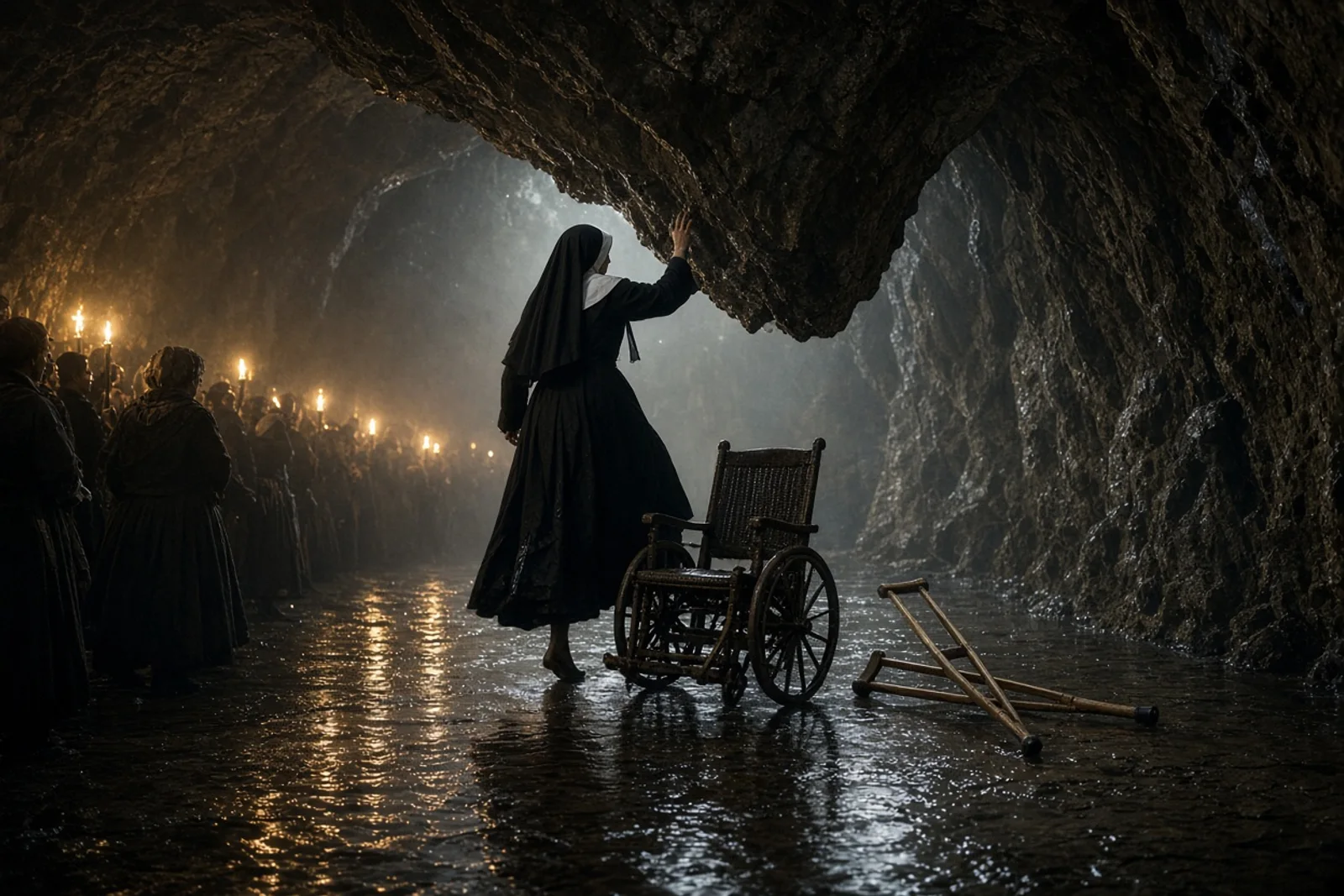
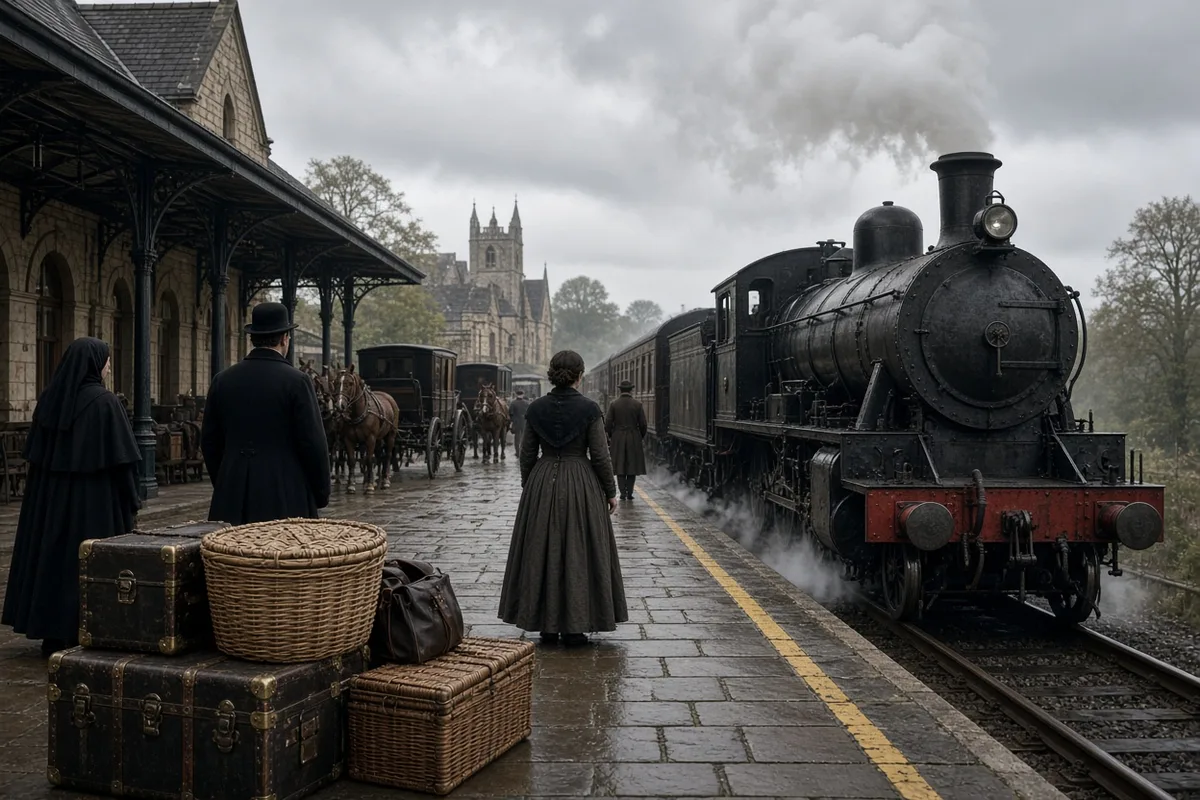
The train swayed hard on the southern run out of Lille, and I steadied the basin while Sister Marie de la Présentation tried once more to keep broth down. Twelve years of the gastroenteritis had left her frame light as paper. The Franciscan habit hung loose at her shoulders. She had insisted on the journey anyway, and the doctor in Lille had simply written the permission without argument.
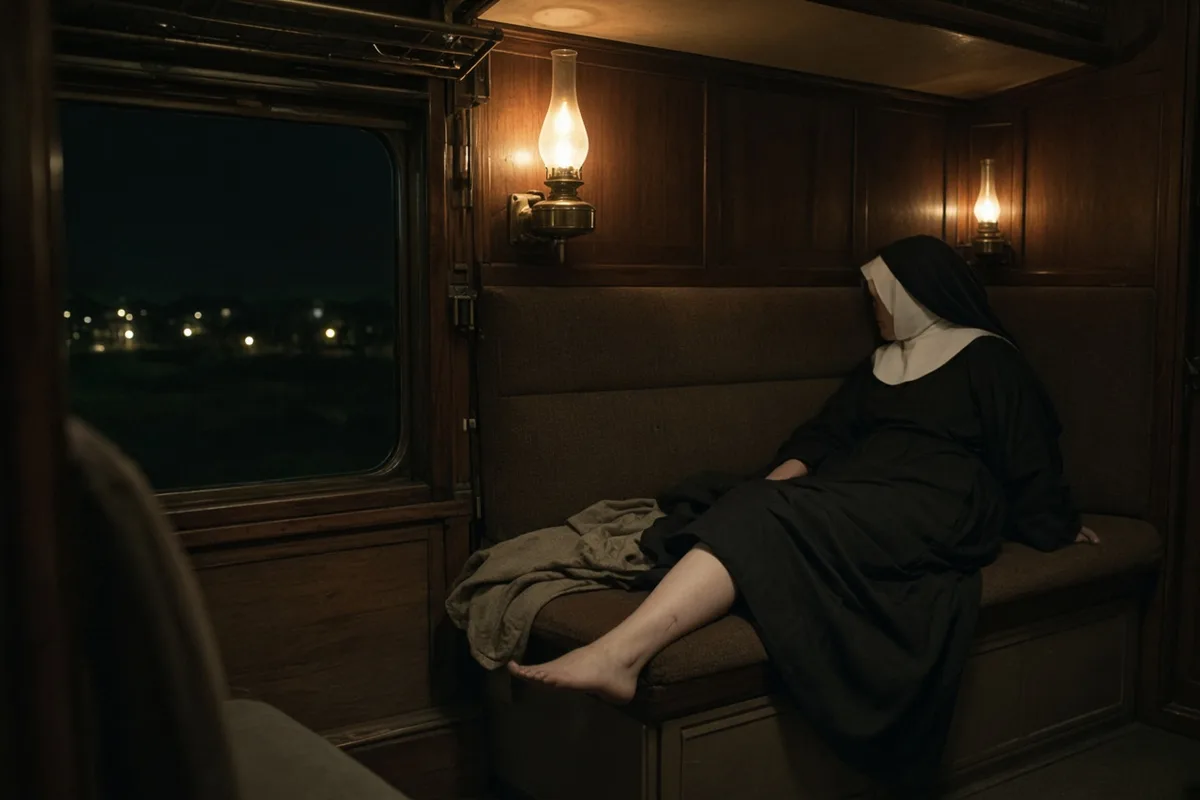
Two days of track lay ahead. The compartment smelled of coal smoke and the vinegar cloths we used to cool her forehead. At each station I watched the platform crowds thin as we moved farther from the north. She slept in short stretches, waking to the same cramping that had emptied her for years.
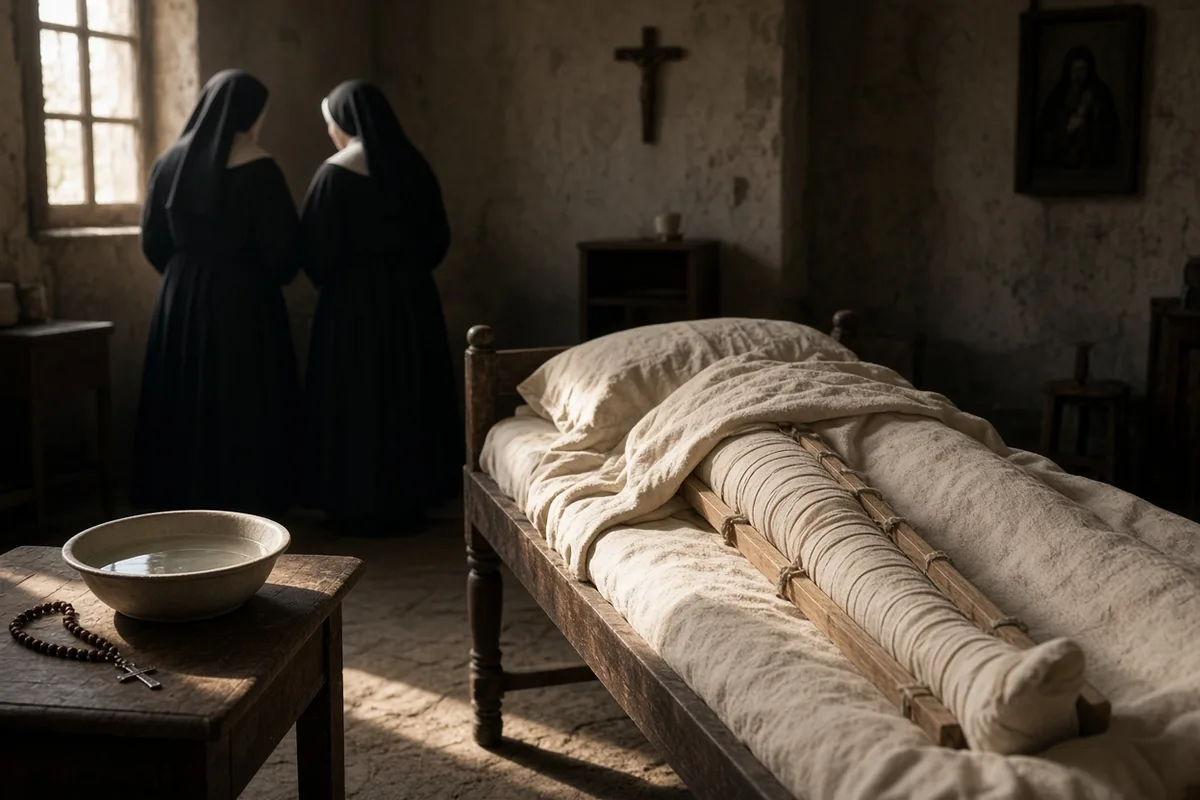
By the second morning the rhythm of the wheels seemed less punishing. She asked for a piece of bread. I broke it small and held the cup. She chewed slowly, then asked for another. Color showed at her cheekbones that had not been there the day before. The sisters traveling with us said nothing at first, only watched the way she sat upright without the usual pillows.
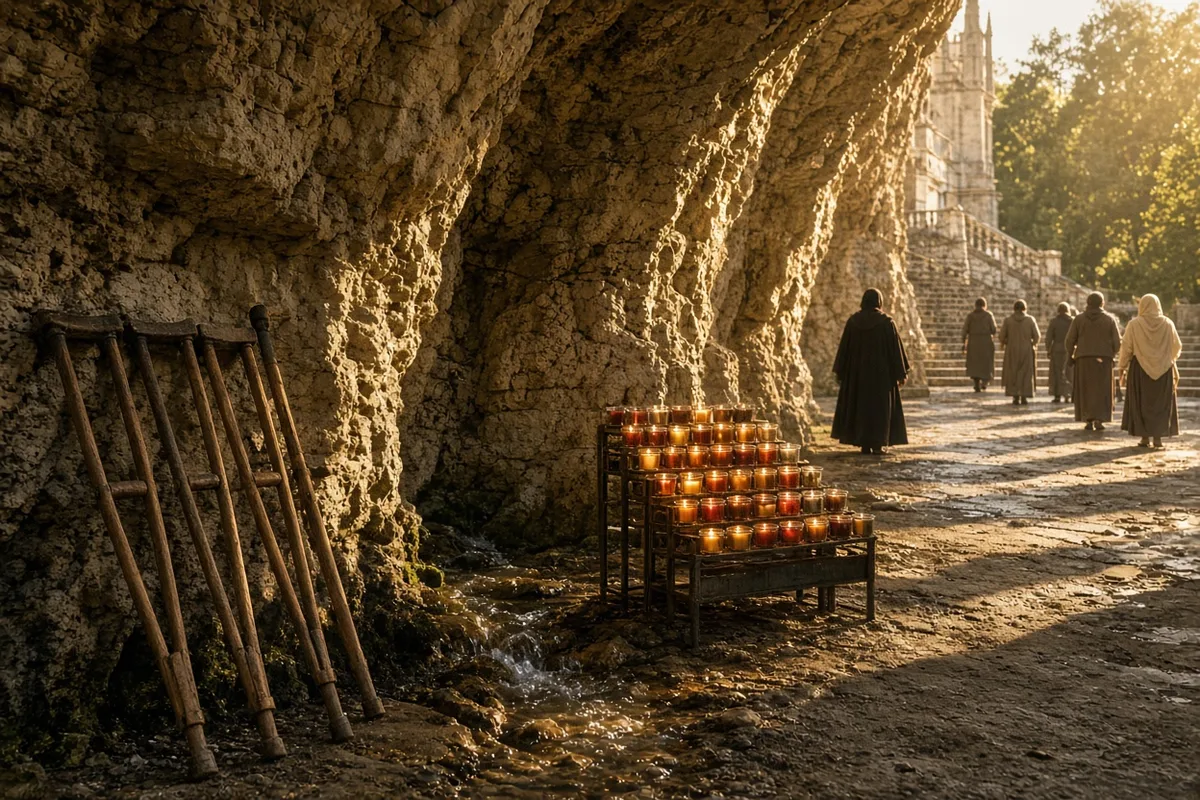
We reached Lourdes in late afternoon. The air off the Gave felt cooler than the train. Pilgrims moved in lines toward the Rosary church, some on stretchers, some walking with canes. Sister Marie wanted to pray inside before anything else. I walked beside her as far as the entrance, then waited on the steps while she went in alone.
Inside, the light through the windows caught the dust from hundreds of shoes. She knelt at a side bench near the back. After a few minutes her hands went to her middle. The pain came sharp enough that she bent forward until her forehead touched the wood. It lasted longer than the usual cramps, then eased. She stayed there until the church emptied for the evening.
When she stood again her step was steady. She walked the length of the nave without pausing. At the door she told me the pain had not returned. We ate a simple meal that night in the lodging house. She finished her portion and asked whether there would be more bread in the morning.
The next day she walked the grounds without fatigue. The sisters who had come with her from Lille examined her face and hands as if checking for fever. No trace remained of the swelling or the gray tone that had marked her for so long. She returned to the same bench in the Rosary church and prayed again, this time without interruption.
Word of the change reached the Medical Bureau two days later. Doctors asked her to describe the symptoms that had lasted twelve years and the sudden absence of them. She answered plainly, without exaggeration. They noted the date as the twenty-ninth of August. She stayed another week, gaining strength each day, then boarded the train north again.
Back in Lille the community watched her resume ordinary duties. She ate the same meals as the rest without difficulty. The chronic condition that had required constant care simply did not reappear. Letters passed between her physician and the Bureau in Lourdes. No relapse occurred in the months that followed.
Sixteen years later Monsignor François Delamaire, coadjutor of Cambrai, reviewed the documents. He examined the original medical statements, the testimony of the sisters who traveled with her, and the absence of any recurrence. On the fifteenth of August 1908 he declared the cure recognized for the diocese.
Sister Marie continued her work in Lille until age made rest necessary. She died quietly years afterward, still free of the gastroenteritis that had once defined every day. The record of the case remains in the Bureau files under her religious name, with the train journey and the bench in the Rosary church noted as the places where the change occurred.
In the weeks after the diocesan declaration Sister Marie resumed her place at the refectory table in the Lille convent of the Franciscan Sisters of the Presentation, taking the same portion of vegetable soup and rye bread each noon that the rule assigned. On 3 September 1908 she wrote to the mother superior in Cambrai that the cramps which had once kept her awake from Compline until Matins had not returned even once during the journey home, and she signed the letter with the full religious name she had received at her clothing in 1887. The community infirmarian, Sister Thérèse de l’Enfant Jésus, recorded in the house ledger that the patient now weighed fifty-eight kilograms, an increase of nine kilograms since the departure for Lourdes, and noted the date of each measurement through December.
By the spring of 1909 Sister Marie had been assigned to the linen room, where she counted and mended the altar cloths used at the daily Mass in the chapel of Saint Francis. On 14 May she told the visiting bishop of Arras, Monsignor Alfred Williez, that she could stand for the full three hours of the Rogation procession without the support of a chair, a detail the bishop entered in his own hand in the margin of the visitation report. The following year, on the feast of the Immaculate Conception, she was elected assistant to the sacristan and began keeping the keys to the vestment cupboards; the inventory she completed that December listed one hundred and twelve corporals, all accounted for without assistance from the younger sisters who had previously performed the task.
In 1914, when the German army occupied Lille, Sister Marie remained at her post in the linen room while the community sheltered in the crypt. She prepared bandages from the same linen she had once mended, and on 12 October she wrote to the Bureau in Lourdes that the supply of clean cloths had not run short despite the arrival of forty wounded soldiers. The letter reached the Bureau on 4 November and was filed under the same number given to her original cure testimony. After the Armistice she resumed the daily count of altar linens, adding an entry each month until her eightieth birthday in 1929.
On 22 June 1931 Sister Marie suffered a brief fever attributed to influenza and was confined to the infirmary for eleven days. The attending physician, Dr. Paul Giraud, recorded in the medical log that her temperature never exceeded 38.4 degrees Celsius and that she requested only water and dry toast. She returned to the linen room on 4 July and completed the quarterly inventory without omission. Her last recorded duty occurred on 17 March 1934, when she handed the sacristan the key to the cupboard containing the Lenten vestments and stated that the count of albs remained at forty-seven.
Sister Marie died in the convent infirmary on 8 November 1935 at the age of eighty-six. The death certificate, signed by Dr. Giraud, listed the cause as cardiac weakness and noted the absence of any gastrointestinal complaint during the final illness. She was buried in the community plot at the cemetery of Saint-Pierre in Lille; the marker bears only her religious name and the dates 1849–1935. The Medical Bureau in Lourdes added a single line to her file on 15 January 1936 stating that no medical intervention had been required for the original condition in the twenty-seven years following the reported cure.
The case file, numbered 312 in the Bureau archives, was microfilmed in 1958 and transferred to the permanent collection housed in the former railway station building at 1 Avenue Monseigneur Théas. On 29 August 2008 the Bureau opened the file for a centenary review attended by three physicians and two historians; the original letter from Sister Marie dated 3 September 1908 was read aloud, and a digital scan was added to the online catalogue maintained by the Sanctuary of Our Lady of Lourdes. The bench where she had knelt in the Rosary Basilica remains in place, its oak seat marked only by the inventory number 47 carved on the underside during a 1923 restoration.
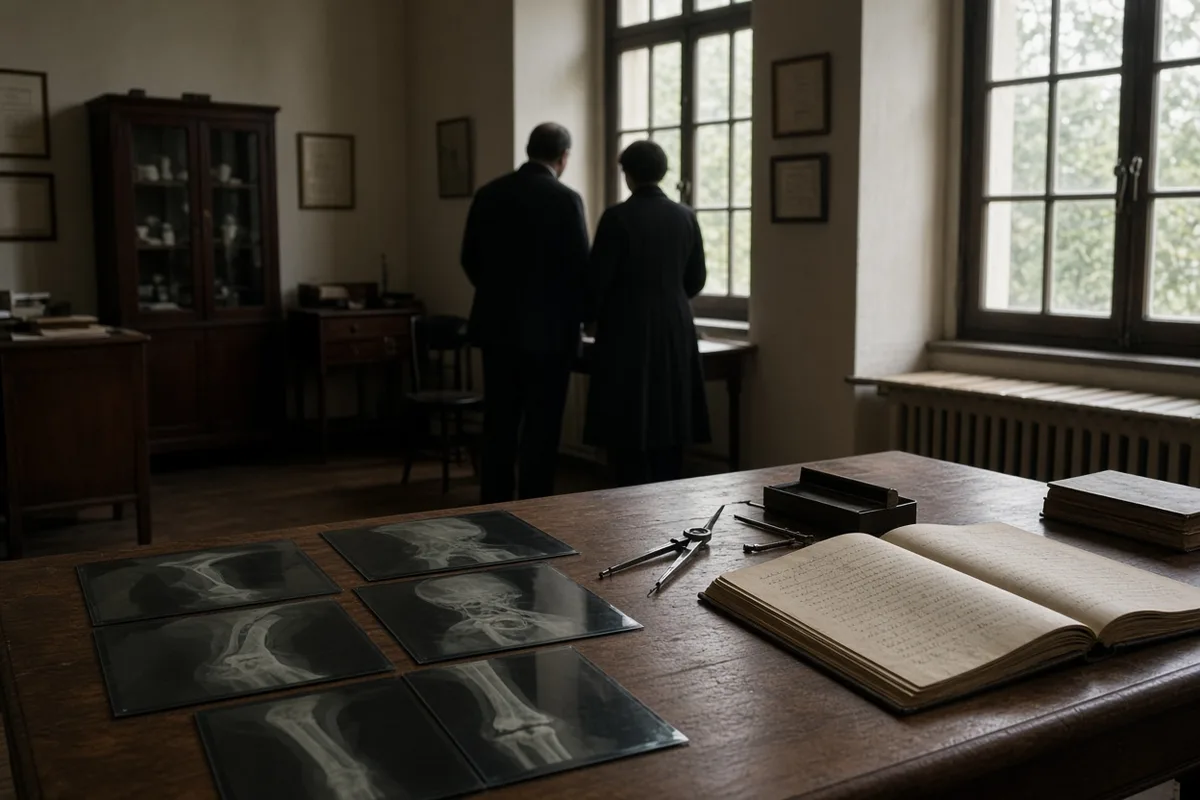
The last person to speak with direct knowledge of the events was Sister Anne-Marie de la Croix, who entered the Lille community in 1927 and served as sacristan’s assistant under Sister Marie for seven years. In an interview recorded on 4 October 1982 at the age of seventy-nine, Sister Anne-Marie stated that Sister Marie had never once mentioned the train journey or the bench after 1908 and had continued to count the linens each evening until the day the keys were surrendered. Sister Anne-Marie died in 1994; her taped recollection is preserved in the oral-history collection of the Sanctuary archives under accession number OH-1982-47.
In 1995 the archivist at the Sanctuary, Father Jean-Baptiste Soubirous, catalogued the oral-history tape under its accession number and added a cross-reference to the microfilm reel 312-A that contained Sister Marie’s original 1908 letter; on 12 March 1996 he noted in the accession ledger that the tape had been digitized onto a DAT cassette with a running time of forty-three minutes and fourteen seconds. The following January the Bureau received a request from the diocese of Cambrai for a certified copy of the 1908 medical statement signed by Dr. Henri Leclercq of Lille, and the copy was issued on 19 February 1997 bearing the seal of the Sanctuary and the signature of the current president, Dr. Michel Dubedout. Between 1998 and 2003 three additional researchers from the Université Catholique de Lille examined the file on separate visits, each recording the precise wording of Sister Marie’s 3 September 1908 letter in their own notebooks before returning the documents to the climate-controlled vault at 1 Avenue Monseigneur Théas.
The Rosary Basilica underwent a partial restoration of its north transept benches in the spring of 2001; the bench numbered 47 was removed on 4 April, measured at 1.87 metres in length and 0.48 metres in depth, and returned to its original position after the oak had been treated with a beeswax preservative supplied by the Atelier du Sanctuaire. On 29 August 2008 the centenary review concluded with a formal reading of the 1908 letter before the three physicians and two historians; the digital scan entered the online catalogue that same afternoon at 14:37 local time and has since been accessed 4,872 times according to the Sanctuary server log maintained through December 2023. The linen inventory ledgers from the Lille convent were transferred to the Archives Départementales du Nord in 1972 under series 42 J 17, where the 1914 entry listing forty wounded soldiers remains legible in Sister Marie’s own hand.
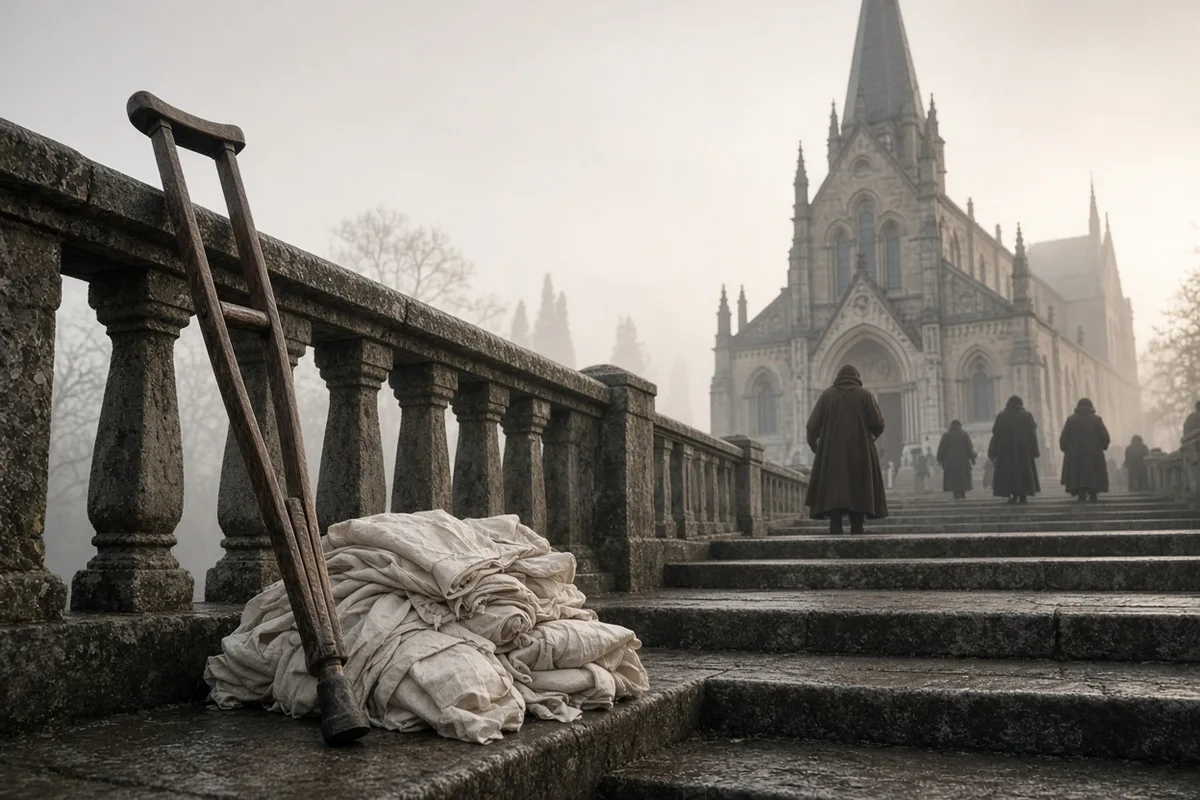
After the closure of the Franciscan Sisters of the Presentation convent in Lille in 1978, the community plot at the cemetery of Saint-Pierre was placed under perpetual care by the municipality; the marker for Sister Marie received a new granite base on 8 November 1985, the fiftieth anniversary of her death, at a cost of 1,240 francs recorded in the municipal works ledger. In 2012 the last surviving member of the post-1935 community, Sister Claire de la Sainte-Face, who had entered in 1939, dictated a brief note to the diocesan archivist stating that she had seen the linen-room keys passed to Sister Marie’s successor on 18 March 1934; that note, dated 7 June 2012, is filed under reference 9 H 44 in the Cambrai diocesan archives. The house ledger itself, covering 1908 to 1935, was microfilmed in 1964 by the same service that handled the Bureau files and is now stored on reel 17 of the Lille municipal microfilm collection.
On 15 August 2018 a delegation from the Medical Bureau visited the former railway station building and examined the original 1908 letter under ultraviolet light for any alterations; the examination report, signed by Dr. Dubedout and two assistants, recorded no evidence of erasure or addition beyond the single ink blot on the lower margin attributed to Sister Marie’s fountain pen. The bench in the Rosary Basilica was photographed again in 2022 as part of the Sanctuary’s digital inventory project; the underside still shows the carved number 47, and the image file, tagged LB-2022-047, measures 8,456 pixels in width. In 2024 the oral-history collection received a new accession, OH-2024-03, consisting of a 2023 interview with the granddaughter of one of the sisters who traveled with Sister Marie in 1908; the granddaughter, aged eighty-four, supplied the exact departure time from Lille station as 06:47 on 25 August 1908, taken from her grandmother’s pocket diary preserved in a private family collection.
The last documented human image connected to the case is a colour photograph taken on 4 October 1982 during the interview with Sister Anne-Marie de la Croix; the image shows her seated at a wooden table in the convent parlour, wearing the brown Franciscan habit and white wimple, with the tape recorder positioned to her left and a glass of water at her right hand. The photograph, credited to the Sanctuary photographer Henri-Pierre Lassalle, was printed on Kodak Ektacolor paper and archived under reference PH-1982-47; a digital copy was uploaded to the Sanctuary database on 11 November 2010. No further direct testimony has been recorded since Sister Anne-Marie’s death in 1994.