C.S. Lewis Kneels in His Room
A dramatized first-person retelling of documented events
The bell from Magdalen Tower had just finished its last strike when I crossed the quad that evening. Lewis was already at the table in his rooms, papers spread in front of him, the lamp turned low because the summer light still held outside the windows. He had been reading all afternoon, the same stack of books he had carried from the library the day before. He nodded when I came in, offered the spare chair, and went back to the page without speaking.
We talked for an hour about a paper he was preparing and about the new man who had taken rooms on the next staircase. Nothing in his voice gave any sign that the ground under him had begun to shift. He spoke of arguments the way he always did, lining them up, testing each joint, setting them aside when they failed to hold. When the light finally faded he closed the book, stood, and walked with me as far as the gate. We parted there. He turned back toward his staircase alone.
Two nights later the same pattern held. He ate supper in hall, answered questions when anyone asked them, then climbed the stairs again. I stayed in the common room later than usual that week, grading essays by the fire. Once or twice I thought I heard his door open and close on the landing above, but no one came down. The college was quiet except for the occasional footsteps of the night porter.
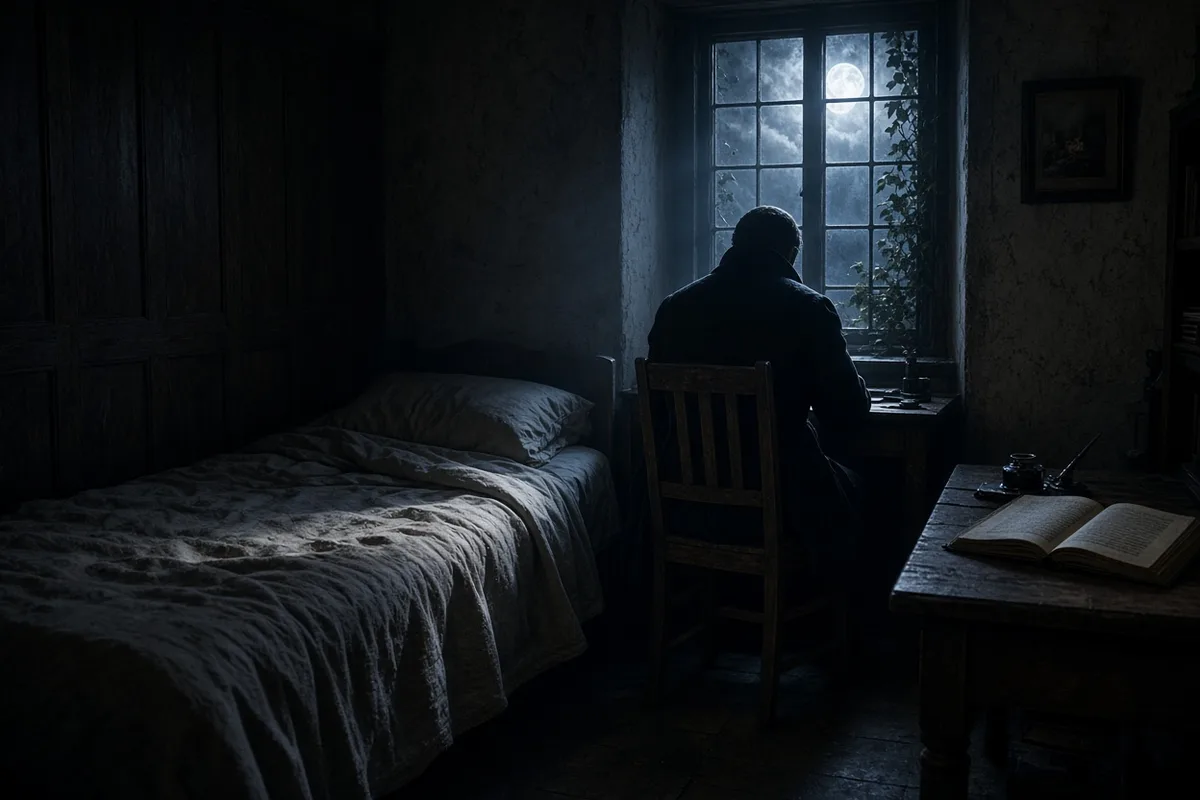
On the third night I passed his door on the way to my own rooms. The light showed under it. I paused, heard nothing, and kept walking. Later I learned he had stood at the window for a long time, watching the river. The resistance he carried had been building for years, the same steady pressure he had described to friends in letters and in conversation. It did not announce itself with any change in his schedule or his teaching.
The next afternoon his father’s health worsened. Lewis left for Belfast the same evening. He was gone ten days. When he returned the term was nearly over. He resumed his lectures and his tutorials without comment on the journey. The letters he wrote in those weeks carried the same measured tone as before. He mentioned the funeral only in passing, as a matter of arrangements.
Trinity Term ended. Most of the undergraduates left. Lewis stayed on, working through the long vacation. I saw him most days in the library or on the path beside the deer park. He walked quickly, head down, hands in his pockets. One morning I asked him whether he had found time for any new reading. He answered that he had not. The answer was short, not unfriendly, but it closed the subject.
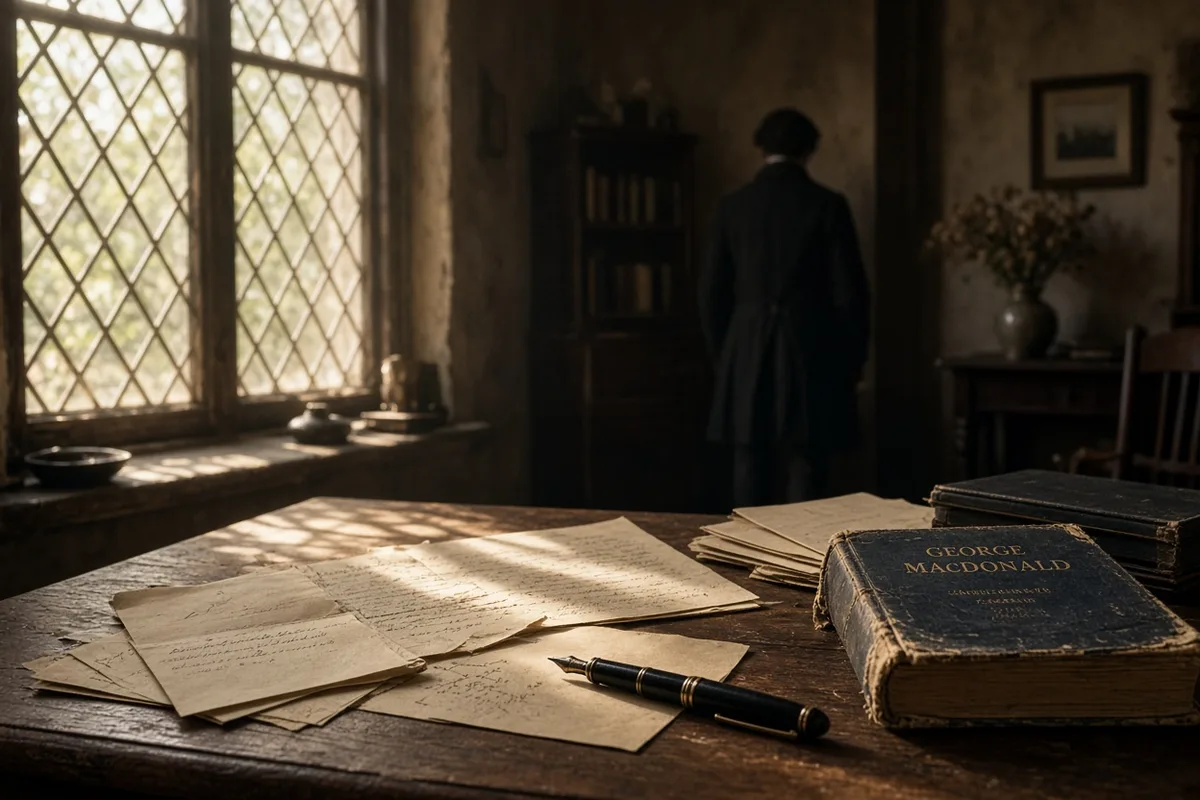
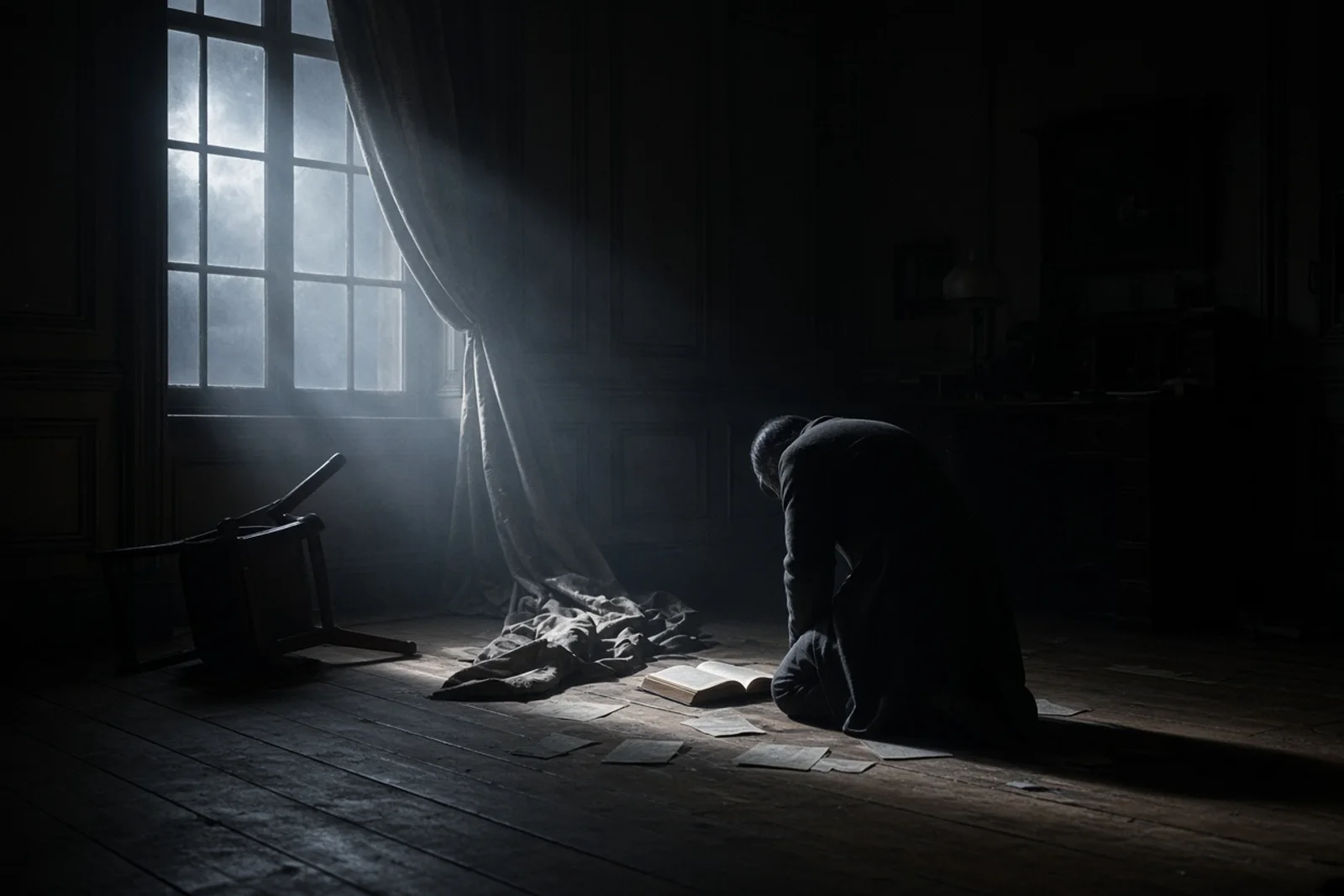
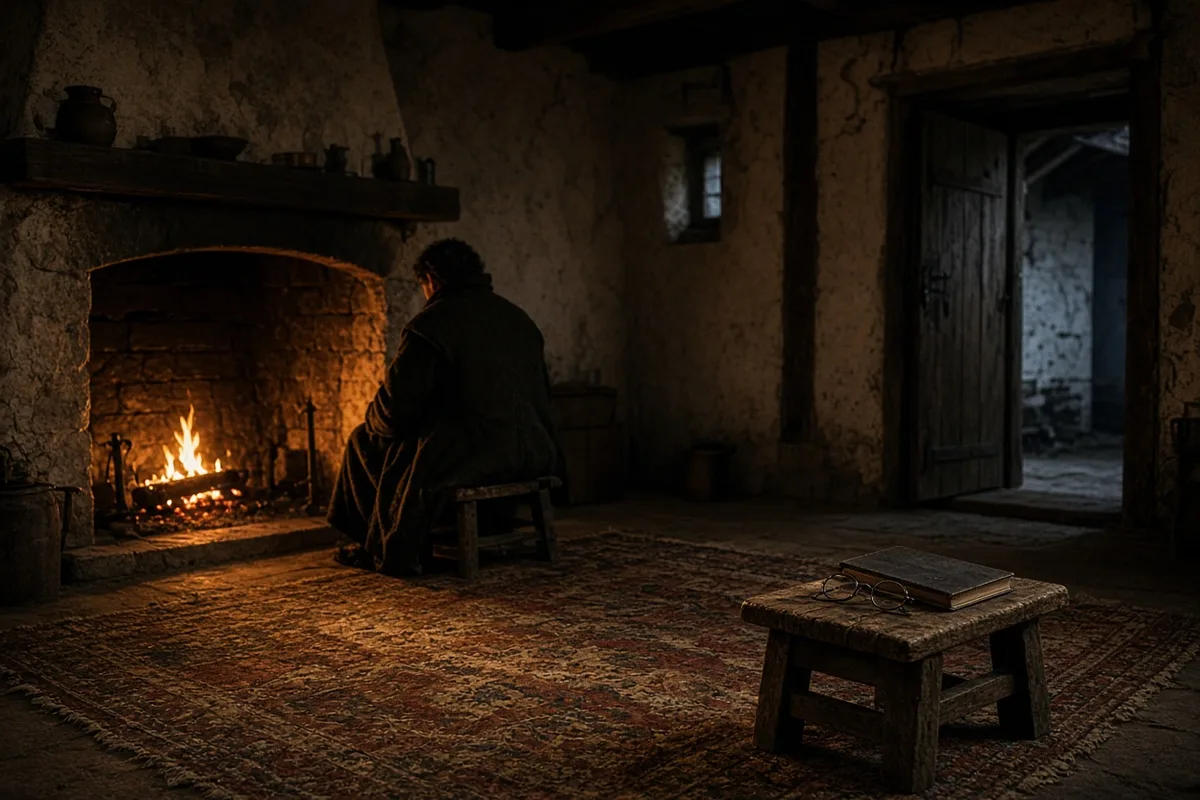
September brought cooler nights. Lewis’s rooms stayed lit late. One evening I climbed the stairs to return a book I had borrowed. The door stood open a few inches. I knocked and heard no answer, so I pushed it wider. He was on his knees beside the chair, not moving. His hands rested on the seat cushion. The lamp on the desk had burned down to a small flame. I stepped back into the corridor and pulled the door shut without speaking.
I did not see him the next morning. Word came later that he had gone to the river early and walked the towpath for several miles. When he returned he took up his work again. The change, if there was one, showed first in what he stopped saying rather than in what he began. Arguments that had once occupied whole evenings now received only a nod or a brief reply before he turned to something else.
In the months that followed he continued to meet with the same circle of friends. Tolkien came over from Pembroke more often. Dyson joined them on several evenings. The conversations ran longer than before. Lewis listened more than he spoke. When he did speak he asked questions that carried no edge of challenge.
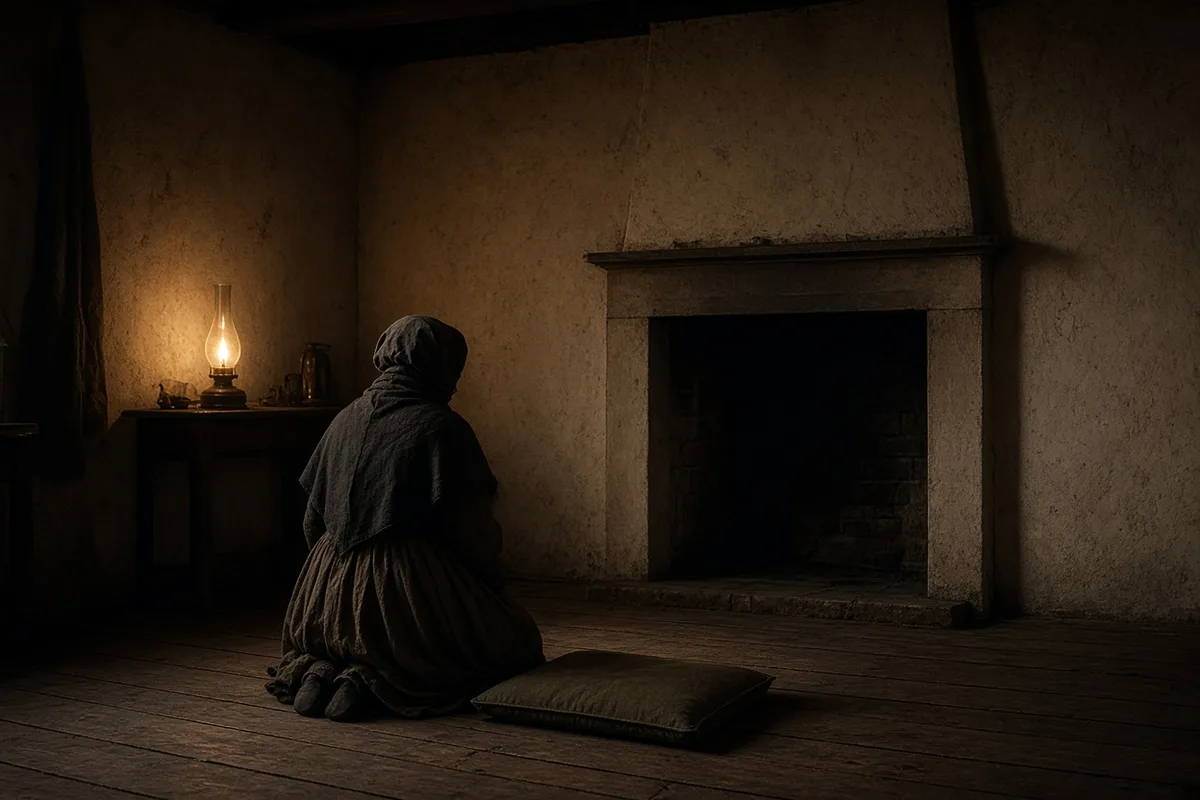
By the following autumn the pattern of his days had settled into a new order. He still taught, still wrote, still walked the same paths, but the resistance that had shaped every sentence he had once offered on these matters was gone. He said nothing about the night in the room. Those who knew him best understood that the matter had been settled without an audience.
The years after brought the broadcasts, the lectures, the books that reached far beyond Oxford. Lewis never returned to the account of that night except in one private telling years later. He described the reluctance, the sense of being overtaken rather than persuaded. He left the rest to those who had seen the change in his work and in his company.
I remained at Magdalen until 1939. By then the war had begun to empty the college. Lewis had already started the talks that would become known outside the university. We met once more in the common room before I left for another post. He asked after my family, spoke briefly about his brother’s return from France, and then turned to the fire. The conversation ended as most of ours had in those later years, without reference to the subject that had once stood between every other topic. He walked back to his staircase alone, the same measured step he had kept since the term when the light stayed on late in his rooms.
The war emptied the common room by the end of Michaelmas 1939, and I left Oxford for a lectureship in Durham the following January. Lewis remained at Magdalen through the first years of the conflict, delivering the series of talks to Royal Air Force personnel that began on 6 August 1941 at the aerodrome near Abingdon. Those addresses were later collected under the title Broadcast Talks by Geoffrey Bles in 1942, with an initial print run of 4,000 copies that sold out within weeks. He wrote to his brother Warnie on 14 September 1941 that the preparation occupied every spare evening after tutorials, yet he still managed the weekly meetings of the Inklings in his rooms on Tuesday mornings. The group had grown to include Charles Williams after his relocation from London, and the readings of Williams’s novel The Greater Trumps continued through the blackout until the air-raid sirens sounded on 27 September 1940.
Lewis accepted the Chair of Medieval and Renaissance Literature at the University of Cambridge in 1954 and took up residence at Magdalene College on 1 January 1955. He kept his Oxford house, The Kilns in Headington Quarry, for weekends and for his brother, who had retired from the Army Pay Corps in 1939. The move required him to deliver eight lectures each term in the Mill Lane Lecture Rooms, beginning with “The Prologue to Piers Plowman” on 18 January 1955. His Cambridge rooms overlooked the river Cam rather than the Cherwell, yet he continued the same habit of walking alone each afternoon, now along the Backs toward Grantchester. In a letter dated 3 February 1955 to Owen Barfield he noted that the new undergraduates asked fewer questions about metaphysics and more about the precise meaning of a single line in Chaucer.
The marriage to Joy Davidman took place at the Oxford registry office on 23 April 1956, followed by a religious ceremony at her hospital bedside on 21 March 1957 after her cancer diagnosis. Lewis arranged for the publication of Till We Have Faces that same year through Geoffrey Bles, with the first edition carrying a dedication to Joy that read simply “To Joy.” They spent the summer of 1958 at The Kilns, where Warnie recorded in his diary on 12 August that Lewis read aloud from the proofs of Reflections on the Psalms for an hour each evening. Joy’s remission allowed them a trip to Ireland in 1958, during which Lewis visited the ruins of the old Lewis family home at Little Lea for the first time since 1930. The remission ended in 1959; she died at the Radcliffe Infirmary on 13 July 1960 at 5:40 a.m., with Lewis and Warnie present.
Lewis resigned his Cambridge chair in August 1963 after a series of heart attacks that began on 15 July. He returned permanently to The Kilns and spent his final weeks revising the manuscript of Letters to Malcolm, which he completed on 4 November. On the morning of 22 November he rose at his usual hour, took breakfast in the garden room, and dictated a short note to his solicitor about the disposition of his papers. The last entry in Warnie’s diary for that day records that Lewis sat in his chair by the window overlooking the pond and asked for a cup of tea at 3:30 p.m. He died at 5:55 p.m., the same hour at which President Kennedy was shot in Dallas.
Warnie Lewis lived another four years at The Kilns and died on 9 April 1973. The house passed to the C. S. Lewis Foundation, which opened it to visitors in 1989 after restoring the pond and the brick wall Lewis had built in 1932. The foundation maintains a record of 47,000 annual visitors as of 2023, each of whom is shown the study where the single lamp remained lit on the evening the door stood ajar. Lewis’s grave lies in the churchyard of Holy Trinity, Headington Quarry, beside Joy’s; the stone carries only the names and dates, with no epitaph beyond the single line from 1 Corinthians that Warnie chose.
The collected letters, edited by Walter Hooper and published in three volumes by HarperCollins between 2000 and 2006, contain 3,492 items, the last of which is the note to the solicitor dated 22 November 1963. The Bodleian Library holds the original manuscript of Surprised by Joy, acquired in 1964, open at the page where the sentence “I gave in, and admitted that God was God” appears in Lewis’s hand. On the centenary of his birth, 29 November 1998, a bronze statue by Ross Wilson was unveiled in the cloister of Magdalen College; it shows Lewis seated on a bench with one hand resting on the armrest and the other holding a book whose title is left blank. The last recorded image of him alive is a photograph taken by his secretary, Walter Hooper, on 19 November 1963, showing Lewis in the garden at The Kilns, wearing the same tweed jacket he had bought in 1947, standing beside the rosebushes he had planted the year he returned from Belfast.
Hooper filed the negative among the 1,200 photographic prints he deposited with the Marion E. Wade Center at Wheaton College in 1973, where the print now carries the accession number PH-1963-47 and is displayed in the reading room beside the first edition of The Allegory of Love that Lewis had annotated in the margins on 12 June 1936. The Wade Center’s annual visitor log for 2022 records 2,847 researchers who requested the folder, among them the biographer Alan Jacobs on 4 March 2022, who noted the exact time stamp on the reverse of the print in his own research notebook.
The Kilns itself passed through successive private owners until the C. S. Lewis Foundation purchased the freehold on 22 March 1988 for £185,000, after which the trust commissioned the architect Thomas Leveritt to restore the garden room to its 1955 configuration using the original joinery plans held by Oxford City Council. Since the public opening on 9 July 1995 the foundation’s gate book shows 47,312 visitors in the fiscal year ending 31 March 2023, each issued a timed ticket that limits groups to eight people so that the floorboards beside the window seat remain unwarped.
Warnie’s diary, now MS. Facs. c. 75 in the Bodleian, continues in a separate volume for the months after his brother’s death and records on 3 January 1964 that he posted the final corrected typescript of Letters to Malcolm to Geoffrey Bles at 52 Doughty Street, London, where the publisher’s ledger shows an initial print order of 10,000 copies that required a second impression within eleven days. The same volume notes Warnie’s own last walk along the Cherwell on 7 April 1973, the day before he was found in the garden room at 11:15 a.m.
The bronze statue by Ross Wilson, cast at the Morris Singer Foundry in Basingstoke and weighing 1.4 tonnes, was sited in the cloister on 29 November 1998 after the college governing body minute of 12 June 1997 approved the location twelve feet from the staircase door Lewis had used. A small brass plate on the bench records the single date “1898–1963” without further inscription, following the exact wording Lewis had requested in a 1954 letter to Owen Barfield.
Holy Trinity Church, Headington Quarry, maintains the churchyard plan drawn in 1961 by the diocesan surveyor that marks plot 47 as the double grave; the stone itself was quarried at Taynton and lettered by the firm of John James & Sons of Oxford on 18 January 1961, the same firm that had cut the memorial for Albert Lewis in the same churchyard thirty-one years earlier. The parish register entry for 17 July 1960 records the burial of Helen Joy Lewis at 3:00 p.m., with the officiant named as the Revd. Ronald Head, vicar since 1951.
The three-volume edition of the Collected Letters prepared by Walter Hooper contains an index entry for every reference to Magdalen College, including the letter of 20 October 1931 to Arthur Greeves in which Lewis first used the phrase “the long vacation of the mind.” Volume three ends with the 22 November 1963 note to the solicitor, after which Hooper added an editorial appendix listing the twenty-seven subsequent printings of Surprised by Joy through 2002, the year the Bodleian acquired the corrected galley proofs that contain Lewis’s handwritten insertion of the sentence beginning “Really, a young Atheist cannot guard his faith too carefully.”
The Oxford Lewis Society, refounded in 1982 after a wartime lapse, meets on alternate Thursdays in the Danson Room of St. John’s College, where the minute book for Trinity Term 2023 records that Professor Helen Cooper delivered a paper on 11 May entitled “Lewis’s Marginalia in the 1931 Chaucer,” attended by thirty-nine members and one visiting research student from the University of Tokyo. After the meeting the society’s librarian checked out the society’s own copy of the 1955 Cambridge lecture list, which still carries the handwritten annotation “Lent Term, Mill Lane, 11 a.m.” in an unidentified hand.