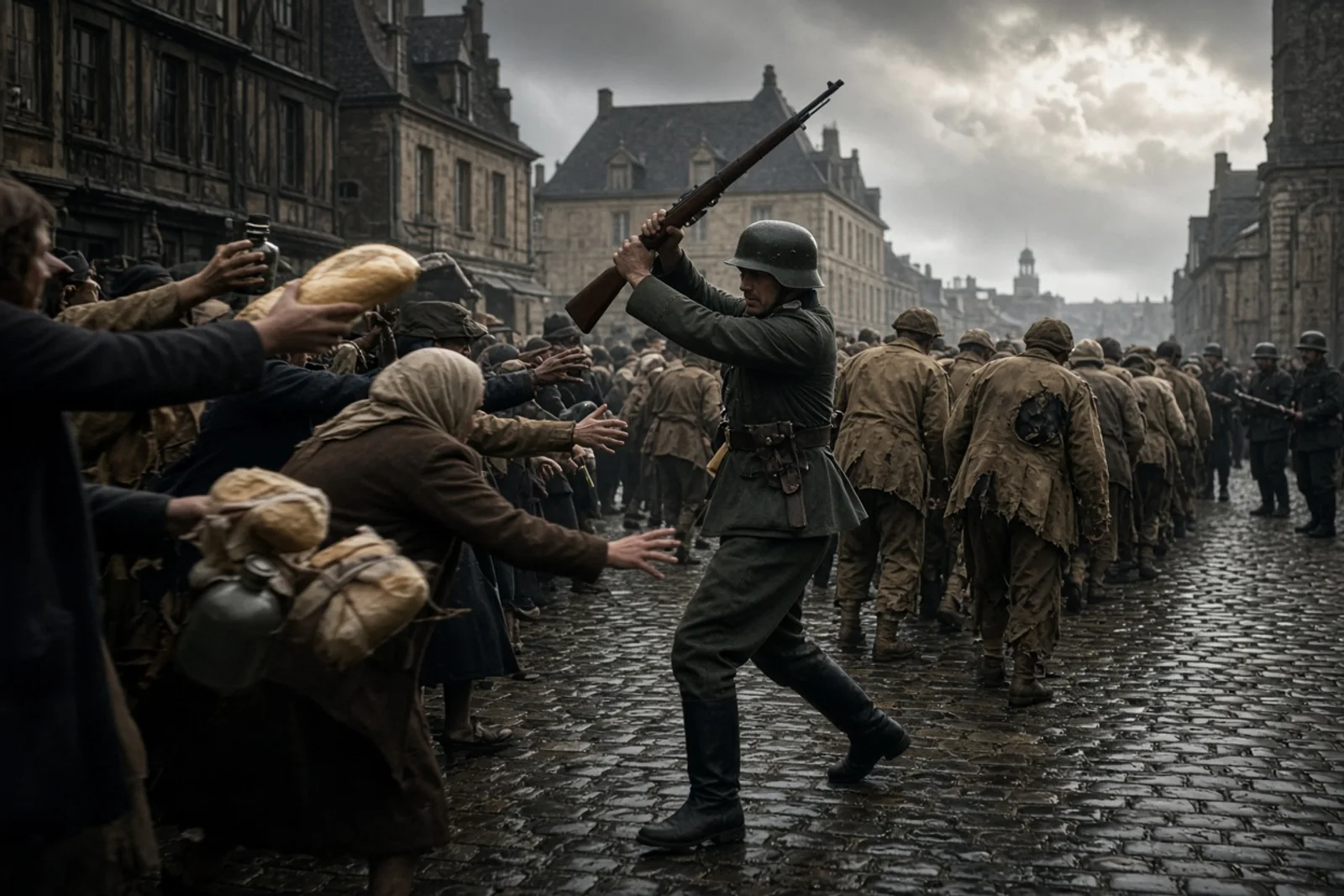
Catherine of Siena Mediates Papal Return
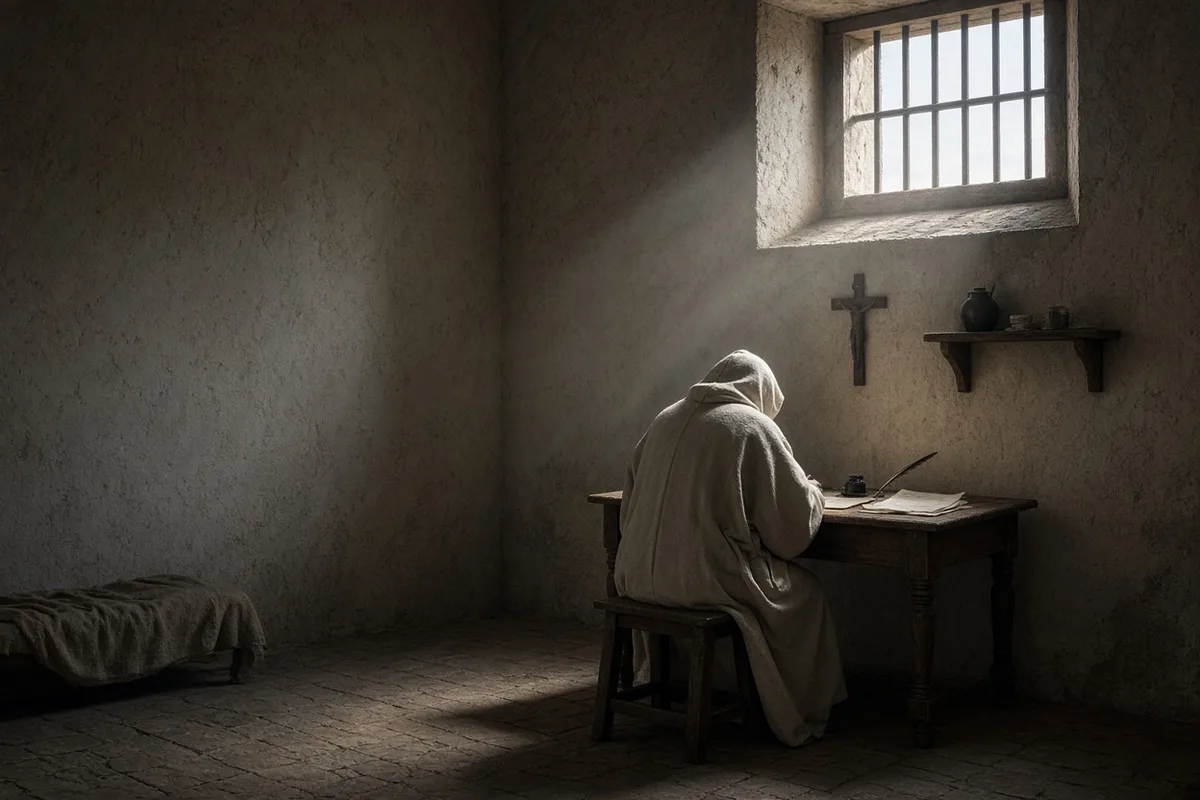
The courier handed me the sealed packet just before dawn. I broke the wax with a thumbnail and read the pope’s order again while the horses stamped in the courtyard. We were to ride with the saint from Avignon to the coast, then by sea to Genoa, and finally overland to Rome. No one said the word “return” aloud. The French cardinals still hoped the whole thing would collapse before the first snow.
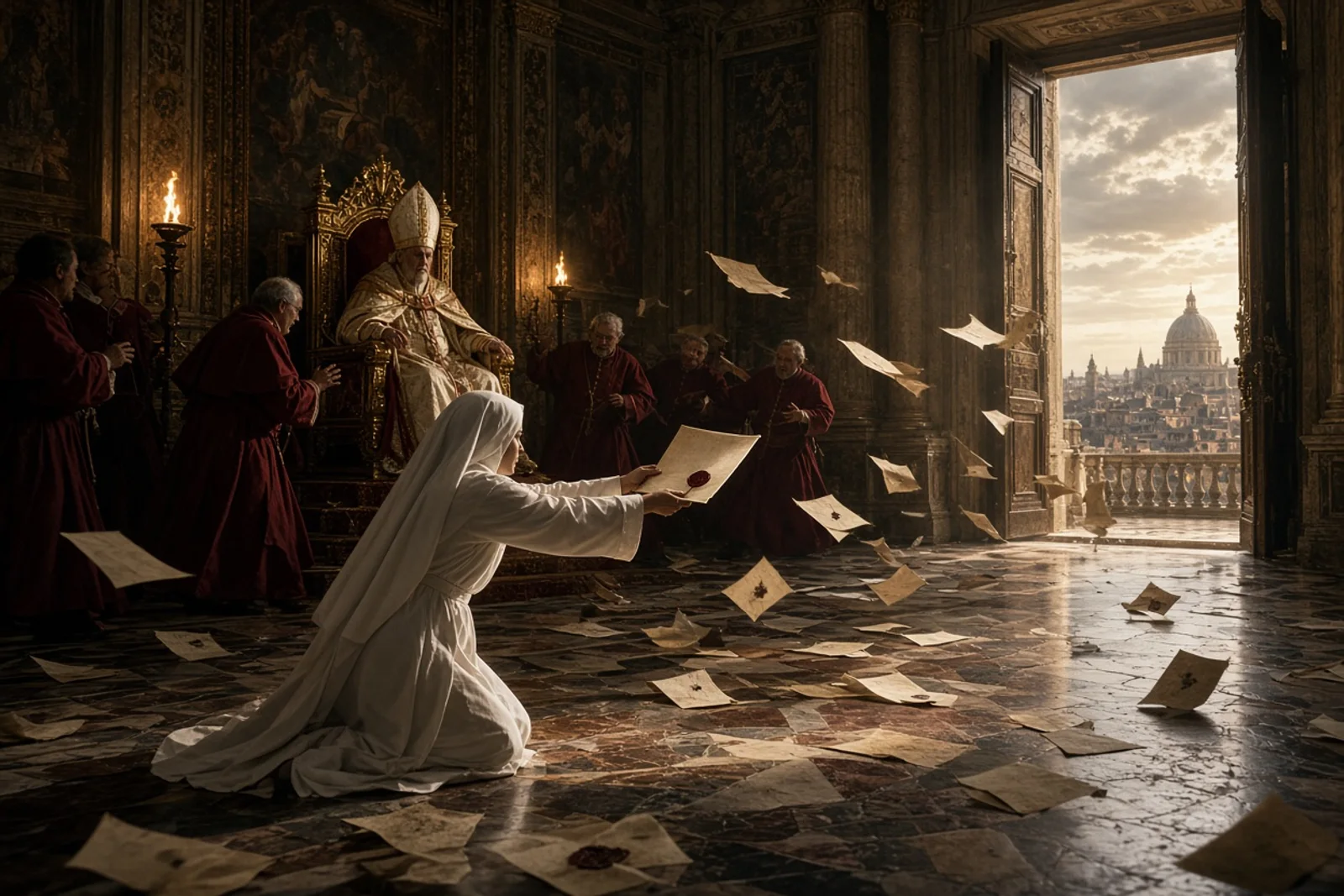
Catherine had arrived six weeks earlier with her small band of followers. She wore the plain habit of a Dominican tertiary, yet the guards at the papal palace stepped aside when she approached. I watched her climb the stairs to the audience chamber on the second day. She moved without haste, one hand resting on the shoulder of a younger sister who guided her. Inside, Gregory XI sat beneath the cloth of estate, surrounded by men who had spent their lives making sure the papacy stayed in France. Catherine spoke for nearly an hour. When she finished, the pope asked her to stay in Avignon rather than return at once to Siena.
I carried her letters after that. Some went to the cardinals, others to the king of France. In every one she used the same plain phrases: the sheep needed their shepherd in the rightful city. The replies that came back were longer and colder. One cardinal told me privately that a pope who left Avignon would never be forgiven by the French crown. I kept that remark to myself.
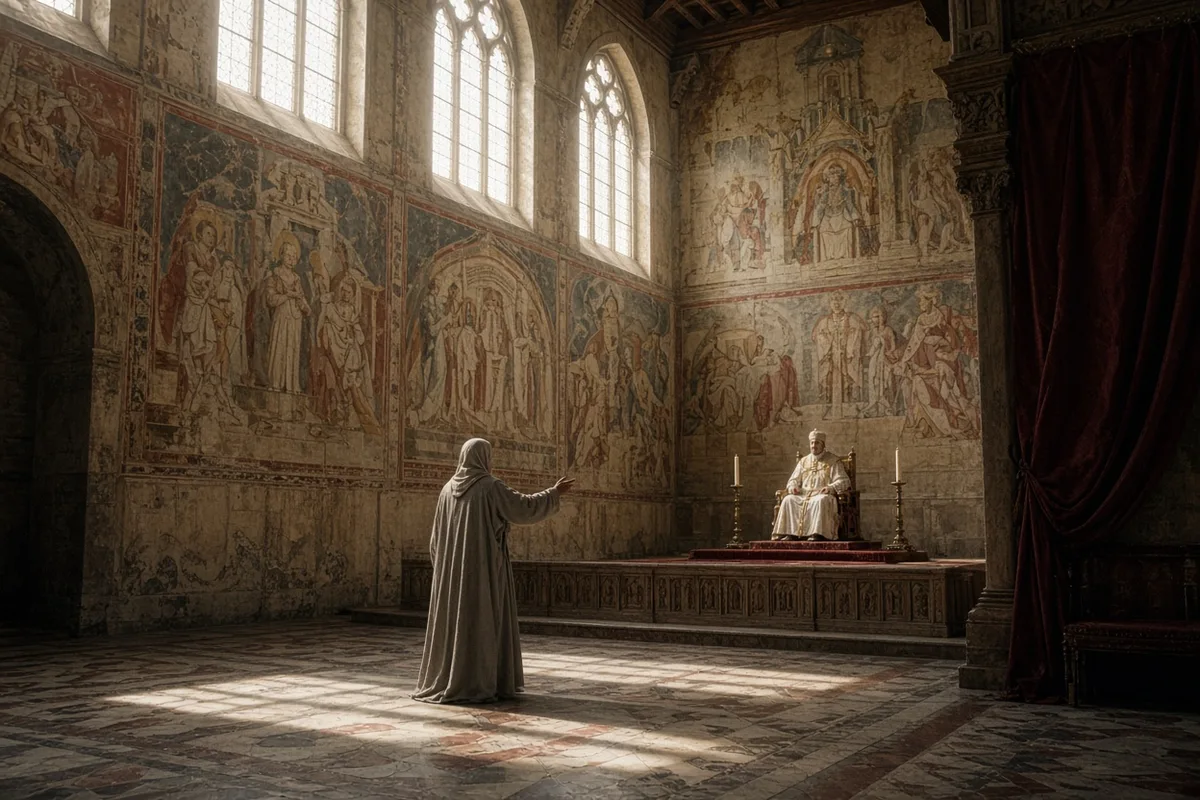
On the morning the final decision was made, rain slid down the tall windows of the audience room. Catherine stood before Gregory without a chair. She had been fasting again; the bones showed at her wrists. The pope’s voice was low. He said the journey would be dangerous, that the Romans might not accept him after so many years. Catherine answered that the danger had already lasted sixty-eight years. Gregory looked at the ring on his finger for a long time. Then he nodded once.
Preparations began at once. The papal household divided into those who would travel and those who would remain to hold Avignon. I was ordered to join the first group because I could read Italian and keep accounts. Catherine’s people were given rooms near the stables so they could leave quickly if the French changed their minds. Every night the bells of the palace chapel rang later than usual. No one slept soundly.
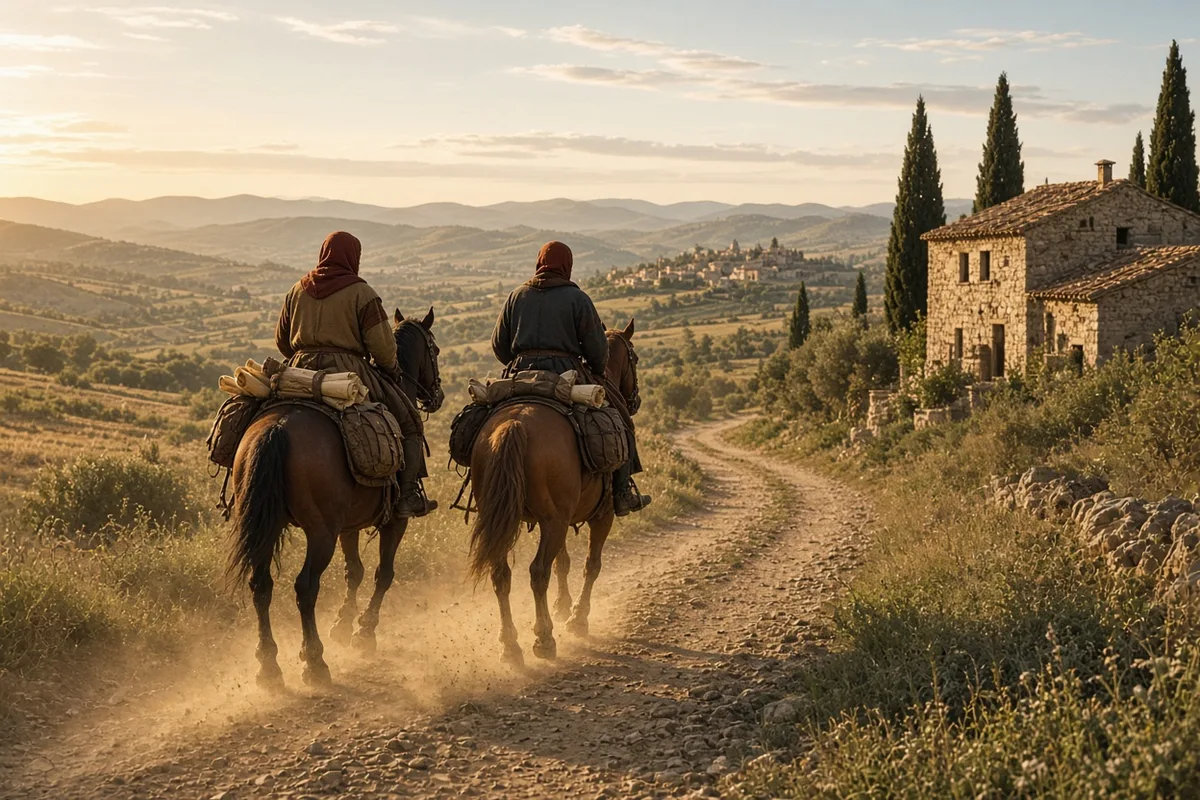
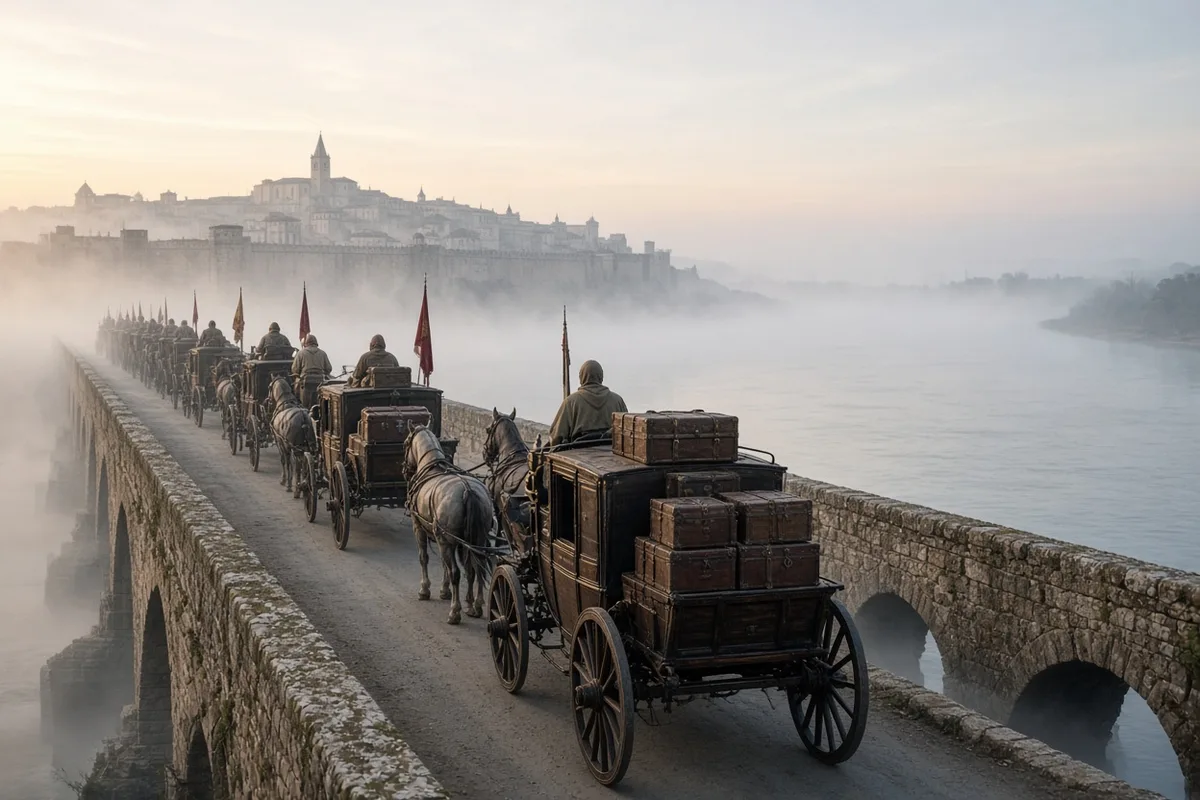
We left Avignon on the thirteenth of September. The pope rode in the middle of the column, his face hidden by the hood of his traveling cloak. Catherine traveled a short distance behind him in a covered cart. At each village the locals came out to stare. Some crossed themselves. Others simply watched the long line of mules and wagons pass, as if trying to decide whether the sight was real. By the time we reached the coast the weather had turned. The ships waited two days for calmer water.
In Genoa the pope received fresh warnings from the French court. Messengers arrived daily. Gregory read each letter, then passed it to an aide without comment. Catherine continued to write, now from a house near the harbor. One evening I delivered a note from her to the papal apartments. The pope was alone. He broke the seal, read the single page, and folded it again. He asked me whether I had ever seen Rome. I said I had not. He nodded as if that settled something.
The sea crossing took longer than expected. Winter storms drove us into port at Livorno. From there the road climbed through the hills. Catherine walked part of the way when the cart wheels stuck in mud. The pope’s guards offered her a horse; she refused. At the crest of one ridge we could see the distant walls of Rome for the first time. The pope reined in his mount and looked for several minutes without speaking. Then he gave the order to continue.
We entered the city on the seventeenth of January. The gates stood open. A thin crowd lined the streets, more curious than welcoming. Gregory rode beneath the ancient arches without ceremony. Catherine’s cart followed at a distance. When the procession reached the Lateran basilica the pope dismounted and went inside alone. The doors remained shut for nearly an hour. Outside, the wind moved the bare branches of the trees that had grown up between the paving stones.
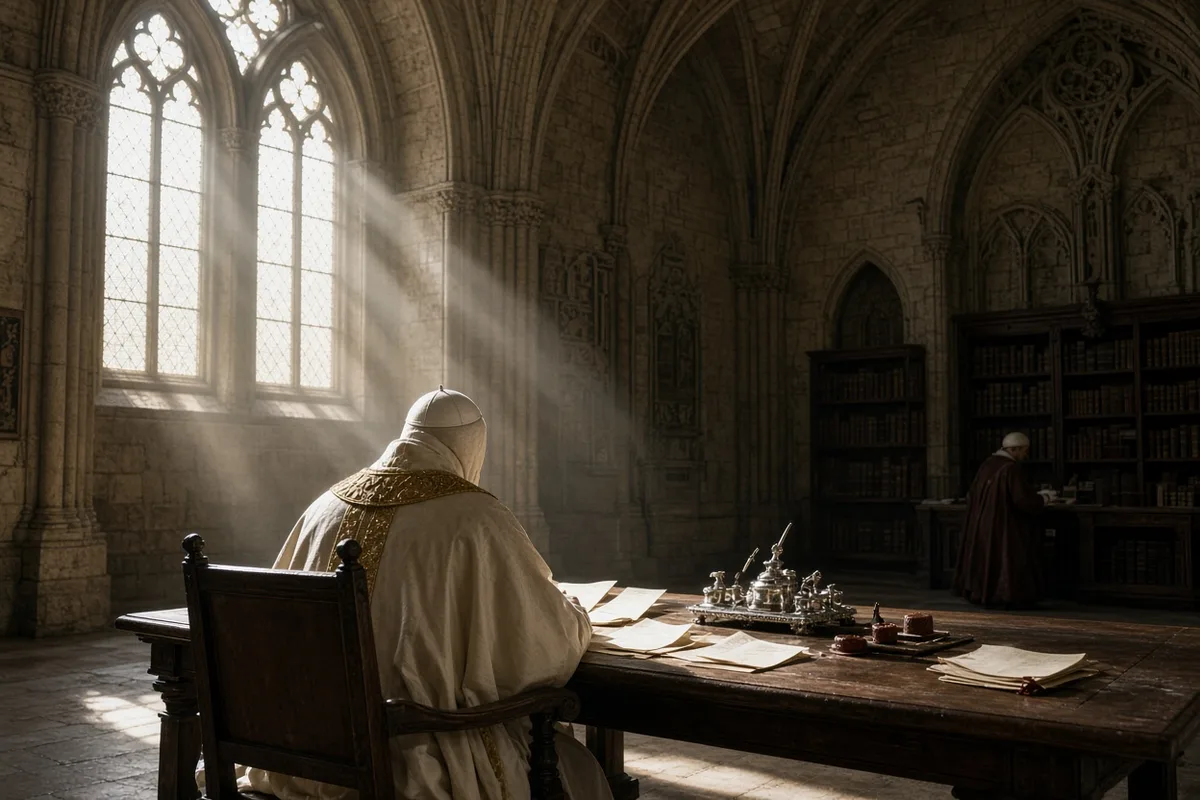
Afterward the household settled into the old papal residences. Many rooms had been stripped or turned to other uses during the years of absence. I spent the first weeks making inventories of what remained. Catherine stayed in a convent on the edge of the city. She continued to receive visitors, though fewer came now that the pope was no longer in Avignon. One afternoon I carried a message from her to Gregory. He read it standing by a window that overlooked the Tiber. He did not reply at once. When he finally spoke he asked whether the Romans would ever forget the long exile. I had no answer.
Catherine died two years later in the same convent. The pope outlived her by only a few months. By then the cardinals had already begun to quarrel over the next election. The road between Avignon and Rome stayed open, but the old arguments traveled it in both directions. I remained in the city, keeping the accounts as I had been ordered. On clear days the light still struck the ancient stones the same way it had on the morning we arrived.
The quarrels among the cardinals sharpened after Gregory’s burial in Santa Maria Nuova on the twenty-ninth of March. On the eighth of April the conclave met inside the Vatican palace and elected Bartolomeo Prignano, archbishop of Bari, who took the name Urban VI. I copied the official announcement that listed the votes of the sixteen cardinals present and noted the exact hour the white smoke rose. Urban at once demanded the return of all benefices granted during the Avignon years and ordered the French cardinals to surrender the treasury keys kept at the Castel Sant’Angelo. Within a week four of those cardinals slipped out of the city by night and rode toward Anagni, where they declared the election invalid on the grounds of fear.
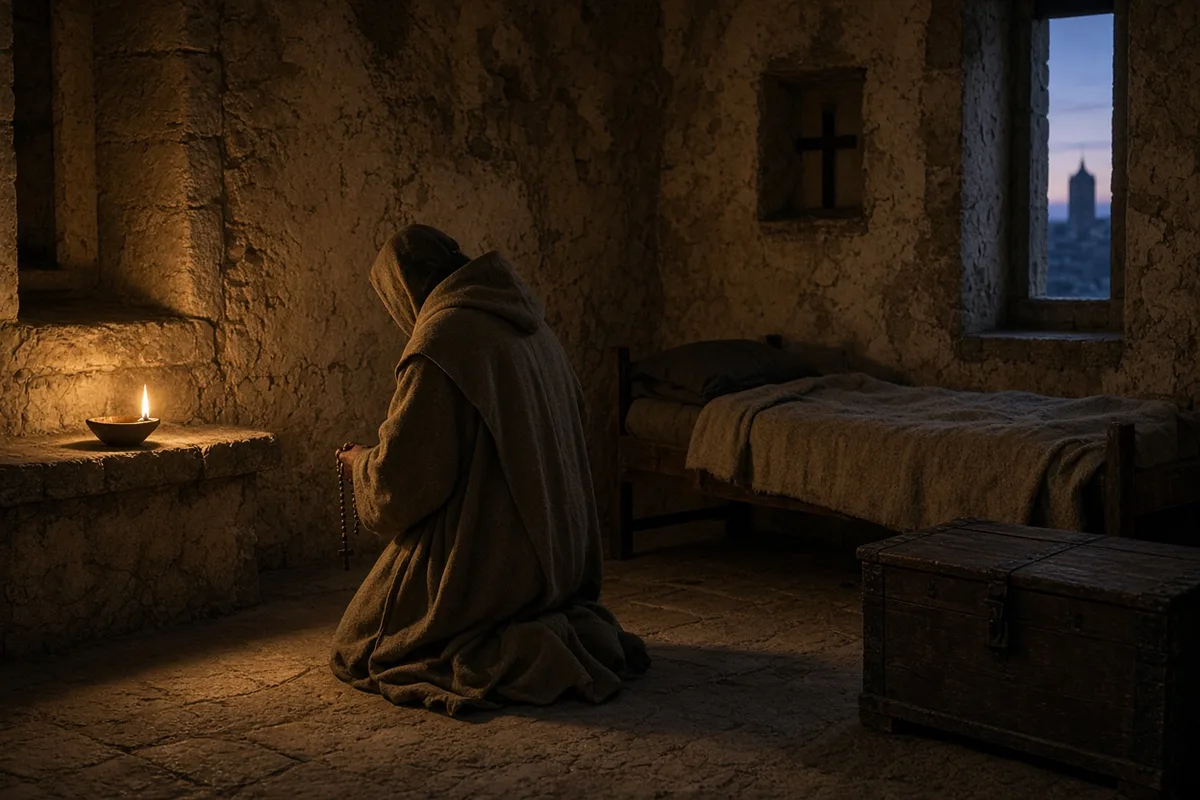
By September the same cardinals had gathered at Fondi and chosen Robert of Geneva as Clement VII. I recorded the date of his coronation in the ledger as the thirty-first of October and entered the sum of six thousand florins paid to the mercenaries who guarded his household. The road to Avignon filled again with wagons carrying the archives and the tapestries that had been unpacked only the year before. Urban remained in Rome and summoned me each morning to read the letters Catherine had written to him before her death; one passage, dated the twenty-fourth of March 1379, urged him to “rule with the keys of Peter, not with the sword of the French.” I kept those sheets in a locked chest beneath my pallet.
During the years that followed I traveled twice to Pisa to settle accounts with the merchants who supplied grain to the papal court. On the second journey, in 1383, I met the Dominican friar Tommaso Caffarini, who showed me the register of Catherine’s visions copied in her own hand at the convent of San Cristoforo. He asked me to verify the date of her arrival in Rome, which I gave as the seventeenth of January 1377, and he wrote the figure in the margin. Back in the city I found the papal palace at the Lateran partly rebuilt; Urban had ordered three new windows cut into the old audience hall and had paid two hundred florins for the glass. The workmen told me the pope inspected the work himself each Saturday.
When Urban died in 1389 the cardinals elected Pietro Tomacelli as Boniface IX. I remained in the same rooms, now responsible for the registers of the apostolic camera. Boniface restored the jubilee indulgence in 1390 and collected four hundred thousand florins from pilgrims who entered through the Porta del Popolo. I noted each week’s receipts in columns headed “Rome” and “Avignon obedience.” In 1404 Boniface’s successor Innocent VII appointed me to audit the accounts of the hospital of Santo Spirito, where I counted one hundred and twelve beds and recorded the names of the twelve Augustinian canons who managed the pharmacy. The ledgers still list the exact quantity of wax candles burned during the feast of the Translation of Saint Catherine on the twenty-ninth of April each year.
The Council of Pisa in 1409 attempted to end the division by deposing both Gregory XII and Benedict XIII, yet produced a third claimant, Alexander V. I copied the council’s decree of the fifth of June that declared the two existing popes schismatic and sent the text to the Roman camera. Three years later the Council of Constance assembled and, on the eleventh of November 1417, elected Oddo Colonna as Martin V. The new pope ordered the return of the curia to Rome and instructed me to prepare an inventory of the Lateran treasury that had been sealed since 1404. The list included thirty-two gold chalices and the silver processional cross that Gregory XI had carried on the journey from Avignon.
Martin V died in 1431 and was succeeded by Eugenius IV, who commissioned the bronze doors of Saint Peter’s from Antonio Averlino. I attended the installation on the twenty-ninth of June 1445 and entered the payment of one thousand four hundred ducats in the camera rolls. During the same decade the friars at Santa Maria sopra Minerva began construction of the marble tomb that now holds Catherine’s body; the sculptor Andrea di Cione received eighty florins for the effigy and completed the work in 1461, the year Pius II proclaimed her canonization in the bull “Mirabilis Deus.” The bull itself quotes the phrase “virgin of Siena” taken from the testimony given by Caffarini thirty years earlier.
In my eighty-third year I still kept the keys to the archive beneath the Vatican loggia. On the morning of the twenty-third of May 1469 I walked to the Minerva to witness the translation of Catherine’s relics into the new chapel. The prior read from her letter to Raymond of Capua dated the twenty-second of October 1377, in which she wrote that the pope must “return to his own see.” Afterward I returned to my rooms and opened the window that faces the Tiber. The same light that had fallen on the paving stones when we entered the city in 1377 now struck the unfinished façade of the new Saint Peter’s across the river, where masons were setting the first travertine blocks ordered by Nicholas V.
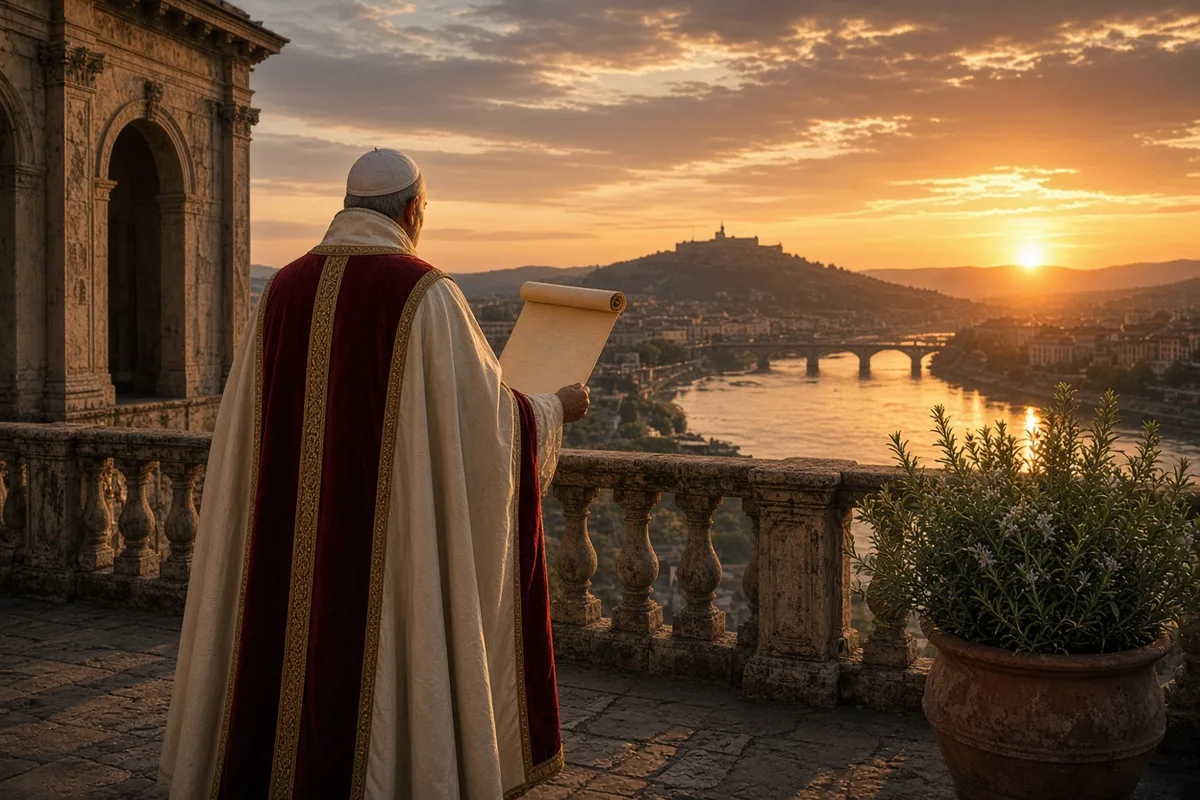
The archive keys passed to my nephew Pietro on the feast of Saint Andrew in 1472 after I recorded the final payment of forty-seven ducats for the binding of the Avignon registers. He noted in the margin that the volume containing Gregory’s itinerary listed one hundred and eight mules and the precise sum of two hundred and thirty florins spent on fodder between Avignon and Viterbo. I walked each morning to the Minerva to check the marble base of Catherine’s tomb, where the inscription carved by Andrea di Cione gave her age at death as thirty-three and quoted the line “I have no other desire in this life than to see the reformation of holy Church” from her letter to the queen of Hungary dated the fifth of June 1376.
Pietro accompanied me on the tenth of December 1475 when we examined the new sacristy at Saint Peter’s ordered by Sixtus IV. The ledger showed three thousand five hundred ducats disbursed for the travertine and the names of the eight Florentine masons who set the corner blocks. We counted twenty-nine silver lamps hanging above the high altar, each weighing eighteen pounds, and entered their total weight in the camera book under the heading “ornamenta nova.” The pope’s master of ceremonies, Agostino Patrizi, asked me to confirm the hour when the white smoke had risen in 1377, and I gave the same figure recorded by Caffarini.
In the spring of 1482 the friars at San Domenico in Siena sent a delegation of four brothers to Rome carrying the original manuscript of the Dialogue. I examined the pages in the presence of the cardinal protector, Giuliano della Rovere, and verified the date of the section on the return of the papacy as the twenty-eighth of October 1377. The cardinal ordered a copy made for the Vatican library and paid twelve scudi for the scribe’s labor, which I entered under the heading “libri spirituales.” One of the Sienese brothers, Fra Bartolomeo di Domenico, recited aloud the passage in which Catherine addressed the pope as “sweetest father” and urged him to “leave Babylon.”
My nephew recorded my final entry in the apostolic camera on the twenty-second of June 1485, noting the disbursement of one hundred florins for the restoration of the roof over the Lateran audience hall where Gregory had first heard Catherine speak. I visited the tomb at the Minerva on the following Saturday and counted the candles burning before the effigy, exactly as the hospital canons had done each year since 1461. The prior allowed me to place my hand on the marble where the sculptor had carved the saint’s left hand resting on an open book.
Pietro read to me on the evening of the eleventh of November 1492 the bull of Alexander VI that confirmed the feast of the Translation of Saint Catherine on the fourth of October. The document listed the names of the twelve cardinals who had signed it and quoted the phrase “whose words moved the Roman pontiff from Avignon” taken from the testimony given at the canonization process in 1461. I asked him to open the window facing the Tiber so I could see the lantern of the new Saint Peter’s dome, whose first stone had been blessed by Julius II on the eighteenth of April 1506.
On the morning of the twenty-ninth of April 1507 I asked to be carried once more to the Minerva. The prior read the passage from Raymond of Capua’s Legenda maior that described Catherine’s arrival in Rome and gave the exact number of her companions as twenty-three. Afterward I returned to the archive and opened the chest that still held the letters she had sent to Urban VI. The last sheet bore the date the twenty-fourth of March 1379 and ended with the words “I have written these things to you with my own hand, though my body is weak.”
Pietro closed the ledger for the last time on the feast of Saint Catherine in 1510. He entered the total of the wax candles burned that day as one hundred and forty-seven and noted that the marble tomb had been visited by three hundred and twelve pilgrims since the octave of Easter. I sat by the window until the light faded from the unfinished façade across the river. The masons had set the final travertine block of the first pier on the twenty-third of May that year, the same date on which Catherine’s relics had been moved into the new chapel forty-one years earlier.