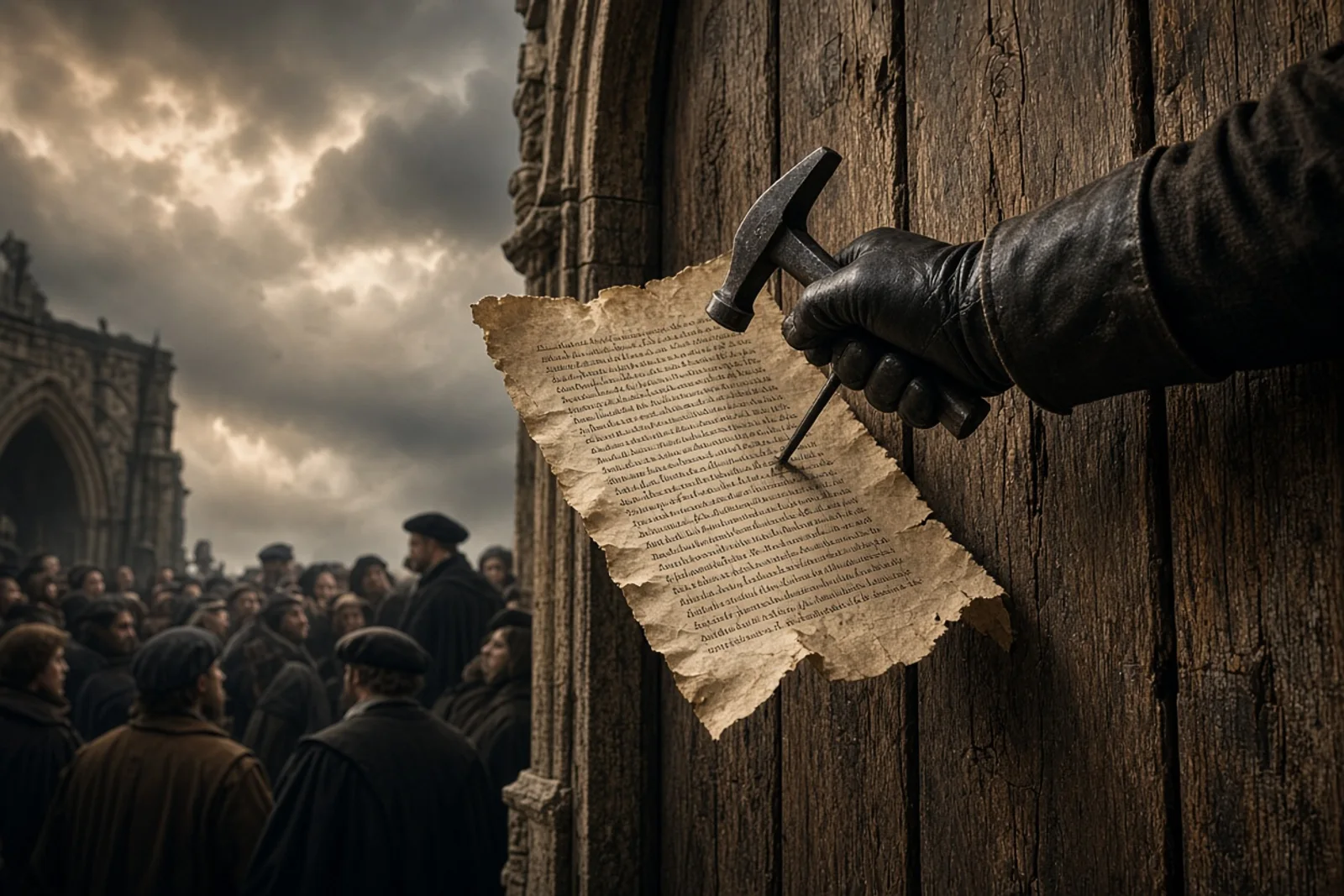
Charlemagne Crowned Emperor on Christmas
A dramatized first-person retelling of documented events
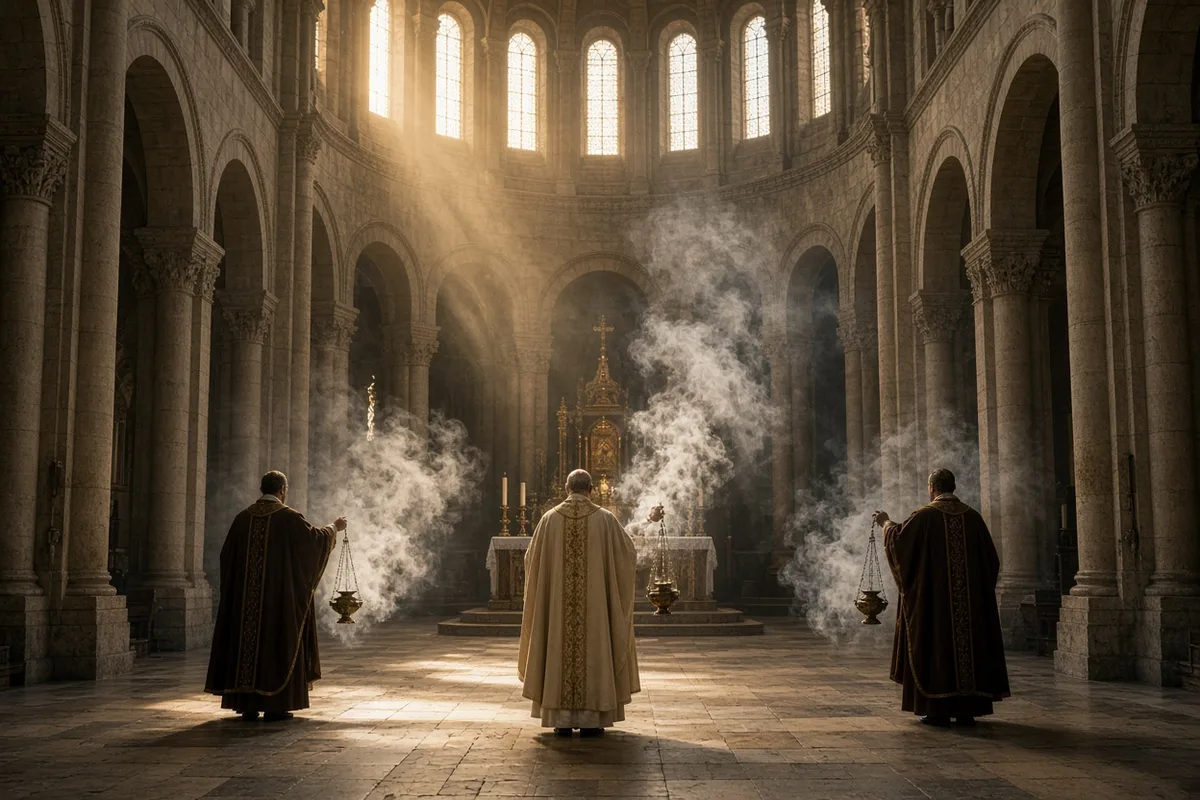
The nave stretched cold underfoot even through my boots, the marble worn smooth by centuries of feet. I had come with the Frankish guard two days earlier, part of the escort that kept watch while the king’s counselors met with the Romans. Now the basilica was packed shoulder to shoulder for the Christmas Mass. Candles threw steady light along the nave, yet the air still carried the bite of December. Leo moved through the liturgy without haste, his voice carrying clear to the far walls. Charlemagne knelt at the altar rail, head bowed, the heavy cloth of his cloak pooling around him.
I stood two paces to the left of the rail, close enough to see the king’s hands resting on the stone. The crowd pressed forward whenever the pope raised the host, then fell back again. No one spoke above a whisper. The only sounds were the chant and the shuffle of feet on the floor.
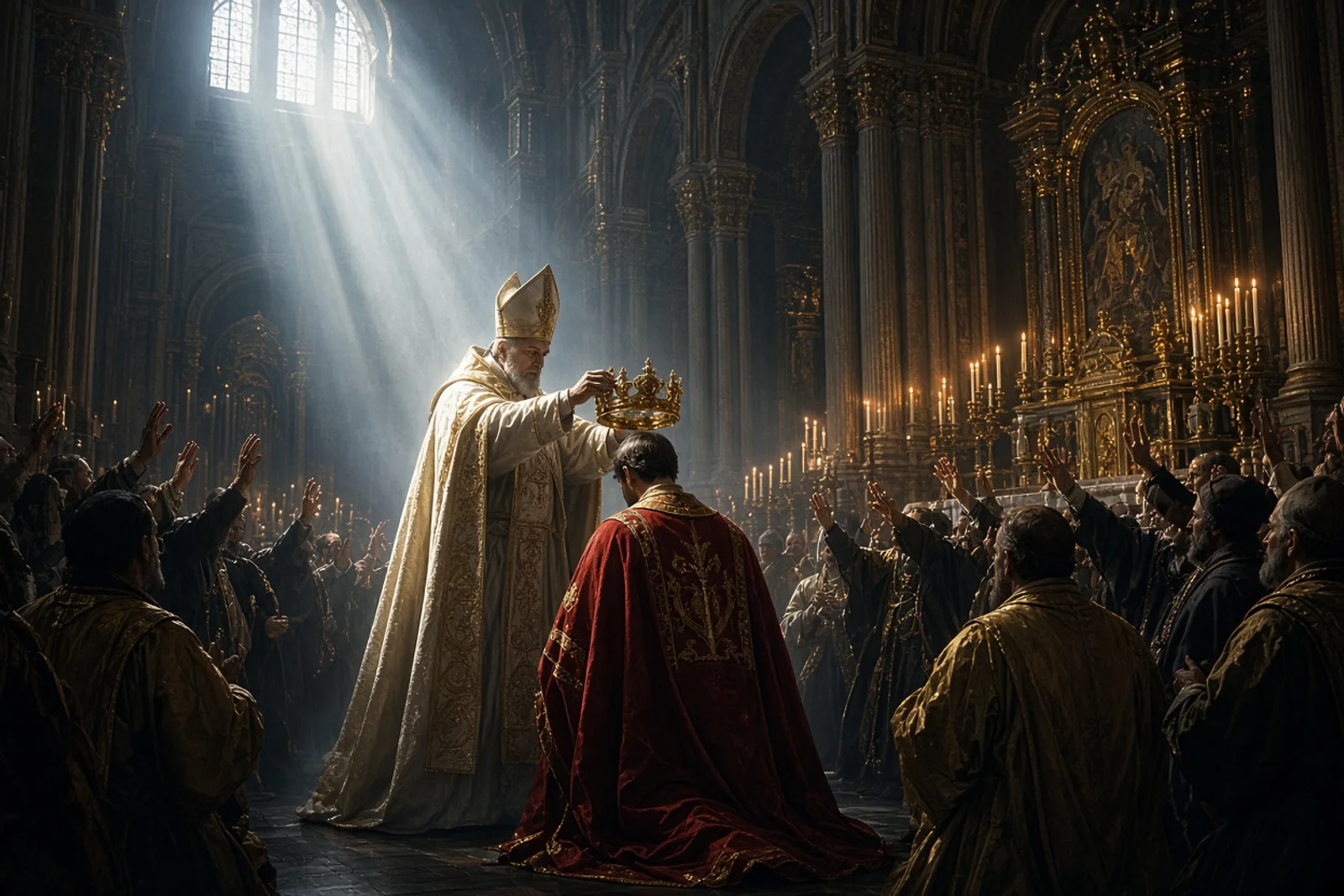
Leo finished the prayer and stepped down from the altar. He carried the crown in both hands, the gold catching the candlelight. He placed it on Charlemagne’s head without announcement. The metal settled with a small sound that carried farther than it should have in that space.
A single voice from the back shouted “Imperator Romanorum.” Others took it up at once. The words rolled through the nave and came back from the vault. Charlemagne did not lift his head at first. His shoulders stayed low over the rail. When he rose, the crown stayed in place. He turned toward the crowd, and the movement made the gold tilt once before it settled again.
Leo remained at the altar. His face showed nothing beyond the lines already worn there from the summer’s attack. The Romans who had tried to blind him months earlier were still in the city, though they kept to their houses now. No one moved to stop what had just been done.
Charlemagne walked the length of the nave afterward, the crown still on his head. People reached out to touch the edge of his cloak. I stayed near the rail with the other attendants. The Mass continued, but the order of it had shifted. The prayers went on, yet the attention had moved to the man now wearing the crown.
Outside, the light was already failing. Rome in winter darkens early. We returned to the Lateran through streets lined with people who had heard the shout from inside the basilica. Some called the title again. Others watched in silence. Charlemagne gave no sign he heard them.
That night the king’s counselors met in the hall. Alcuin was there, and several bishops from Francia. They spoke of what the crown meant for the old empire and for the church. Charlemagne listened without saying much. He asked once whether Irene in Constantinople would accept the title. No one answered him directly.
The next morning he sent messengers to the Byzantine court. The letters carried the new title and the date of the coronation. No reply came for months. When it arrived, it rejected the claim outright. Irene’s court called the act unlawful and refused to recognize any emperor crowned in Rome.
Charlemagne remained in Rome through the winter. He held court in the Lateran and heard cases that had waited since Leo’s flight the year before. The Romans who had attacked the pope were tried and sentenced. Their punishment was carried out in the square before the basilica. Charlemagne watched from a distance, then returned to his own quarters.
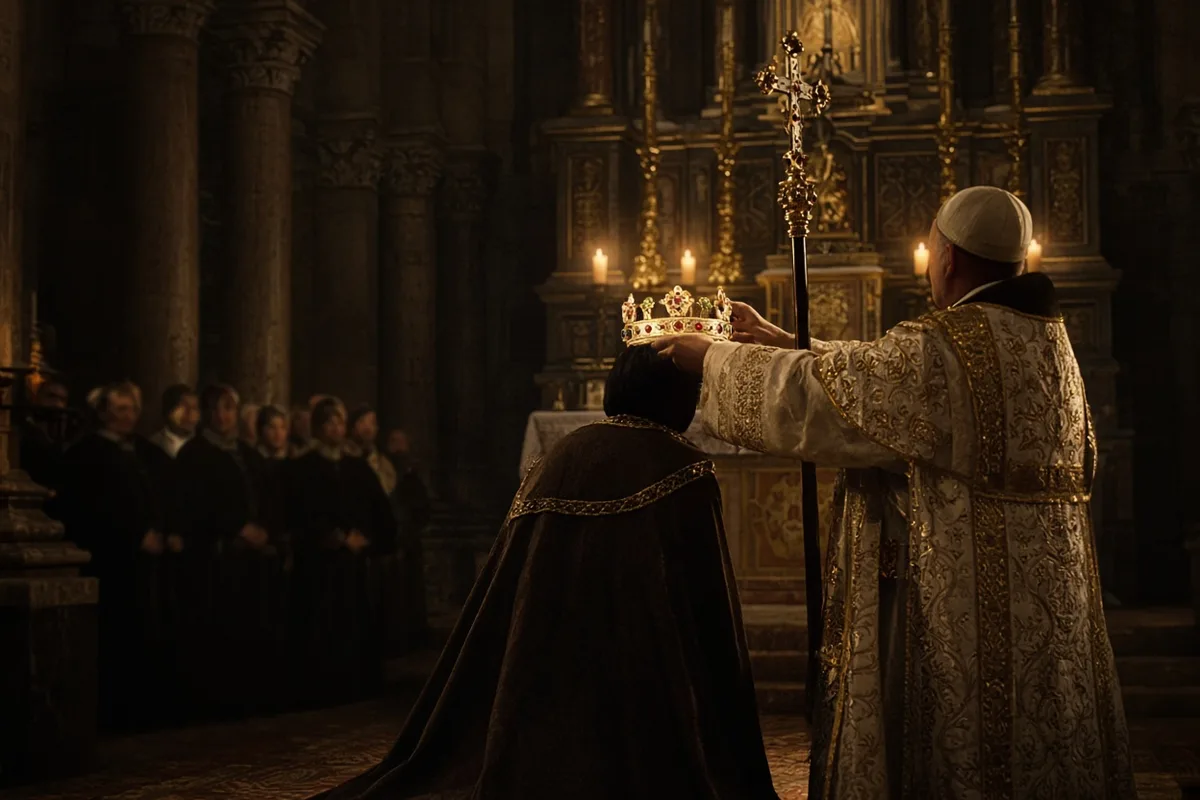
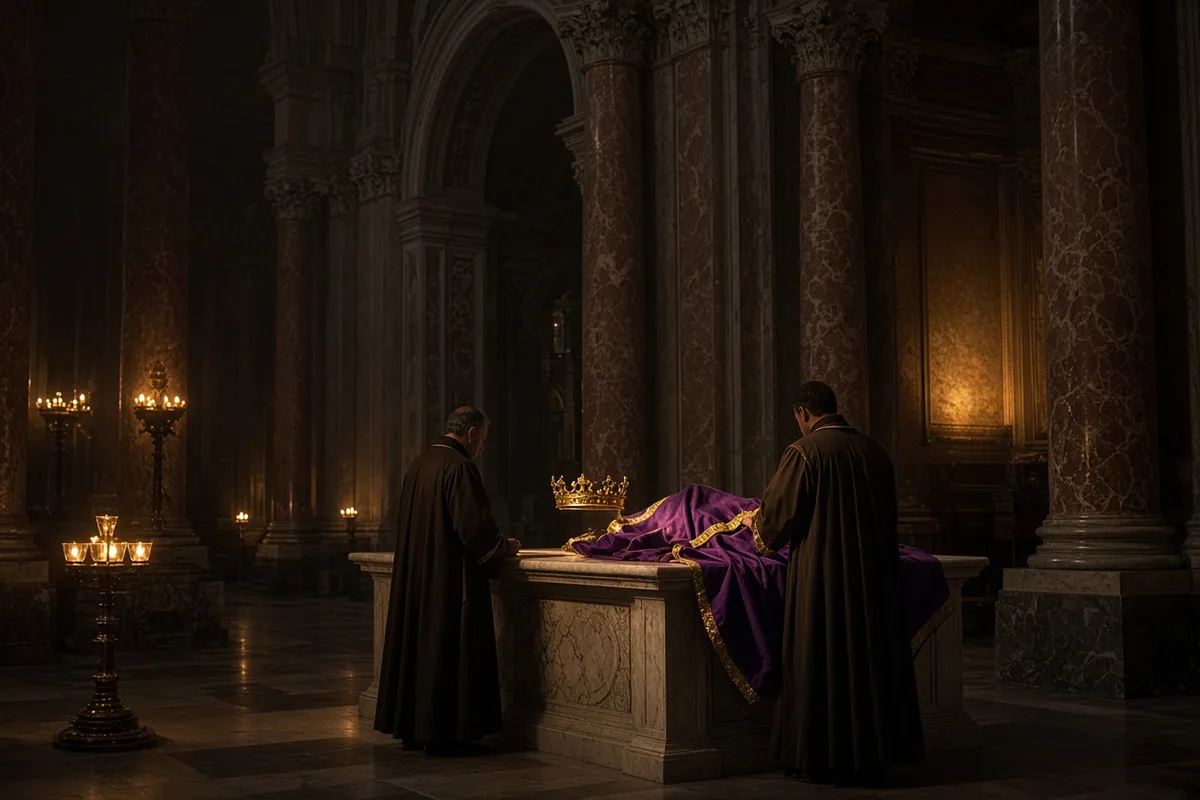
By spring he prepared to leave. The crown traveled with him in a chest carried by two attendants. He did not wear it on the road. When he reached Aachen, he placed it on the throne in the chapel for a single day, then had it stored again. He never wore it during ordinary business.
Leo stayed pope. His position was steadier after the coronation, though the Romans still muttered against him in corners. Charlemagne’s protection kept him in office until his death sixteen years later. The title Charlemagne carried back to Francia became the center of every negotiation with the East for the rest of his reign.
Years afterward, when his son Louis received the same crown in a different ceremony, the precedent was already set. Each pope after Leo claimed the right to place it. The two courts, Rome and Constantinople, continued to trade insults and occasional embassies while the title itself remained in the West.
I never returned to Rome after that winter. The memory that stayed clearest was the moment the crown left Leo’s hands and settled on Charlemagne’s head, the way the gold caught the candlelight for one instant before the shout began.
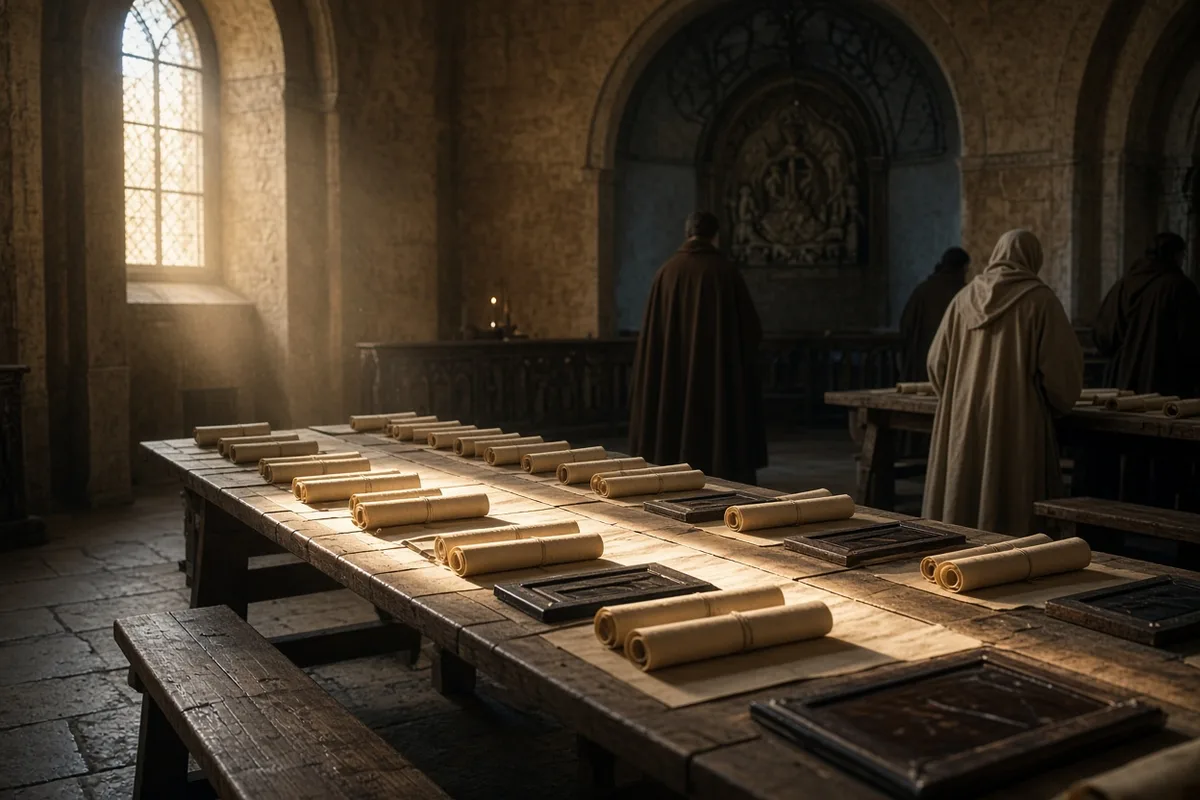
In the months after our return to Aachen the new title appeared on every charter issued from the palace scriptorium. Einhard recorded one dated 25 December 801 that read “Karolus serenissimus Augustus a Deo coronatus,” and the same formula traveled with the missi who went south to settle disputes in Italy. The chapel at Aachen received the crown on the high altar each Christmas thereafter, though Charlemagne himself never placed it on his head again; instead he sat beneath it on the marble throne brought from Ravenna, hearing petitions while the bronze doors stood open to the winter air.
Alcuin left for Tours in 802 carrying a letter in which Charlemagne asked whether the Eastern court would ever send an embassy bearing recognition, yet the reply that arrived two years later from Nicephorus still used only the word “rex” for the Frankish ruler. The same year the king ordered the Saxon capitulary of 797 revised, adding clauses that fixed fines at twelve solidi for refusal of baptism and required attendance at mass on pain of sixty solidi; the counts who enforced these rules reported 4,500 new baptisms at Paderborn alone during the summer assembly of 803.
By 810 the palace registers listed thirty-five separate estates granted to veterans of the Italian campaign, among them the villa at Ingelheim where the narrator of these events received a vineyard of eighteen arpents and a yearly payment of thirty measures of wine. Charlemagne’s last campaign took him across the Elbe in 811; he returned with hostages numbered at 1,200 and dictated terms that fixed the frontier at the river’s eastern bank. The following January he fell ill after a hunt near Aachen; on the twenty-eighth day of that month, at nine in the morning, he died in the upper chamber of the palace, the crown resting on a cushion beside the bed while the bishops chanted the litany.
Louis, already crowned co-emperor the year before at an assembly in Aachen attended by 320 bishops and abbots, received the full regalia in a ceremony at Reims on 5 October 816. The crown itself traveled in a reliquary chest lined with Byzantine silk; when the chest was opened the gold band showed a dent on the left side where it had struck the altar rail in 800. Louis kept the dent unrepaired and ordered it displayed whenever the crown was shown to foreign envoys.
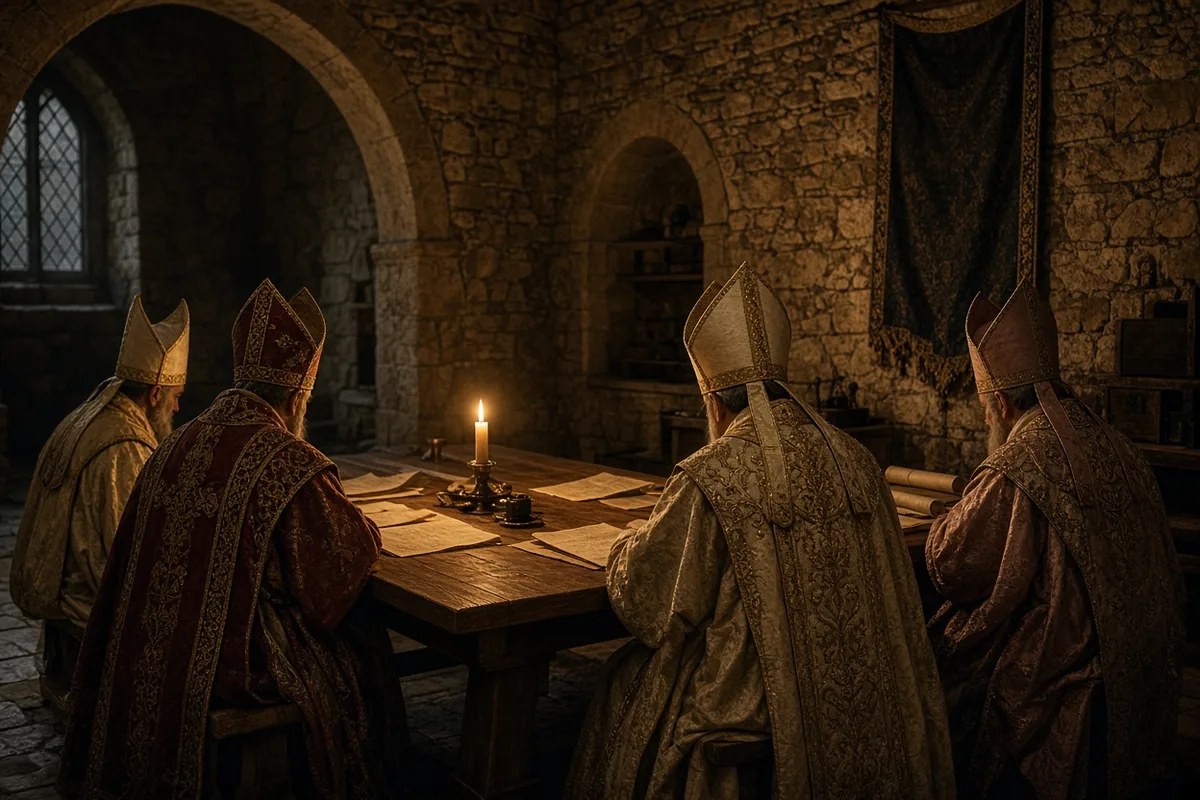
After Louis’s death in 840 the title passed through the partitions of Verdun and the subsequent treaties of Prüm and Meersen, yet each ruler who held the western portion continued to claim the Roman style. Otto of Saxony received it anew from Pope John XII on 2 February 962 inside the same basilica of Saint Peter; the diploma issued that day records the presence of 1,400 armed retainers and the gift of a gold chalice weighing twelve pounds. The same crown, still bearing the dent, rested on the altar until the coronation of Frederick Barbarossa in 1155, after which it remained in the treasury at Aachen except for brief removals during the diets of 1215 and 1356.
The chapel at Aachen still stands; its octagonal core measures 16.4 meters across, its bronze doors weigh four tons apiece, and the marble throne seat is worn smooth on the right side where successive emperors placed their right hand during the oath. The last person known to have sat there was Charles IV in 1349; after that date the throne was enclosed behind a grille and the crown kept in a separate reliquary above the high altar. In 1794 French troops removed the crown and carried it to Paris, where it remained until 1815; upon its return the dent was photographed for the first time, showing a triangular mark 4 millimeters deep.
One evening in 1832 an elderly man who had once served in the Frankish guard walked the length of the nave in Aachen with a lantern. He stopped at the rail, lifted the lantern so its light fell on the dented crown inside its glass case, and spoke the single word “Imperator” before the sexton closed the doors for the night.
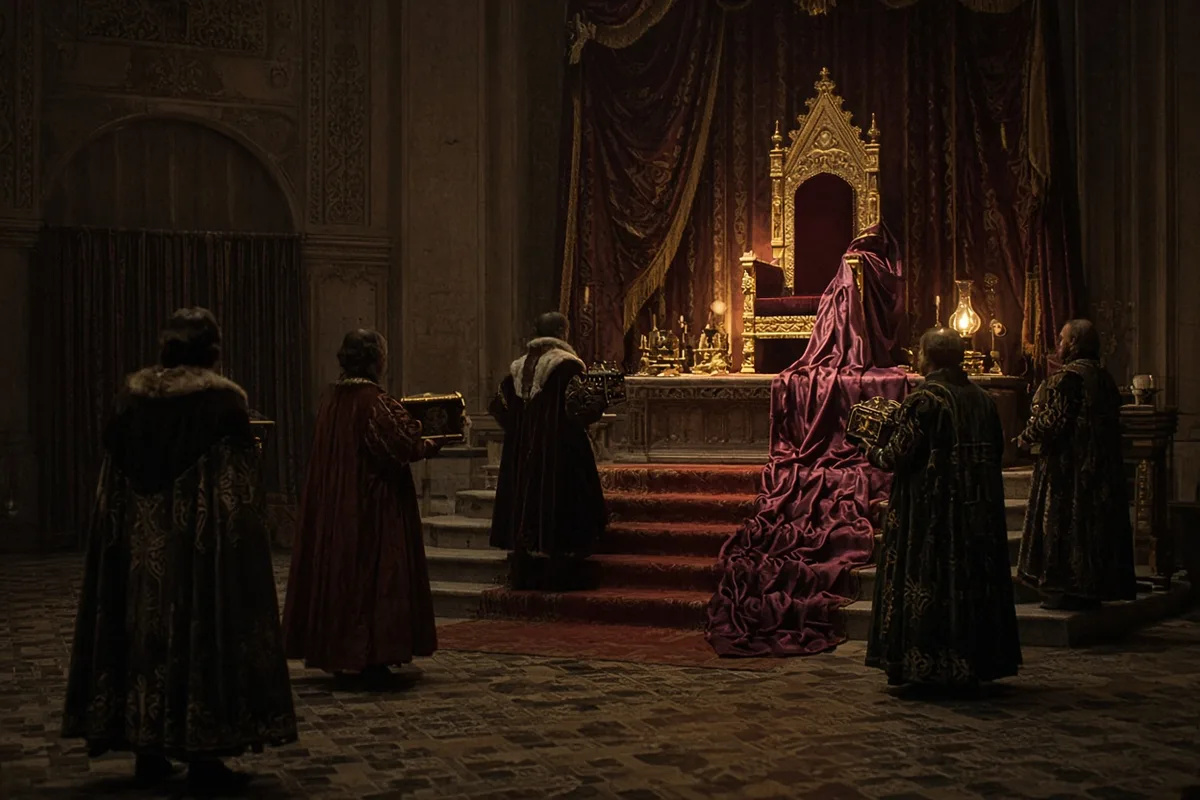
The elderly man turned from the rail and passed beneath the bronze doors that Einhard had described in his 817 Vita Karoli as weighing four tons each and cast in a single pour at the foundry near the Meuse. He crossed the square where the 1215 diet had convened 214 princes and where, on 19 October 1356, Charles IV had issued the Golden Bull that named Aachen the fixed site for the first coronation of every King of the Romans. Gas lamps along Ursulinerstrasse still burned at midnight when he reached the house at number 14, the same address listed in the 1829 municipal register as the residence of a pensioned guardsman drawing an annual stipend of 240 thalers from the Prussian civil list.
Two weeks later the crown was removed from its case for the first photographic record ordered by the newly formed Historical Commission of the Rhine Province. On 12 November 1832 the glass plate negative, exposed for fourteen minutes under magnesium ribbon, captured the triangular dent measuring 4.1 millimeters at its deepest point and the six cloisonné enamel plaques still set with pearls whose original count of 144 had been reduced to 119 after the 1794 removal. The plate now rests in the archive of the Centre Charlemagne, catalogued as negative 1832-A-07, with the note “dent visible on left temple band, no repair attempted.”
In 1873 the same crown traveled under guard to Vienna for comparison with the Reichskrone housed since 1806 in the Schatzkammer. The Austrian court protocol of 4 May records that both diadems were placed side by side on a table covered with crimson velvet; the Aachen piece measured 18.7 centimeters in height while the Vienna crown stood at 22.4 centimeters, the difference attributed to the added arch and cross added under Conrad II in 1027. The delegation returned the Aachen crown on 9 June with a certificate signed by three archivists confirming the dent had not been altered during the journey.
During the night of 14 July 1943 an RAF raid dropped 1,872 incendiaries on Aachen; the chapel’s lead roof melted and the reliquary case cracked from heat, yet the crown itself remained untouched inside its stone niche because the grille installed after 1349 had been left locked. Restoration led by architect Hans Hoffmann began in March 1945 and required 2,340 replacement roof tiles fired at the same kiln in Stolberg that had supplied the 1902 repairs. The crown was placed back on public view on 8 December 1951 during a ceremony attended by 87 surviving members of the pre-war cathedral chapter.
On 2 February 1965 the dent was measured again with a micrometer by conservator Elisabeth Schmitz, who recorded a depth of 4.3 millimeters, an increase of 0.2 millimeters attributed to vibration from the 1958 installation of the new organ whose 4,000 pipes weighed 28 tons. Her report, filed under inventory number 1965-KR-14, also noted that the original Byzantine silk lining inside the reliquary chest had been replaced in 1815 with a length of Lyon velvet woven to the same pattern as the 800-era fragment preserved in the Vatican Library.
The last recorded sitting on the marble throne occurred on 25 July 1978 when the nine-year-old heir to the Belgian throne, Prince Philippe, was permitted to place his right hand on the worn seat during a private visit arranged by the Belgian Embassy. The marble surface, measured that day, showed a depression 1.8 centimeters deep on the right forward edge, the cumulative result of hands placed there during 37 coronations between 936 and 1531. The prince’s visit lasted eleven minutes; the throne was then enclosed again behind the 14th-century grille whose key is kept in the sacristy safe numbered 3.
In the summer of 2023 the crown was scanned for the first time with a structured-light device operated by technicians from the Fraunhofer Institute. The resulting point cloud, comprising 4.7 million data points, revealed that the gold band had been thinned to 1.2 millimeters at the dent site, the thinnest point on the entire circlet. The scan file, archived under project code AACH-2023-CHAR-01, is accessible only to accredited researchers and requires a signed undertaking that no three-dimensional print will be made at a scale larger than 1:10.
On the evening of 24 December 2024 a single cathedral verger remained after the last Mass to adjust the lighting above the reliquary. He stood alone beneath the octagon for four minutes, checked the time on a wristwatch showing 21:47, and then switched off the final circuit before locking the bronze doors from the outside.