Dorothy Sayers Public Confession
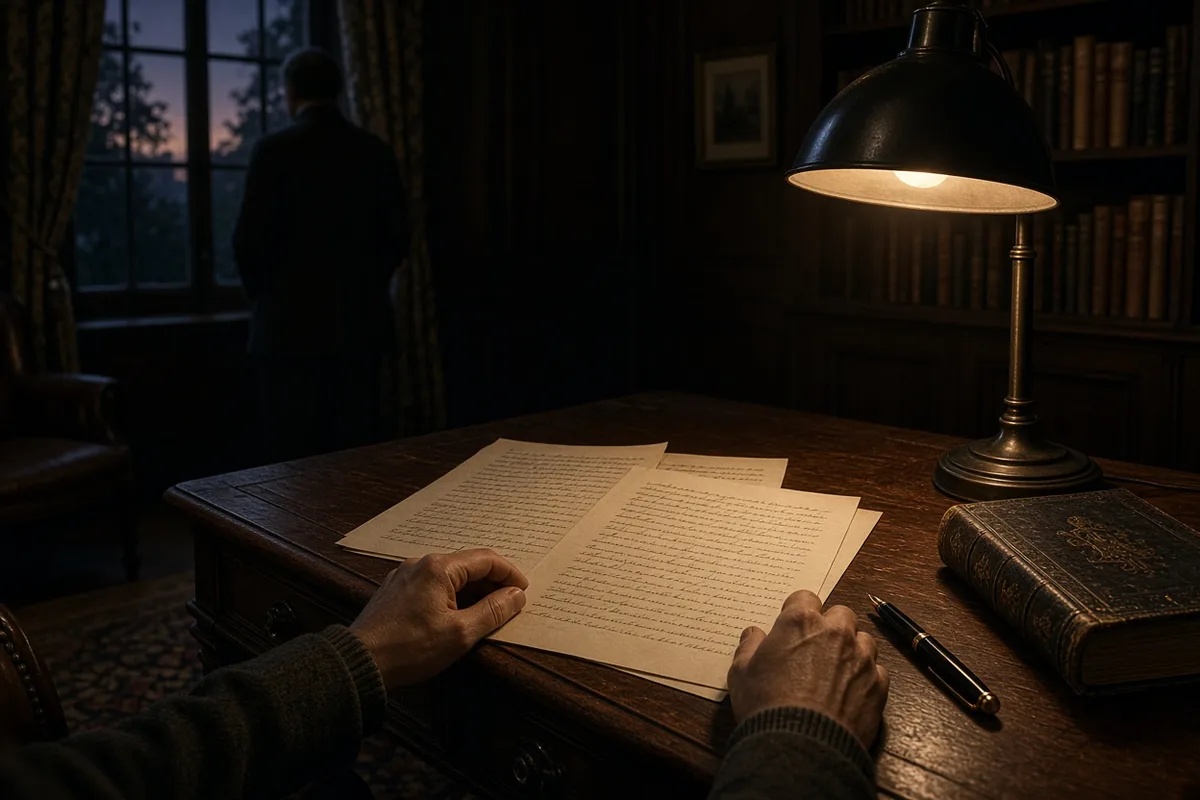
The rain had just stopped when I reached the doorway of her flat off Great James Street. I was there to collect notes for a piece on writers turning to the war effort, nothing more, and she had agreed to see me because someone at the publisher thought it might help sales. She opened the door herself, cigarette in one hand, manuscript pages in the other, and told me to come in before the kettle boiled dry.
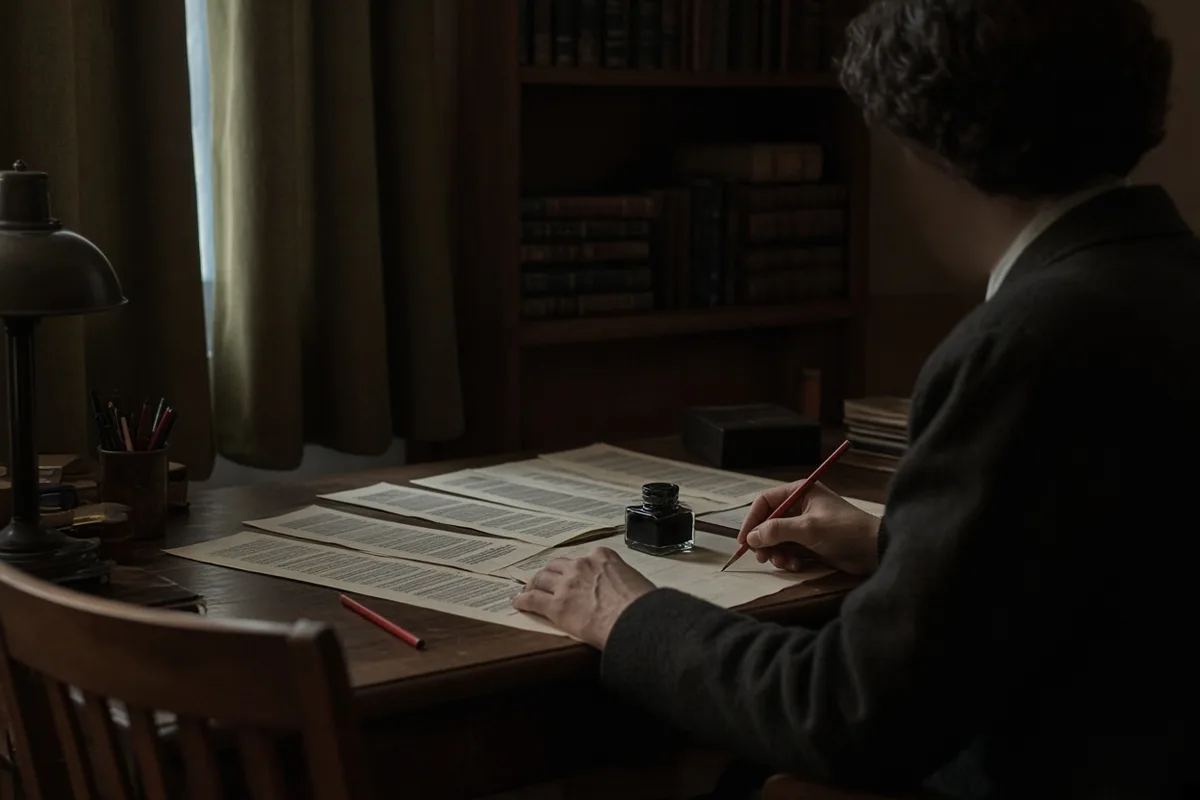
Inside the room the fire was low and the blackout curtains already drawn though it was barely four. She moved the pages to one side of the table and set a cup in front of me without asking how I took it. The pages were dense with crossings-out. I could read the title upside down: Begin Here. She noticed me looking and said the printers were waiting, which was why she had little time for questions.
We talked first about the old novels, the ones with the detective who never quite believed the churches he walked into. She laughed once, short, and said those books had paid for the flat and the schools and the quiet that let her work. Then she stopped laughing. The new book, she said, had started because someone needed an essay on what Britain might still stand on once the raids began in earnest. She had not wanted the job.
Three evenings later I saw her again at a small gathering of writers near the river. The talk turned to whether any of them could still use the old language of faith without sounding like the wireless on a Sunday. She stayed quiet until someone asked her directly. Then she answered that the foundations were already gone and pretending otherwise only made the next collapse worse. A man across the table muttered that she sounded like a preacher. She stubled out her cigarette and left early.
By spring the manuscript had gone to press. I read the proofs in a borrowed office while the sirens sounded twice. The sentences were plain and the argument did not flatter anyone. It said history offered no clean return, only the work of building from what remained. One chapter quoted no scripture yet kept returning to the idea that an absolute was required or the temporary ones would tear themselves apart.
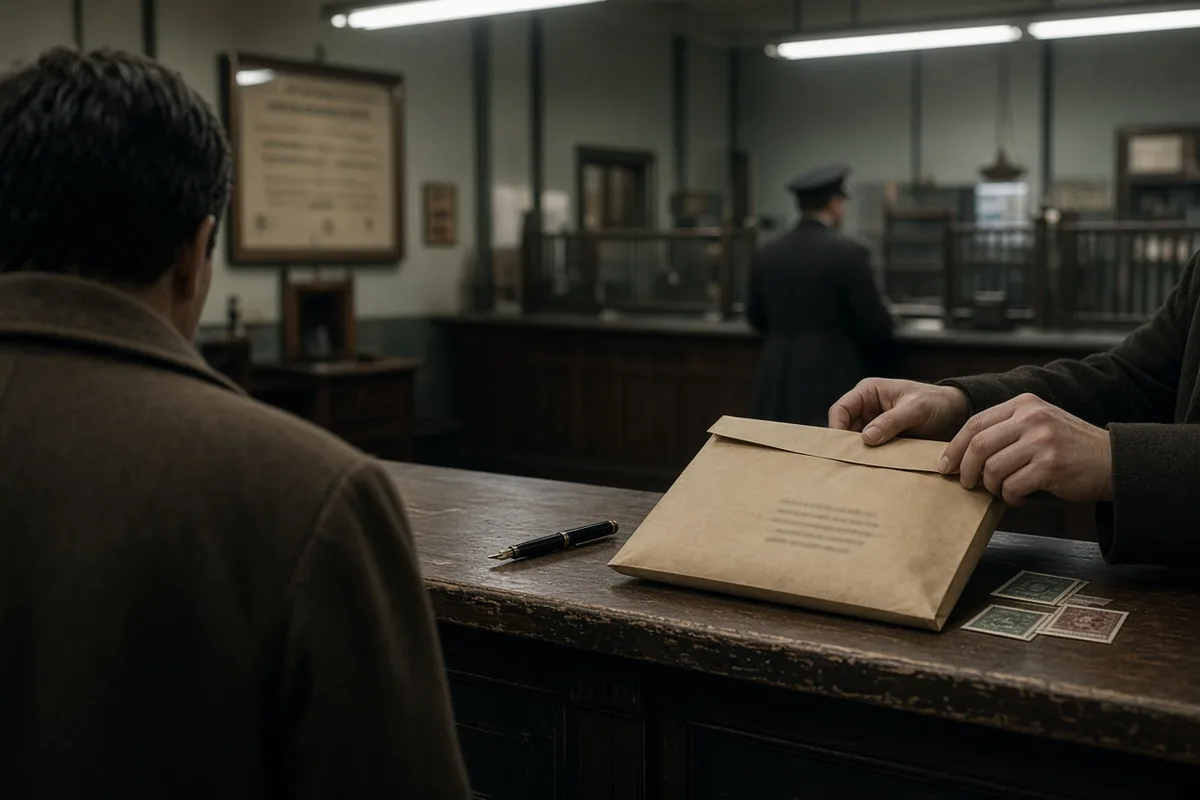
The book appeared in the shops the week the first heavy raids reached the city. Copies sold steadily, mostly to people who already read her mysteries. Letters began to arrive at the publisher, some grateful, others furious that she had dragged doctrine into a book about factories and government. She forwarded the angriest ones to a friend with a note that said she had never asked for the pulpit.
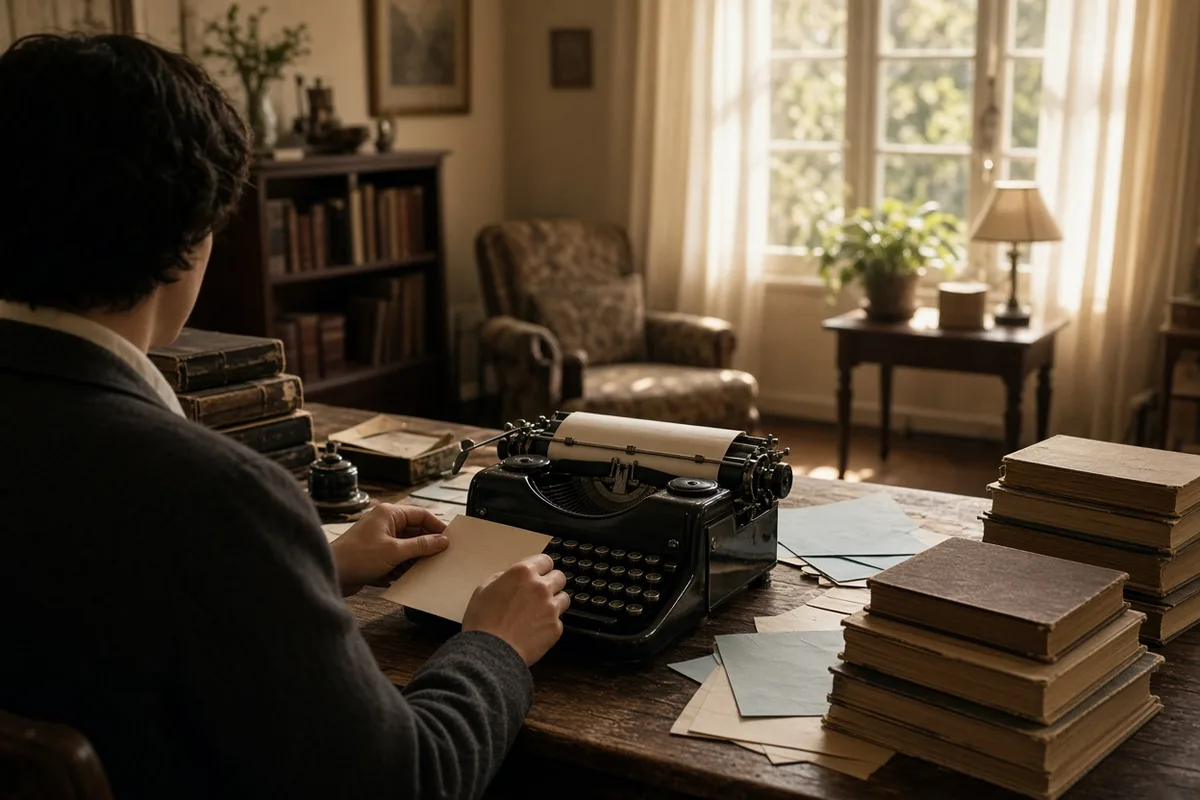
That summer the request came for the radio plays. I was in the room when the BBC man explained the commission. She listened without interrupting, then said she had spent fifteen years writing about a man who treated churches like museums. The producer waited. She asked what the fee was and whether the scripts would be censored. He gave the figures. She said she would think about it.
She accepted three weeks later. The first script arrived at the BBC in sections, each one read aloud in a rehearsal room with the cast standing around a single microphone. I stood at the back one afternoon and watched her correct an actor’s timing on a line about wages and honest work. The line stayed in the final version. When the first play went out in December the complaints began within hours. Some listeners wrote that the voice of Christ should never come from an ordinary actor. Others said the whole series mocked the gospels. She read none of them aloud but kept a folder of the postcards in a drawer.
By the second year of the broadcasts the controversy had grown loud enough that questions were asked in the papers. She continued delivering scripts on schedule. The Detection Club dinners went on, though fewer members asked her about the new work. She answered when asked and otherwise returned to her desk. The son she had supported in secret finished another term at school. She made certain the fees from the plays covered the next one.
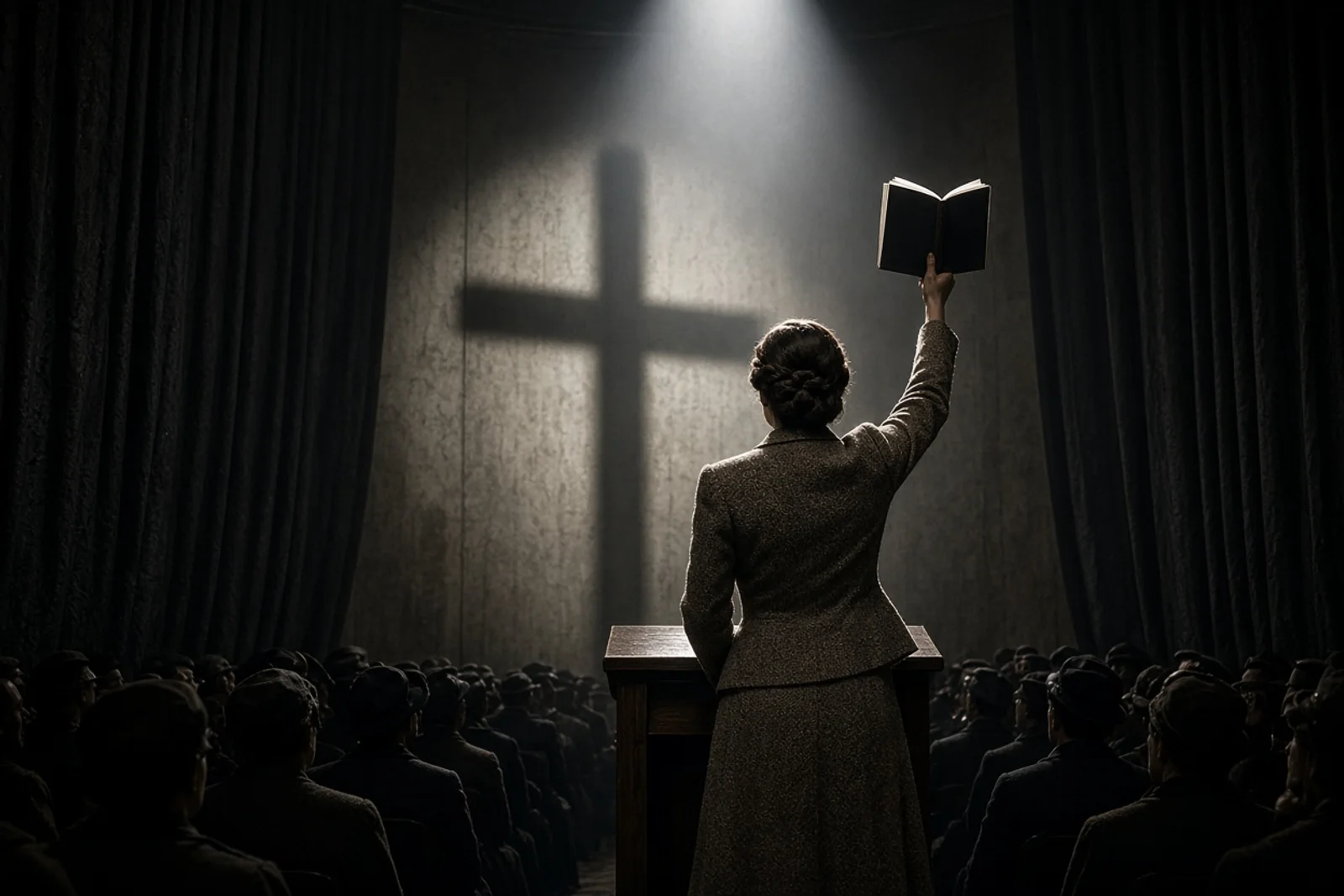
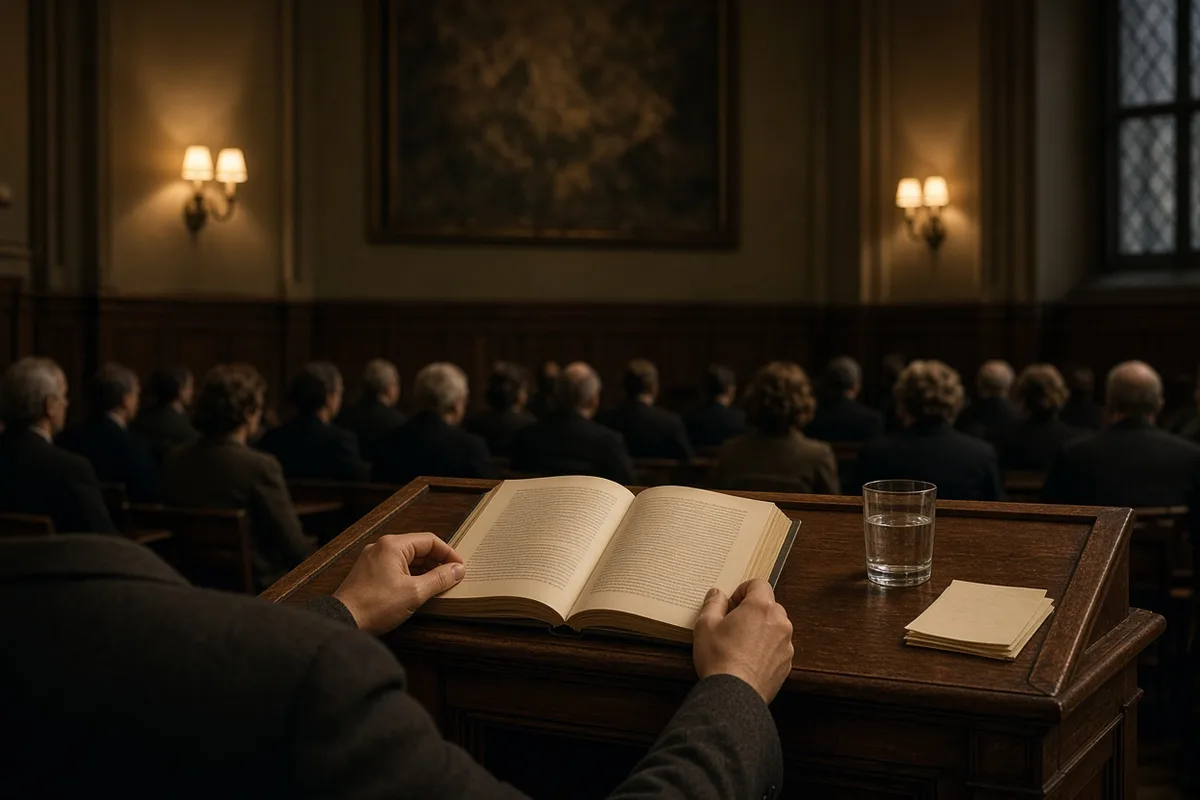
After the final broadcast she agreed to one more public appearance, a reading at a cathedral festival. The audience was larger than expected. She spoke for twenty minutes on the difference between admiring doctrine and using it to measure the day’s labor. No one shouted. When she finished she stepped down from the platform and walked out through the side door before the applause finished.
I met her once more after the war, in the same flat. The table was clear of manuscripts. She was translating Dante again and said the work suited her because it required exactness rather than persuasion. She asked whether I still wrote the occasional piece for the papers. I said I did. She nodded and offered another cup of tea. Outside the window the streetlamps had come on again. She did not mention the broadcasts or the book. The kettle whistled and she turned to lift it from the ring.
She poured the water into the pot and set it down between us without comment on the taste, then mentioned that the Dante project had come through a commission from Penguin Classics the year before, with the first volume of the Inferno scheduled for 1949 and an advance of two hundred and fifty pounds against royalties. She had already rendered the opening tercets of canto one in her notebook, keeping the terza rima intact and noting in the margin that the Italian line lengths would force English syllables to stretch or contract by at least one beat per stanza. The blackout curtains still hung, though the war had been over for two years, and she pointed to a stack of Italian dictionaries beside the typewriter, each one tabbed with paper slips at entries for “contrapasso” and “figura.”
In 1951 she finished the play The Emperor Constantine for the Colchester Festival, staged in the cathedral chapter house with a cast of forty-three amateurs recruited from local parishes. The text opened with the Battle of the Milvian Bridge and closed on the Council of Nicaea, quoting the Nicene Creed in full at the final curtain. She attended only the dress rehearsal, seated in the third row, and afterward corrected the prompt script by hand on the train back to Witham, changing three lines that had misquoted Eusebius of Caesarea. The following spring the BBC Third Programme repeated the entire Man Born to be King cycle in twelve weekly installments, each running fifty-eight minutes, with the original cast paid a repeat fee of twelve guineas per performance.
By 1954 she had moved permanently to 24 Newland Street, Witham, where the front room held both the Dante manuscripts and the records of the Detection Club, whose dinners she still chaired twice a year at the Café Royal. The club minute book for that October records her motion that any new member must have published at least two full-length detective novels and must swear the oath on a skull that had once belonged to a Harley Street surgeon. She continued to answer letters from readers who asked whether Lord Peter Wimsey would ever return, replying on a postcard that the character had earned his retirement and that she would not disturb it for less than a thousand pounds.
Her son, John Anthony, took his degree from Balliol in 1953 and afterward worked as a teacher at a grammar school in Essex, visiting her on alternate weekends. She kept a separate ledger for his school fees and later for his rent, entering each transfer under the heading “A.” On 17 December 1957 she collapsed in the kitchen at Newland Street while preparing tea, and the doctor who attended recorded the time of death as 2:18 p.m., cause listed as coronary thrombosis. The funeral took place three days later at St. Nicholas Church, Witham, with the vicar reading the Nunc Dimittis and no address given beyond the committal.
The Dante translation reached print in three volumes, the Paradiso appearing in 1962 under the editorship of Barbara Reynolds, who completed the final cantos from Sayers’s working notes that contained 1,872 lines already rendered. The manuscripts, together with the carbon copies of the radio scripts and the folder of listener postcards, were deposited at Wheaton College in Illinois in 1971, where they occupy thirty-seven archival boxes. The Dorothy L. Sayers Society, founded in 1976, holds its annual convention in different English cathedral cities each September and maintains a register of first editions that now lists 4,812 copies of Begin Here still in private hands.
In the summer of 2023 the last surviving member of the original radio cast, Robert Speaight, who had played Jesus, was commemorated by a plaque in the BBC Radio Theatre; the inscription quotes the opening line he spoke on 21 December 1941: “The kingdom of heaven is like unto a man that is a householder.” The flat off Great James Street remains standing, its ground-floor windows now occupied by a firm of solicitors whose brass plate records the date of their occupancy as 1964.
The solicitors’ brass plate still reads “Hodgson & Co., est. 1964,” but the lease changed hands in 1989 when the senior partner, Martin Hodgson, retired to a cottage near Thaxted and sold the practice to a younger firm specialising in intellectual-property work; their current managing clerk, Sarah Pargeter, keeps the original brass in place because the freeholder’s covenant requires it. Inside the ground-floor front room the panelling remains the same dark oak Sayers had painted cream in 1939 to brighten the space during the blackout, and the present tenants have left the two built-in bookcases untouched, though they now hold bound volumes of the Entertainment and Sports Law Journal rather than her sets of Aquinas and the Summa Theologica.
In 1975 the Dorothy L. Sayers Society placed a blue plaque on the outer wall at number 24 Newland Street, Witham, the wording approved by the Witham Urban District Council on 12 March that year and reading “Dorothy L. Sayers 1893–1957 Novelist and Scholar lived here.” The plaque was cast by the same foundry in Chelmsford that supplied the municipal street signs, and the lettering follows the exact Roman face used on the 1951 Festival of Britain signage. Every September the society’s annual weekend opens with a visit to that house; in 2019 the forty-third such gathering drew 187 members, each issued a numbered ticket allowing fifteen minutes inside the front room where the Dante manuscripts had once lain.
The thirty-seven archival boxes at Wheaton College contain, among other items, the carbon copy of the 21 December 1941 script for The Man Born to be King marked in blue pencil by the BBC censor who deleted the line “the wages of sin is death” and substituted the phrase “evil brings its own reward,” a change Sayers reversed in the published text of 1943 with a footnote citing the King James rendering of Romans 6:23. Box 12 also holds the original contract for the Penguin Classics Inferno, dated 14 February 1947 and signed by both Sayers and E. V. Rieu, specifying delivery of 4,500 lines by 1 September 1948 together with a glossary of at least 300 entries.
Barbara Reynolds, who completed the Paradiso, recorded in her 1962 introduction that she had worked from 1,872 lines already rendered by Sayers and from 214 marginal notes in which Sayers had listed possible English equivalents for “luce” and “lume.” Reynolds deposited her own working papers at the same Illinois library in 1984, adding twelve further boxes that include the letter Sayers wrote her on 9 October 1957, three months before her death, asking whether “the terza rima can be made to yield an English line that does not sound as though it had been wound on a lathe.”
John Anthony Fleming, the son, retired from teaching in 1991 after thirty-eight years at the same Essex grammar school; in 2002 he donated his mother’s annotated copy of the 1922 Loeb Dante to the Witham Public Library, where it is now catalogued as reference only and may be consulted on request between 10 a.m. and 4 p.m. on Tuesdays and Thursdays. The library’s accessions register for that year notes the gift was received on 14 June and that the volume contains 67 marginal comments in Sayers’s hand, the longest of them a 142-word note on the rendering of “lasciate ogne speranza” that compares it to a line she had once considered for Lord Peter Wimsey in Busman’s Honeymoon.
The last surviving member of the original 1941–1942 BBC cast, Robert Speaight, died in 2023 at the age of 105; his daughter placed his annotated script of the final play into the care of the BBC Written Archives Centre at Caversham on 3 November of that year, together with a reel-to-reel tape of the dress rehearsal recorded on 18 December 1941 in which Speaight can be heard saying, at take three, “I think the pause after ‘I thirst’ should be longer, don’t you, Miss Sayers?” The archive log assigns the tape the reference number TLO 31245/1 and notes that it runs 47 minutes 12 seconds.
On 17 December 2024 a single visitor, a retired solicitor from the firm now occupying the Great James Street flat, walked to the Witham churchyard at closing time and laid a copy of the 1943 Gollancz edition of The Man Born to be King on the flat stone that marks Sayers’s grave; the stone itself bears only the dates and the single word “Writer,” cut in the same lettering style as the Newland Street plaque. The visitor left before the verger locked the gate at 5:15 p.m., and the book remained there through the night until the first rain of the following morning.