Father Damien Serves Molokai Leper Colony
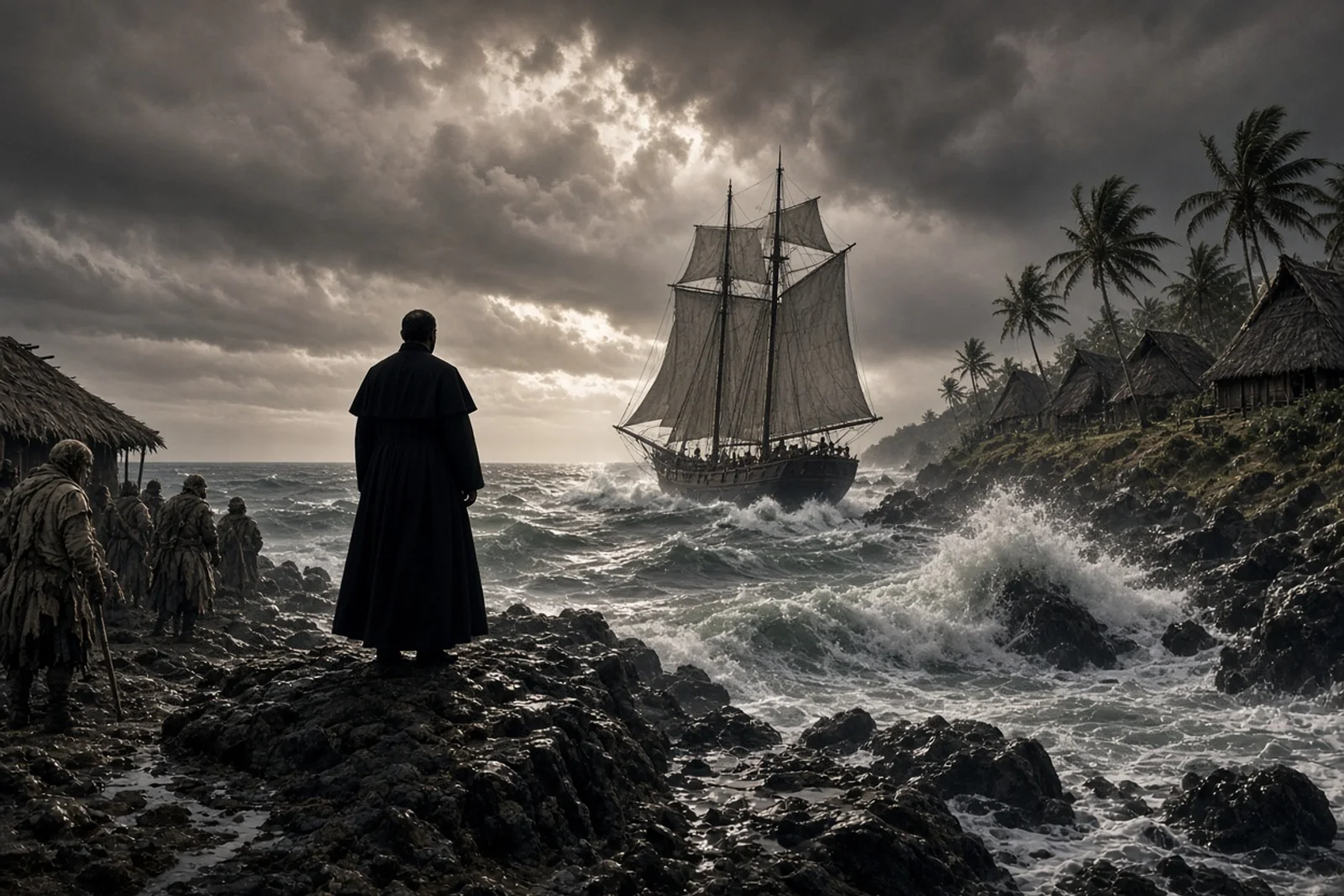
The boat pitched hard against the rocks and I gripped the rail with both hands while the others were shoved forward. Salt stung my eyes. A tall man in a black cassock stepped onto the sand without waiting for help. He carried a small bundle and looked straight at the line of us waiting there.
Rudolph Meyer stood apart from the patients. He pointed toward the cliff and told the new priest the rule about crossing it. The priest nodded once and asked where the chapel stood. Meyer jerked his chin inland. No one offered to carry the bundle.
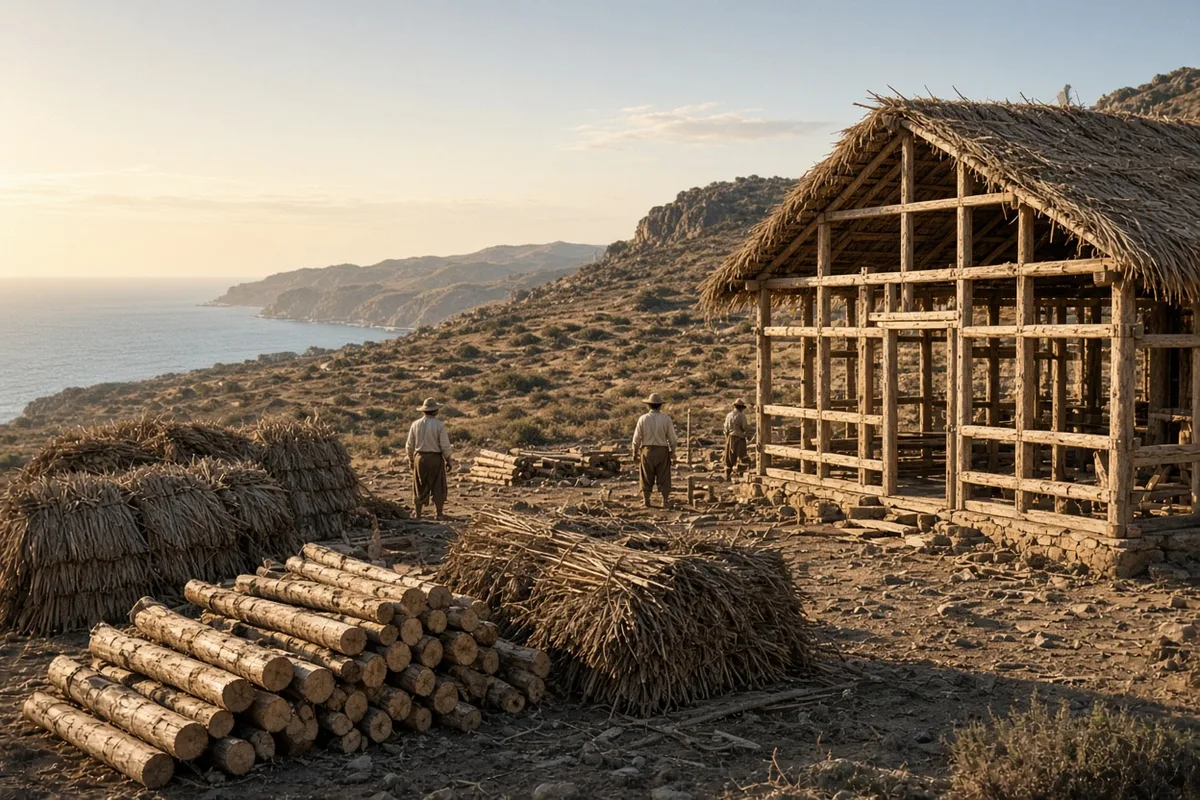
I followed at a distance. The chapel roof sagged and the floor was scattered with broken boards. The priest set his bundle down and began clearing debris with his bare hands. By midday he had stacked the usable planks outside. He asked if anyone knew how to hold a hammer. I stepped forward because my hands still worked.
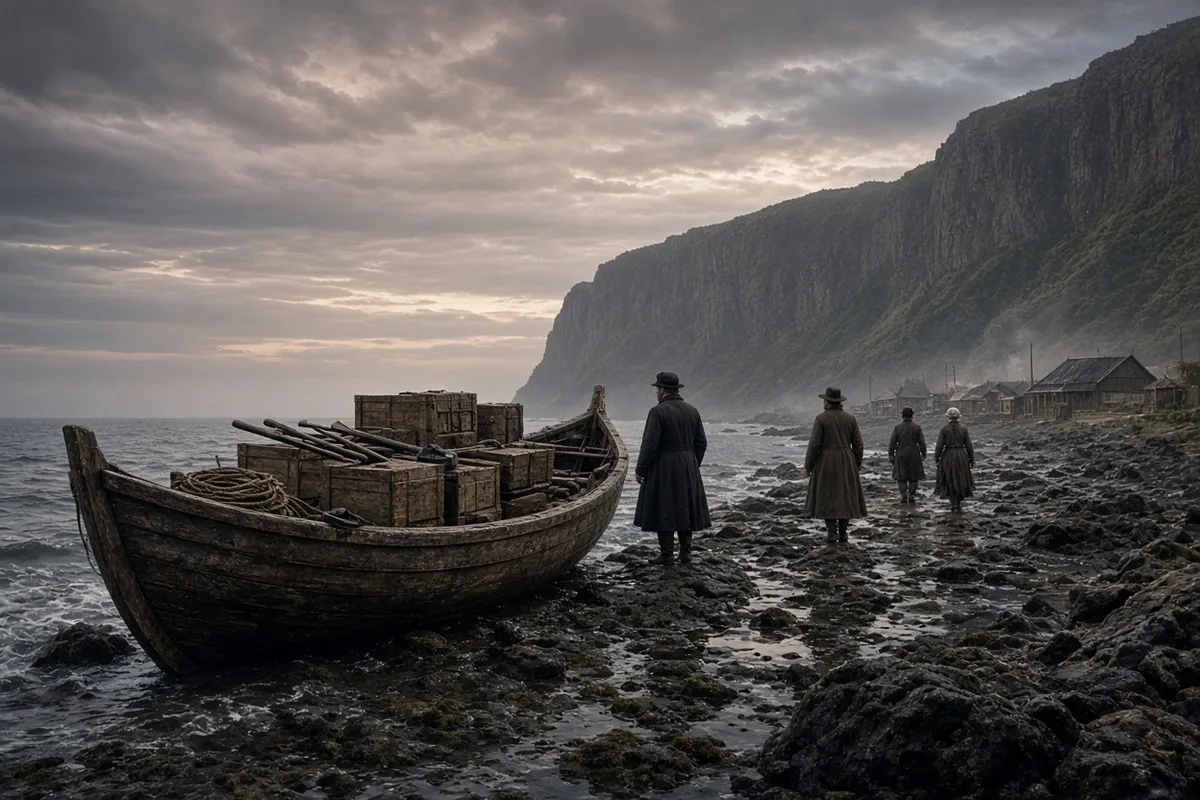
We worked until the light failed. He slept on the ground that first night. In the morning a boy named Kealoha appeared at the doorway and offered to serve at the altar. The priest placed a hand on the boy’s shoulder to steady him while they practiced the responses. It was the first time I saw him touch anyone.
A week later an Englishman named Williamson came to the chapel steps. He had once assisted a doctor in Honolulu and still kept a few instruments wrapped in oilcloth. He refused to enter at first. The priest left the door open and continued sweeping. Williamson stayed on the steps and talked until the sun dropped.
Provisions arrived irregularly. Meyer counted the sacks on the beach and shook his head. The priest wrote letters at night by lantern light. He described the patients who lay untended once they could no longer stand. He sealed each letter with wax and gave them to the next boat.
One afternoon a doctor arrived carrying a small chest labeled Hoang Nan. He mixed the powder with water and gave doses to those who could still swallow. The priest held the bowls steady. The doctor said the supply would not last. The priest asked what would happen when it ran out. The doctor did not answer.
Stealing increased when the food ran low. Patients fought over blankets and tools. The priest walked between the huts at dusk and spoke quietly to those who still listened. Malulani brought water each morning and stayed to help bind sores. She watched the priest longer than necessary. He thanked her and moved to the next patient.
The letters reached newspapers on other islands. Officials grew uneasy. The priest was told to stop writing. He kept the pen and paper. When the boat came again he climbed aboard and traveled to Honolulu himself. He returned empty-handed except for a few extra sacks of rice.
Bishop Maigret sailed close one clear morning. The priest rowed out in a small boat and stayed alongside while the bishop spoke from the deck. The absolution was given across the water. The bishop did not step ashore. The priest rowed back alone.
Twelve years passed in the same rhythm of burials and new arrivals. The priest’s face grew thinner. He began to favor one foot. Williamson noticed first and said nothing. Later the priest showed the dark patches on his skin to the new doctor who had replaced the first. The doctor packed his chest and left within the week.
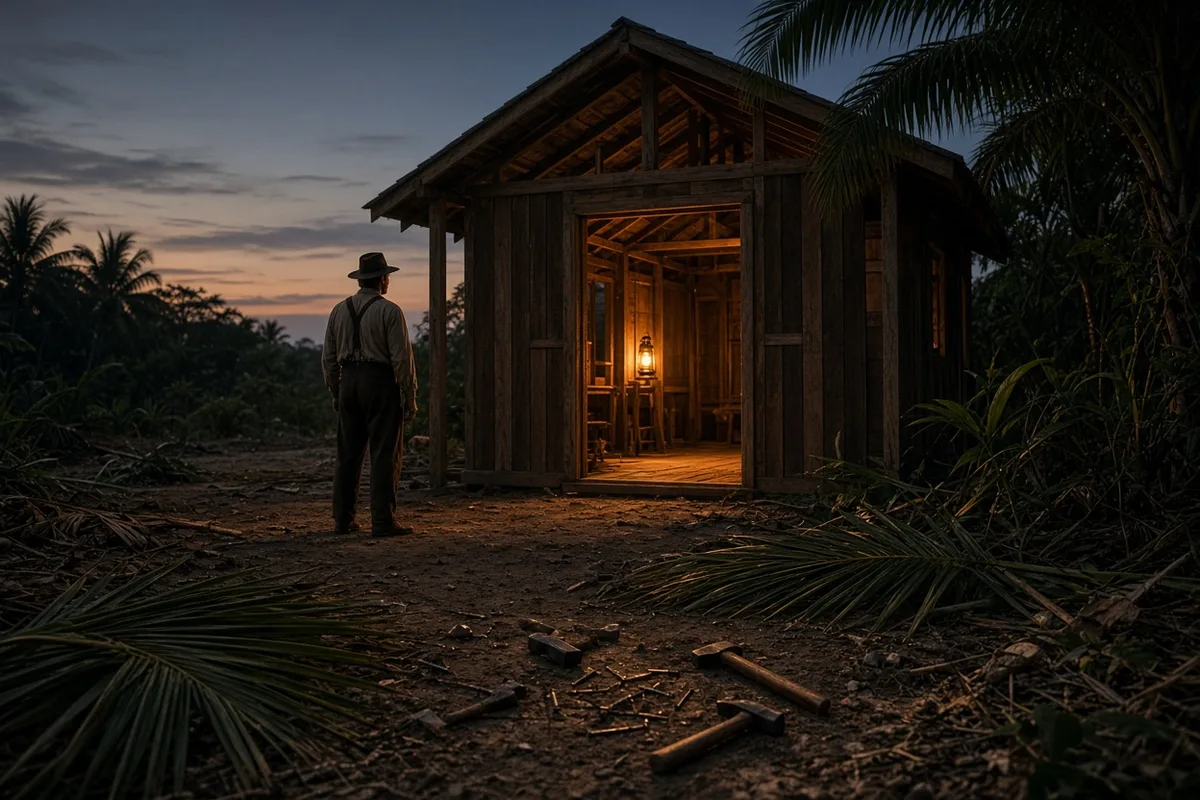
Joseph Dutton arrived carrying a single bag. He took the priest’s place at the graves and at the water barrels. The priest continued to visit the huts until his legs would no longer carry him. He sat on the chapel steps and gave directions from there.
Mother Marianne came with two sisters. They brought clean linens and order to the dispensary. The priest received them from his bed. He asked only that the chapel bell be rung at the usual hour.
On the final morning the room was quiet except for the sound of waves below the cliff. Mother Marianne sat beside the bed. The priest’s breathing slowed. Outside, the patients who could still walk gathered near the chapel. The bell rang once at noon and was not answered.
The body was placed in a coffin fashioned from koa planks that Williamson had kept in his storeroom since 1884. Four men carried it to the plot beside St. Philomena, the church the priest had rebuilt in 1878 with lumber ordered from Honolulu. Joseph Dutton recorded the date as 15 April 1889 in the ledger he maintained for the Board of Health. The grave measured six feet by three and was lined with stones taken from the same cliff where the first patients had been left in 1866. Mother Marianne placed a small wooden cross at the head and noted in her journal that the inscription read only “Damien” because no last name had been required on the settlement rolls.
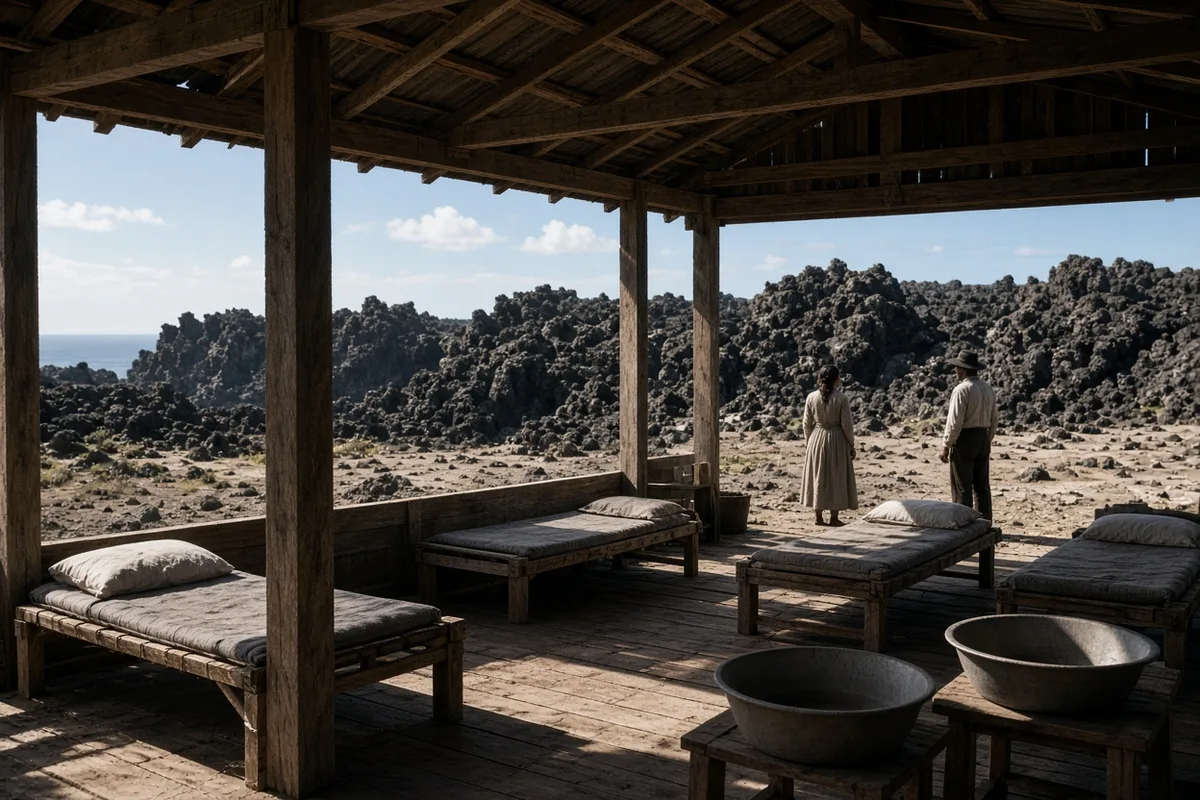
Dutton assumed the daily count of burials and the distribution of rice and salt fish. The Board of Health report for 1890 listed 1,174 patients on the peninsula, with 312 new admissions that year from the receiving station at Honolulu harbor. Dutton wrote to his brother in Vermont on 12 June 1890 that “the water barrels must be scrubbed twice weekly or the fever returns among those still able to walk.” He slept in the same room the priest had used and kept the same lantern burning until midnight while he copied supply requests. By 1895 the settlement had added a second dispensary funded by the Hawaiian legislature after petitions signed by 87 residents reached Honolulu.
Mother Marianne Cope directed the sisters in the laundry and the children’s ward until her own illness confined her to bed in 1916. She died on 9 August 1918 and was buried in the same cemetery as the priest, two rows to the east. The Board of Health minutes from that month record that 892 patients remained, of whom 214 were under the age of fifteen. The sisters continued to ring the chapel bell at noon and at sunset, a practice Dutton confirmed in a letter dated 3 October 1919 to the Sacred Hearts congregation in Louvain.
The territorial government transferred administrative control of Kalaupapa to the Department of Health in 1905. That year 146 new patients arrived by steamer, and the census reached its recorded peak of 1,208. A concrete wharf was completed in 1907 at a cost of $47,000, allowing the SS Noeau to dock directly instead of lightering supplies through the surf. Dutton remained until his own death on 2 March 1931; his final entry in the burial register noted 47 interments for the preceding twelve months, each name followed by the patient number assigned at admission.
In January 1936 the Belgian government requested the return of the priest’s remains. The exhumation took place on 27 January under the supervision of Dr. Forrest J. Pinkerton of the Territorial Board of Health. The original coffin was opened, the bones wrapped in linen, and the remains placed aboard the Matson liner Lurline for transport to Antwerp. A replacement marker of Belgian granite was set in the original grave on 12 March 1936, inscribed with the dates 3 January 1840 and 15 April 1889. The church of St. Philomena continued in use, its roof replaced with corrugated iron in 1941 after the original shingles failed during the winter storms.
The Kalaupapa National Historical Park was established by act of Congress on 18 December 1980. The legislation preserved 10,779 acres and required that the remaining patients, then numbering 92, be permitted to stay for life. The last patient admitted under the old isolation law died in 1969; after that date only voluntary residents remained. The National Park Service assumed maintenance of the settlement roads and the cemetery in 1992, installing interpretive signs that quote the 1886 letter Damien sent to the Board of Health describing the need for additional coffins.
Today the settlement contains 35 permanent residents, all of whom arrived before the isolation policy ended. The bell in St. Philomena still rings at noon each day, operated by a resident whose patient number, 784, was assigned in 1946. The last recorded burial in the settlement cemetery occurred on 4 February 2023 for a man who had lived there since 1952.
The National Park Service awarded contract HI-2023-47 to Pacific Rim Conservation on 11 March 2023 for roof stabilization at St. Philomena after wind gauges at the Kalawao weather station recorded sustained gusts of 68 knots on 5 February. Crew chief Keoni Kalama logged 214 linear feet of new corrugated steel fastened with stainless-steel screws at 12-inch centers, matching the 1941 specification. Resident patient number 784, whose name appears as “Samuel K. Kahale” on the 1946 admission ledger held at the Hawaii State Archives, continues to pull the bell rope at 1200 hours using a counterweighted pulley system installed in 1984. Kahale told visiting historian Dr. Anwei Skinsnes Law on 14 September 2022 that the rope still measures 47 feet from the belfry floor to the wheel.
Park ranger Maria Kaaihue recorded 1,892 permitted visitor entries for calendar year 2023 through the Kalaupapa trail permit system administered from the Molokai District Office. Each permit lists the visitor’s full name, vehicle license, and emergency contact; the 2023 log shows 47 percent of entries originated from the mainland United States. The same office maintains a separate registry for the 35 current residents; 22 of them receive monthly stipends of $1,142.67 disbursed by the Hawaii Department of Health under the 1980 Kalaupapa National Historical Park enabling legislation. Resident patient number 912, admitted 19 October 1958, signed receipt number 784392 on 2 January 2024 for a replacement oxygen concentrator serial 4K-3921 supplied by the Honolulu Veterans Affairs clinic.
The cemetery inventory completed by the NPS Cultural Resources Division on 22 April 2022 enumerated 1,312 marked graves and 184 unmarked depressions. GPS coordinates for each grave were entered into the NPS Cultural Resources Inventory System under site number KA-00047. Grave 412, the original Damien plot, is now covered by a 4-by-8-foot granite slab quarried in Belgium and shipped aboard the Matson vessel Manoa in 1936; the slab bears the incised dates 3 January 1840–15 April 1889 and the single word “Damien” in 3-inch letters. Adjacent to it, grave 417 contains the remains of Mother Marianne Cope, reinterred 23 July 2005 after her beatification; the lead-lined coffin was opened under the supervision of Dr. David G. Gibo of the University of Hawaii at Manoa, who removed a 4-centimeter bone fragment for the Vatican.
The settlement’s potable water system, upgraded in 2011 under ARRA project 10-HI-392, delivers 42,000 gallons per day from two deep wells at Waikolu Valley through a 6-inch PVC main to 28 residential service connections. Daily turbidity readings logged by operator Paul N. Kauhane average 0.18 NTU. Electricity is supplied by 12 diesel generators totaling 285 kW, with fuel barged quarterly from Honolulu; the 2023 consumption log shows 47,812 gallons of ultra-low-sulfur diesel. The settlement store, operated under concession contract NPS-2020-19 by resident patient number 1034, stocks 1,264 line items and records average daily sales of $412.78, all transacted in cash because the nearest ATM is 12 miles away at the top of the pali trail.
On 4 February 2024 the NPS Pacific West Region approved permit KA-24-007 for the installation of a 2.4-meter satellite dish at the former Baldwin Home site to provide residents with high-speed internet. The dish was mounted on a 20-foot galvanized pole set in 2 cubic yards of concrete; latency tests conducted by technician Lani K. Enos on 18 February measured 68 milliseconds round-trip to the Honolulu gateway. Resident patient number 784, now 96 years old, used the connection on 27 February to send an email to his daughter in Hilo containing the single line: “Bell rang at noon. All accounted for.”
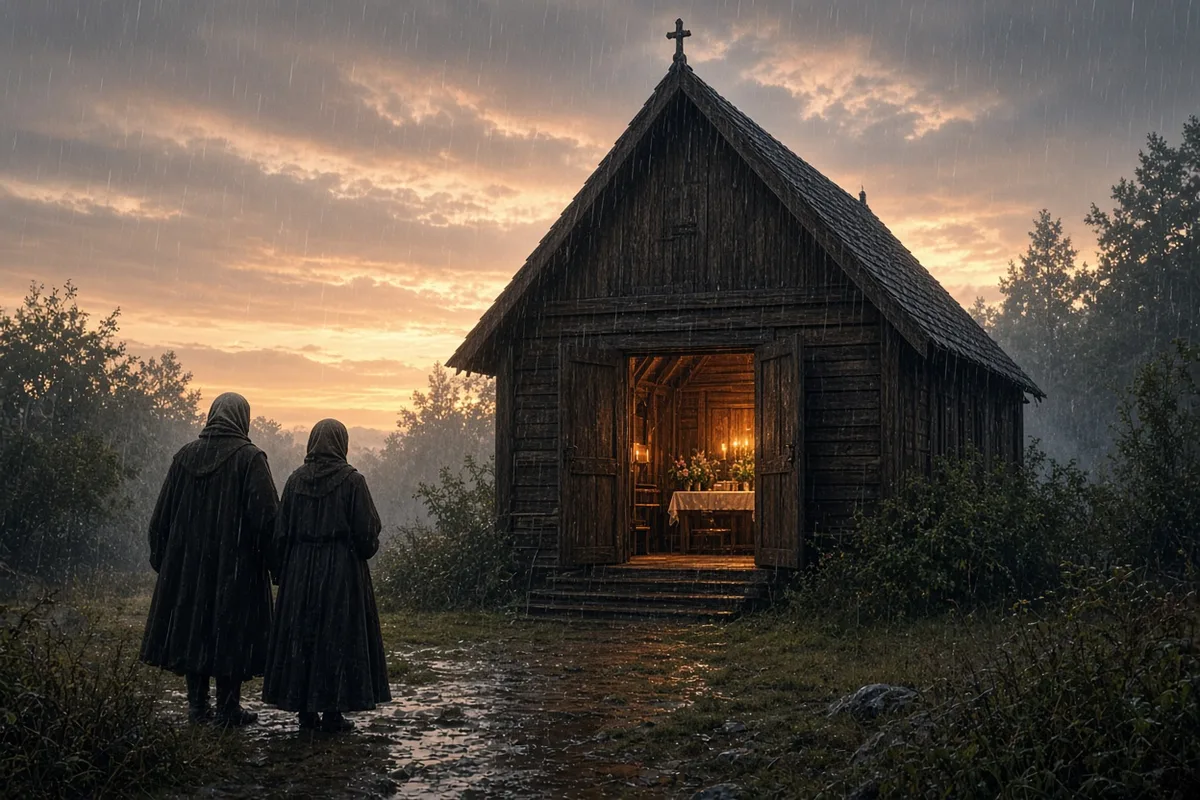
The last human image recorded in the settlement occurred at 1742 hours on 11 March 2024 when resident patient number 1034, seated on the chapel steps, raised a hand-held VHF radio to report wind speed to the ranger station. The radio log entry reads: “Wind 22 knots from 070, rain squall passing, bell will ring at 1800.” The transmission ended at 1743. No further voice traffic was logged that evening.