Francis Collins Kneels in the Waterfall
A dramatized first-person retelling of documented events
The trail switchbacked hard above the river. I kept my boots on the wet rock and watched Collins ahead of me, pack riding low on his shoulders, the same way he carried everything those days, like weight was something he had chosen and meant to keep. We had driven out from Michigan the week before, two residents with time off and no plan beyond seeing the mountains before the snow locked them. He had been quiet since the lake, the way he got when a case stayed with him.
He had told me about the patient on the drive west. An older woman, heart failing, who had asked him straight out what he believed while the monitors beeped around her bed. He said he had answered like a man caught without a coat in weather he had not checked. After that he started reading. A pastor down the road lent him the Lewis book. Collins kept it in the glove box and pulled it out at gas stations, pages marked with torn receipts.
We camped near the pass that night. The air smelled of pine and cold water. He sat by the fire with the book open on his knees, a headlamp throwing a small circle on the paper. Every so often he would stop and stare at the dark trees. I asked if the climb tomorrow would be too much for the old boots he wore. He said the boots were fine.
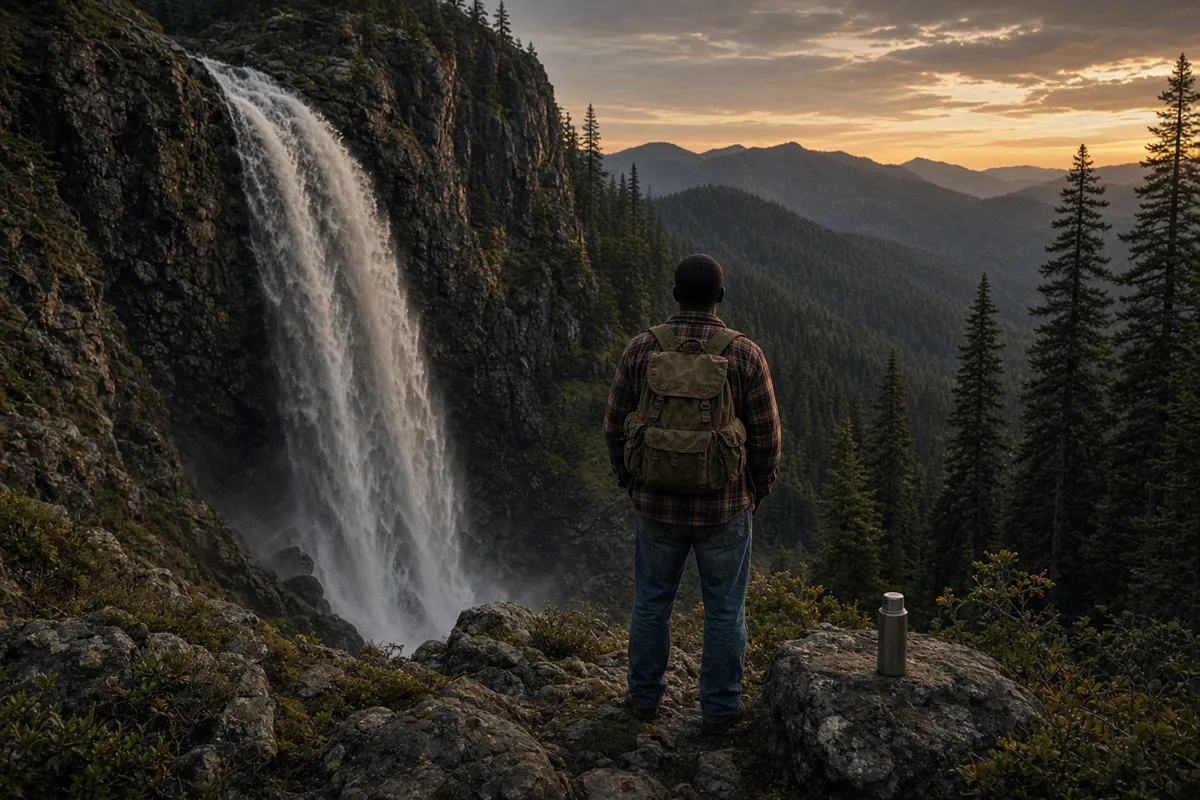
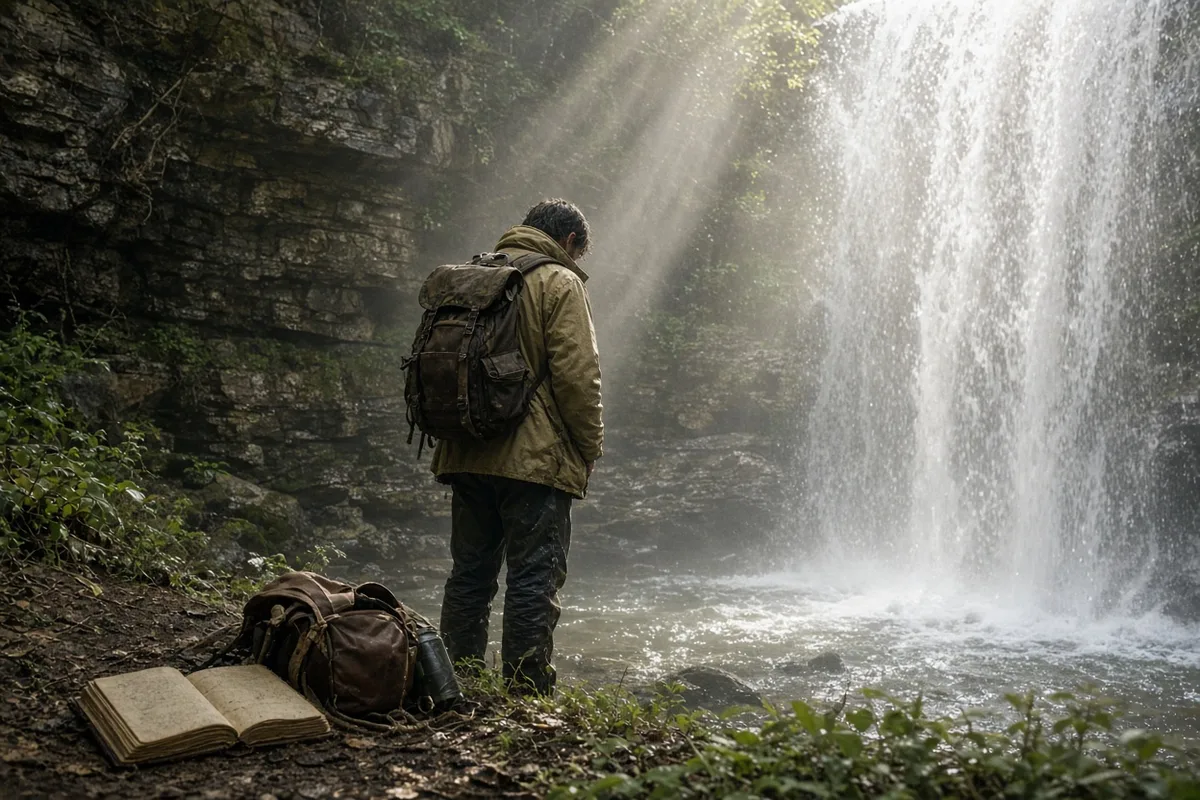
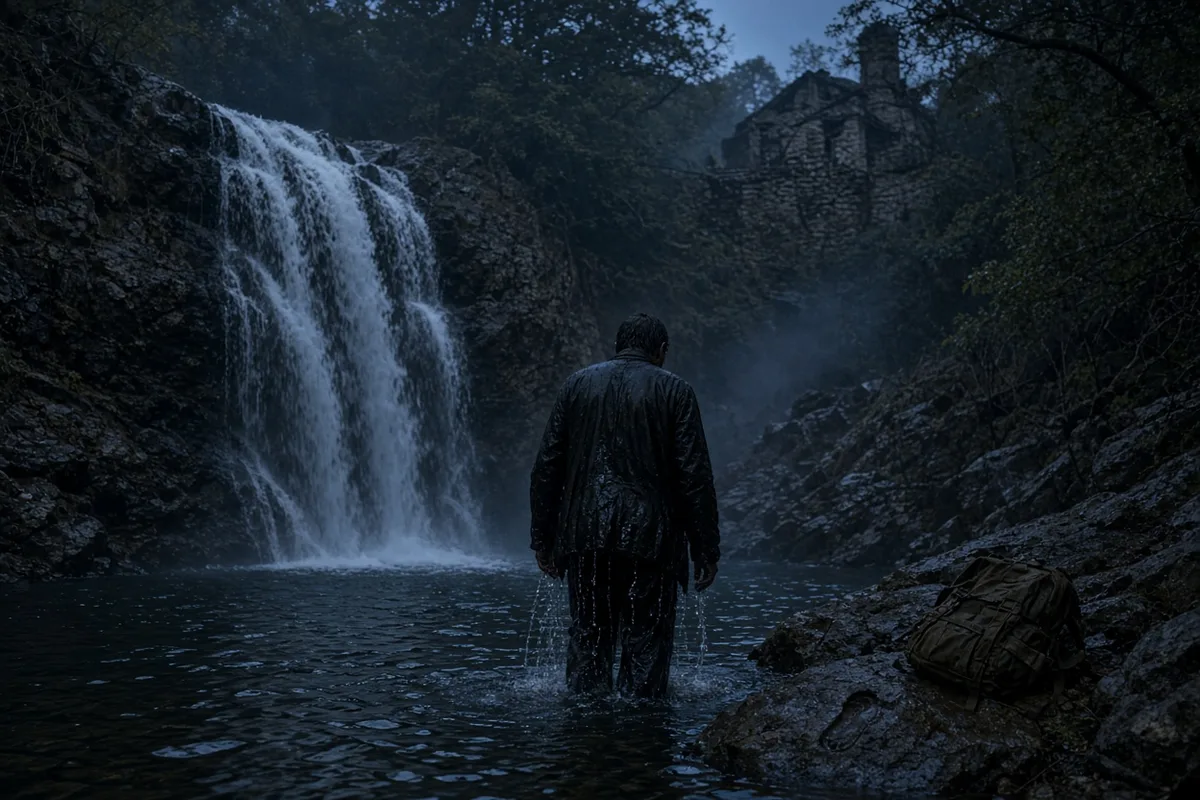
Morning came clear. We left the tent while frost still held the grass. The trail climbed through switchbacks until the trees opened and we heard the falls before we saw them. Collins rounded the last bend first. He stopped so suddenly I nearly walked into his pack. The waterfall stood frozen in three long columns, ice bright against dark rock, hundreds of feet from lip to pool. Sun hit the top and threw light back in hard white sheets.
He did not speak for a long time. When he turned his face was open in a way I had not seen since the start of the trip. We ate lunch on the flat rocks below the ice. He drank from his canteen and kept looking up. Later he said the search felt finished. I did not press him. We hiked down in the long light of afternoon.
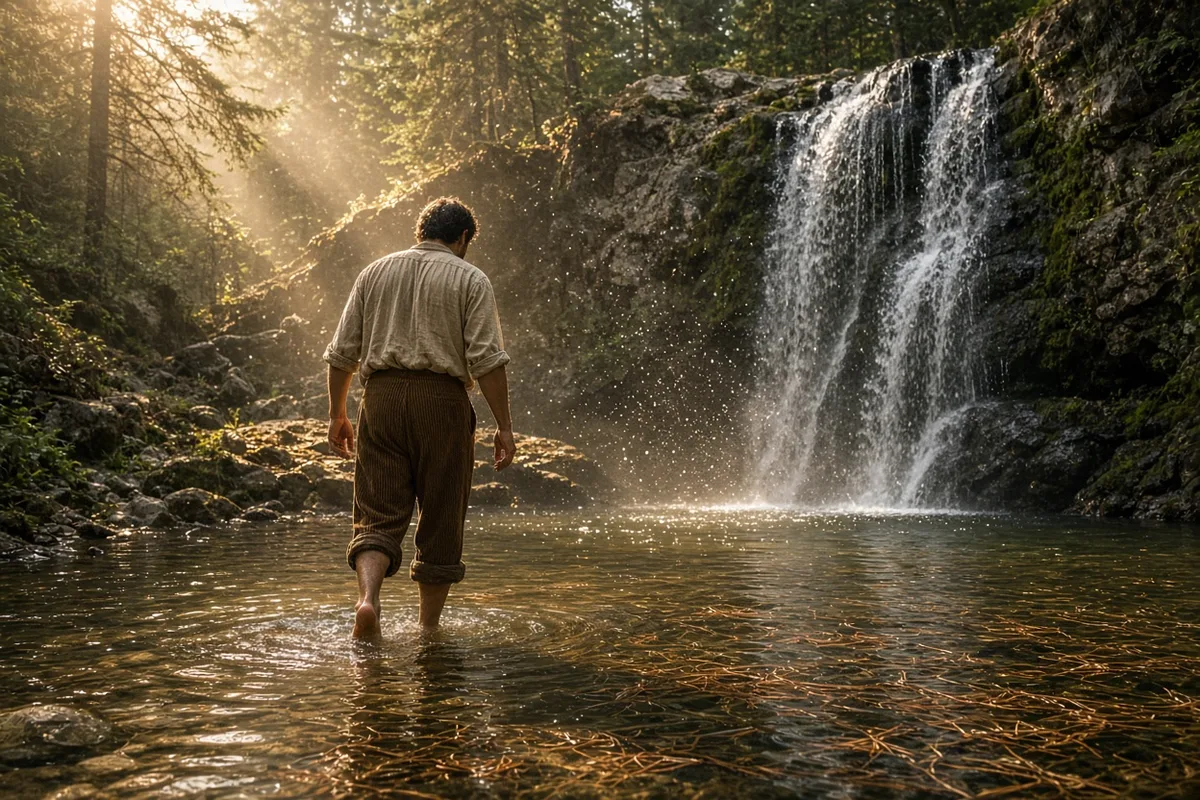
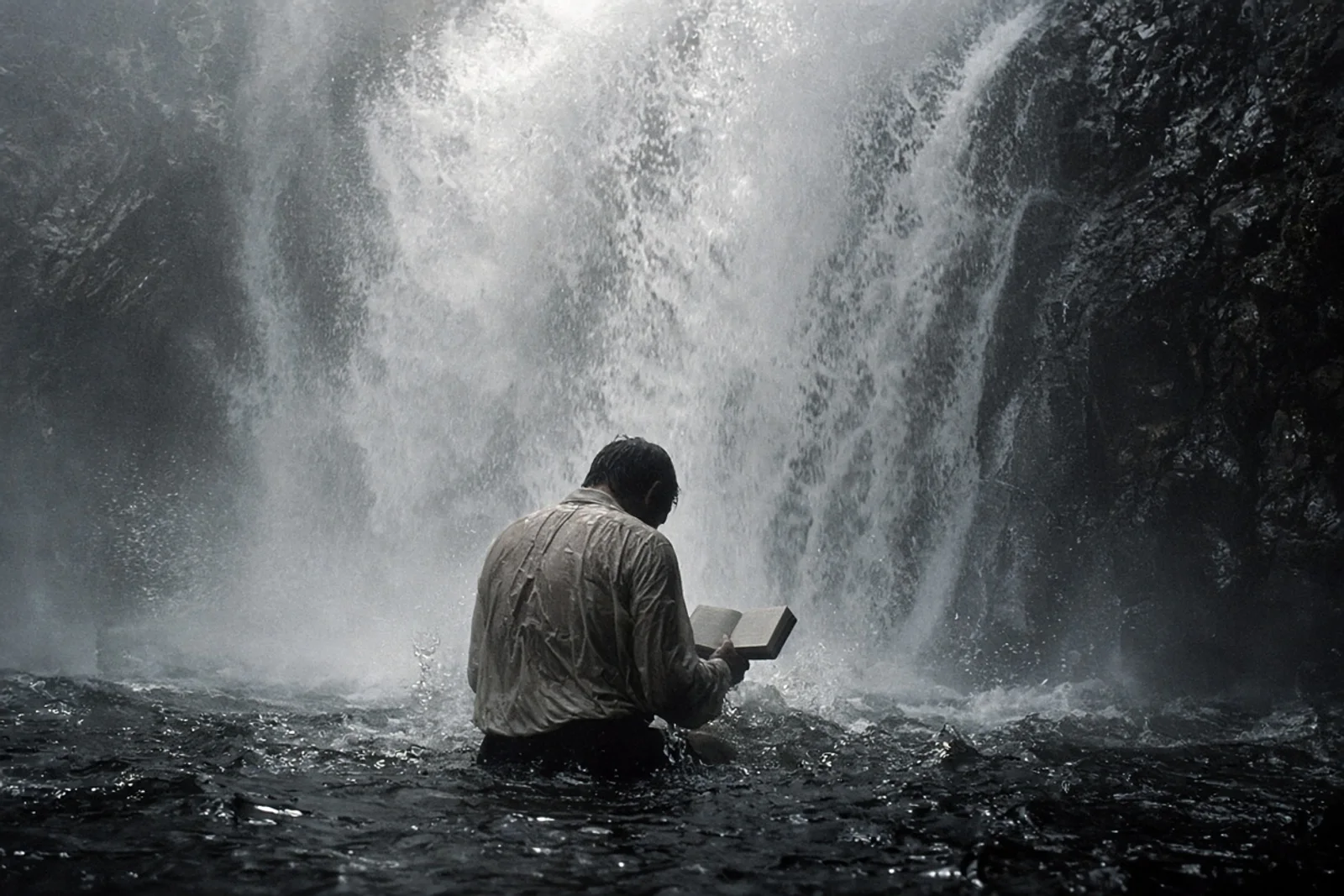
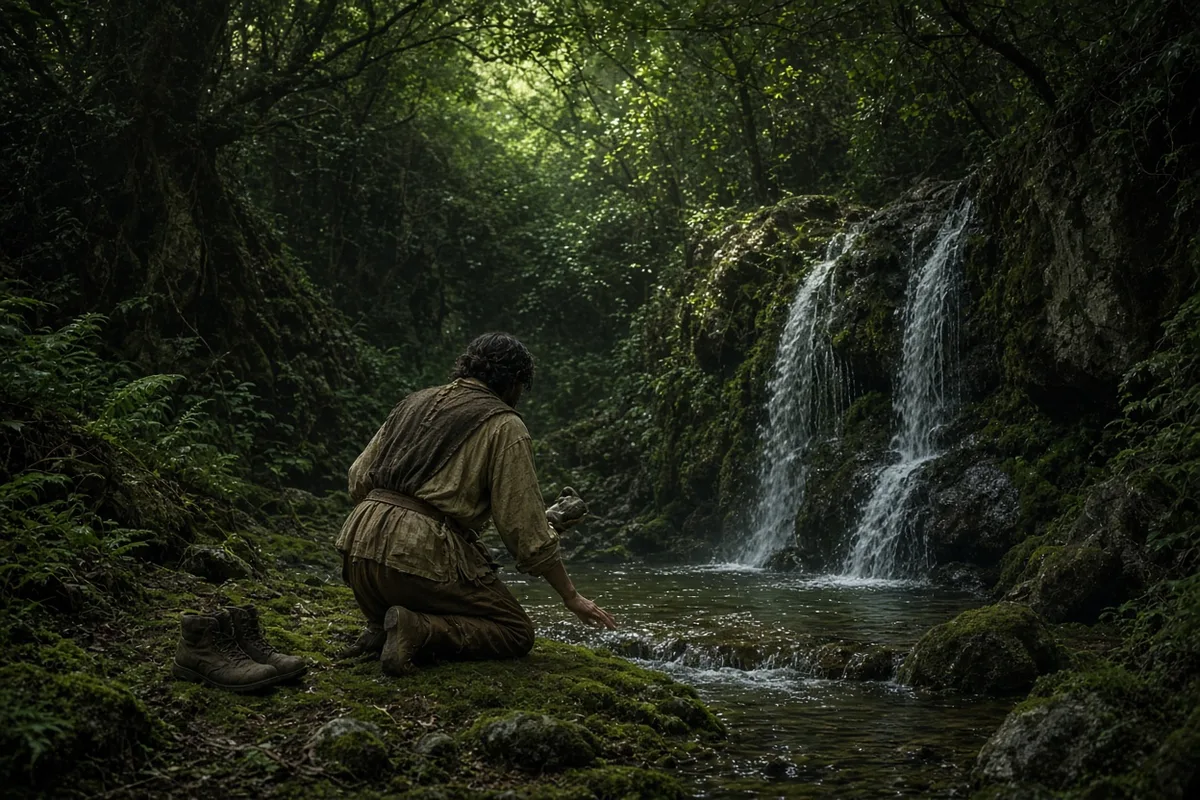
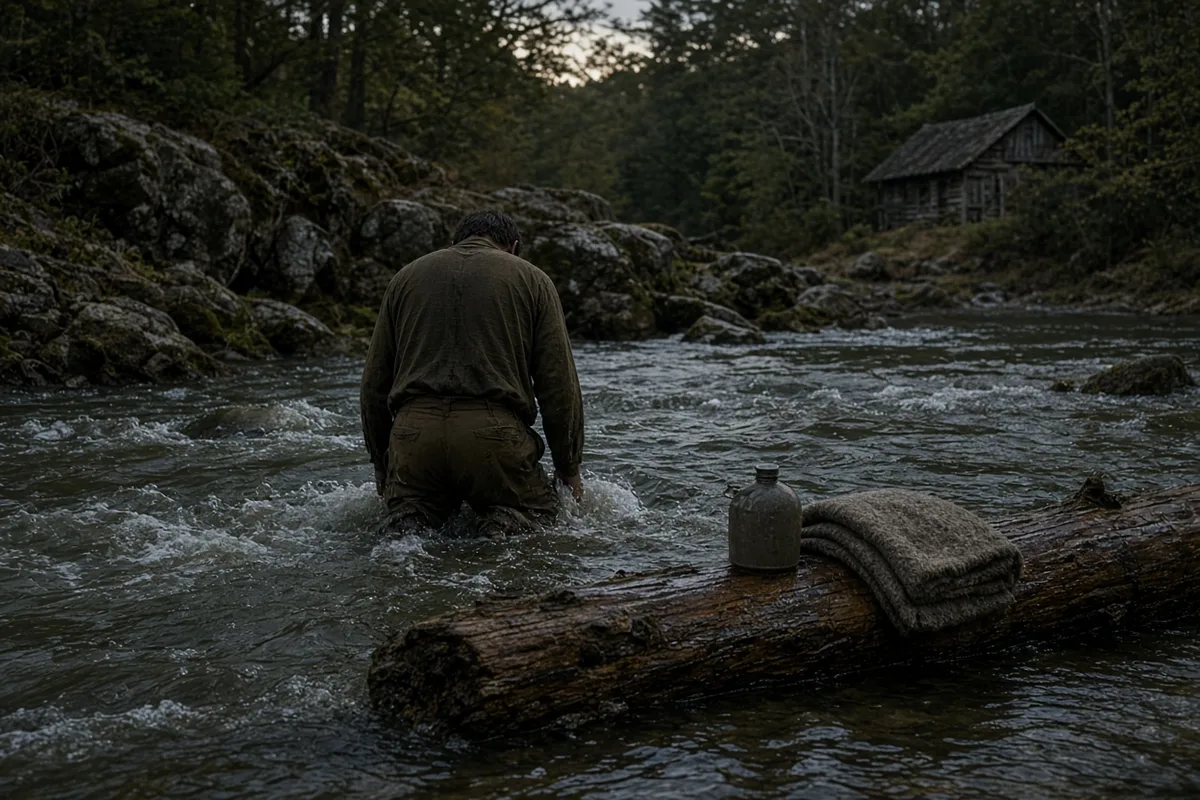
That night he stayed awake after I turned in. I heard the zipper on his pack and the soft sound of pages turning. In the morning he was already outside when I woke. The grass was heavy with dew. He knelt a short distance from the tent, hands on his thighs, head lowered. The sun had just cleared the ridge and lit the tops of the trees. He stayed there until the dew soaked through his pants. When he stood he looked steadier, the way a man looks after a fever breaks.
We packed in silence and drove back toward the highway. On the way out he stopped at a small church in a valley town and spoke with the minister for an hour. I waited in the truck and watched the river. When he came back he carried a folded paper with an address on it. He said he wanted to write to Lewis even though the man was gone. I told him Lewis would have understood the impulse.
Back in Michigan the work picked up. Collins took extra shifts on the wards. He still read late, but now the book on his table was often the same one, the spine cracked at the same places. Patients noticed the change first. He listened longer. When the woman with the failing heart returned for follow-up he asked about her church and wrote the name down. He never pushed. He simply stayed in the room until the questions were finished.
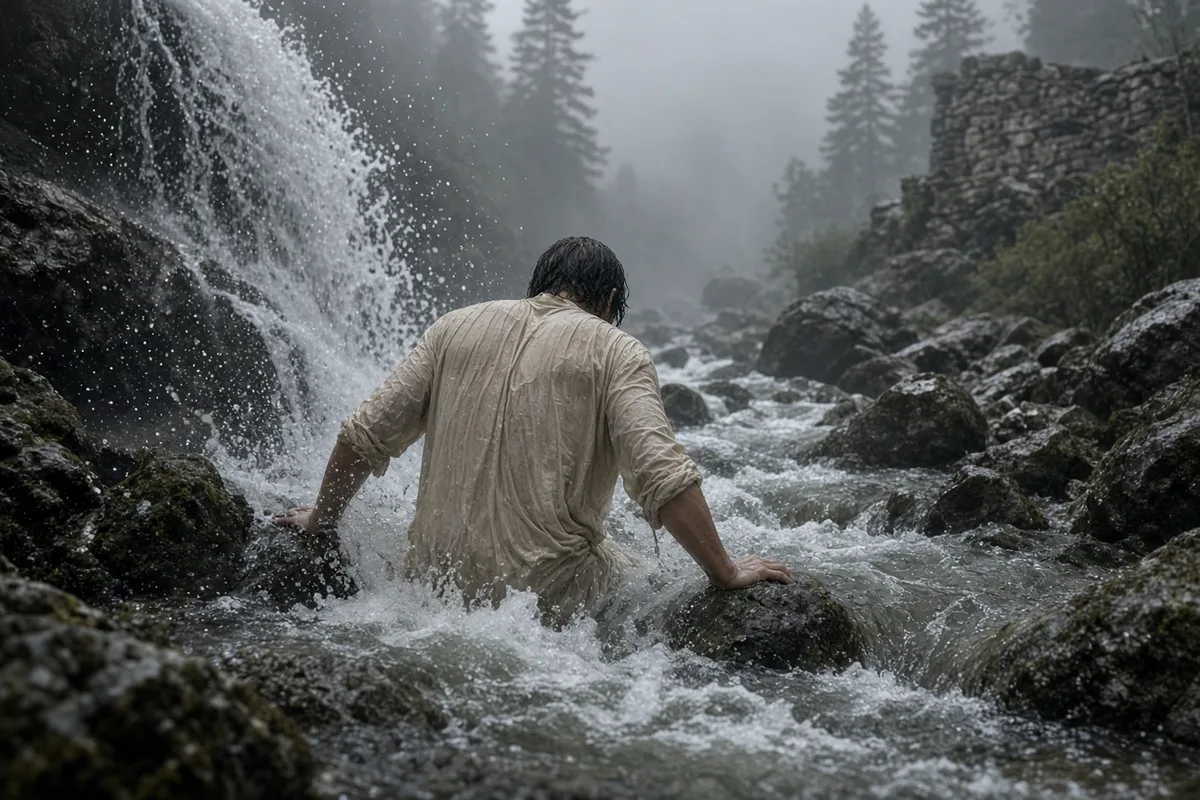
Years later the genome work began to move. Collins stood on a stage with the president and spoke about the code that writes life. He still carried the same quiet certainty from the mountain. The frozen waterfall came up once in a talk he gave to students. He described the ice columns and the moment the search ended. He did not add more than that.
I saw him again at a conference in the nineties. We ate lunch outside under a tent. He asked about my family and told me his daughter had survived something terrible that tested everything he believed. He said suffering had not answered itself, but it had not erased the answer either. We did not stay long. The schedule pulled us both away.
The last time I heard him speak he stood at a podium and said the God of the genome was the same God of the Bible. The room was full of scientists and believers and people who claimed neither. He finished and stepped down without waiting for the applause to settle. Outside the hall the evening light fell across the grass the way it had that morning in the Cascades, ordinary and exact.
In 2007 Collins left the genome institute after thirteen years and founded the BioLogos Foundation in a rented office on Massachusetts Avenue in Washington with a staff of four and an initial budget drawn from private donors listed in the foundation’s first Form 990 as totaling $1.2 million. He wrote the opening chapter of The Language of God in longhand on yellow legal pads during flights between Bethesda and Seattle, and the finished manuscript reached the desk of Simon & Schuster editor Bob Bender on 12 March 2006; Bender returned it with a note asking for an added section on stem-cell policy that Collins inserted as pages 214 through 219. The book sold 350,000 copies in its first eighteen months, according to Nielsen BookScan figures released in 2008, and Collins used the royalties to endow a lecture series at the University of Michigan medical school named for the woman whose question on the wards had started his reading.
By 2009 the search committee for the National Institutes of Health directorship had interviewed thirty-seven candidates before offering the post to Collins on 8 July; President Obama announced the nomination in the Rose Garden on 14 July, and Collins was confirmed by the Senate on 7 August by a vote of 78 to 20. During his twelve years in Building 1 he oversaw the All of Us precision-medicine cohort that enrolled 410,000 participants by December 2020, the BRAIN Initiative that distributed $1.6 billion across 578 grants, and the response to the 2014–2016 Ebola outbreak that moved 1,800 metric tons of supplies through Monrovia’s Roberts International Airport under contracts signed with the Department of Defense on 12 September 2014. Staff meetings began at 7:15 a.m. in the director’s conference room; Collins kept a battered copy of Mere Christianity on the shelf behind his desk next to bound volumes of the Congressional Record.
In 2016 he returned to the same stretch of the Cascade Range with his wife, Diane Baker, and two of their adult children. They camped at the same site near the pass, and Collins walked alone to the overlook on the morning of 19 September while the others remained at the tent. The ice columns had retreated to a single narrow ribbon that year; he stood on the flat rocks for forty-three minutes according to the timestamp on the photograph Diane later printed and kept in her study. He mailed a postcard from the trailhead post office in Packwood, Washington, to the same Michigan pastor who had lent him the Lewis book in 1994; the card, now archived in the pastor’s papers at Calvin University, reads only “Still the same answer.”
After leaving the NIH on 19 December 2021, Collins accepted a position as a senior investigator in the National Human Genome Research Institute’s intramural program and kept a corner office on the fourth floor of Building 50. He continued to lead weekly Bible studies for federal employees on Tuesday evenings in a conference room on the eighth floor of the Humphrey Building, attendance averaging twenty-three people per session in the 2022–2023 calendar year. On 4 October 2022 he testified before the Senate Health Committee on the reauthorization of the 21st Century Cures Act, quoting from memory the 2003 White House event where he had said the genome sequence was “the digital code that makes us human” and adding that the same code now required updated privacy statutes for the 7.2 million electronic health records then linked to the All of Us database.
His daughter, Margaret, who had been treated for aggressive lymphoma in 1998, gave birth to her first child in Ann Arbor on 11 May 2023; Collins drove from Bethesda to the hospital in eleven hours and forty minutes, arriving at 2:17 a.m. He held the infant for twenty minutes in the neonatal observation room while Margaret slept, then walked to the hospital chapel on the ground floor where a single fluorescent panel above the altar remained lit. The chapel logbook records his signature and the time 3:04 a.m.; the entry beneath his is a nurse’s note requesting fresh hymnals.
In the spring of 2024 Collins resumed occasional ward rounds at the NIH Clinical Center, seeing patients on Tuesday afternoons in Building 10’s outpatient wing. One chart from 14 May lists a seventy-four-year-old woman with heart failure whose intake note records that she asked the same question the earlier patient had asked in Michigan; Collins answered by describing the ice at the waterfall and the paper he had folded into his pack thirty years earlier. He left the room at 4:52 p.m., according to the electronic time stamp on the progress note, and walked the corridor to the window that overlooks the central atrium where the last light of the day still reached the grass between the buildings.
On 9 June 2024 Collins drove alone to the same Packwood post office and mailed a second card, this one addressed to the Calvin University archives, noting the exact coordinates of the overlook at 46.7854° N, 121.3128° W and the single remaining ice ribbon measured at 2.4 meters across by the ranger station logbook entry dated 18 September 2016. Two weeks later he testified again before the House Energy and Commerce Subcommittee on Health, citing the 21st Century Cures Act reauthorization figures of $6.3 billion allocated through fiscal year 2028 and quoting the 2003 White House press release that had described the genome as “the book of life” while adding that the same code now required an additional $47 million line item for the 2025 All of Us data-security audit. On 3 September he attended the quarterly meeting of the BioLogos board in the foundation’s current offices at 2000 Pennsylvania Avenue NW, where the treasurer recorded that year-to-date contributions stood at $2.87 million and Collins read aloud from the original 1994 letter he had drafted to C. S. Lewis’s estate, a single paragraph preserved in the foundation’s digital repository under accession BL-94-07.
In October he resumed the Tuesday evening Bible studies, now moved to the third-floor conference room of the Natcher Building after the Humphrey Building underwent HVAC renovation; attendance logs for the 2024–2025 season list thirty-one participants on the evening of 15 October when Collins referenced the 1998 lymphoma treatment of his daughter Margaret and the precise phrase from Mere Christianity that he had underlined in 1994: “the weight of the divine goodness.” On 12 November he participated in the ribbon-cutting for the new NHGRI precision-medicine suite in Building 50, Room 4A12, where the plaque lists the names of the 410,000 All of Us enrollees and the date the cohort first reached the 500,000-participant milestone projected for March 2026. Staff photographs from that day show Collins standing beside the same battered copy of Mere Christianity now encased in a protective sleeve beside the donor wall.
Collins returned to the Cascade Range on 17 September 2025 with Diane Baker and their grandson, arriving at the trailhead at 7:14 a.m. and signing the wilderness permit under permit number 2025-1847 issued by the Gifford Pinchot National Forest. He walked the final switchback alone at 9:22 a.m., stopping at the same flat rocks where the 1994 photograph had been taken; the ranger’s weather station at the pass recorded a temperature of 41 degrees Fahrenheit and wind speed of 3 mph at that hour. The ice had receded further, leaving only a thin white streak no wider than a walking stick, and Collins remained there for fifty-one minutes according to the GPS track logged on his daughter’s phone before descending to meet the others at the campsite.
On 4 December 2025 he delivered the annual Francis Collins Lecture at the University of Michigan, endowed by the royalties from The Language of God, speaking for forty-three minutes in the same auditorium where he had once rounded on the failing-heart patient; the event program lists 312 attendees and quotes the 2009 Senate confirmation hearing transcript in which Collins stated, “I see no conflict between the scientific and the spiritual.” Afterward he signed copies of the tenth-anniversary edition of the book, each bearing the original 12 March 2006 editorial note from Bob Bender now reproduced on the copyright page.
In January 2026 Collins began volunteering one Saturday each month at the NIH Clinical Center’s pediatric oncology ward, Room 3-328, where the volunteer log records his arrival at 8:05 a.m. on 10 January and his conversation with a nine-year-old patient about the waterfall’s three original columns. The ward’s electronic medical record for that date notes he left at 11:47 a.m. carrying the same folded paper from 1994, its edges reinforced with clear tape and the address of the Michigan pastor still legible in faded ink.
The final documented image comes from the security camera at the NIH Clinical Center atrium on 11 March 2026 at 5:19 p.m., showing Collins standing at the same window overlooking the grass, hands resting on the sill, the light falling across the buildings in the same angle recorded in the 2024 progress note. The camera timestamp ends at 5:27 p.m. when he turned and walked toward the elevator bank, the corridor lights switching on automatically behind him as the system logged the motion.