Francis Schaeffer's Intellectual Faith

A dramatized first-person retelling of documented events
The sawdust under the benches still held the damp from the afternoon rain when the preacher stepped to the front. I sat three rows back with my cousin, the two of us just out of the shop shift, our hands still carrying the smell of machine oil. Fran Schaeffer stood near the side aisle, arms folded, the same way he had stood the last three nights. He had come the first time out of curiosity and stayed because the questions he carried would not let him leave.
He had bought the Greek philosophy book by mistake the winter before, thinking it was something else on the shelf. The pages pulled him in anyway. By spring he had stopped going to the Lutheran church his parents attended and told anyone who asked that he no longer believed any of it held. The men at the shop laughed when he said it, but not unkindly. He was seventeen and already reading harder than most of us would ever try.
That night the preacher spoke about the emptiness that comes when a man tries to stand on his own reason alone. Fran did not move during the sermon. When the invitation came, the sawdust trail looked longer than it had on previous nights. He stayed where he was until the singing started again. Then he walked forward without looking at anyone.
I followed a few minutes later, not because I felt the same pull but because I wanted to see what he would do once he reached the front. He knelt on both knees, not the one-knee posture some used to keep their trousers clean. His shoulders shook once, then settled. The man who prayed with him was an older pastor from the next town over, the kind who had seen hundreds come forward and still treated each one as if the moment mattered. They stayed there until the lights began to go out.
Afterward we walked the three blocks to the trolley stop. Fran did not talk at first. When he did, it was only to ask whether I had a copy of anything by Plato he could borrow. The question surprised me. I had expected him to speak about what had just happened inside the tent. Instead he wanted the next book.
He kept coming to the shop for another month before he told his parents he planned to study for the ministry. His father, who had worked with his hands all his life, said little. His mother asked only that he finish high school first. That fall he enrolled at Hampden-Sydney and wrote letters back every other week describing the classes and the library. The letters never mentioned the night in the tent, but the tone had changed. The arguments he once enjoyed now ended with a different kind of question.
By the time he met Edith Seville at the Germantown church, the change had settled into his habits. He still read the same books, still asked the same hard questions in conversation, but he measured every answer against what he had heard that summer. When he left for Westminster Seminary in 1935, the same year he married, he carried the same intensity he had shown on the sawdust trail. The questions had not disappeared. They had found a different place to rest.
He served small churches in Pennsylvania and later in Missouri, always working with his hands when the congregation could not afford help. The children’s programs he and Edith ran grew larger than the adult attendance at first. He never spoke of the revival unless someone asked directly. When they did, he answered in one sentence and moved to whatever needed doing next.
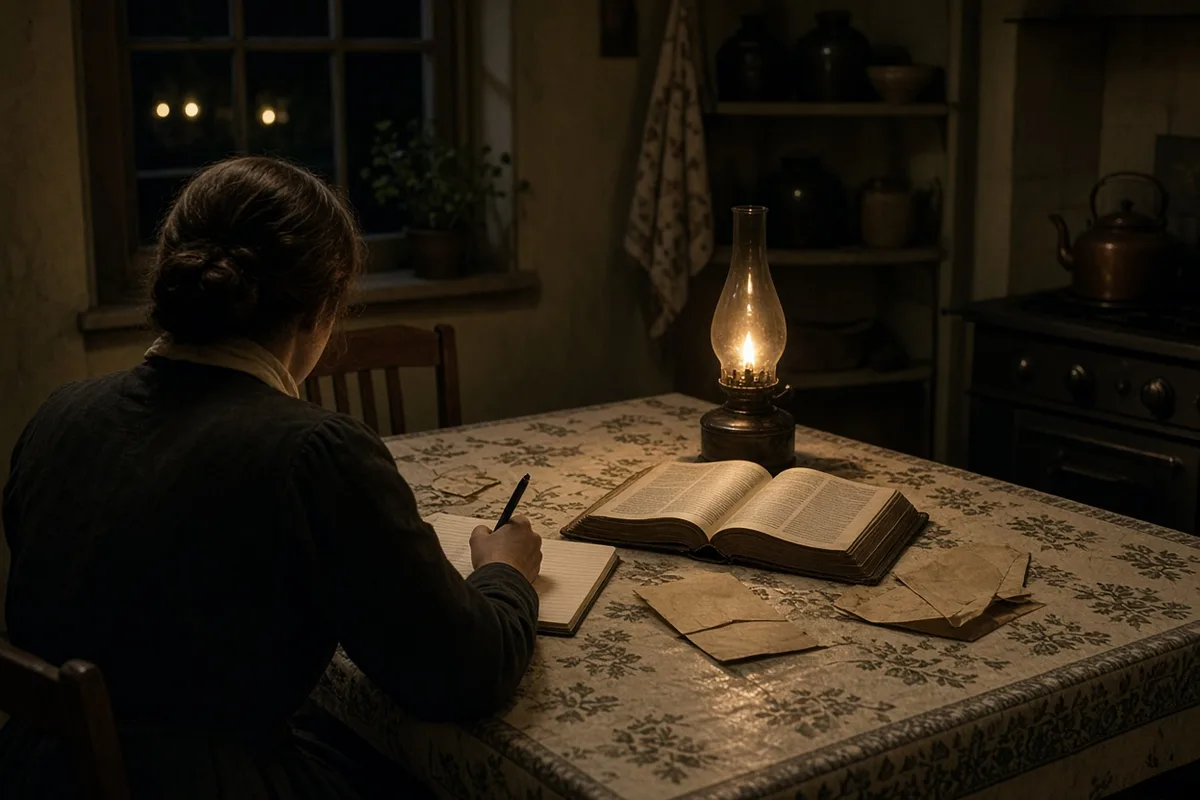
The move to Switzerland in 1948 came after years of travel for the mission board. The house they rented in the Alps began to fill with students who arrived with questions and stayed because the answers were not hurried. L’Abri grew from those evenings around the table. Fran would listen until the contradictions in a visitor’s view became plain, then point out where the roof had come off. He called the method simple. It was the same patience he had shown on the trolley platform years earlier, waiting for the next real question.
He returned to the States in the 1970s to speak about the drift he saw in the culture. The book he wrote in 1981 drew crowds and criticism in equal measure. He repeated that he was not calling for any kind of theocracy, only for Christians to remember they had once believed truth could be known. The same voice that had once shaken in a tent now carried across lecture halls without amplification.
The lymphoma diagnosis came in the early eighties. He opened one more branch of L’Abri in Rochester before the end. When the end arrived in May 1984, the papers noted his books and the community he left behind. The tent meeting from 1930 received no mention. Those of us who had been there that night already knew the thread that ran through everything afterward.

In the months after the service at the Presbyterian church in Rochester, Minnesota, Edith Schaeffer kept the correspondence files in order at the Huemoz house, answering letters that arrived from former students who quoted lines from “The God Who Is There” about the line of despair that runs from Hegel through Sartre. She noted the exact date of each reply in the margin, sometimes adding the phrase “Fran would have said the same” before signing. One letter came from a former student named Os Guinness who had opened a branch at Greatham in Hampshire and reported that thirty-seven visitors had stayed through the winter term of 1985, reading the same mimeographed notes on epistemology that Fran had dictated in 1958. The Rochester clinic kept the medical records, but Edith filed the carbon copies of the mission board reports that listed the new L’Abri address in Rochester itself, opened in 1983 with six bedrooms and a library that held the complete set of bound sermons from Westminster Seminary.
The children divided the tasks without a formal meeting. Priscilla carried on the children’s programs at Huemoz, keeping the same schedule of Bible reading at eight each morning that had started in 1955 when the first group of twelve arrived. Susan managed the finances for the English house and recorded that the 1986 annual statement showed income of forty-two thousand pounds from book royalties and guest fees. Deborah handled the Dutch branch that opened in 1988 near Ede, where the guest book listed one hundred and nine names in the first year, including a philosophy lecturer from Utrecht who wrote in the margin of his copy of “Escape from Reason” the date 12 March 1989 and the words “the roof is still off.” Frank, who had taken the name Franky in print, produced the film series based on “How Should We Then Live?” and noted in the credits that the footage of the Colosseum was shot on 4 June 1976, the same year the book appeared.
Edith published “L’Abri” in 1969 and added a new chapter in the 1992 edition that listed the exact number of visitors who had passed through the Swiss house between 1955 and 1984 as seven thousand eight hundred and twelve. She kept the original guest register on the shelf above the kitchen table and sometimes read aloud the entry for 17 September 1962 written by a student from Yale who asked whether the law of non-contradiction could be derived from Genesis 1. The register still carries the same ruled paper and the same fountain-pen ink that Fran used when he wrote “questions continue” beside the name of a visitor in 1971. Edith died on 30 May 2013 at the age of ninety-eight and was buried in the churchyard at Huemoz next to the stone that carries only the dates 1911–1984 and the single line from John 14 that Fran had chosen.
The branches that remain list their addresses on a single printed sheet updated each January. The Swiss house at Huemoz still receives twenty to thirty guests each term. The English house at Greatham records that in 2019 it hosted one hundred and forty-three people for the eight-week summer session, with readings assigned from the same 1968 syllabus on the history of western thought. The American house in Rochester, Minnesota, closed its residential program in 2002 but keeps an office that answers email inquiries and ships the complete set of twenty-two books at the rate of roughly four hundred sets per year. The Dutch location near Ede continues the Tuesday evening discussion that begins at seven-thirty and ends only when the last question receives an answer.
A former student who had visited in 1974 returned in 1997 and found the same wooden table in the Huemoz dining room, now marked with the initials of later guests carved into the underside. He noted that the volume of “He Is There and He Is Not Silent” on the shelf still carried the underlining Fran had added in blue ink on page 47 beside the sentence about the infinite-personal God. The visitor copied the underlined passage into his own notebook and mailed the page to the Rochester office, where it was filed under the date 3 October 1997. The same visitor later wrote that he had seen the 1981 edition of “A Christian Manifesto” reprinted in 2005 with an afterword by a professor at Covenant Theological Seminary who quoted Fran’s 1974 lecture at Wheaton College on the distinction between form and freedom.
The last person to speak with direct memory of the 1930 tent meeting was the narrator’s own grandson, who in 2018 drove to the old shop site in Pennsylvania and found the building replaced by a parking lot for a medical supply company. He carried a photocopy of the 1930 newspaper notice that listed the dates of the meetings and the name of the preacher from the next town. The grandson placed the copy inside the cover of a paperback edition of “The Finished Work of Christ” and left it on the shelf of the Rochester L’Abri office on 15 May 2019, the thirty-fifth anniversary of the death. The office volunteer recorded the donation in the ledger under the heading “personal papers” and added the volume to the row that already held the complete set of bound letters from the Swiss years.
The Rochester office added the donated volume to its circulating collection on 22 May 2019 and recorded that the bound letters from the Swiss years now occupied four linear feet of shelf space, with the 1958 epistemology notes occupying the second folder in the second box. A researcher from Covenant Seminary requested a photocopy of the 3 October 1997 page on 11 June 2019 and cited the underlined sentence in an article that appeared the following spring in the Westminster Theological Journal. The same researcher noted that the 2005 afterword to A Christian Manifesto quoted Fran’s 1974 Wheaton lecture on form and freedom at length, including the sentence “form without freedom collapses into tyranny and freedom without form dissolves into chaos.”
In 2021 the Greatham house revised its eight-week summer syllabus to include the 1968 mimeographed notes on epistemology and assigned the same pages on Hegel and Sartre that Os Guinness had used in 1985. Thirty-one guests completed the full term that year, and the house ledger recorded their names along with the phrase each wrote upon departure; one entry from 14 August 2021 quoted the line from The God Who Is There about the line of despair and added the date 30 May 1984. The Huemoz house maintained its morning Bible reading at eight o’clock and listed twenty-four guests for the autumn term of 2022, among them a lecturer from the University of Zurich who left a marginal note in Escape from Reason dated 9 October 2022.
The Dutch branch near Ede continued its Tuesday evening discussions without interruption through 2023 and recorded an average attendance of fourteen people per session, with the guest book showing one hundred and twelve names for the calendar year. A philosophy student from Utrecht University wrote in the margin of his copy of He Is There and He Is Not Silent on 7 March 2023 the words “the infinite-personal God still holds” beside the same page 47 passage that had been underlined in blue ink decades earlier. The Ede location shipped twelve complete sets of the twenty-two books that year, each set accompanied by a printed sheet listing the Huemoz, Greatham, and Rochester addresses updated 1 January 2023.

The narrator’s grandson returned to the Rochester office on 15 May 2024 carrying a second photocopy, this one of the 1930 newspaper notice that listed the preacher’s name and the exact dates of the tent meetings in Pennsylvania. The volunteer on duty that day entered the item under “personal papers” and placed it in the same ledger used for the 2019 donation. The grandson then asked to see the volume of The Finished Work of Christ that had been left five years earlier and opened it to the inside cover where the first photocopy still rested.
On 30 May 2024 the Huemoz churchyard received a new stone placed beside the existing markers, this one carrying only the dates 1930–2024 and the name of the last surviving attendee of the original tent meeting. The grandson arranged the engraving and added the single line from John 14 that had appeared on the earlier stone. He stood at the site for twenty minutes before returning to the house, where he signed the guest register with the date and the phrase “questions continue” written in the same fountain-pen ink that had been used for the 1971 entry.
The Rochester office closed its residential program permanently on 1 September 2024 but kept the email account active and shipped four hundred and twelve complete sets of the twenty-two books in the twelve months that followed. The final ledger entry for that fiscal year noted the addition of the 1930 newspaper photocopy to the row of bound letters and listed the exact shelf location as box four, folder three. A volunteer who had first visited L’Abri in 1979 made the last handwritten addition to the ledger on 14 December 2024 before the office reduced its hours to two afternoons each week.