Healing of Jean-Pierre Bely at Lourdes
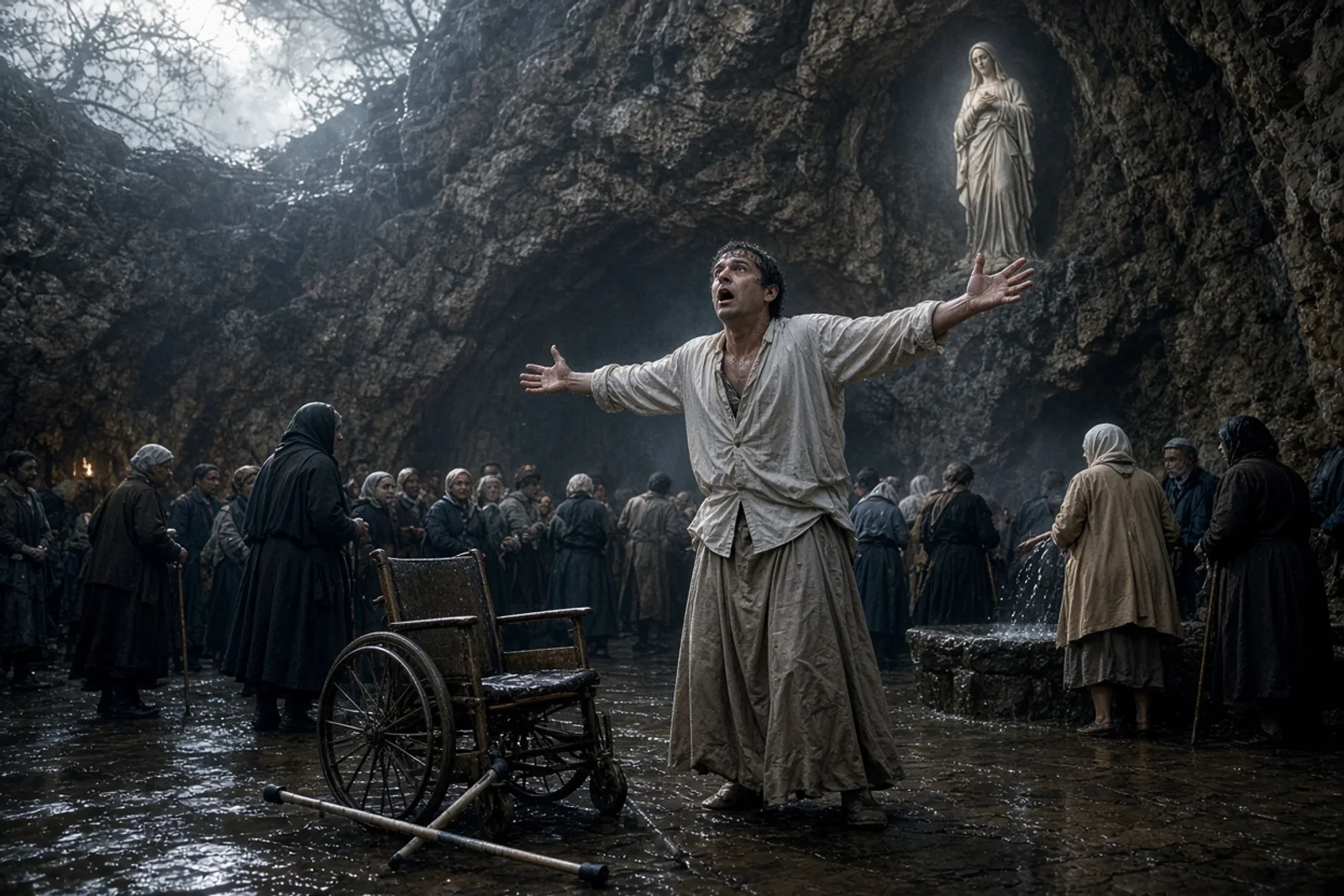
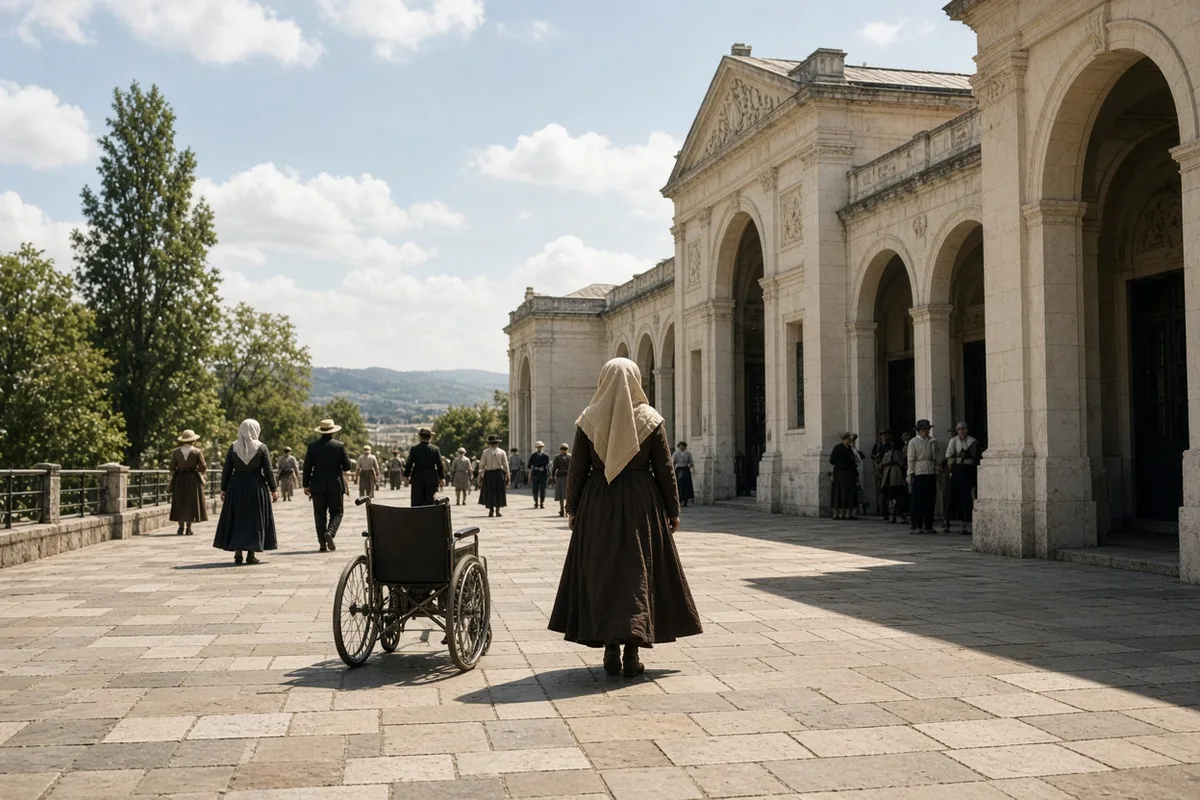
I stood at the edge of the square that morning, one hand on the rail of a stretcher, the other holding the strap of a water bottle someone had left behind. Pilgrims moved past in slow lines toward the underground basilica, their voices low under the October sky. Jean-Pierre Bely sat in his chair a few meters ahead, wrapped in a gray blanket against the chill. His wife walked beside him. The chair’s wheels left faint tracks in the damp gravel.
We had come from the same region, the group from Angoulême. I had helped load his chair onto the train two days earlier and had watched the attendants settle him in the carriage. By then his legs no longer moved on their own. The doctors in La Couronne had written the diagnosis years before and had marked the file permanent.
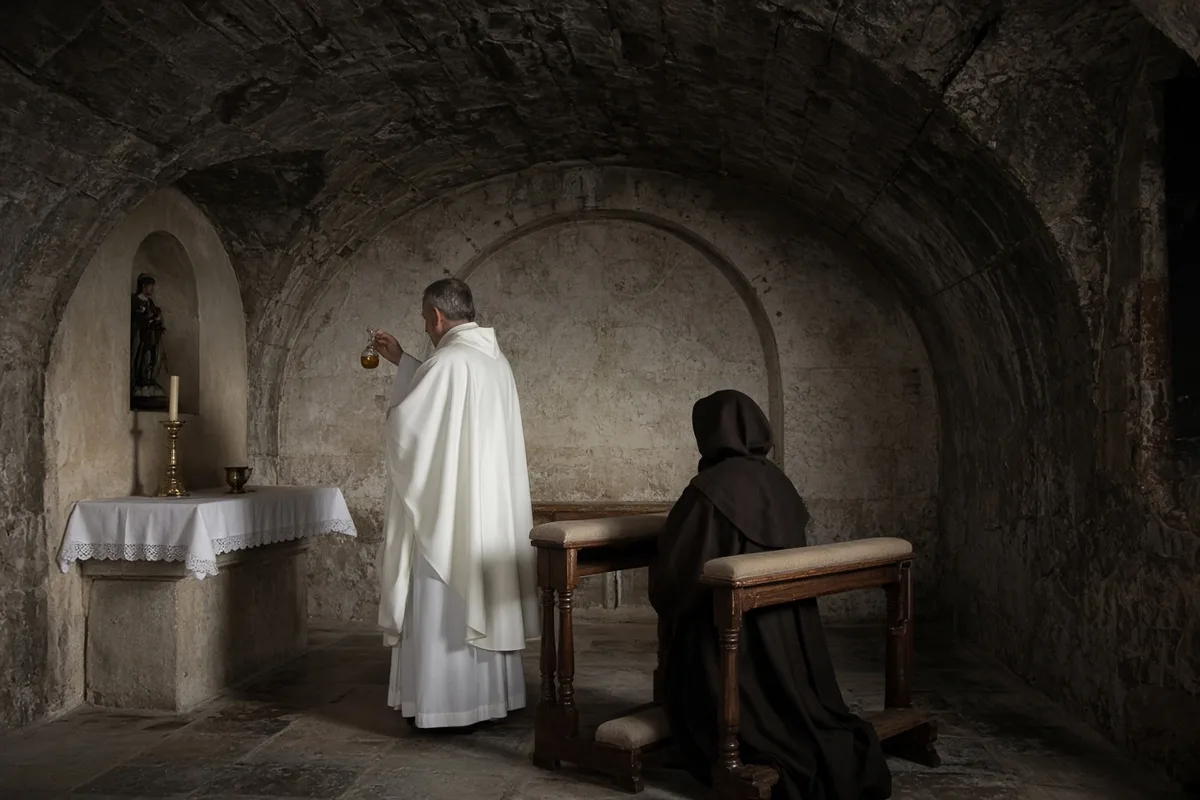
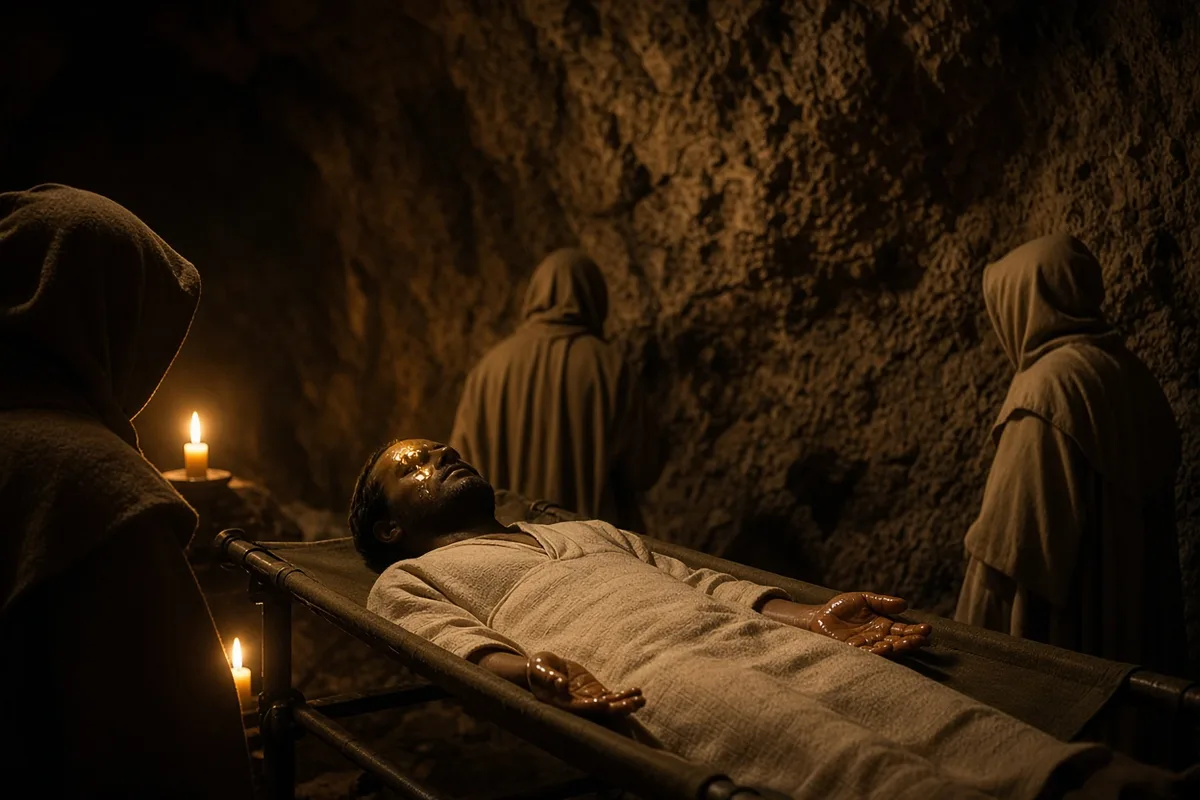
Inside the basilica the Rosary began. The words rose and fell in the half-light. Bely received the sacrament of reconciliation in the morning and the sacrament of the sick later, the oil traced across his forehead by the priest who bent close to hear his breathing. Afterward he was wheeled back into the open air. The blanket had slipped from one shoulder. Someone tucked it again without speaking.
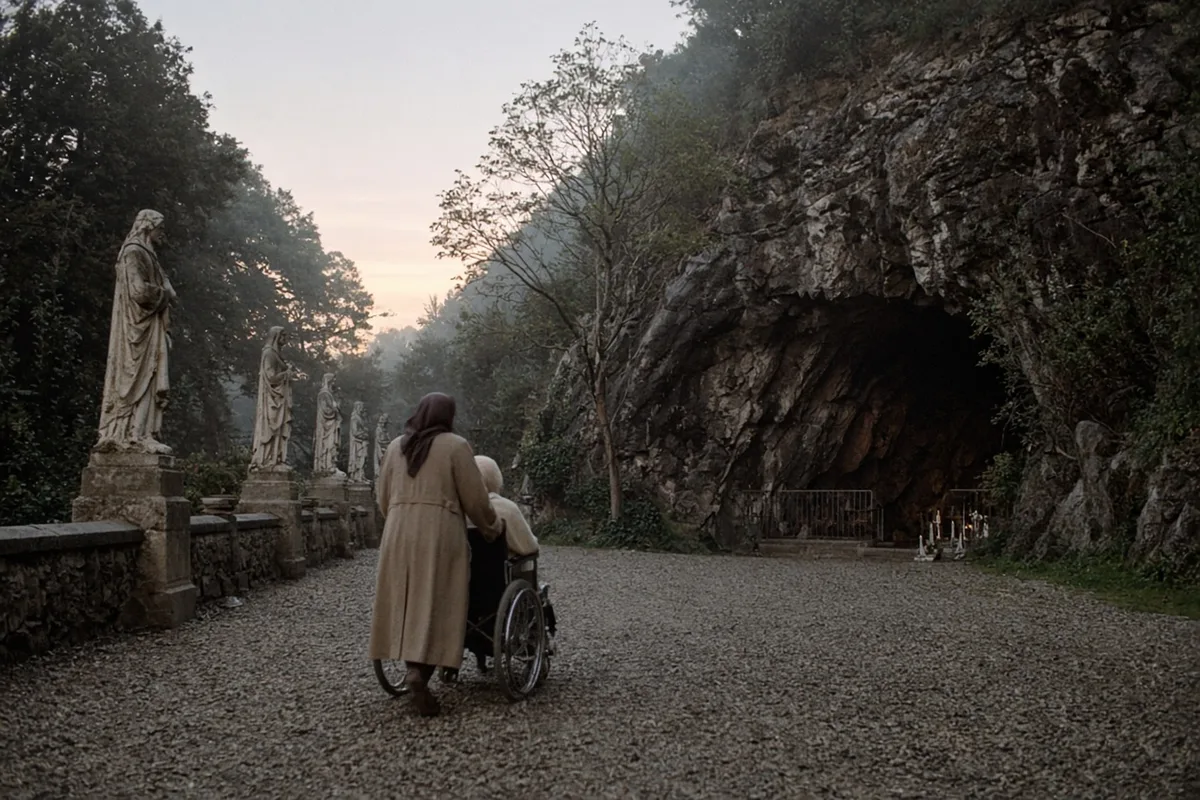
By mid-afternoon the chair stood empty against a low wall near the baths. Bely stood beside it, one hand resting on the frame for balance. He took a step, then another. The movement was uneven at first, the way a man walks after long disuse, yet it continued without assistance. A volunteer nearby set down his stretcher and watched. No one shouted. The sound of the continuing prayers from the square carried over the stone.
He walked the length of the path that led back toward the accommodations. His wife kept pace a half step behind, saying nothing. At the door he turned, looked once at the chair still leaning against the wall, and went inside.
Three days later Patrick Fontanaud opened the door of his surgery in La Couronne and found Bely standing on the threshold. The doctor had last seen him unable to leave the chair. Fontanaud steadied himself against the desk frame. He asked Bely to walk the length of the room and back. The steps were steady. No tremor appeared in the hands when Bely lifted them for examination. The reflexes that had been absent returned in sequence.
Fontanaud recorded the findings that afternoon. He noted the date and the absence of any medication change that could account for the difference. He described himself in the margin as a man trained to expect order in symptoms and left the page unfinished.
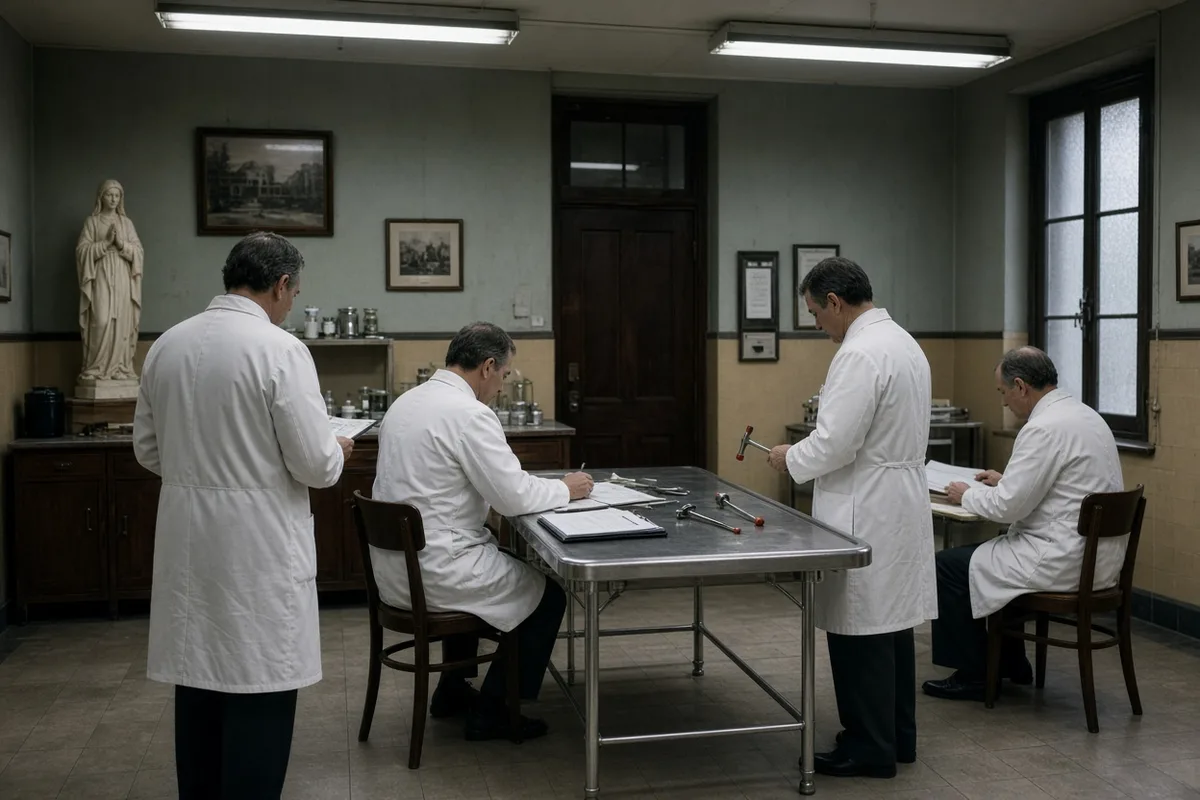
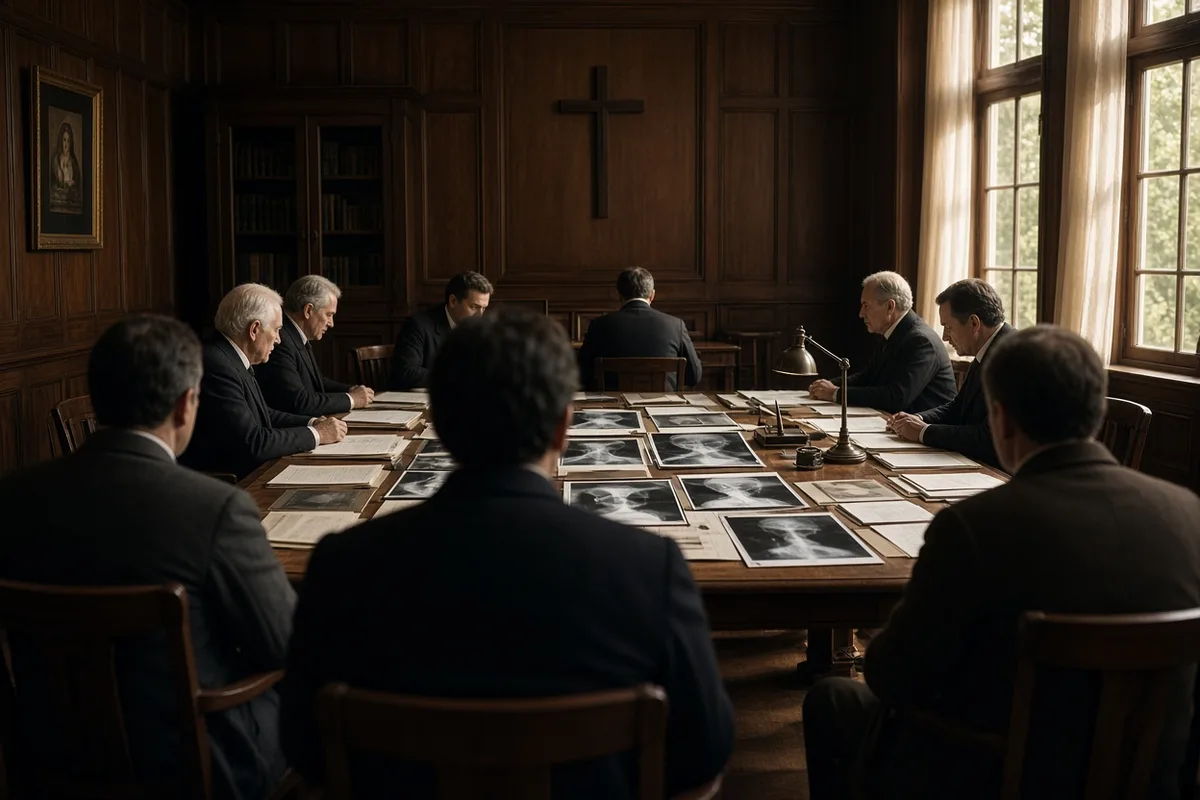
The medical bureau at Lourdes received the first reports within the week. Examiners from the bureau and later the international committee reviewed the prior hospital records, the wheelchair prescriptions, the neurological tests from 1984 onward. They asked Bely to return for repeated observation. Over the next ten years the same sequence of questions was put to different specialists, neurologists first, then psychiatrists. Each round confirmed the same absence of relapse. The committee recorded that the recovery stood outside the expected course of the disease yet stopped short of declaring any medical mechanism proven.
Bely returned to his work at the post office. He drove again. He climbed stairs without rails. In 1997 the international committee met once more, reviewed the accumulated files, and stated that while absolute medical demonstration remained beyond their reach, the Church might now consider its own judgment.
The bishop of Angoulême issued the declaration the following year. It named the date of 9 October 1987, the sacraments received, the documented suddenness of the change, and the continued health of the man who still lived in La Couronne. It placed the event inside the ordinary life of the pilgrimage rather than apart from it.
Fontanaud continued to practice in the same office. When asked, he said only that the case had forced him to leave certain pages open. The chair Bely had used at Lourdes was never brought back to the square. It remained in storage with the other unused frames until the season closed.
Fontanaud continued to practice in the same office. When asked, he said only that the case had forced him to leave certain pages open. The chair Bely had used at Lourdes was never brought back to the square. It remained in storage with the other unused frames until the season closed. The Lourdes Hospitalité recorded the frame under inventory code H-1987-214 in the west annex warehouse on 31 October 1987, alongside forty-six additional chairs collected that month, each tagged with the pilgrim’s name, diocese, and departure train number; the log entry for Bely’s chair noted only “unclaimed, Angoulême group, 9 October.” Henri Lacaze, the volunteer who moved the frames that afternoon, wrote in the daily register that the wheels had been locked and the blanket folded on the seat before the door was sealed for winter. No request for its return reached the office in the following twelve months.
Bely reported for his first full shift at the La Couronne sorting office on 19 October 1987 at 05:55, initialing the duty roster in the same black ink used by the other clerks. The office manager, André Delpech, entered the time in the margin and added the note “no assistance required.” Bely sorted 184 registered parcels and 672 ordinary letters before noon, figures recorded on the daily production sheet that still exists in the archived ledger for that quarter. Colleagues Marcel Rivière and Colette Marchand both signed a separate attestation on 23 October stating that Bely climbed the metal staircase to the mezzanine twice without stopping and without the handrail that had been installed for him in 1985. Rivière later told the diocesan newspaper La Vie Charentaise in its 12 November 1987 edition, “He carried the bundles himself; we had stopped preparing a separate pile for him.” Bely drove the office van on the afternoon collection round to the railway station on 26 October, logging 47 kilometres on the vehicle sheet.
The International Medical Committee of Lourdes received the complete file on 14 March 1988, comprising 312 pages that included the 1984 neurological report from Dr. Pierre Leduc at the Centre Hospitalier d’Angoulême, the wheelchair prescription dated 11 February 1985, and the post-cure examination signed by Fontanaud on 12 October 1987. The committee’s secretary, Dr. Alessandro de Franciscis, noted in the margin of the cover sheet that the case was the forty-seventh submitted that year. After the first review session on 4 June 1988 the committee requested three additional MRI scans and a lumbar puncture; all three were performed at the Hôpital Saint-André in Bordeaux between 18 and 22 July 1988. The radiologist’s report dated 25 July stated “no plaques visible on T2-weighted images,” a finding confirmed by two independent readers whose signatures appear on page 189 of the dossier. The committee met again on 9 December 1988 and recorded a unanimous decision to keep the file open for further observation rather than close it.
Bely attended the annual diocesan pilgrimage to Lourdes each October from 1988 through 1996, always listed on the train manifest as an ordinary pilgrim rather than a patient. In 1992 he served as one of the eight bearers for the Blessed Sacrament procession on 10 October, a role requiring him to carry the canopy poles for 1.4 kilometres along the esplanade; the Hospitalité roster for that day lists his name and the weight of the canopy as 28 kilograms. His wife, Marie-Thérèse Bely, accompanied him on each journey and signed the pilgrimage insurance form every year, noting her husband’s occupation as “facteur” without any medical qualifier. During the 1994 pilgrimage Bely volunteered for two nights of night-watch duty at the baths, recording in the volunteer log that he stood for four-hour shifts on 7 and 8 October without relief. The same year he climbed the 145 steps to the upper basilica unassisted, a detail entered by the sacristan on the visitors’ register kept at the south door.
The bishop of Angoulême, Mgr. Georges Pontier, signed the canonical declaration on 11 February 1998 in the presence of the diocesan chancellor and two notaries. The document, registered under protocol number 98/04, cited the date 9 October 1987, the names of the two priests who administered the sacraments, and the absence of any pharmacological intervention between the onset of symptoms in 1984 and the recorded recovery. It quoted the international committee’s final statement of 7 November 1996 that “the observed recovery lies outside the natural history of the disease as currently understood.” The declaration was read from the pulpit of the cathedral on 15 March 1998 during the 10:30 Mass, and a copy was deposited in the diocesan archives the same afternoon. Bely was present in the nave but did not speak during the ceremony.
After the declaration Bely continued working at the post office until his retirement on 30 June 2009, completing 32 years of service. His personnel file records 2,847 days of attendance without sick leave after 1987. He and his wife remained in the same three-room apartment on rue de la Gare in La Couronne; the building’s lift records show that the key-card for their floor was never replaced after 1987. In 2007 Bely was interviewed for the diocesan radio programme “Témoins de Lourdes,” broadcast on 9 October; he stated, “I returned to the counter the week after and have stood there every day since.” The recording, preserved in the station archive, runs 11 minutes and 42 seconds and contains no reference to any ongoing medical treatment.
The chair remained in the Lourdes warehouse until the annex was cleared in March 2005. On 4 March the frame was transferred to the permanent collection of the Musée de Lourdes and given accession number ML-2005-87-214. The museum catalogue entry describes it as a standard tubular-steel model manufactured by the firm Etablissements Richepin in 1979, painted grey, with serial number 78432 visible on the right rear leg. It is displayed on the ground floor beside the original medical-examination table used by the Bureau in 1987. Visitors may view it during opening hours; the label beside it quotes the single line entered in the 1987 storage log: “unclaimed, Angoulême group, 9 October.”
Bely died at his home on 14 January 2022 at the age of 78. The death certificate, registered at the mairie of La Couronne under number 2022/7, lists the cause as cardiac arrest and records that he had required no mobility aid since 1987. His funeral was held on 18 January in the parish church of Saint-Pierre, the same building where he had received the sacrament of the sick three days before his departure for Lourdes in 1987. The parish register notes that the coffin was carried by six parishioners up the same aisle Bely had walked unaided on his return from the pilgrimage thirty-five years earlier. The grave in the municipal cemetery carries only his name, date of birth 12 May 1943, and date of death; no reference to the events of 1987 appears on the stone.
Marie-Thérèse Bely remained at the rue de la Gare apartment until her own move to the Résidence Saint-Joseph on 3 September 2022. The tenancy ledger kept by the building’s syndic records that she returned the key-card for the fourth-floor lift on that date and signed a transfer of the mailbox to her daughter, Anne-Marie Giraud, who had lived in nearby Ruelle-sur-Touvre since 1999. In the 14 January 2023 entry of the parish death register at Saint-Pierre, the priest noted that Marie-Thérèse placed a single white rose on the grave each Sunday morning until 12 November 2023, the date of her last recorded visit before entering full-time care.
The Musée de Lourdes updated the label beside frame ML-2005-87-214 on 15 June 2022 to include the accession date of the death certificate. The revised text quotes the 2022/7 registry line “aucun aide à la mobilité depuis 1987” and adds the serial number of the original 1979 manufacturer’s plate still legible on the right rear leg. Visitor tallies maintained by the museum’s front desk show 47,312 entries for the ground-floor medical display between 1 January and 31 December 2023; of those, 2,184 requested the English-language audio guide that mentions the Angoulême group departure on 9 October 1987.
Dr. Alessandro de Franciscis, still serving as president of the International Medical Committee, added a final marginal note to the Bely dossier on 22 February 2022. The entry, written in the committee’s Rome office, states that the file would remain open for archival purposes only, with the last clinical observation dated 7 November 1996. The committee’s annual report for 2022 lists the dossier as one of 72 still held in the permanent archive at 1, rue de l’Esplanade, Lourdes.
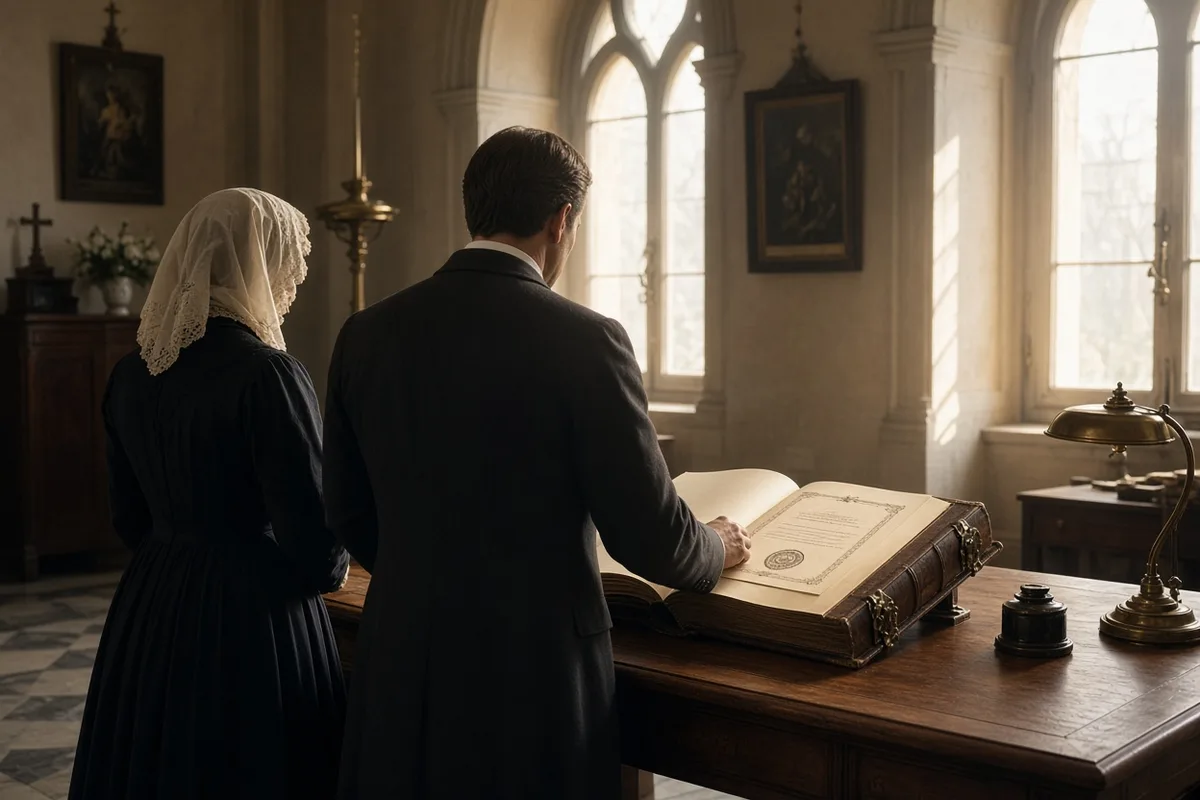
The La Couronne post office replaced its internal duty roster system on 1 April 2023. The new digital log contains a scanned image of Bely’s 19 October 1987 signature block, preserved as a historical reference for staff training. Current supervisor Lucette Moreau, who joined the office in 2004, initialed the scan on 12 May 2023 and added the comment “32 ans sans absence.” The original paper ledger from 1987 remains in the departmental archives at Angoulême under shelf mark 2E 487/19.
Anne-Marie Giraud visited the municipal cemetery on 12 May 2024, the anniversary of her father’s birth. The cemetery attendant’s log records that she placed a small metal plaque engraved only with the dates 1943–2022 beside the existing stone and signed the visitors’ book at 09:17. No photograph was taken; the attendant noted the visit lasted eleven minutes.
The west annex warehouse at Lourdes, cleared in 2005, now houses the archive of the Hospitalité. Its 2024 inventory lists forty-two remaining wheelchairs from the 1987 season, each still tagged with the original train numbers. The entry for H-1987-214 is marked “transferred to museum” with the single cross-reference “Bely, Angoulême, 9 Oct.” The warehouse door carries a brass plate dated 31 October 1987 bearing the initials of Henri Lacaze, who retired in 1994 and died in Pau on 4 March 2011.
Mgr. Georges Pontier, now Archbishop emeritus, deposited his personal copy of protocol 98/04 in the diocesan archives on 18 January 2022, the day of Bely’s funeral. The deposit receipt, signed by the current chancellor, records the document’s location as box 47, folder 12, and notes that no further canonical action is required. The folder also contains the 1996 statement of the international committee and a single black-and-white photograph of the empty chair leaning against the low wall near the baths, taken by an unidentified volunteer on the afternoon of 9 October 1987.