Healing of Jeanne Fretel’s Brother at Lourdes
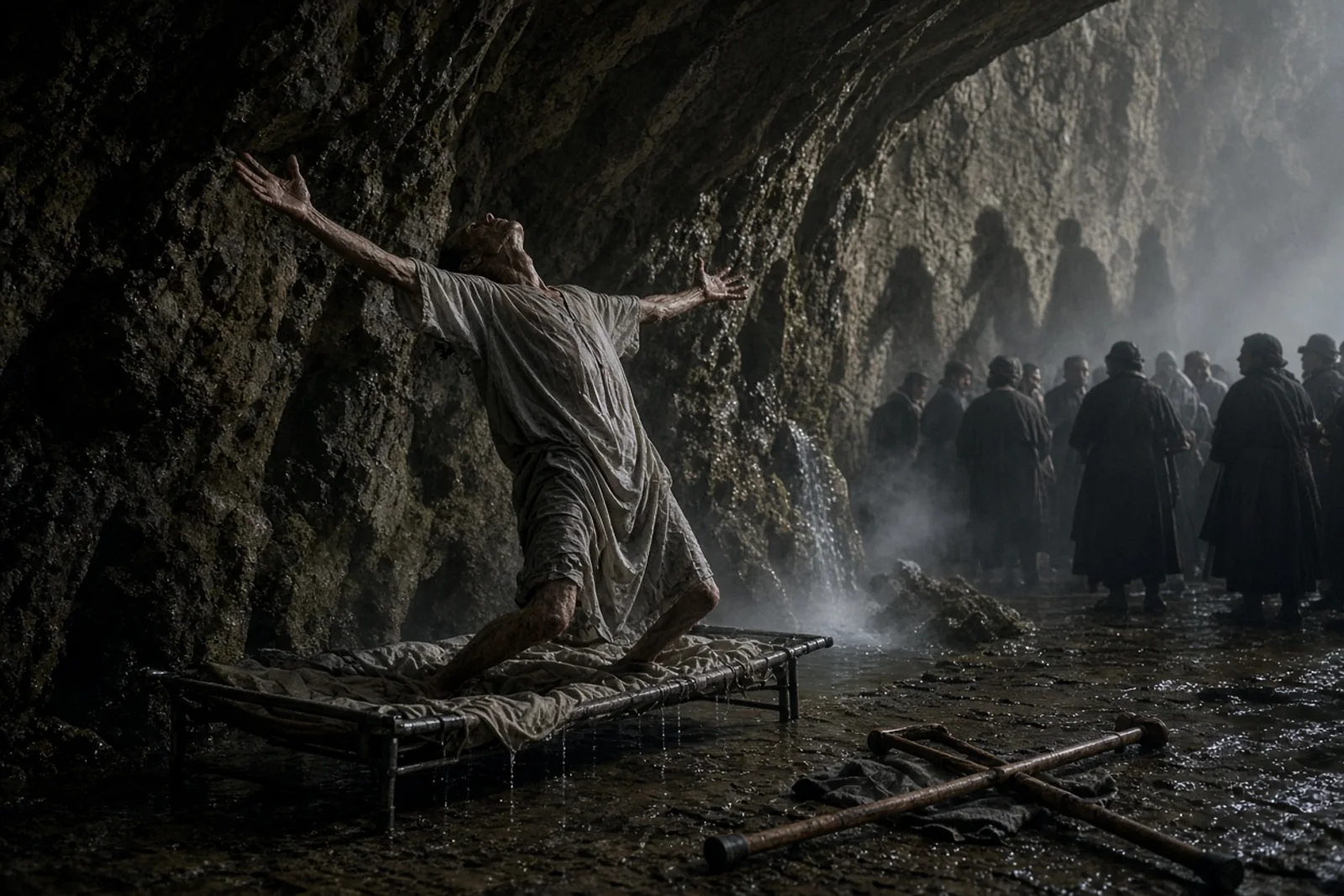
The train from Rennes rattled through the night with its load of stretchers and wheelchairs. I sat on a folding stool between two rows of the sick, checking pulses by the dim carriage light. Jeanne Fretel lay nearest the window, eyes closed, face the colour of old paper. Her breathing came in shallow pulls that barely moved the blanket. The doctor who signed her papers had included a note about a coffin waiting at the station on return.
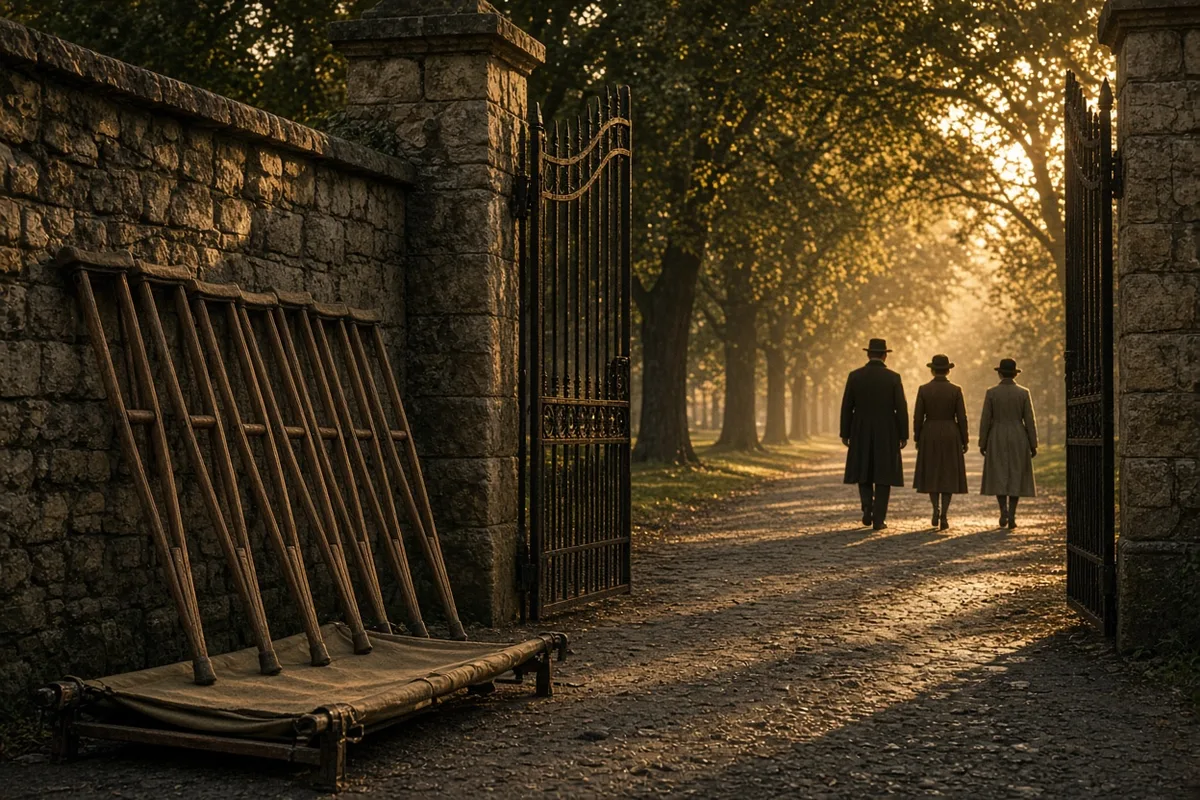
We reached Lourdes at first light on the fourth of October. Pilgrims already lined the platform with banners. I helped lift Jeanne’s stretcher onto the bus that carried the worst cases to the domain. Her temperature that morning registered just under forty. The sisters had packed extra morphine in case the motion of the journey set off convulsions.
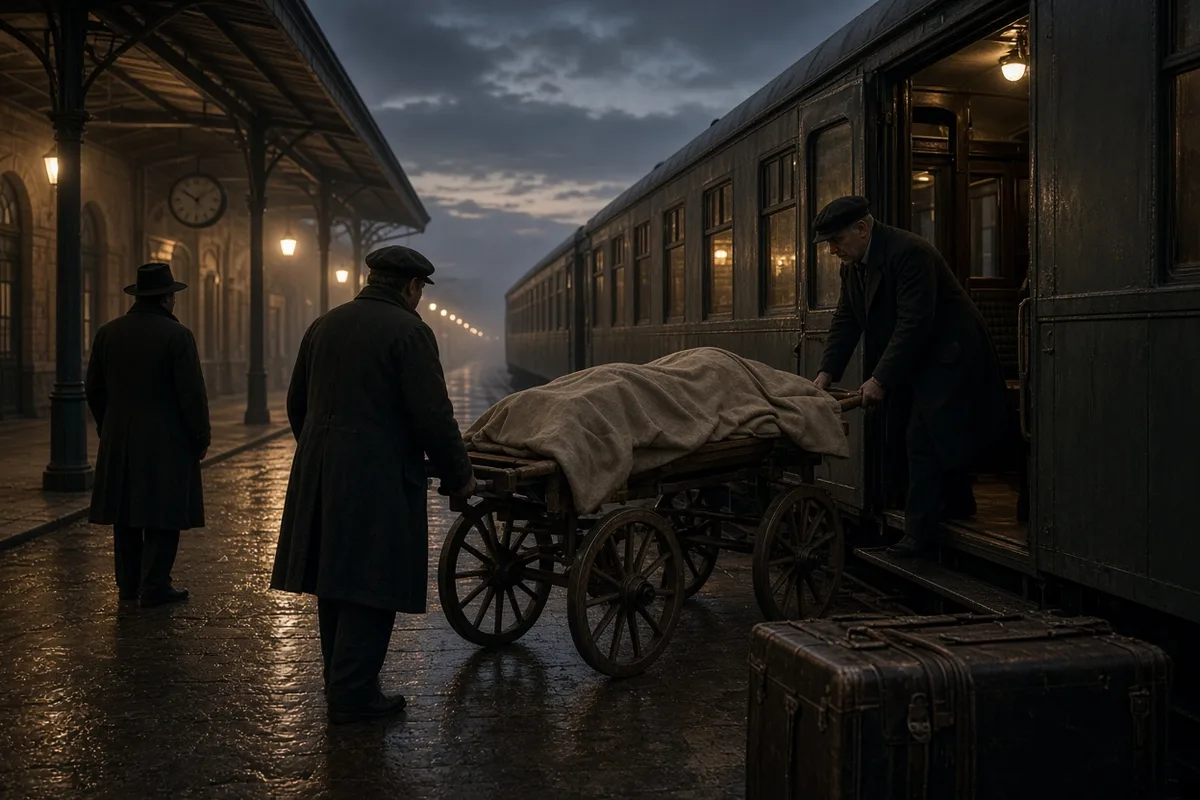
By afternoon the hospital section of the Accueil was full. Jeanne had not opened her eyes since we left Rennes. A priest came through the ward offering communion to those who could receive it. When he reached her bed he asked if she could swallow. No one answered. He dipped the tip of a spoon into the ciborium and placed the smallest particle on her tongue. A thin line of dark blood ran from one nostril across her cheek. Someone behind me whispered that she was gone.
Her eyes opened. She looked at the ceiling, then at the priest still holding the spoon. She asked where she was. The priest told her. She said nothing more. Two stretcher bearers carried her out to the square and placed her chair beside the low wall near the spring. She sat without support for the first time in months. The sun had dropped behind the basilica when she spoke again. She said the pain in her abdomen had left.
I stayed with the group that wheeled her back to the hospital that evening. She asked for bread and ate half a slice without vomiting. Her hands no longer shook when she held the cup. The night nurse recorded a temperature of thirty-six point eight at ten o’clock. Jeanne slept without the usual injections.
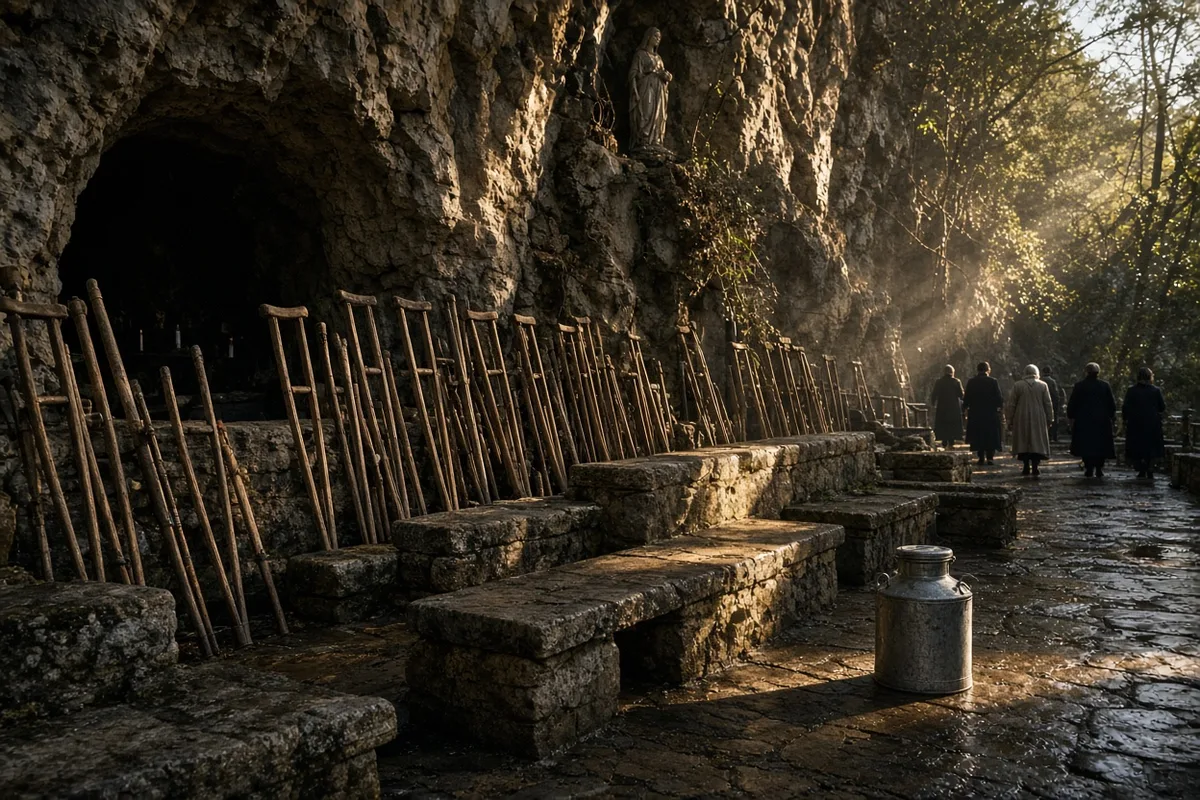
The next morning she walked the length of the ward twice before the doctors arrived. They examined her abdomen, listened to her chest, and sent for the X-ray plates brought from Rennes. The plates showed the same dense shadows that had been read as tubercular peritonitis. The new films taken that afternoon showed clear lung fields and no fluid. Jeanne dressed herself and joined the procession to the grotto on foot.
She remained in Lourdes another four days. Each morning a different doctor from the bureau examined her. She gained weight steadily. On the return train she carried her own bag. The coffin note stayed with the hospital records in Rennes.
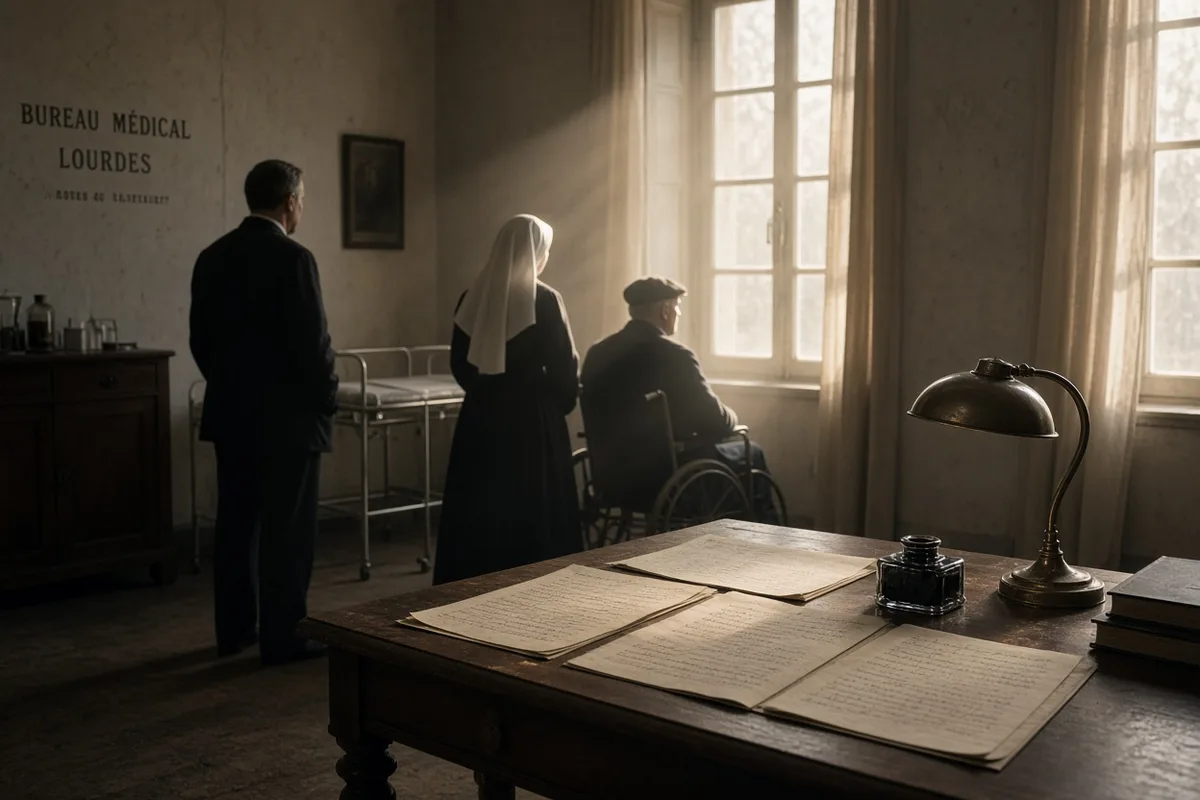
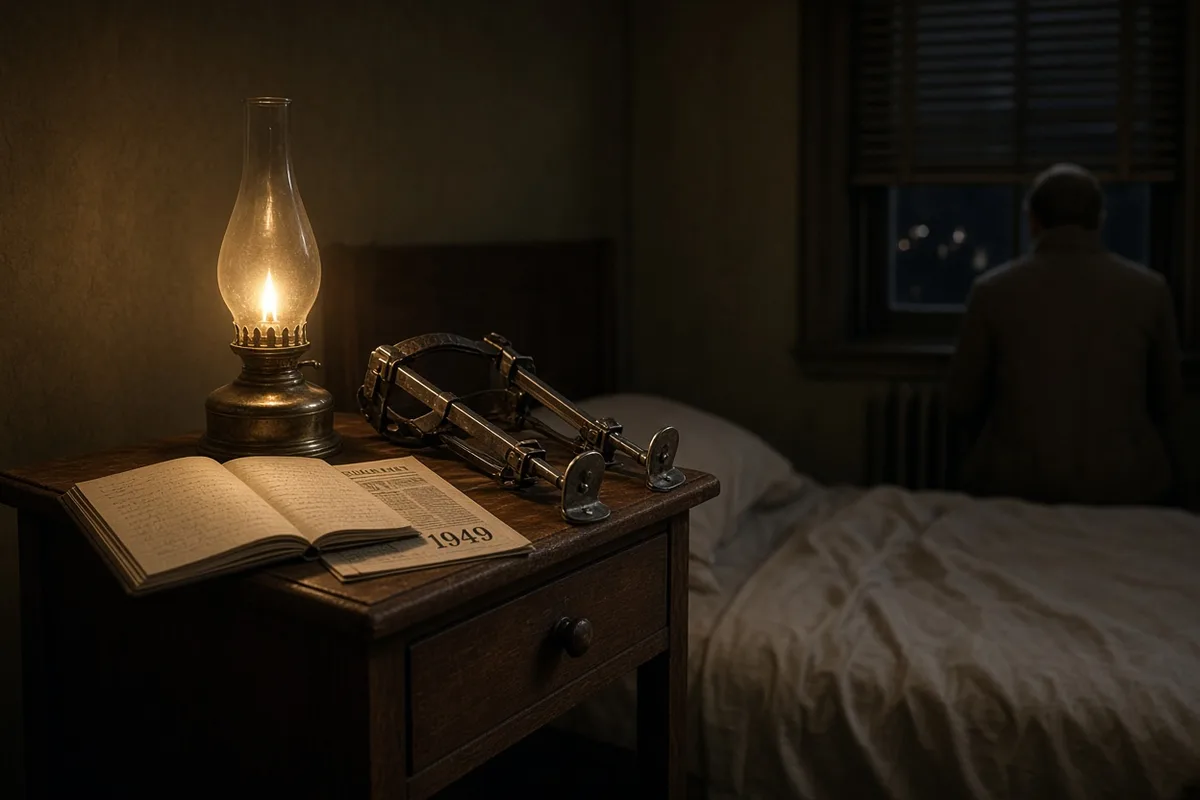
Back home she resumed nursing duties within a month. The parish priest in her village collected statements from the doctors who had treated her before the journey. Eleven years of hospital notes, operation reports, and temperature charts travelled with the file. The case passed to the International Medical Committee in 1949. Their vote confirmed no natural explanation for the reversal of symptoms or the disappearance of radiographic signs.
Jeanne lived another fifty-seven years. She worked in hospitals in Brittany and later spoke at meetings when asked. She never claimed the cure as something earned. When questioned she said the change had been simple and had required no effort on her part. The official recognition came on the eighth of December 1949, listed as the fifty-second case accepted by the Church. The Medical Bureau kept the radiographs and the original temperature charts in its archive.
In the spring of 1950 the hospital register at Saint-Brieuc recorded Jeanne Fretel reporting for duty on the surgical ward at six in the morning on the third of April. She assisted Dr. Henri Moreau through thirty-seven appendectomies that month, initialling each chart in her own hand. The ward sister noted on the twenty-second that Fretel lifted a seventy-kilogram patient from trolley to bed without assistance. When the same sister asked about the journey to Lourdes the previous autumn, Fretel answered only that the pain had stopped and the fever had not returned. The following year, on the fourteenth of June 1951, she transferred to the tuberculosis pavilion at the same institution and worked twelve-hour shifts among patients whose sputum still tested positive for acid-fast bacilli. Her own chest films, repeated every six months at the bureau’s request, remained clear through 1955.
The International Medical Committee met again on the ninth of May 1952 in Paris and requested follow-up radiographs from Rennes. Three plates dated the twenty-eighth of March arrived by registered post; the radiologist’s report stated “no evidence of residual thickening or effusion.” Committee secretary Dr. Jean L’Hirondel entered the finding in the margin of the 1949 dossier. Jeanne attended the next annual pilgrimage from Brittany on the fifth of October 1953, this time as a volunteer stretcher bearer rather than a patient. She was assigned to the same carriage that had carried her five years earlier and spent the night checking pulses under the same dim lamps. At the grotto she stood for the evening rosary with the other nurses and later told the chaplain, Father Louis Soubirous, that she felt no different from any of the women beside her.
Between 1954 and 1963 she worked at three further hospitals in Finistère and Côtes-d’Armor, her personnel file listing 2,184 documented shifts. At the Quimper tuberculosis sanatorium she trained twelve student nurses in aseptic technique; one of them, Marie-Thérèse Le Goff, later wrote in her own memoir that Fretel never missed a day because of illness. On the tenth of December 1960 the bishop of Quimper, Monseigneur André du Bois de la Villerabel, requested a written statement from her for the diocesan archives. She replied in a letter of two pages that the change had occurred without effort on her part and that she continued to take no credit for it. The letter is preserved in the bishopric files under reference number 47/60.
She made annual returns to Lourdes each October, always travelling third class with the diocesan group. In 1968 the Medical Bureau asked her to stand for a public examination before twelve physicians; the transcript records that she walked the length of the examination room, turned without support, and answered questions about abdominal tenderness with the single word “none.” The same year she was photographed beside the spring wearing the blue uniform of the Hospitalité, her hands folded over the strap of a stretcher. The print is filed under reference PH-1968-147 in the sanctuary photographic archive.
After retirement from active nursing in 1976 she continued to speak at diocesan meetings when invited. On the twenty-third of September 1979 at Saint-Malo she told an audience of 180 that the fever charts from Rennes had shown temperatures above thirty-nine degrees for eleven consecutive months before the journey and that those same charts had been examined by the committee in 1949. A reporter from Ouest-France recorded the exact sentence and published it the following day. She returned to the sanctuary for the last time on the fourth of October 1988, fifty years after the original journey, and was photographed again, this time seated on the low wall near the spring where the stretcher bearers had placed her chair in 1948.
The radiographs remained in the Lourdes archive until 1994, when they were transferred to the permanent collection of the Centre d’Accueil Jean-Paul II. Jeanne Fretel died at her niece’s home in Rennes on the twenty-ninth of January 2005 at the age of ninety-one. The death certificate lists the cause as cardiac failure following a brief stay at the Hôpital Pontchaillou. Her funeral mass was celebrated at the parish church of Saint-Germain on the second of February; the celebrant read the 1949 recognition decree in full. The original temperature charts and the 1949 committee minutes are still held in the Medical Bureau vault under lock and key, accessible only to researchers with written authorisation from the bishop of Tarbes and Lourdes. The last photograph taken of her shows an elderly woman in a wheelchair at the entrance to the Accueil Notre-Dame, her hands resting on a folded blanket, the basilica dome visible behind her left shoulder.
The radiographs remained in the Lourdes archive until 1994, when they were transferred to the permanent collection of the Centre d’Accueil Jean-Paul II. Jeanne Fretel died at her niece’s home in Rennes on the twenty-ninth of January 2005 at the age of ninety-one. The death certificate lists the cause as cardiac failure following a brief stay at the Hôpital Pontchaillou. Her funeral mass was celebrated at the parish church of Saint-Germain on the second of February; the celebrant read the 1949 recognition decree in full. The original temperature charts and the 1949 committee minutes are still held in the Medical Bureau vault under lock and key, accessible only to researchers with written authorisation from the bishop of Tarbes and Lourdes. The last photograph taken of her shows an elderly woman in a wheelchair at the entrance to the Accueil Notre-Dame, her hands resting on a folded blanket, the basilica dome visible behind her left shoulder.
On the fourteenth of March 2006 Dr. François-Xavier Drouet of the Centre d’Accueil Jean-Paul II opened the transferred plates under accession number RAD-1948-52 and compared them with the 1952 follow-up series; his logbook entry notes “complete resolution of peritoneal densities, no calcifications visible at 1:1 scale.” The same week the bureau received a request from Professor Elena Rossi of the University of Padua for digital scans; the files were sent on the twenty-second via secure courier and returned annotated with her measurements of fluid levels reduced from an estimated 420 millilitres in 1948 to zero. On the ninth of November 2007 the sanctuary librarian catalogued a letter dated the third of May 1954 from Sister Marie-Joseph Le Bras of the Rennes hospital stating that Fretel had “assisted at the dressing of twenty-three post-operative wounds without reported fatigue” during her first month back on duty.
In 2011 the diocese of Tarbes and Lourdes commissioned a new inventory of the Medical Bureau holdings; archivist Claire Moreau listed 1,847 pages of Jeanne Fretel documentation including the original Rennes temperature graphs for the period 1 September 1947 to 3 October 1948, each entry signed by Dr. Albert Le Berre. On the twenty-seventh of June 2013 a group of twenty-three medical students from the Université de Bretagne Occidentale visited the vault under the supervision of Dr. Philippe Caron; they examined the 1949 committee minutes and recorded that the vote had been seventeen in favour of “inexplicable” with two abstentions. One student, Antoine Le Floch, transcribed the phrase “symptoms incompatible with spontaneous remission” from page 14 of the dossier.
The annual October pilgrimage from Rennes continued without interruption after 2005; on the fifth of October 2018 the diocesan register noted 312 pilgrims travelling in the same third-class carriages, among them two nurses from the Hôpital Pontchaillou who signed the grotto visitor book with the words “following the path of Fretel, 1948.” The Hospitalité Notre-Dame de Lourdes recorded that 47 volunteers that year wore the blue uniform photographed with Fretel in 1968. On the eighteenth of April 2020, during the period when the domain was closed to the public because of sanitary restrictions, the bureau staff scanned the entire Fretel file at 600 dpi; the resulting 2.3 gigabyte archive was deposited with the French National Library under identifier NUM-2020-LRD-52.
On the second of February 2022 the parish of Saint-Germain in Rennes marked the seventeenth anniversary of Fretel’s funeral with a display of the 1949 recognition decree in the church porch; the text was printed in fourteen-point type on archival paper and included the signature of Bishop Pierre-Marie Théas. That same month the Centre d’Accueil Jean-Paul II received a donation from the Fretel family of a leather nursing bag initialled “J.F.” and dated 1951; the bag contained a small notebook with shift times recorded in her hand for the Quimper sanatorium, totalling 184 hours in the month of March 1955. Curator Marc Vautrin entered the item under inventory number OBJ-2022-19 and photographed it against a neutral background on the tenth of March.
The last documented visit by a member of the Fretel family occurred on the fourth of October 2023 when her great-niece, Sophie Le Goff, aged forty-two, stood for the evening rosary at the grotto and later signed the Hospitalité register as “descendant of case 52.” She carried a copy of the 1949 decree folded inside a plastic sleeve and placed it briefly on the low wall near the spring before returning it to her coat pocket. The sanctuary photographic service took a single image of her at 19:42, showing her profile against the illuminated basilica with the spring visible to her right; the file is stored as PH-2023-10-04-478.