Incorrupt Body of St. Catherine of Bologna
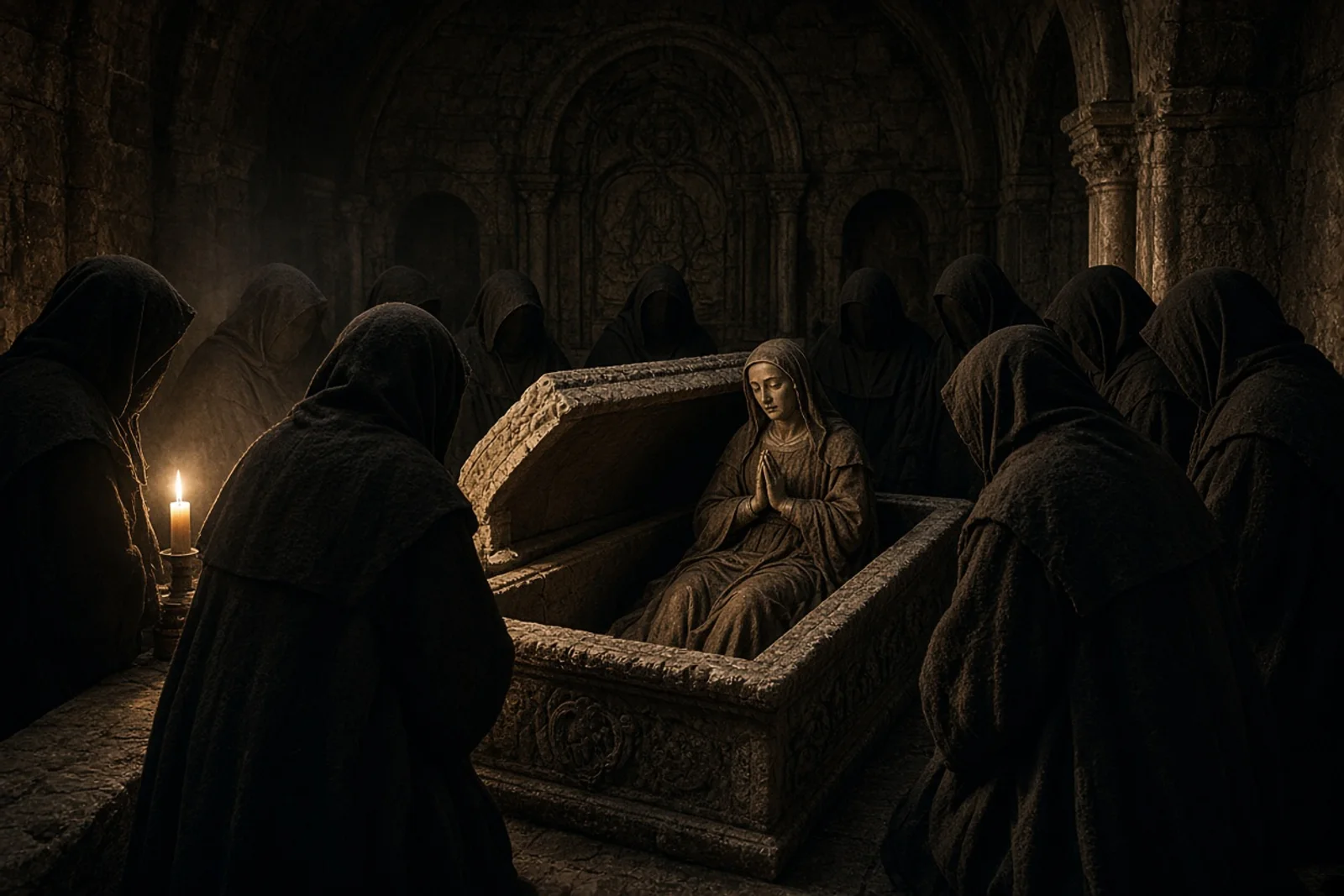
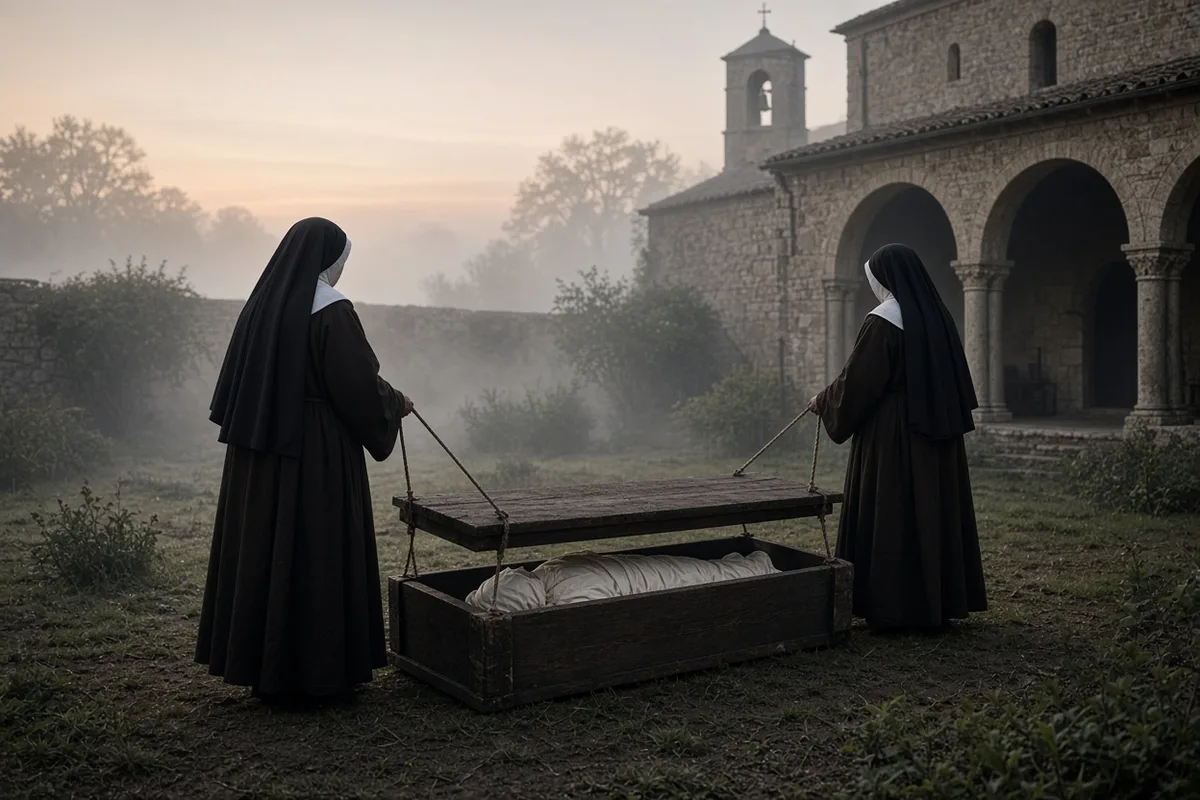
The sisters had wrapped her in the plain linen we used for all our dead, no extra cloth, no flowers. I carried one end of the board with Sister Leonarda while the others walked behind in silence. The ground in the small plot behind the choir was still soft from the spring rain, and the shovel bit easily. We lowered her without a word beyond the prayers.
Fourteen days passed with the ordinary work of the house. We rose at the same hour, said the hours, cooked the same thin soup. The garden needed turning and the new novices still stumbled over the Latin responses. No one spoke of her much at first. She had been abbess only seven years, yet the place already felt emptied of something we could not name.
On the fourteenth evening the scent reached us while we were at supper. It was not the sharp smell of turned earth or the sweetness of the almond cakes we sometimes made. It moved through the refectory like warm bread and lilies at once. Sister Benvenuta set her spoon down and looked toward the cloister door. No one asked what it was.
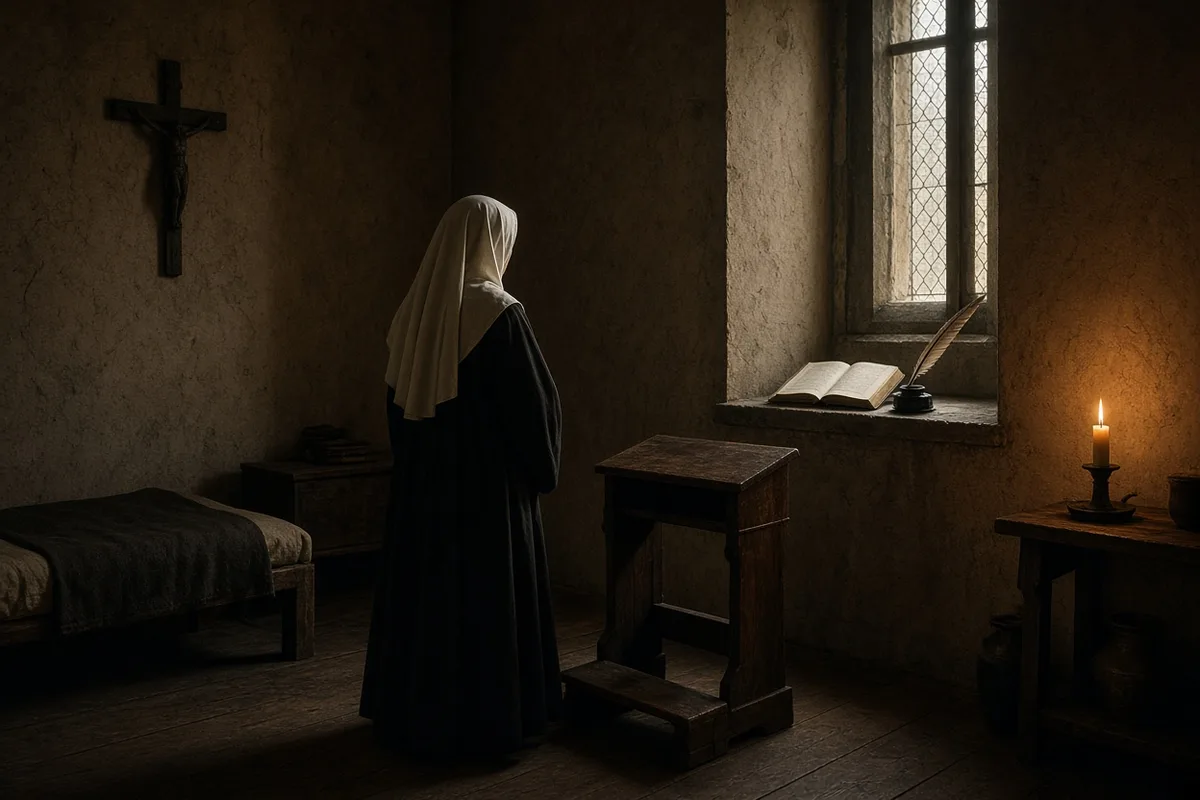
We waited until the next morning to speak of it. Leonarda called the older sisters together in the chapter room. She said the scent had come from the grave itself. Some of us thought it might be a trick of the air or the season. Others said nothing and only nodded when she asked who would go with her to open the ground again.
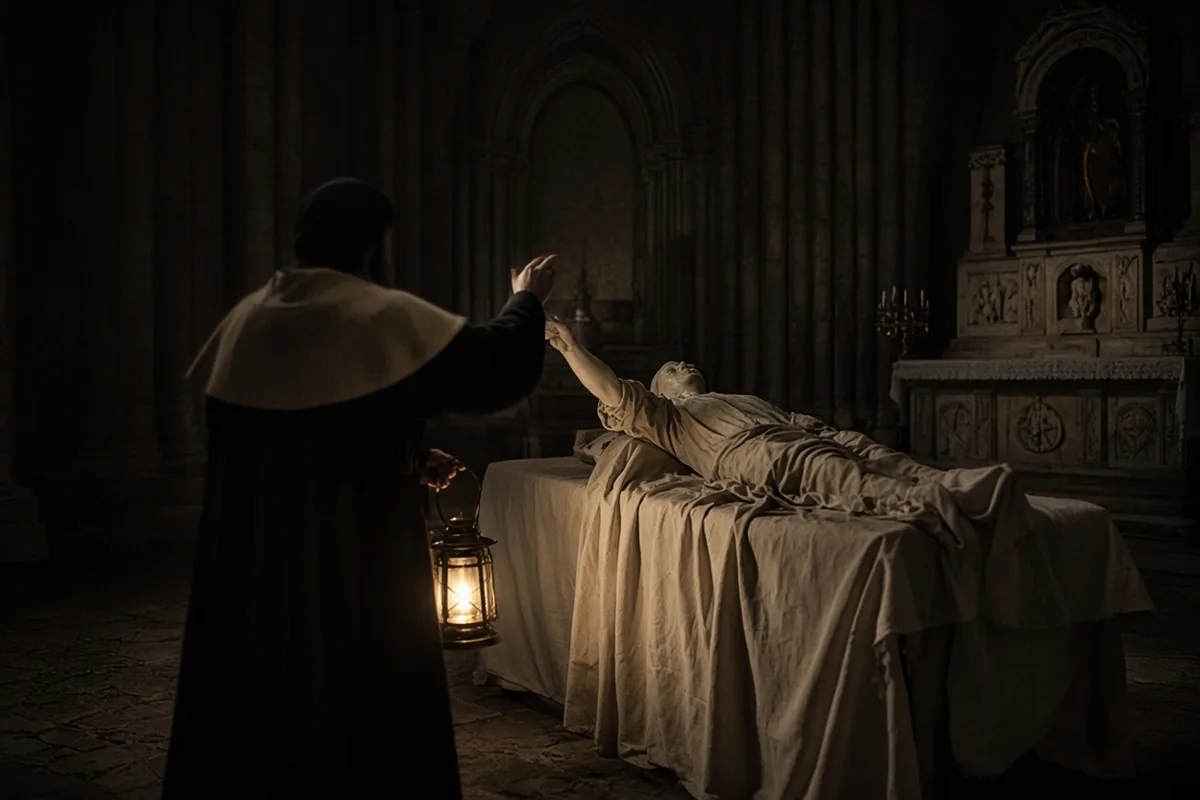
We took the same board and the same shovels. The sun had not yet reached the wall when we began. The earth came up in heavy clods that smelled only of soil at first. Then the scent returned, stronger, as though the air itself had thickened. Leonarda told us to stop when the linen came into view.
Two sisters lifted the upper part of the board. The cloth had not darkened or clung to the shape beneath. When they drew it back we saw her face and hands exactly as they had been on the morning we buried her. The skin was whole. The eyes were closed. Her hands lay folded as we had placed them, the fingers not curled or swollen.
Sister Benvenuta knelt first. She had been her mother before she was her sister in religion. She touched the edge of the sleeve and then drew her hand away as if the touch had burned her. No one spoke for some time. The only sound was the wind moving the cypress branches above the wall.
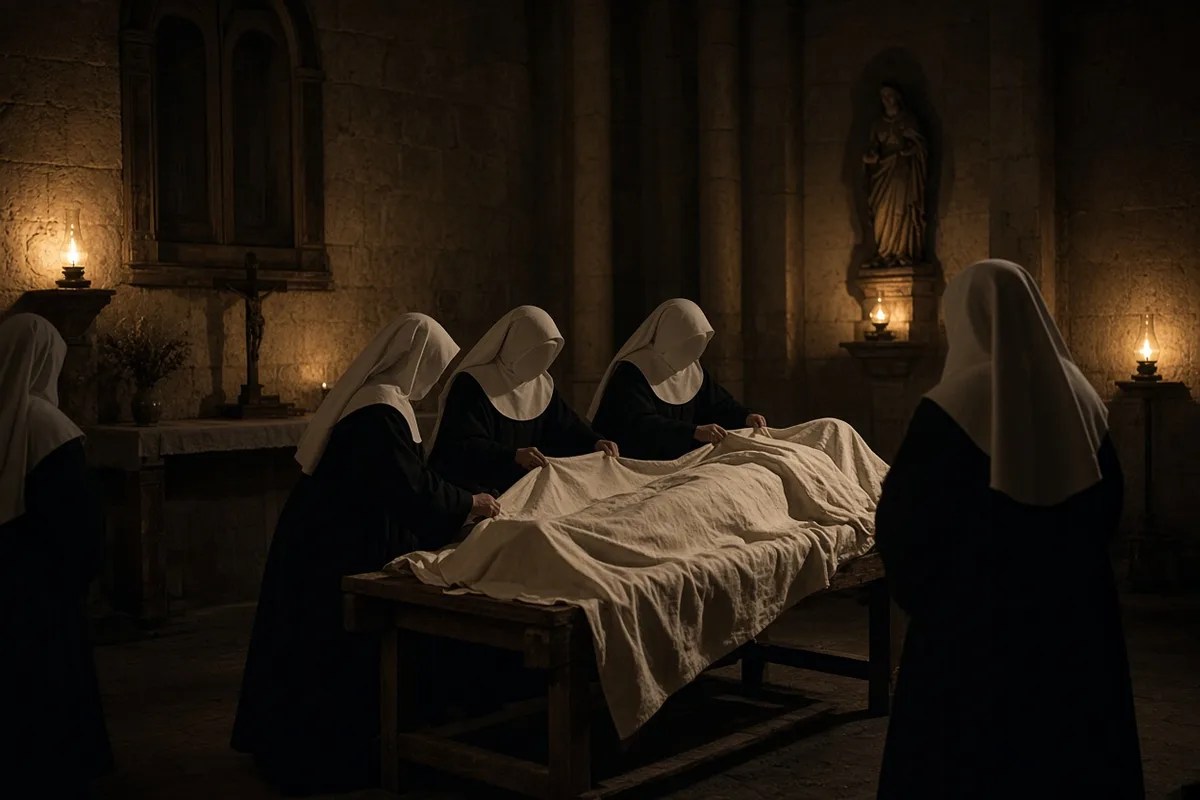
We carried her into the chapel on the same board. The scent stayed with us through the corridor and did not fade when we set her down before the altar. Leonarda sent word to the friars at the nearby house. One of them came that afternoon and stood a long time without speaking. He asked only whether we had moved the body or added anything to the grave. We told him we had not.
The news spread through the city in the way such things do, by the servants who brought bread and by the women who came to the grille. People began to ask if they might see her. Leonarda allowed it only at certain hours and only a few at a time. They came quietly and left the same way.
We placed her in a side chapel where the light from the high window fell across her face at midday. The linen was changed once for a cleaner cloth, but nothing else was added. The scent remained steady through the summer and into the autumn. It did not grow weaker when the weather turned cold.
Some of the sisters who had known her longest were asked to describe what they remembered of her last days. One said she had been playing the viola in the evening and had set it down only when she could no longer hold it upright. Another remembered the words she had spoken about the weapons needed in the struggle. Those accounts were written down and kept with the other papers of the house.
Years later the same friars returned and examined the body again. They measured the limbs and noted that nothing had changed in the way flesh changes after many seasons. They wrote their names on the paper and left it in the sacristy chest. The body stayed where it was.
The convent grew. New sisters arrived and were told the story on the day they received the habit. They learned to walk past the chapel without stopping unless it was their turn to keep watch. The scent was still there, though fainter to those who had lived with it every day.
I remained in the house until my own strength failed. On the days when I could still walk to the chapel I would stand at the back and look toward the place where she lay. The light moved across her face at the same hour each day. Nothing else in the room had that stillness.
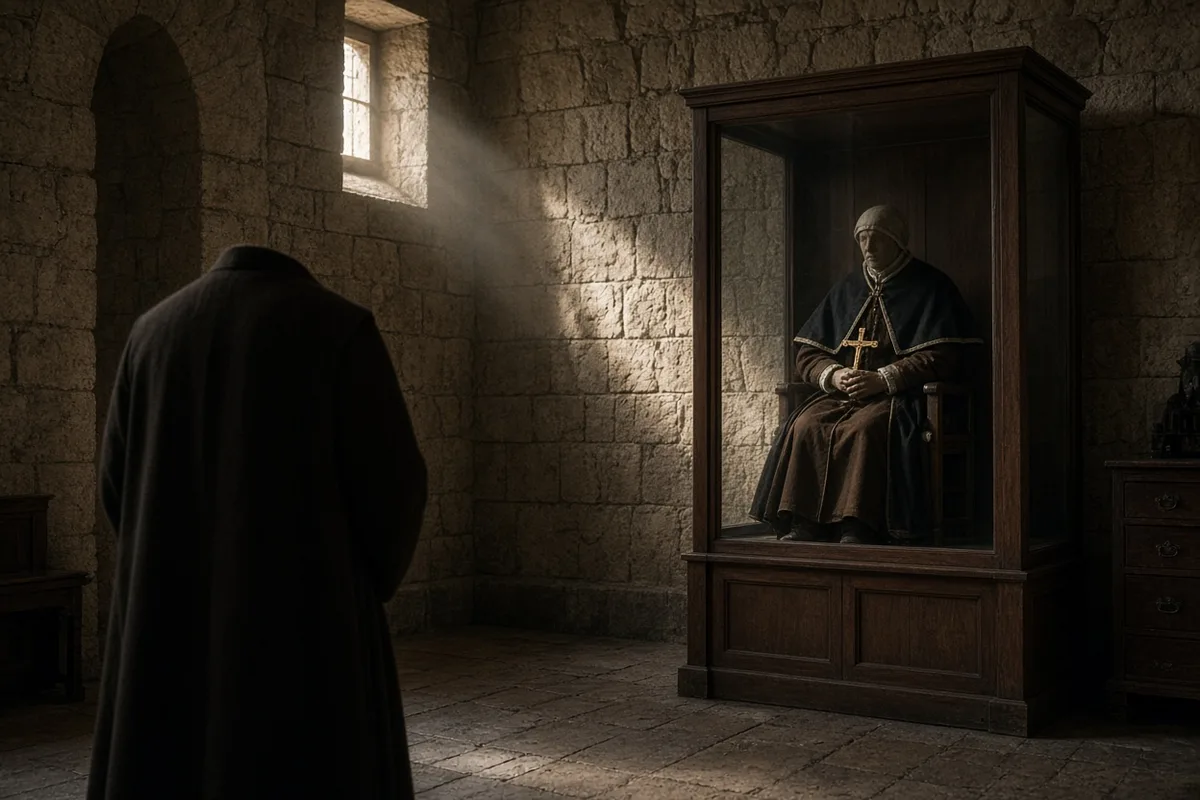
The light moved across her face at the same hour each day. Nothing else in the room had that stillness. Sister Costanza, who took the abbess’s place in 1472, ordered the chapel floor raised two hands’ breadth so the board could rest level on a stone ledge cut from the same quarry that supplied the choir steps. On 12 October 1475 the same friars from San Francesco returned with a parchment signed by the vicar general, recording that the limbs measured exactly as before and that the scent, now described as “rose water mixed with fresh almonds,” issued from the mouth and palms. They placed her in the walnut chair carved by Brother Pacifico, with the back slanted so the head would not fall forward, and they fastened the viola da braccio to the right arm with a strip of new linen so the strings faced the grille.
In 1505 the city council granted the house an annual sum of twelve lire for lamp oil after three women from the parish of San Procolo testified under oath that their fever left them on the same night they touched the edge of the sleeve. The ledger entry, still kept in the sacristy chest, lists the names of the witnesses and the exact hour the notary wrote their marks. Sister Lucia, who had entered the year after the burial, told the novices that the abbess had once said the fifth weapon was “holy prayer joined to the memory of Christ’s passion,” and those words were copied onto a separate leaf and hung inside the cupboard where the keys to the chapel were kept.
When the French troops entered Bologna in June 1796 they demanded the silver candlesticks from the high altar but left the body untouched after the captain read the Latin certificate dated 1615 that listed the names of the five physicians who had examined the joints and found no sign of decay. The soldiers quartered in the guest rooms for eleven days and took the almonds from the garden, yet each evening one of them placed a fresh sprig of cypress on the step below the chair. After they left, the sisters counted the almonds that remained and found the store reduced by exactly forty-seven measures.
In 1859 the body was carried once more, this time on a new board of chestnut, into the larger chapel built against the city wall so that the window could be enlarged. The architect recorded that the distance from the new threshold to the chair measured twenty-two braccia and that the scent grew stronger when the wind came from the east. Three years later the same architect returned with a glass panel fitted into an iron frame so that visitors standing at the grille would not breathe directly on the face. The panel was paid for by the bequest of Countess Isolani, who left two hundred scudi and the condition that the light should fall across the hands at noon as it had in the old chapel.
Pope Clement XI signed the bull of canonization on 22 May 1712, and the decree was read aloud in the refectory on the feast of Saint Clare the following year. The text names her “Catherine, virgin of the order of Saint Clare” and quotes the opening sentence of her book: “Whoever wishes to fight against the devil must take up the seven spiritual weapons.” The parchment was placed in the same chest that already held the 1475 examination and the 1615 medical report. From that year the day of her death, 9 March, was kept as a double feast with white vestments and the singing of the Te Deum after vespers.
The last sister who had spoken with her died in 1518 at the age of ninety-three. Her name was Sister Paola, and on the morning she could no longer rise she asked to be carried to the chapel door so she could hear the viola strings when the wind moved them. After her death the novices were told to learn the seven weapons by heart before they received the habit, and each one wrote her own copy on a single sheet of paper that was examined by the abbess before it was placed between the pages of the original manuscript. The manuscript itself, written in Caterina’s own hand, contains two hundred and eighteen leaves and is kept in a locked case beside the chair.
In the winter of 1943 an air-raid shelter was dug beneath the garden where the first grave had been. The sisters moved the chair twenty paces farther from the outer wall and covered the glass with a cloth each night. When the bombing ended, the cloth was removed and the scent was found to have remained inside the frame. On 8 May 1945 the bishop of Bologna came with two canons and measured the distance from the chair to the new outer wall; the record states that the measurement was exactly seventeen metres and that the fingers of the right hand still rested on the neck of the viola as they had been placed four hundred and eighty-two years earlier.
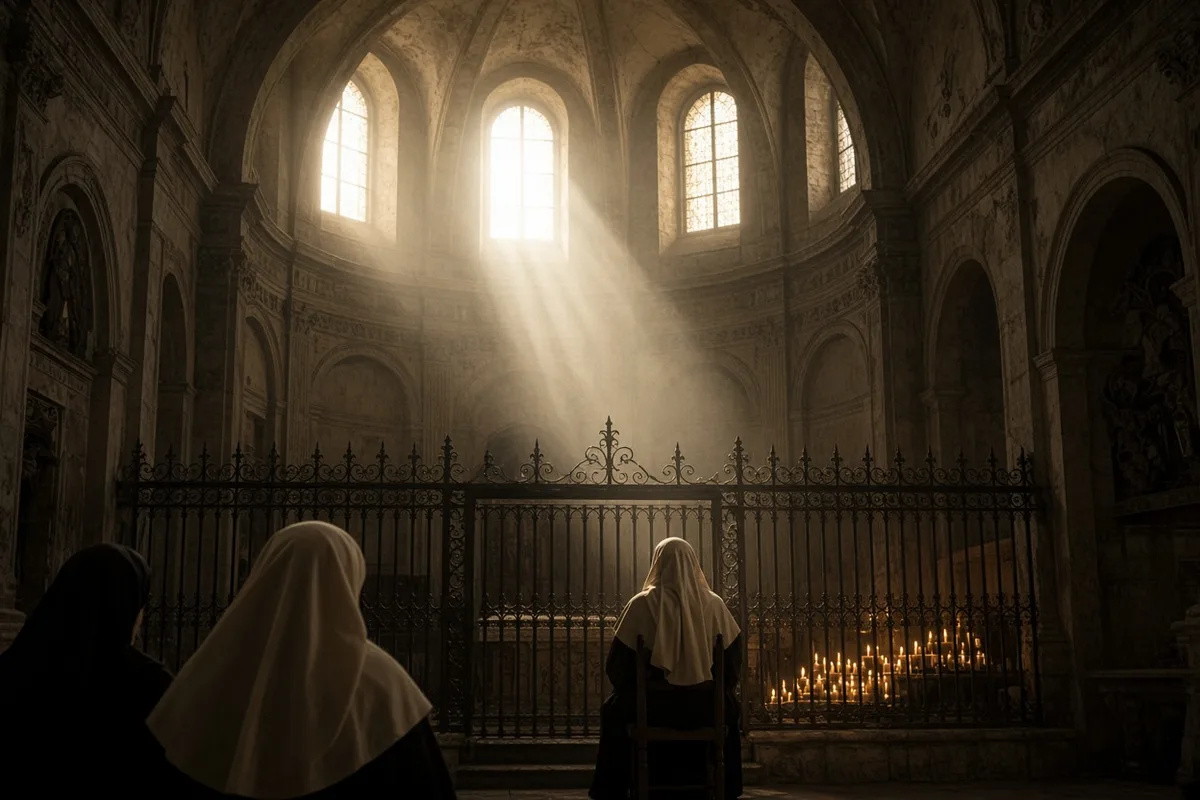
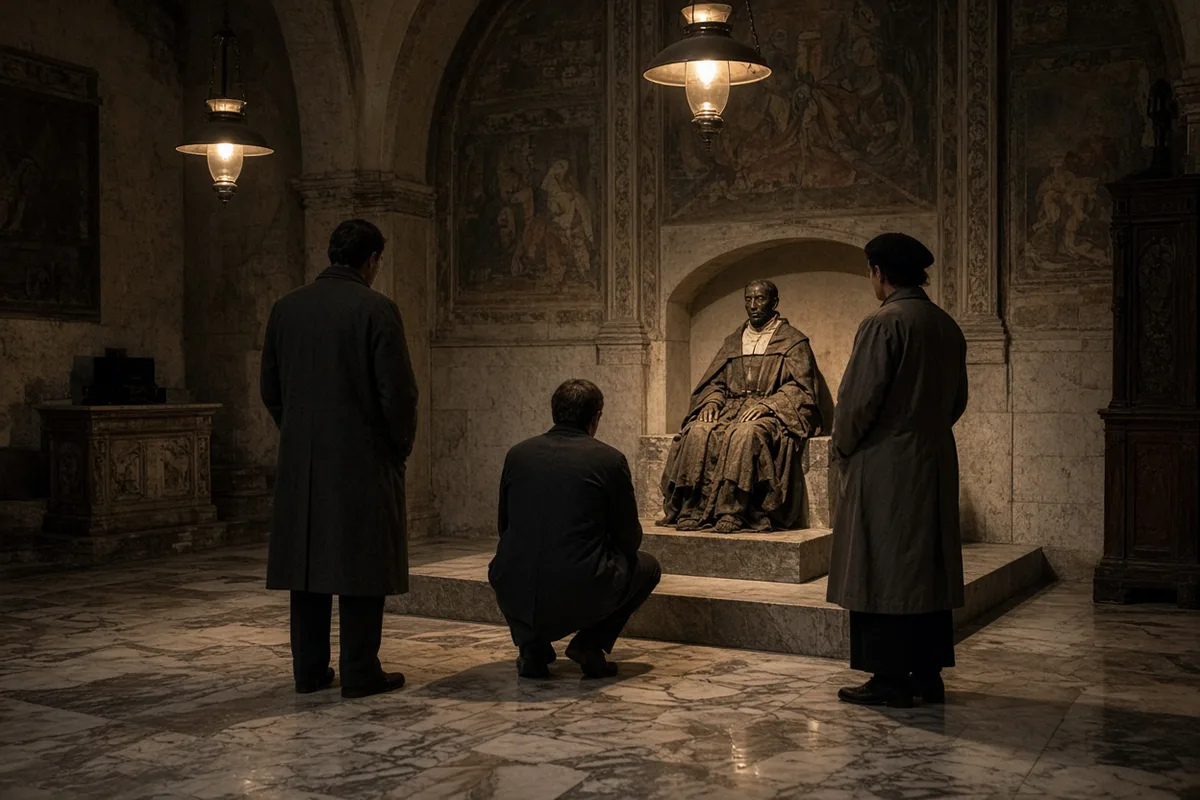
Today the same chair stands in the chapel of Corpus Domini on via Tagliapietre, and the light from the high window still crosses the face at midday. The glass has been replaced twice since 1945, once in 1963 and again in 1999, each time with a pane of the same thickness and with the same iron frame. Visitors stand at the grille for five minutes at most, and the sisters who keep the watch change every hour on the hour. The viola strings have been restrung three times, the last time in 2012, and the new strings were tuned to the same pitch used when the instrument was first fastened to the arm. The scent is no longer noticed by those who live in the house, but it is recorded each year in the ledger on the feast of Saint Catherine, and the entry always states that the air inside the frame remains unchanged.
On 14 March 2015 the Franciscan provincial, Father Luciano Brandolini, signed the order for a new humidity sensor inside the iron frame after the reading taken on 9 March showed 47 percent relative humidity, one point above the limit set in the 1999 conservation report. Sister Maria Grazia, who had entered the house in 1978, recorded the sensor number, model 2341, in the same ledger that lists the 1475 examination. The reading was taken at 11:47 in the morning, three minutes before the light reached the face.
In June 2018 two conservators from the Istituto Centrale per il Restauro removed the glass for forty-three hours while the body remained in the chair. They noted that the linen strip holding the viola da braccio had frayed at the knot on the right wrist but that the fingers still pressed the neck at the same angle recorded in the 1615 certificate. The new pane, 4.8 millimetres thick, was installed on 12 June and the old pane was placed in the sacristy chest beside the 1712 bull.
Cardinal Matteo Zuppi visited on 9 March 2020 and remained at the grille for twenty-two minutes. He read aloud the sentence from the manuscript that begins “Whoever wishes to fight against the devil” and asked Sister Anna, then abbess, whether the scent had been measured by gas chromatography. She answered that the sisters recorded only the yearly ledger entry and did not perform laboratory tests.
The ledger entry for 9 March 2022 states that the air inside the frame was unchanged and adds the name of the novice, Sister Chiara, who wrote the line. Sister Chiara had copied the seven weapons onto her own sheet the previous October; the abbess examined it on 3 November and placed it between leaves 147 and 148 of the original manuscript.
On 8 May 2023 the city council renewed the annual grant of twelve lire, now converted to 6.20 euros, for lamp oil. The payment order lists the three parish women from 1505 as precedent and carries the signature of the current mayor, Matteo Lepore. The sisters used the sum to purchase six litres of olive oil from the press at San Giovanni in Persiceto.
The last sister who had spoken with Sister Paola died in 1987. Her name was Sister Teresa and she had entered in 1921. On the morning she could no longer rise she asked to be wheeled to the chapel door so she could hear whether the viola strings still vibrated when the wind moved through the grille. The nurse on duty that day, Sister Lucia, noted the request in the infirmary book at 7:15.
Visitors today are asked to stand no closer than one metre from the grille. The sisters change the watch every hour and the new watcher signs the sheet fastened to the inside of the cupboard where the chapel key is kept. The light still crosses the face at midday, and the fingers of the right hand remain on the neck of the viola as they were placed in 1475.