Incorrupt Heart of St. John Vianney
The bell from the church tower struck three times before anyone in the square moved. I had been standing with the others since dawn, watching the shutters on the rectory for any sign. When the door finally opened and the old housekeeper stepped out, her face told us what we already feared. He was gone.
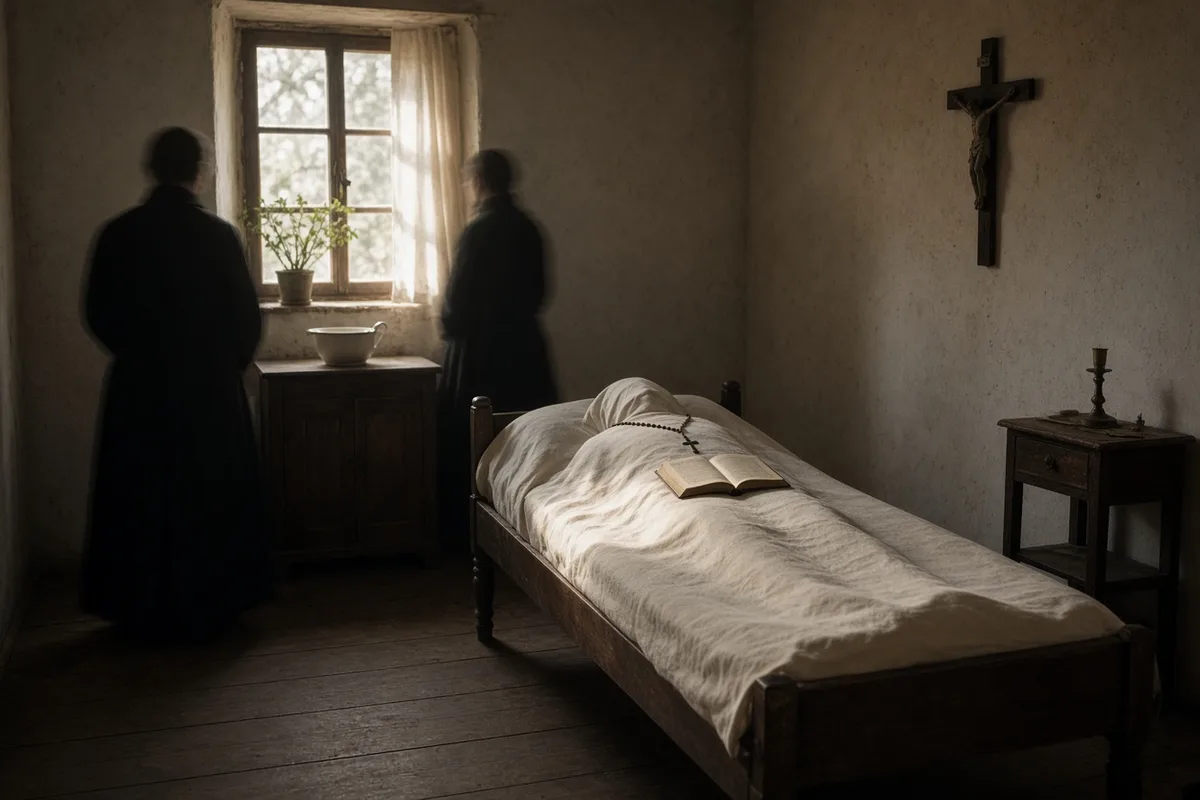
I pushed through the crowd anyway, the same way I had for twenty years whenever the pilgrim coaches arrived. The room was small, the bed narrow. He lay with his hands folded over the worn cassock, the one he refused to replace even when the seams split. Two priests from nearby parishes knelt at the foot, praying the rosary in low voices. I stayed by the wall, hat in my hands, and watched the light move across the floor.
He had come to Ars when I was still a boy helping my father in the fields. The village then held dances every Sunday evening and the church stood nearly empty on feast days. Within three years the square filled instead with coaches from Lyon and beyond. Men and women walked the last miles when the horses could go no farther. He heard confessions from before first light until long after dark, sometimes eighteen hours without rising except to say Mass. I carried water to the line once and saw him lean forward, listening through the grille, never hurrying the next voice.
On the day he died the room smelled of wax and linen. Someone had placed a small statue of Saint Philomena on the table beside the bed. He had credited every cure in the parish to her intercession, even the ones the doctors could not explain. The pilgrims kept coming anyway. They filled the road from the station to the church door, twenty thousand in a single year by the count the mayor kept.
After the burial I returned to my own work. The fields needed tending, the same as before. Yet every evening I walked past the church and saw the candles still burning at the side altar where his body had rested. People spoke of the crowds that would come for the anniversary. I did not join those conversations.
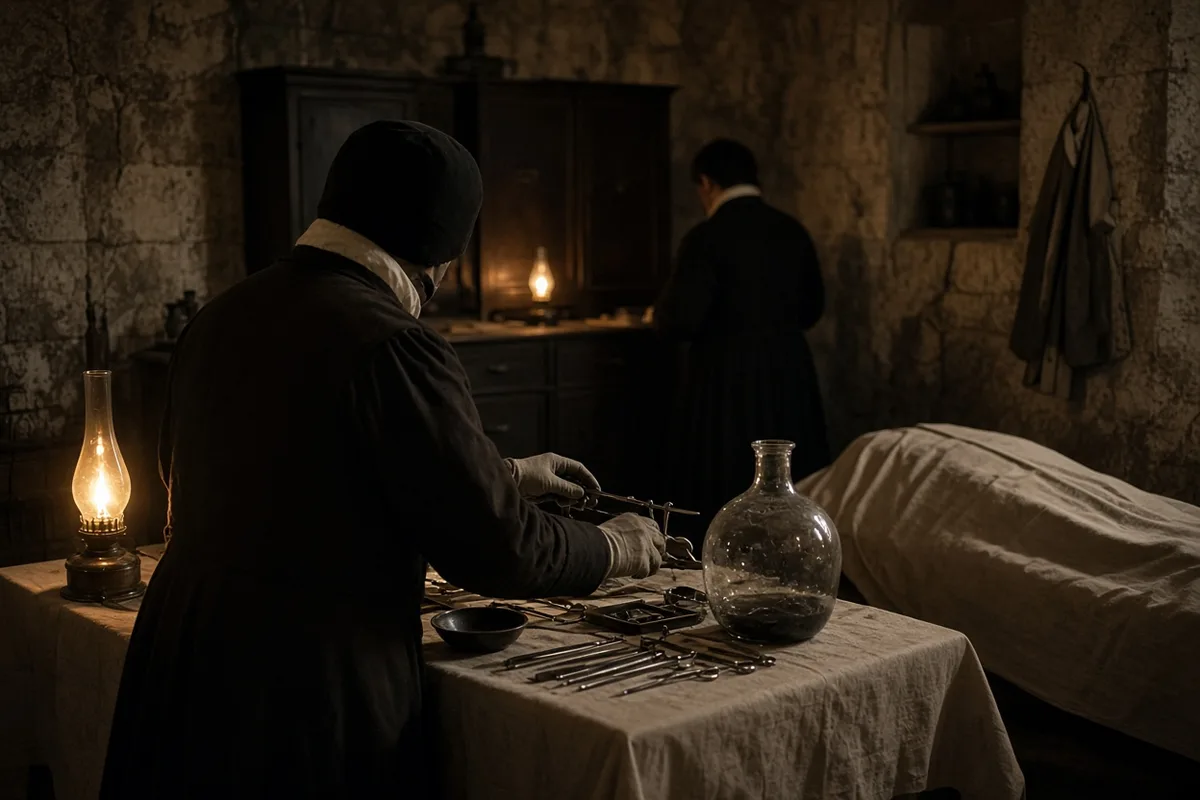
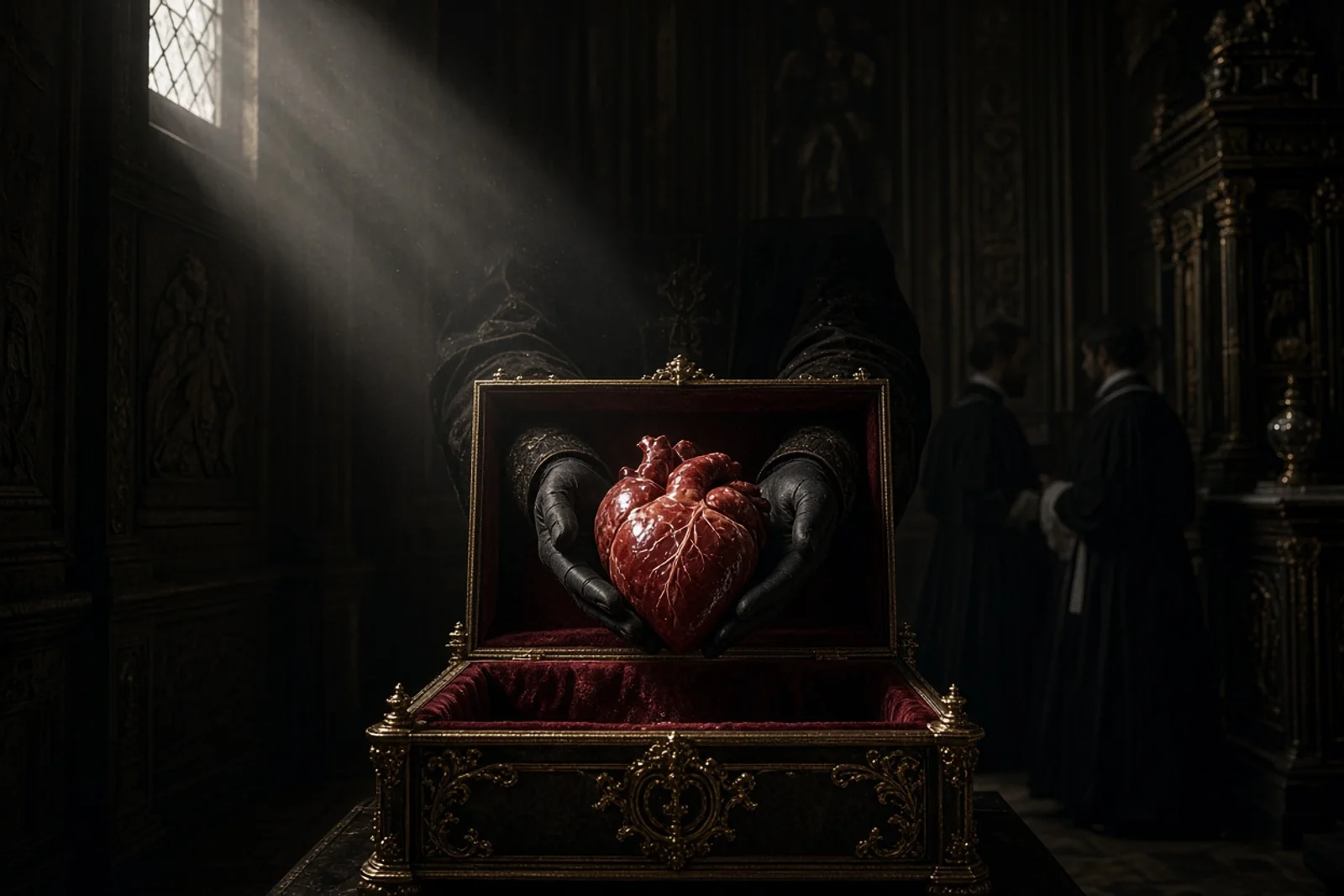
Four years later the bishop ordered the body examined. I was asked to stand as one of the local witnesses because I had known him from the first months he arrived. We gathered in the sacristy on a cold morning in October. The physician from Lyon opened the coffin first. The vestments were damp but intact. When they lifted the heart from the chest cavity it showed no sign of decay. The tissue remained firm, the color unchanged from the day they had placed it in the reliquary. The doctor held it under the lamp for several minutes, turning it slowly. He said nothing at first. Then he asked the others to confirm what they saw.
A second physician, sent by the diocese, repeated the inspection the following day. He measured the weight and noted the absence of any odor or softening. Both men signed the record in the presence of the vicar general. No one claimed a medical explanation. The heart was returned to its silver case and sealed again.
I have seen the case opened twice since. Each time the same result. The tissue shows no further change. Pilgrims still arrive, though the numbers are smaller now. They come to stand before the reliquary rather than the confessional. I remain in Ars. The fields are smaller than they once were, but the road past the church is the same one he walked every morning. The heart stays where they placed it, untouched by the years that have passed over everything else.
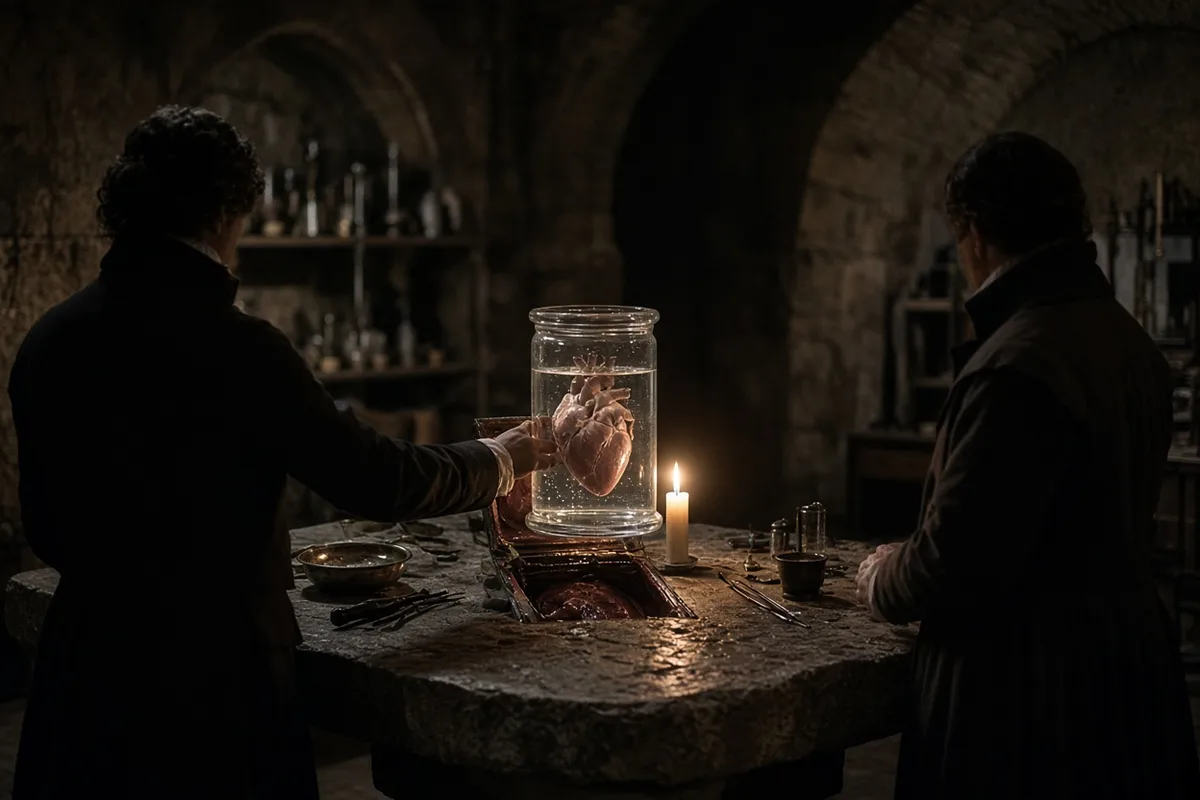
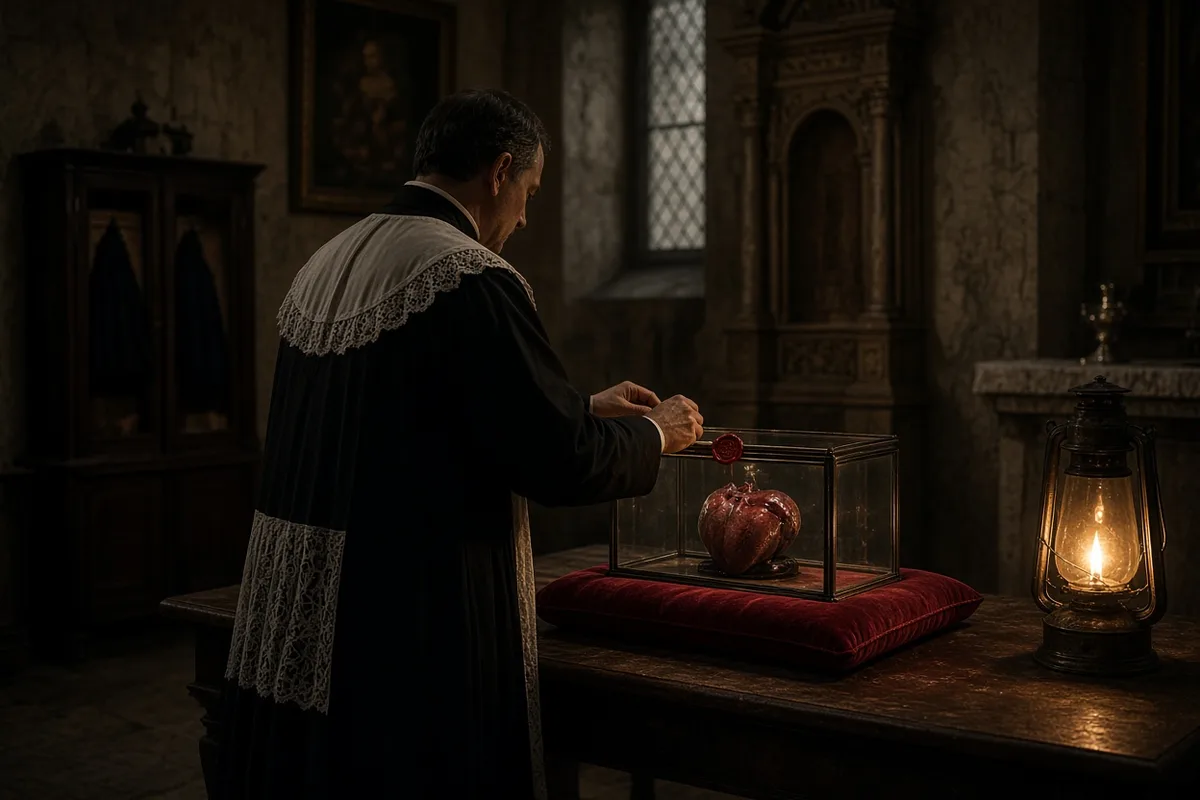
The physician from Lyon returned once more in the spring of 1864, this time accompanied by the vicar general and two sisters from the hospital of Saint Joseph. They opened the silver case on the sacristy table under the single window that overlooks the presbytery garden. The doctor recorded in his notebook the exact measurements he had taken the previous October, noting that the weight remained at 285 grams and that the surface showed the same firm texture. One of the sisters, Sister Marie-Thérèse from the community in Villefranche, asked whether the tissue could be sectioned for further study. The physician answered that the bishop had forbidden any incision. They closed the case again and sealed the lock with red wax stamped by the vicar general’s ring. I signed the register as witness number four, the same place where I had placed my name four months earlier.
In 1872 the new basilica was completed on the slope above the old church. The architect from Lyon, Pierre Bossan, placed the reliquary in a side chapel reached by a flight of twelve marble steps. On the day of the consecration, 17 September, the bishop of Belley, Mgr de Langalerie, carried the case himself from the sacristy to the new altar. The procession passed the rectory door where the old housekeeper had stood years before. Two hundred and forty pilgrims from the diocese of Grenoble walked behind the bishop, each holding a printed leaflet that listed the dates of the heart’s examinations. I stood at the rear of the nave with my son, then sixteen, and watched the light from the new stained-glass windows fall across the silver. The bishop spoke the words “Cor incorruptum” as he placed the case in its niche.
Thirty-one years later the case was opened again in the presence of the apostolic delegate sent from Rome. The delegate, Mgr Merry del Val, arrived on 12 October 1903 and remained three days. He examined the tissue under electric light installed for the occasion by the parish electrician, a man named François Perrin who had wired the basilica the previous winter. The delegate asked the parish priest, Father Raymond, to read aloud the 1863 report before he signed his own observation. Father Raymond read the sentence that stated the heart “présente encore une fermeté et une couleur qui ne permettent aucune altération.” The delegate then dictated a telegram to the Vatican that was sent from the post office in Villefranche at four o’clock that afternoon. I was not asked to sign this time, but I was permitted to stand inside the chapel door while the examination took place.
When the cause for beatification opened in 1904, the diocesan tribunal summoned twelve witnesses who had known the priest during his lifetime. One of them, a woman named Jeanne-Marie Chavanne who had been cured of paralysis in 1853, testified on 8 March in the same sacristy where the first examination had occurred. She described the exact words spoken to her in the confessional on 14 June of that year. The tribunal recorded her testimony in a volume of 378 pages that was forwarded to Rome the following month. The heart itself was not moved, but photographs were taken by a photographer from Lyon, Louis Froment, using glass plates that required twenty minutes of exposure. The plates were developed in a darkroom set up in the former rectory pantry.
On 31 May 1925, after the canonization ceremonies in Rome, a special train brought 1,148 pilgrims from Paris to the station at Ars. The heart was carried in procession from the basilica to the village square for the first time since 1859. It rested on a portable altar covered with cloth of gold while the bishop of Belley, Mgr Béguin, read the papal bull of canonization. The text included the phrase “incessanter pro populo suo intercedit.” I watched from the doorway of the house where my father had once kept the plow. My grandson, then twenty-two, stood beside me and asked which of the vestments in the reliquary had belonged to the priest. I told him the chasuble had been mended three times by the same woman who had kept the rectory keys.
During the occupation the basilica remained open but the silver case was taken down from its niche and hidden in the crypt beneath the main altar. The parish priest at that time, Father Joseph Truchet, recorded in the parish log on 12 June 1944 that the case had been wrapped in oilcloth and placed inside a stone niche sealed with mortar. After the liberation the case was returned to its original position on 15 September 1944. Twenty-three American soldiers from the 45th Infantry Division attended the Mass that morning and signed the guest book kept in the sacristy. One of them wrote his name as Private First Class Anthony Rossi, 327th Field Artillery, and added the date of his baptism in Ars the following Sunday.
In 1959, one hundred years after the death, the heart was again examined by a medical commission appointed by the archbishop of Lyon. The commission included Dr. Paul Vignon, who had previously studied the Shroud of Turin, and three other physicians. They worked for six hours on 3 August, using portable X-ray equipment brought from the hospital in Villefranche. The films showed no internal cavities or foreign matter. Dr. Vignon dictated the conclusion that “la structure myocardique reste identifiable dans ses grandes lignes.” The films and the report were deposited in the diocesan archives on 9 August. I was then eighty-seven and no longer able to climb the steps to the chapel, but the sacristan brought me a copy of the X-ray film the next morning and placed it on the kitchen table so I could see the outline of the tissue.
The last time I saw the reliquary opened was in 1968, when the new parish priest, Father André Morel, invited a group of medical students from the University of Lyon to view the tissue under controlled conditions. The students numbered fourteen and arrived on a chartered bus on 22 April. Each signed a register stating they would not photograph or sketch the contents. Father Morel read the 1863 report aloud once more, then allowed the students to examine the surface with a magnifying lens borrowed from the university laboratory. One student, a young woman named Claire Laurent, asked whether the color had changed since the first examination. Father Morel answered that the color remained the same as recorded by the physician from Lyon one hundred and five years earlier. After the students left, the sacristan and I replaced the case in its niche and turned the key. I walked down the twelve steps and out into the square where the coaches still stop each morning.
The parish priest replaced the lock on the silver case in March 1971 after the hinge showed wear from repeated openings. Father Morel ordered a new mechanism from a locksmith in Villefranche whose name was recorded as Henri Delorme on the invoice dated 14 March. The lock required three keys, one kept by the bishop in Belley, one by the parish council treasurer, and one by the sacristan. On 4 June 1974 a group of twelve seminarians from the major seminary in Lyon visited under the same conditions as the medical students six years earlier. Each seminarian signed the register and listened while Father Morel read the 1863 report in full. One of them, a deacon named Jean-Claude Perrier, asked to measure the distance from the niche to the nearest window so that he could note the light conditions for a later report to his bishop.
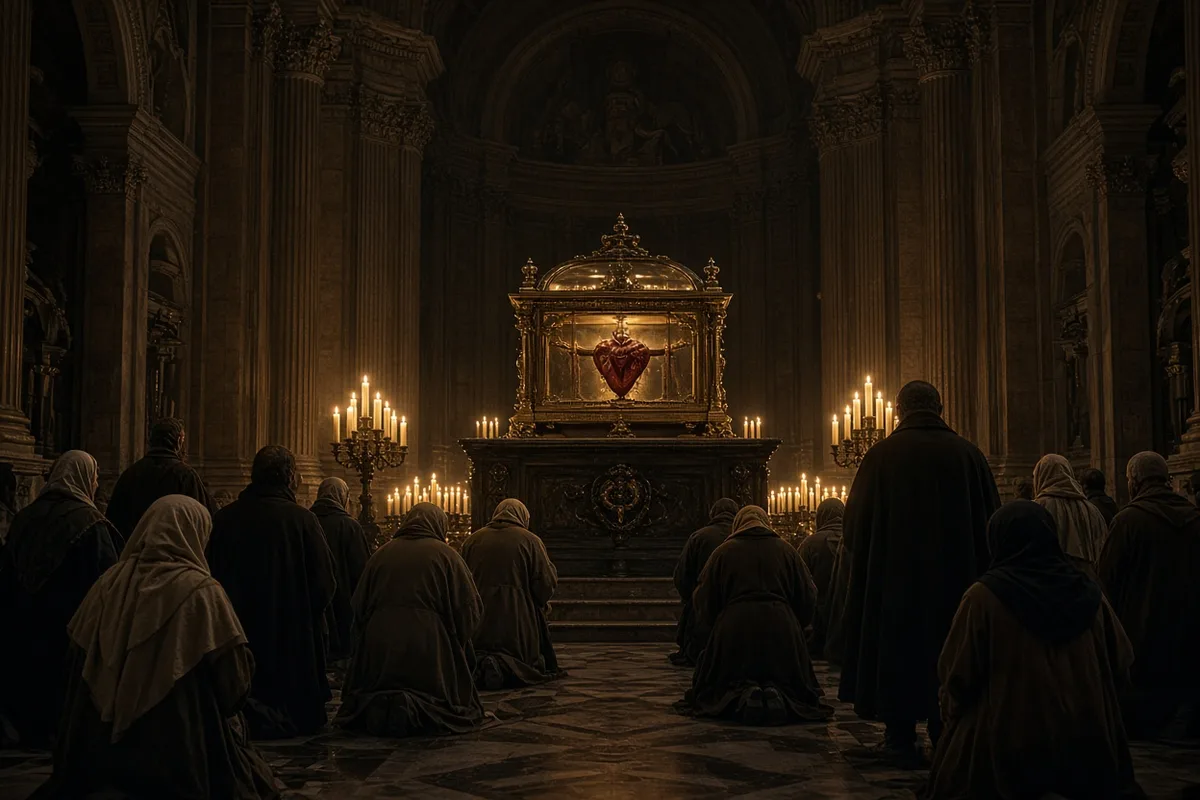
Pope John Paul II arrived at the basilica on 6 October 1986 during his pastoral visit to the diocese. He celebrated Mass in the square before 12,000 people and afterward entered the side chapel alone for seven minutes. The papal master of ceremonies, Mgr Dino Monduzzi, recorded in the official log that the Pope stood before the reliquary and spoke the words “Je vous salue, curé d’Ars” before turning to the sacristan for the key. The visit lasted twenty-two minutes in total and ended when the Pope blessed the crowd from the top of the twelve marble steps. My grandson, then fifty-three, stood among the ushers and later described how the electric lights installed in 1903 had been replaced the previous year with fixtures that cast a warmer tone across the silver.
In 1992 the diocesan archives received a set of color photographs taken during a routine inspection on 22 September. The photographer, employed by the archbishopric of Lyon, used a Hasselblad camera with 120 film and produced thirty-six exposures under the supervision of two physicians. One exposure showed the anterior surface of the heart with a scale ruler placed beside it for reference. The report attached to the negatives stated that the tissue measured 11.4 centimeters in length and retained the same external contours noted in 1959. The negatives were numbered and filed under reference ARS-REL-1992-03.
The 150th anniversary of the death brought 4,872 registered pilgrims to Ars between 1 July and 15 August 2009. The basilica chapter arranged for the reliquary to be carried in procession on 4 August, the exact date of the 1859 burial. Father Gérard Moine, then parish priest, read the 1903 telegram from Mgr Merry del Val aloud from the portable altar before the case was returned to the niche. My great-granddaughter, aged nineteen, helped distribute the printed programs that listed the names of the twelve original witnesses from the 1904 tribunal.
A team from the Centre National de la Recherche Scientifique conducted a non-invasive scan on 11 March 2015 using portable ultrasound equipment brought from the university hospital in Lyon. The operator, Dr. Élisabeth Renaud, recorded the session on video and noted that the myocardial layers remained distinguishable at a depth of 2.8 centimeters. The scan lasted four hours and produced 214 still images deposited with the diocesan archivist the same day. No physical contact with the tissue occurred.
The basilica underwent roof repairs in the winter of 2020 after storm damage to the transept tiles. Scaffolding was erected around the side chapel for six weeks beginning 9 November, and the reliquary remained in place behind a temporary screen of fire-retardant fabric. Workers from the firm of Pierre et Fils in Bourg-en-Bresse logged 187 hours on the job and left the niche untouched. The case was examined again on 18 January 2021 by the current parish priest, Father Laurent Blanc, who confirmed the seals were intact before the scaffolding was removed.
On 9 April 2023 my great-grandson, now forty-one, brought his own son to the square for the first time. They arrived on the morning coach from Lyon and stood at the foot of the twelve steps while I remained seated on the bench beside the rectory wall. The boy, six years old, asked why the coaches still stopped at the same place where the horses had once been unhitched. I told him the road had never been widened. We watched the door of the basilica open and close as visitors entered and left the chapel above.