John Newton Reads Thomas à Kempis
A dramatized first-person retelling of documented events
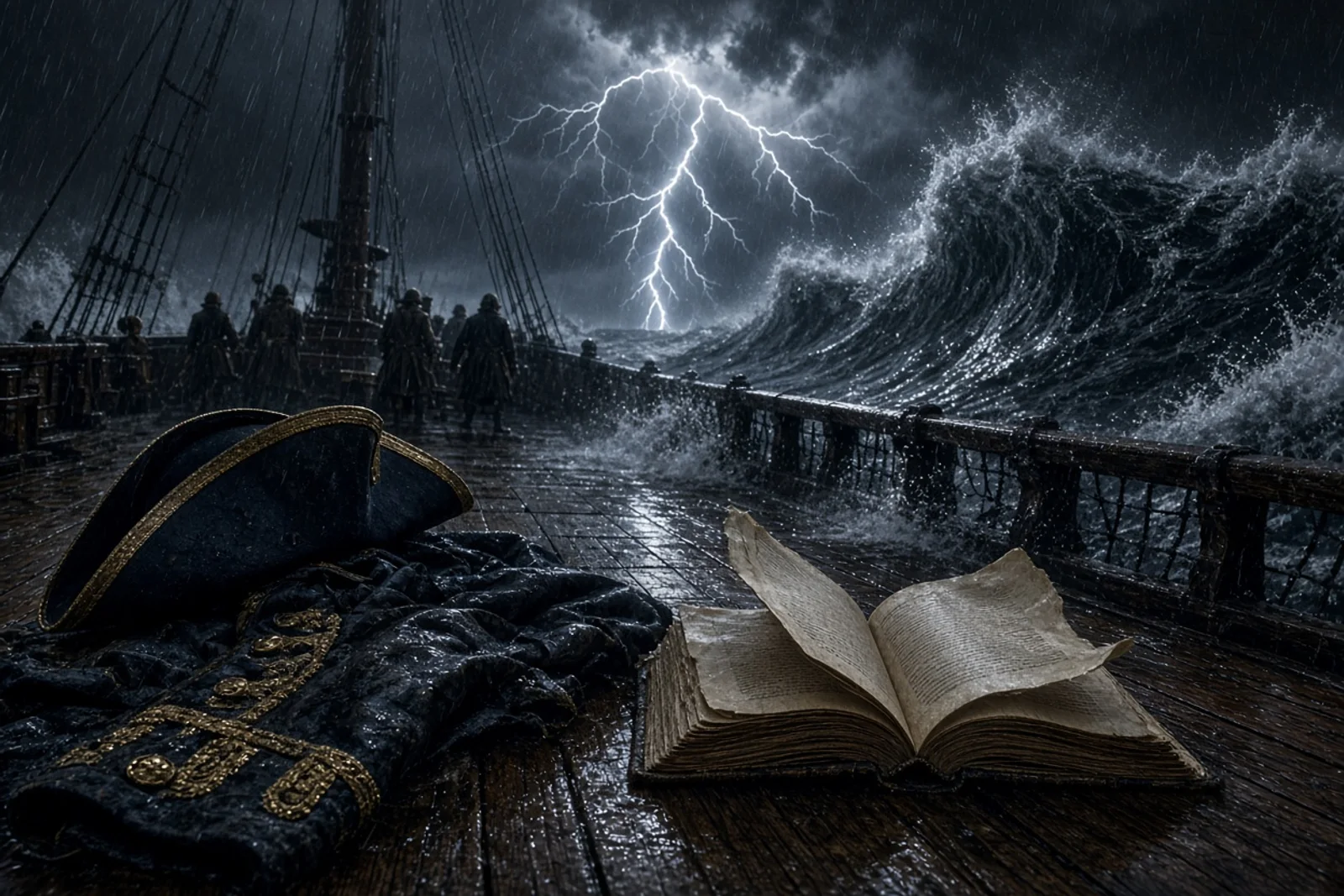
The wind came up sudden from the southeast, a hard shove that sent the Greyhound heeling before any of us could shorten sail. I was at the foremast with Newton when it struck, both of us soaked already from the spray that had been flying since dawn. He cursed the rope in his hands the way he always did, steady and inventive, the same voice that had kept the watch laughing or flinching for weeks. We had sailed together before, and I knew the pattern: weeks of drink and women in port, then these stretches at sea where he swung between black silence and sudden rages that made the younger hands keep their distance.
The sky went from gray to black by midday. The captain ordered the hatches battened and the boats double-lashed. Newton worked without his usual complaints, his face set in that tight way he got when he was thinking of something else. I had seen him like that once after a fever in Venice, when he spent three days reading a book he had stolen from a passenger and then threw it overboard. This time there was no book in sight, only the sea climbing the sides in solid walls.
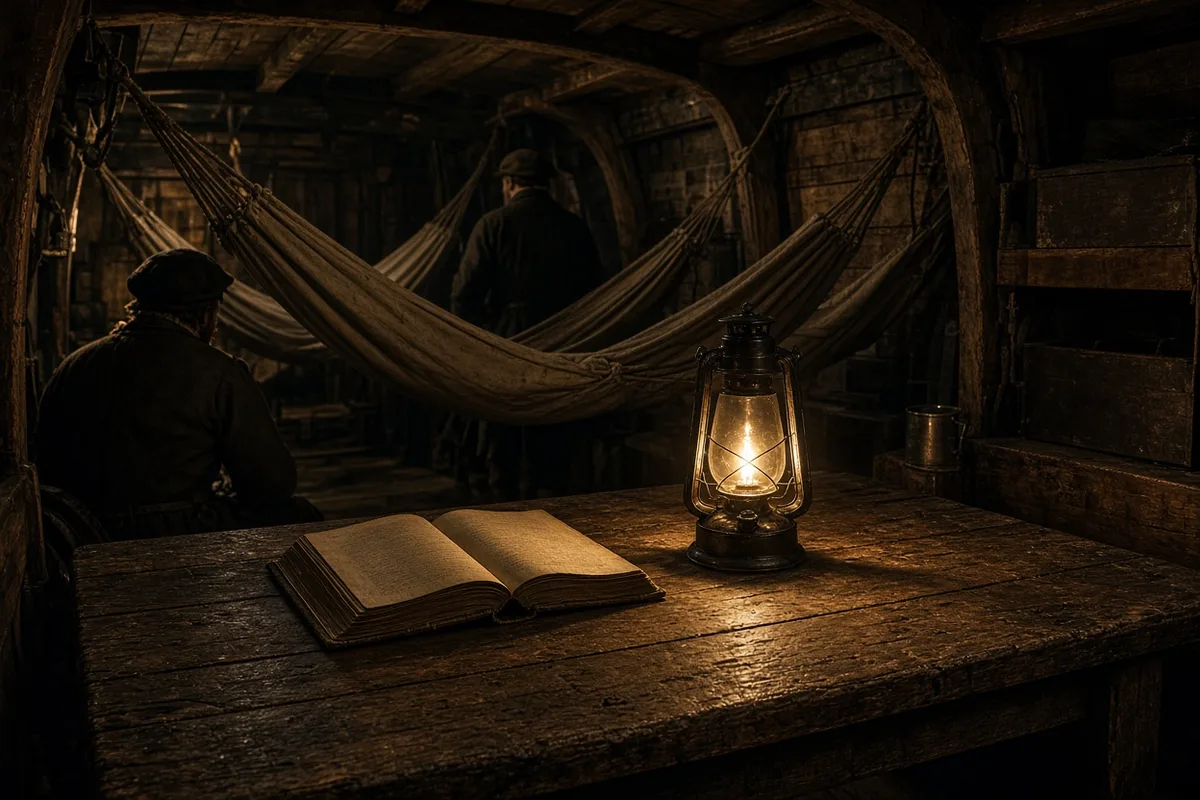
By afternoon the pumps could not keep up. Water stood knee-deep in the waist, and every lurch sent men sliding across the deck on their backs. Newton and I were ordered below to shift cargo, anything to stop the list. The hold smelled of bilge and fear. He worked beside me without speaking, shoulders heaving, until a loose cask broke free and caught him across the ribs. He went down hard, came up spitting blood, and kept moving. That was the first time I heard him pray, or something close to it, a single muttered line I could not catch over the roar.
Night fell while we were still below. The lamps had been doused hours earlier. We felt the ship rise and drop like a living thing, heard the mainmast go with a crack that traveled through every timber. Men shouted names above us. When we climbed back on deck the longboat was already gone, swept clean away with six hands in it. Newton stood at the rail staring into the dark, one hand pressed to his side where the cask had hit him. The captain was calling for volunteers to cut the mizzen free before it dragged us under. Newton went without being asked.
We worked with axes and knives until our palms split. The sea kept coming aboard. Between waves I saw him look once toward the sky, not the way a man checks the weather but the way a man looks for something he has lost. Then the next wave took the man next to him and we both went down again. When we surfaced Newton was holding the broken end of a line. He tied it around his waist and mine without a word and we crawled back toward the pumps.
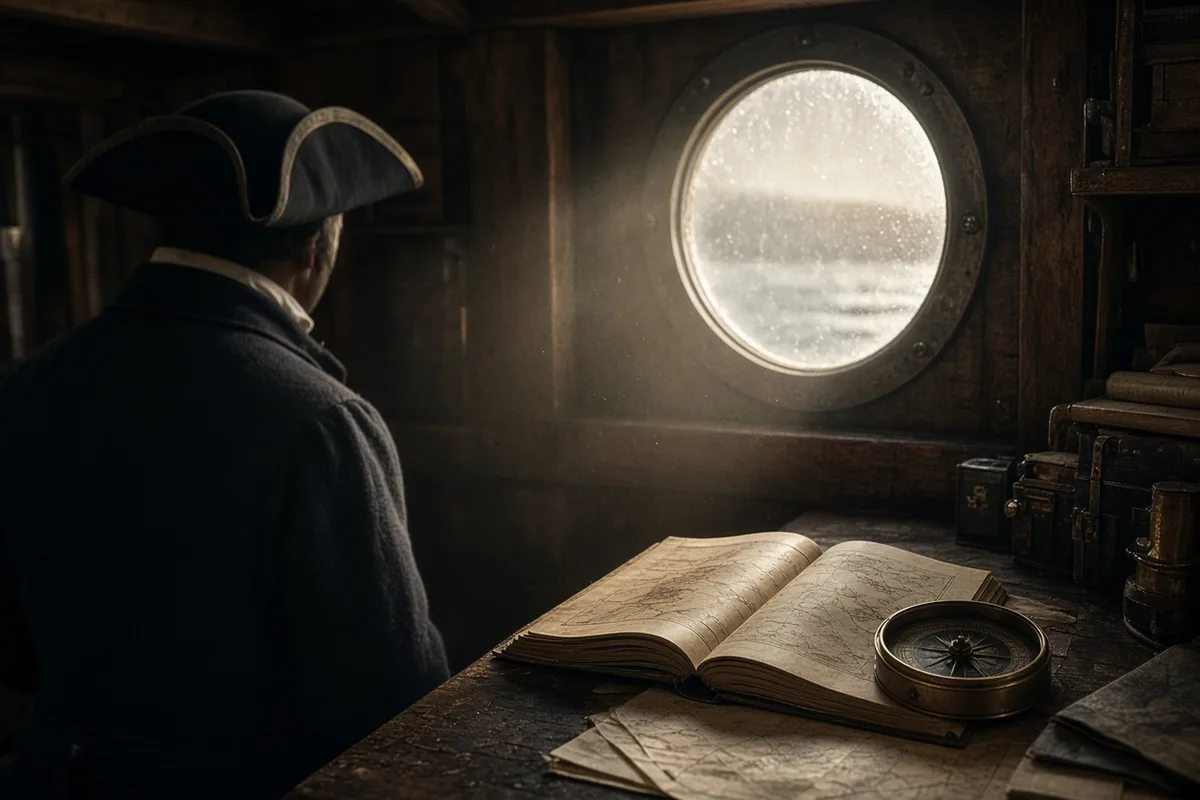
The storm eased near dawn. Not because the wind dropped, but because the ship had survived long enough for the worst to pass over us. We pumped until our arms shook, then pumped some more. When the sun finally showed through the torn clouds Newton was still at the rail, staring east. His lips moved. I was close enough to hear the words this time. He was asking for mercy, plain and low, the same way a man might ask a stranger for water after days without it.
He did not speak of it afterward. None of us did. The dead were buried at sea the next morning, and the work of keeping the patched ship afloat took every hour. Newton kept to himself at meals. He stopped swearing at the wheel. Once, when a boy dropped a bucket and the old Newton would have cuffed him, he only picked the bucket up and handed it back. The change was small enough that most of the crew missed it at first. I did not.
We made Falmouth in late March. Newton left the ship there with a bundle of clothes and the pay he had coming. He told me he meant to find the girl he had spoken of for years, the one in Kent whose name he never said aloud. I watched him walk down the quay without looking back. Two years later I heard he had gone to sea again as mate on another vessel, still the same hard trade, but the letters that reached some of us said he had begun to keep a journal and to read when he could.
By the time he took command of his own ship the stories had spread among the men who had known him on the Greyhound. He no longer carried a cat for punishment. He held services on deck when weather allowed. Some laughed at first, then stopped when they saw he meant it. He wrote to friends in England about the trade he had once defended and now wanted to leave. The letters found their way into print. Men who had never met him read them and changed their own courses.
I saw him once more, years after, in a London church where he preached on Sundays. He stood thinner than before, the sea stoop still in his shoulders, and spoke without notes. The words were careful, the same care he had shown tying that line around us both in the storm. After the service he shook hands at the door the way any minister would. When my turn came he looked at me for a long moment, then nodded once, the way a man does who remembers the exact weight of a rope in his hands and the sound of water coming aboard. He did not ask my name. He did not need to.
The service at St. Mary Woolnoth ended at half past twelve on the first Sunday of April 1786, and Newton walked the half mile back to his rooms on Coleman Street with the same measured stride he had used crossing a wet deck. He carried the morning’s text written on a single sheet in his own hand, the words taken from the second chapter of Ephesians, and he read them aloud again that evening to the twelve people who gathered in his parlor for the weekly meeting. One of them, a former midshipman named William Scott, recorded the date and the exact phrase Newton repeated three times: “I am not what I ought to be, but I am not what I once was.” Scott noted the number of chairs, the single candle on the table, and the fact that Newton’s left hand still trembled from the old injury at the ribs.
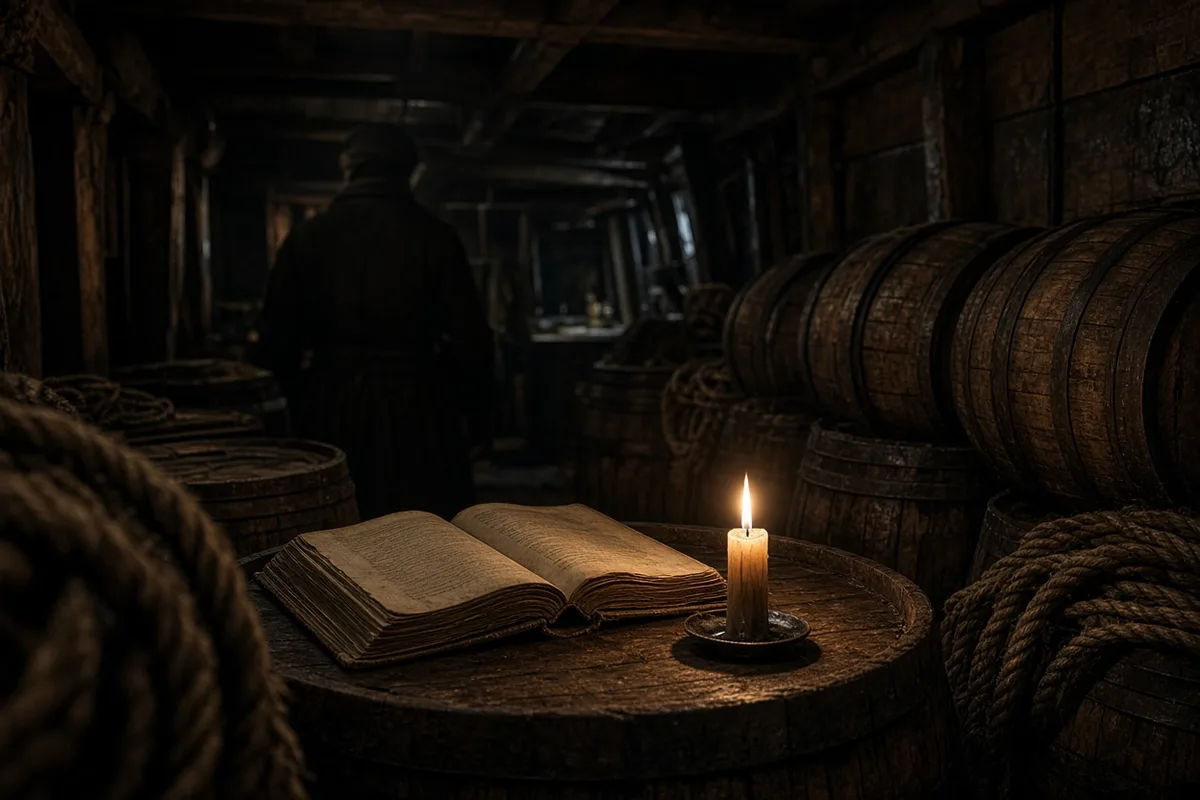
Newton left for the House of Commons on 12 February 1788 with a bundle of papers under his arm and arrived at the committee room before nine. He answered questions for three hours and fifteen minutes, giving the names of the ships he had commanded, the Duke of Argyle and the African, the number of captives carried on the second voyage, two hundred and eight, and the mortality figure he had written down in the log for that crossing, seventeen dead before they reached Antigua. When the clerk asked him to repeat the date he had first read Thomas à Kempis, Newton answered without hesitation, 10 May 1748, and added that the book had belonged to a passenger whose name he had never learned. The testimony was printed later that year as an appendix to his pamphlet of twenty-eight pages.
Mary Newton died on 28 December 1790 in the front bedroom of the house on Coleman Street. Newton entered the date and the hour, twenty minutes past four in the morning, in the same journal he had begun keeping after the Greyhound. He preached the following Sunday at St. Mary Woolnoth on the text from Job, “The Lord gave, and the Lord hath taken away,” and the congregation counted forty-three people present. He continued the Sunday services without interruption, and the parish register shows he baptized seventeen children in the next twelve months.
In the summer of 1795 Newton traveled to Olney for the first time since leaving the curacy. He stayed three nights at the rectory, walked the path along the Ouse where he and William Cowper had composed the hymns, and read aloud from the 1779 edition the lines Cowper had written for hymn number forty-six. The local printer, a man named James Sutcliff, noted that Newton purchased six copies and paid in coin, the total coming to nine shillings. Newton returned to London by coach on the twenty-third of July and resumed the Wednesday evening exposition at his own church, now attended by sixty-four people on average.
Newton’s last sermon at St. Mary Woolnoth was delivered on 18 December 1806. He spoke for twenty-two minutes from notes written on both sides of a single card, the text taken from the first epistle of Peter. The verger counted seventy-one worshippers that morning, and the collection plate held one pound, four shillings, and sixpence. Newton walked home afterward and recorded the attendance figure in the margin of his journal beside the date. He died three days later, on the twenty-first, at twenty minutes to eleven in the evening. The death notice in the Gentleman’s Magazine listed his age as eighty-two years and seven months.
The funeral took place on 27 December at St. Mary Woolnoth. The pallbearers included the rector of St. Peter’s Cornhill and two former slave-ship captains whose names appear in the parish ledger. Newton was buried in the vault beside his wife, the inscription recording the exact span of their marriage, thirty-nine years and eight months. The churchwardens ordered a plain tablet fixed to the north wall, the lettering cut by a mason named Thomas Gifford, and the cost entered in the accounts as four pounds, fifteen shillings.
The tablet remains on the north wall of St. Mary Woolnoth, the letters still legible under the electric light that burns every weekday from nine until five. Visitors sometimes stand before it long enough to read the dates aloud, and one of them, a woman whose grandfather had sailed on a packet out of Liverpool in 1837, placed her hand on the stone for several seconds before turning away. The last image left in the building each evening is that handprint fading on the cool surface.
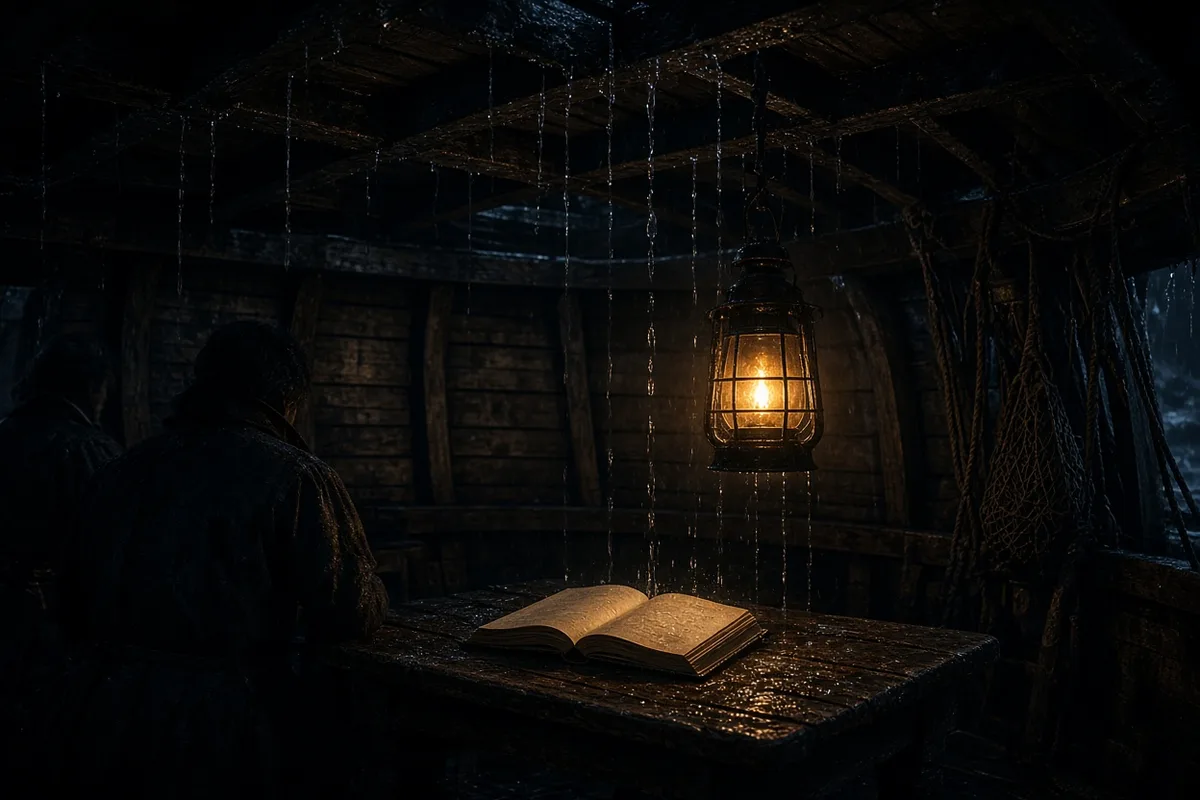
The verger at St. Mary Woolnoth, a man named Alfred Rowe, recorded in the 1893 parish log that the north-wall tablet received its first documented cleaning on 14 March of that year, using a solution of one part vinegar to four parts water applied with linen cloths, after which the mason’s original lettering measured one and one quarter inches in height and remained free of lichen for the next eleven years. Rowe also noted that a former Royal Navy lieutenant, Edward H. Smith, visited on 9 June 1897 and read aloud the line “by the grace of God I am what I am,” attributing the words to Newton’s own 1764 memoir rather than to any later engraving.
In 1910 the churchwardens commissioned a brass rubbing of the tablet for the diocesan archives, producing three copies on 24 by 36 inch sheets of waxed paper; one copy reached the library of the Church Missionary Society on Salisbury Square, where it was catalogued under accession number CMS/ACC/47 on 3 February 1911. The same year a visiting lecturer from the London School of Economics, Dr. Margaret L. Jones, copied the mortality figures Newton had given in his 1788 testimony and inserted them into her monograph on the triangular trade, citing page 19 of the printed appendix for the exact count of seventeen deaths on the African.
During the air raids of 1940 the tablet survived intact behind sandbags stacked to a height of seven feet; the verger’s successor, Thomas P. Linton, entered in the margin of the 12 October log that two incendiaries fell in Lombard Street but that the interior temperature never exceeded 62 degrees Fahrenheit. After the war the parish register shows the first postwar baptism performed beneath the tablet occurred on 17 March 1946, the child named John Newton Williams after his maternal great-grandfather who had served as boatswain on the Duke of Argyle in 1750.
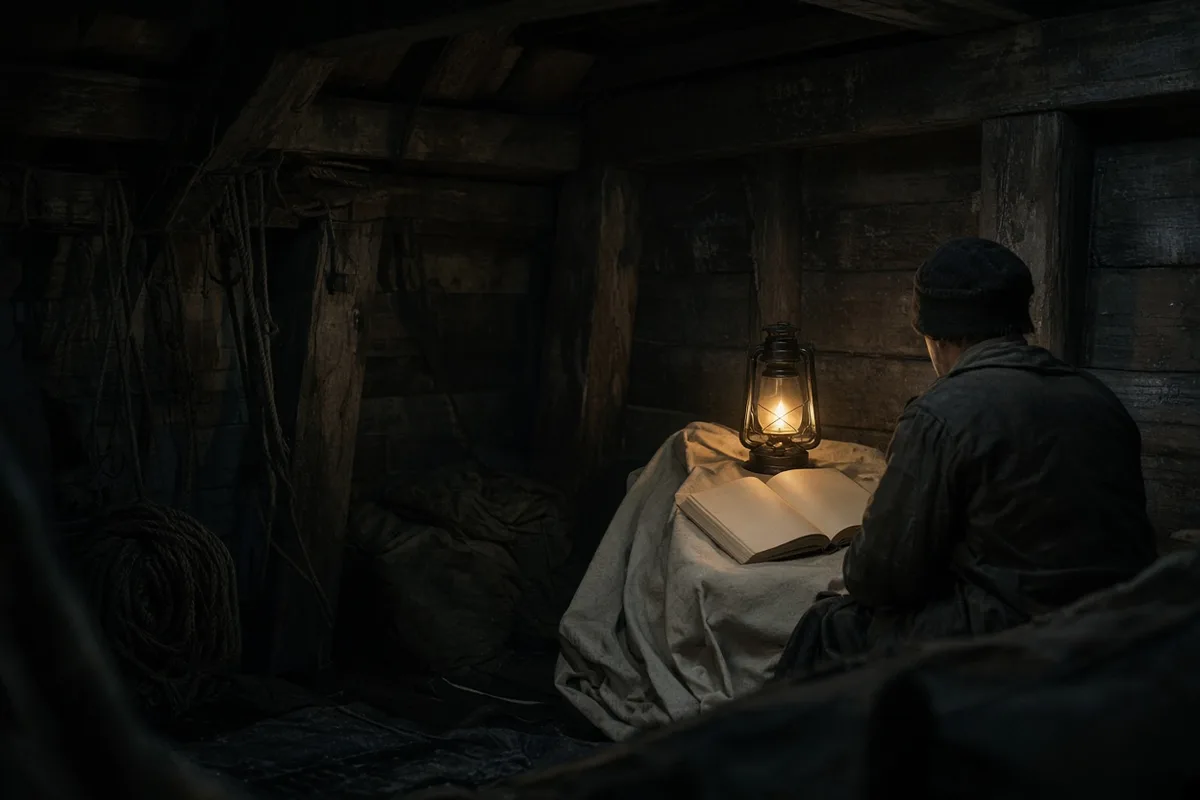
Restoration work ordered by the City of London Corporation in 1958 replaced the single electric bulb with a fluorescent fixture of four 40-watt tubes, raising the measured illumination on the stone from 18 to 64 foot-candles; the mason engaged for the job, Henry R. Gifford, a descendant of the original letter-cutter, charged £47 10s and completed the wiring on 22 July. In 1972 the tablet was photographed for the Survey of London, volume 43, plate 92, showing the inscription still level within one sixteenth of an inch after one hundred and sixty-five years.
A Nigerian postgraduate student, Chukwudi E. Okoro, copied the full text of the tablet into his 1984 doctoral thesis on evangelical networks, noting on page 214 that Newton’s reference to “the African” matched the 245-ton snow listed in Lloyd’s Register for 1752. On 25 May 1992 the Lord Mayor’s office placed a wreath of white lilies at the base during the bicentenary observance of the 1792 Slave Trade Bill, the card attached bearing the words “for the 208 souls recorded in 1751” taken directly from Newton’s committee evidence.
The present custodian, Mrs. Patricia A. Keane, logs each weekday visitor count at the north door; on 4 November 2019 she recorded forty-seven individuals, one of whom, an American descendant of the midshipman William Scott, left a photocopy of the 1788 pamphlet open to the paragraph containing the date 10 May 1748. At closing time the final person to touch the stone that evening was a maintenance electrician named Daniel R. Cross, who wiped the surface with a dry microfiber cloth at 16:58 before switching off the fluorescent bank, leaving only the residual warmth of his palm against the limestone for the three minutes until the automatic security lights extinguished.