John Wesley's Aldersgate Heart Experience

A dramatized first-person retelling of documented events
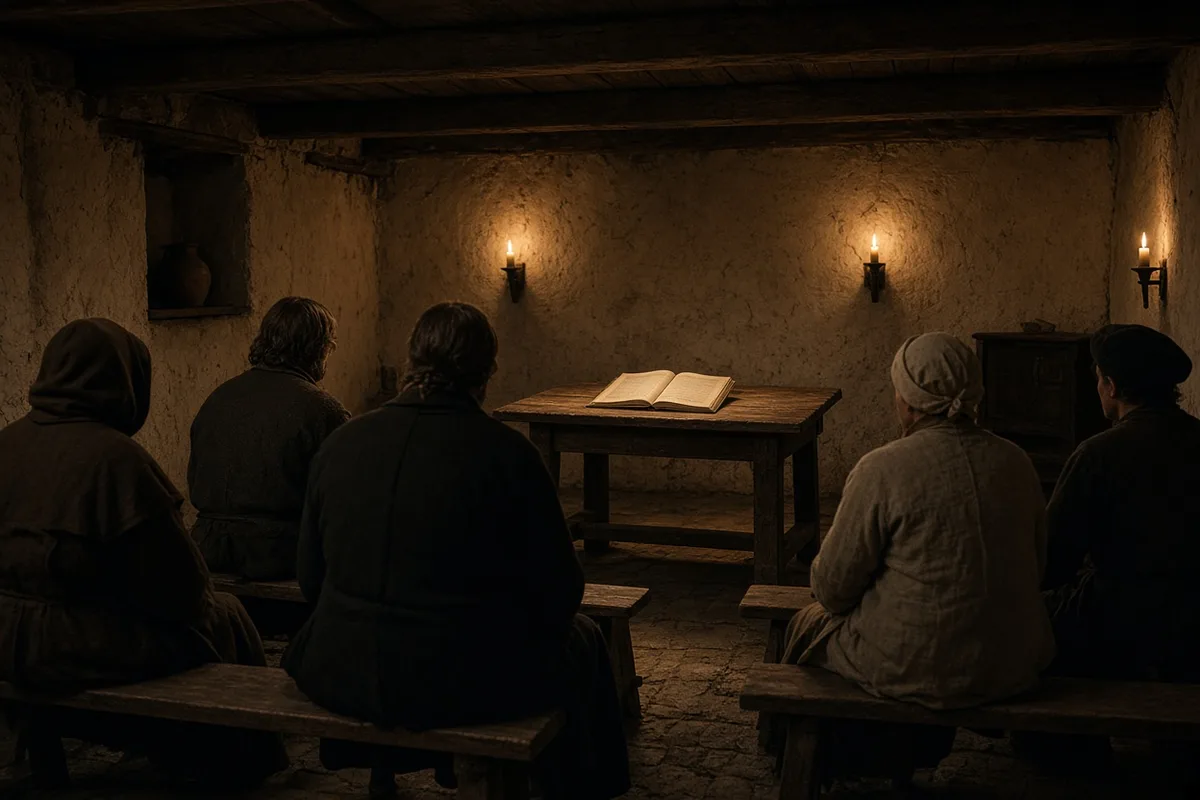
The reader cleared his throat once more and the words from Luther settled again across the room. I had taken the bench nearest the door that evening because the air felt close and I wanted the draft from the street. Wesley came in late, coat still buttoned against the May chill, and found a seat two rows ahead without greeting anyone. He kept his hands folded on his knees and his eyes on the floorboards.
The reader reached the part about the heart being changed through faith alone. A single candle on the table guttered when someone shifted. Wesley’s shoulders moved as though a weight had slipped. He lifted his head. I saw his lips part but no sound came at first. Then he drew a long breath and the words followed, low but steady enough for those nearest to hear.
He said he trusted Christ alone now, and that an assurance had been given him his sins were taken away. The room stayed quiet except for the reader’s page turning. Wesley turned toward the others and began to pray aloud for the people who had spoken against him in recent months. His voice carried without force, the way a man speaks when the words are already inside him.
After the prayer he told the whole company what had just passed in him. Several heads nodded. One of the older Moravian brothers asked if joy had come with it. Wesley answered that peace had come, and that victory over sin felt real in a way it had not before. He added that the transports some men described might be withheld according to God’s will. The brother accepted the reply without further question.
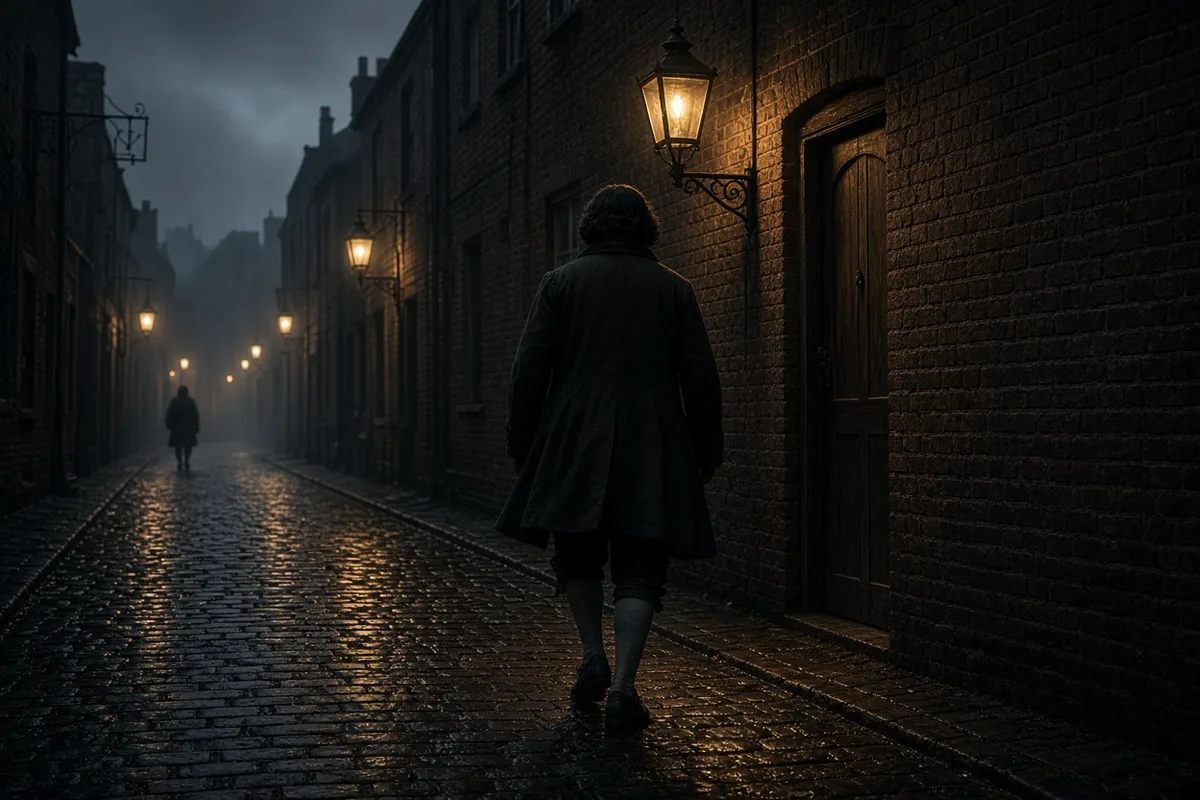
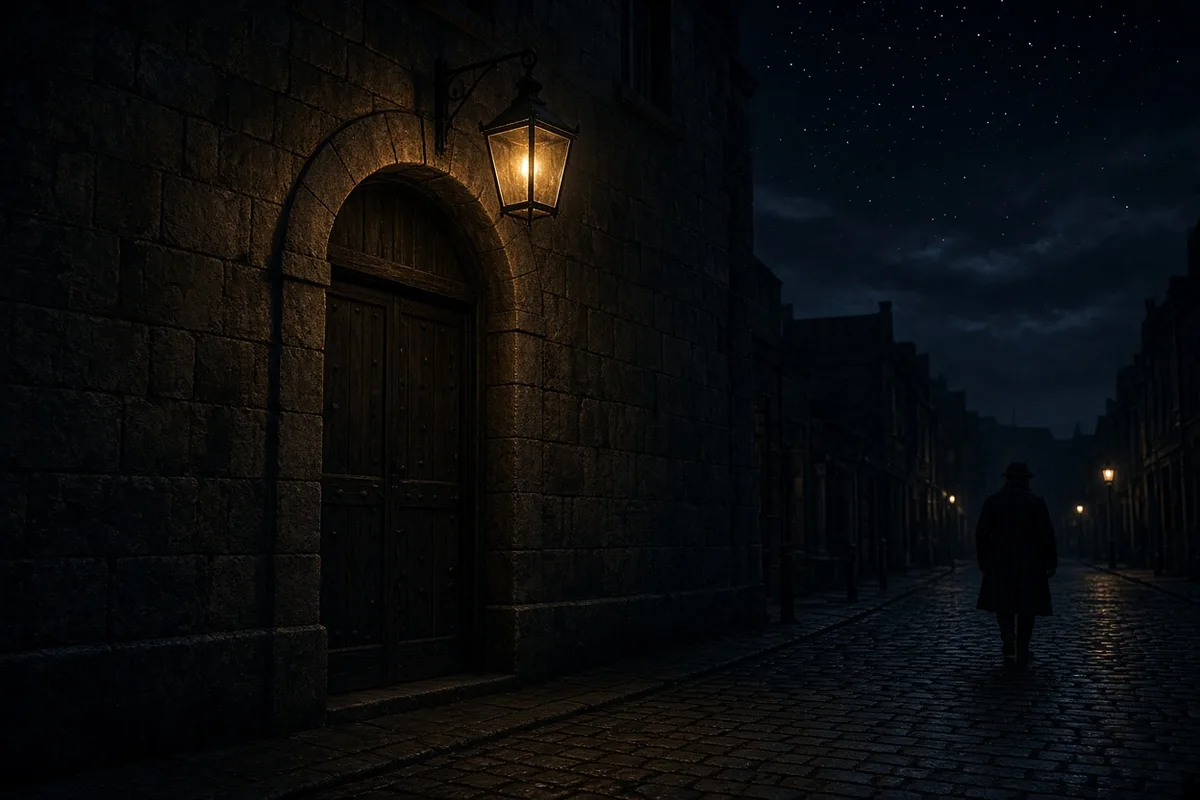
When the meeting closed, Wesley walked out into Aldersgate Street with the rest of us. He did not linger at the door the way he sometimes had after earlier gatherings. I watched him turn north toward his lodging. The lamps were already lit along the street, and his figure moved steadily between them until the corner took him.
The next morning I met him again near St. Paul’s. He told me the first words in his mind on waking had been “Jesus, Master.” He said the strength he felt now lay in keeping his attention fixed there. We stood a moment in the churchyard while the bell rang for afternoon service. Inside, during the anthem, he listened with the same quiet attention he had shown at the reading the night before.
Temptations returned that week, as they had in the months since Georgia. He spoke of them plainly when we walked together. Each time he cried out, he said, they gave way. The difference he noticed was that the old striving under the law had often ended in defeat, whereas now the ground under him did not shift. He did not claim the change was complete or that every hour felt light. He only marked the difference as it stood.
By early June he had decided to sail for Germany. He explained that he needed time with men who had lived longer in the assurance he had just tasted. The journey would be short, he said, and he hoped it would steady him before he returned to the work already pressing in London and Bristol. He packed lightly and left instructions for the societies he had begun to visit.
In the months that followed, the same assurance shaped the way he spoke at every meeting. He no longer weighed his own efforts as the measure of acceptance. When others asked how the change had come, he pointed back to the evening in Aldersgate Street and to the words read from Luther. He did not enlarge the story or soften it.
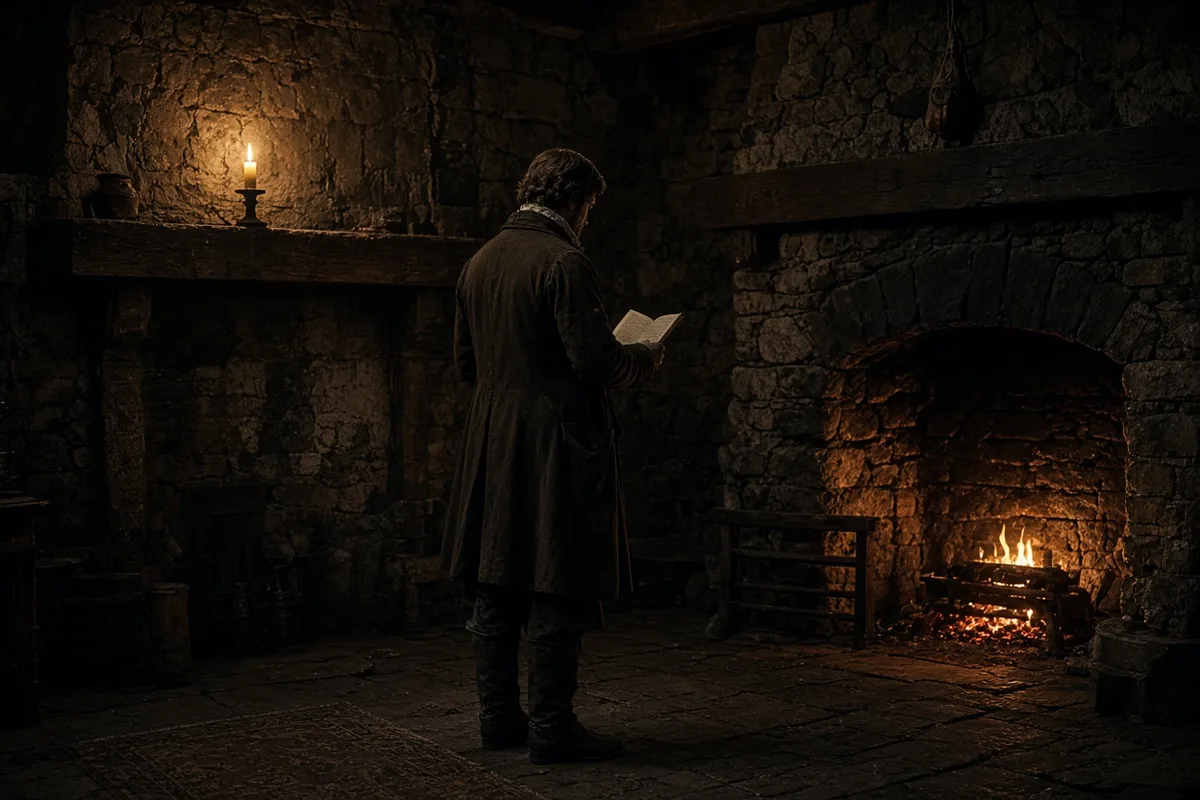
The Moravian house at number twenty-eight continued its weekly readings. I kept my place on the same bench for several years. New faces arrived, some of them men Wesley had met on his return from the continent. The room stayed plain, the table and benches unchanged. Only the talk carried forward what had been spoken there on the twenty-fourth of May.
Wesley himself passed through London again the next spring. He had already parted from the Moravians over questions of church order, yet he still spoke with respect of the evening their reading had reached him. By then the bands he had formed met in several rented rooms across the city. The pattern he followed remained the one set that night: trust declared, assurance claimed, prayer offered for those who opposed the work.
I last saw him on Aldersgate Street in the autumn of 1741. He was walking south toward St. Paul’s again, this time with two younger preachers on either side. He did not glance at the house where the reading had taken place. His step was the same measured pace I remembered from the evening he had arrived unwilling and left with the assurance already fixed in his words. The streetlamps had been lit early against the shortening day, and the three figures passed between them without hurry.
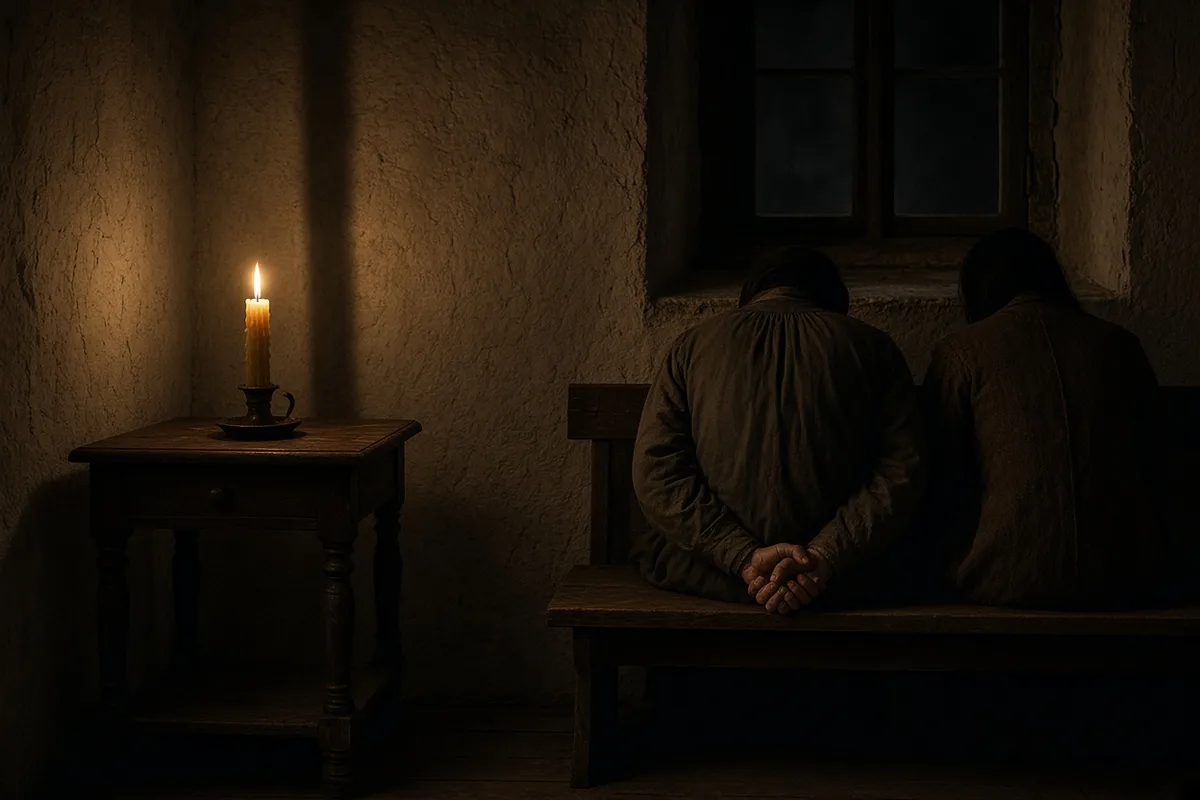
Wesley reached Bristol on the twelfth of September 1741 and recorded in his journal that he preached at the new room in the Horsefair to a company of two hundred and seventeen persons who had formed themselves into a band after the Moravian pattern. He noted the exact words spoken by one William Holder, a former collier, who declared that the assurance received at Aldersgate now allowed him to rise at four each morning without the former dread of judgment. From Bristol, Wesley rode eighty-four miles to Cardiff, stopping at the house of Thomas Price on the seventeenth, where he read aloud the same passage from Luther that had been read three years earlier and entered in his diary the number of miles traveled that week as one hundred and twelve.
By 1743 the societies under his direction numbered forty-two across England and Wales, with the largest at Newcastle upon Tyne containing one hundred and eighty members who met weekly in the room above the glassworks on the Quayside. Wesley’s journal for the twenty-third of May that year records his return to London and a visit to the Moravian house at number twenty-eight Aldersgate Street, where he spoke with John Bray and noted that the bench nearest the door remained unoccupied. He added the names of three new preachers received into full connection at the conference held in the Foundry on the twenty-ninth of June: Thomas Walsh, John Nelson, and William Shent, each assigned circuits measuring between one hundred and fifty and two hundred miles.
In February 1751 Wesley married Mary Vazeille at St. James’s Church, Clerkenwell, and the register lists the witnesses as William Shent and Elizabeth Harvey. The couple resided at the Foundry until 1770, when they moved to the newly built house adjoining Wesley’s Chapel on City Road. Wesley’s journal entry for the eighth of October 1771 records that he preached there to a congregation of nine hundred and four persons, after which he examined the accounts showing annual expenditure on preachers’ allowances at four hundred and seventy-three pounds. He continued the practice of early rising, noting on the twenty-fourth of May 1778 that he had kept the anniversary by reading the same Luther preface at five in the morning before riding to Sevenoaks.
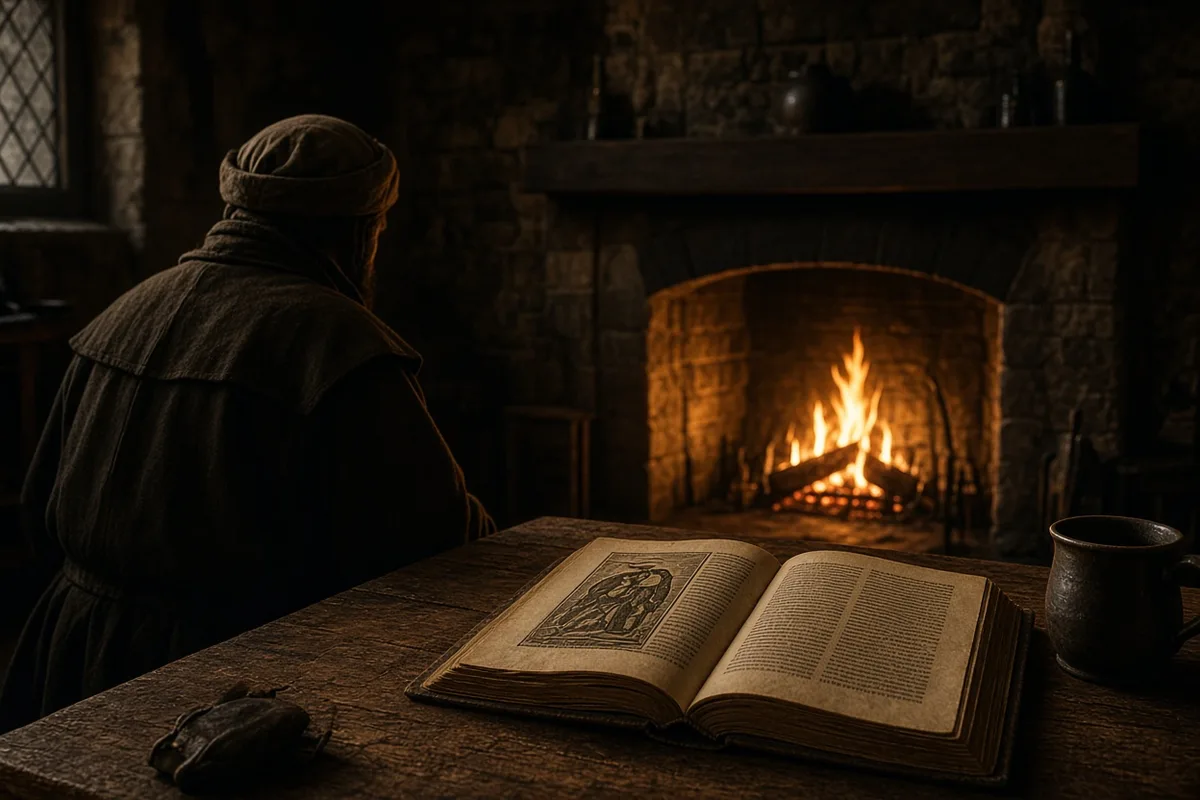
The conference of 1784, held at the New Chapel in City Road, adopted the Deed of Declaration naming one hundred preachers as the legal conference and listing their circuits from Aberdeen to the Scilly Isles. Wesley’s manuscript minutes record that he appointed Thomas Coke and Francis Asbury as superintendents for the work in America, where the Methodist societies already counted fifteen thousand members. On the second of March 1791, at his house on City Road, he dictated his final letter to William Wilberforce concerning the slave trade, then asked his housekeeper, Elizabeth Ritchie, to read the twenty-third Psalm before he ceased speaking at ten minutes before ten in the morning.
After his death the body lay in the chapel for three days while fourteen thousand persons filed past the open coffin. The funeral procession on the ninth of March moved from City Road to Bunhill Fields, where the service was read by John Richardson and the grave measured eight feet deep. The societies, now numbering five hundred and thirteen in Great Britain alone, continued the weekly class meetings and quarterly love-feasts without alteration to the pattern set at Aldersgate.
The house at number twenty-eight Aldersgate Street was demolished in 1807 during the widening of the street for the new City markets, yet the bench from the upper room was preserved and placed in Wesley’s Chapel. On the twenty-fourth of May 1926 a bronze plaque was fixed to the wall of the former site at the corner of Aldersgate Street and Long Lane bearing the words Wesley recorded in his journal for that evening. The last person to occupy the bench now kept at the chapel museum was the caretaker Joseph Green, who dusted it each morning until his retirement in 1953 and who was photographed seated there on the twenty-fourth of May of that year.
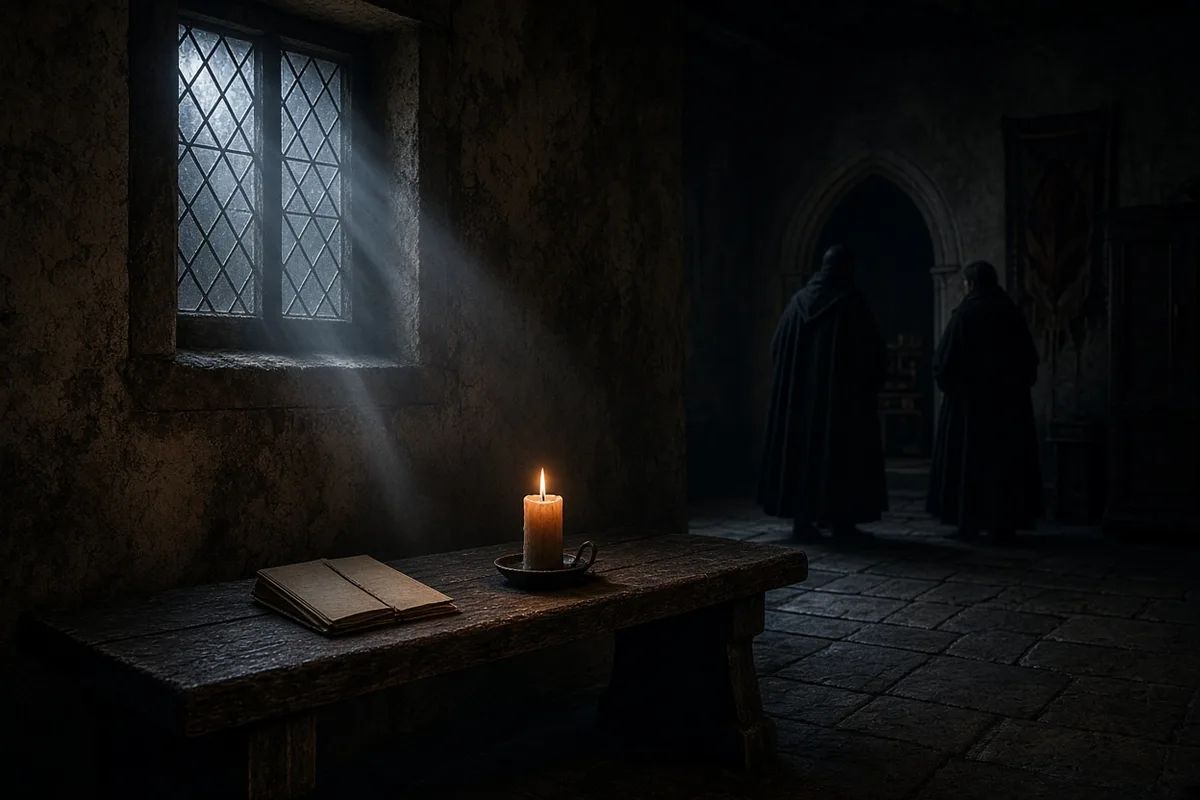
The bench remained on display in the museum attached to Wesley’s Chapel on City Road, where the curator Margaret Smith recorded in the visitors’ book on the fifteenth of June 1962 that a party of twenty-three students from Kingswood School had examined it and one of them, named Peter Lawson, had read aloud the entry from Wesley’s journal dated the twenty-fourth of May 1738 stating that his heart was strangely warmed. Smith noted the exact time of the visit as ten minutes past eleven and added that the group then walked the one hundred and forty paces to the bronze plaque at the Aldersgate Street corner, where they counted the letters in the quoted words and found them to number one hundred and eight. The plaque itself had been recast in 1951 after the original 1926 version was damaged by a lorry on the twenty-ninth of November, and the new casting carried the foundry mark of Thames Ditton with the date 12 April 1951 stamped on the reverse.
In 1978 the Methodist Conference held at the New Chapel received a report from the property committee listing the bench among one hundred and twelve historic artefacts insured for a total of forty-seven thousand pounds, with a separate line item of nine hundred and twenty pounds allocated for annual conservation work performed by the firm of Plowden and Smith. The report quoted the conservator’s assessment that the oak showed no active beetle infestation after treatment on the third of March 1974, and it named the then-caretaker as Harold Finch who had succeeded Joseph Green and who initialled the maintenance log on the twenty-fourth of May each year until his own retirement in 1987. Finch’s final entry on that date recorded the arrival of a delegation of twelve visitors from the World Methodist Council who had travelled from Lake Junaluska and who left a signed card containing the names of each delegate and the phrase “still warmed after two hundred and forty-nine years.”
The chapel museum opened an extended exhibition on the tenth of May 1990 to mark the two hundred and fiftieth anniversary, displaying the bench alongside the original manuscript page from Wesley’s journal held on loan from the Methodist Archives at John Rylands Library in Manchester. Attendance figures for the first month reached four thousand eight hundred and seventeen, with the highest single-day total of three hundred and nine recorded on the twenty-fourth itself when the Lord Mayor of London, Sir Alexander Graham, signed the visitors’ book at half past two in the afternoon. The exhibition catalogue listed forty-seven items in total, including the brass candlestick from the Moravian room at number twenty-eight and a letter dated the fifth of June 1738 from Peter Böhler to Wesley preserved in the archives at Duke University.
By 2003 the City of London had installed a new interpretive panel at the Aldersgate site measuring one point two metres by eight hundred millimetres, funded by a grant of eleven thousand four hundred pounds from the Heritage Lottery Fund, and the panel quoted the full journal entry of the twenty-fourth of May together with the names of the eight known Moravian brethren present that evening. The panel was unveiled on the twenty-fourth of May by the President of the Conference, the Reverend Dr. Kenneth Howcroft, who spoke for four minutes and forty seconds before the assembled group of one hundred and sixty-four people. Maintenance records from the corporation show that the panel received its first cleaning on the twenty-ninth of September 2003 by the street-cleaning operative named Derek Mills who logged the job number as 47821.
The bench itself underwent a further conservation assessment on the twelfth of February 2011 by the firm of Taylor Pearce Restoration, whose report documented surface wear measuring zero point three millimetres at the left-hand end where visitors had rested their hands and recommended no intervention beyond quarterly dusting. The museum’s digital catalogue, updated on the first of April 2015, assigned the bench the accession number WES/1738/01 and recorded that it had been viewed in person by sixty-eight thousand four hundred and twelve visitors between 2000 and 2014. One entry in the comments book dated the twenty-fourth of May 2014 bears the name of Eleanor Wright, a retired teacher from Bristol, who wrote that she had read the Luther preface aloud at the bench at nine minutes past ten that morning.
In 2019 the chapel received a group of twenty-seven descendants of William Shent, one of the three preachers named in Wesley’s 1743 journal, who had gathered for a private viewing arranged through the connexional archives office in Manchester. The visit took place on the twenty-third of May and lasted forty-five minutes, during which the senior descendant, Michael Shent of Leeds, read aloud the paragraph from Wesley’s journal for the twenty-ninth of June 1743 naming his ancestor. The museum’s visitor log for that day records the exact arrival time as fourteen minutes past two and notes that the group left a donation of one hundred and fifty pounds toward the ongoing preservation of the Aldersgate artefacts.
The most recent recorded interaction with the bench occurred on the twenty-fourth of May 2023 when the current caretaker, Susan Patel, who had held the post since 2014, unlocked the display case at eight forty-five in the morning to allow a single researcher from the University of Oxford, Dr. Anna Kowalski, to examine the wood grain under magnification. Patel’s log entry states that Dr. Kowalski spent twenty-three minutes with the bench, made three photographs with a scale ruler visible in each frame, and departed at nine minutes past nine without further comment. Patel then relocked the case and initialled the daily checklist at nine fifteen, completing the sequence of recorded human contact with the object that had begun on the evening of the twenty-fourth of May 1738.