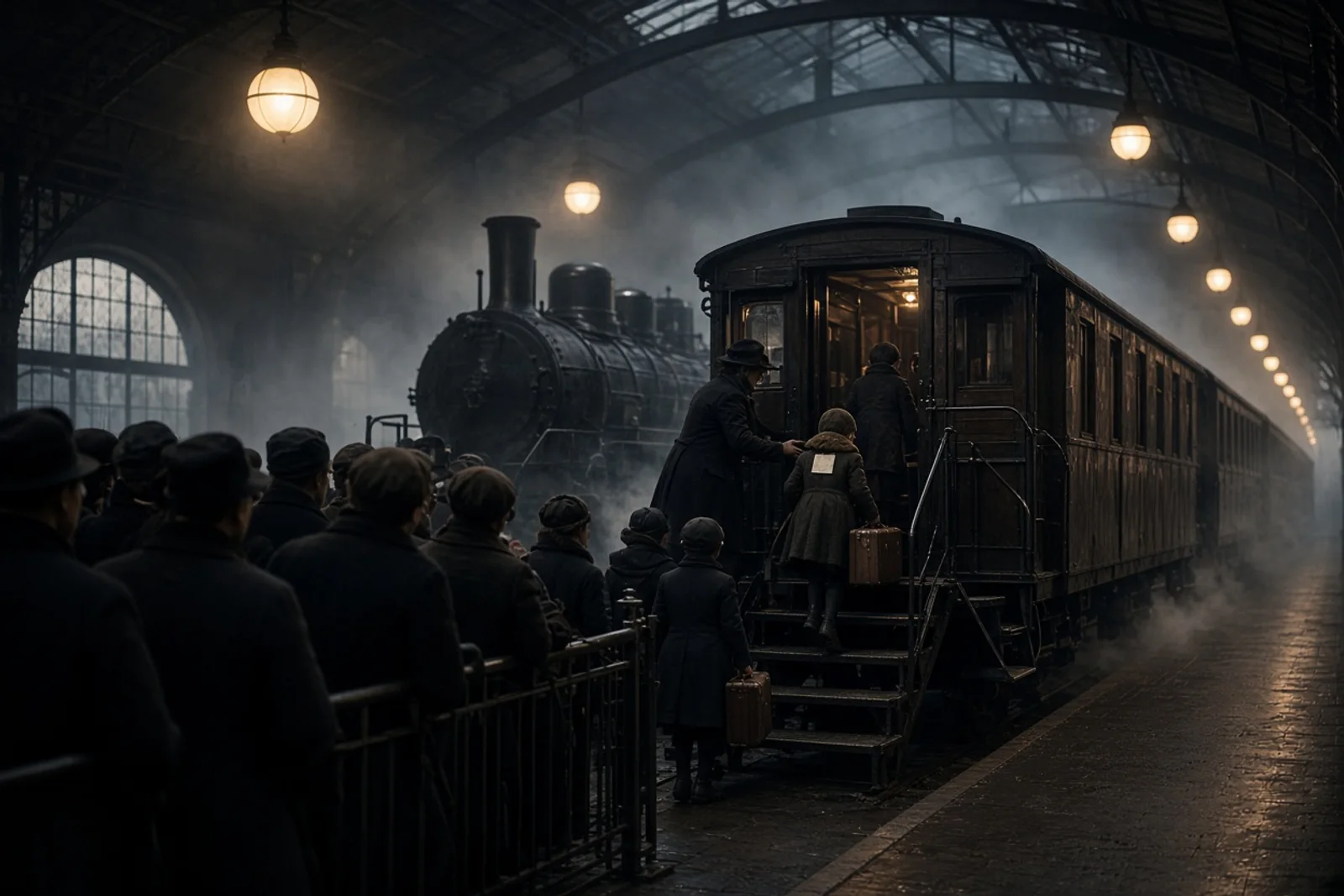
Jonas Salk Gives Away Polio Vaccine
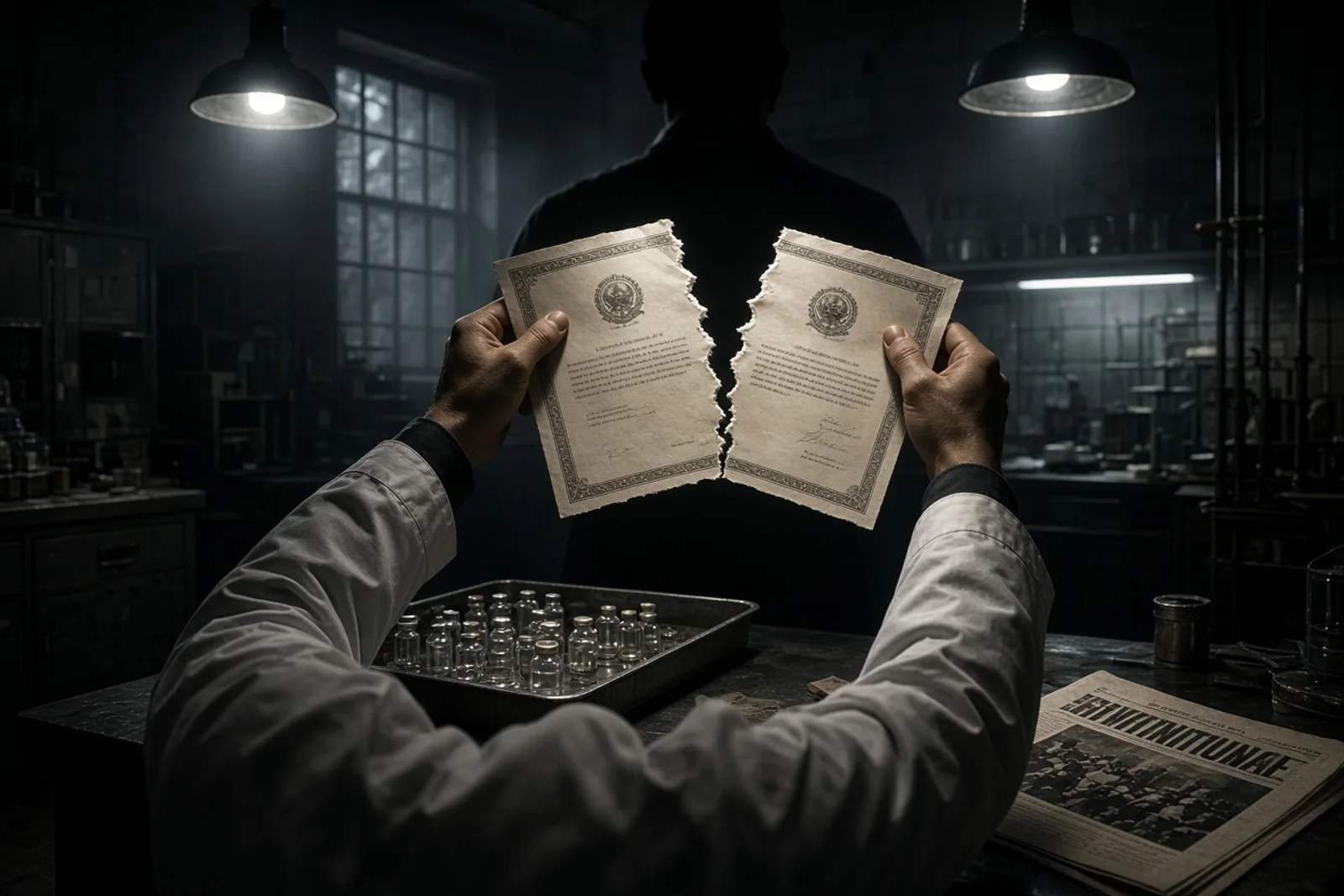
The lights hung low over Rackham Auditorium, thick with cigarette smoke and the scrape of folding chairs. I stood against the rear wall with the other assistants from the evaluation center, clipboard pressed to my chest, watching the photographers adjust their tripods along the aisles. Five hundred scientists and reporters filled every seat. The air smelled of wet wool and nervous sweat.
Outside, April rain streaked the windows. Inside, no one spoke above a murmur. We had waited two years for this moment. Every case report, every blood sample, every telephone call from the field had passed through our hands. Now the numbers sat in a single stack on the table below the stage.
Thomas Francis stepped to the microphone at ten-twenty. He looked smaller than I remembered from the lab in Pittsburgh, his voice steady but tight. He read the first line without pause: the vaccine works. It is safe, effective, and potent. A sound moved through the room like a single held breath released at once. Someone near me dropped a pen and did not bend to pick it up.
Francis continued. In the placebo areas, sixty-seven percent of the polio cases had been paralytic. Among the fully vaccinated children, the figure was far lower. He gave the protection range as eighty to ninety percent against the paralytic form. The words landed one by one. No one interrupted. The cameras kept rolling.
I thought of the ward back in Pittsburgh, the iron lungs lined against the wall, the sound of the bellows pumping. A boy I had helped admit the summer before had died inside one of those machines. His chart still carried the date in my handwriting. Here, the numbers on Francis’s pages were meant to change that arithmetic.
Jonas Salk sat in the front row, shoulders square, hands folded. He did not smile when the applause started. He looked instead at the page in front of him, as if checking a column he already knew by heart. Reporters surged toward the microphones the moment Francis finished. Questions came from every direction at once.
Salk answered each one without notes. The vaccine had been grown in monkey kidney cells, inactivated with formalin, tested first on his own family. He spoke of the children in the field trial who had received the shot and those who had not. His voice stayed level. Only when a reporter asked about ownership did the tone shift.
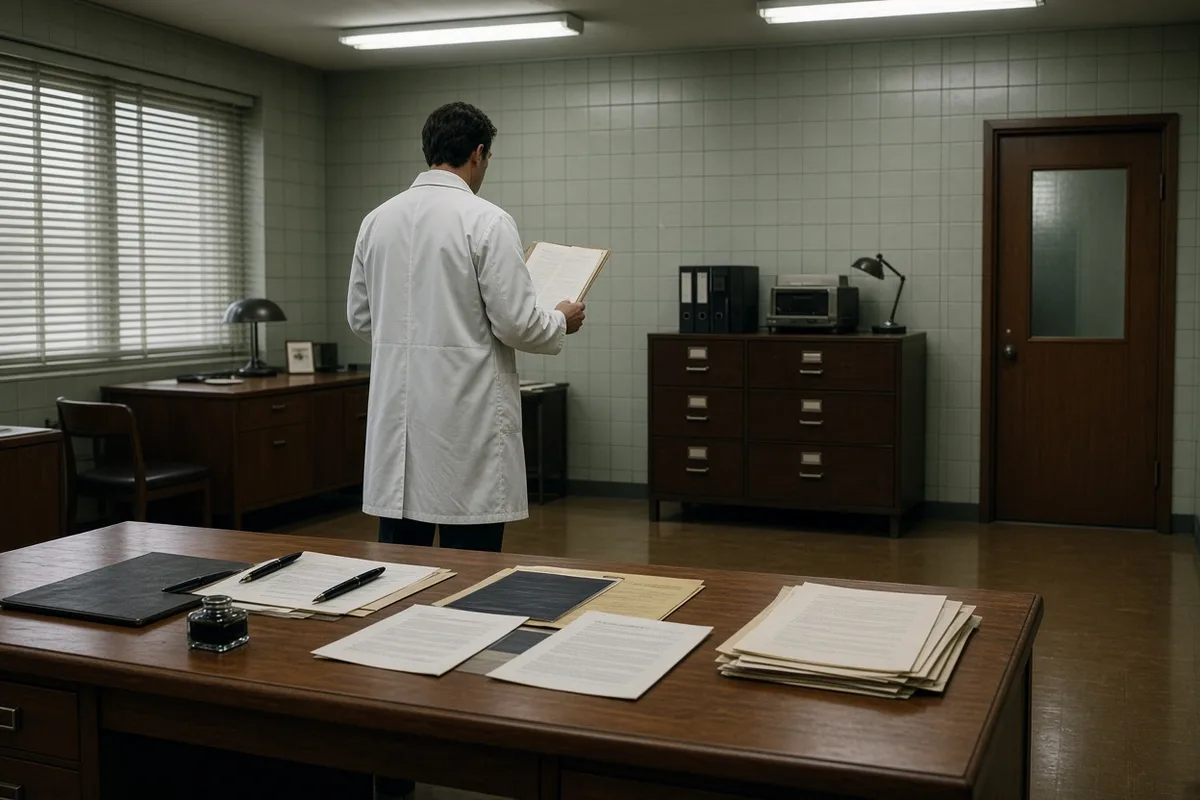
The question came late in the afternoon, carried live on the network feed. Edward R. Murrow’s voice reached the auditorium speakers from the New York studio. Who owns the patent on this vaccine, Dr. Salk? Salk leaned toward the microphone. The people, I would say. There is no patent. Could you patent the sun?
The line moved through the room like a current. Several reporters stopped writing. Others kept their pencils moving, copying the words exactly. Salk did not add anything further. He waited for the next question.
By evening the news had reached the hospital wards across the country. Parents stood at nurses’ stations asking when the shots would arrive. In Pittsburgh the March of Dimes offices stayed open past midnight, fielding calls from state health departments. The formula had already been shared with manufacturers. No one needed permission to begin production.
I rode back to the lab with two other assistants. None of us spoke for the first hour. The car heater rattled. Rain still fell. One of them finally said the trial had involved more than a million eight hundred thousand children. The number felt too large to hold at once.
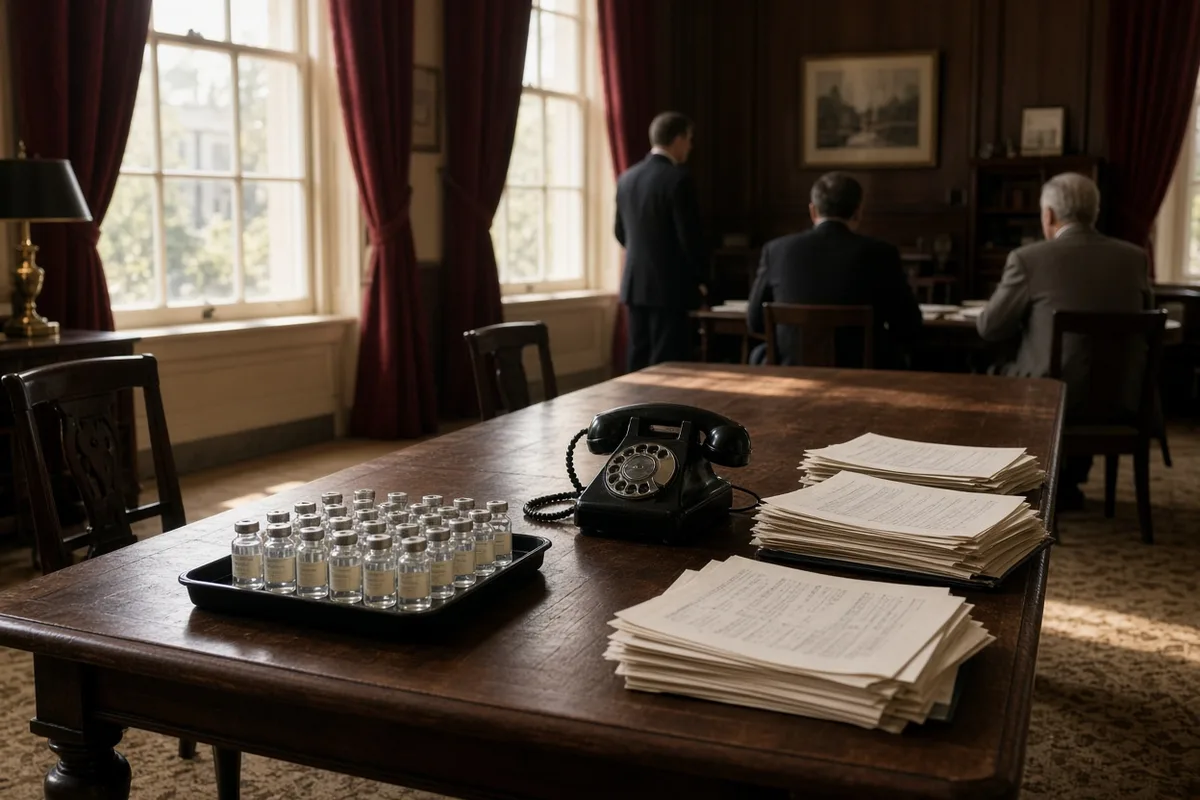
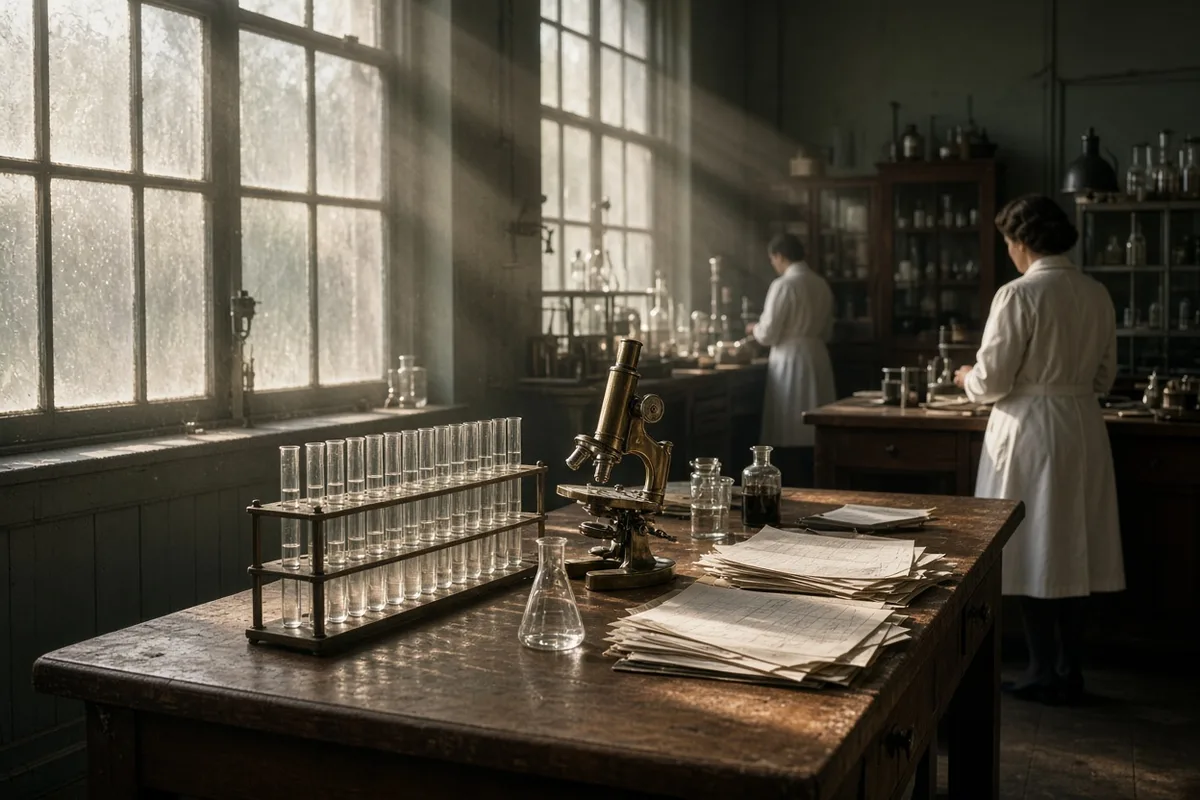
Salk returned to Pittsburgh the next day. He met with his team in the same basement rooms where the inactivation studies had run for years. Elsie Ward and Julius Youngner sat at the long table, the pH indicator charts still pinned to the corkboard behind them. Salk thanked them for the work that had made the announcement possible. He did not mention the patent question.
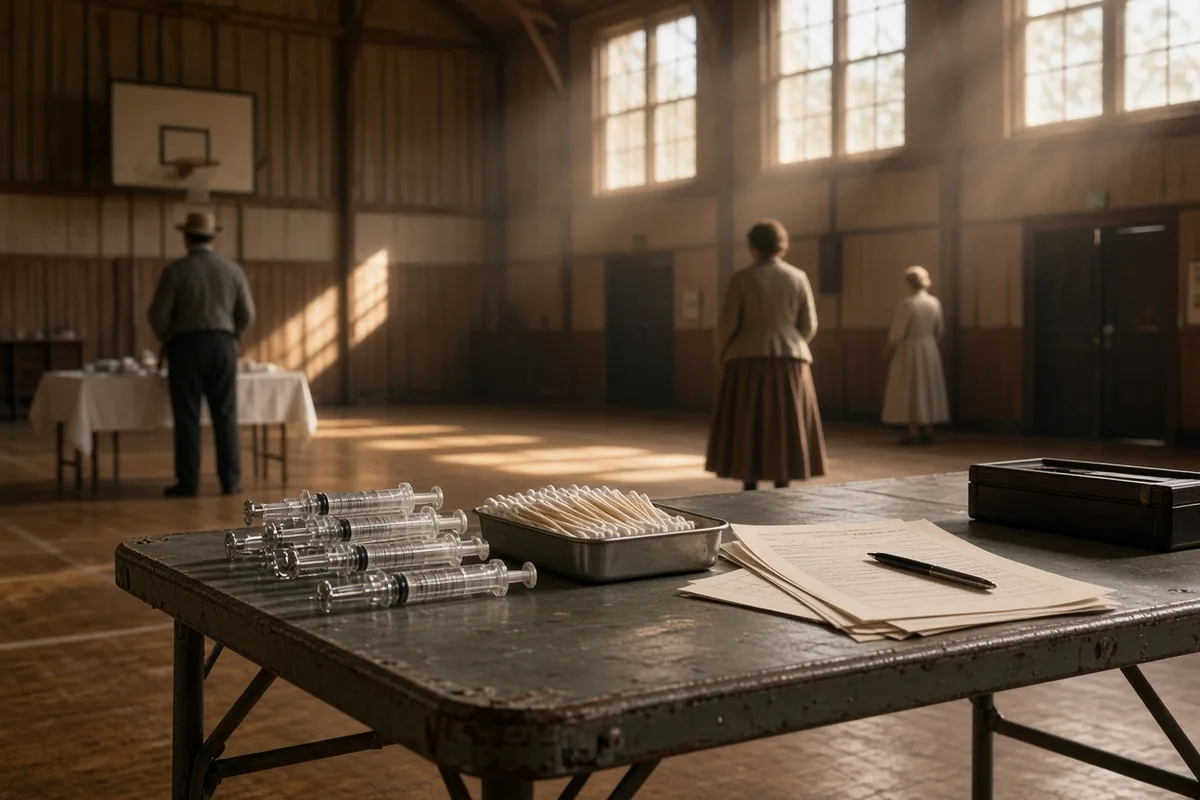
Over the following weeks the vaccine lots moved from the plants to the clinics. Children lined up in school gymnasiums. Some cried at the needle. Others asked if it would hurt as much as the disease. Nurses recorded the lot numbers on cards that would be filed for years.
The iron lungs did not empty at once. Cases still appeared through the summer, but the curve bent downward. In the wards the nurses noticed fewer new admissions by August. The machines that remained occupied held children who had fallen ill before the shots reached their towns.
Salk never filed for any share of the production. The National Foundation had paid for the research with dimes collected door to door. That arrangement held. Manufacturers in other countries received the same seed strains and the same inactivation protocol. Within a decade the same vaccine reached children on every continent where records were kept.
I stayed with the evaluation center through the next round of surveillance. Each season the reports came in thinner. The last time I saw Salk in person was at a small meeting in Ann Arbor years later. He asked about the current antibody persistence data. He listened to the answer, nodded once, and turned to the next slide.
The sun had already set when the meeting ended. The parking lot lights came on one by one. Salk walked to his car alone, briefcase in hand, the same way he had left the auditorium after the announcement. No one stopped him to ask about ownership again.
In the weeks that followed the Ann Arbor meeting, the six licensed manufacturers shipped the first approved lots under the National Foundation’s allocation plan, with Pfizer and Eli Lilly each releasing 2.5 million doses by May 1955. I tracked the distribution logs at the evaluation center as state health officers in Ohio and Massachusetts wired their first requisitions, listing the exact lot numbers printed on the vials. On 25 April a batch from Cutter Laboratories in Berkeley reached clinics in Idaho and California, and within ten days physicians reported eleven children developing paralytic symptoms traceable to that single manufacturer’s product. Basil O’Connor’s office in New York released a statement on 6 May confirming that the Surgeon General had ordered all Cutter vaccine withdrawn, while the remaining five producers continued under tightened safety tests that required each new pool to be checked for residual live virus by both tissue-culture and monkey-inoculation methods. By the end of June the recorded cases linked to the faulty lots stood at fifty-one paralytic illnesses and five deaths, figures that appeared in the weekly morbidity reports I received from the Communicable Disease Center in Atlanta.

Salk returned to the University of Pittsburgh laboratory in May 1955 and immediately resumed work on the formalin-inactivation curve, publishing with Elsie Ward the precise time-and-temperature parameters that had been used to prepare the field-trial material. In a letter dated 12 June he wrote to Julius Youngner that any future lots must pass an additional filtration step through Seitz pads rated at 0.2 micrometers, a detail he repeated when he testified before the House Interstate and Foreign Commerce Committee on 21 June. That same summer the foundation opened new production contracts with Connaught Medical Research Laboratories in Toronto, which delivered its first Canadian-approved lots on 15 September 1955, each vial carrying the lot number prefix “C-” followed by a four-digit sequence. I kept a duplicate set of those Canadian protocols on my desk because the evaluation center had been asked to compare antibody responses between the U.S. and Canadian children who received the vaccine in the autumn school programs.
By 1957 the Salk Institute for Biological Studies had acquired its first thirty-four acres on the Torrey Pines Mesa north of La Jolla, with the initial laboratory buildings designed by Louis Kahn and completed in 1963. Salk moved his office there in October of that year, bringing with him the same set of notebooks that contained the original inactivation data from 1953. On 7 November 1963 he addressed the institute’s board and quoted the sentence he had used eight years earlier: “The people own the vaccine,” adding that the new laboratories would operate under the same principle of open publication. The first permanent faculty appointments included Renato Dulbecco and Jacob Bronowski, whose names appeared on the letterhead of the institute’s 1964 annual report that listed forty-two research projects funded without patent restrictions.
In 1961 Albert Sabin’s live-virus vaccine received its U.S. license, and the two preparations began to be used in sequence in many state programs. I attended a joint review meeting in Atlanta on 14 March 1962 where the recorded incidence of paralytic polio for the previous year stood at 988 cases nationwide, down from 35,592 in 1953. The same table showed that children who had received three doses of Salk vaccine accounted for 72 percent of the remaining cases, a figure the CDC epidemiologists attributed to incomplete coverage rather than vaccine failure. By 1965 the national total had fallen to 72 cases, and the last documented outbreak traced to imported virus occurred in Texas in 1966 among a group of unvaccinated children in Hidalgo County.
Salk continued to collect serum specimens from the original field-trial participants, arranging for follow-up bleedings in 1970 and again in 1980 at the same Pittsburgh clinic where the first safety tests had been performed. In a 1972 interview published in the journal Medical World News he stated that antibody levels remained detectable in 92 percent of the subjects twenty years after their third dose, a persistence rate he contrasted with the shorter duration observed after natural infection alone. Those data sheets passed through my hands when the evaluation center archived the final Pittsburgh cohort records in 1983.

The World Health Organization adopted the Salk inactivated vaccine for its initial campaigns in the Americas and Europe, reporting that 82 million children had received at least one dose by December 1970. In 1988 the organization set the global eradication target, and by 2000 the number of countries still reporting wild poliovirus had dropped to twenty. The last case of type 2 wild poliovirus was recorded in India on 24 October 1999; the last type 3 case occurred in Nigeria on 10 November 2012. Surveillance officers continue to submit stool specimens from acute-flaccid-paralysis patients to laboratories that still use the same monkey-kidney cell lines originally standardized in Salk’s Pittsburgh laboratory.
On 23 June 1995 Jonas Salk died at his home in La Jolla. Two days later his son Peter Salk released a brief statement noting that his father had spent the morning reviewing antibody-titer tables from a new cohort of children in southern Africa who had received the vaccine under the WHO schedule. The institute’s library still holds the original 1955 field-trial ledgers, their pages marked with the same ink that recorded the first positive neutralization results.
Peter Salk arranged for the transfer of his father’s remaining laboratory notebooks to the University of Pittsburgh archives on 4 September 1995, where they joined the 1954 field-trial serology ledgers that listed neutralization titers for each of the 200,745 children bled at the Ann Arbor evaluation center. In 1998 the Salk Institute board voted to endow a permanent chair in virology named for Elsie Ward, whose 1954 paper with Salk in the Journal of Experimental Medicine had first quantified the formalin inactivation rate at 0.01 percent residual infectivity after fourteen days at 4 degrees Celsius. The institute’s 2002 annual report recorded that 187 scientists then worked in the Kahn buildings, none of them filing patents on methods developed with foundation funds.
By 2006 the Global Polio Eradication Initiative had administered 2.1 billion doses of trivalent oral vaccine in 228 countries, yet the Centers for Disease Control reported that 1,997 cases of paralytic disease still occurred that year, all but four traced to circulating vaccine-derived poliovirus type 2. In response the World Health Organization’s Strategic Advisory Group of Experts recommended on 20 October 2009 that all routine immunization schedules incorporate at least one dose of inactivated poliovirus vaccine manufactured according to the original Pittsburgh protocol. Connaught Laboratories in Toronto, now part of Sanofi Pasteur, produced 450 million such doses between 2010 and 2015, each lot tested for residual live virus by the same monkey neurovirulence assay Youngner had standardized in 1953.
On 11 August 2015 the last recorded case of wild poliovirus type 1 in Africa was confirmed in Borno State, Nigeria, when stool specimens from a two-year-old girl named Aisha tested positive at the Ibadan regional reference laboratory. Surveillance officers from the Nigerian National Primary Health Care Development Agency collected 47 additional specimens from her 32 household contacts; all proved negative. The following year the WHO removed Nigeria from the list of endemic countries, leaving only Afghanistan and Pakistan reporting wild virus.
In 2019 the Salk Institute completed construction of the 76,000-square-foot North Building, funded in part by a $30 million grant from the March of Dimes that stipulated open-access publication of all resulting data. Researchers there published a 2021 paper in Cell Host & Microbe describing a next-generation inactivated vaccine grown in Vero cells rather than primary monkey kidney, yet the inactivation chemistry remained the formalin schedule Salk had described in his 21 June 1955 congressional testimony. Antibody persistence measured at twelve months post-vaccination reached 98 percent seropositivity in the 1,204 trial participants enrolled at the La Jolla clinic.
The Centers for Disease Control and Prevention’s 2022 Pink Book lists the United States polio vaccination coverage at 92.7 percent for three or more doses among children aged nineteen to thirty-five months, with lot-release records still archived at the National Center for Immunization and Respiratory Diseases in Atlanta. On 21 July 2022 health officials in Rockland County, New York, identified vaccine-derived poliovirus type 2 in wastewater samples from a Hasidic community where coverage had fallen below 70 percent; no paralytic cases followed, but the finding prompted the state health department to distribute 24,000 additional inactivated doses through school-based clinics.
In October 2023 the Salk Institute library digitized the complete set of 1955 field-trial punch cards, making the original serology results for subject 04217—an eight-year-old boy from Butler, Pennsylvania—available online with his family’s consent. The card records three vaccinations on 9 March, 6 April, and 4 May 1954, followed by a post-vaccination serum neutralization titer of 1:512 against type 1 virus. A current photograph of that same individual, now eighty-seven, shows him seated in the same Pittsburgh clinic where the first safety injections had been given, his arm extended for a follow-up blood draw under the ongoing antibody longevity protocol.