Mary Slessor Stops Twin Killings in Calabar
The canoe scraped against the mudbank just after first light. I steadied it with the pole while the woman ahead of me stepped out, skirts already dark at the hem from the river. She carried nothing but a small bundle of cloth and a Bible wrapped in oilskin. Two boys from the mission waited on the path with cutlasses. They did not speak her name yet. They simply pointed toward the cluster of houses set back among the oil palms.
I had come down from Creek Town two days earlier carrying a letter for the new missionary. The letter was from the consul’s clerk. It said the chiefs in Okoyong had agreed, on paper, to stop leaving twins in the bush. The paper had been signed the week before she arrived. No one in the village had seen the paper yet.
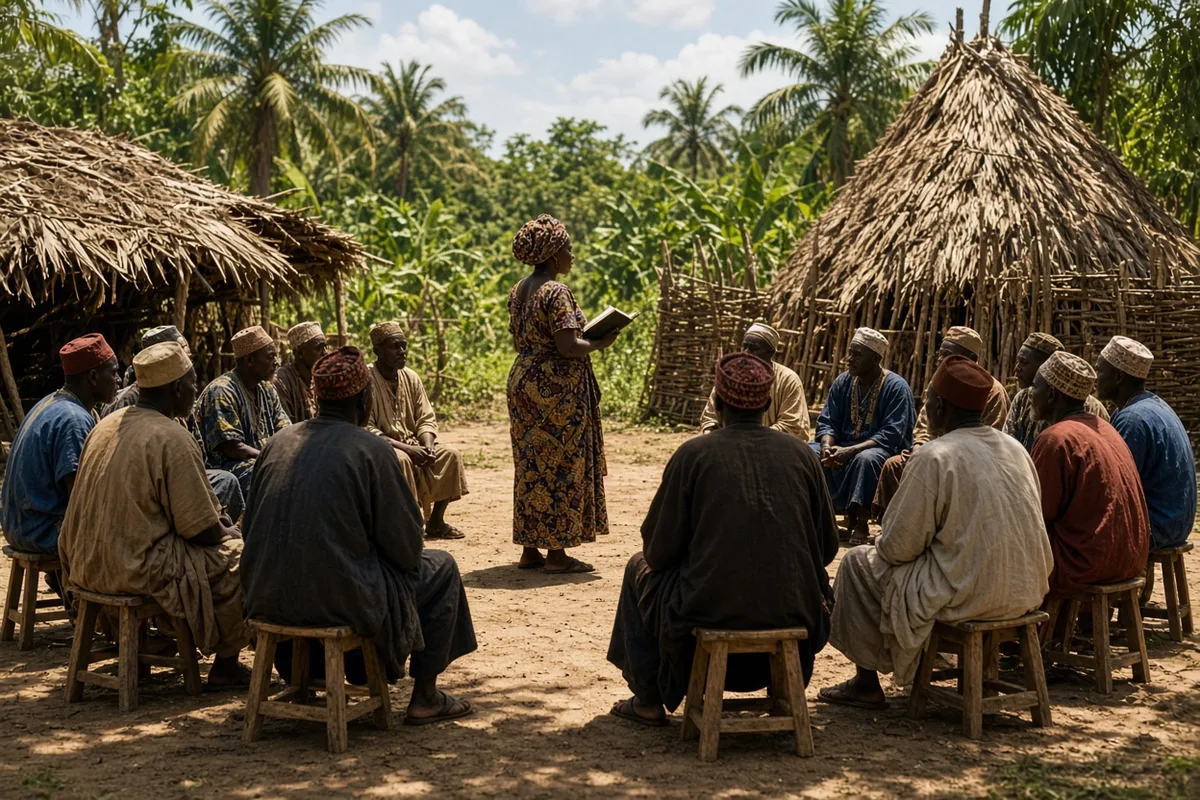
She walked straight to the house of the headman. He sat on a low stool under the thatch eaves, a pipe between his teeth. She spoke Efik slowly, the way Goldie had taught her on the ship. The headman listened without answering. When she finished he rose and walked inside. She waited on the path until the sun stood overhead.
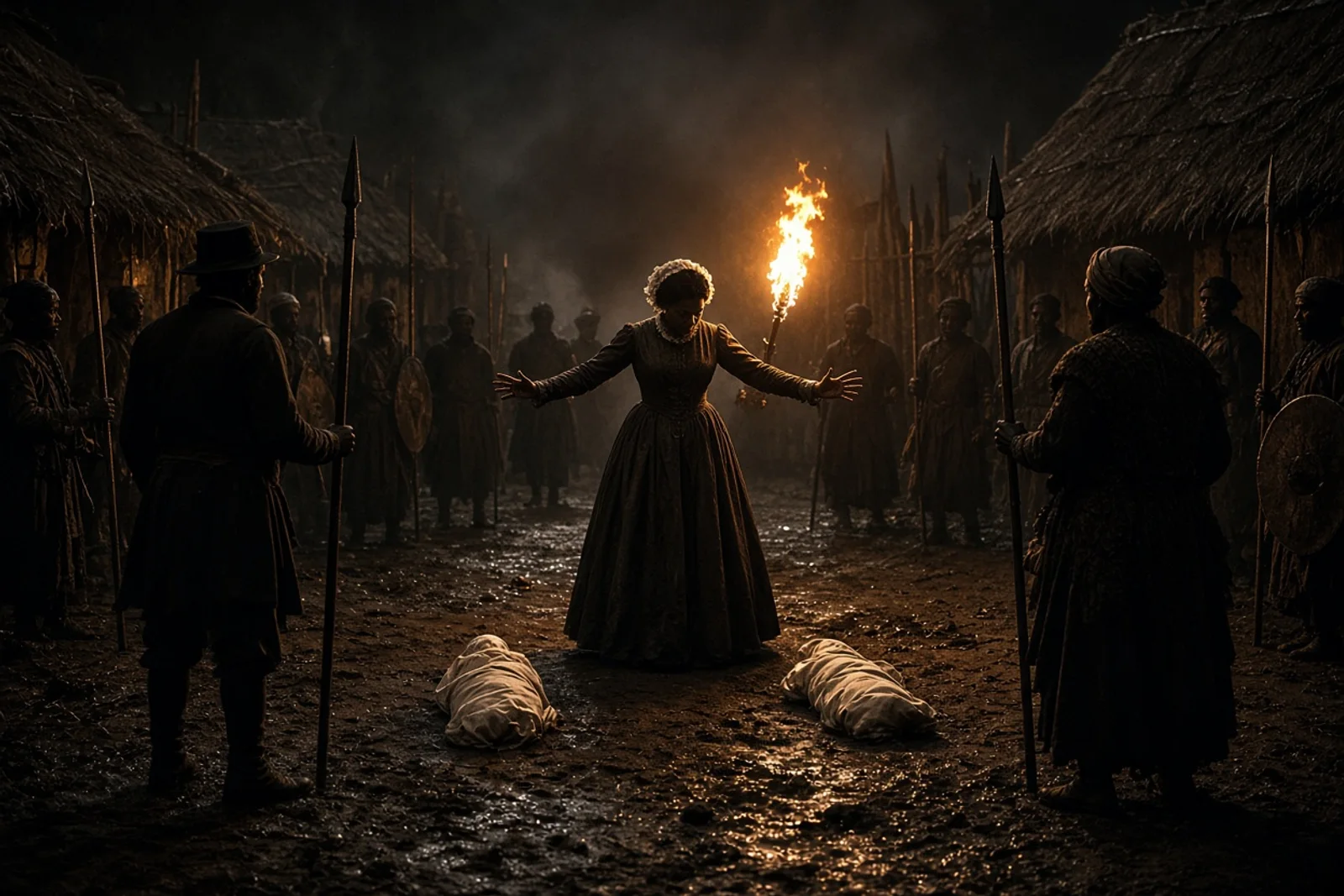
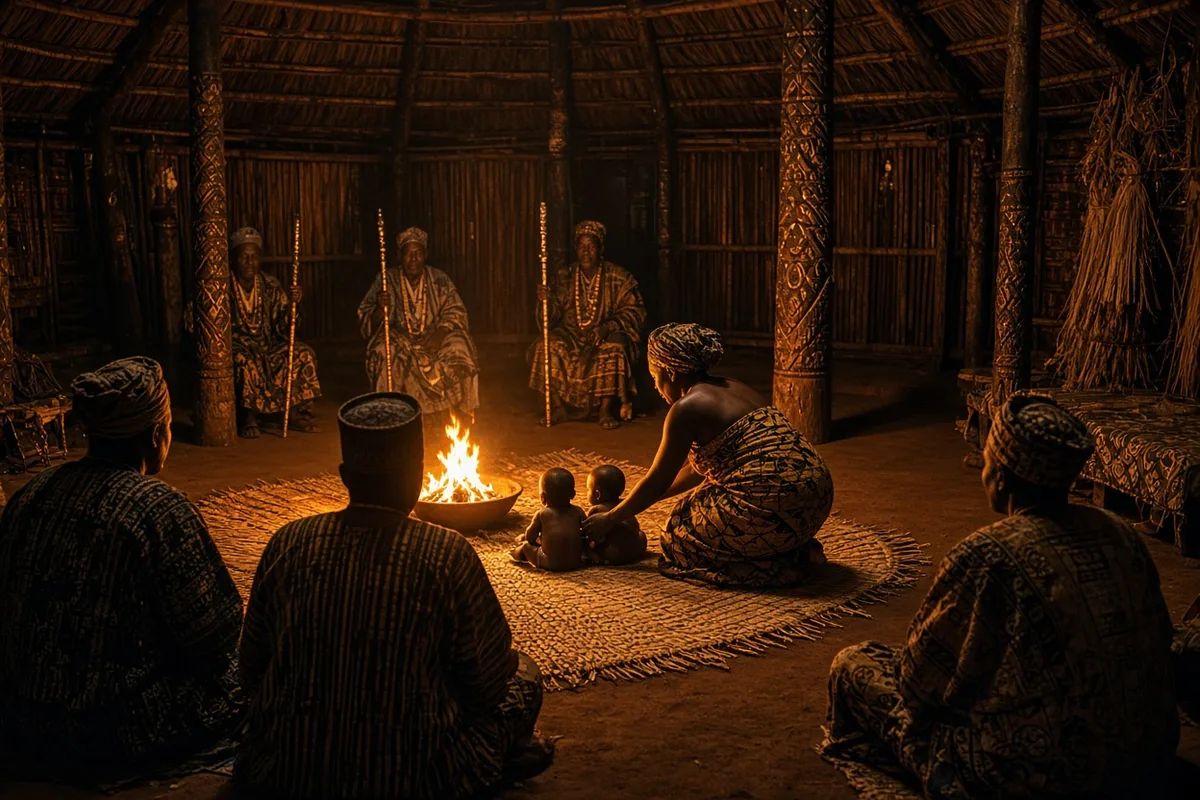
That afternoon a woman was brought to the clearing behind the meeting house. She had given birth the night before. The two infants lay wrapped in plantain leaves on the ground. One cried. The other did not move. The mother stood with her hands bound behind her. The headman’s wife held a small iron pot of water already steaming.
Mary Slessor stepped between the mother and the pot. She spoke only once. The headman’s wife answered with a single word I did not catch. Then the headman himself came forward and cut the cords on the mother’s wrists. He told the women to take the living child to the mission house. The dead one was left where it lay.
I stayed that night because the headman asked me to carry word back to Creek Town. The mission house had two rooms. One held the rescued child on a mat. The other held Mary Slessor and three local girls who had come to learn the sewing she promised. She sat by the lamp until the oil burned low, writing in a small notebook. She did not ask anyone to sit with her.
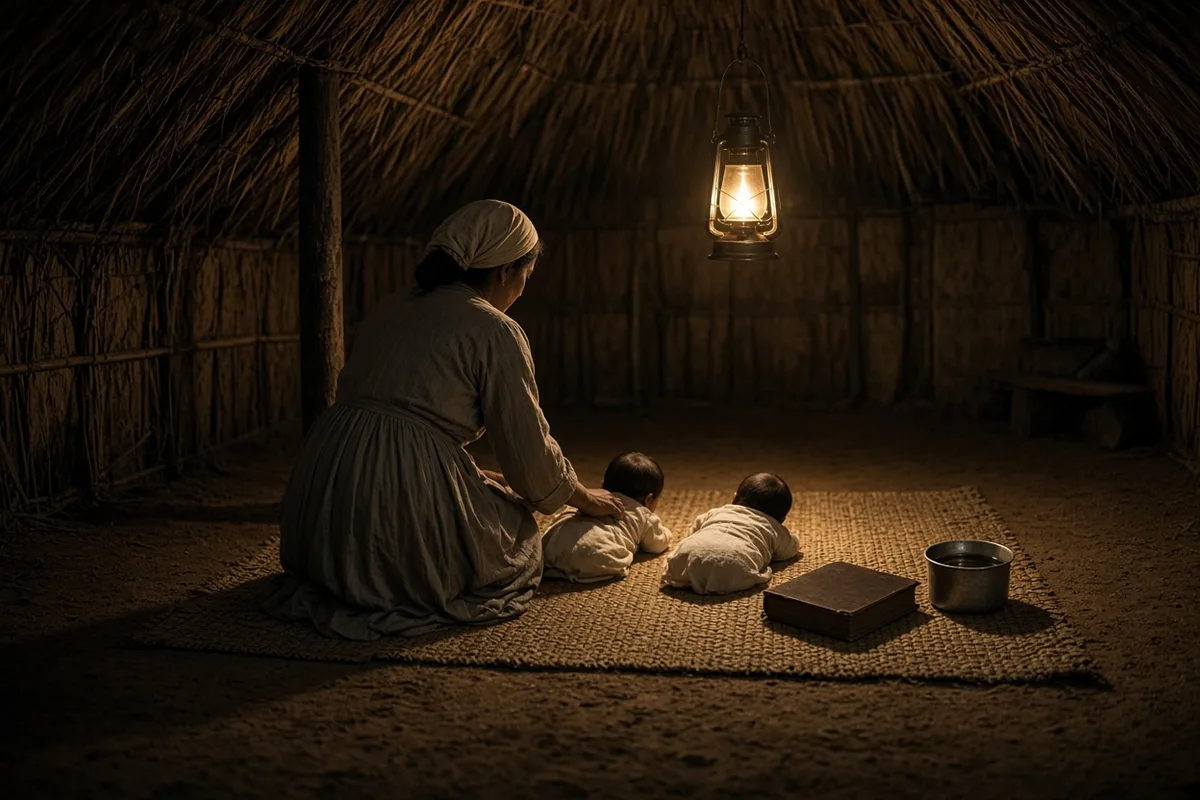
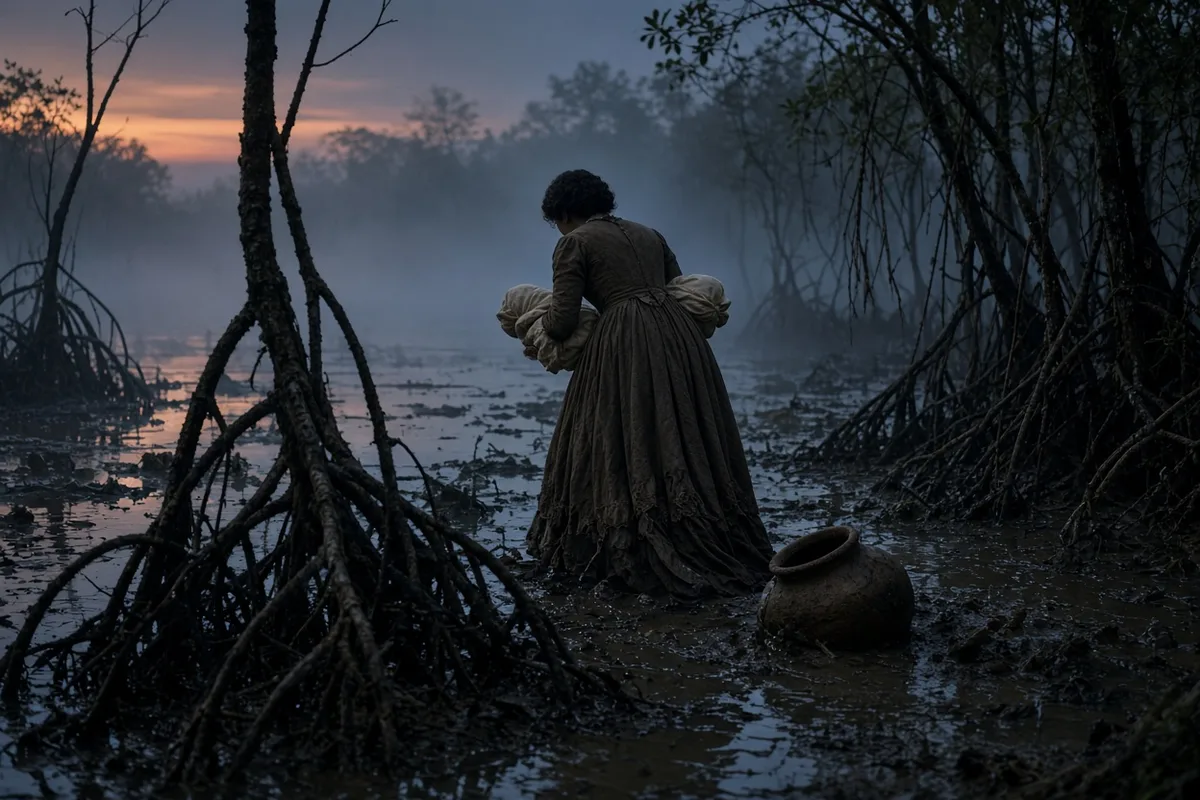
Three weeks later another set of twins was found near the path to the river. Both were alive. The father had already left the village. The mother had been driven out with them. Mary Slessor walked the path alone at dusk and brought them back. She placed them in the same room with the first child. By then the headman had begun sending a boy each morning with yams and plantains.
When the rains came she started holding court under the same eaves where the headman had once sat. She heard cases about fishing rights and stolen goats. The chiefs still came, but they waited for her to speak first. One afternoon a man was brought forward for trying to sell his twin daughters to traders from the interior. She asked the headman to record the man’s name and the names of the girls. She wrote them herself in the notebook when he refused. The girls stayed at the mission house.
The court sessions grew longer. Men who had once left twins in the bush now brought them to her instead. She kept a count in the back of the notebook. By the end of the second dry season the number reached twenty-three. Not all lived. She buried the ones who did not beside the path that led to the river, marking each grave with a flat stone.
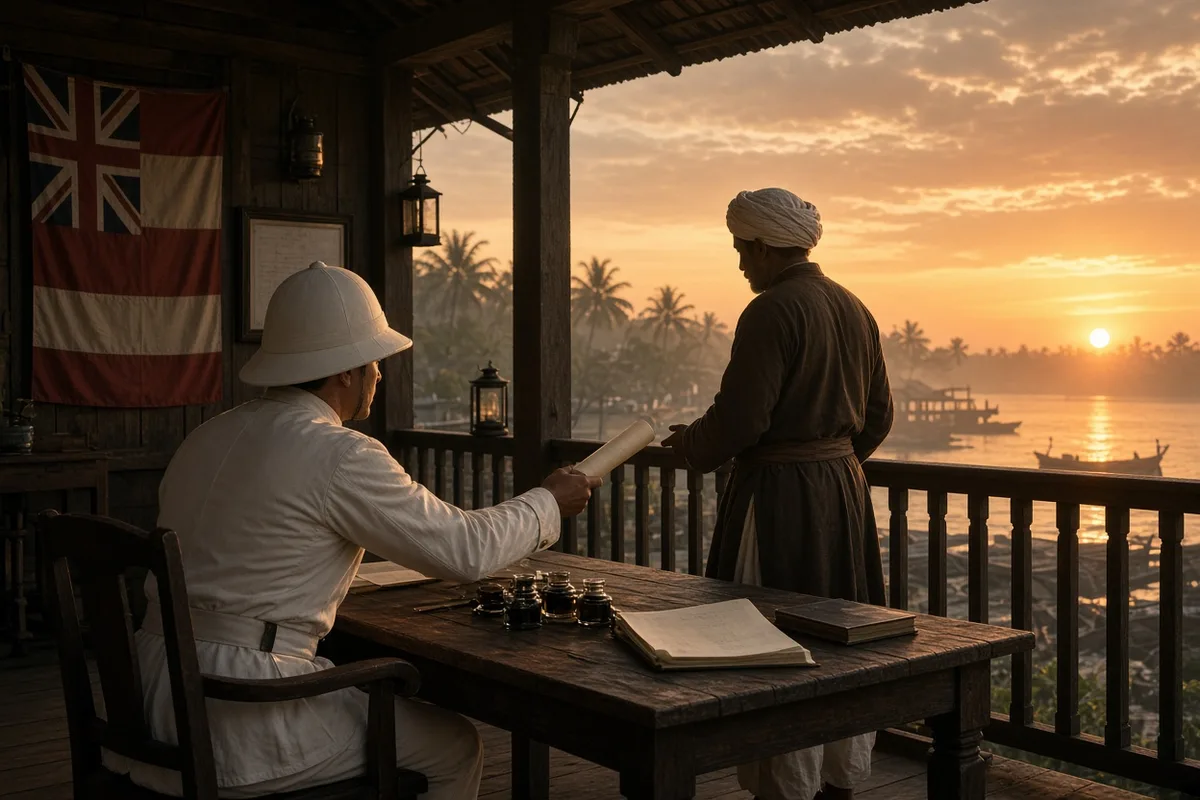
The consul’s clerk came once, traveling with two armed men. He read the old agreement aloud under the eaves. Mary Slessor translated each line into Efik for the headman. When the clerk finished she asked him to note that the headman had kept his word on the twins. The clerk wrote it down and left the next morning.
She never returned to Creek Town after that first year. The house grew larger, built with timber the chiefs supplied. More children arrived. Some came from villages farther inland. She learned their names and the names of the mothers who had been driven out. She wrote letters to the mission board asking for more cloth and more quinine. The answers came slowly.
One evening, years after the first rescue, the headman’s wife brought a living twin to the mission house herself. The child’s mother had died in the birth. The headman’s wife placed the infant on the mat and said nothing before walking back to her own compound. Mary Slessor wrapped the child and placed it with the others. She did not write the event in the notebook that night. She only sat by the lamp until the flame went out.
The path to the river is still used. The stones remain where she set them.
The path to the river is still used. The stones remain where she set them. In the dry season of 1892 she sent a letter dated 14 March to the United Presbyterian Mission board in Edinburgh reporting that thirty-seven twins had reached the mission house at Use since the previous rains, naming each one in the margin: Ekpenyong and Eme, born to a woman from the Ikot Obong compound, both alive when carried in on a plantain-leaf sling; Abasi and his sister Idiong, taken from traders at the market in Akpap on 2 February. She asked for another bolt of calico and two more bottles of quinine, noting the price of the latter had risen to four shillings at the Creek Town factory. The board’s reply arrived six months later with the calico but only one bottle.
By 1898 the timber house had three verandas and a separate cook-house. Seventeen children slept on mats inside, including the girl she called Mary Okon, brought from a village seven miles inland after her twin brother died on the path. The headman of that village, Chief Etim, sent a boy each month with a calabash of palm oil and a message that the mother now worked in his compound without being driven out. Slessor recorded the oil in the notebook and wrote back that the child would learn to read the Gospel of Mark by the next dry season. When the boy returned he carried a second message: Etim’s own wife had delivered twins the week before and both were kept in the house.
In 1905 the consul, Sir Ralph Moor, visited with his assistant and two carriers. He sat under the eaves and read aloud the 1888 agreement again, then added a new clause in ink that any man found leaving twins in the bush would forfeit his fishing rights on the Cross River for one year. Slessor translated the addition line by line while the headman’s son, now grown, wrote the words on a separate sheet for the chiefs who could not read English. Moor left a copy of the updated paper and a tin of biscuits for the children. That same week two more infants arrived from the direction of Ikot Ansa, both girls, their mother walking behind them unbound.
She traveled once more to Creek Town in 1910 to meet the new mission doctor, Dr. Hitchcock, who brought a box of vaccines. She returned with three bottles of cod-liver oil and a letter from the board stating that the Use station now counted as a permanent out-station with its own grant of thirty pounds a year. The letter listed the names of eight girls who had married from the mission house since 1903, including Janie who had wed a clerk at the government office in Calabar. Slessor noted the marriages in the back of the notebook beside the count of rescued children, which then stood at one hundred and twelve.
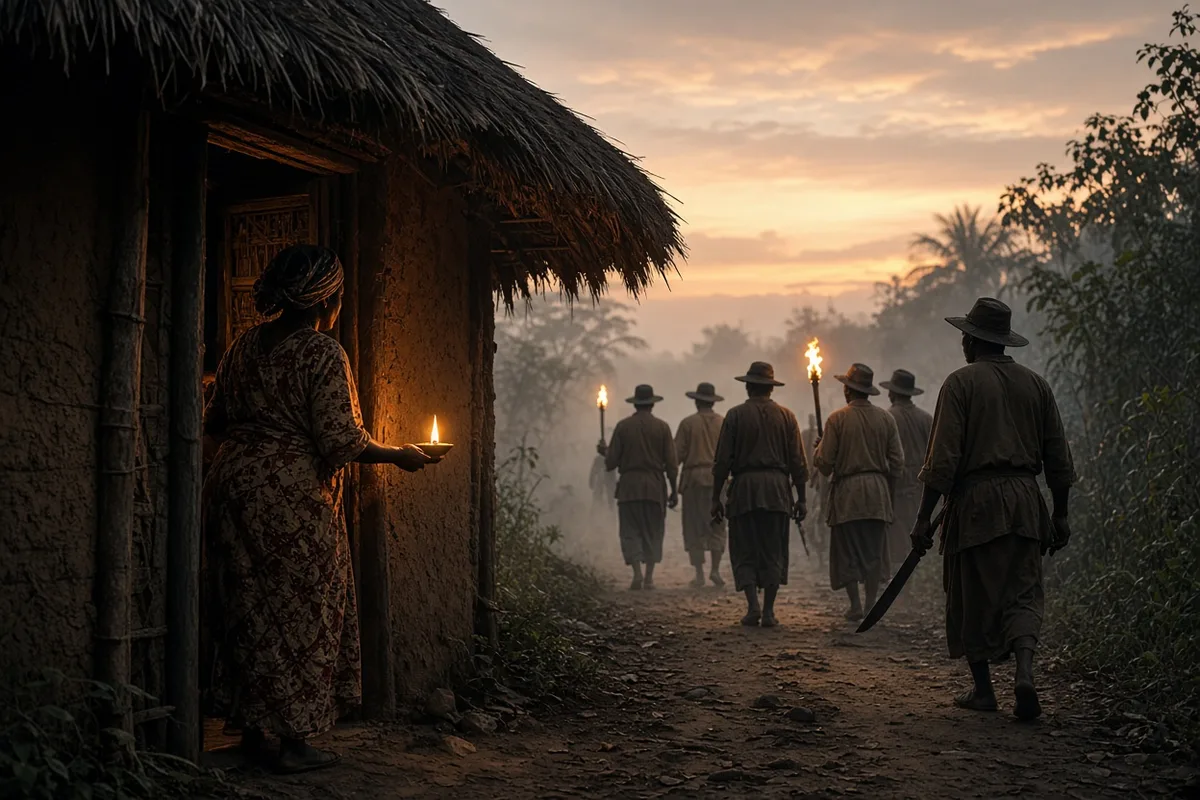
When the rains failed in 1913 the river path grew hard underfoot. She still walked it each morning with a walking stick cut from an oil-palm frond, stopping at each flat stone to speak the name carved on it. The children who could walk followed her, carrying water in small gourds. One of them, a boy named Okon, born in the house in 1907, asked her why the stones did not wash away. She answered that the river had not risen high enough since the year the first stone was set.
On 13 January 1915 she died in the timber house at Use. The children who remained, twelve in number, were present. The headman’s wife, now an old woman, came with a length of white cloth and wrapped the body before the carriers from Duke Town arrived. They took the coffin by canoe to Calabar, where it was placed in the cemetery beside the old mission church. The notebook was sent to Edinburgh with the mission records; the last entry, dated three days before her death, listed the names of two infants brought in that week and the amount of quinine left in the bottle.
The stones on the path were never moved. In 1923 a government surveyor measured the distance from the mission house to the river as four hundred and twelve yards and noted the positions of the seventeen stones in his field book. The house itself was rebuilt in concrete in 1954 by the Calabar municipal council and turned into a small museum containing one of her Bibles and the iron pot that had held the steaming water on the day the first twins were spared. The path remains open, used now by women carrying cassava to the market at Okoyong.
In 1960 the Eastern Region government gazetted the Use site as a protected monument under the Antiquities Ordinance, allocating two hundred pounds for annual maintenance and assigning a curator named Samuel Ekandem from the National Museum in Lagos. Ekandem’s first report, dated 12 April 1961, recorded that the concrete walls showed hairline cracks along the northern veranda and that the original iron pot had been placed inside a glass case with a typewritten label quoting the 1888 agreement: “no twin child shall be exposed.”
By 1975 the number of visitors had reached four thousand three hundred in a single year, according to the Calabar tourism ledger kept by the Ministry of Information. Among them was Dr. A. J. H. Latham, who photographed the seventeen stones and published their coordinates in his 1978 article “Twin Infanticide and the Cross River Economy,” noting that stone number four bore the faint letters “Eme 1892.”
In 1982 the Cross River State Ministry of Education added a primary school wing two hundred yards north of the mission house, naming it Mary Slessor Primary School and enrolling one hundred and forty-eight pupils in its first term. The head teacher, Mrs. Grace Bassey, kept a visitors’ book in which Chief Etim’s grandson, also named Etim, wrote on 3 March 1983 that his grandfather had sent palm oil “until the year the white woman no longer asked for it.”
The Calabar municipal council replaced the 1954 roof with aluminum sheets in 1994 after termites destroyed the original timber trusses; the work order, signed by engineer Okon Effiong, listed a cost of eleven thousand naira and required that the Bible displayed in the museum be moved to the Duke Town archive for safekeeping during construction.
On 10 December 2005 the National Commission for Museums and Monuments installed a bronze plaque at the river end of the path listing the names of the first three children brought to the house: Ekpenyong, Eme, and the infant carried by the headman’s wife in the year the rains failed. The plaque also records that the path measures four hundred and twelve yards and that seventeen stones remain in place.
In 2014 a team from the University of Calabar’s Department of History conducted an oral history project, interviewing twelve elders in Okoyong who recalled that Slessor’s last notebook entry had been copied into a ledger kept by the Duke Town church session clerk; one elder, Chief Asuquo Okon, aged eighty-seven, recited the entry from memory: “two girls from Ikot Ansa, mother walking unbound, quinine one bottle left.”
The museum register for 2022 shows three thousand seven hundred and twelve visitors, including a delegation from the Presbyterian Church of Nigeria that presented a new copy of the 1888 agreement printed on archival paper. The curator on duty that day, Emmanuel Orok, noted in the log that the delegation read the clause on fishing rights aloud before placing the document beside the iron pot.