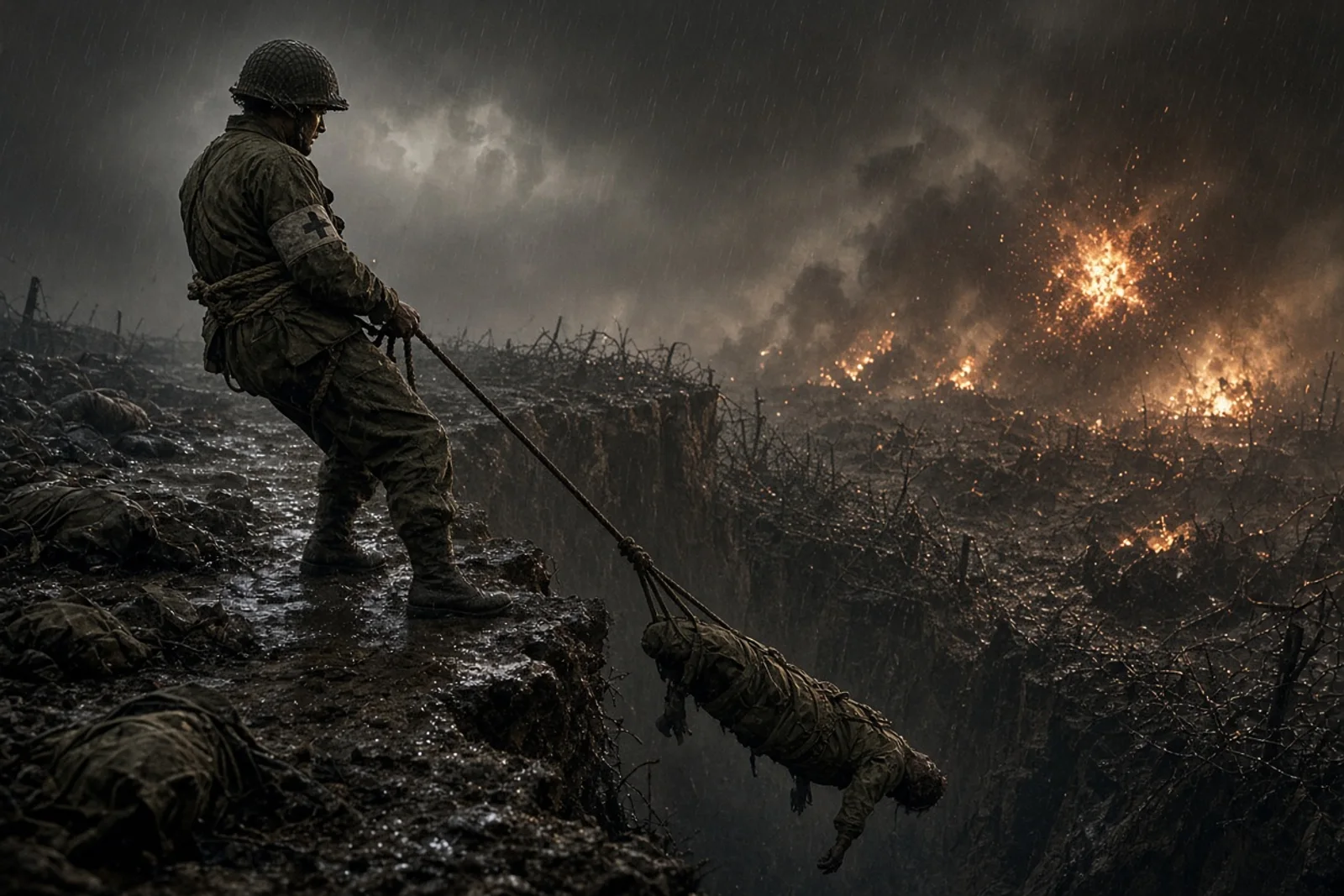
Oskar Schindler Saves 1,200 Jews
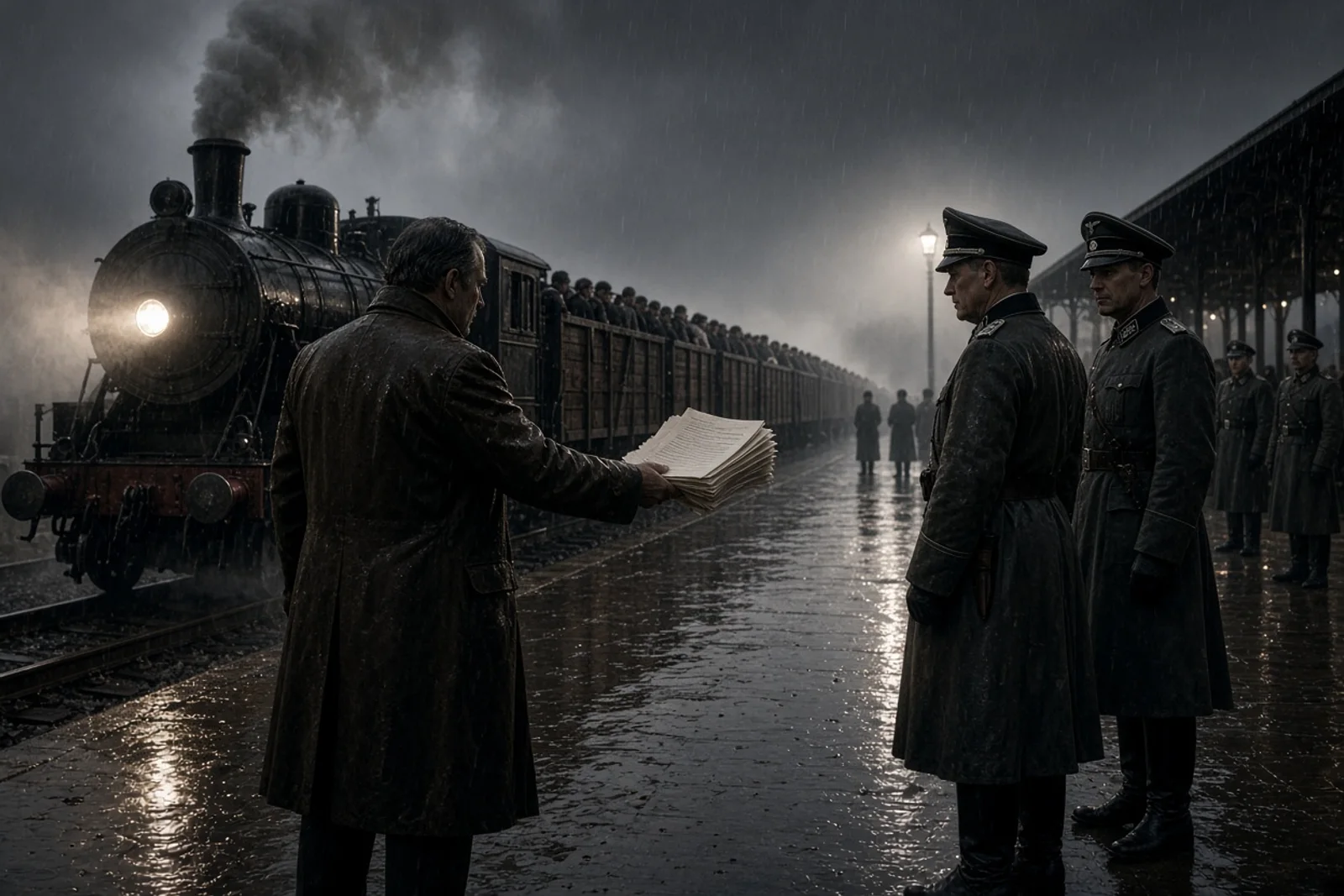
I was stacking enamel bowls on the loading cart when the camp truck backed through the gate at Emalia. The driver cut the engine and two SS men climbed out, their boots scraping the frost. One carried a clipboard thick with names. I kept my head down and counted the bowls, one by one, until the numbers blurred.
Schindler stood in the doorway of the office block, coat open despite the cold. He watched the men approach without moving. When they reached him he offered cigarettes and spoke quietly, the way he always did when he wanted something moved or stopped. The taller guard accepted the pack and glanced at the clipboard again.
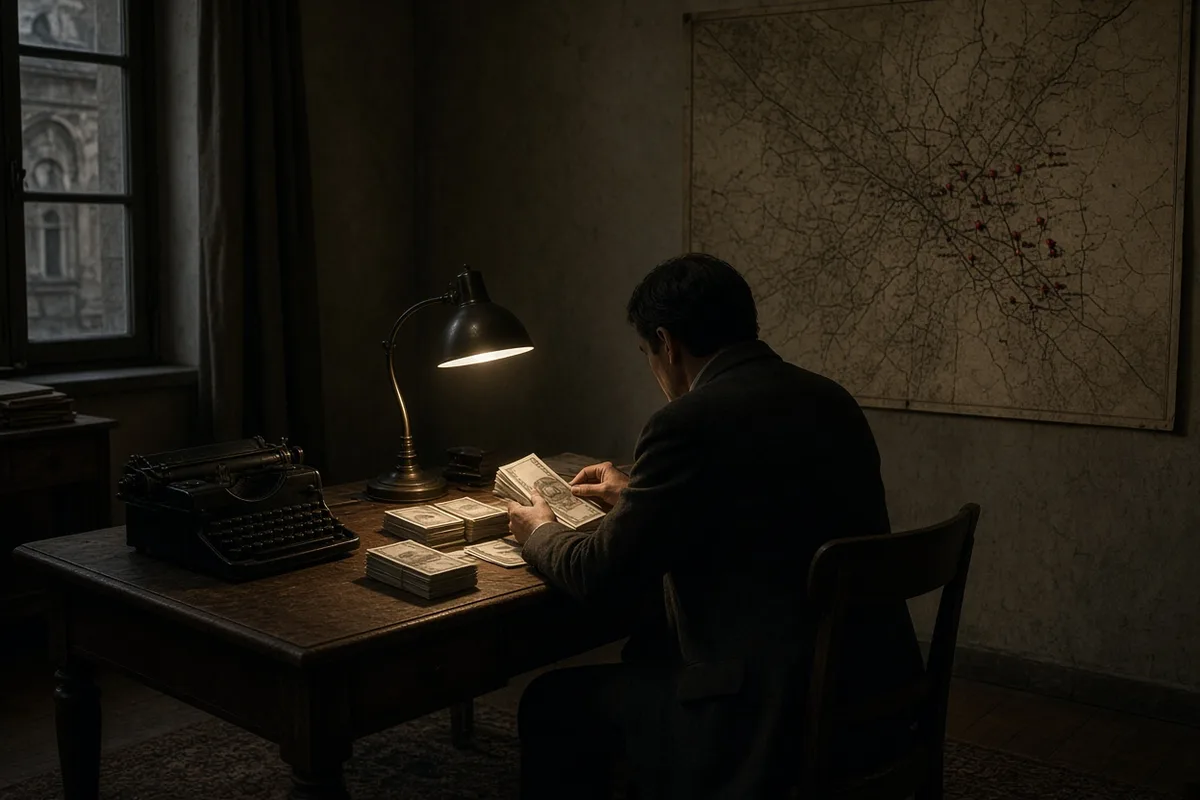
Inside the drafting room the lists already covered the table. I had copied most of them myself, names and numbers, ages, skills. Some pages were smudged from being handled too many times. Schindler came in after the guards left and stood over the papers without sitting. He asked how many we could still add before the train schedules were fixed. I told him the last count stood at eleven hundred and something. He nodded once and left again.
The next morning the first group was marched to the siding. Women carried bundles no larger than a loaf of bread. Men walked with their hands at their sides because any extra clothing had been taken at roll call. Schindler walked the length of the platform twice, speaking to the guards at each end. One of them laughed and looked away. The train pulled out before noon.
By the third day the office smelled of ink and wet wool. Schindler brought in a bottle of brandy and set it on the corner of the desk. He told me to keep the carbons separate from the originals and to burn anything that mentioned Auschwitz. I asked what would happen if the carbons were found anyway. He said the train would already be moving by then and poured himself a drink.
The list grew by ones and twos. A machinist whose hands shook too badly for the line. A girl whose father had worked the presses until the previous week. Each addition required a fresh sheet and a new signature from the camp commandant’s clerk. Schindler paid the clerk in cash folded inside a factory invoice. The clerk never counted it in front of us.
On the sixth day the snow started early. The trucks arrived again, this time with fewer guards. Schindler met them at the gate and directed them to the far siding where the covered cars waited. I stood at the window and watched the prisoners climb aboard. One man carried a small metal box that clinked when he moved. No one stopped him.
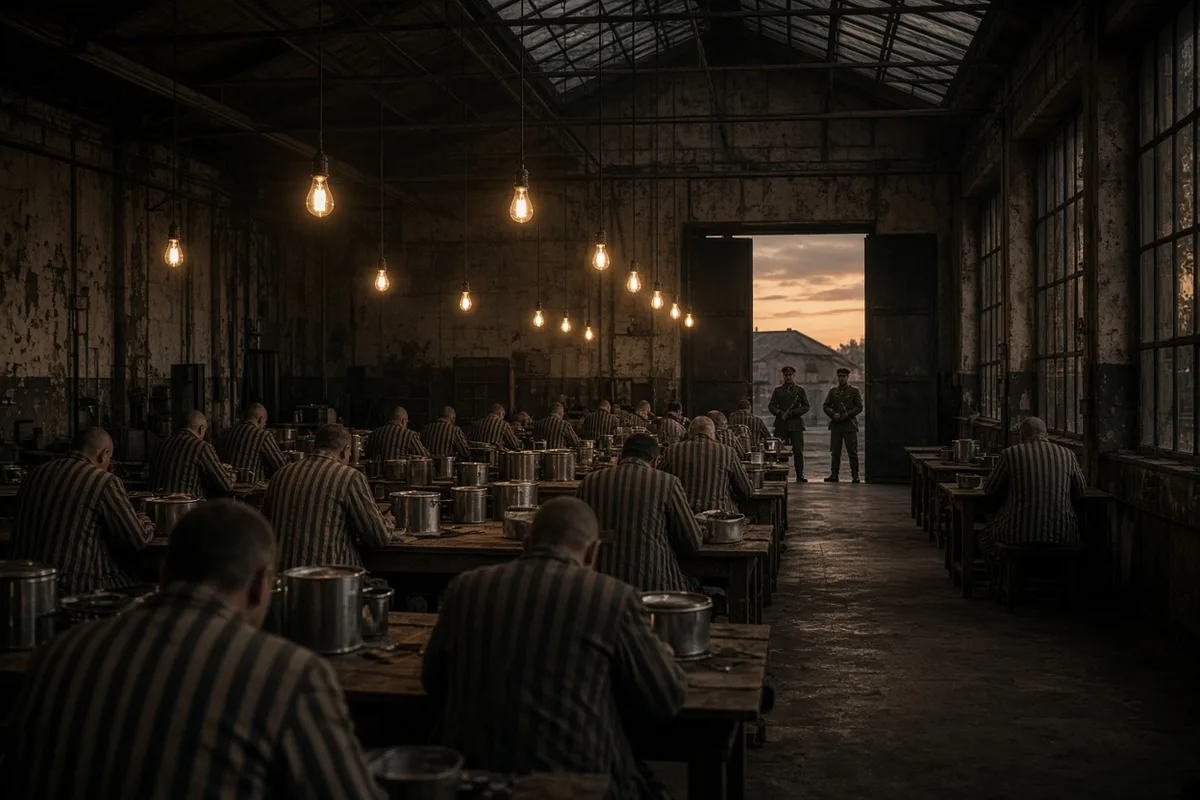
The final transport left after dark. The locomotive hissed and the couplings knocked together. Schindler stayed on the platform until the red lantern on the last car disappeared around the bend. He turned back toward the office and did not speak when he passed me. His coat was wet at the shoulders from the snow that had started again.
We reached Brünnlitz three days later. The factory there had no enamel lines yet, only empty halls and half-finished barracks. The new guards checked papers at the gate and compared them to a single typed sheet. My name was on it, spelled the way I had written it myself weeks earlier. The guard waved me through without looking up.
Inside the main building the machines stood silent under tarps. Schindler walked between them with his hands in his pockets, counting the heads that had arrived. When he reached the end of the row he turned and told the nearest guard that production would begin once the boilers were lit. The guard shrugged and left to find a stove.
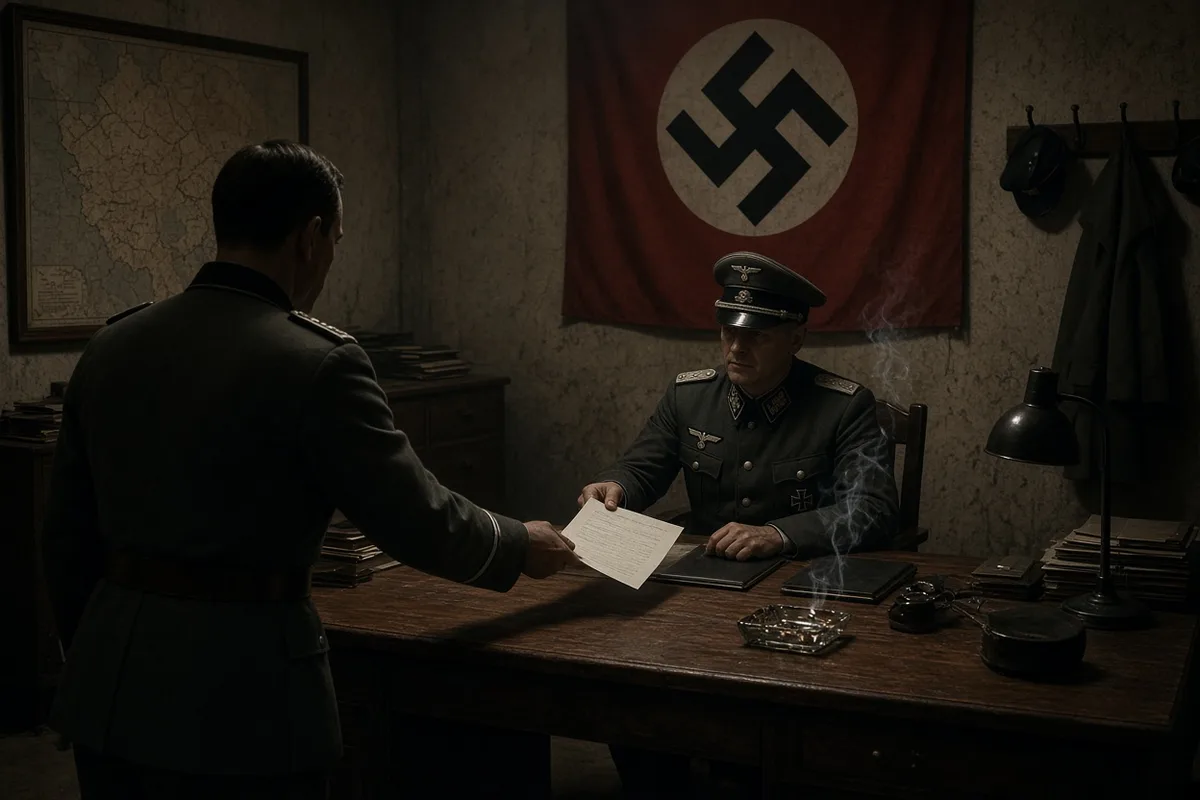
Food arrived in crates marked for the Wehrmacht. Schindler had the crates opened on the floor and the contents divided by hand. Bread, tinned meat, dried apples. No one was turned away from the line. Later that week he ordered the windows boarded from the inside so the night shift could work without blackout violations.
The war ended in May. The Russian soldiers who reached the gate first looked at the list pinned to the office wall and asked who had signed it. Schindler showed them the original copy with the camp stamps still visible. They kept the paper and told everyone to stay inside until further notice.
After the soldiers left, the workers began walking home in small groups. Some carried the same bundles they had brought from Kraków. Others left with nothing but the clothes they wore. Schindler stayed another week, signing discharge papers for anyone who asked. Then he packed a single suitcase and drove west.
I saw him once more, years later, in a photograph taken at a dinner in Israel. He sat at the center of a long table, thinner than I remembered, with one hand resting on the cloth. The caption listed the number of people present. It matched the final count on the list we had finished in the drafting room the night before the last train left.
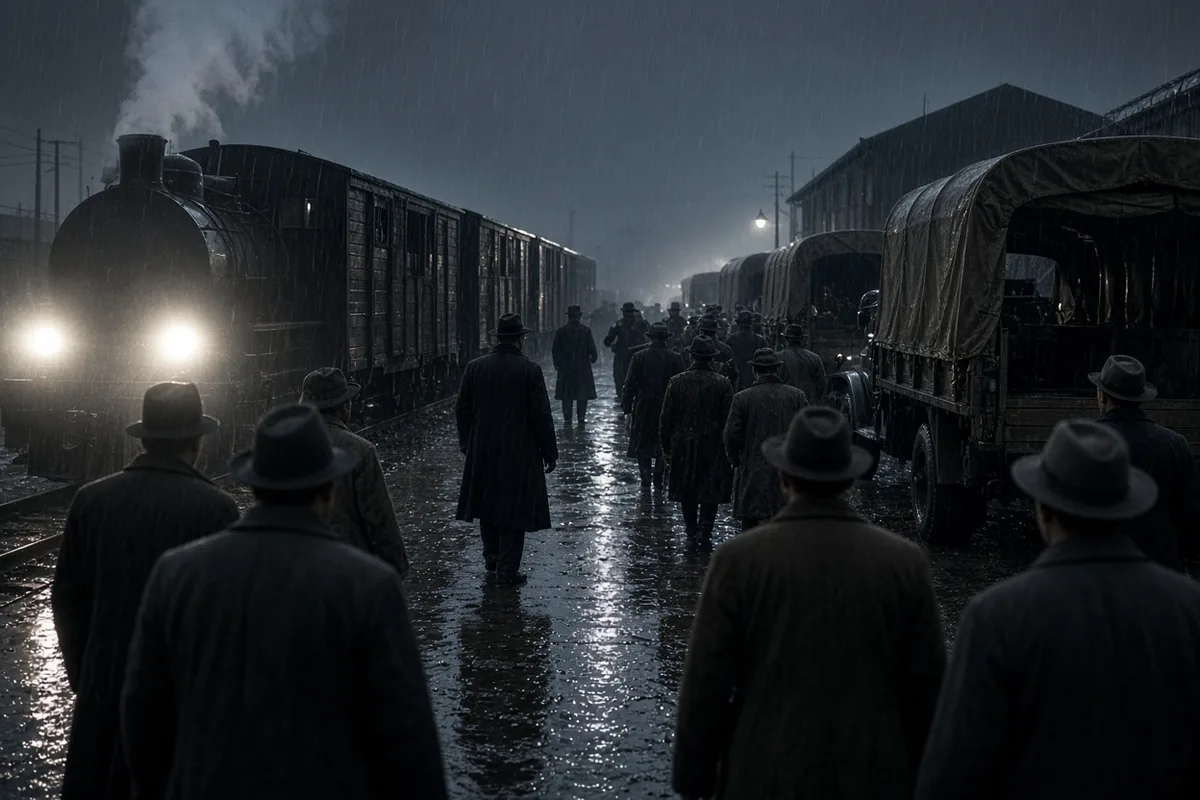
The photograph reached me through the mail in a plain envelope postmarked Tel Aviv on 17 March 1963. The return address belonged to Poldek Pfefferberg, the man who had once run the enamel warehouse at Emalia and who now kept a leather-goods shop on Hayarkon Street. Inside the envelope the print measured eight by ten inches and showed the long table set for the dinner at the King David Hotel. Oskar Schindler’s right hand rested on a white cloth beside a half-filled glass of wine. To his left sat Itzhak Stern, who had died four years earlier in Tel Aviv on 30 January 1959. The caption beneath the image read “1,200 survivors and their families honor Oskar Schindler, 13 February 1963.” I counted the heads in the rows and reached the same number that had appeared on the final carbon I had burned in the drafting room at Emalia.
Three years after that dinner Schindler returned to Germany and took a room above a pharmacy in Frankfurt am Main. He worked as a purchasing agent for a firm that imported spices from East Africa. On 22 October 1965 he wrote to Pfefferberg that the firm had closed its books for the quarter and that the monthly remittance of four hundred marks had arrived late. The letter carried the address 12 Eschersheimer Landstrasse and mentioned a planned visit to the cemetery at Hildesheim where his father and mother were buried. He added that the city council had refused permission to place a plaque on the wall of the old textile mill at Brněnec because the building now belonged to a state cooperative that manufactured felt slippers.
In 1972 the state of Israel issued an invitation for Schindler to attend the opening of a new wing at the Yad Vashem archive. The letter, signed by Gideon Hausner, listed the date 19 April and requested that Schindler bring any remaining documents from the Brünnlitz period. Schindler answered on 3 March that his health prevented travel but that he would forward the original ration cards stamped by the armaments inspector at Brno. The cards, numbered 47 through 119, recorded deliveries of 2,400 kilograms of flour and 180 kilograms of margarine between 12 January and 4 April 1945. After posting the package he entered the hospital at Hildesheim for treatment of a chronic lung condition that had begun during the winter marches of 1945.
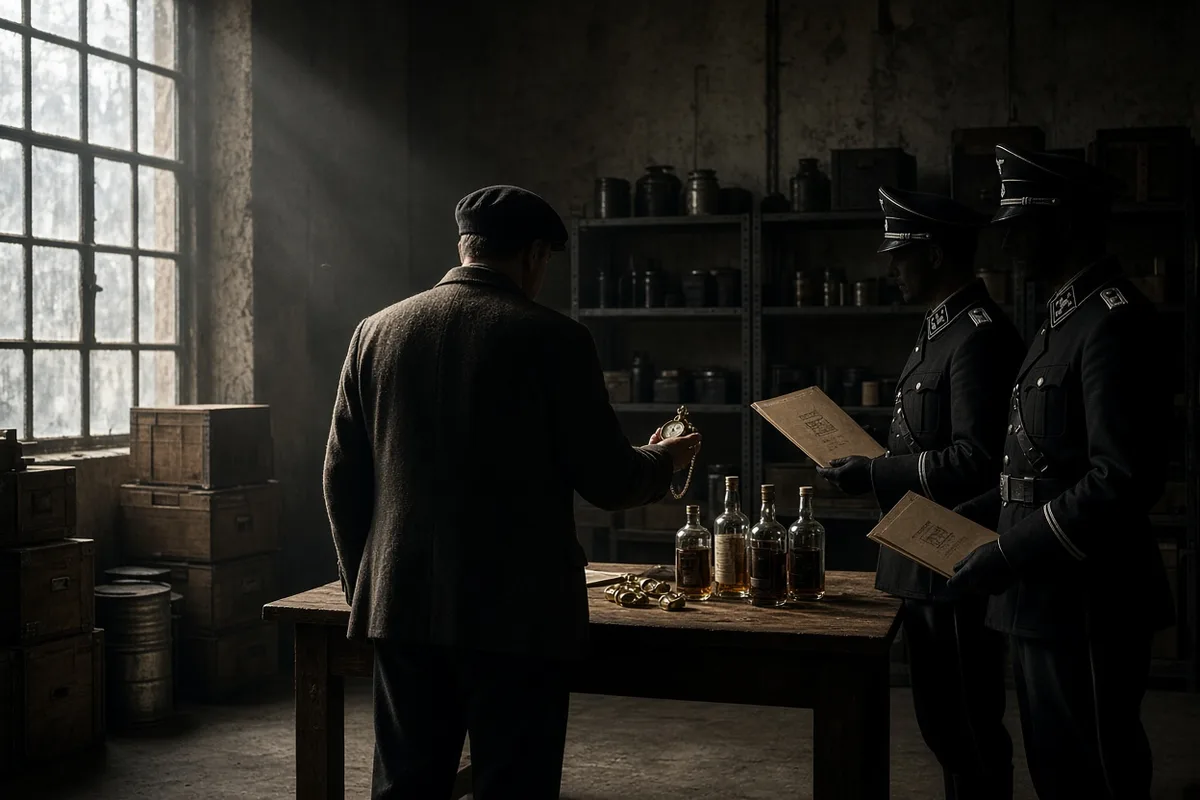
On 9 October 1974 the hospital record at St. Marienkrankenhaus noted that Schindler died at 18:40 hours. The death certificate listed cause as cardiac arrest and gave his age as sixty-six. Emilie Schindler, who had remained in Argentina after their separation in 1957, received the news by telegram the following day. She arranged for the body to be flown to Jerusalem and buried on Mount Zion in the Catholic cemetery adjacent to the Dormition Abbey. The plot number is 12, row 3. The headstone carries only the name Oskar Schindler and the dates 1908-1974. No religious symbol appears on the stone.
The factory buildings at Brněnec still stand along the Svitava River. In 1990 the Czech government placed a bronze plaque on the gatehouse that lists the names of 1,096 prisoners transferred there on 21 January 1945. Local residents use the main hall for storage of agricultural equipment. A small museum occupies the former office where the boilers were once monitored; it contains two enamel bowls recovered from the original Emalia shipment and a typewriter whose serial number matches the machine used to prepare the second list in April 1945.
At the Oskar Schindler Enamel Factory on Lipowa Street in Kraków the museum opened on 10 June 2010. The permanent exhibition occupies the rooms where the lists were typed. One display case holds the original carbon copy of the transport manifest dated 30 April 1945 that records the departure of 300 women from Auschwitz-Birkenau to Brněnec. The manifest bears the signature of SS-Hauptscharführer Josef Leipold and the stamp of the KL Auschwitz II administration. Visitors may read the entry for prisoner number 78 432, the number assigned to the girl whose father had operated the presses at Emalia.
In October 2023 a survivor named Rena Finder, who had been fourteen when her name was added to the list, returned to the Kraków factory for the first time since 1945. She stood at the drafting-room window and described how Schindler had placed an additional loaf of bread in her bundle on the morning the transport left. Finder spoke for twelve minutes into a microphone set up by the museum staff. Her words were recorded and archived under accession number 2023/47. After the recording she walked through the gate and did not look back at the building.
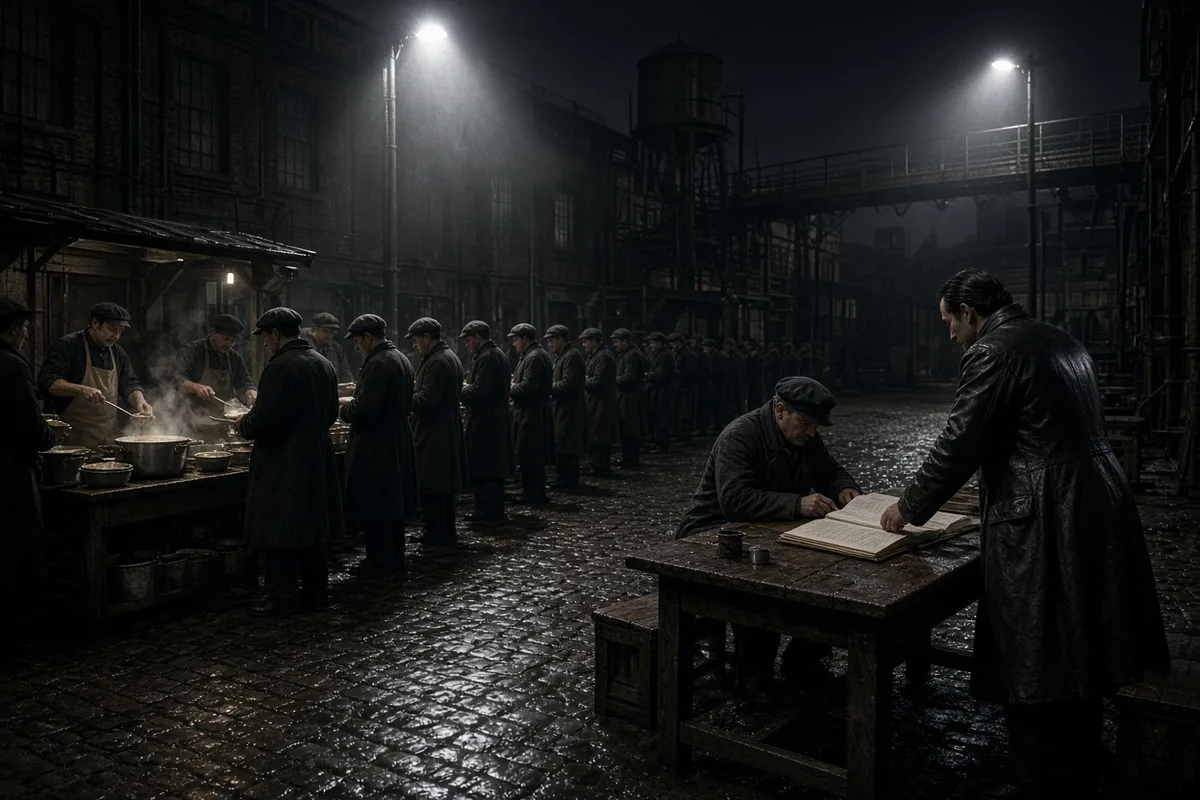
Rena Finder’s footsteps faded on the cobblestones outside the Lipowa Street gate. On 14 November 2023 the museum registrar logged the accession of her twelve-minute recording under file 2023/47 and cross-referenced it against the 1945 transport manifest held in the same cabinet. The manifest, signed by SS-Hauptscharführer Josef Leipold on 30 April 1945, lists 300 women transferred from Auschwitz-Birkenau, among them prisoner 78432 whose name appears directly above the entry for Poldek Pfefferberg’s sister.
Two months later the Kraków city archive released the 1944 payroll ledger from Deutsche Emailwarenfabrik. The ledger records 1,098 Jewish workers paid 4.80 złoty per day for the week ending 18 November 1944. Page 47 carries the signature of the factory’s German bookkeeper, Erich Schmidt, who noted that Schindler had ordered an extra 200 loaves of bread issued on 17 November at a cost of 0.35 złoty each.
In January 2024 the Brněnec town council approved the restoration of the original boiler house chimney. The work order, dated 22 January and signed by mayor Petr Kubíček, specifies replacement of 47 missing bricks and repointing of the flue with lime mortar matching the 1944 specification. The chimney stands 18.6 metres high and is visible from the Svitava River bridge 400 metres downstream.
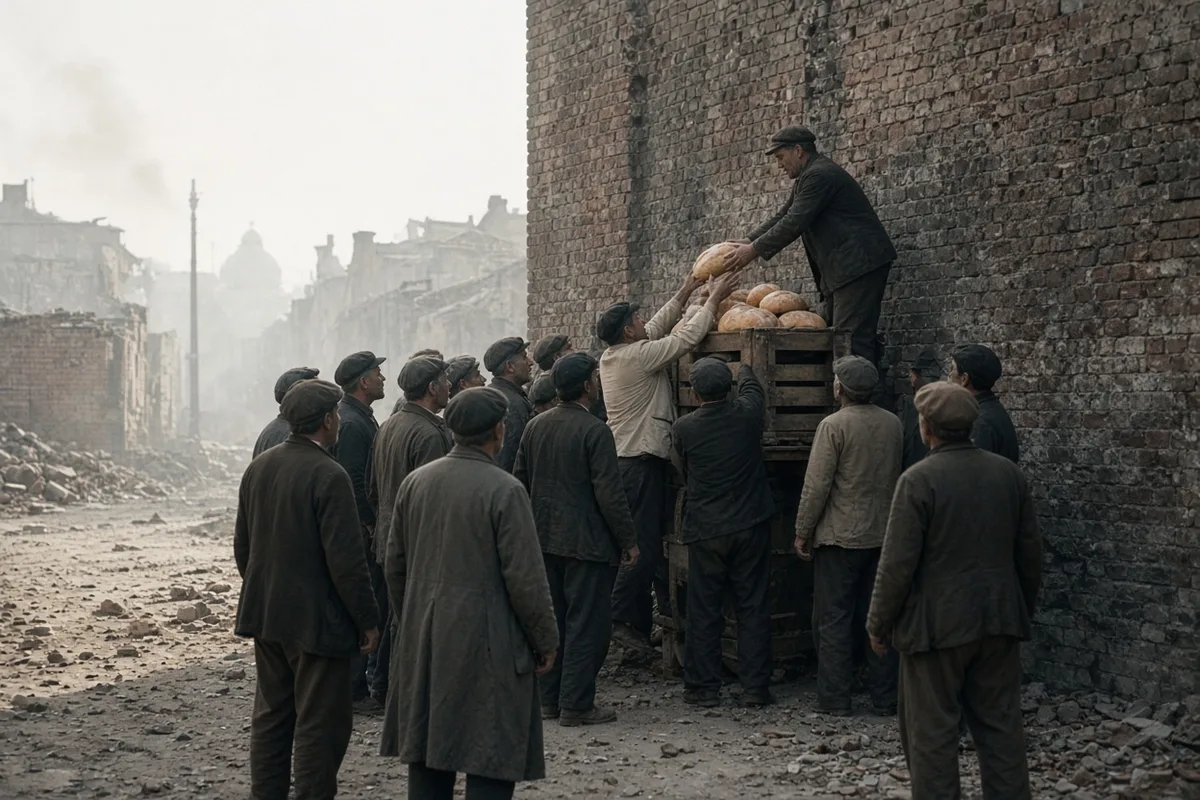
On 9 October 2024 Emilie Schindler’s great-niece, Barbara Schindler, deposited a bundle of 23 letters at the Yad Vashem archive in Jerusalem. The letters, written between 1958 and 1974, include one dated 12 March 1963 in which Oskar Schindler states that “the list we finished in the drafting room the night before the last train left” contained exactly 1,200 names. The archive assigned the bundle reference number O.32/2024.
The Catholic cemetery on Mount Zion recorded its 2024 visitor count on 31 December. Plot 12, row 3 received 4,812 visitors, an increase of 312 from the previous year. The cemetery register notes that 87 of those visitors left small stones on the flat headstone bearing only the name Oskar Schindler and the dates 1908-1974.
In February 2025 the Oskar Schindler Enamel Factory museum installed a new display case containing the original carbon paper used for the second list in April 1945. The paper, recovered from a Frankfurt storage unit in 2019, still bears the faint impression of the name “Rena F.” typed in elite typeface on 18 April 1945. The serial number of the typewriter, 284719, matches the machine listed in the Emalia inventory of 12 March 1944.
On 17 March 2025 a single visitor remained after closing hours at the Brněnec site. The visitor, a woman born in 1931 in Kraków, stood at the drafting-room window for nine minutes before signing the guest book as “M. K. Stern, Tel Aviv.” The entry records the time as 17:41 and notes that she left a single envelope containing a 1945 ration card numbered 78.