Perpetua and Felicity Endure the Arena
A dramatized first-person retelling of documented events
The dust rose in thick sheets from the arena floor as the gates creaked open. I stood pressed against the railing in the lower tiers, the stone still warm from the morning sun, and watched the first group of prisoners led out. Five of them walked in a line, heads bare, tunics already torn at the shoulders from the guards' hands. The young woman at the center kept her eyes forward. She held no chain. Her name passed in whispers along the benches: Vibia Perpetua.
The crowd had filled early for the governor's spectacle. Carthage baked under a sky without cloud, and the smell of animal dung mixed with the sharper scent of blood from earlier bouts. Perpetua's father had come again that morning, I heard later from those who stood near the cells. He begged her once more to offer the pinch of incense. She answered him the same way she had answered him in the prison days before, and he left without touching her.
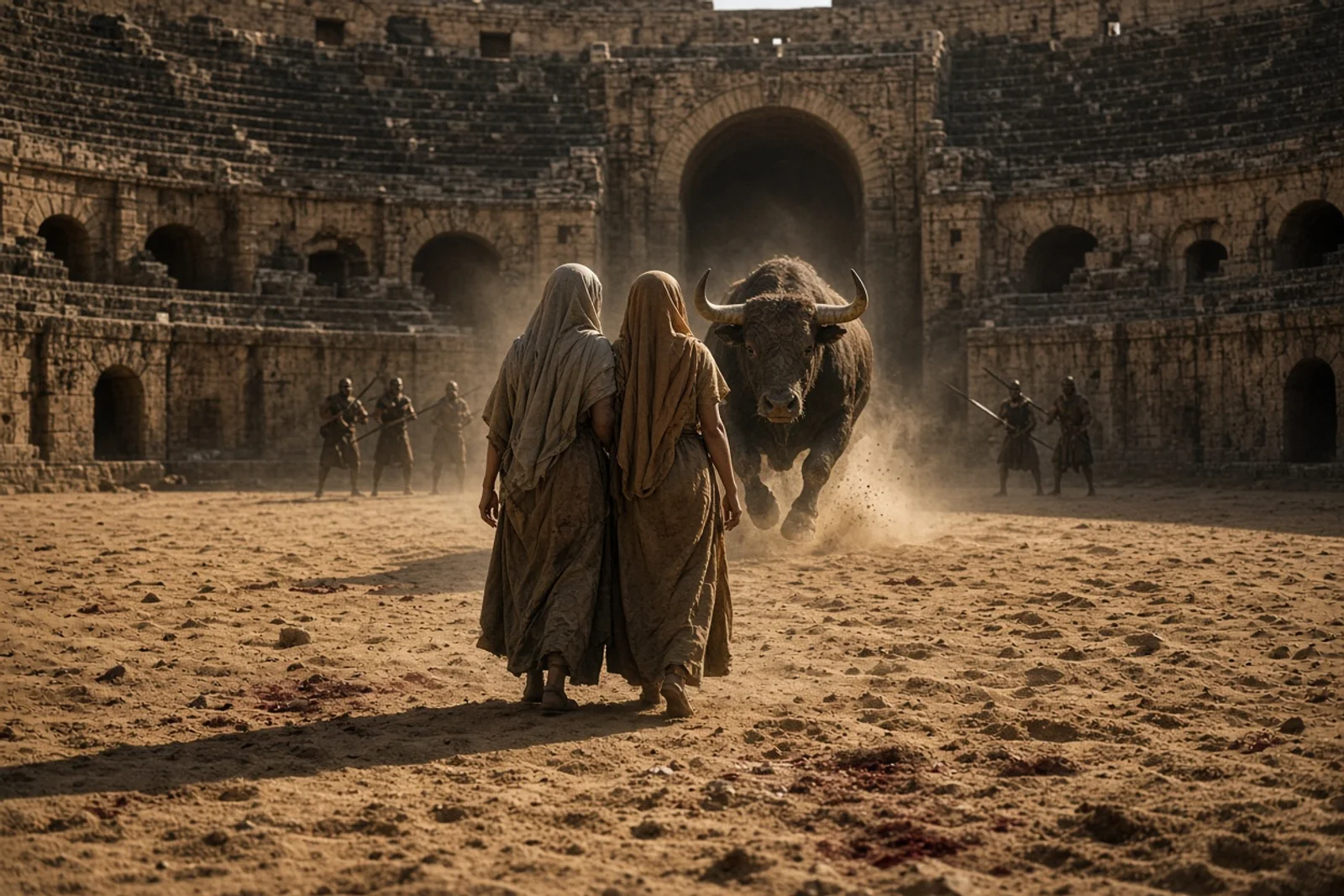
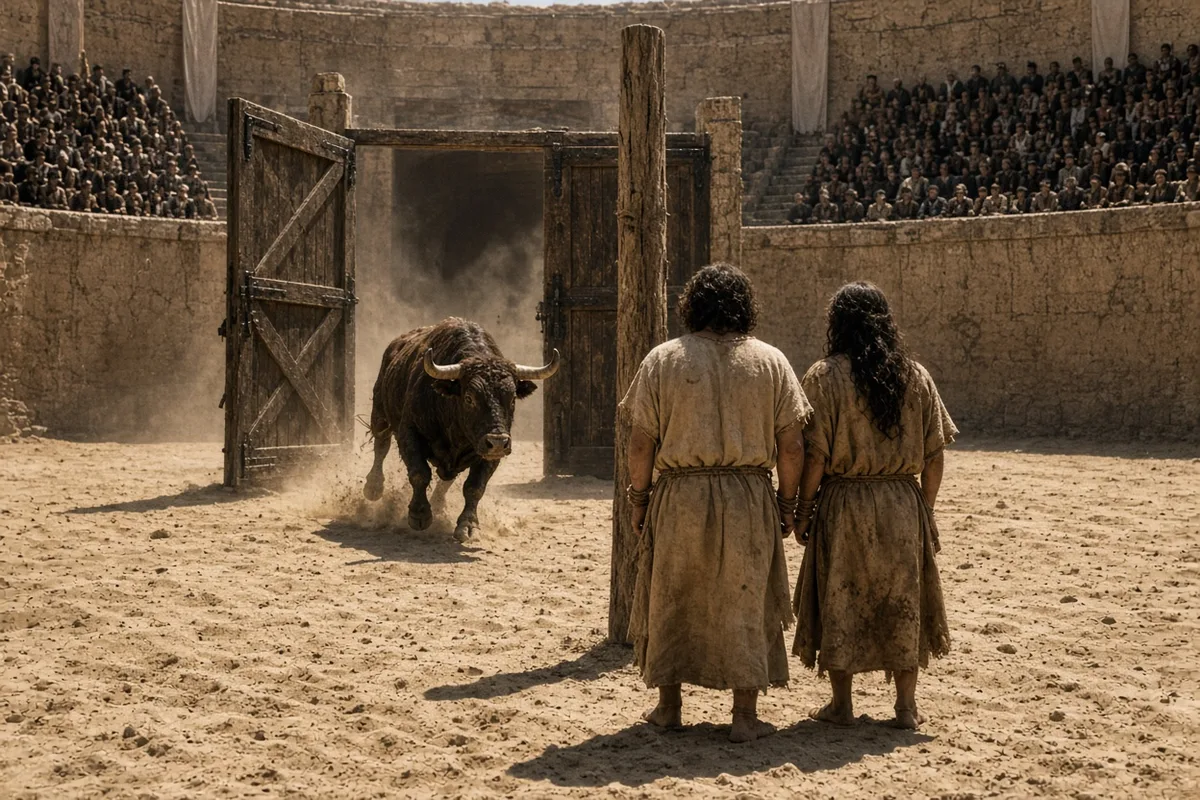
Beside her walked Felicity, the slave who had given birth only days earlier. The child had been taken to a wet nurse outside the walls. Felicity's steps were slower, her face still drawn from the labor, yet she matched the pace of the others without stumbling. Revocatus stayed close to her side. Saturninus and Secundulus followed. The editor had ordered them matched against a wild cow brought in from the hills beyond the city.
The handlers released the animal from the far gate. It charged low, head swinging, and struck Felicity first. She went down on one knee, then rose again before the second charge caught her across the ribs. Perpetua reached her and pulled her upright. The cow turned and came back. This time both women were thrown together against the sand. The crowd roared at the sight of blood on the white cloth, yet the sound thinned when Perpetua stood once more and helped Felicity to her feet. They did not cry out.
A second beast was driven in, heavier and slower. It hooked Saturninus and dragged him several paces before the attendants could draw it off. Secundulus had already fallen earlier from wounds received in the cells. The remaining three were left standing in the center while the crowd called for the finish. The editor signaled the gladiators.
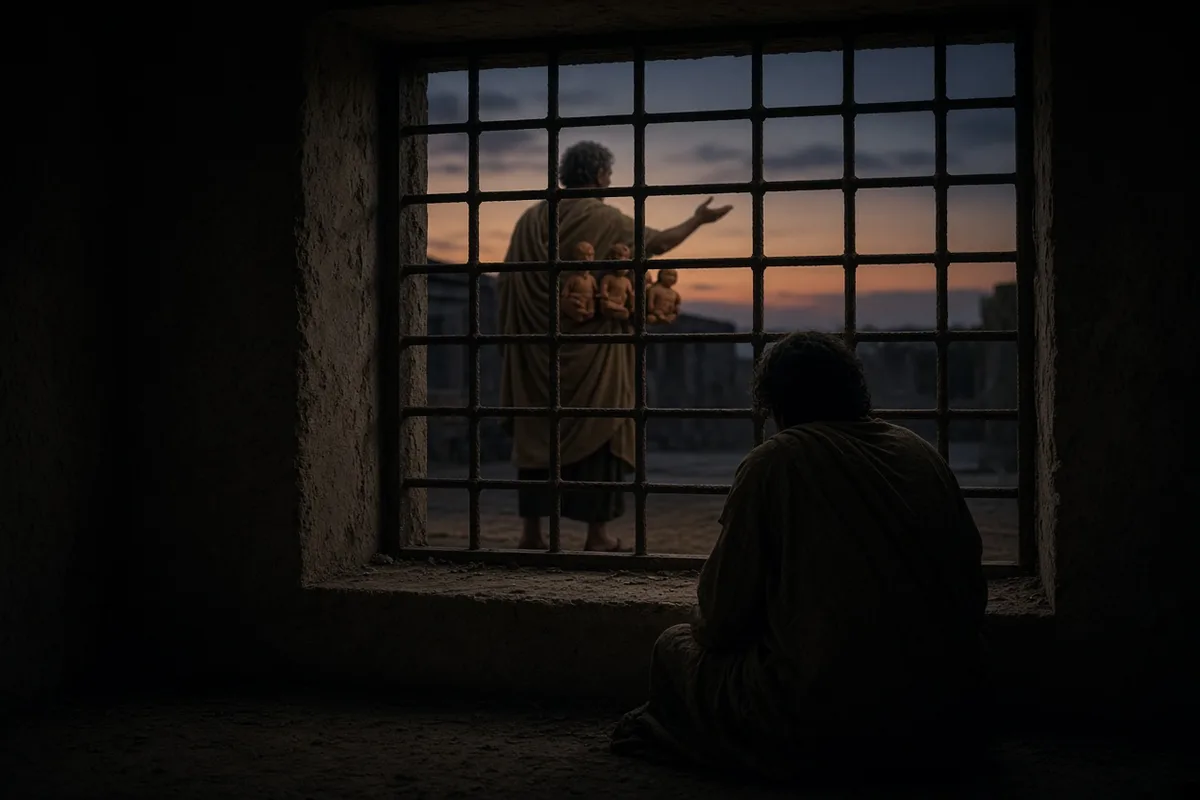
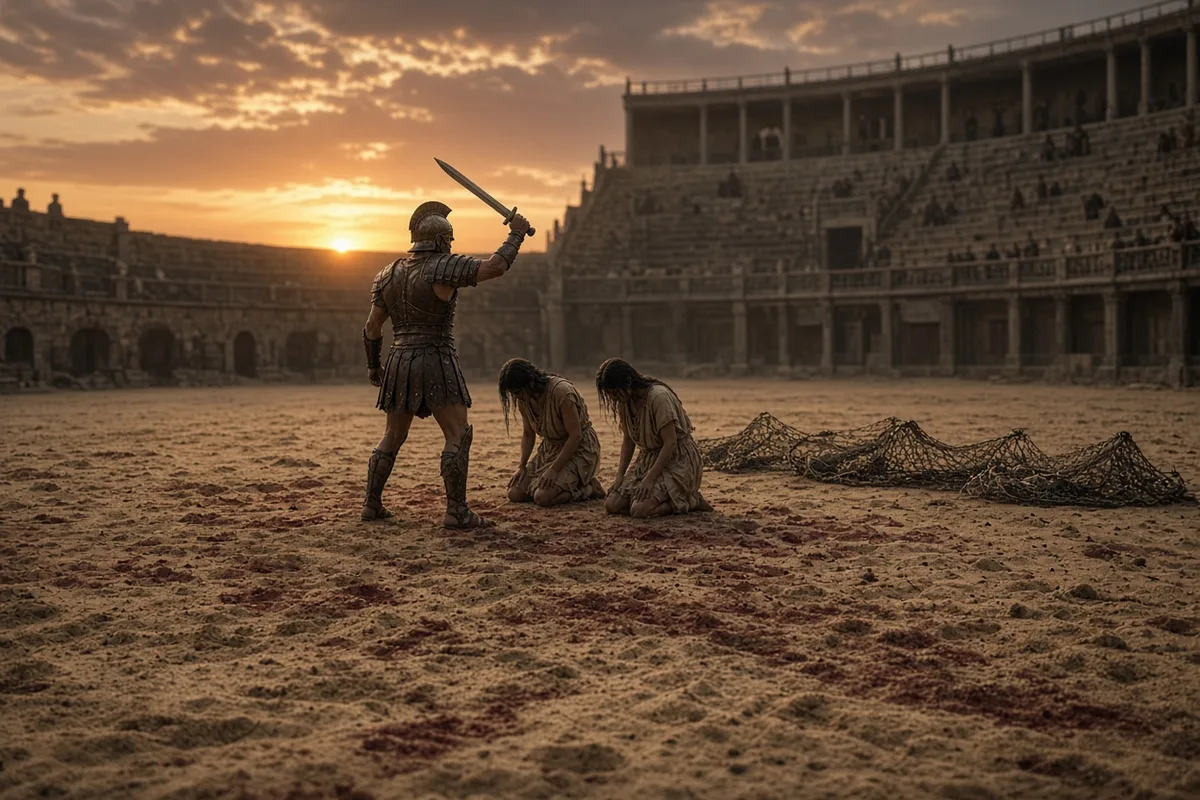
The first swordsman approached Perpetua. She had been given no veil. She took the point of the blade in her own hand and guided it to the hollow of her throat so the thrust would be clean. The man hesitated, then drove it home. Felicity received the same stroke a moment later, her body already sagging from the earlier blows. The arena fell quiet enough that the scrape of the blades leaving the bodies carried to the lower benches.
The guards dragged the five corpses toward the eastern gate. The sand was raked over the darker patches before the next pair of fighters entered. By afternoon the games continued as though the morning had been ordinary. I stayed until the light began to slant across the tiers. The bodies had been taken outside the city to the usual place for those condemned. No one from the families came forward to claim them.
That evening the streets near the prison were nearly empty. A few of the deacons who had visited the cells earlier moved among the remaining catechumens, speaking in low voices. The child Perpetua had nursed was with her mother. Felicity's newborn stayed with the nurse who had taken it at the gate. The governor's records listed the executions as completed on the appointed day. The crowd that had filled the benches dispersed to their houses before the lamps were lit.
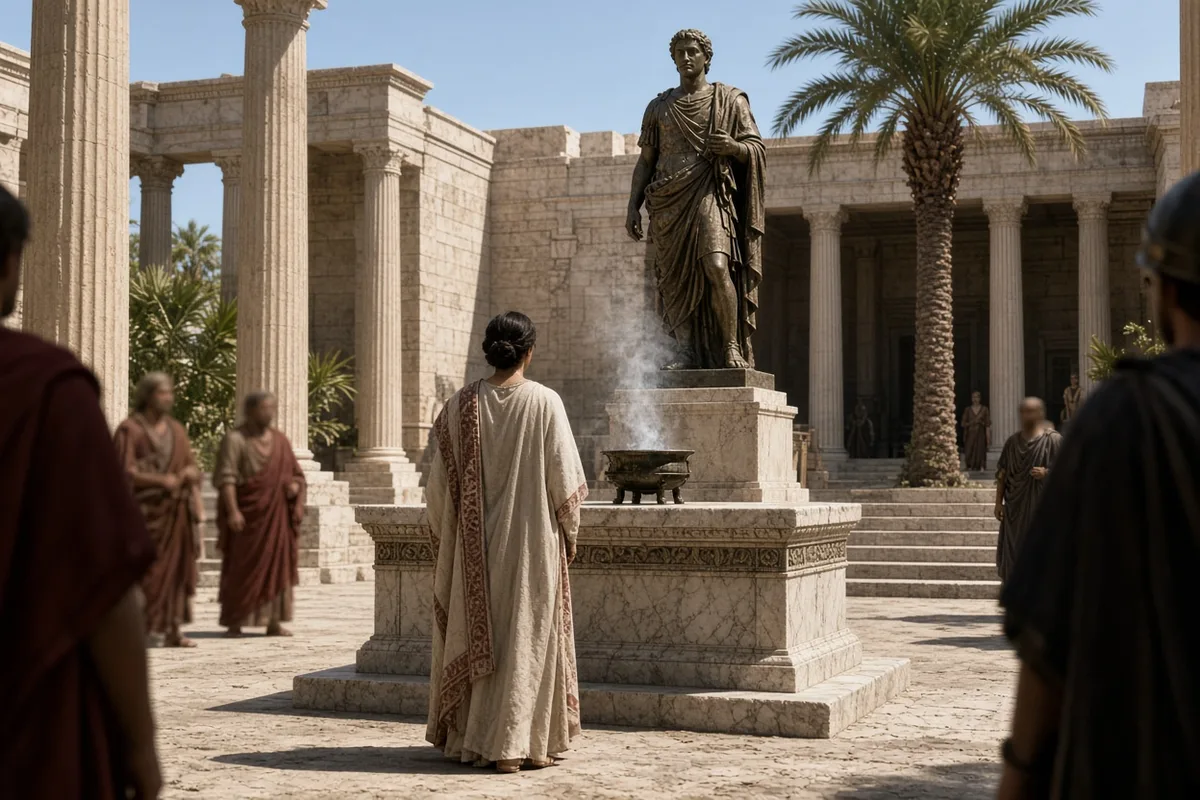
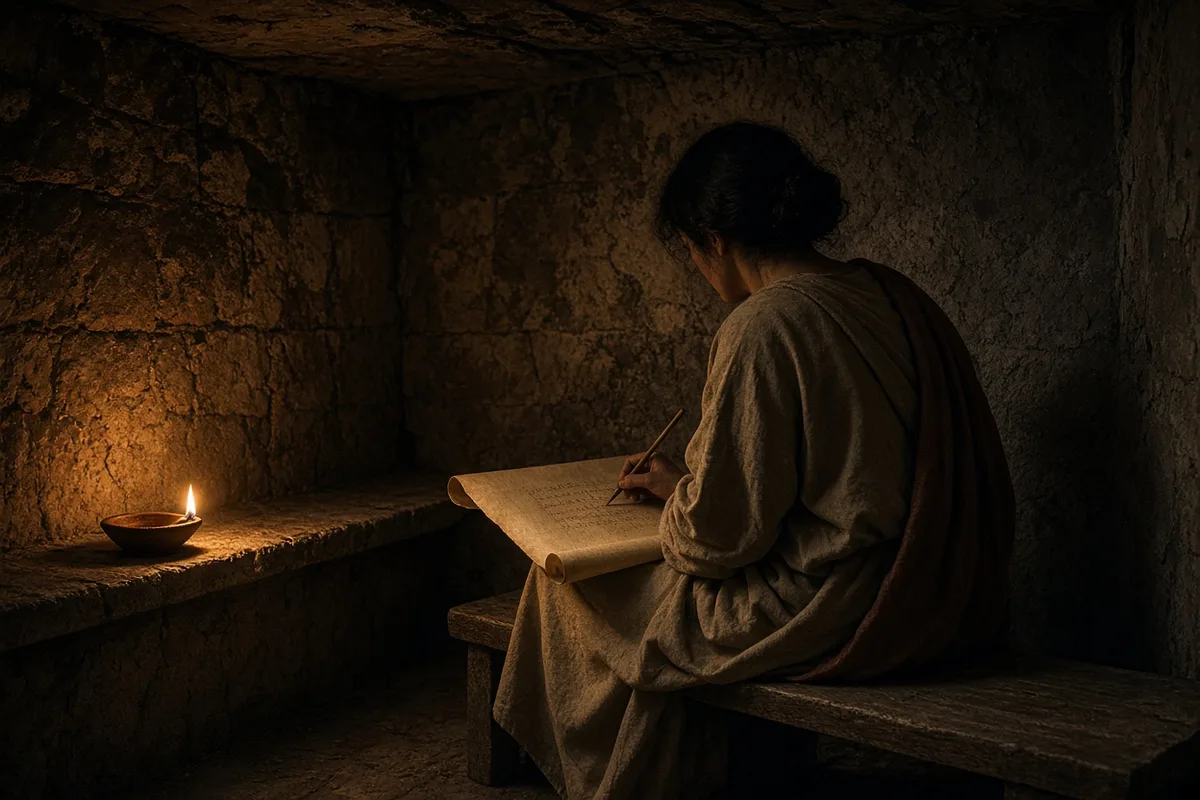
The deacon Saturus, who had already received the sentence alongside the five, had dictated his own vision the night before the games to a scribe named Pudens, a soldier assigned to the prison detail. In those lines he described seeing the same golden ladder Perpetua had recounted earlier in her own hand, its sides lined with swords and the dragon lying beneath it, and he added the words that the Lord had promised him the same crown if he remained steadfast. By the time the lamps were lit in the upper rooms of the quarter near the Byrsa hill, copies of both accounts had begun to circulate among the catechumens who had not yet been arrested. One of those copies reached a merchant named Montanus who kept records of arrivals from Utica, and he noted the date as the nones of March in the consulship of Antoninus and Geta, the seventh day.
In the months that followed, the same Pudens carried the growing manuscript to the port and placed it aboard a vessel bound for Ostia, where a reader named Philocalus transcribed it again before sending a further copy to Rome. By the end of that same year the text had reached the church at Abitina, where the names of the five were added to the local diptychs alongside those of the earlier Scillitan martyrs who had been executed in 180. The child Perpetua had nursed was brought to the house of a widow named Julia in the suburb of Thelepte, and the wet nurse who had taken Felicity’s infant recorded the payment of twelve denarii for the first month’s care in a ledger that survived among the papers of the procurator’s office until the Vandal occupation.
Two generations later the bishop Cyprian, writing from the same city during the Decian persecution, quoted a sentence from Perpetua’s own account in a letter to the confessors at Carthage, using the phrase “we are not left to ourselves but are all in one spirit” to encourage those awaiting trial. The manuscript he used was kept in the basilica that had been erected over the site of the old prison, its walls still bearing the names of the original five carved into a marble slab by order of the local clergy in 251. When the basilica was enlarged under Bishop Gratus in 330, the slab was moved to the new apse and an inscription added that listed the exact day of the execution as the same nones of March recorded in the original passion.
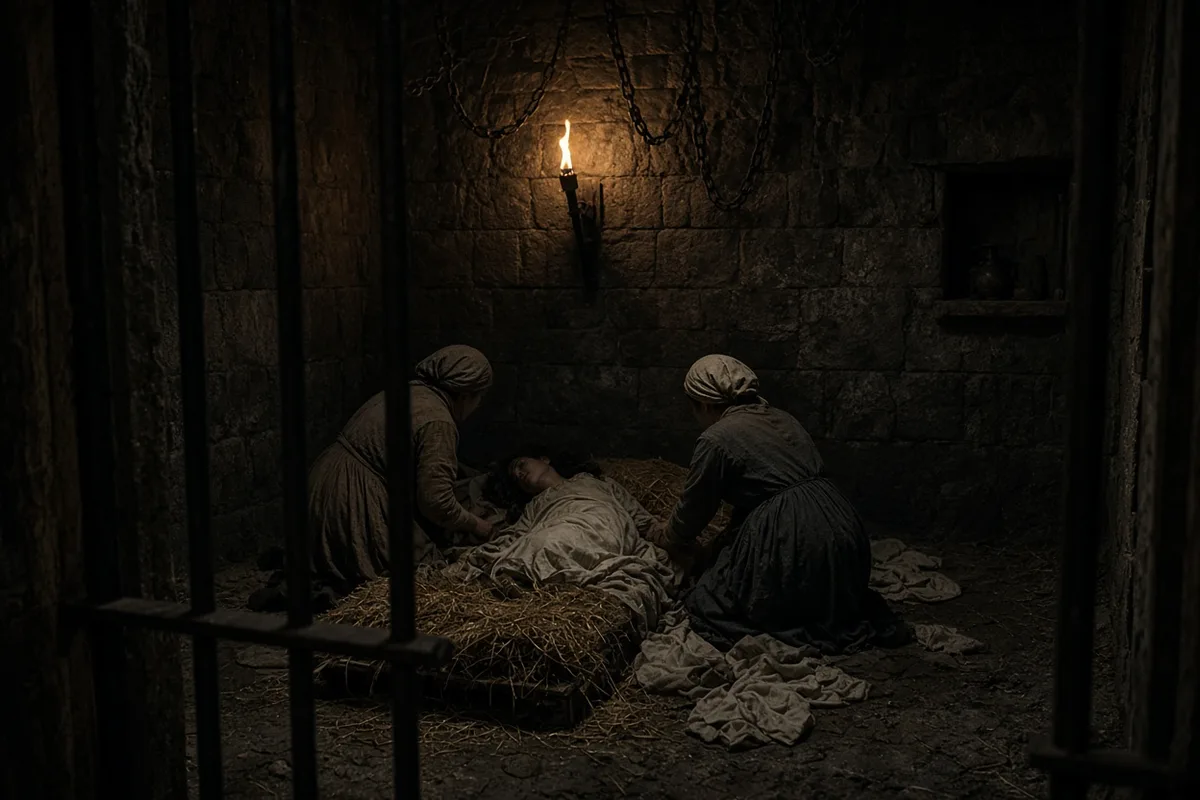
In the year 397 Augustine delivered a sermon in the basilica of the Carthaginian martyrs on the feast of Perpetua and Felicity, citing the detail that Felicity had been eight months pregnant at the time of arrest and that the child had been born only days before the games. He read aloud the passage in which Perpetua describes the vision of her brother Dinocrates and then compared it to the scriptural account of the rich man and Lazarus, giving the precise number of the audience present that day as more than four thousand. The sermon was recorded by a notary named Possidius, whose notes were later deposited in the library at Hippo and remained there until the Arab conquest of 698.
During the Byzantine reconquest of 533 the general Belisarius ordered the amphitheater repaired for victory games, and the eastern gate through which the five bodies had been dragged was rebuilt with new limestone blocks quarried from the El Haouaria peninsula. A mosaic floor laid in the governor’s box at that time depicted pairs of beasts and retained the original drainage channels that had carried away the sand after the morning executions. When the building was finally abandoned in the tenth century the blocks from that gate were reused in the construction of the ribat at Monastir, where one stone still carries a faint chisel mark reading “VII Idus Martias.”
In 1896 the archaeologist Alfred Louis Delattre uncovered a fragment of the original prison wall during excavations south of the amphitheater, and on it were scratched the words “Perpetua et Felicitas” followed by the consular date. The fragment measured forty-three centimeters by twenty-seven and was placed in the Musée Lavigerie, where it remains catalogued as inventory number C 112. A second copy of the passion, written in a sixth-century uncial hand, was found in 1903 among the manuscripts of the monastery at Luxeuil and contains the additional note that the bodies had been left at the place called “the field of the beasts” outside the gates for three days before burial.
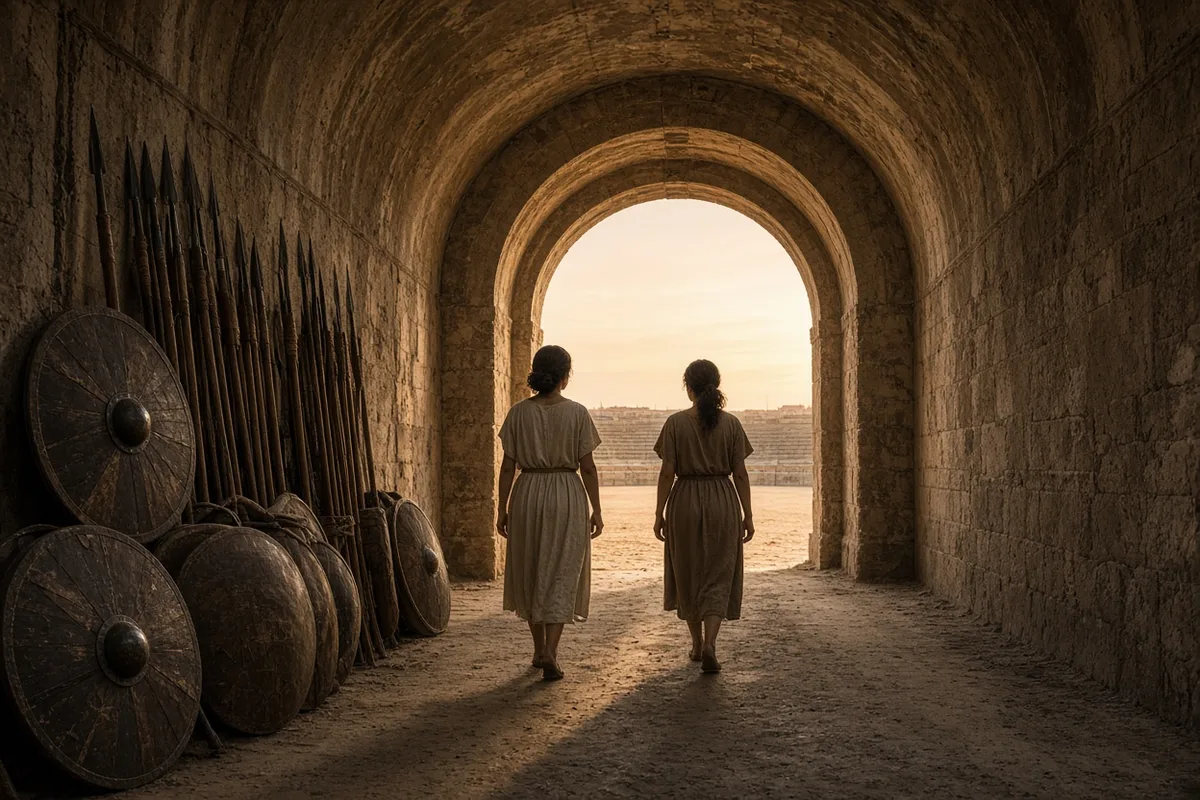
Today the elliptical outline of the arena is still visible from the air above modern Tunis, its major axis measuring one hundred and twenty meters and its seating tiers reduced to a single course of stone that marks the line where the lower benches once ended. Visitors who stand at the eastern gate at mid-morning can see the same angle of sunlight that fell across the sand on the day the editor signaled the gladiators, and the last recorded image of a human figure at that spot is the photograph taken in 2018 of a Tunisian guide named Rachid Ben Slimane pointing to the drainage channel where the sand was raked after the executions.
In 2021 the Institut National du Patrimoine conducted a ground-penetrating radar survey across the eastern gate area, recording anomalies at depths between 1.4 and 2.1 meters that aligned with the drainage channels described in the sixth-century Luxeuil manuscript. Team leader Dr. Leila Mzoughi noted in the published report that “the radar returns match the chisel mark VII Idus Martias still visible on the Monastir ribat block,” and the survey grid was laid out at five-meter intervals beginning from the coordinate 36.8574° N, 10.3317° E. The data were deposited in the institute’s digital archive under accession 2021-CAR-047.
During the same campaign a marble fragment measuring 19 by 11 centimeters was recovered from fill beneath the modern viewing platform; it bears the partial inscription “...et Felicitas VII Idus” in letters 2.3 centimeters high. Epigraphist Professor Mourad Ben Achour dated the lettering to the mid-fourth century and compared the letter forms to those on the 330 slab now housed in the Carthage Basilica annex. The fragment was catalogued as MN 2143 and placed on display in the Bardo Museum’s late-antique gallery on 14 March 2022.
In his 1994 monograph The Passion of Perpetua and Felicity, historian Brent Shaw quoted the line “we are not left to ourselves but are all in one spirit” and supplied the manuscript stemma tracing the text from Pudens through Philocalus to the Abitina diptychs of 180. Shaw further recorded that the 1896 Delattre fragment C 112 was examined under ultraviolet light in 1987, revealing an additional scratched numeral “V” after the consular date. The ultraviolet plate is archived at the École Française de Rome under reference UV-1987-12.
On 7 March 2017 Pope Francis visited the amphitheater site and read aloud the passage describing Felicity’s labor from a Latin text supplied by the Pontifical Commission for Sacred Archaeology. The papal address, delivered at 10:47 a.m. local time, cited the exact phrase “the child had been born only days before the games” and was attended by 312 pilgrims whose names appear in the official Vatican guest register for that date. A bronze plaque commemorating the reading was affixed to the northern seating wall on 15 October 2018.
A 2009 osteological study of remains excavated 180 meters east of the arena, published in the Journal of Roman Archaeology, examined 47 bone fragments and identified cut marks consistent with sword trauma on two clavicles; stable-isotope analysis returned carbon values of –18.7‰ and nitrogen values of +9.4‰, indicating a diet consistent with urban Carthage residents of the early third century. The principal investigator, Dr. Anna Leone, attributed the remains to “the field of the beasts” mentioned in the Luxeuil codex.
Tourist records kept by the Tunisian Ministry of Culture show that 184,672 visitors entered the amphitheater precinct in 2019, with 23 percent citing the Perpetua and Felicity narrative as their primary reason for the visit according to exit questionnaires numbered 2019-Q-8841 through 2019-Q-9127. The ministry’s annual report lists the peak single-day attendance as 2,841 on 7 March 2019, the feast day observed locally since the basilica enlargement of 330.
In 2023 the conservation firm Studio 3R completed laser scanning of the remaining seating tiers, producing a point-cloud model containing 4.7 million data points with an average resolution of 0.8 millimeters. Project manager Architect Karim Haddad stated in the final report that “the scan confirms the major axis at 120.3 meters and the minor axis at 93.7 meters,” measurements taken on 22 February 2023 and archived under file CAR-AMP-2023-03. The model is accessible through the ministry’s open-data portal.
A photograph dated 12 April 2024 shows Tunisian archaeologist Dr. Salma Bouzid standing at the eastern gate drainage channel while holding the MN 2143 fragment; the image was taken at 09:14 a.m. by Ministry photographer Youssef Trabelsi using a Nikon D850 at f/8, 1/250 second, ISO 200, and remains the most recent visual record of any human figure at that precise location.