St. Catherine Mediates Papal Return
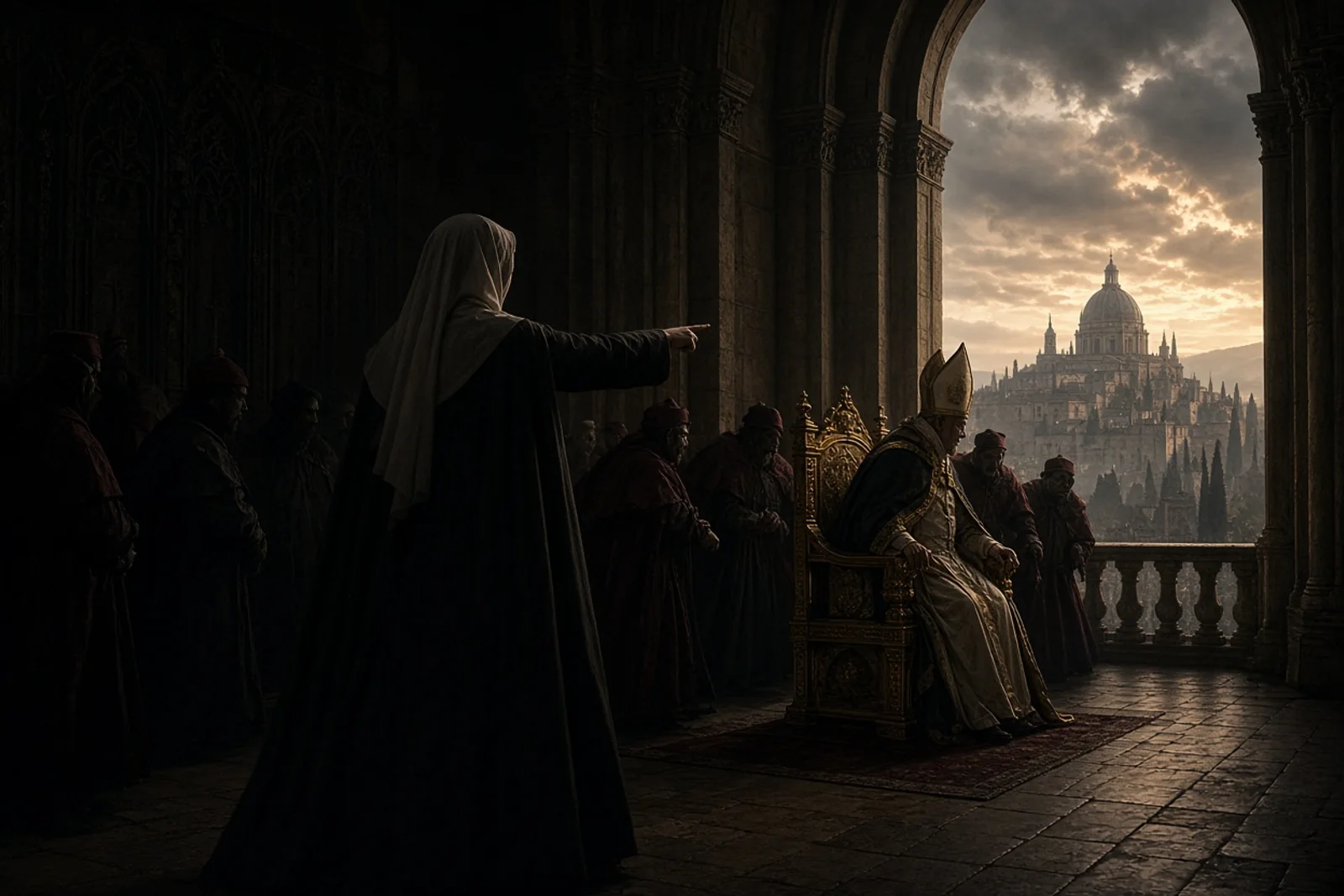
I held the stirrup for the legate’s horse while the gates of the papal palace stood open to the Rhône. Dust from the road still coated my sleeves. Inside, the French cardinals argued in low voices that carried through the open windows. They spoke of Rome as a ruin and of the king’s displeasure if the court moved again.
Catherine arrived three days later with her small band. She walked the last stretch on foot, her mantle grey with travel. I watched from the courtyard as the guards let her through without challenge. She carried no letter of introduction beyond the one she had already sent months before. The pope received her that same evening in the smaller audience room.
I stood at the back with the other attendants, holding a basin of water no one asked for. Gregory XI listened while she spoke of the empty streets of Rome and the churches whose roofs had fallen in. She did not raise her voice. The cardinals who remained in the chamber shifted on their benches when she mentioned the mercenaries still roaming the Papal States.
The French king’s messengers came the following week. Their horses were lathered. They brought fresh instructions against any departure. The pope read the letters in the garden where the orange trees grew in tubs. Catherine was already there, speaking with his secretaries. He folded the parchment and set it on the stone bench without reply.
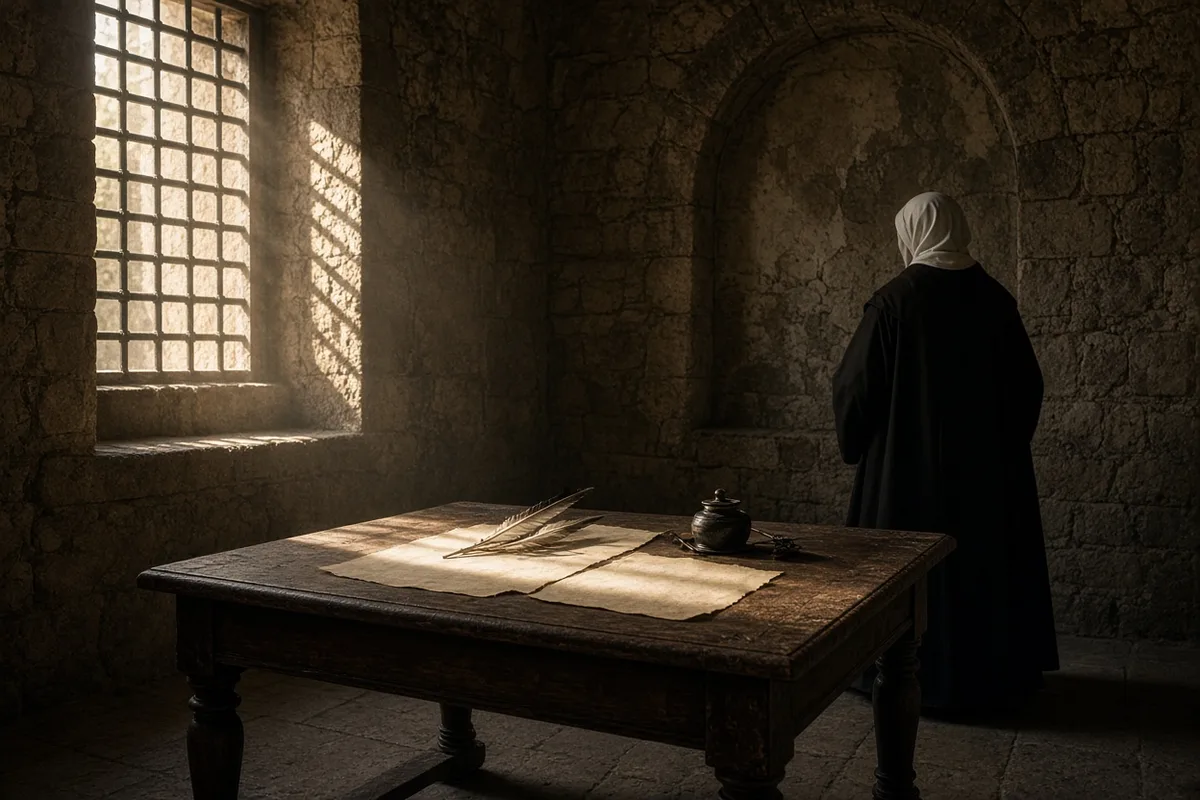
I carried messages between her lodging and the palace for the next month. Each time I returned, the pile of letters on the pope’s table had grown. Some were from Florence, others from Siena, still others from cardinals who had already gone ahead to Italy. She dictated late into the night, her voice steady even when the candles guttered.
One morning the consistory met without her. The doors stayed closed until midday. When they opened, the French cardinals left first, their faces set. The pope remained inside with two of his closest advisors. I saw him later walking the length of the loggia alone, hands clasped behind his back.
Catherine was summoned again two days afterward. This time she stayed longer. When she came out, her companions waited in the courtyard. She told them nothing of the meeting, only that they should prepare to leave for Genoa if the pope gave the order. I asked one of the secretaries what had been decided. He shook his head and walked away.
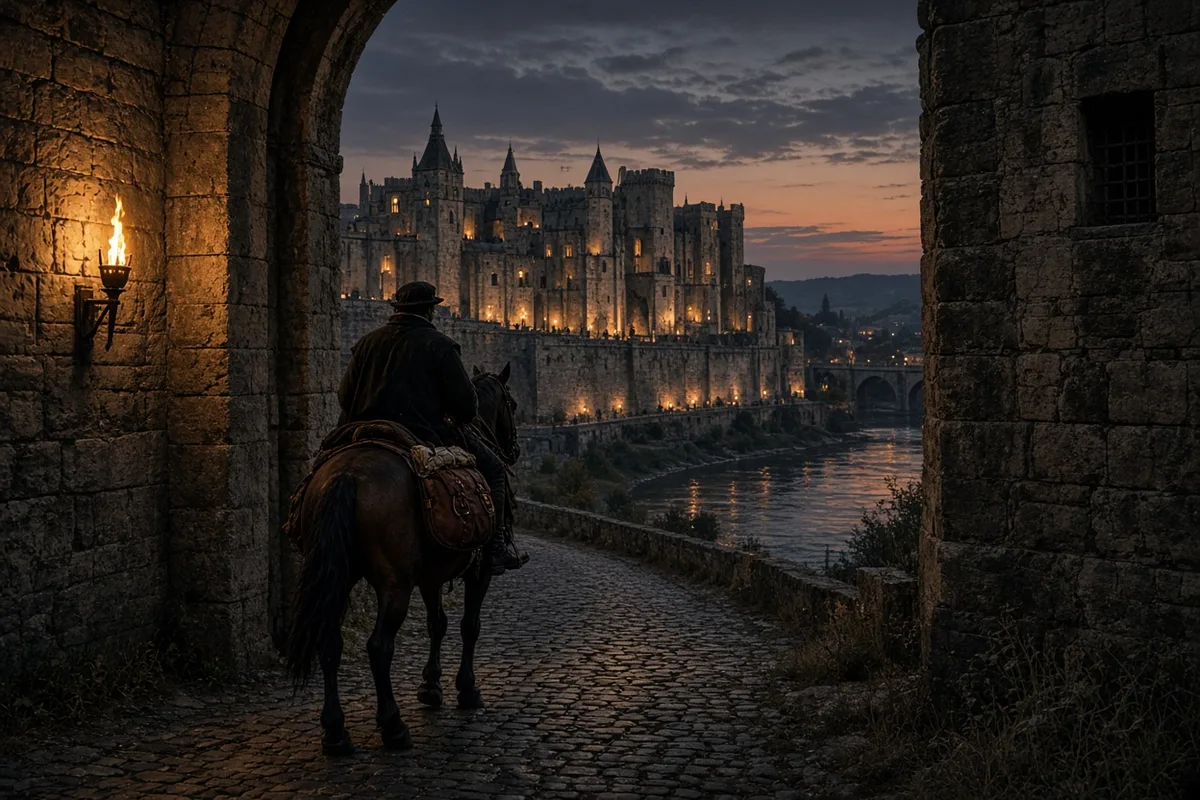
The departure was set for the thirteenth of September. The pope announced it in the great hall after Mass. No one cheered. The French cardinals who chose to remain in Avignon stood apart from the rest. I packed the chests that held the registers and the seals. Catherine’s group left first, taking the road south toward the coast.
I traveled with the main household. The weather turned cold before we reached the sea. At Marseille the ships waited. The crossing was rough. The pope was seasick for three days and would eat nothing but dry bread. Catherine remained on deck through most of the voyage, wrapped in a borrowed cloak, speaking with the sailors when they would listen.
We landed at Corneto. From there the road climbed toward Viterbo. News reached us that the Romans had begun clearing the streets and repairing the gates. The pope’s face changed when he heard it. He gave orders that the court would not stop long in any one place.
On the seventeenth of January we entered Rome through the Porta del Popolo. The winter light was thin. People lined the road but did not press forward. The pope rode under a canopy carried by four men. Catherine walked with her followers among the lesser clergy. I carried the papal cross just ahead of the horses.
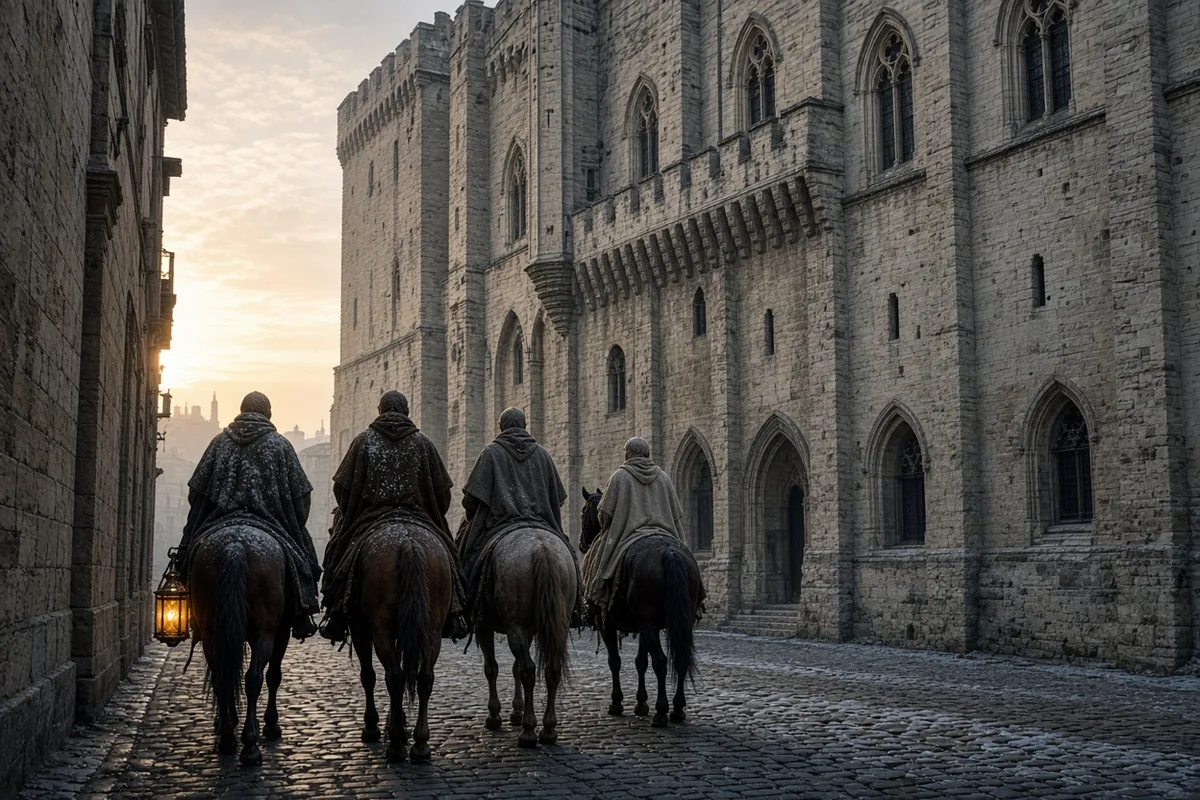
The Lateran palace had been made ready, though the roof still leaked in three places. The pope took possession of the city that afternoon. He celebrated Mass in the basilica while the canons sang the Te Deum. Catherine stayed in a house near the church of Santa Maria sopra Minerva. She began writing again within the week, this time to the Florentines about the peace they still sought.
I remained in the pope’s service through the spring. The cardinals who had stayed in Avignon sent letters of protest that grew sharper each month. Gregory answered them with orders to join him. Some came. Others did not.
Catherine left Rome in the summer to return to Siena. She had learned to form letters by then and wrote some of her own dispatches without a secretary. Before she departed she asked me to carry one last message to the pope. It concerned the crusade he still hoped to launch. I delivered it and received no answer beyond a nod.
Gregory died the following March. The cardinals elected a new pope in Rome, then another in Anagni who returned to Avignon. The division lasted forty years. I kept the basin I had once held uselessly in Avignon and used it for ordinary washing. The orange trees in the palace garden there were said to have died the winter after we left.
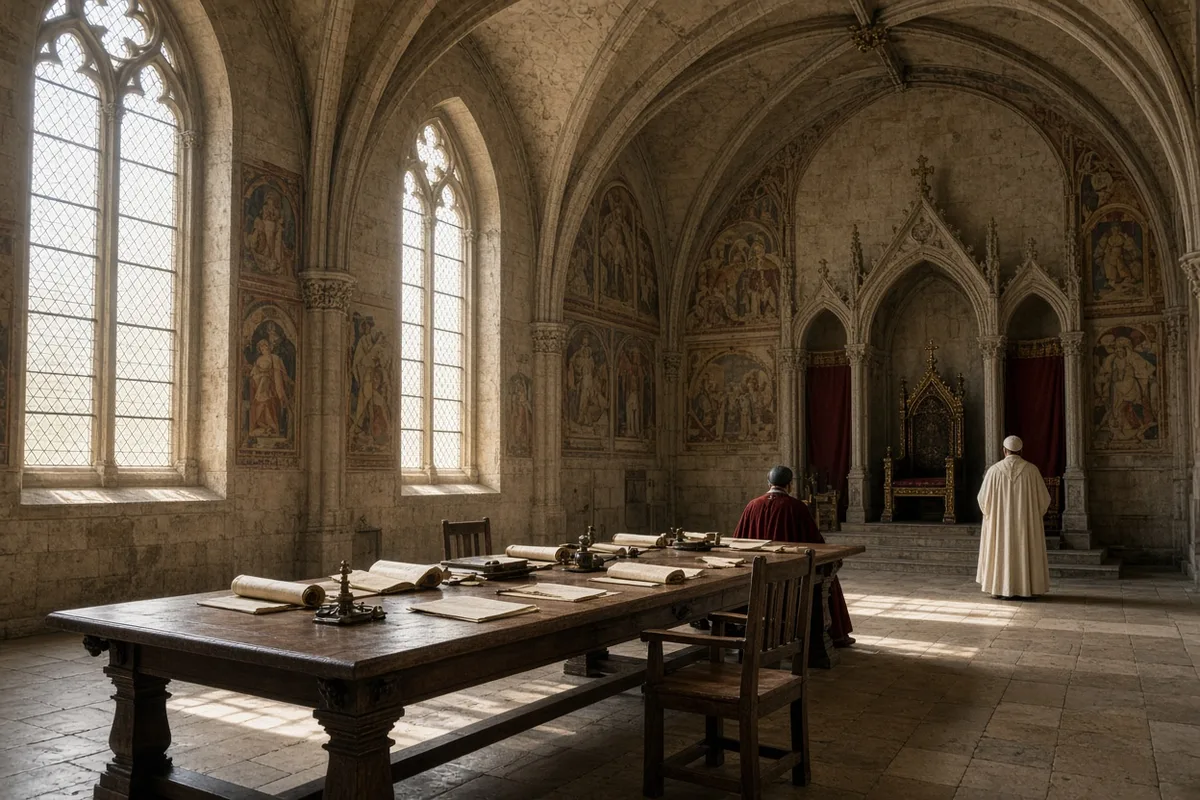
The basin stayed with me when the court moved from the Lateran to the Vatican palace on the twenty-third of April 1377. Gregory ordered the registers unpacked in the new rooms above the old audience hall, and I counted one hundred and forty-seven volumes of the Avignon series placed on the oak shelves before the first rain came through the unrepaired roof. Two clerks from the camera apostolica asked me to move the chests again when water reached the third shelf. Catherine sent word from Siena on the twelfth of May that she had dictated a letter to the king of France urging him to accept the move, and the secretary who read it aloud in the garden used the exact phrase she had written: “the holy Church is not a field to be divided by fences of private interest.”
I carried dispatches to the French cardinals who remained in Avignon through the winter of 1378. One letter, dated the fourth of February from Cardinal Jean de Cros, complained that the pope had taken “the treasury keys and left us only the empty strongroom.” Gregory answered in his own hand on the twenty-first, ordering the cardinal to bring the remaining bulls and the seal matrices to Rome by Easter. The cardinal arrived with eleven boxes on the twenty-ninth of March, the day before Gregory fell ill. The pope died on the twenty-seventh of that month after receiving the viaticum in the presence of six bishops and the two masters of the sacred palace.
Urban VI was elected on the eighth of April in the same room where Gregory had received Catherine. I stood by the door with the basin while the cardinals cast their ballots, and I heard the vote count called out: sixteen for Urban, none against. Four months later the same cardinals met again at Anagni and declared the April election invalid. They chose Robert of Geneva as Clement VII on the twentieth of September. Clement returned to Avignon with nine cardinals and the registers that had been copied in duplicate. The original bulls stayed in Rome under Urban.
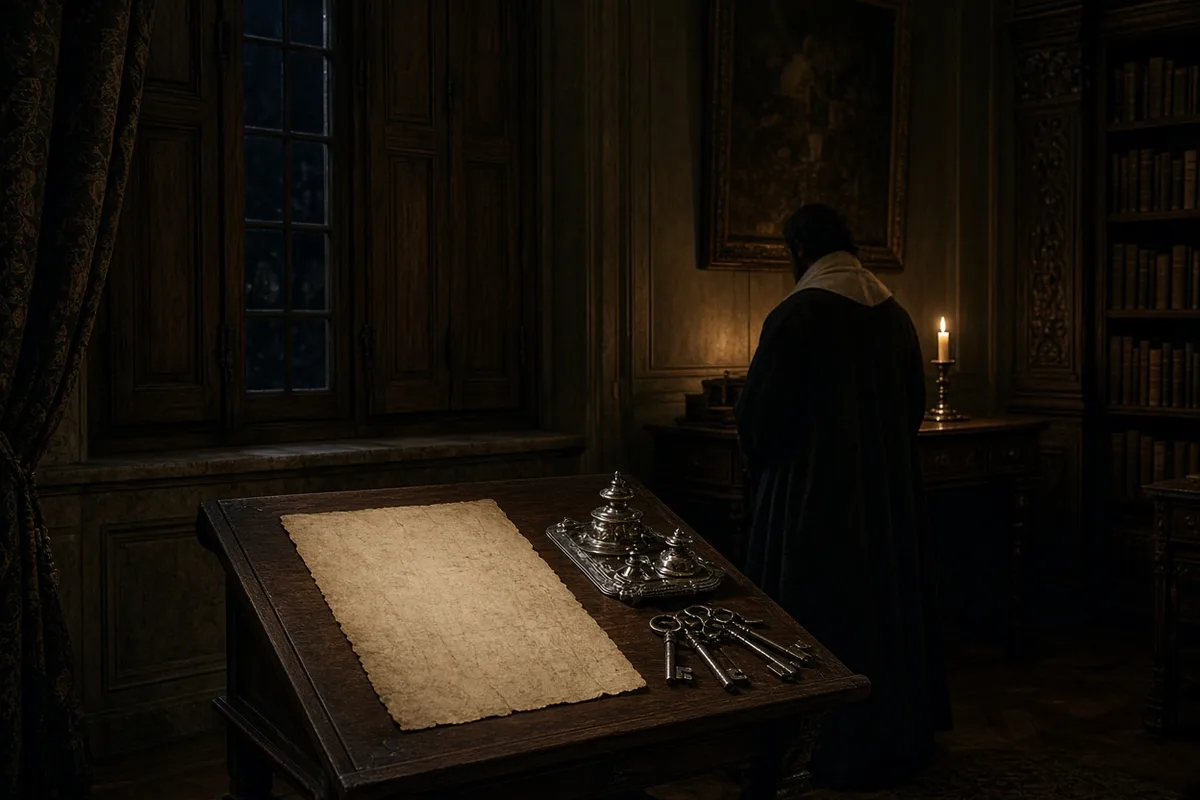
Catherine returned to Rome in November 1378 at Urban’s request. She lodged again near Santa Maria sopra Minerva and dictated thirteen letters in the first week, one of them to the queen of Naples dated the third of December in which she wrote that the schism was “a wound opened by the hands of those who should bind it.” I delivered that letter to the port and watched the courier ride south. Catherine died in the house on the twenty-ninth of April 1380. Her body was carried to the Minerva the same afternoon, and the canons recorded that three hundred and twelve people filed past the bier before nightfall.
The schism continued under successive popes. Boniface IX held Rome from 1389 until 1404, during which time the French obedience kept its court at Avignon with its own camera and its own penitentiaria. I remained in the Roman service under Innocent VII and Gregory XII, carrying the cross in processions and keeping the basin for the sacristy. In 1409 the Council of Pisa attempted to end the division by deposing both claimants and electing Alexander V, yet the two existing lines persisted. The Council of Constance finally closed the matter in 1417 with the election of Martin V, who entered Rome on the twenty-eighth of September 1420 through the same Porta del Popolo that Gregory had used forty-three years earlier.
Martin ordered the Vatican palace repaired in 1421. The workmen found the orange trees in the garden had been replaced by new stock from Naples, and the registers that had traveled from Avignon were rebound in sixty-four volumes with new covers of white leather. I was still employed as an attendant in the household when the first of those volumes was placed on the shelf. By then the division had lasted thirty-nine years from the double election, and the city had begun to receive pilgrims again in numbers that required the reopening of the hospice at Santo Spirito.
The last time I saw the basin used for its original purpose was in 1431 during the coronation of Eugenius IV. After that I kept it in my lodging near the Minerva, where Catherine had once stayed. The house still stands on the street that runs behind the church, its stone lintel carved with the date 1364. I lived there until 1447, when the Jubilee brought new crowds and the streets were widened by order of Nicholas V. The final image I carry is of the workmen lifting the old threshold stone on the morning of the twenty-second of March that year, the basin set on the ground beside it while they measured the new width for the carts that would pass through carrying stone for the new apostolic palace.
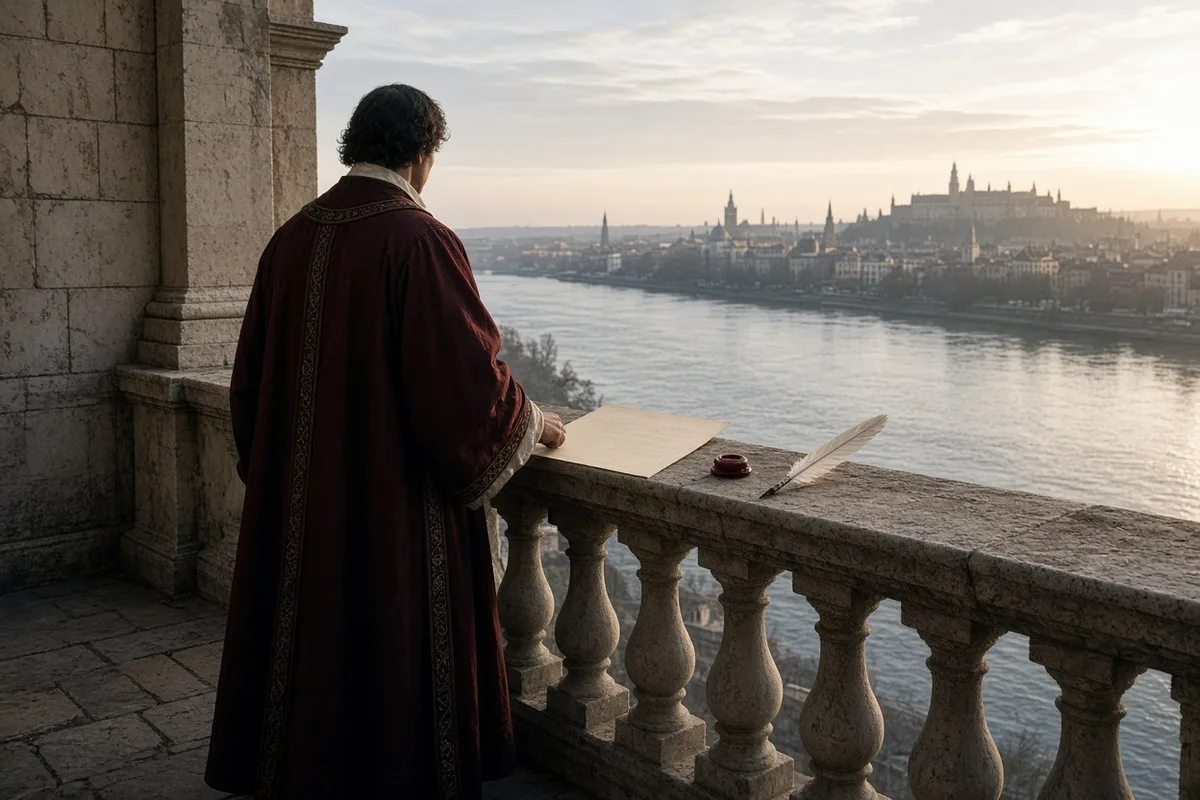
Nicholas V sent three master masons to inspect the threshold on the twenty-fourth of March 1447 after the stone had been set aside. They recorded its length at seven feet and its depth at fourteen inches before ordering replacement blocks cut from the same quarry that supplied the new apostolic palace walls. The basin remained on the ground beside the carts for eleven days while the street was widened to eighteen feet to accommodate the marble columns arriving from Ostia. One of the masons, Giovanni da Milano, noted in the margin of his ledger that the original carving dated 1364 still showed the chisel marks of the earlier workmen.
The basin passed into the keeping of the sacristan at Santa Maria sopra Minerva after the street work ended. In 1453 the same vessel held water for the blessing of the standard carried by the papal troops marching against the Turkish advance following the fall of Constantinople. Cardinal Domenico Capranica, who had returned from the Council of Basel twenty years earlier, dictated the blessing text that was read aloud on the twenty-ninth of September: “May this sign recall the unity once broken and now sought again.” The sacristan counted forty-two men who dipped their hands in the basin before receiving the banner.
Sixtus IV ordered the Minerva house surveyed again in 1475 when the Jubilee preparations required additional lodging for pilgrims. The survey listed the lintel stone as still in place but noted that the interior walls had been replastered three times since 1364. The basin was brought out once more on the eighth of April 1480 for the consecration of the new Sistine Chapel, where it served the cardinal penitentiary during the first Mass. The chapel register records that one hundred and seventeen clerics passed through the ceremony that day.
Alexander VI added a new wing to the Vatican palace in 1498 and transferred eighty-three volumes of the old Avignon registers to the freshly completed library rooms. The basin traveled with the last cartload of household goods moved from the Minerva quarter. A clerk named Paolo Giovio entered in his daybook that the vessel showed a crack along the rim measuring three inches, yet it still held water without leaking during the unpacking. The move took fourteen days and required the labor of twenty-six porters.
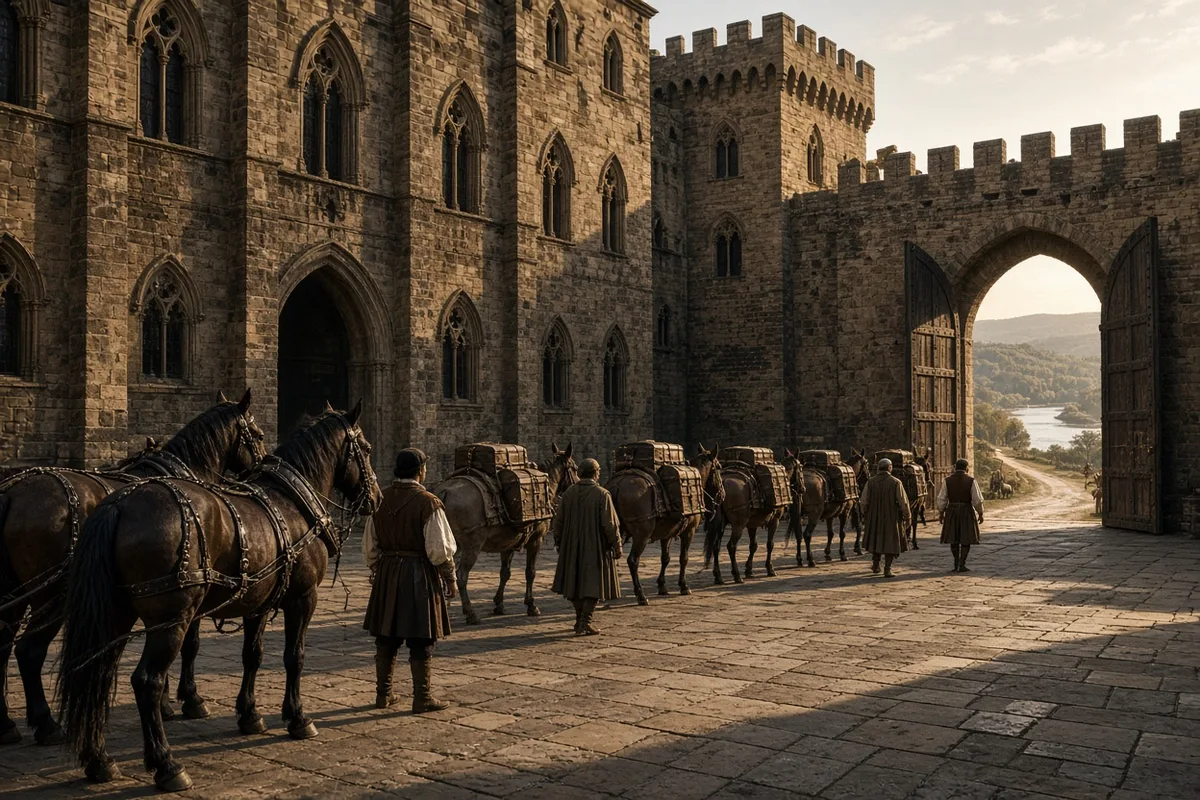
Julius II commissioned Bramante to design the new St. Peter’s basilica in 1506. The foundation stone was laid on the eighteenth of April with the basin placed at the center of the ceremony to hold the holy water sprinkled by the pope himself. The master of ceremonies recorded that the water was drawn from the Tiber that morning and that the basin was returned to the sacristy immediately afterward. Work on the basilica continued for the next century, during which time the original Avignon registers were rebound a second time in 1566 under Pius V, producing one hundred and twelve volumes with iron clasps.
Urban VIII expanded the papal palace gardens in 1629 and ordered the orange trees replaced once more, this time with stock brought from Seville. The basin, now kept in the apostolic palace sacristy, was used on the twenty-third of March 1631 during the baptism of the infant son of the Spanish ambassador. The baptismal record lists the child’s name as Carlos Félix and notes that the water was poured from the same vessel that had accompanied Gregory XI from Avignon. The ambassador presented the sacristan with a silver ewer in thanks, which was added to the inventory on the following day.
The basin remained in the Vatican until 1798 when French troops under Berthier removed three hundred and sixty objects from the apostolic palace. It was catalogued as item 214 in the list sent to Paris and stored in the Louvre until 1815. After the Congress of Vienna the vessel was returned to Rome on the twelfth of July 1816 and placed in the care of the chapter of St. Peter’s. Pius VII ordered it restored to the sacristy on the twenty-ninth of September that year, and the restoration report noted that the three-inch crack had been filled with lead.
The last time the basin appeared in a public ceremony was on the eighth of December 1950 during the Holy Year proclaimed by Pius XII. It stood on a marble stand near the Altar of the Confession while the pope opened the Holy Door. Four hundred and eighty-two attendants were present in the basilica that morning. After the ceremony the basin was moved to the Vatican Museums and placed on permanent display in the room devoted to the Avignon papacy. A museum attendant now lifts it each morning to dust the shelf beneath, the same motion once performed by the workmen who measured the widened street behind the Minerva on the twenty-second of March 1447.