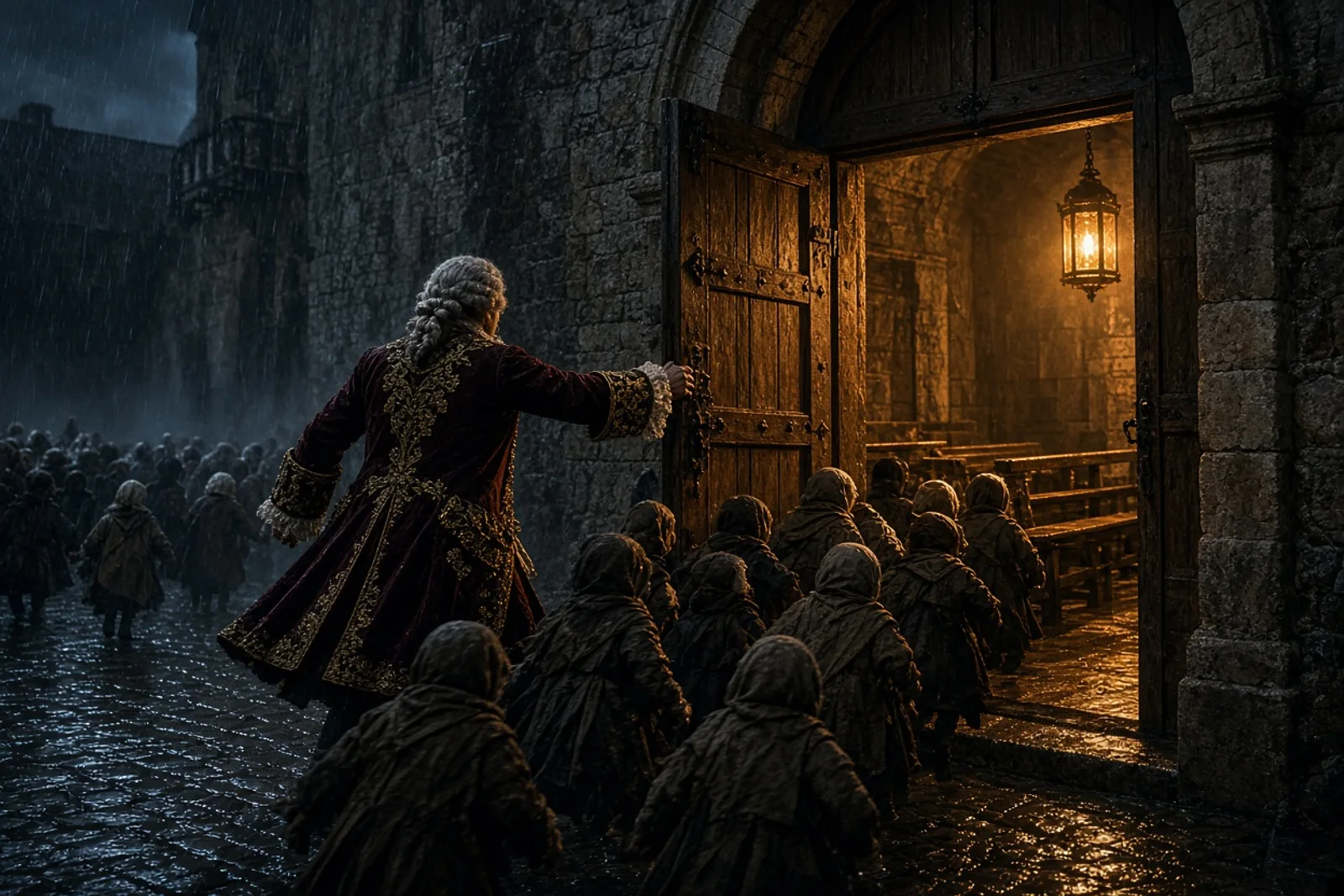
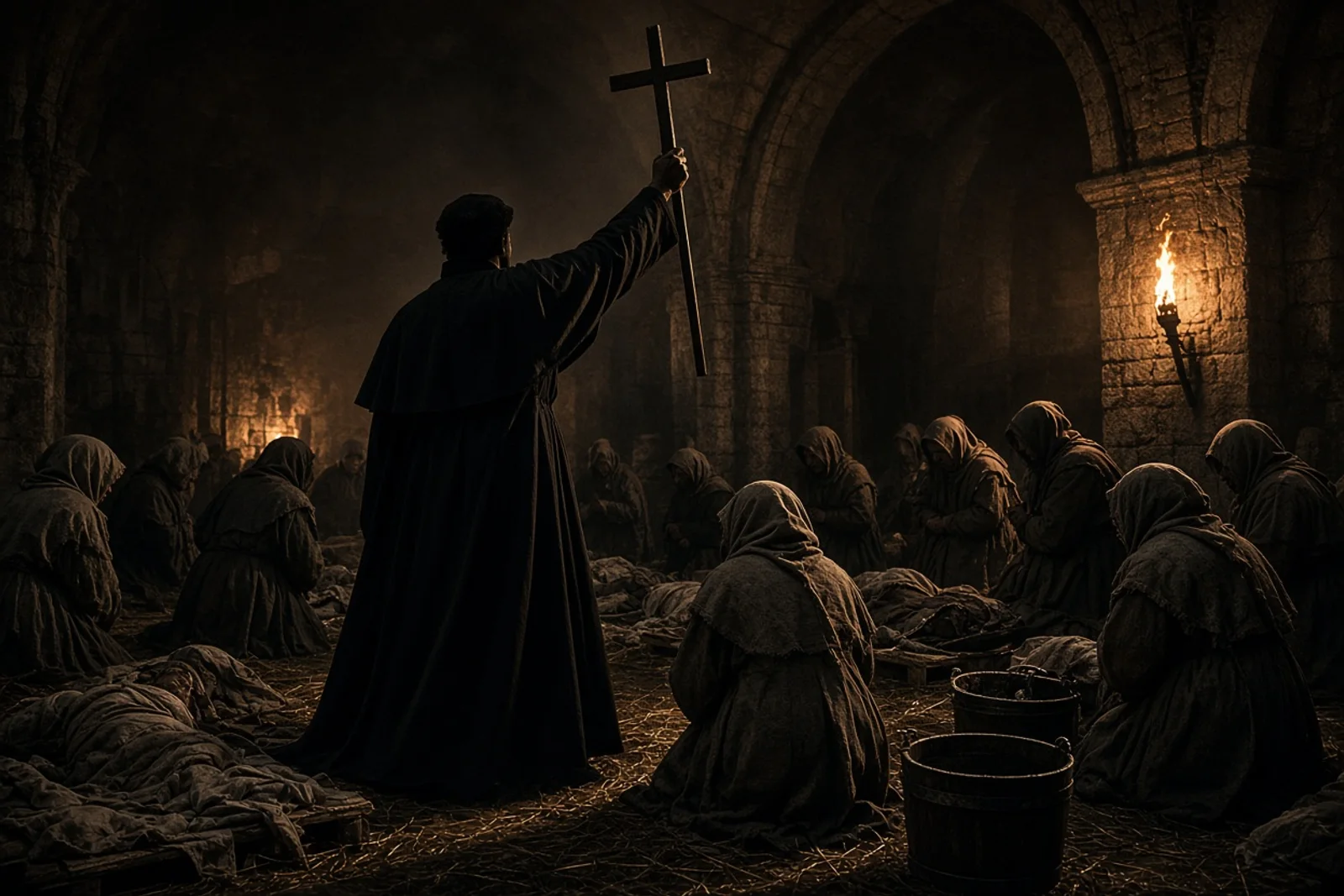
St. Clare Escapes to Assisi
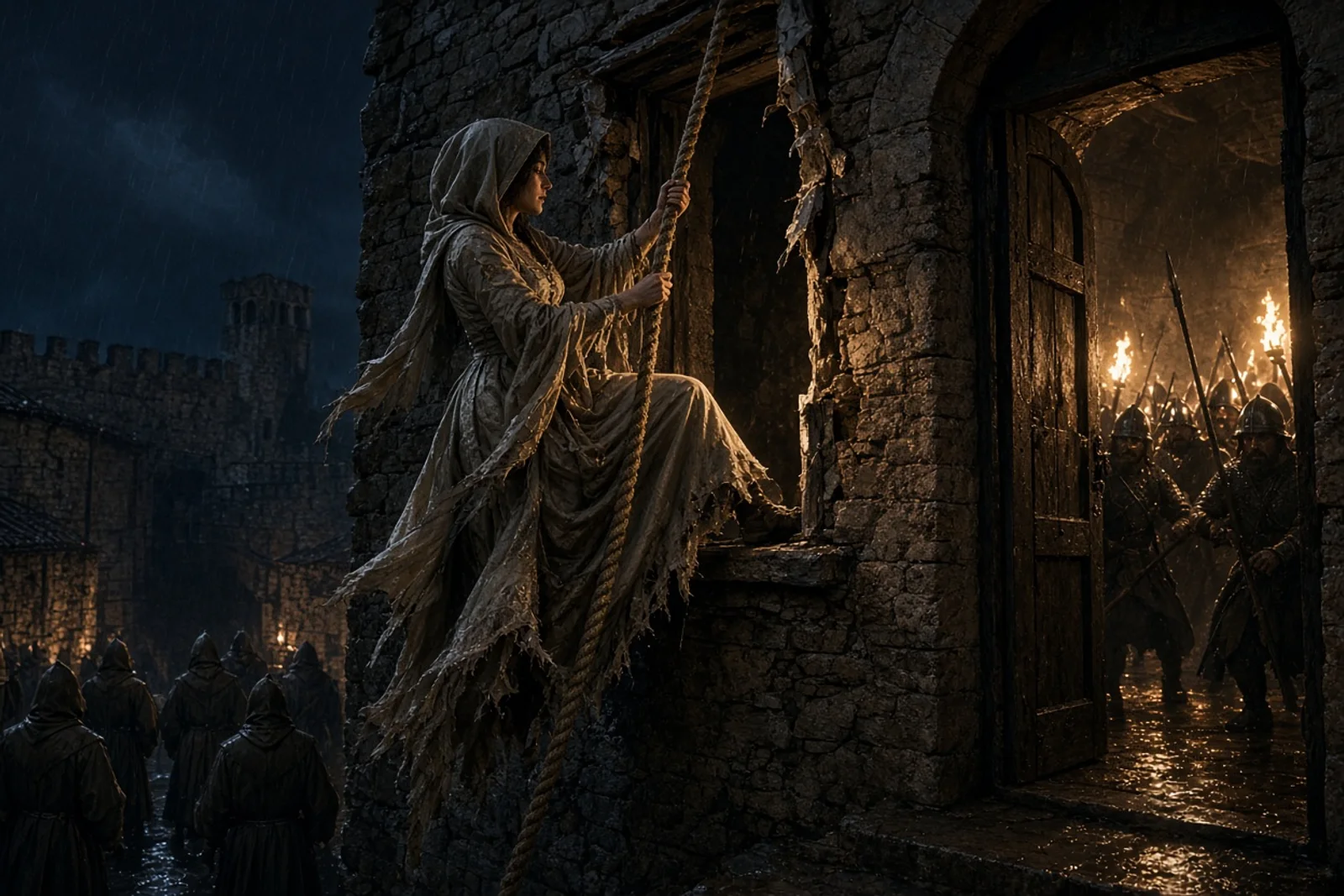
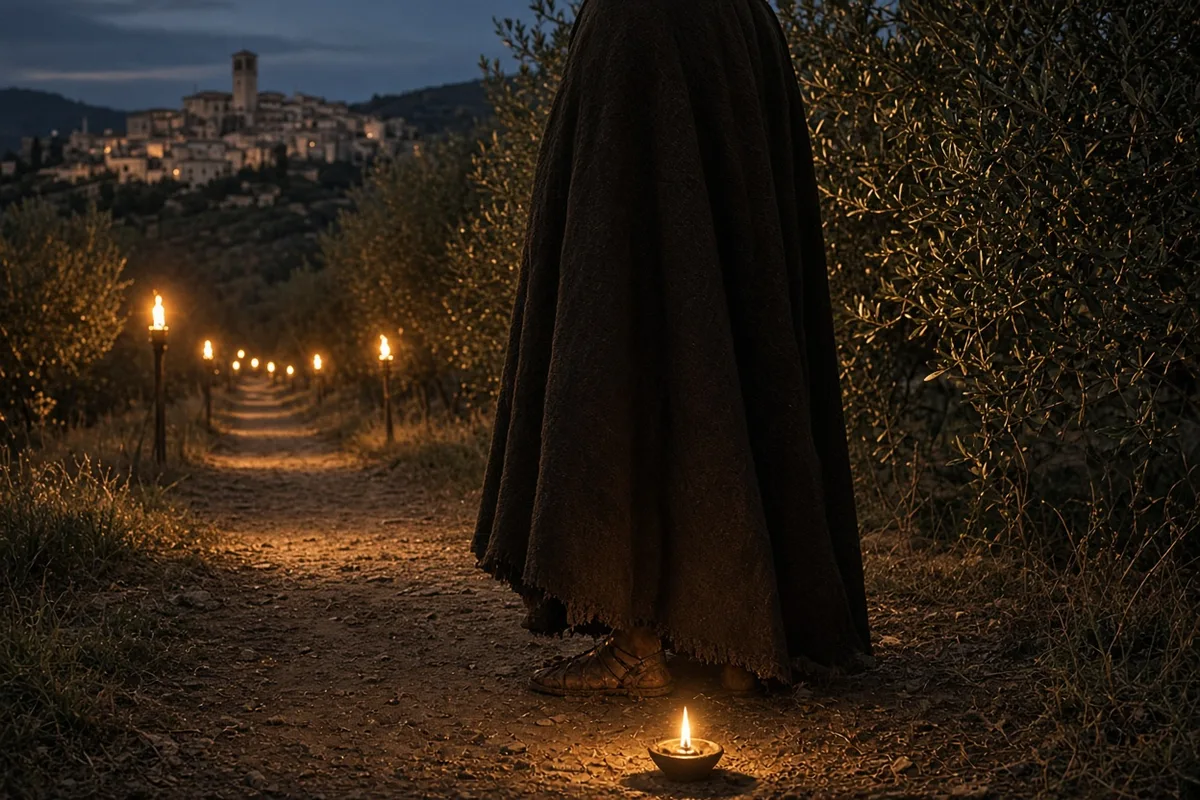
The path from the town gate still held the day's heat underfoot when we reached the chapel. I carried one of the lamps, its wick trimmed low so the flame would not betray us to any late rider on the road. Francis stood at the door already, the rope around his waist dark against the rough cloth. Two others waited with him, their bare feet pale in the lamplight. We had been told only that a girl would come, and that we must be ready before the bells rang for matins.
The sound reached us first, light steps and the rustle of heavier cloth. Then three figures stepped from the olives. The tallest wore a cloak that caught what little moon there was. She pushed the hood back and I saw the face I had glimpsed once before in the cathedral square, the same steady eyes. Clare. Behind her walked an older woman whose hand stayed near her elbow, and a younger one who kept looking over her shoulder toward the town.
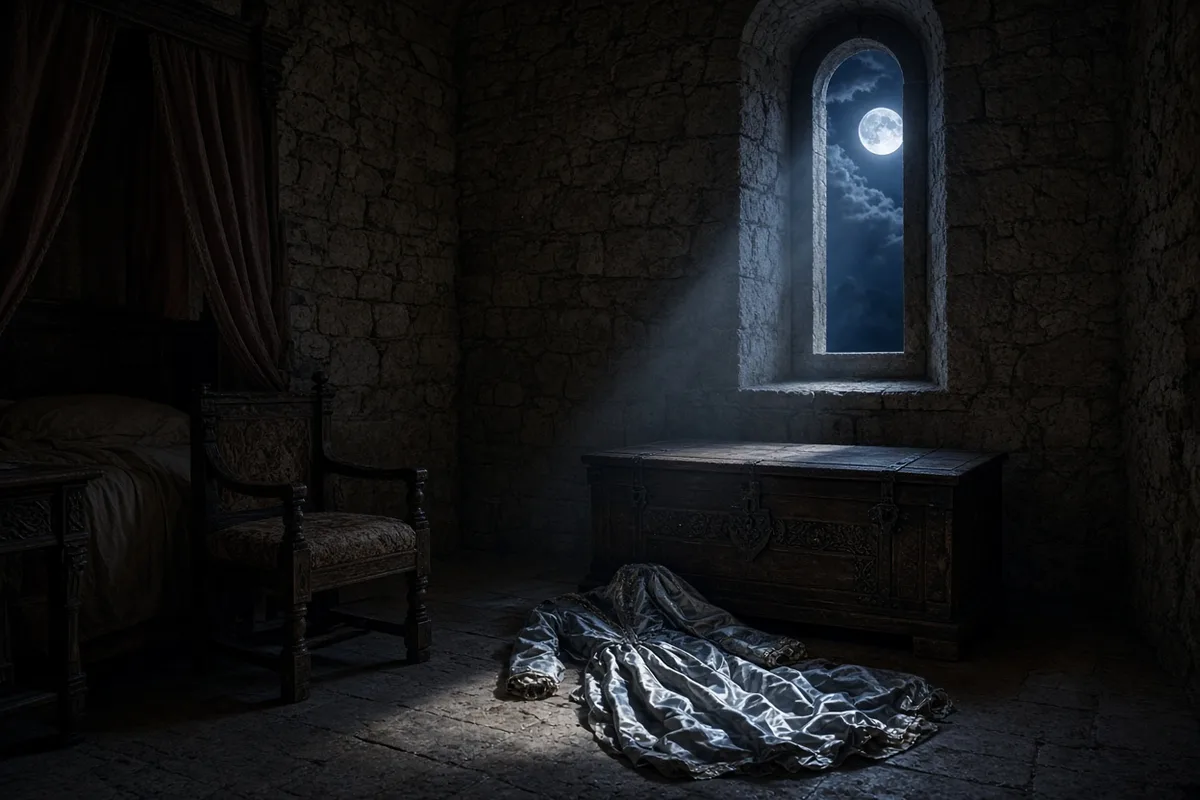
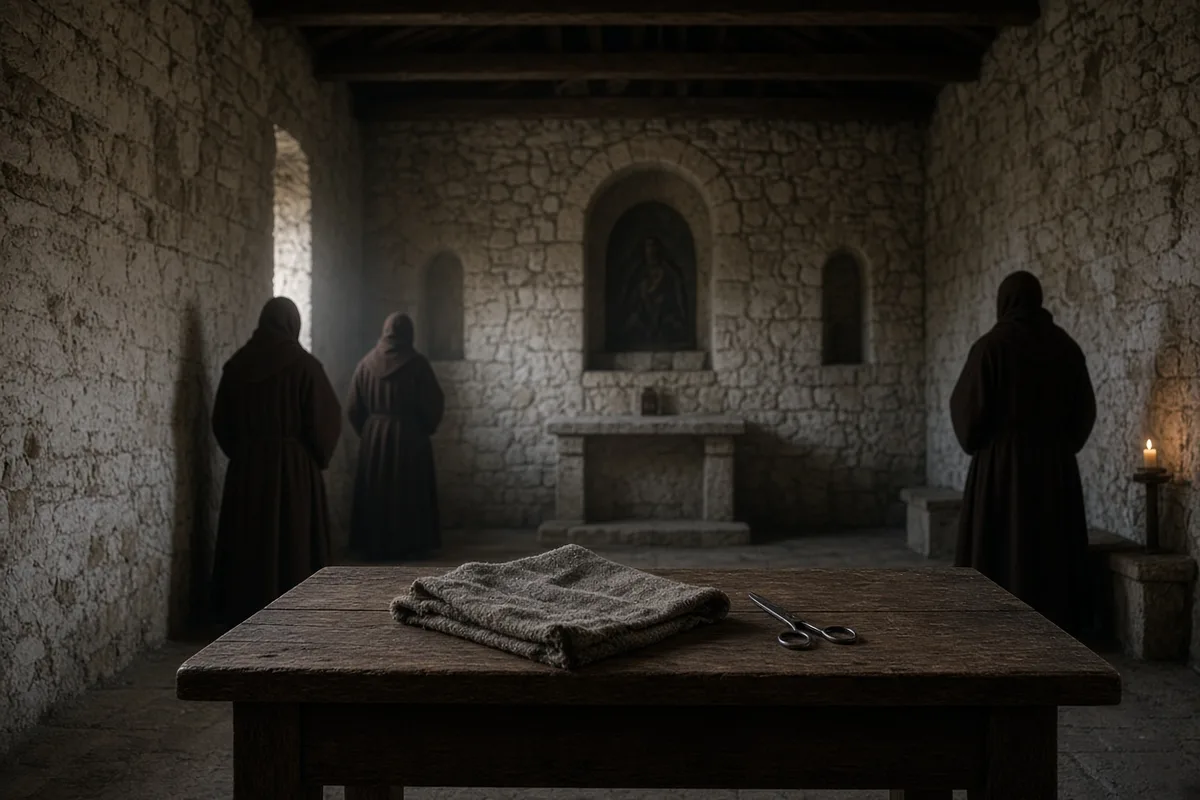
Francis took the lamp from me without a word. He led them inside the small church where the altar stood bare except for a single candle. No one spoke above a whisper. Clare knelt on the stone, and the older woman unfastened the heavy brooch at her throat. The cloak fell. Under it she still wore the silk she had worn to the Palm Sunday procession, the hem now streaked with dust. Francis set the lamp on the floor and drew a small knife from his belt. He cut the long braid at the nape, not quickly, working one strand at a time so the blade would not pull. The hair dropped in a dark coil. He handed her the tunic he had carried folded under his arm, the same coarse wool the rest of us wore, and showed her how to knot the cord twice around the waist. She changed where she stood. When she turned, the silk lay in a heap beside the hair.
We walked with them as far as the track that turned toward Bastia. Francis spoke only once, telling the older woman the Benedictine sisters would keep the gate open. Clare did not look back. The lamp I carried guttered in the wind that came down from Subasio, and by the time we reached the fork the flame had gone out.
Word traveled faster than we did. By the next morning her father’s men were at the monastery gate demanding to see her. They did not enter; the abbess met them in the yard and told them the girl had placed herself under the bishop’s protection. The men left, but not before one of them shouted that the count would come himself. Clare stayed inside the enclosure. She sent no message.
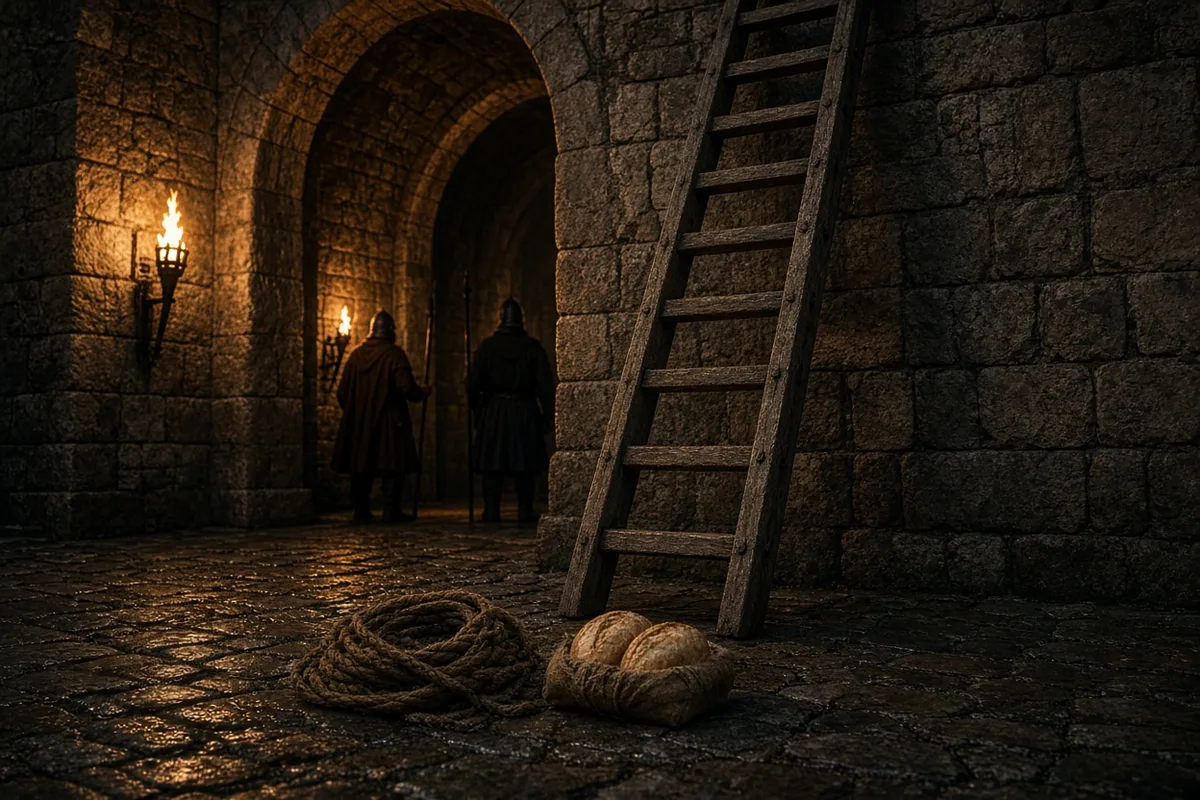
Sixteen days later her sister arrived at the same gate, thinner and bruised along one arm. Agnes had walked most of the night after slipping through a side door of the palace. The count’s men found her before she reached the river and tried to carry her back. She fought them until they dropped her. Francis took her to Sant’ Angelo instead, where the slope gave better cover from the road. Clare was moved there the following week. The two of them shared a single cell no wider than a stable stall, the walls still damp from winter.
The count came twice more. The second time he brought armed retainers and a priest from the cathedral who argued that no girl of noble blood could lawfully renounce her inheritance without family consent. They were not allowed past the outer court. Clare stood at the grille with Agnes beside her. She did not raise her voice. When the men finally turned away, one of them spat on the threshold. The sisters swept it clean before nightfall.
Francis found the small houses behind San Damiano empty after the Benedictines agreed to lease the ground. We carried benches and a few cooking pots up the hill on our shoulders. Clare and Agnes walked between us, each carrying only the bundle that held her spare tunic. The first night the wind came through the gaps in the walls and the candle would not stay lit. Agnes laughed once, a short sound that seemed to surprise even her. Clare did not laugh, but she reached across the space between their pallets and touched her sister’s wrist until the sound stopped.
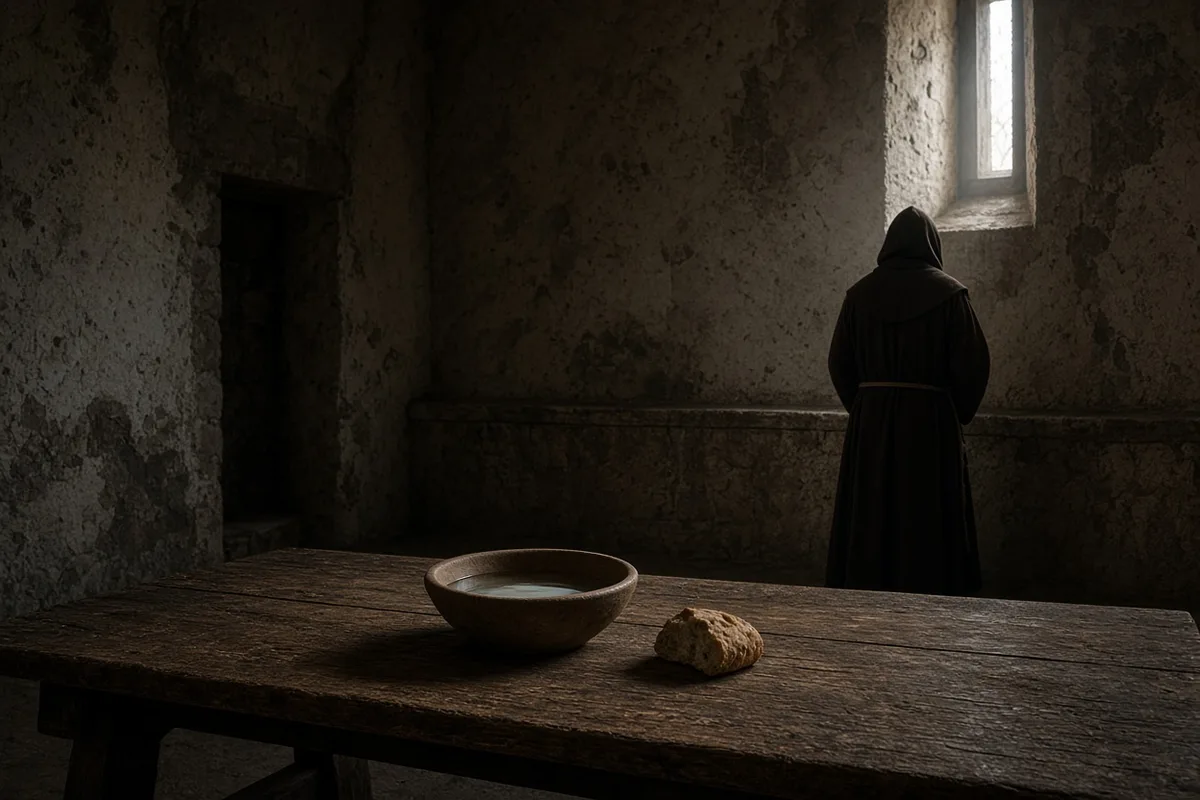
By summer the number of women had grown to twelve. They kept the same rule Francis had given the brothers, eating what was begged at the town gates and sleeping on straw. No one wore shoes. When the bishop sent word that they must accept a fixed income like other convents, Clare answered that she would rather beg than hold land. The messenger left without pressing the matter.
I still pass the path that leads from the palace to the Porziuncola. The olives have grown taller, and the track is wider now from carts. At certain hours the light falls the same way it did that night, low and slanted, so that a person walking alone casts a long shadow across the stones. I have never seen anyone take that walk at that hour since.
The olives still mark the fork where the lamp died, but the track itself has changed since the year the sisters reached twelve. In the autumn after Agnes came, a girl named Beatrice arrived from Spello with her mother’s permission written on a scrap of vellum dated the feast of Saint Michael, and she brought the first copy of the letter Francis had sent from the Spoleto valley, the one that begins “I, brother Francis, the little poor man.” By then the roof at San Damiano had been patched with tiles taken from the ruined farmhouse below the olive press, and the sisters kept a count of every loaf they received at the gate: forty-three in the month of October, thirty-eight in November when the rains began. I carried two of those loaves up the hill myself on the day the bishop’s messenger returned with the order that the women must accept the income from the vineyard at Poggio. Clare met him at the grille and answered with the words she had already written on a separate sheet: “I desire to have no privilege from any human being, only the privilege of following the poor and crucified Christ.” The messenger copied the sentence into his register before he left.
Francis came less often after the chapter at the Porziuncola in 1219, the one where he named Peter Catanio as minister and prepared to sail from Ancona. Before he boarded he left with Clare the small wooden cross he had carried from San Damiano, the one with the Corpus carved by Brother Rufino. She placed it on the wall of the oratory where the sisters gathered each night after compline. The following spring Agnes was sent to establish the house at Monticelli outside Florence, taking with her four of the twelve and a copy of the same rule that still forbade any possession of land or rents. Letters passed between the two houses every quarter; the first one Agnes sent back carried the date of the octave of Pentecost and the names of the three women who had already joined her there. Clare kept those letters in a wooden box beneath her pallet until the box itself split from the damp.
In 1228, when Cardinal Hugolino became Pope Gregory IX, he visited San Damiano in person on the twenty-third of September and offered the community the income from three farms near the Tiber. Clare refused again, this time kneeling on the stone floor of the chapel while the pope stood at the altar. The words she spoke that day were recorded by Brother Leo, who stood outside the grille: “Holy Father, absolve me from my sins, but never from the following of Christ in poverty.” Gregory left the same afternoon without signing any document of endowment. Two years later he confirmed the Privilege of Poverty in a bull dated the twenty-fourth of September 1230, the only such document issued to any community of women in that century. The parchment itself was carried to Assisi by a friar named Stephen and placed in Clare’s hands on the feast of Saint Michael again.
The number of houses grew to twenty-seven by the time Francis died in 1226. Each one received a copy of the same letter Clare had written in her own hand, the one that opens with the salutation “To the sisters of the monastery of Saint Agnes in Prague” and carries the date of the first Sunday of Advent 1234. That letter was dictated to Sister Pacifica, who wrote it on a single sheet of vellum no larger than a breviary page. Clare’s own health had already begun to fail; she spent the winter of 1240 confined to the cell behind the oratory after the Saracen troops under Frederick II approached the walls of Assisi. The sisters remained inside while the townsmen fought on the plain below; the only food that reached them that week was carried by two friars who crossed the river at midnight.
By 1247 the community at San Damiano numbered forty-two women. That year Pope Innocent IV sent a new rule that allowed fixed incomes, and Clare spent the next six years writing her own version, line by line, with the help of Brother Leo and Brother Angelo. The finished document, sealed on the ninth of August 1253, contains the sentence “The sisters are to appropriate nothing to themselves, neither house nor place nor anything else.” Innocent confirmed it two days before Clare died. She received the viaticum on the tenth of August and spoke her last recorded words to the sisters gathered at her bedside: “Go in peace, for you have accompanied me well; now I go to the Lord.” She was fifty-nine years old.
Her body was buried first in the church of San Giorgio, then moved on the third of October 1260 to the new basilica built on the slope below Assisi. The translation was witnessed by Pope Alexander IV and recorded in the register of the commune; the procession included twenty-three cardinals and the entire chapter of the friars minor. The stone sarcophagus still stands in the crypt beneath the high altar of Santa Chiara, its lid carved with the date of her canonization, the twenty-sixth of September 1255. The original grille from San Damiano was removed in 1490 and placed in the sacristy of the same basilica, where it remains behind glass. The last sister to leave the original house at San Damiano died in 1810 during the suppression under Napoleon; the building itself was returned to the Poor Clares in 1856 and is still occupied by a community of twelve women who keep the same enclosure and the same daily count of loaves received at the gate.
The community of twelve at San Damiano recorded forty loaves received on the feast of Saint Clare in 1857, the same number entered in the ledger kept by Sister Maria Maddalena that year under the restored rule. Pope Pius IX visited the basilica crypt on the third of October 1862 and placed a new silver lamp before the sarcophagus, the gift of the Duchess of Modena, after which the sisters resumed the midnight office without interruption for the first time since the suppression.
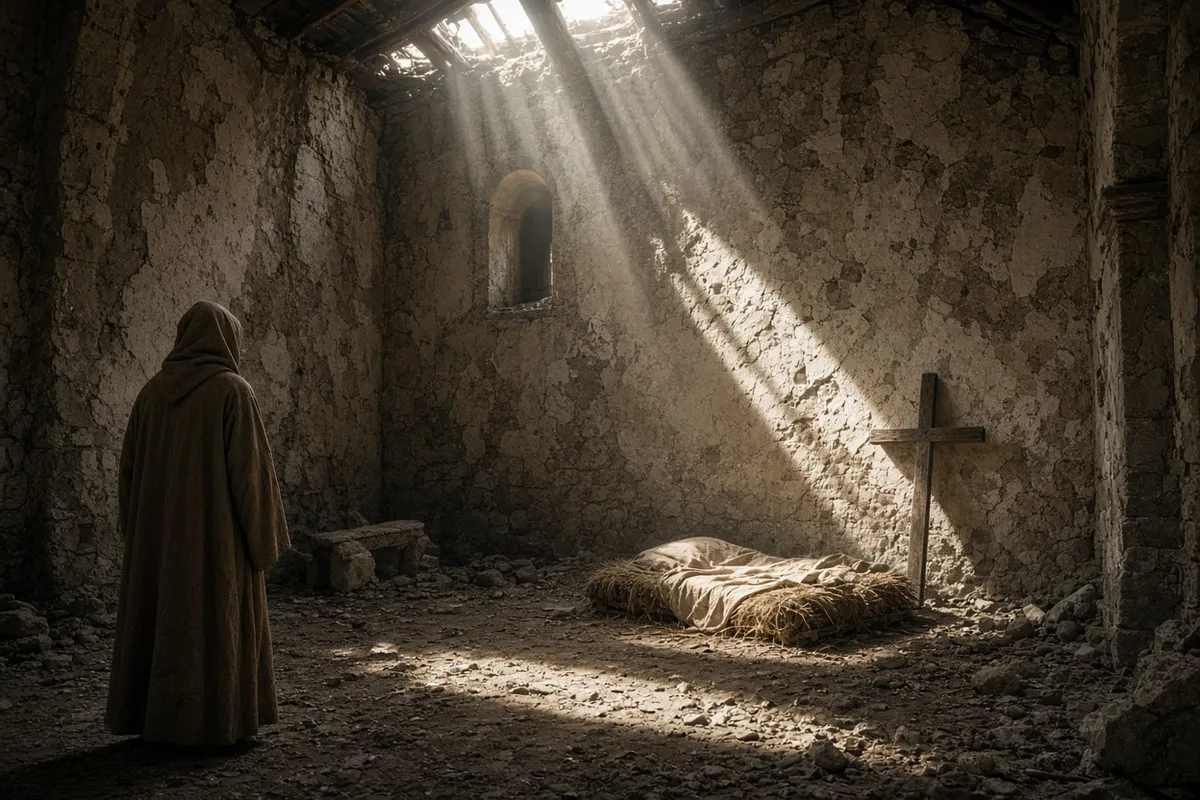
In 1906 the Minister General of the Friars Minor, Father Pacifico Monza, arranged for the return of the original wooden cross Francis had left with Clare in 1219; it was carried from the Sacro Convento by Brother Rufino of Assisi on the octave of Pentecost and hung again on the oratory wall where Sister Pacifica had once written letters. The sisters counted thirty-seven loaves that month, the figure noted in the margin of the same register that had survived the Napoleonic inventory.
During the Allied advance in 1944 the enclosure walls at San Damiano sheltered twenty-four displaced women from the town below; the abbess, Mother Chiara Serafina, signed a receipt on the twenty-seventh of June for two sacks of flour delivered by the British 8th Army quartermaster, each sack marked with the date and the stamped number 112. The sisters continued the daily count of loaves even when the gate was opened only once a week.
After the Second Vatican Council the community accepted four postulants from Perugia in 1968, bringing the number inside the enclosure to sixteen; the new novices copied the text of the 1253 rule by hand onto vellum sheets measuring twenty-eight by twenty-one centimeters, the same dimensions used for the copy sent to Prague in 1234.
In 1983 the Minister of Cultural Heritage, Vincenzo Scotti, authorized the reinforcement of the crypt floor beneath Santa Chiara with steel beams dated the twelfth of March, after which the sarcophagus lid was cleaned of soot accumulated since 1943; the register of the commune records the names of the three masons who performed the work.
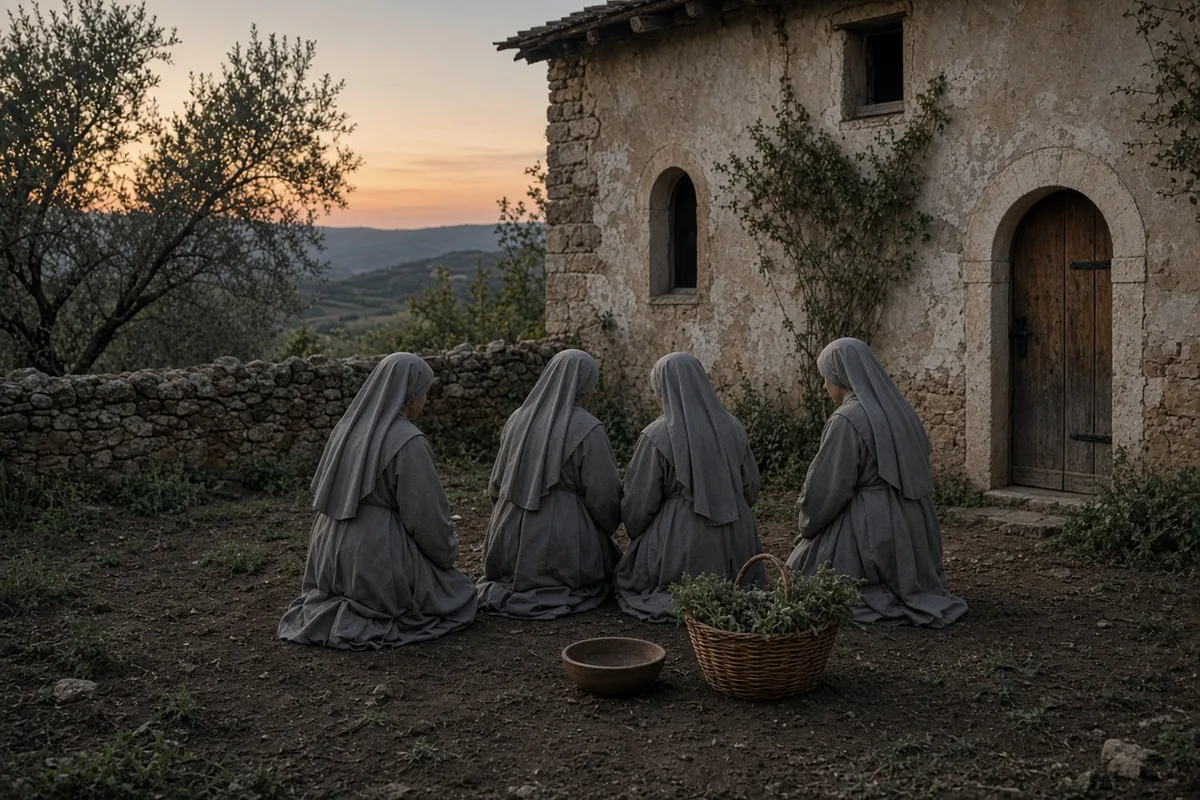
The present community at San Damiano numbers fourteen women as of the feast of Saint Michael 2023. Each morning at first light Sister Maria Grazia, born in Foligno in 1957, opens the grille to receive the loaves brought by two friars from the Porziuncola, entering the count in the same ledger format used since 1856.
At dusk on ordinary days she walks the path behind the olive press carrying the single lamp whose wick is trimmed to the width of a thumbnail, the flame visible from the road only when the wind from Subasio drops.