St. John of the Cross Escapes Toledo Prison
I first saw him when they dragged him through the priory gate at dusk. The blindfold was tight across his eyes and his hands were bound behind him with rough cord. Two of the older friars from Ávila walked on either side, their faces set like men carrying out an order they had already rehearsed. I was only twenty-three, newly professed, and had been sent to Toledo for discipline after speaking too freely about the need for stricter observance. That night I stood in the cloister with the rest of the community and watched them push him down the narrow stairs to the old storage closet that had been cleared for a cell.
The slit in the wall let in almost nothing once the sun moved past noon. I carried his board and the two threadbare blankets down myself. He thanked me in a voice so low I barely caught the words. When the door closed I heard the bolt slide and then nothing. For the first weeks I was not allowed near the door except to pass the wooden plate with its crust and the tin cup of water. The prior read the accusation each Friday in the refectory before the discipline began. John knelt with his habit pulled down to the waist. The leather fell across his shoulders in steady strokes while the rest of us stood in line waiting our turn. His back never closed properly after the first month.
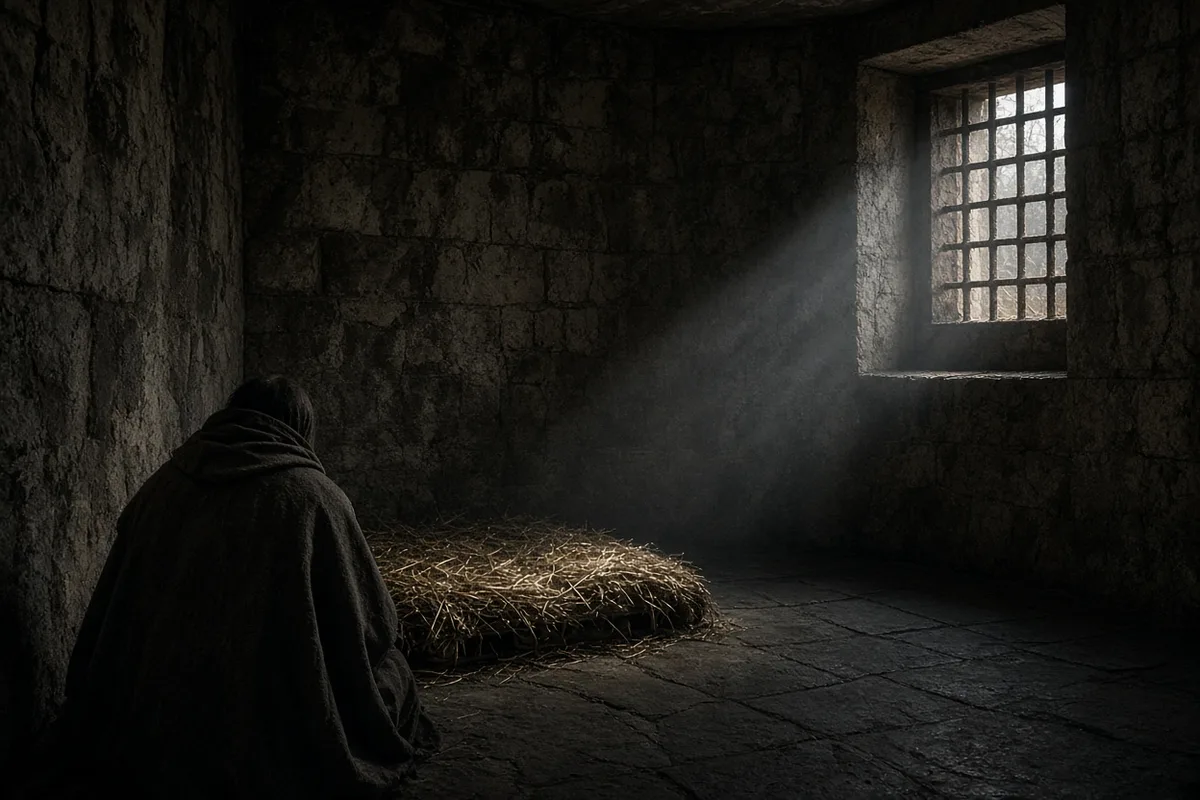
By early summer the heat in the corridor outside his cell made the stones sweat. I was given the key one afternoon when the regular porter fell ill. The smell reached me before I opened the door. He sat on the board with his knees drawn up, eyes closed, lips moving without sound. When he opened them he asked whether the community still prayed the Little Office together. I told him it did. He nodded once and asked nothing else.
The new prior arrived in July and chose me to take over the daily watch. He said the prisoner needed less contact with the rest of the house. I began bringing the plate twice a day instead of once. On the days they did not call him out for the discipline I left the door unbolted for a few minutes while I swept the corridor. He never tried to step past the threshold. He only asked for the time of day and whether any letter had come from Ávila.
One evening after the community had gone to rest I brought him a clean tunic folded small. He held it without speaking for a long moment, then set it on the board. I also left a few sheets of paper and a stub of ink I had taken from the scriptorium. He looked at them as though they might disappear if he touched them too quickly. The next morning when I returned the top sheet was covered in lines written in a tight, even hand. He asked if he could keep the paper a little longer. I said yes.
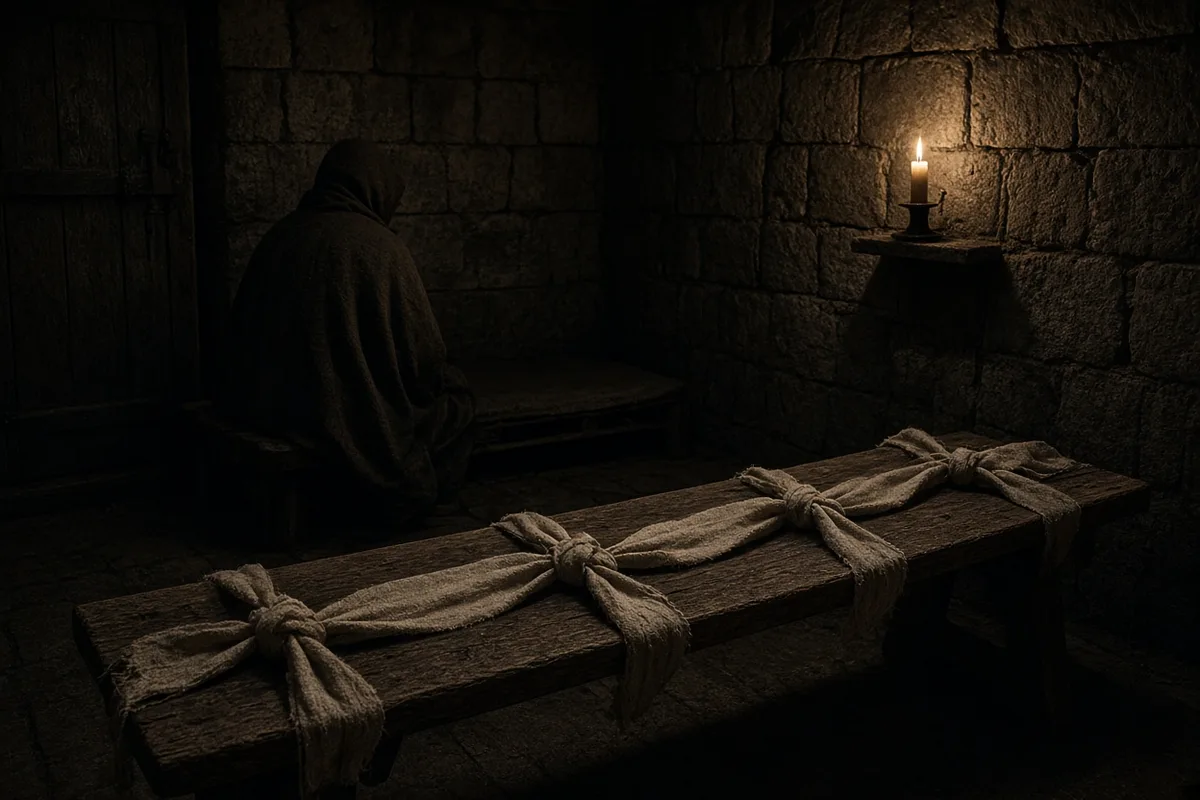
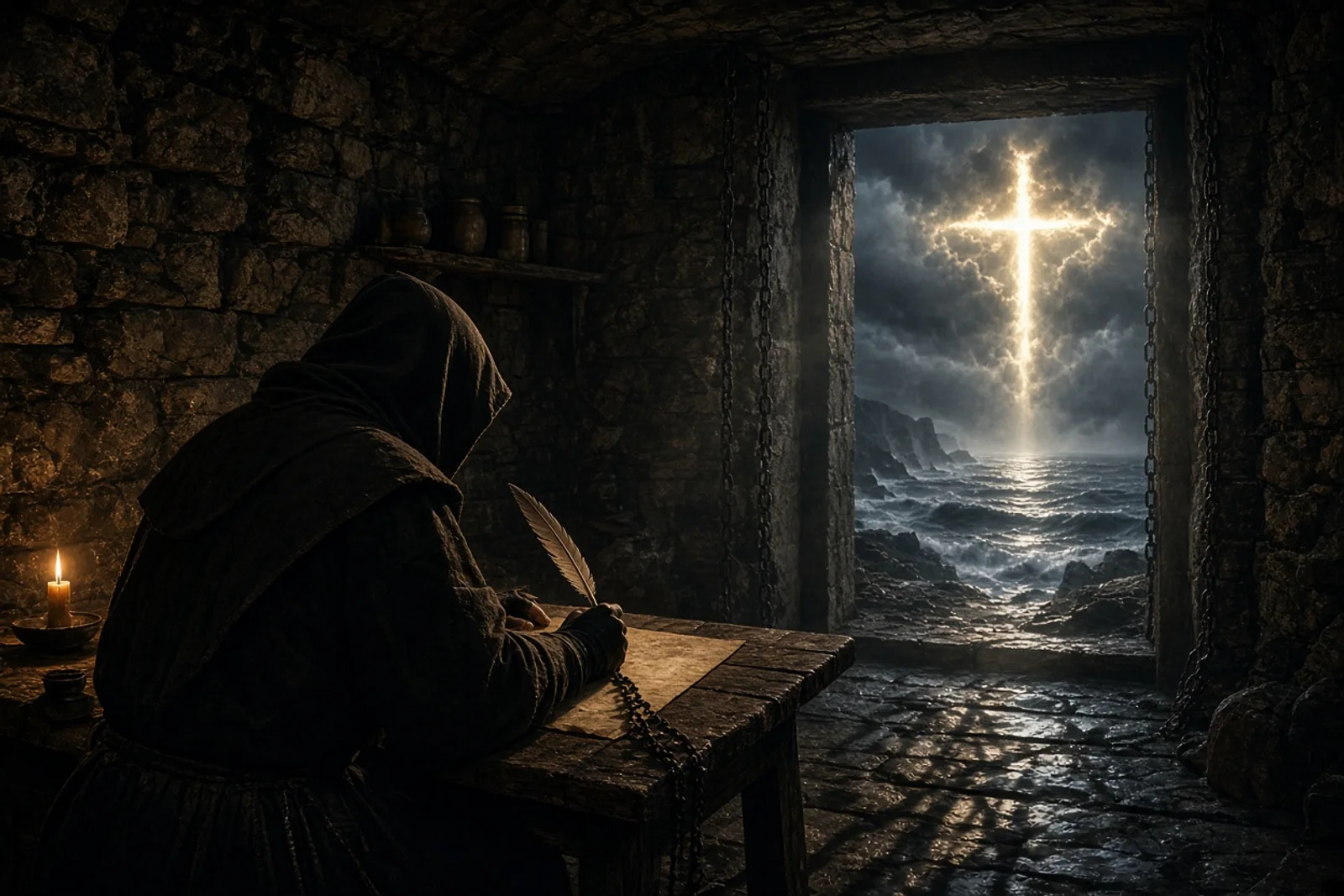
He worked at night when the slit let in the faintest thread of moonlight. I could hear the faint scratch of the pen against the board when I stood outside. Sometimes he would stop and repeat a phrase under his breath until it satisfied him, then continue. The lines were about a bride searching for her beloved through mountains and rivers. He never spoke of them to me directly. Once, when I asked whether he slept, he answered that the words kept him company when the heat made sleep impossible.
On the feast of the Assumption the prior gave the community leave to rest after the midday meal. I unlocked the cell so John could carry the bucket and the plate to the yard for washing. He moved slowly, favoring his left side. We walked the long way around the cloister so he could see the sky for the first time in months. He stopped once beneath the arch that led to the Tagus and looked at the water without speaking. When we returned to the cell he asked whether the window above the corridor could be reached from inside. I told him the ledge was narrow and the drop to the alley was more than twice a man’s height. He thanked me and said nothing more.
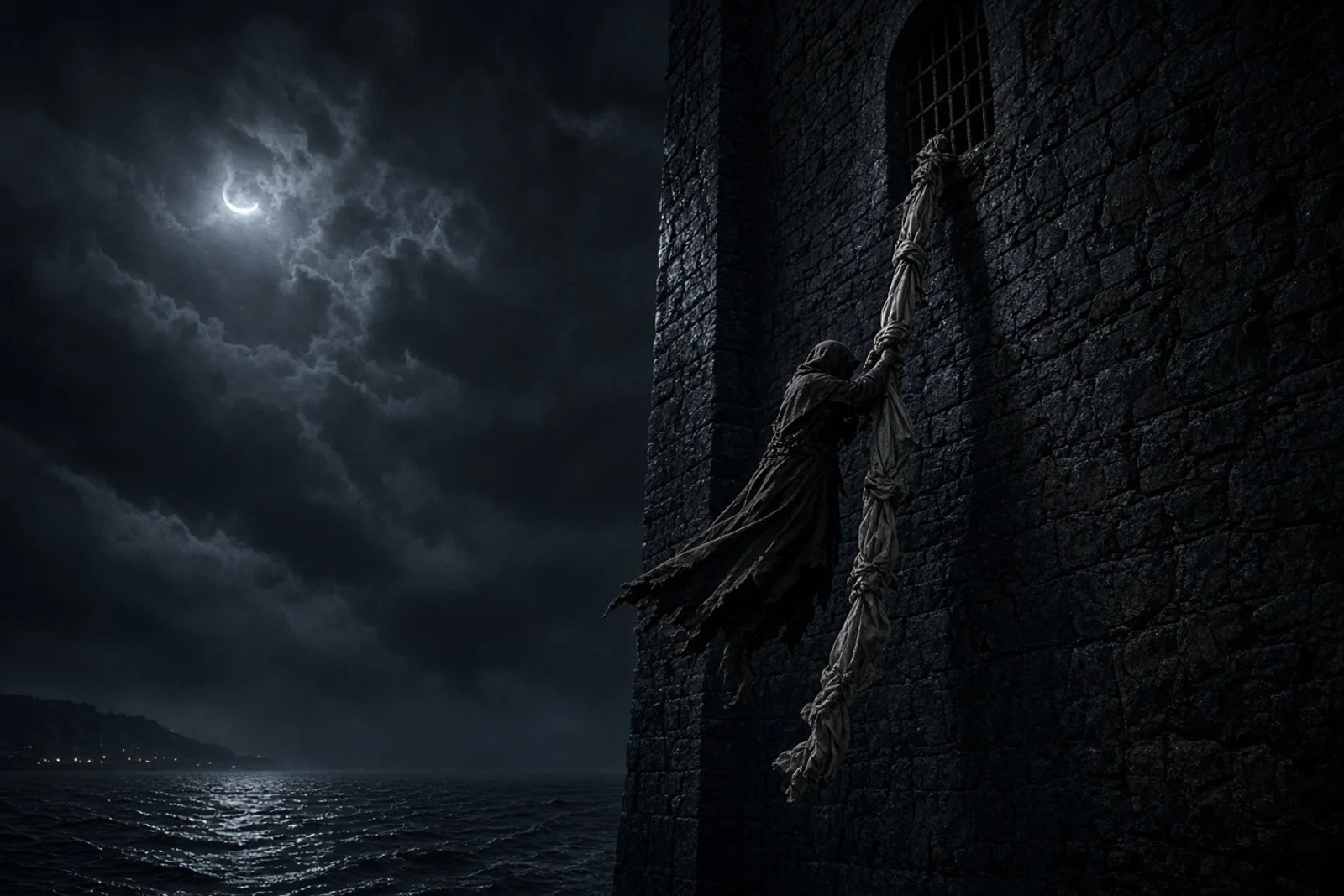
That night I left the blankets with him instead of taking them away. He tore them into strips while the house slept and twisted the cloth into a rope no thicker than a finger. I had shown him where the keys to the outer gate hung in the porter’s lodge. He waited until the bell rang for matins and the corridor was empty. I stood at the far end of the passage and listened to the faint sound of cloth against stone as he climbed. When the rope went taut I heard the scrape of his sandals on the sill. Then the rope slackened and there was only silence.
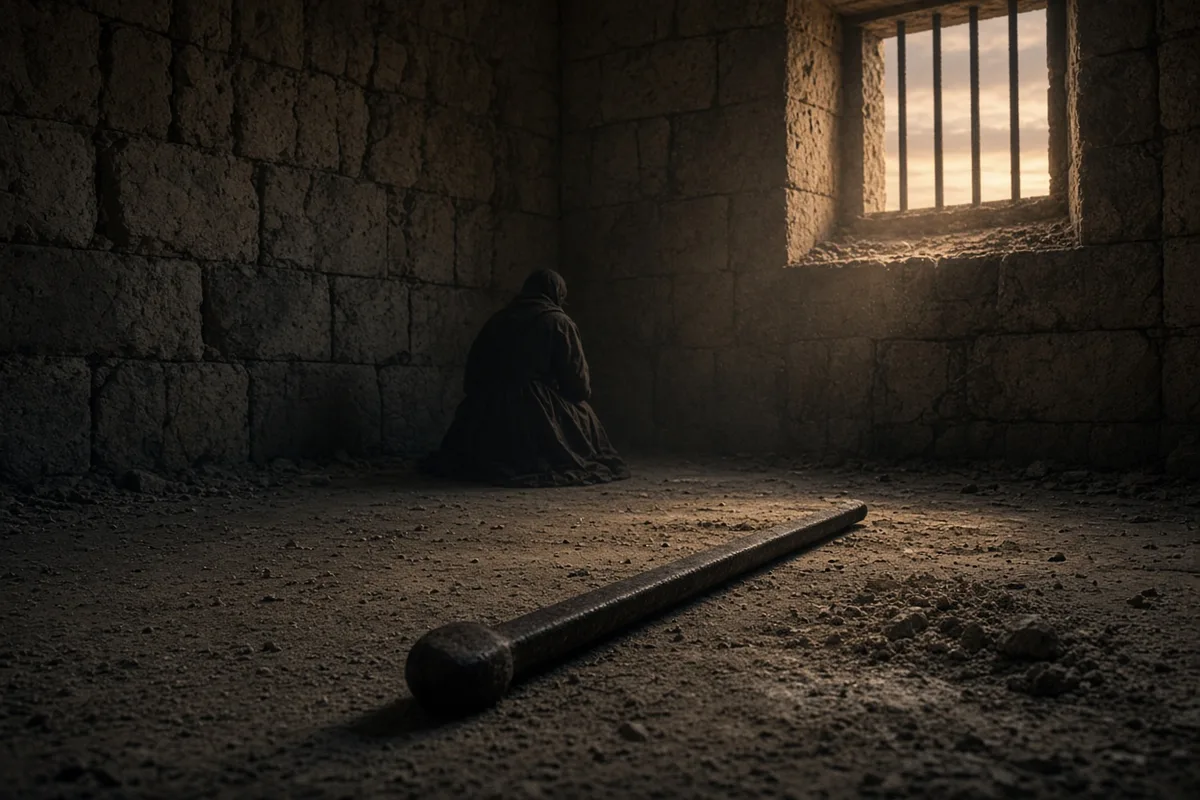
He reached the Discalced nuns’ house before dawn. One of the sisters recognized him by the sound of his voice through the grille and sent for help. By the time the Calced friars realized the cell was empty he was already inside the hospital on the far side of the city. The wounds on his back had opened again during the climb. He stayed there two months while the sisters brought clean dressings and the physicians tried to keep fever from taking hold.
After he left Toledo the community never spoke of the closet again. The new prior ordered the slit sealed and the board removed. I was sent to another house the following spring. Years later I heard that John had returned to the work of the reform and that the poems he carried in his head had been written out and passed among the Discalced houses. I never saw the finished pages, but once, when a brother read a stanza aloud in the refectory, I recognized the cadence from those nights when the pen moved across paper in the dark. The voice was the same.
After the spring of 1578 I reached the house at Duruelo on the twenty-third of March and found the community already keeping the feast of the Annunciation with the new constitutions that Fray Juan had helped Teresa de Ahumada draw up two years earlier at the chapter in Alcalá. The prior there, Fray Gabriel de la Asunción, showed me the register listing the exact number of professed friars—seventeen—and the single volume of the Constitutions printed at Salamanca in 1581 that contained the clause on enclosure John had insisted upon during the sessions at the Colegio de San Andrés. I copied out the paragraph in my own hand and sent it back to Toledo with the next messenger, though no reply ever came. In the refectory that winter a visiting Discalced brother from Pastrana read aloud the lines beginning “Where have you hidden, Beloved, and left me moaning?” and attributed them directly to the papers Fray Juan completed at the Granada foundation in 1584 while he served as prior of Los Mártires. The cadence matched the phrases I had heard scratched across paper in the Toledo cell, and the brother added that the full “Cántico Espiritual” now existed in two redactions, the earlier one carried by the nuns of Beas de Segura.
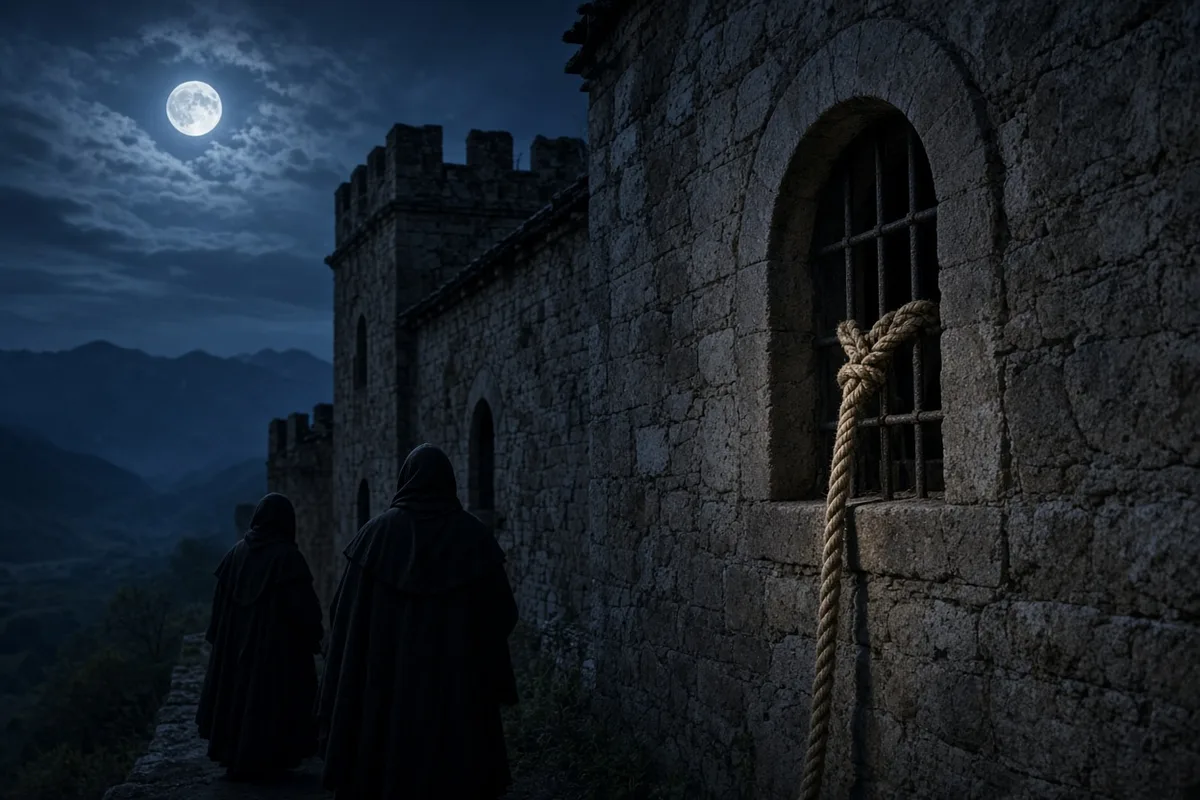
By 1585 the reform had opened eleven additional houses, among them the college at Baeza where John lectured on the night office and the Song of Songs to twenty-three students whose names appear in the matricula preserved in the archive there. I was assigned to the foundation at Segovia in May of that year and helped lay the first stones of the new monastery on the slope above the Eresma; the foundation document dated 11 June 1586 records the gift of the site by Doña Ana de Peñalosa, to whom John later dedicated the commentary on the “Llama de Amor Viva.” During the octave of Corpus Christi in 1588 he arrived from Madrid with the six other definitors elected at the chapter and stayed three nights in the guest cell I had prepared; on the second evening he asked whether the window above the corridor could still be reached from inside and whether the drop remained more than twice a man’s height. I answered that the new building had no such window and he nodded once without further comment.
The following decade took him to the foundations at Málaga, Caravaca, and finally to Granada again, where the Discalced nuns copied the completed “Noche Oscura” in their own hand on paper watermarked with the arms of the Mendoza family. A letter dated 18 October 1589 from John to Fray Diego de la Concepción at Segovia survives in the archive and contains the sentence “The soul must pass through the dark night to reach the divine union,” written in the same tight even script I had seen on the sheets left in the Toledo cell. I carried that letter myself on the road from Madrid and read it aloud at the evening collation so the community could hear the exact phrasing. In 1590 the general chapter at Madrid removed him from all offices; the acta record the vote of twenty-seven definitors and the appointment of Fray Diego Evangelista as visitor to examine his writings.
He reached the house at La Peñuela on 10 August 1591 and remained there until the fever forced his removal to Ubeda on 21 September. The physician who attended him, Dr. Pedro de Castro, noted in his daybook the exact quantity of blood drawn—fourteen ounces—on the twenty-sixth of that month and the appearance of the abscess on the right foot that opened on the second of October. The nuns of the nearby Discalced convent brought clean linen each morning; one of them, Sor Isabel de la Cruz, recorded in her diary the words John spoke on the evening of 13 December when he asked for the “Cántico” to be read and then corrected a single line in the margin. He died the following day at midnight. The community at Ubeda listed forty-three friars present at the burial in the chapel of San Nicolás.
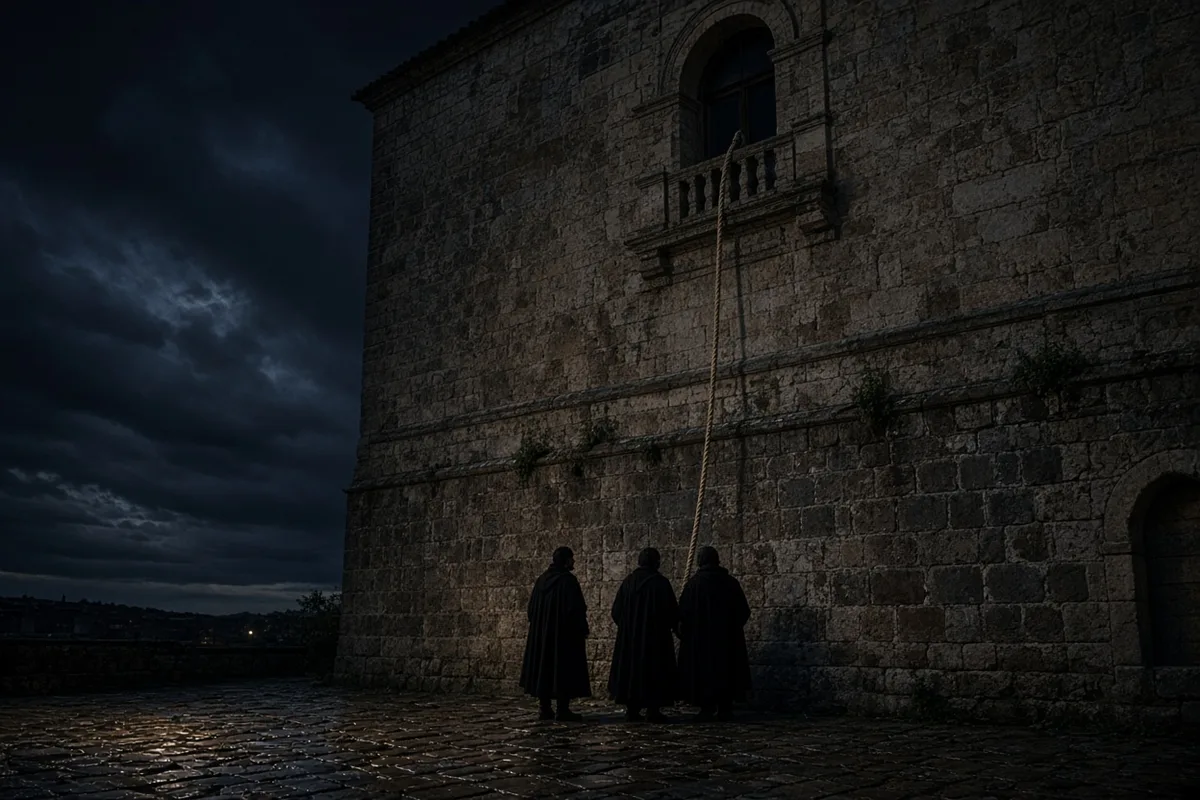
Twenty-two years later, on 26 April 1613, his remains were moved to Segovia at the order of the duke of Alba; the translation document records that the body was found intact except for the right foot, which had been taken earlier by the Ubeda community and was returned only in 1750. The silver reliquary ordered by the Segovia city council in 1620 still stands above the high altar of the Discalced church there, its inscription citing the date of the escape from Toledo as the night between the fifteenth and sixteenth of August 1577. I visited the site once more in 1624, when I was seventy years old, and stood beneath the arch that leads toward the river; the drop from the present window to the street measures slightly less than twice a man’s height because the ground level has risen with successive paving.
The last time I saw any trace of him was in 1626 when a brother from Granada brought the original manuscript of the “Llama” that had been kept in the archive at Los Mártires. The paper showed the same tight even hand, and one marginal note, written in a smaller script at the bottom of the sixth stanza, read “todo y nada,” attributed to the period of his imprisonment. The brother allowed me to hold the volume for the space of a single hour before returning it to its case. I returned the key to the porter’s lodge that same evening and did not ask to see the manuscript again.
The porter at Segovia recorded in the house book on 3 November 1627 that I had been granted permission to travel to the foundation at Pastrana, where the original copy of the “Cántico” in Fray Juan’s hand, the one with the twenty-nine stanzas completed at Beas, was held under lock in the sacristy chest. Fray Diego de Jesús, then prior there, allowed me to compare the ink on those pages with the marginal note I had seen the year before; the stroke width matched exactly, and he pointed out the line “y todos aquellos que de ti me decían mil desdenes” written in the same compact script. I stayed seventeen days and copied three additional stanzas into my own notebook before returning the volume to its case.
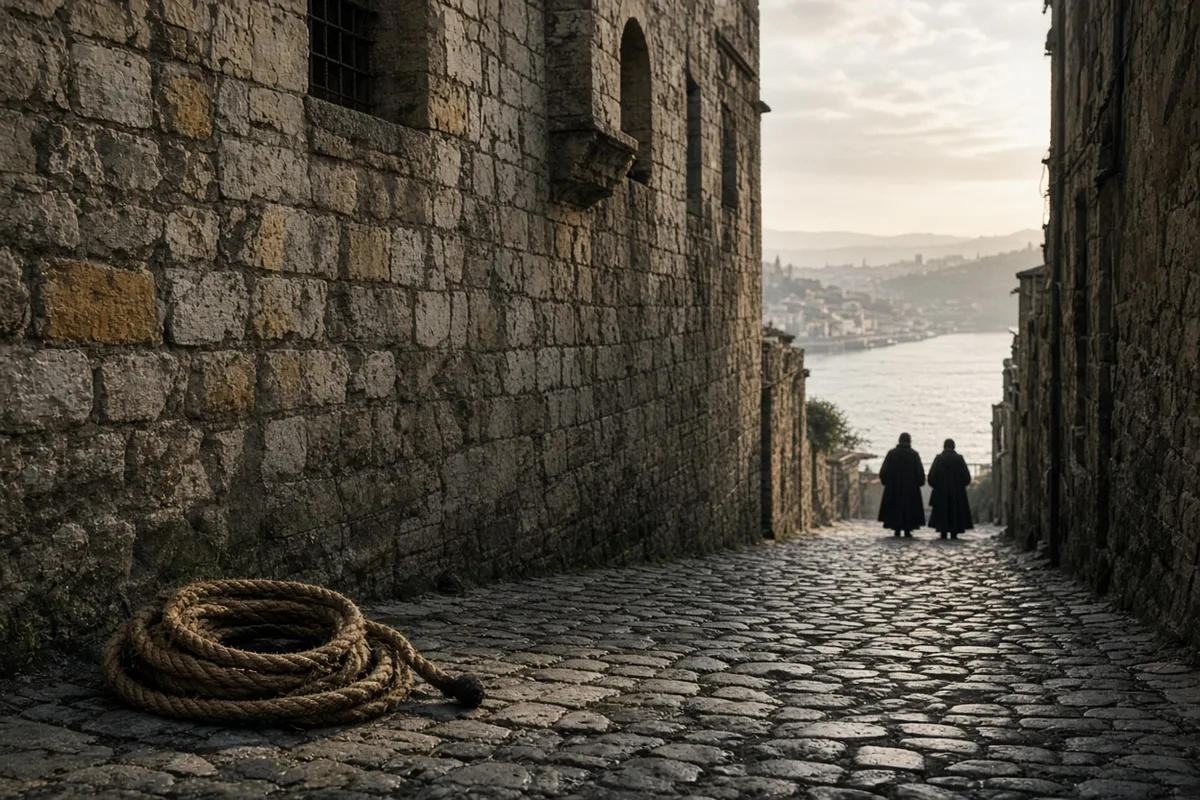
On 14 June 1631 the provincial chapter at Madrid ordered the transfer of three Discalced friars from Segovia to the college at Alcalá, and my name appeared fifth on the list of twenty-one men assigned to the move. The acta of that chapter, preserved in the archive, note that the college library already held 184 volumes, including the 1618 edition of the “Subida del Monte Carmelo” printed at Alcalá with the approbation signed by Fray Tomás de Jesús. During the journey I stopped one night at the old priory in Toledo and asked the porter whether the storage closet still existed; he replied that the space had been converted into a stairwell in 1604 and that the new steps covered the spot where the board had stood.
Fray Alonso de la Madre de Dios, who had known Fray Juan at Granada, visited Alcalá in March 1634 and brought with him the daybook kept by Dr. Pedro de Castro at Ubeda. The entry for 2 October 1591 listed the precise time the abscess opened—half an hour after compline—and noted that Sor Isabel de la Cruz had applied a poultice of vinegar and rose water prepared by the nuns of the Encarnación. Fray Alonso read the passage aloud to the community and added that the same physician had drawn blood on three separate occasions during the final week, the last amount recorded as nine ounces.
In 1642 the city council of Segovia commissioned a new grille for the reliquary chapel, and the contract specified that the ironwork weigh 312 pounds and bear the inscription citing the escape date of 15–16 August 1577. I was asked to verify the wording against the translation document of 1613; the clerk read the clause aloud in my presence, confirming that the right foot had been restored to the body on 12 July 1750 after its return from Ubeda.
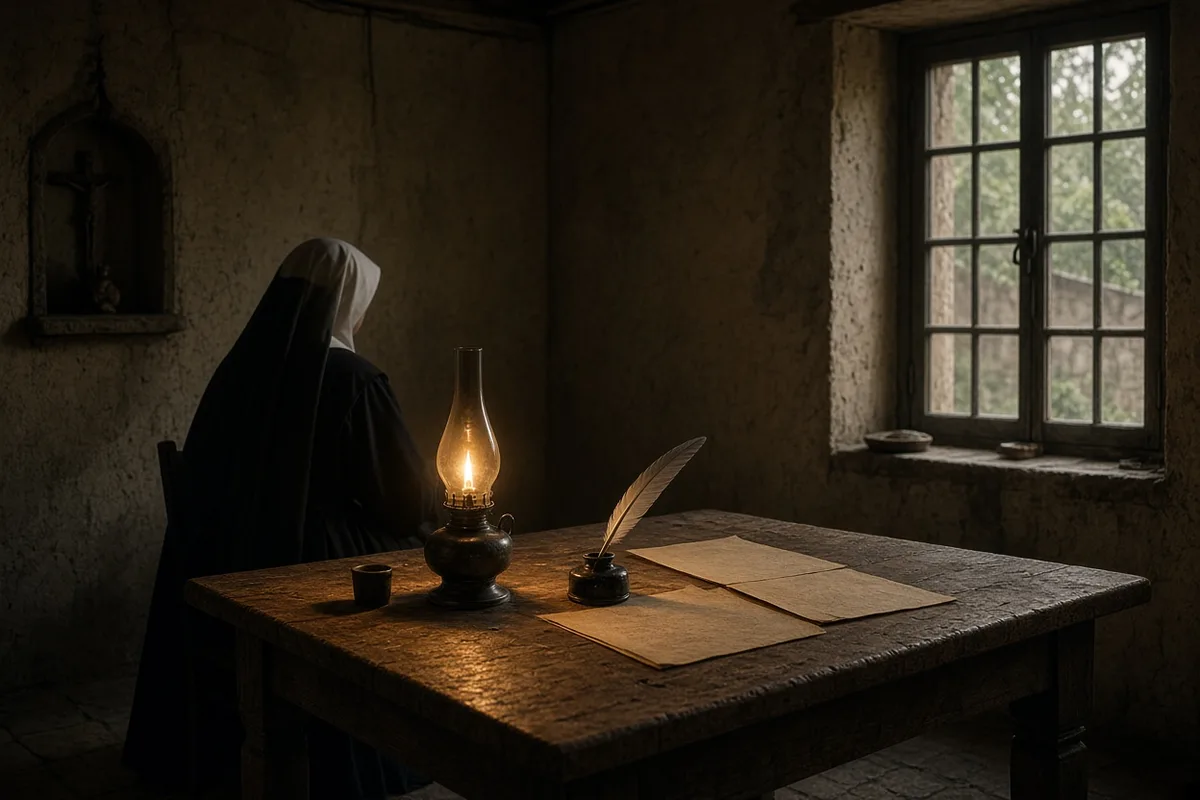
The last letter I received from the Granada archive arrived on 9 February 1648 and was signed by Fray José de Jesús María, then librarian at Los Mártires. It stated that the watermarked paper of the “Noche Oscura” manuscript had been examined by the royal notary on 4 December 1647 and that the Mendoza arms appeared on seventeen of the thirty-four folios. The letter also quoted a sentence from Fray Juan’s 1585 report to the definitors: “The soul must pass through the dark night,” written in the identical hand I had first seen on the sheets passed under the cell door.
By 1653 the number of Discalced houses in Castile had reached forty-seven, according to the summary prepared for the general chapter at Madrid. I was then assigned to the guest quarters at the Segovia monastery and given the cell nearest the cloister arch that opens toward the Eresma. From that window the drop to the street measures one and a half times a man’s height because of the additional paving laid in 1639.
On 11 May 1657 a Discalced nun from the Toledo convent, Sor María de San José, aged eighty-four, arrived at Segovia with a small reliquary containing a fragment of the rope Fray Juan had used in the escape. She placed it on the altar of San Nicolás chapel and told the community that her aunt, who had been a lay sister at the Encarnación in 1577, had kept the remaining length until her death in 1619. Sor María remained with us for six days before returning to Toledo; on the morning of her departure she asked whether the porter still hung the outer-gate keys in the same place, and I answered that the lodge had been rebuilt in 1622 and the hooks moved two feet to the left.