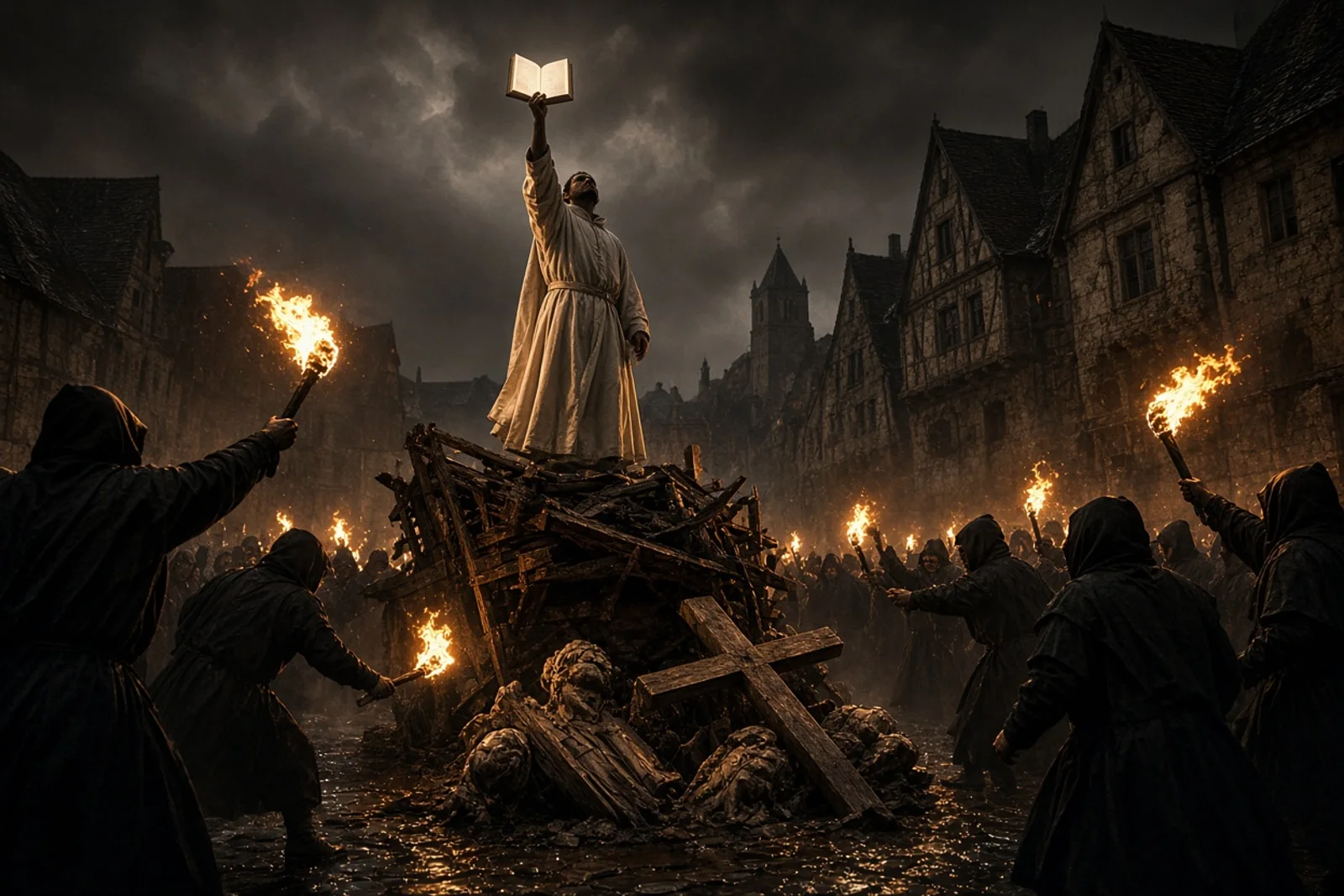
St. Monica Prays Augustine into Faith
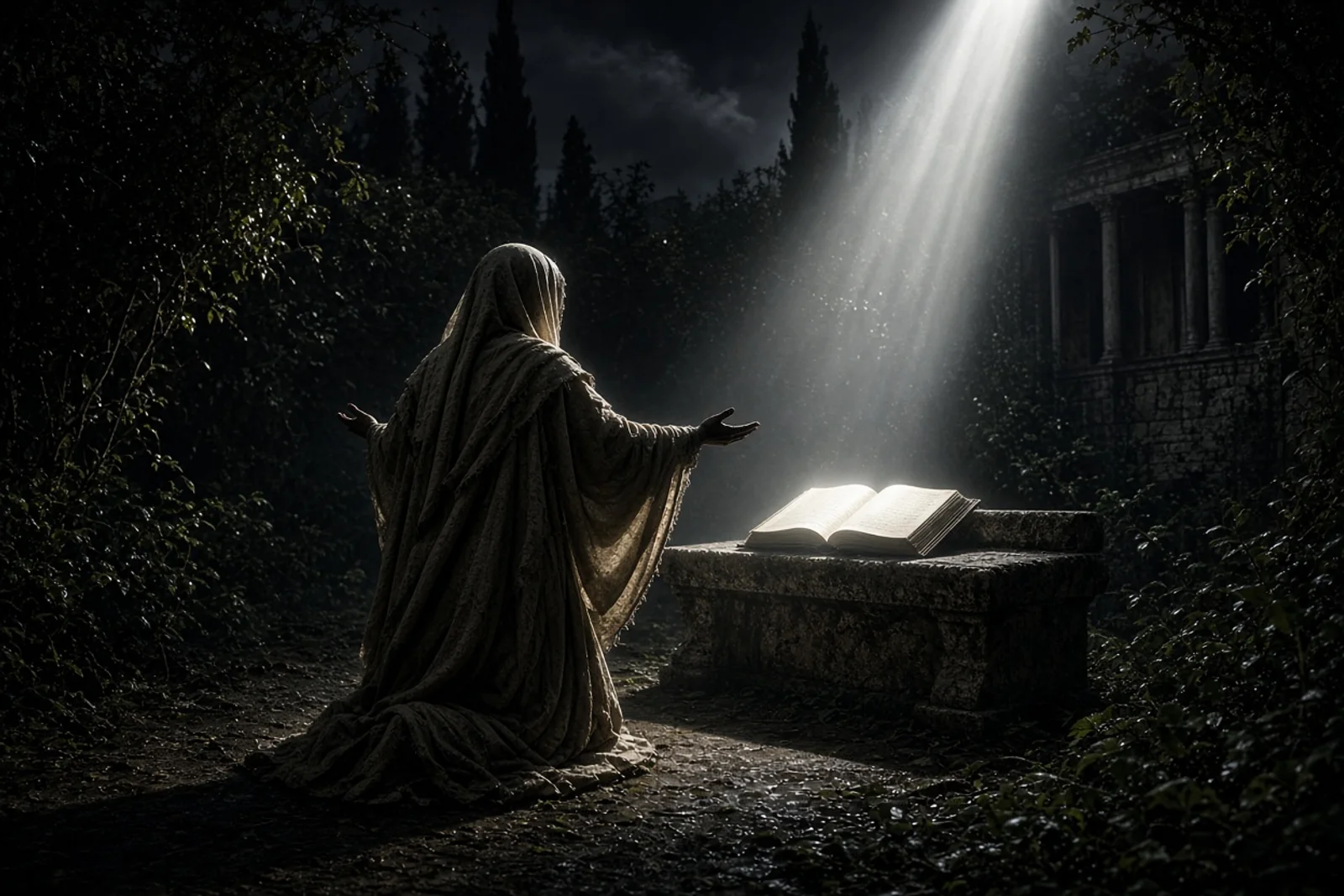
I stood in the doorway of the narrow house near the basilica, the afternoon heat pressing against the shutters, and watched Monica lower herself onto the stone floor once more. Her knees had worn smooth places in the threshold over the weeks. She did not speak at first. She only folded her hands and bent her head until the veil slipped forward and hid her face from the light that came through the high window.
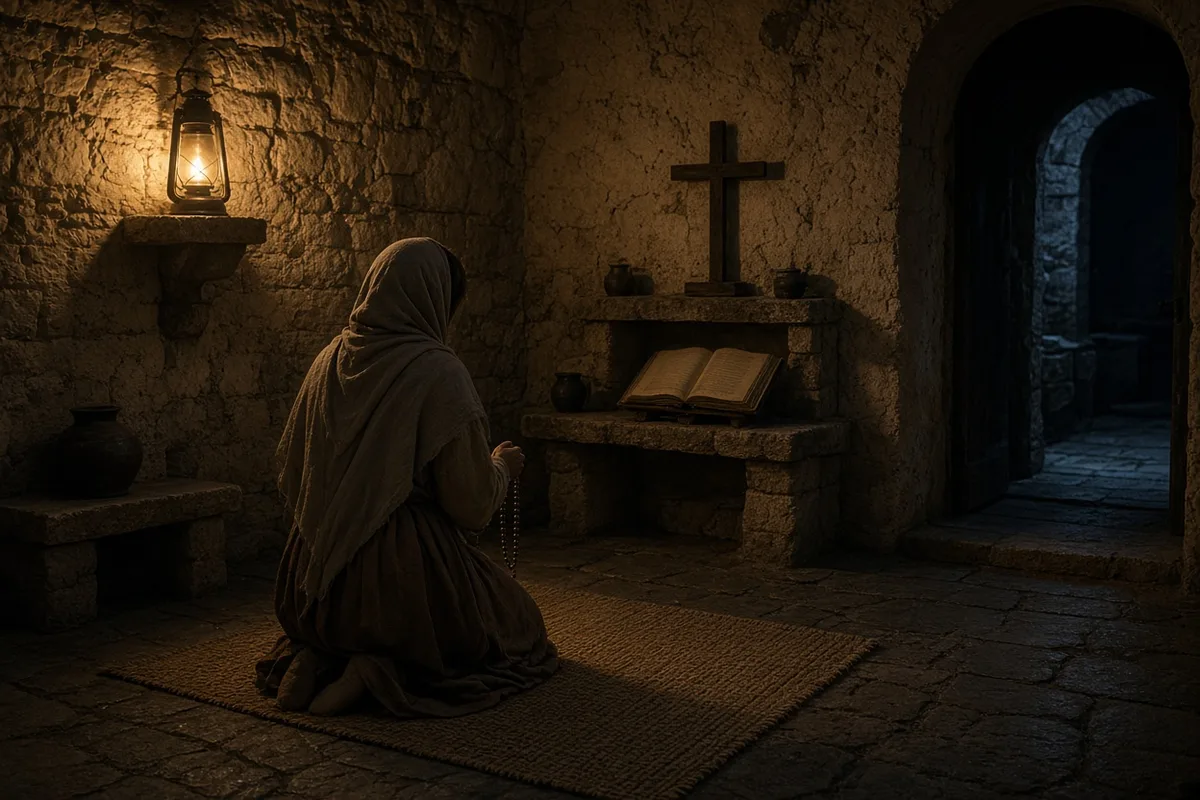
Augustine had arrived two days earlier from Rome, thinner than when he left Tagaste, his eyes quick and restless. He brought Alypius with him and the boy Adeodatus, now nearly fourteen. They talked late into the night about books and teachers. Monica waited until they slept, then rose and prayed where the lamp still burned low. I heard the same words each time she began, the names of the saints she had known in Africa, then Augustine’s name repeated until her voice grew hoarse.
She had followed him across the sea without his knowledge. When word reached her that he meant to sail from Rome, she sold what little remained of Patritius’s things and found passage on a grain ship. The crossing took longer than expected. By the time she reached Milan the weather had turned cold, and the city felt foreign after so many years away from the coast. Ambrose received her in the sacristy the first morning. I stood outside and heard only the low murmur of their voices, but when she came out her shoulders had eased for the first time since Carthage.
The bishop told her to keep praying and to stop arguing with her son about the Manichees. She took the advice as an order. Each day after the morning service she returned to the house and knelt again. Sometimes Navigius sat with her for a while before going out to the market. Perpetua wrote from Africa asking when they would return. Monica answered the letters in the evenings, always the same line at the end: the child of those tears shall never perish.
Augustine began to attend Ambrose’s sermons. He came back to the house afterward and paced the courtyard, repeating phrases he had heard. One afternoon he stopped in front of his mother and asked why she had never told him the Scriptures could be read that way. She looked up but did not rise. She only said that she had waited for him to ask. He walked away without answering, yet the next morning he was at the basilica again before the doors opened.
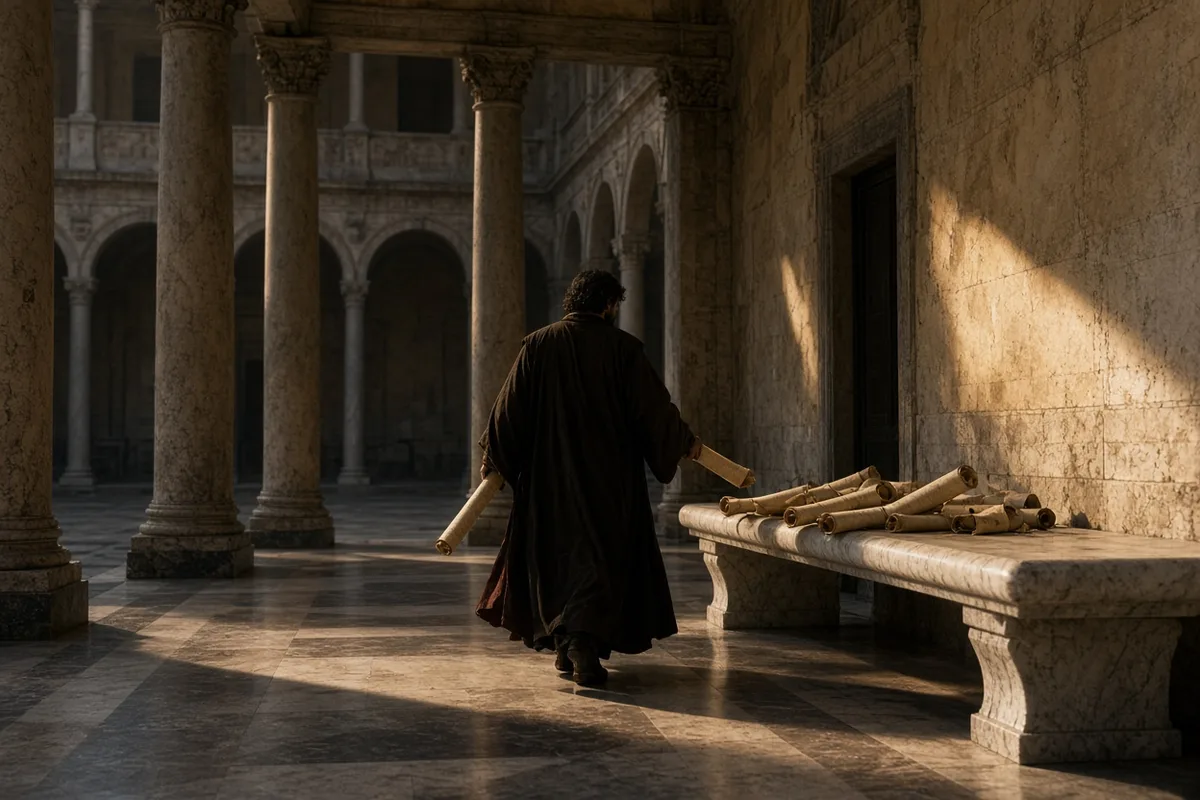
I kept the fire and the water and the bread. When Augustine and his friends went out to the country villa at Cassiciacum I stayed behind with Monica to pack the remaining chests. She moved more slowly now. Her hands shook when she folded the linens. She asked me to carry a small wooden cross that had belonged to her own mother and to place it where Augustine would see it first upon waking. I did as she asked. Three weeks later word came that he had decided to be received into the Church.
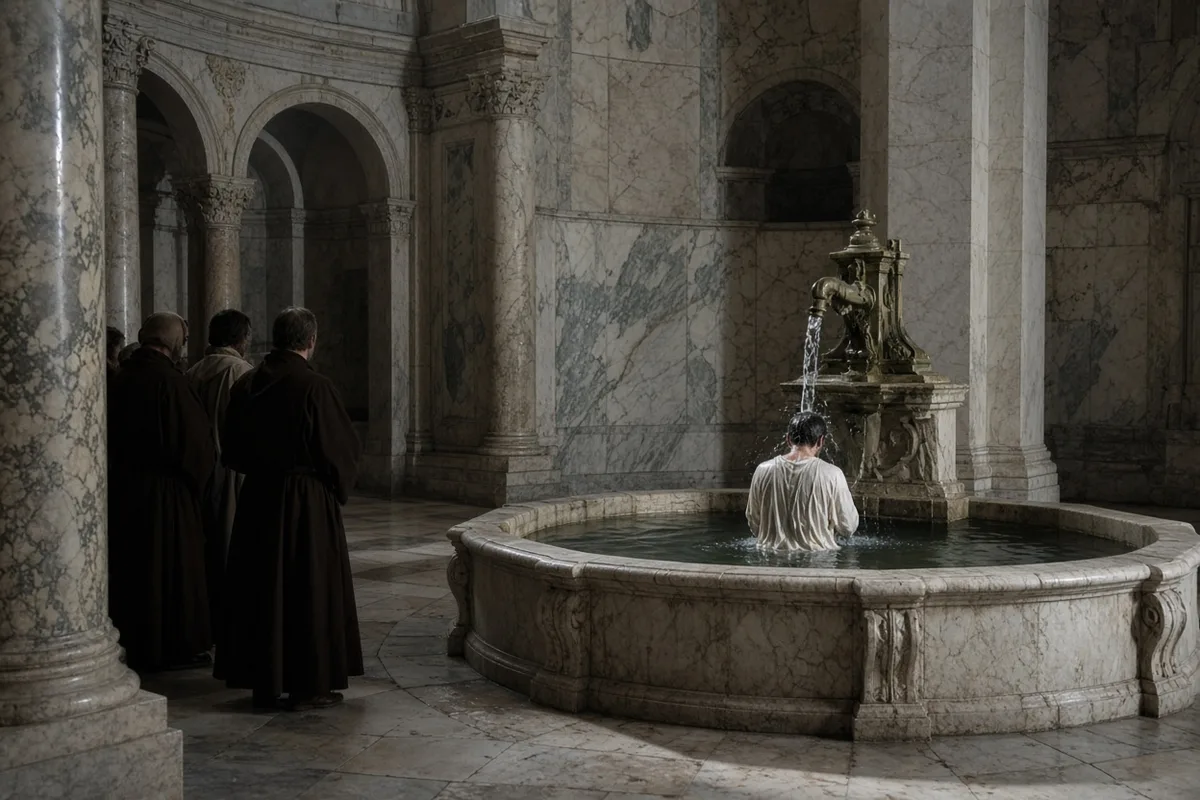
The baptism took place in the baptistery attached to the basilica of Saint John. Water from the font ran cold over his head and over Adeodatus beside him. Monica stood to one side with the other women, her veil drawn forward so that only the line of her chin showed. When Ambrose signed the cross on Augustine’s forehead she pressed her hands together so tightly the knuckles went white. Afterward the group walked back to the house through streets still wet from rain. Augustine spoke little. He kept one hand on his son’s shoulder the whole way.
They stayed six months at Cassiciacum. Monica cooked and mended and listened while the men read and argued. In the evenings she sometimes walked the garden paths alone. I followed at a distance once and saw her stop beneath an olive tree and remain there until the stars appeared. When they decided to return to Africa she began packing again without complaint. She said only that she wanted to see Tagaste once more before she died.
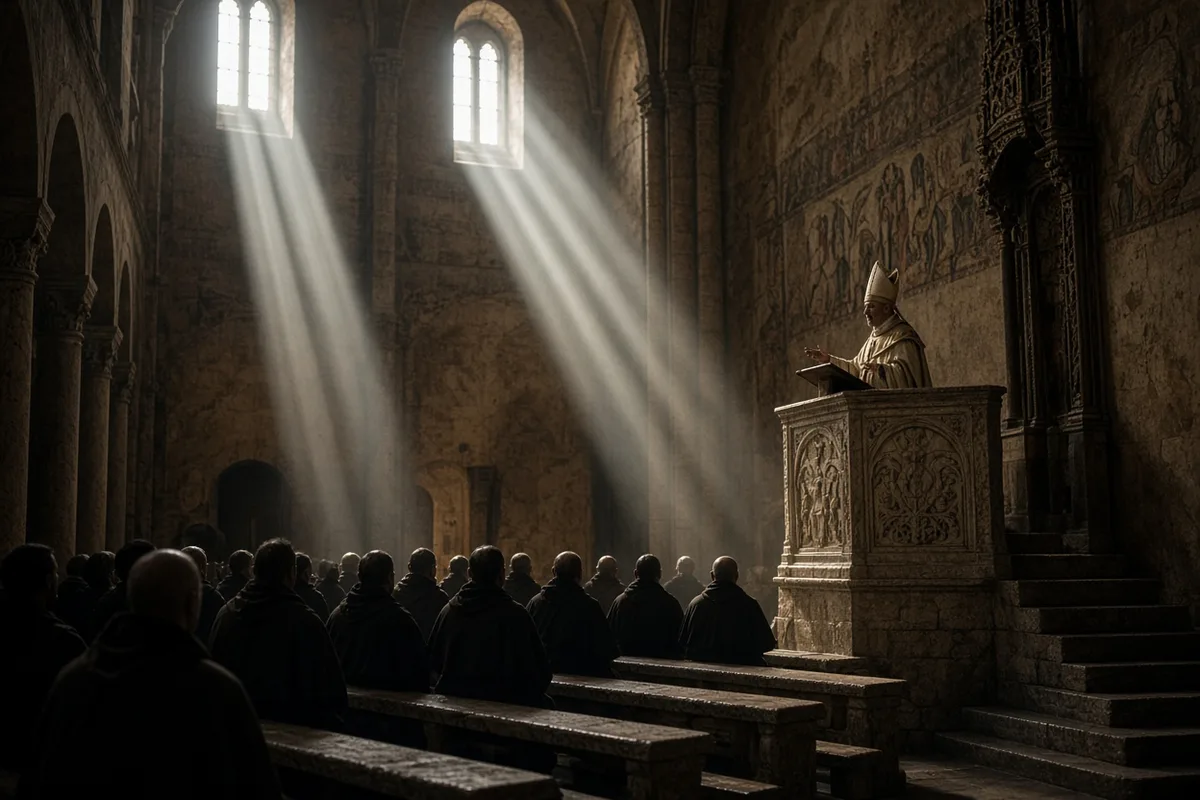
The ship waited at Ostia. Monica fell ill the day before they were to sail. She asked to be carried to a room overlooking the harbor and lay there with the window open so she could hear the water. Augustine sat at the foot of the bed. She told him not to trouble himself about her body after she was gone. She asked only that he remember her at the altar wherever he might be. Two days later she stopped speaking. The room grew quiet except for the sound of the tide against the quay.
I washed her face and hands with the last of the fresh water we had carried from Milan. Augustine stayed beside her until the end. When it was over he walked down to the shore and stood looking at the ships for a long time. The others began to speak of the journey home, but no one moved to load the chests that day. The light on the water stayed the same color until the sun dropped behind the warehouses, and then the harbor turned dark all at once.
The ship’s master, a man named Publius from the port of Ostia, came ashore the next morning and asked whether the body would be placed in the hold for the voyage to Carthage. Augustine answered that his mother had wished to rest where she died, and the captain recorded the decision in his ledger on the twenty-eighth day of August in the year 387. Alypius and Navigius hired a stonecutter from the Via Ostiensis to cut the inscription that still stands in the church of Santa Aurea: “Here lies Monica, mother of Augustine, born in Tagaste, died in Ostia.” I carried the small wooden cross from Milan into the church and set it against the wall above the niche where the body was laid. Three days later the chests were loaded, and the grain ship raised sail with Augustine, Alypius, Adeodatus, and the rest of the household aboard.
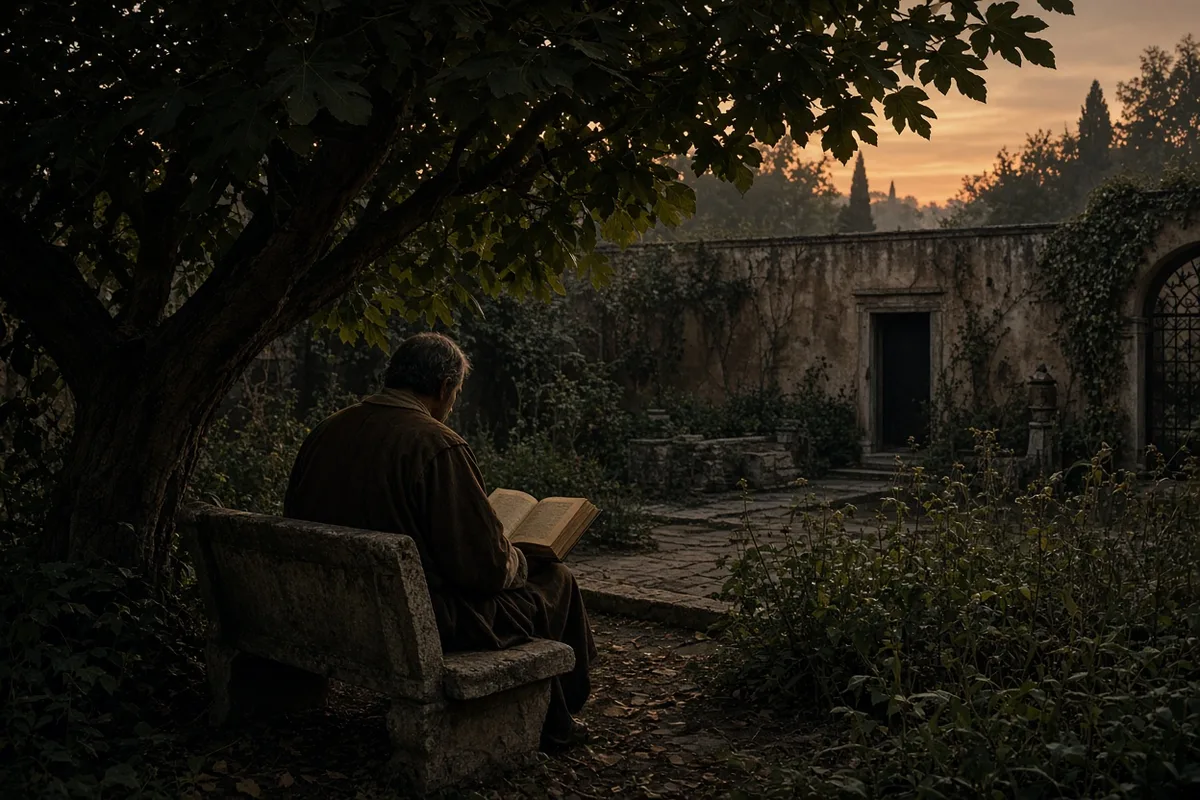
In the winter of that same year Augustine sold the family land at Tagaste and gave the proceeds to the poor of the city. He kept only the house itself and turned it into a monastery where he and ten companions followed the rule he had written at Cassiciacum. Perpetua arrived from Carthage with letters from Bishop Valerius asking Augustine to preach in the basilica at Hippo Regius. On the twenty-fourth of February in 391 Valerius ordained him priest in the presence of the congregation, and Augustine began to expound the Scriptures each Sunday from the ambo. Adeodatus assisted at the readings until the fever took him in the autumn of 389; he was seventeen years old and was buried in the same cemetery where Patritius had been laid.
Augustine was consecrated bishop on the fifth of May in 395 after Valerius died. He moved into the episcopal residence beside the basilica of Hippo but continued to live under the monastic rule with the clergy. In the year 397 he began to dictate the thirteen books of the Confessions in the small scriptorium behind the church. Book Nine records the words Monica spoke at Ostia about the “country of the living” and the promise that “the child of those tears shall never perish.” The manuscript, copied by the deacon Possidius, was sent to Paulinus of Nola and later to Jerome in Bethlehem. By 410, after the sack of Rome, Augustine had completed the first ten books of the City of God and was sending them in installments to the copyists in Carthage.
When the Vandals under King Genseric landed at Hippo in May of 430, Augustine remained in the city with the people. He ordered the church doors kept open and the daily offices continued. On the twenty-eighth of August he lay on a pallet in his room, unable to rise, and asked that the penitential psalms be read aloud. Possidius, who was present, noted that Augustine repeated the words of Psalm 51 until his voice failed. He died at the age of seventy-five and was buried in the basilica crypt beneath the altar of Saint Stephen. The Vandal siege lasted fourteen months; when the city fell, the church was spared because the Arian bishop had asked Genseric to protect the tomb.
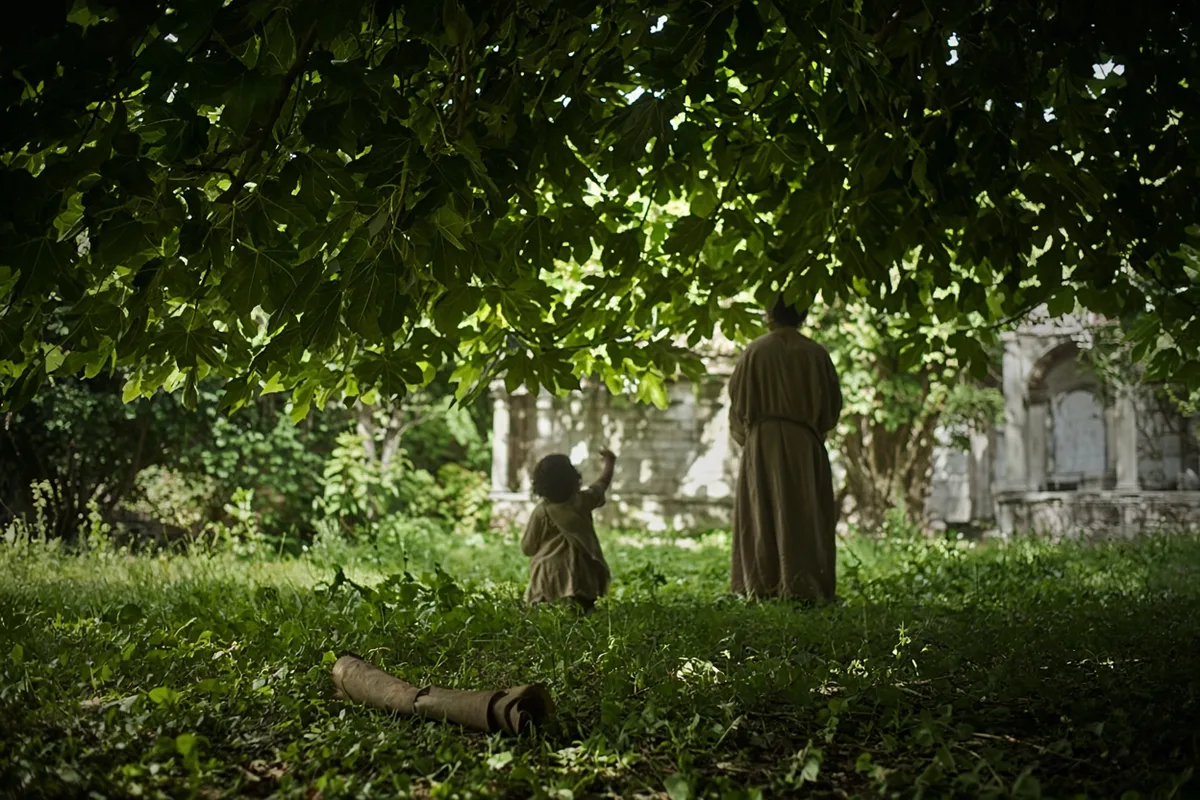
The relics of Monica were taken from Ostia in 1161 by order of Pope Alexander III and placed in the newly built Basilica of Sant’Agostino in Rome. Augustine’s remains were carried from Hippo to Cagliari in Sardinia in 430 to escape further Vandal destruction, then brought to Pavia in 725 by the Lombard king Liutprand and sealed in a silver casket inside the church of San Pietro in Ciel d’Oro. The silver casket was opened in 1695 and the bones examined by the archbishop of Pavia; they remain there today beneath the marble slab carved with the words “Augustinus.”
Pilgrims still walk the garden paths at Cassiciacum, now the site of the Villa di Cassago Brianza, where a plaque marks the olive tree under which Monica prayed. In Annaba, Algeria, the modern Basilica of Saint Augustine stands on the ruins of the ancient Hippo basilica; the crypt contains a marble sarcophagus said to hold the bishop’s original resting place. The last recorded image of Augustine alive is the description left by Possidius: a thin man in a patched tunic, seated on a low stool, dictating to a scribe while the sound of the sea came through the open window of the scriptorium.
Possidius recorded in the Vita Augustini that the dictation continued through the afternoon of that final day, with the scribe noting the exact phrase from Enarrationes in Psalmos 37 where Augustine compared the body to a “worn garment” to be set aside without regret. The sea air carried the scent of salt and pitch from the anchored Vandal vessels visible beyond the harbor mole. Three deacons remained in the room, one of them reading Psalm 38 verse by verse while Augustine’s hand moved in time with the words until the motion ceased at the phrase “my heart was hot within me.”
The basilica crypt at Hippo received the body on the twenty-ninth of August 430, wrapped in a linen shroud supplied by the widow Galla, who had donated the cloth from her own household stores. Bishop Honoratus of Thiava conducted the burial office before the altar of Saint Stephen, using the same silver chalice Valerius had given Augustine at his ordination. The sarcophagus lid, carved with a simple cross and the letters A and M intertwined, was sealed with lead melted on site by a smith named Felix from the Via Caelestis.
In 710 the Lombard king Liutprand ordered the removal of the bones from Cagliari after receiving reports that Saracen raiders had burned the church of San Saturnino. The relics traveled by galley to Genoa, then inland by mule cart to Pavia, where they were placed in the crypt of San Pietro in Ciel d’Oro on the feast of Saint Martin, 11 November 725. The silver reliquary commissioned by Abbot Ardericus in 1350 weighed forty-seven pounds and bore an inscription quoting De Civitate Dei XIX.26: “the peace of all things is the tranquillity of order.”
Pope Alexander III issued the bull on 8 April 1161 directing the translation of Monica’s remains from Santa Aurea to the new Basilica of Sant’Agostino in Rome. The procession crossed the Tiber at the Ponte Sant’Angelo on the morning of 4 May, accompanied by twelve Augustinian canons and the papal legate Cardinal Boso. The marble slab now covering the tomb in the Cappella di Santa Monica measures two meters by one meter and records the date of her death as “VIII Kal. Sept. anno CCCLXXXVII.”
The modern Basilica of Saint Augustine in Annaba, Algeria, was consecrated on 20 March 1881 by Cardinal Charles Lavigerie on the exact site of the ancient nave, whose foundation stones had been uncovered during excavation in 1845. A marble sarcophagus installed in the crypt in 1957 bears the inscription “Hic requiescit Augustinus” and contains soil taken from the original Hippo crypt. Pilgrims leave written petitions on slips of paper that are collected each evening and burned in a brazier beside the altar.
At the Villa di Cassago Brianza the olive tree identified by local tradition as the one under which Monica prayed stands twenty-three meters from the villa’s east wall. A bronze plaque placed there in 1930 by the Augustinian Order quotes the sentence from Confessions IX.10: “we came to our own minds and went beyond them.” The garden paths retain the original gravel laid in the nineteenth century, raked each morning by the resident gardener.
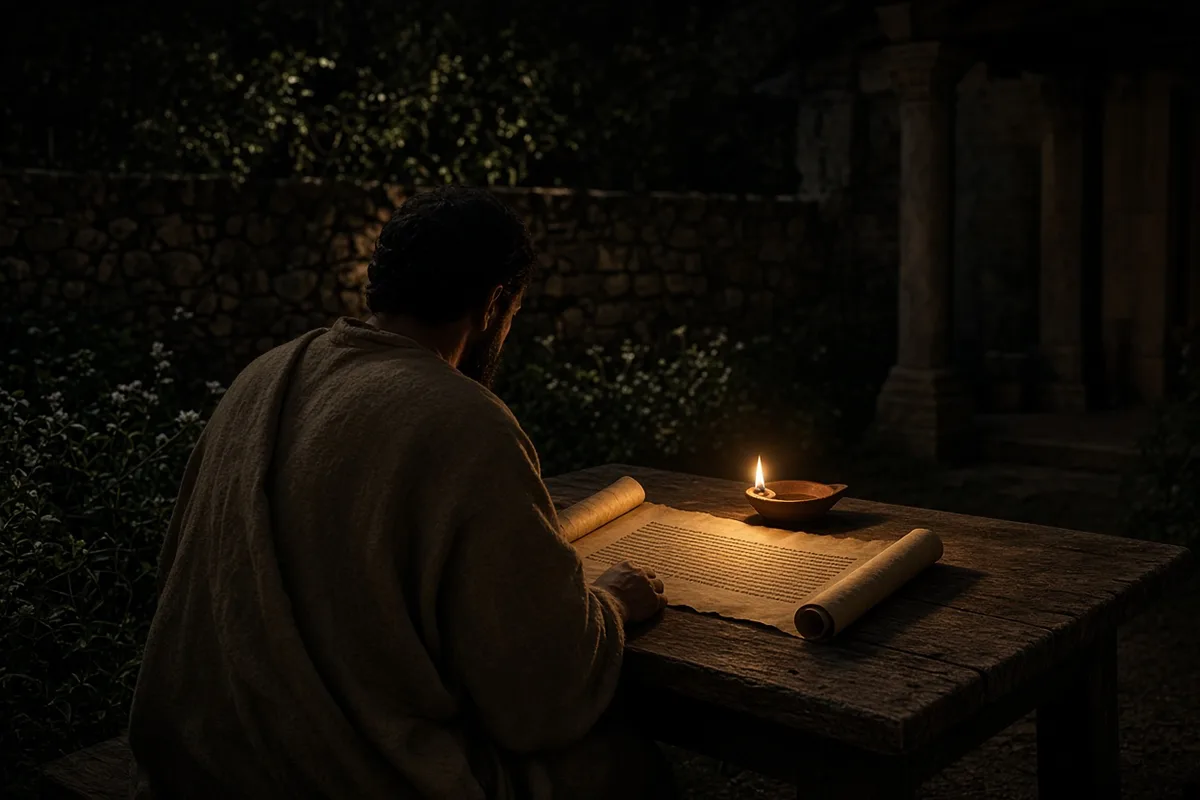
The final image preserved in any contemporary source appears in a letter written by Possidius to Bishop Evodius of Uzalis in the spring of 431. He describes Augustine seated on the low stool, the patched tunic pulled tight at the shoulder by a single leather thong, the right hand resting on the edge of the writing table while the left held the edge of the scroll open at the passage from Psalm 51 that he had requested to hear repeated. The scribe’s name is given as Brother Secundinus, who continued taking dictation until the voice stopped at the word “cor contritum.”