St. Monica's Persistent Prayers for Augustine
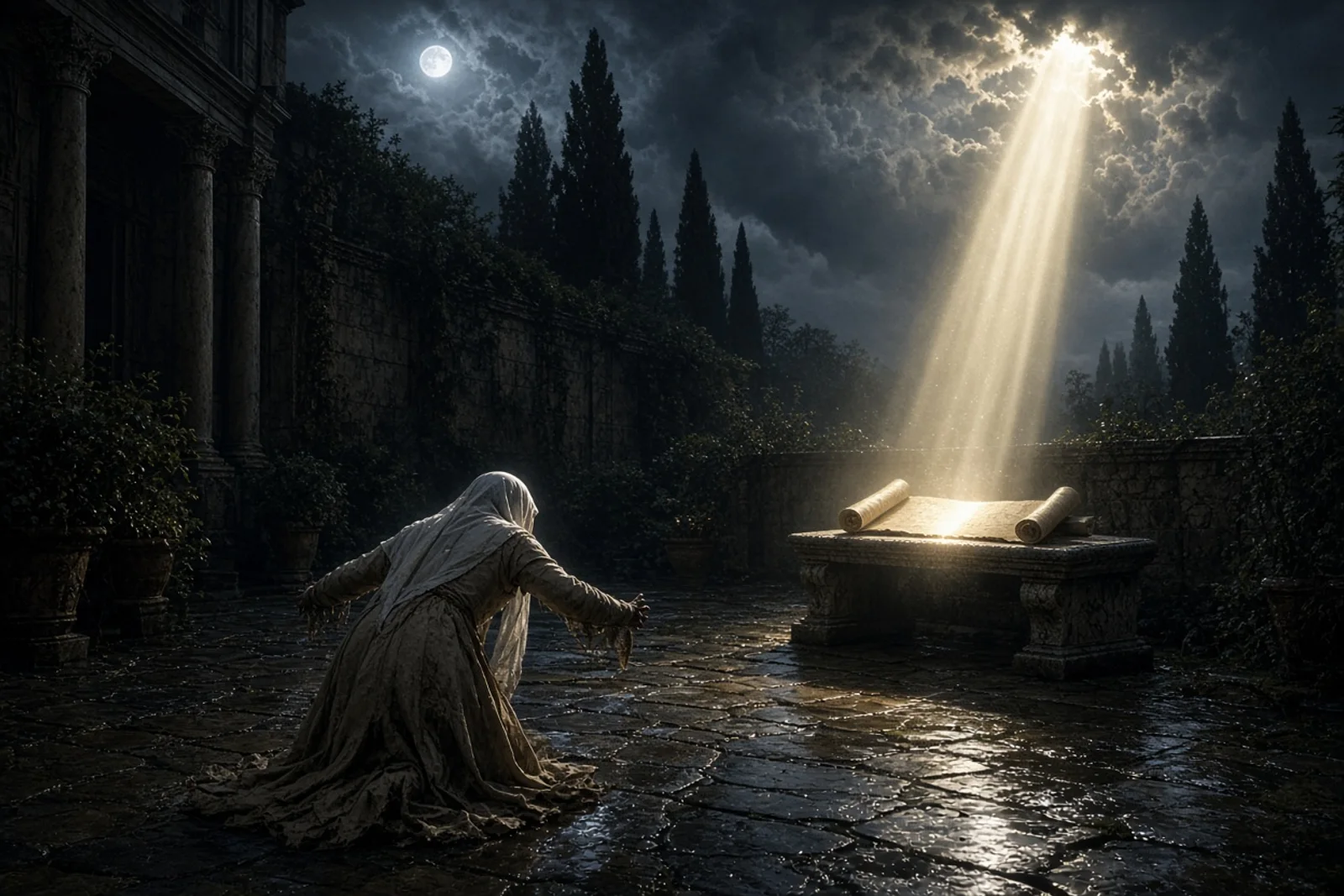
I stood just inside the chapel doorway when she rose from her knees. The stone underfoot still held the day's heat, and the single lamp threw her shadow long across the floor. Monica had been there since the first stars showed. Her lips moved without sound, the same petition she had carried for years.
She stepped past me into the street without a word. I followed at a distance because she had asked me to stay close on nights like this. The port lay quiet. Ships rode at anchor under a thin moon. We reached the house and found the door to Augustine's room open and the bed stripped. A servant girl whispered that he had taken passage for Rome before dawn.
Monica did not cry out. She only pressed one hand to the doorframe and stood still long enough for the lamp to gutter. Then she turned and told me to pack what we would need for the sea. We left the next tide.
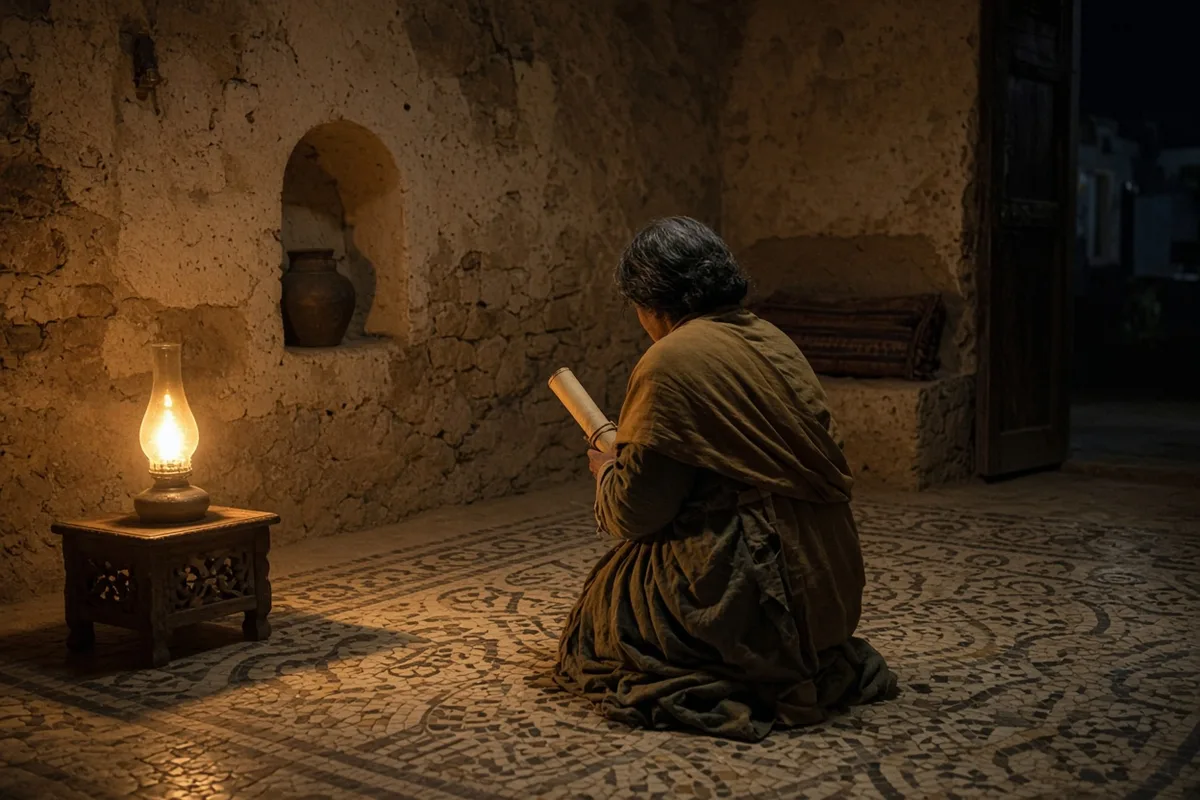
The crossing was rough. Salt spray soaked our cloaks and the motion kept most passengers below. Monica stayed on deck when she could, facing the wind, her hands gripping the rail. At night she prayed the psalms she knew by heart. I heard the same verses repeated until the words blurred into the sound of the water.
In Rome we learned he had already sailed for Milan. She found another ship without hesitation. The journey north was slower. We stopped at small ports where she asked after news of teachers and rhetors. Each time the answer pointed us onward.
Milan rose around us in late autumn. The city felt larger than Carthage, its streets wider and colder. Monica found lodging near the cathedral. She began attending the hours Ambrose led. I carried her cloak and sometimes waited in the side aisle while she remained after the others had gone.
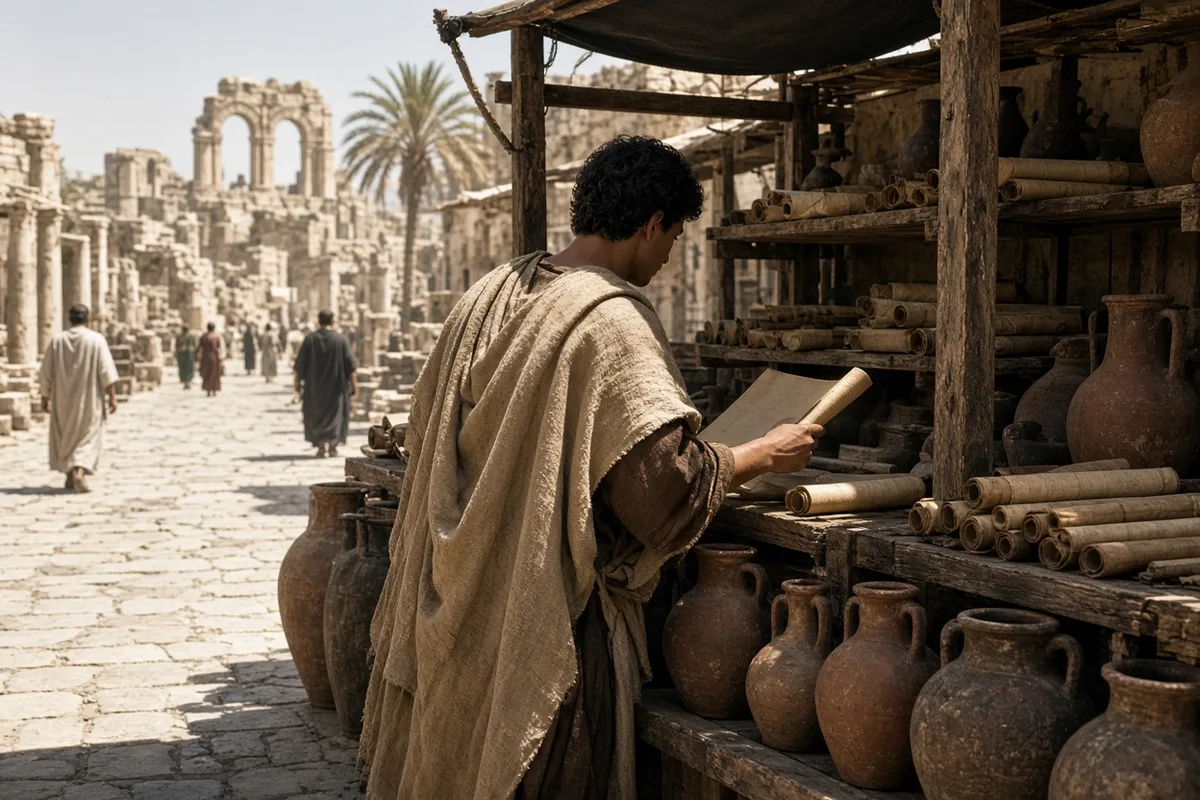
She met the bishop more than once. He listened without promising anything she could hold. One evening she returned to our rooms and repeated what he had said about her son. The words were simple: the child of such tears could not be lost. She repeated them to herself while she prepared the evening meal.
Augustine came to the house at intervals. He spoke of his work and the books he was reading. Monica listened. She did not press him at the table. After he left she would sit with her hands folded and begin again the prayers she had carried across the sea.
Winter passed into spring. Augustine brought friends to the house. Their conversations lasted late. I heard Ambrose's name more often. One morning Augustine told his mother he had decided to present himself for baptism. She received the news without display, only asking that I prepare the garments he would need.
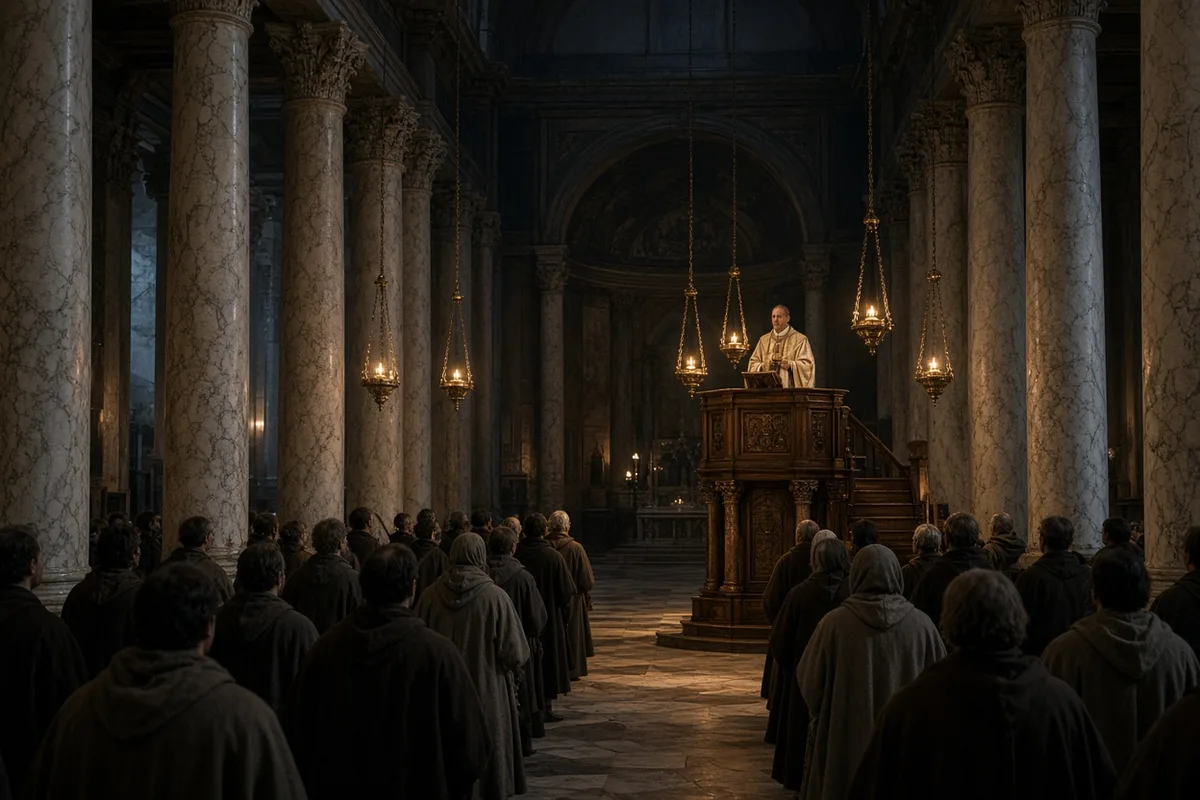
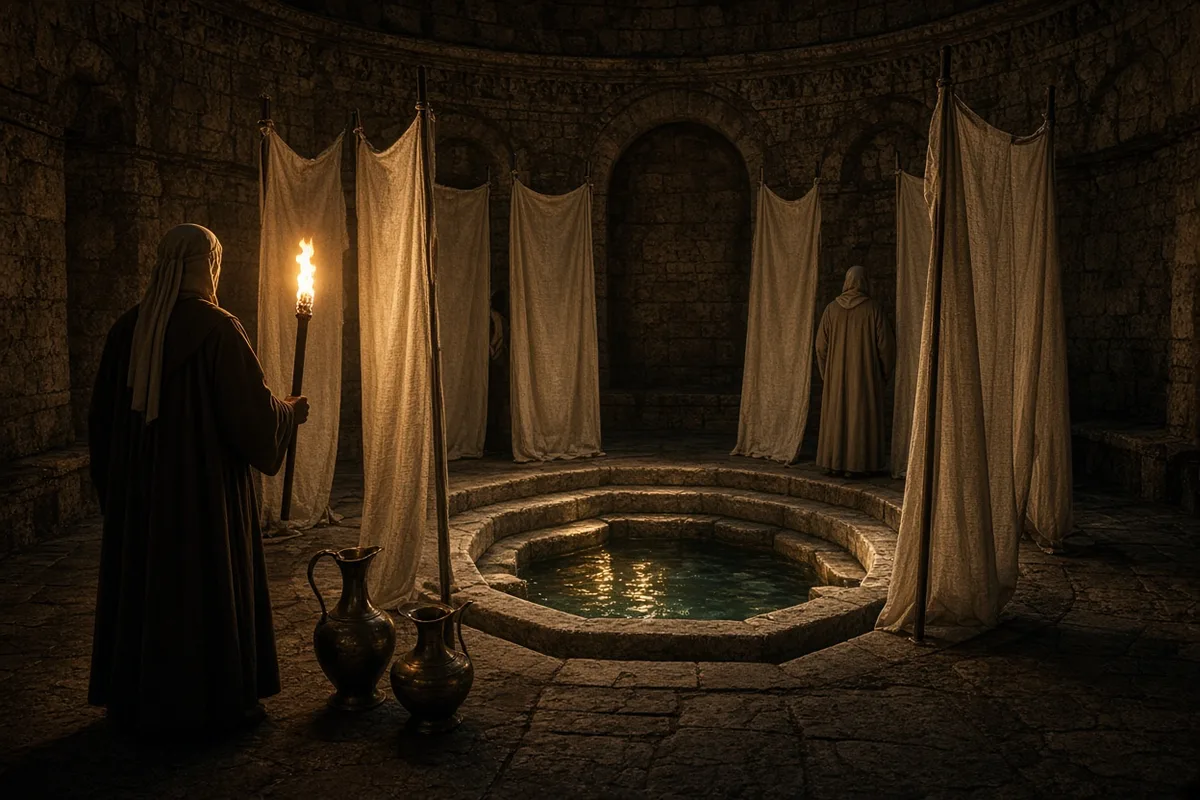
The rite took place in the baptistery attached to the cathedral. Water from the font ran down the steps and pooled on the marble. Ambrose performed the immersion. Augustine emerged and stood dripping while the bishop signed his forehead. Monica waited at the back with Navigius. When the rite ended she stepped forward and embraced her son without speaking.
We remained in Milan through the summer. Augustine prepared to return to Africa. Monica agreed to travel with him as far as Ostia. The road south was hot and the inns crowded. She tired more quickly than before but did not complain.
At Ostia we found rooms overlooking the harbor. Ships from Africa came and went each day. Monica sat by the window in the afternoons and watched the water. One evening she called both sons to her and said she had no further desire for this life. She asked only that they remember her at the altar wherever they went.
She died two days later. The room was quiet except for the sound of the sea through the shutters. Augustine arranged the burial in the local church. We stayed long enough to see the stone set, then began the preparations for the voyage home.
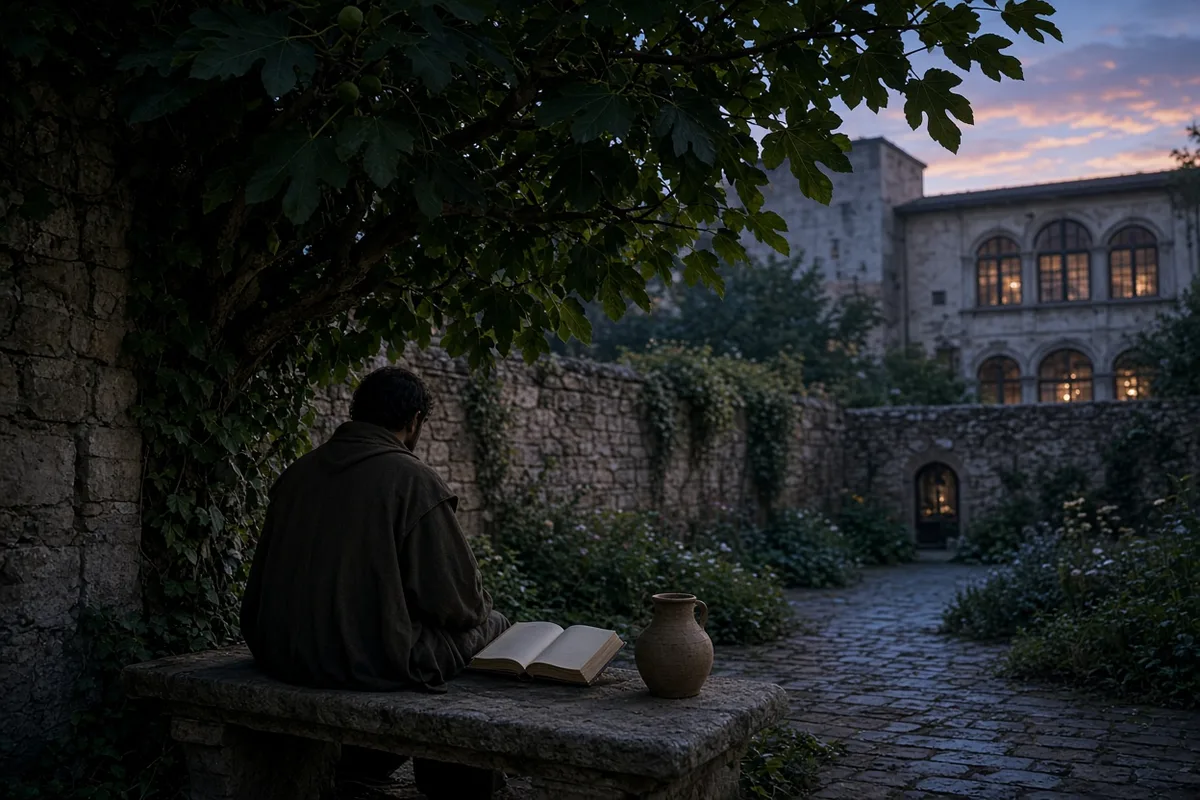
I returned to Tagaste with the household goods. Augustine remained in Italy longer than planned. Years afterward letters reached us describing the work he had taken up. The prayers Monica had offered in the chapel and on the ships were no longer spoken aloud, yet the house in Tagaste kept the custom of the hours she had observed.
The house in Tagaste stood on the same street where Monica had first taught Augustine the psalms, its walls now repaired with fresh mud brick after the winter rains of 388. I set the household goods in the storeroom and instructed the two remaining servants to keep the lamps lit at the third hour and the ninth, as she had required. A letter arrived from Ostia that same month, carried by a merchant from Hippo named Victorinus, dated the kalends of November. In it Augustine wrote that he had sold the last of their property in Milan and would sail for Carthage within the year, adding the line that he had begun to put down on wax tablets the account of his own errors so that others might read the exact words of the change that had come upon him. The merchant stayed three nights and left with a bundle of linen from the Tagaste looms.
Augustine landed at Carthage in the autumn of 391 and traveled directly to Hippo Regius, where Bishop Valerius ordained him priest on the twenty-fourth day of a month the locals still mark by the vintage. He sent word that the small community he formed near the basilica followed the hours exactly as Monica had kept them, rising before first light for the psalm that begins “O God, you are my God.” I answered with the names of the new converts in Tagaste, including the widow Galla who had given her house for meetings, and he replied that the number of those seeking instruction now reached beyond seventy in Hippo alone. Two years later, when Valerius lay dying, Augustine was chosen bishop on the same day the city council recorded the transfer of the episcopal residence keys.
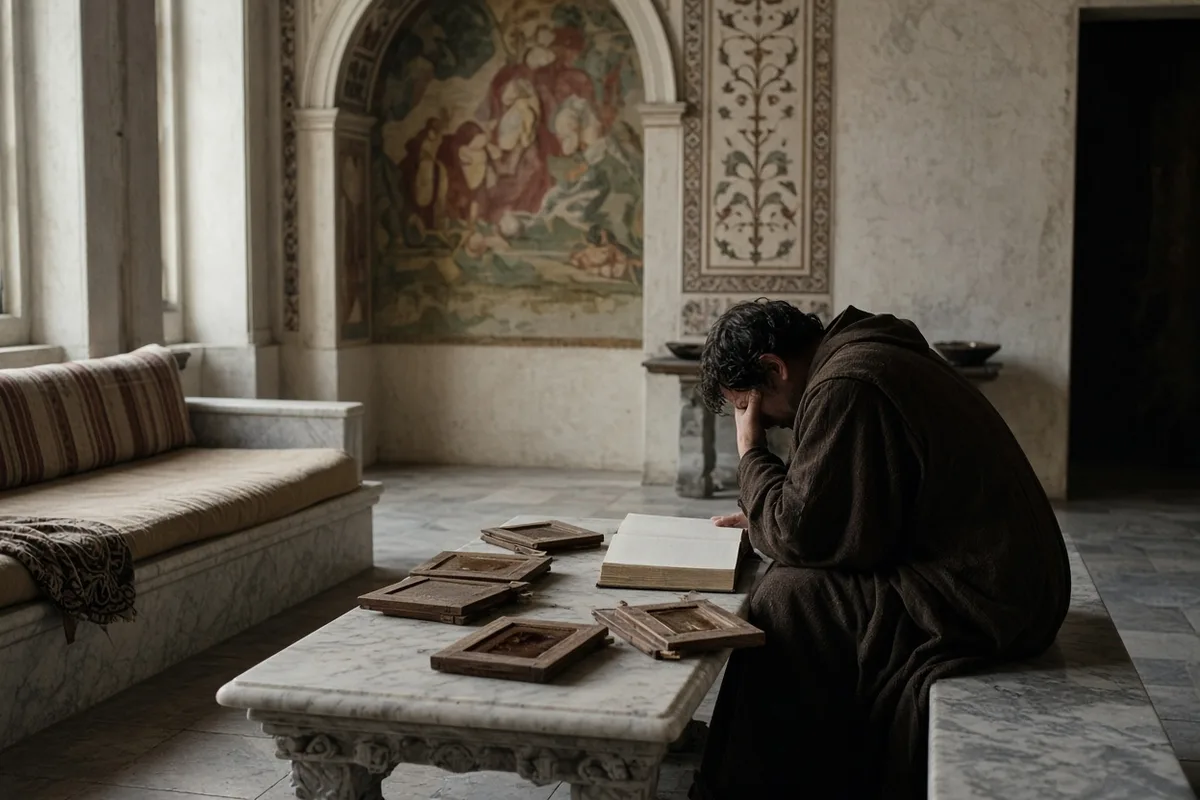
Letters continued each sailing season. One brought the news that he had dictated the first books of the Confessions in the winter of 397, quoting in his own hand the sentence he had spoken to Alypius about the pear tree theft thirty years earlier. Another, sent after the Gothic sack of Rome in 410, described the daily arrivals of refugees at the Hippo harbor and the decision to begin a longer work on the two cities that would require sixteen years and more than five hundred thousand words before the final book was completed. I kept these scrolls in the chest beside the chapel door and read from them aloud at the evening hour so that the servants would know the precise dates and the names of the correspondents, among them Evodius, who had sailed with us from Ostia, and Possidius, who later became bishop at Calama.
In the spring of 430 the Vandals under King Genseric crossed the frontier and laid siege to Hippo. Augustine remained inside the walls with the clergy, refusing to leave even when ships offered passage. He died on the twenty-eighth of August after an illness of ten days, having asked that no one disturb him except to bring the psalter he had marked at the verses beginning “Lord, make me know my end.” The city surrendered three months later. A messenger reached Tagaste with the bishop’s ring and the account written by Possidius that Augustine’s last spoken words concerned the continuation of the library he had assembled, containing more than six thousand volumes and codices.
The custom of the hours continued in the Tagaste house until the last of the original servants died in 451. After that the property passed to a niece of Navigius who maintained the lamps but no longer kept the exact psalms Monica had chosen. Pilgrims still stopped on the road to Hippo to ask for the room where Augustine had slept as a boy. One of them, a deacon from Rome named Paulus, recorded in 484 that he had seen the stone bench in the courtyard and counted twenty-three olive trees planted by Monica’s order.
Monica’s body remained at Ostia until the translation ordered by Pope Martin V in 1430, when the relics were moved to the church of Sant’Agostino in Rome and placed beneath the altar that still bears the inscription recording her death at the age of fifty-six. Augustine’s remains were carried from Hippo during the Vandal occupation and later rested at Pavia, where the basilica of San Pietro in Ciel d’Oro preserves the marble sarcophagus opened in 1695 and found to contain bones corresponding to the height of a man described in the ancient records as slender and of middle stature.
The final image preserved is that of the old woman who tended the lamps in the Tagaste chapel in her ninety-third year. She had been the servant girl who first whispered of Augustine’s departure for Rome. Each evening she lit the single lamp that had crossed the sea with Monica, set it on the same stone threshold, and repeated the words of the psalm Monica had spoken on the deck, the one that begins “Out of the depths I cry to you, O Lord,” until the oil burned away.
She died in the winter of 455 after the oil in the lamp ran out one evening before she could finish the verse. The niece of Navigius, whose name appears in a later deed as Fabiola, recorded the exact date as the ides of December and noted that the lamp itself was placed inside the chapel chest along with the psalter Monica had carried from Ostia. Fabiola ordered the threshold stone reset because the repeated lighting had worn a shallow groove into it measuring four fingers deep. A traveler named Rusticus from Hippo, passing through Tagaste that same month, copied the groove’s dimensions onto a wax tablet and sent the note to Possidius, who added it to the margin of his own account of Augustine’s final days.
In 484 the Vandal king Huneric issued an edict requiring Catholic clergy to surrender church property within thirty days. The Tagaste chapel escaped seizure only because its roof had already collapsed during an earthquake recorded on the twenty-third of March that year. A deacon named Quodvultdeus hid the lamp and the psalter inside a sealed jar beneath the threshold stone and left a scratched inscription on the underside reading “Monica’s vessel, preserved for the hours.” The jar remained untouched until 533 when Byzantine troops under Belisarius retook the city and a soldier named Leontius broke the seal while searching for coins.
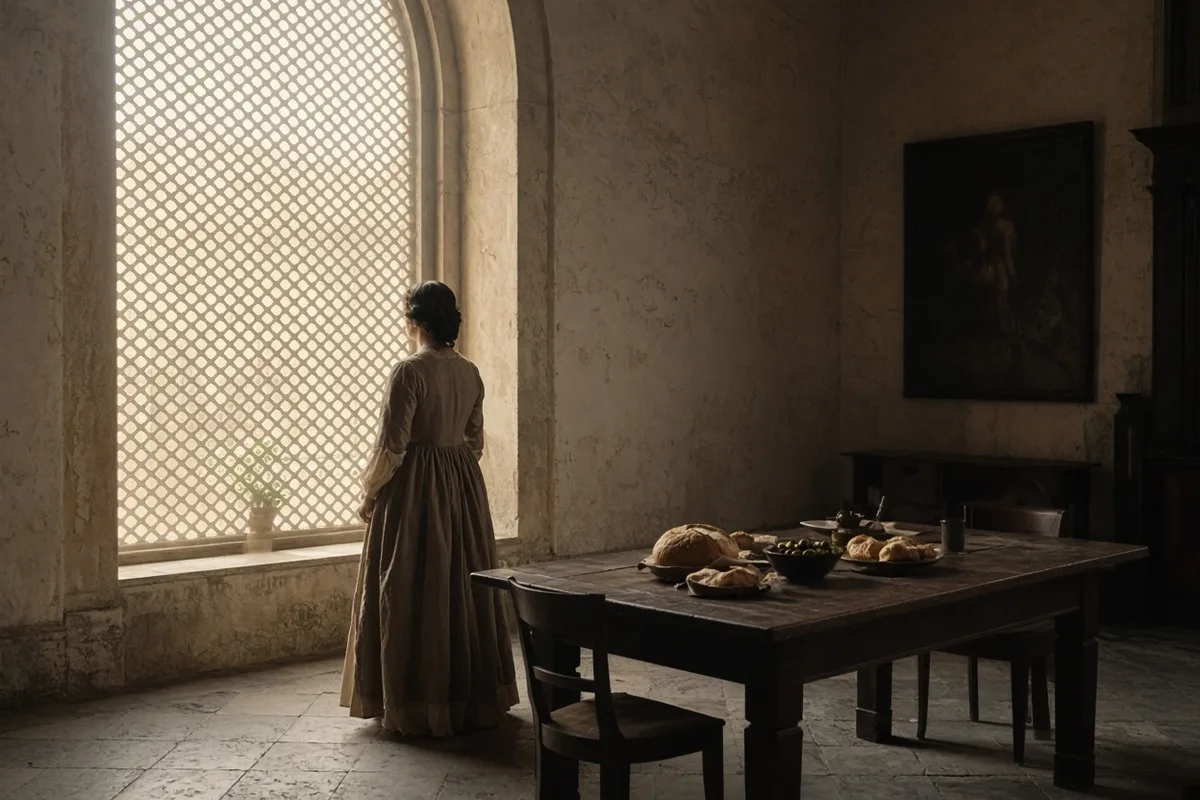
The jar and its contents were carried to Constantinople in 535 by a monk named John who had served briefly in Hippo before the Vandal occupation. John deposited them in the monastery of Stoudios where the librarian recorded their arrival on the kalends of September and noted that the psalter contained marginal notes in Augustine’s hand quoting Psalm 37 at the words “I am ready to fall.” The lamp was relit for the night office on the feast of St. Monica, observed there on the fourth of May, and continued to burn each evening until the monastery was sacked by Ottoman forces in 1453.
After the fall of Constantinople the lamp passed into the collection of a Greek merchant named Michael Laskaris who sailed with it to Venice in 1460. He presented it to the church of San Giorgio Maggiore on the condition that it be kept lit on the anniversary of Monica’s death, the fourth of May. The church sacristan’s ledger for 1462 lists the purchase of thirty-six measures of olive oil specifically for that lamp and records the first lighting on the evening of the fourth with the words “Out of the depths” spoken by a visiting Augustinian canon from Pavia.
The lamp remained in Venice until 1810 when Napoleon’s officials removed it during the suppression of religious houses. It was catalogued as item 2147 in the Musée Napoléon and described as “bronze vessel, height 18 cm, with traces of soot.” After Waterloo the piece was returned to Italy in 1815 and placed in the Vatican Library where the inventory number still appears on its base. In 1960 it was loaned to the church of Sant’Agostino in Rome for the sixteen-hundredth anniversary of Monica’s death and has stood on the altar there since the twenty-seventh of August of that year.
Pilgrims who visit the church today may see the lamp beneath the altar that bears the 1430 inscription recording her age at death. On the fourth of May each year a single flame is kindled inside it at the hour of none and allowed to burn until the oil is gone. The last person recorded to have performed this lighting was a sister of the Augustinian community named Maria Grazia Ferretti on the fourth of May 2019. She placed the lamp on the threshold stone brought from Tagaste in 1995 and read the verse “Out of the depths I cry to you, O Lord” from the same psalter text preserved in the Stoudios copy now held in the Vatican manuscript Vat. lat. 337.