St. Teresa of Ávila Reforms Carmelite Order
The cart wheel caught on the stone lip of the lane and the driver swore under his breath. I steadied the bundle of linen against my hip and waited for the axle to clear. It was still early, the sun not yet high enough to burn the white walls of Ávila, yet sweat already ran under my collar. We had come the last half league on foot after the larger wagon stuck outside the gate. Four of us, two women and two men, carried what we could manage. Teresa walked ahead with the keys in her hand. She had not spoken since we left the borrowed room at the edge of the city.
The house stood smaller than the drawings had promised. Its roof sagged on one side and the door hung crooked on its hinges. Teresa fitted the key, pushed, and the wood groaned open onto a narrow courtyard already hot with reflected light. Inside, the air smelled of dust and old plaster. She crossed the yard and set her bundle on the single table. The others followed, setting down the mattresses, the benches, the small chest that held the rule book and the few coins left from the purchase. No one lit a candle yet. We worked by the light that came through the high slit windows.
By mid-morning the first visitors arrived. Two canons from the cathedral stood in the doorway and asked to speak with the foundress. Teresa came out wiping her hands on her apron. She listened, answered briefly, and invited them to return after the Bishop had given his final word. They left without entering. The driver who had brought the cart lingered near the gate, watching the street. He said the market was already talking.
We ate bread and olives on the floor because there were no chairs yet. Teresa ate last. She kept the door open so the air could move through the rooms. In the afternoon a boy brought a message from Doña Guiomar. The Bishop would come the next day if the weather held. Teresa folded the note and placed it inside the chest. She told us to sweep the chapel space again before dark.
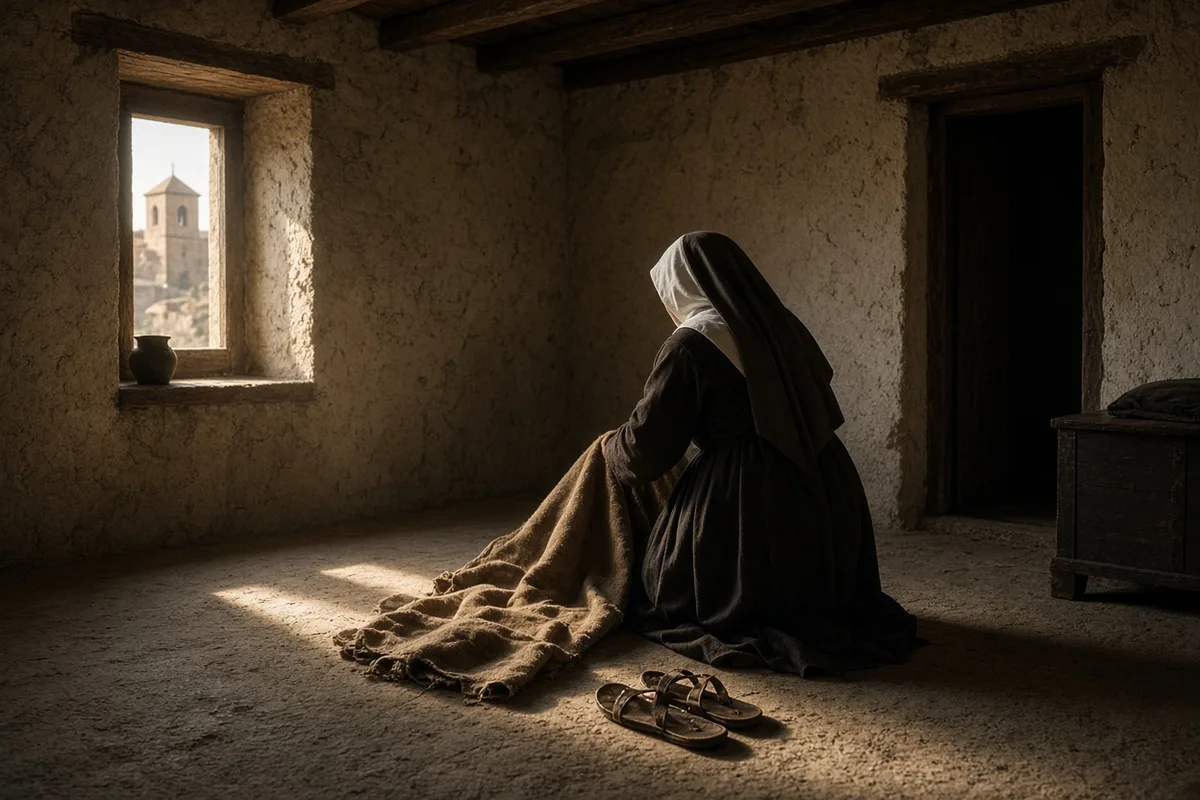
Night fell quickly inside the thick walls. We spread the mattresses on the bare boards of the upper room. Teresa stayed below longer than the rest of us. I heard her moving between the rooms, testing each shutter. When she finally came up the stairs her steps were slow. She lay down without removing her habit. The city bells rang compline somewhere beyond the walls, but no one answered them here.
The Bishop arrived before noon the following day. He walked through every room, asked the cost of the roof repairs, and noted the distance to the nearest well. Teresa answered each question without haste. When he asked whether four women could keep the enclosure with only one lay sister to fetch water, she said the rule would be kept exactly as written. He nodded once and signed the paper on the table. The driver witnessed it. After the Bishop left, Teresa placed the document inside the chest and closed the lid.
By evening the first complaints reached us. A neighbor across the lane said the new house would draw beggars and lower the value of every property on the street. Another claimed the city had not been consulted. Teresa sent word that the foundation had the Brief from Rome and the Bishop’s approval. The messages came back that the Brief was for a different house and the approval could be withdrawn. She did not answer the second round of messages.
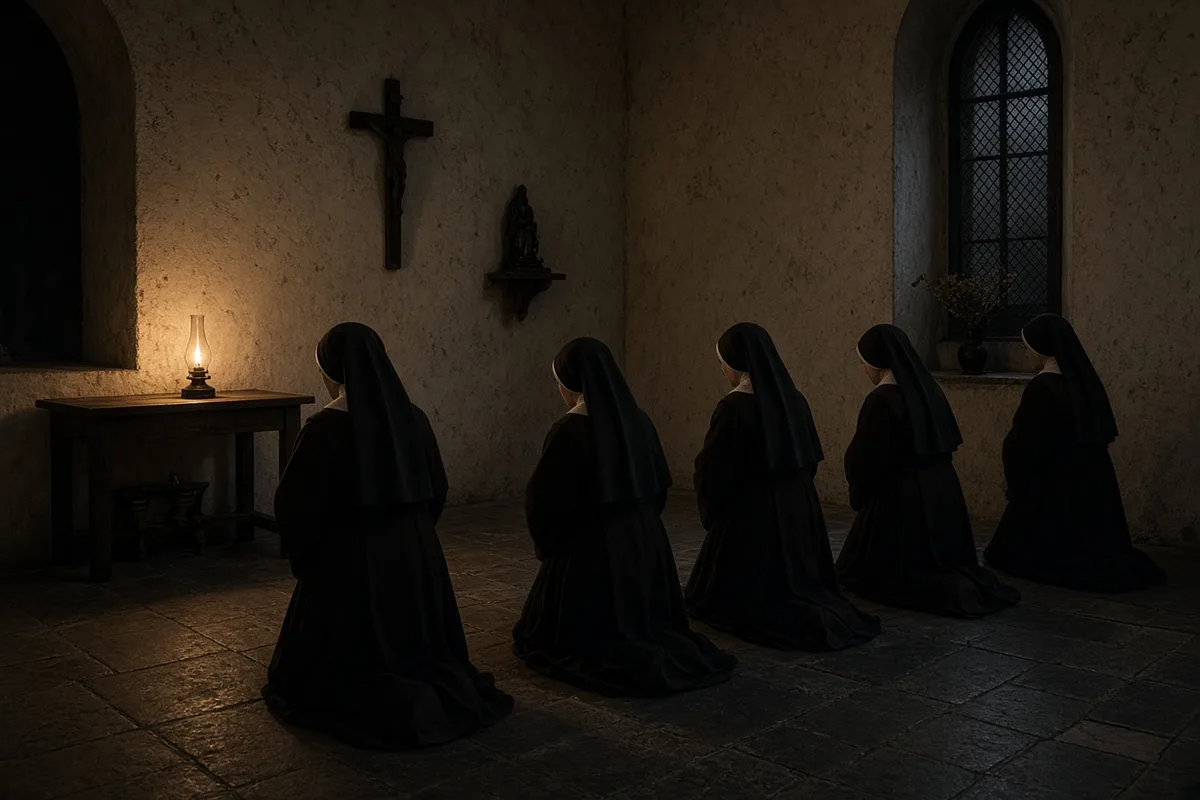
On the third morning the street filled early. Men stood outside the gate arguing with one another about whether the convent should be allowed to remain. Teresa kept the door shut but did not bar it. She asked us to continue the work of whitewashing the chapel wall. The sound of the brushes carried into the yard. When the voices outside grew louder she stepped out alone. She stood on the threshold and waited until the nearest men fell silent. Then she spoke of the rule of enclosure and the obligation to pray for the city. One of the men asked what good prayers would do if the house took bread from the poor. She answered that the house would take nothing it did not earn by its own labor. The group thinned after that, though two men remained until the bells rang for vespers.
St. Peter of Alcántara arrived on foot two days later. He carried no bundle and asked for nothing to eat. Teresa met him at the gate and they walked the length of the courtyard together. He examined the roof beams and the thickness of the walls. When he left he told her the opposition would pass if the enclosure held for the first month. She thanked him and returned to the whitewashing.
The first Mass was said in the small chapel on the morning of the twenty-fourth. The priest came from the cathedral at the Bishop’s direction. Four of us knelt on the packed earth while the words were spoken. No one rang a bell. After the Mass Teresa locked the outer door and gave the key to the oldest of the companions. She said the enclosure had begun.
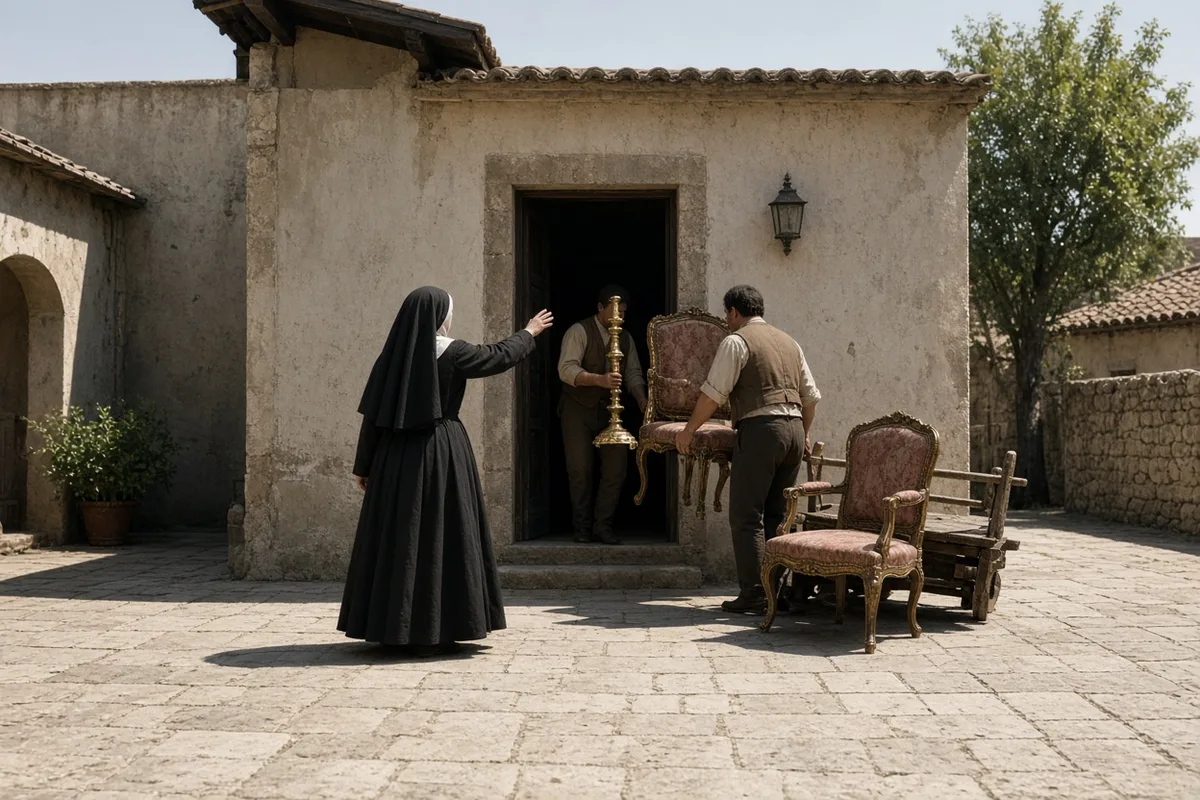
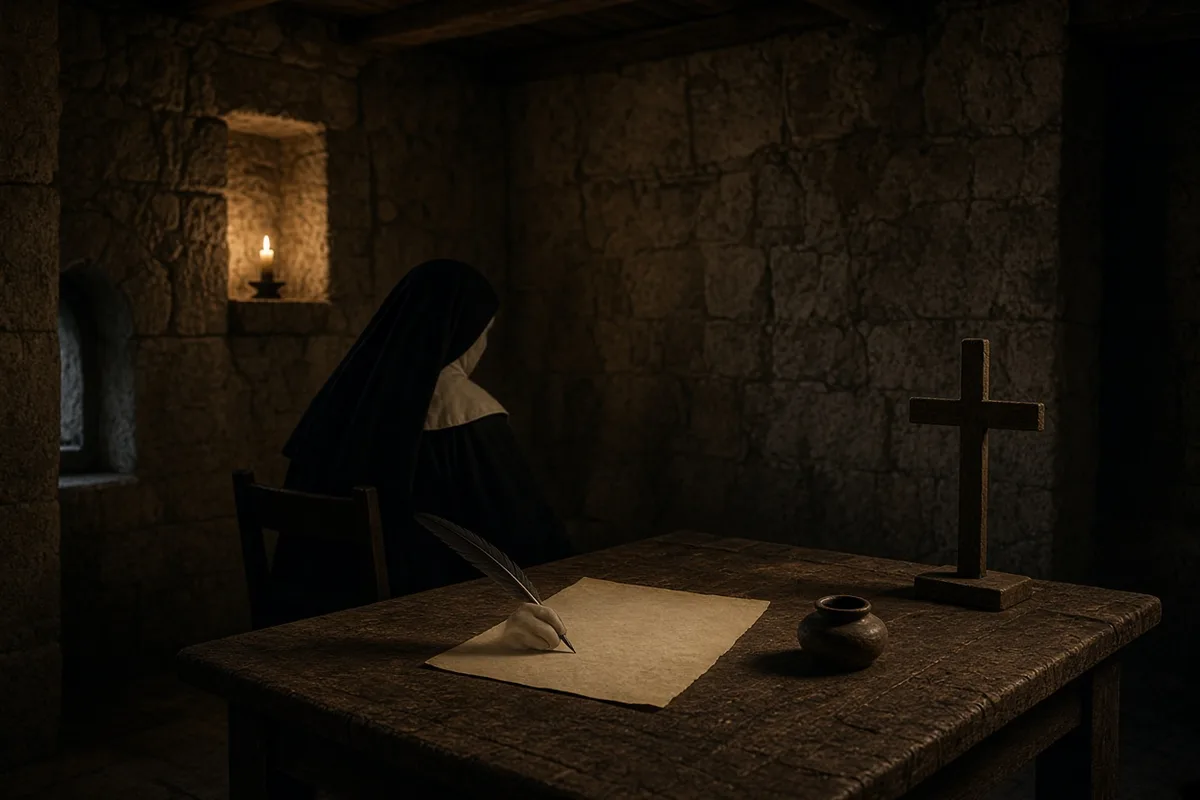
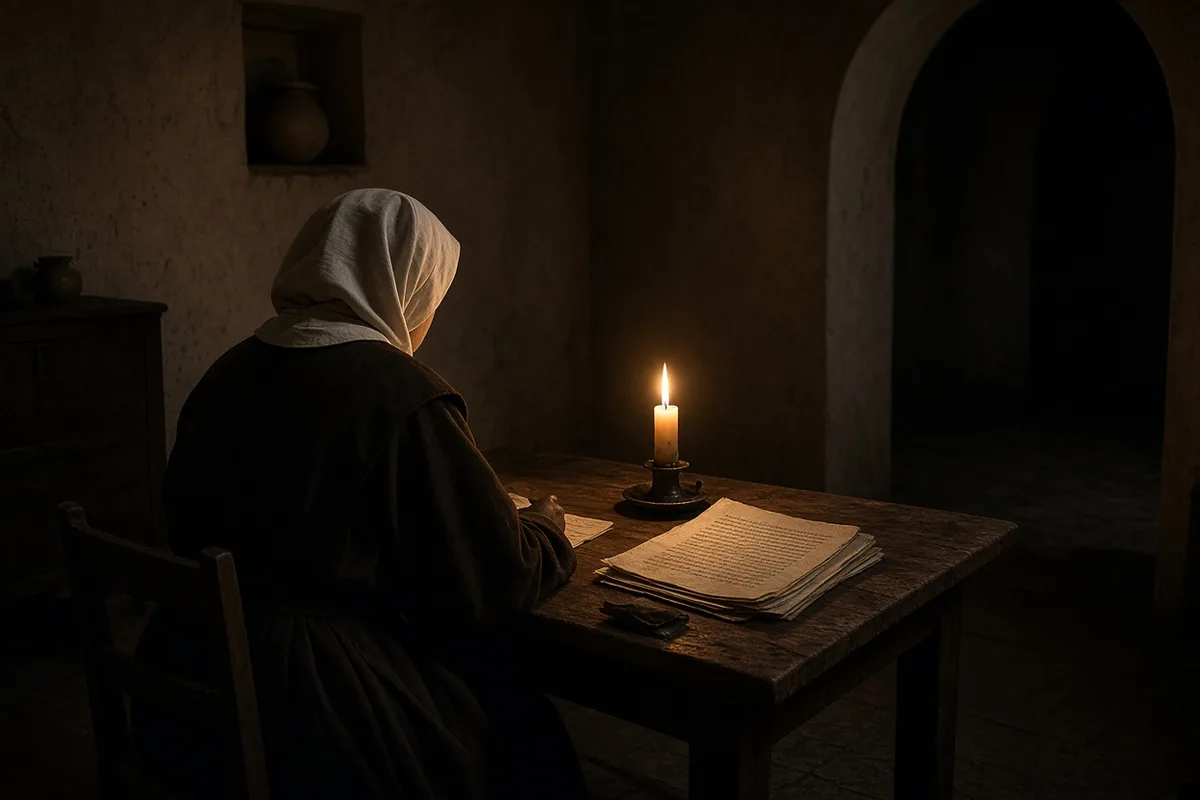
For the next week the city continued to talk. A petition circulated asking the council to close the house. Teresa received a copy through the grille and read it without comment. She spent the mornings teaching the companions the hours of the new rule and the afternoons repairing the linen that had come with us. At night she wrote at the table by the light of a single rush. The pages accumulated in the chest beside the Brief.
By the end of September the petition had lost force. The council took no action. The neighbor across the lane stopped shouting at his children when they played near our wall. Inside the house the routine settled into the pattern Teresa had set from the first day: prayer, work, silence, and the same plain food each evening. The roof no longer leaked after the first rain. The door remained locked except when the lay sister went for water.
Teresa kept the key on a cord around her neck. When she walked the courtyard at dusk the metal caught the last light and flashed once before she turned back toward the chapel.
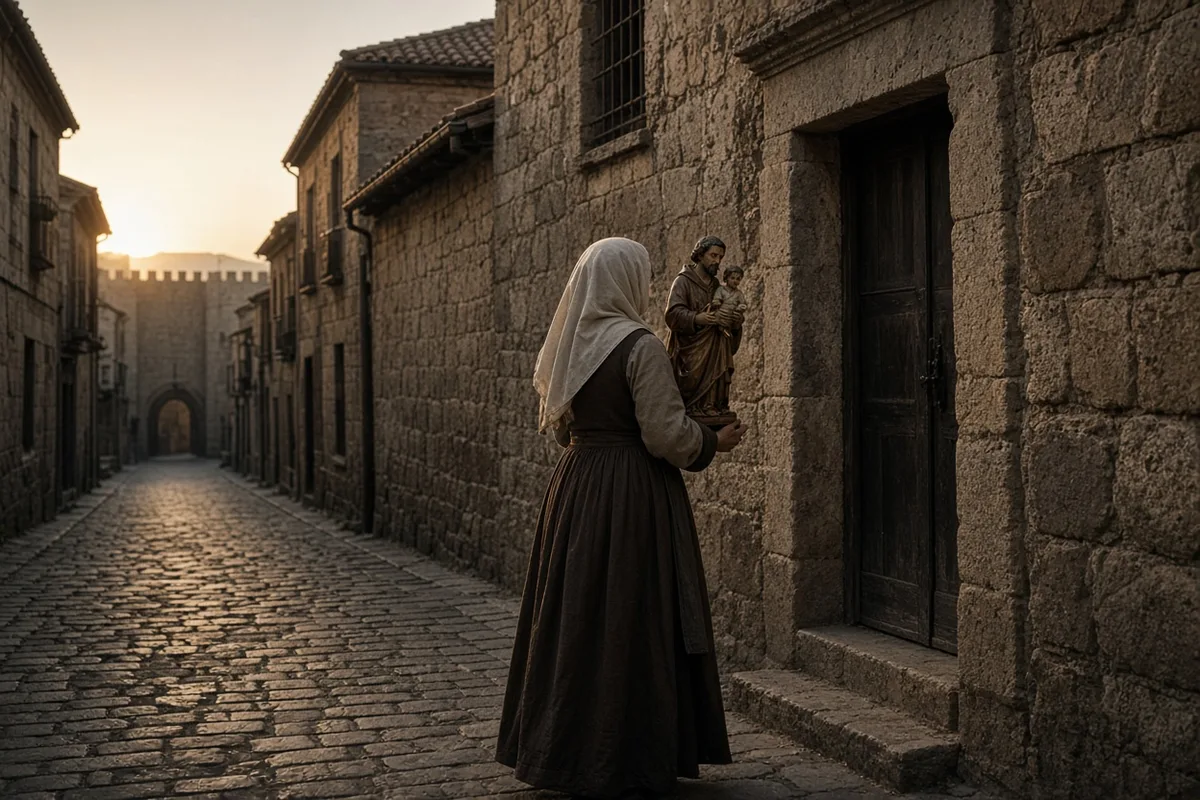
The key stayed on its cord through the first winter, when the frost split two roof tiles and water pooled under the refectory bench. On the morning of 3 January 1563 the lay sister returned from the well with word that the council had posted a notice demanding the house prove its income. Teresa sent the oldest companion, María de la Cruz, to the cathedral with the Brief of Pius IV dated 7 February 1562 and the Bishop’s signed paper of 25 August. The document carried the seal of the Vicar General, Don Pedro de la Gasca. When María returned at noon she repeated the Vicar’s exact phrase: “the enclosure stands while the rent of four hundred ducats a year is met.” Teresa counted the coins left in the chest—seventy-eight reales—and set them aside for the mason who would mend the tiles.
By the feast of the Purification the house held nine women. Ana de los Angeles arrived from the Incarnation on 2 February carrying her own mattress and a copy of the Constitutions of the Mitigated Rule printed in 1528. She asked to be received under the stricter observance Teresa had written out in her own hand the previous October. Teresa read the six points aloud at the table: no rent from townspeople, no servants inside the enclosure, meat only on three days a week, and the Divine Office sung without organ. Each woman signed the sheet with her name and the date. The paper was placed inside the chest beside the Brief.
In March 1567 the same chest traveled by mule to Medina del Campo. Teresa rode in a covered cart with four companions; the driver was the same man who had brought the first load to Ávila five years earlier. They reached the rented house on the calle de Santiago on 15 August. The deed, drawn by the notary Pedro de la Peña, listed the purchase price as three hundred and twenty ducats paid by Doña Elena de Jesús. That night Teresa wrote in the small book she kept under the mattress: “We began the Office at midnight because the bells of the parish church were silent.” The entry is dated 16 August 1567 and signed with her initials.
The following spring she met Fray Juan de Yepes in the parlor of the Incarnation. He was thirty-five years old and already a priest of the Carmelite house in Medina. Teresa asked him to accompany her to Duruelo, a village twelve leagues from Ávila. On 11 November 1568 the first friars took possession of the ruined farmhouse there. The deed of gift from Don Rafael Mejía listed one hundred and twenty fanegas of wheat land and the obligation to keep enclosure. Juan de la Cruz, as he was now called, signed first; the other two friars were Fray Antonio de Heredia and Fray José de Cristo. Teresa remained outside the gate until the door was barred.
Between 1569 and 1574 she founded seven more convents: Malagón on 11 April 1569 with money from Doña Luisa de la Cerda, Toledo on 14 May 1569 in a house bought for four thousand ducats from the banker García de Alvarado, Pastrana on 28 June 1569 under the protection of the Princess of Éboli, Salamanca on 1 November 1570, Alba de Tormes on 25 January 1571, Segovia on 19 March 1574, and Beas de Segura on 24 February 1575. Each foundation record lists the exact sum paid, the name of the notary, and the number of nuns who signed the book of professions. The total number of women enclosed under the new rule reached one hundred and twelve by the end of 1575.
In the summer of 1582 she traveled from Palencia to Alba de Tormes to visit the Countess of Alba. On 4 October she took to her bed in the upper room of the convent there. The infirmarian, Sister Antonia del Espíritu Santo, recorded that Teresa received the last sacraments from Father Antonio de Heredia and spoke the words “Lord, I am a daughter of the Church” at three o’clock in the afternoon. She died at nine that evening. The burial entry in the convent register, written by the chaplain, states her age as sixty-seven years and names the eight nuns who kept vigil until the coffin was sealed.
After her death the Discalced houses numbered thirty-two convents and fifteen friaries. In 1585 the General Chapter at Lisbon elected Fray Nicolás Doria as Vicar General; the separation from the Mitigated Carmelites was confirmed by Pope Sixtus V in the brief “Cum de statu” of 5 June 1593. By 1600 the order had spread to France, Belgium, and the Spanish colonies in Mexico and Peru. The original house in Ávila received its final enlargement in 1607 when the city council granted the nuns the adjoining garden plot measuring forty varas by twenty-five. The key that Teresa had worn was kept in the sacristy until 1809, when French troops under General Kellermann removed the silver ring from the cord and melted it for coin. The cord itself remained in the reliquary until the convent was suppressed in 1836; it is now preserved under glass in the museum attached to the church of San José.
The last companion who had entered with Teresa in 1562, Sister María de San José, died in the same house on 19 April 1606 at the age of eighty-four. On the morning of her burial the nuns found, inside the chest that had traveled from Medina, a single sheet of paper in Teresa’s hand listing the names of the first four women and the date 24 August 1562. The sheet was placed in the coffin with Sister María. The chest itself stands today in the cloister of the Discalced Carmelites at Alba de Tormes, its lid open to the public each 15 October between the hours of ten and twelve.