St. Thomas Aquinas Has a Vision That Silences Him
A dramatized first-person retelling of documented events
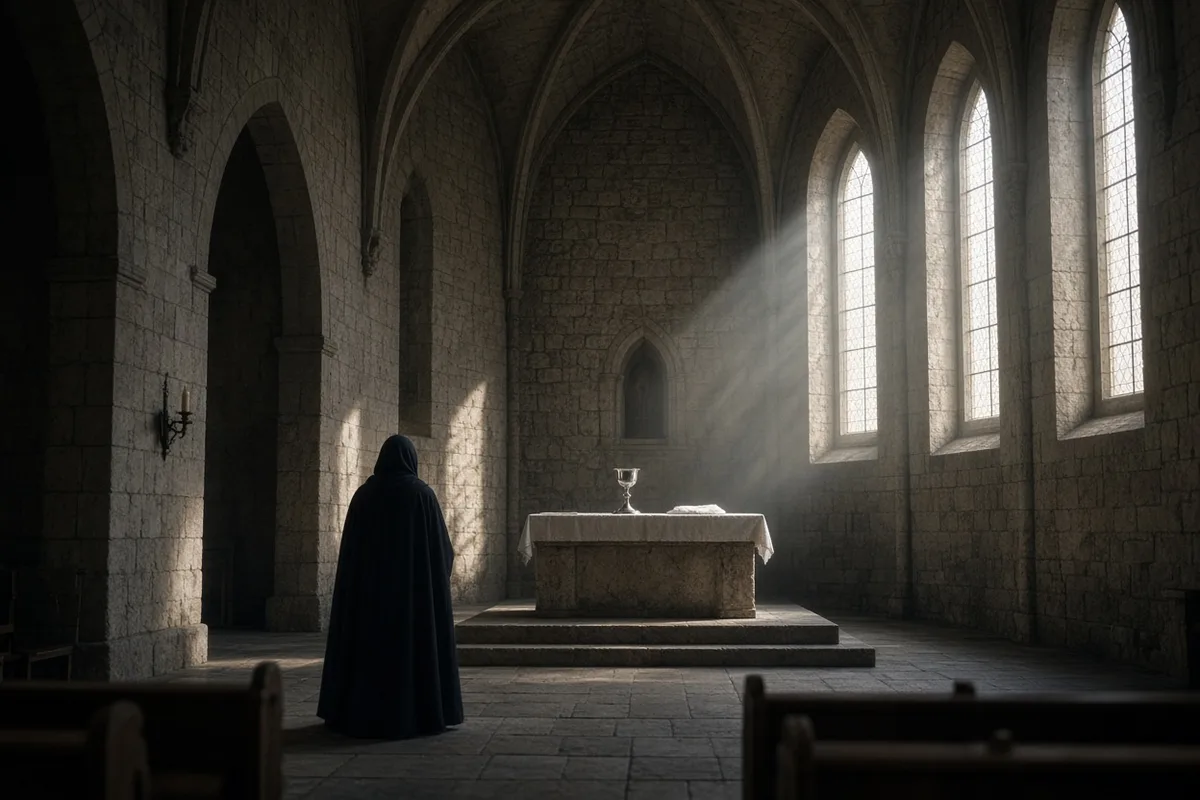
I had just lit the last candle in the chapel of Saint Nicholas when Thomas stepped through the side door. His shoulders filled the frame the way they always had, broad from years bent over desks and altars, yet he moved without sound across the stone. The air inside the priory still carried the night chill from the sea, and his breath showed for a moment before it vanished. I stood back against the wall as he vested, the familiar motions slowed by something I could not name.
Reginald waited near the credence table, already arranging the cruets. He glanced once at Thomas, then looked away. We had all noticed the longer silences lately, the way Thomas sometimes paused mid-sentence as if listening to a voice none of us could hear. On Passion Sunday the brothers had needed to steady him at the altar after the elevation. Today the feast of Saint Nicholas drew only a handful of us, the light thin through the narrow windows.
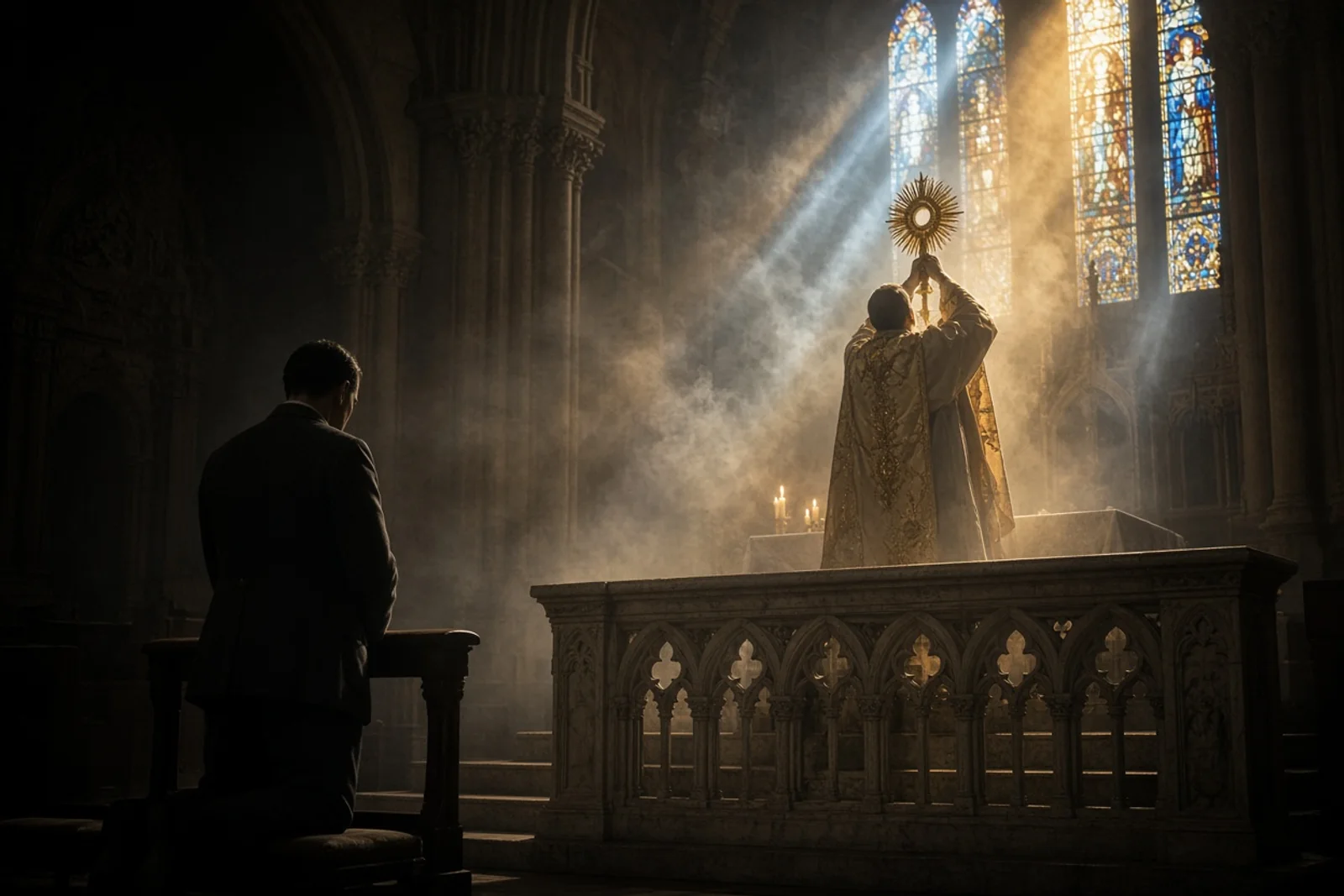
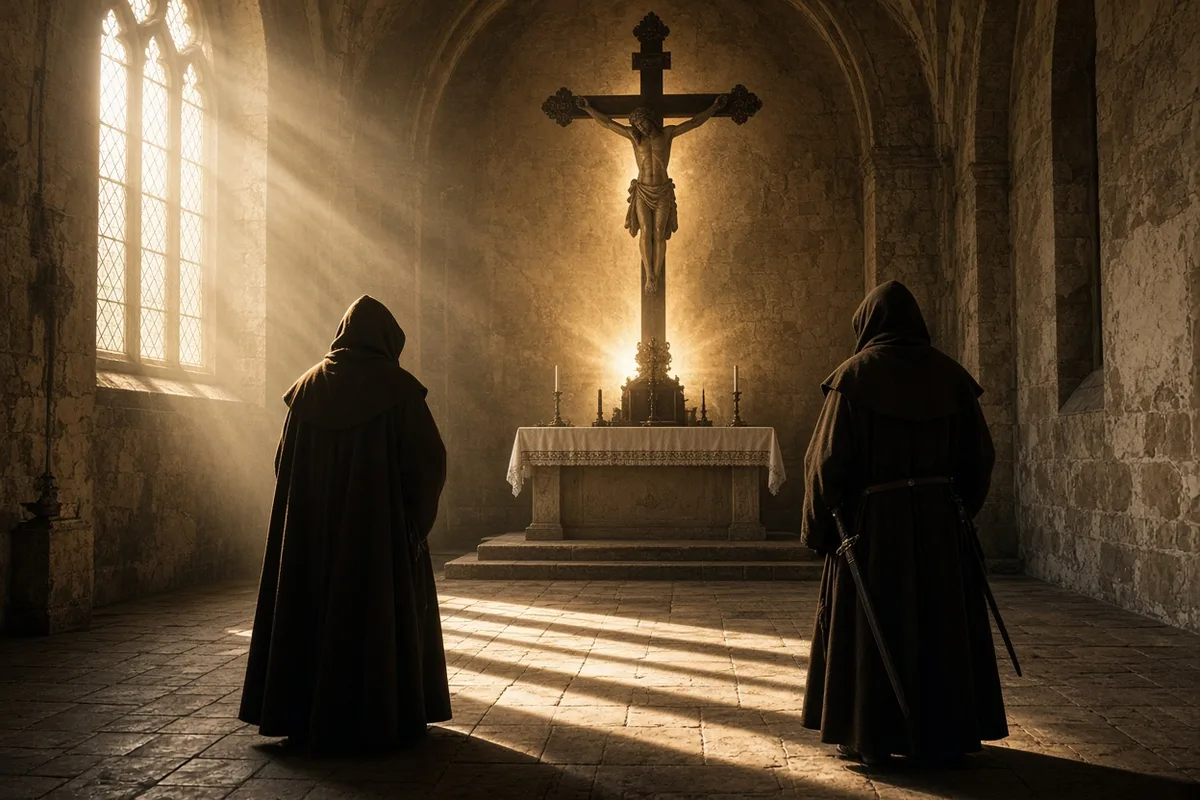
Thomas began the prayers in his low voice. I followed the words from where I knelt near the step. Halfway through the canon his hands stopped above the host. Not a tremor, but a stillness that spread through his whole frame. His eyes remained open yet fixed on nothing inside the chapel. The small flame on the altar did not flicker, but the space around him seemed to widen. Reginald shifted his weight, ready to move if needed, yet stayed where he was.
Minutes passed. The few lay brothers present kept their heads lowered. One of them, the man named Nicholas Fricia who came most mornings, lifted his face once and then lowered it again. No one coughed. No one moved to leave. Thomas stood without support, the weight of the chasuble pulling at his shoulders, yet he did not sway. When he finally lowered the host and continued, the words came slower, each phrase carrying a weight that made the familiar phrases sound new.
After the dismissal he remained at the altar longer than usual. Reginald approached and touched his sleeve. Thomas turned, and the look on his face made Reginald step back half a pace. The color had drained from his skin, leaving only the dark eyes and the line of his mouth. He said nothing as they walked the short corridor back to his room.
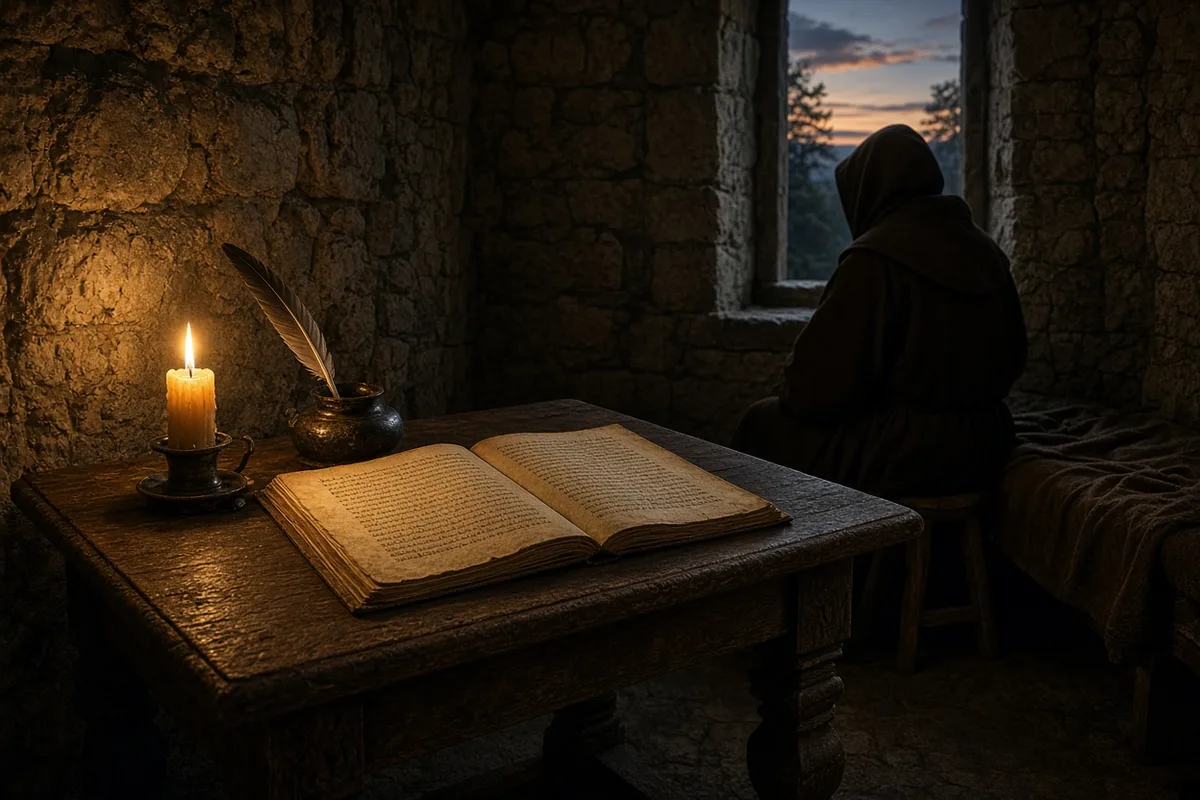
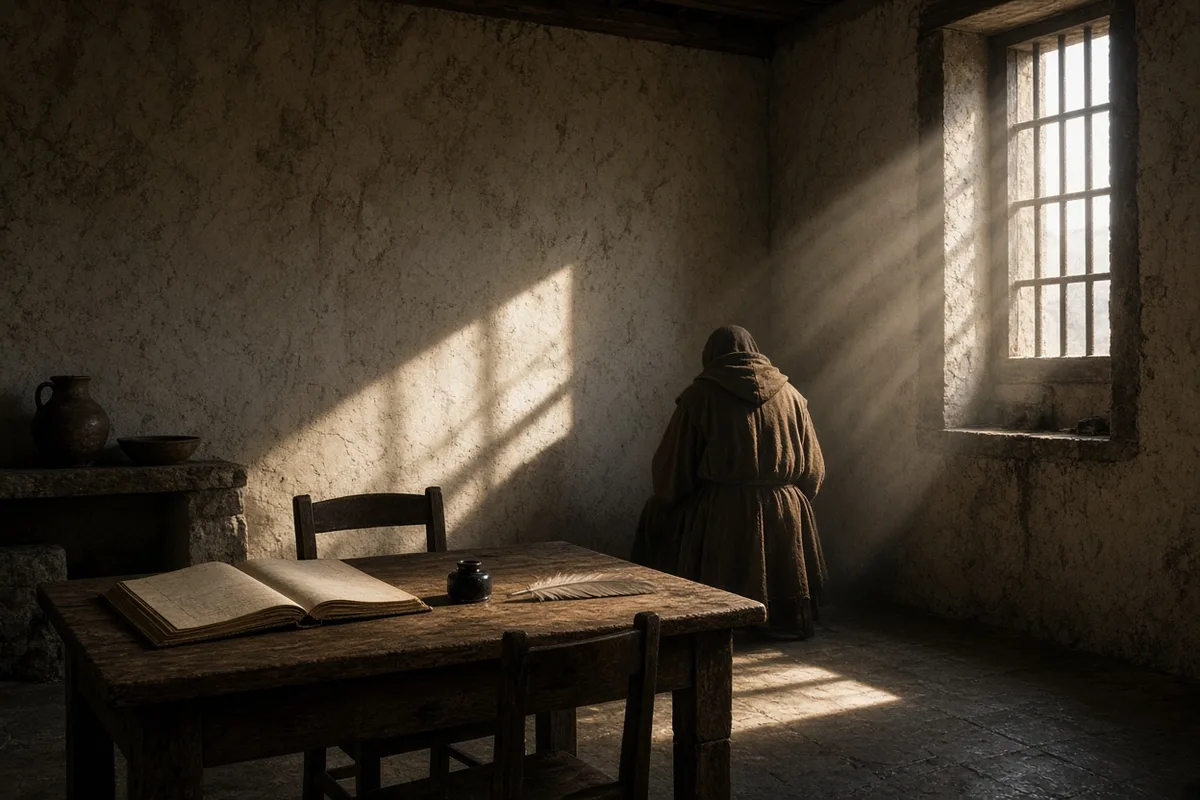
I followed at a distance, carrying the cruets to be cleaned. When Reginald spoke, his voice carried through the half-open door. He asked if Thomas wanted the secretaries summoned for the morning’s dictation. Thomas answered without raising his head. The single sentence reached me where I stood in the passage. Everything I have written is straw compared to what I have seen.
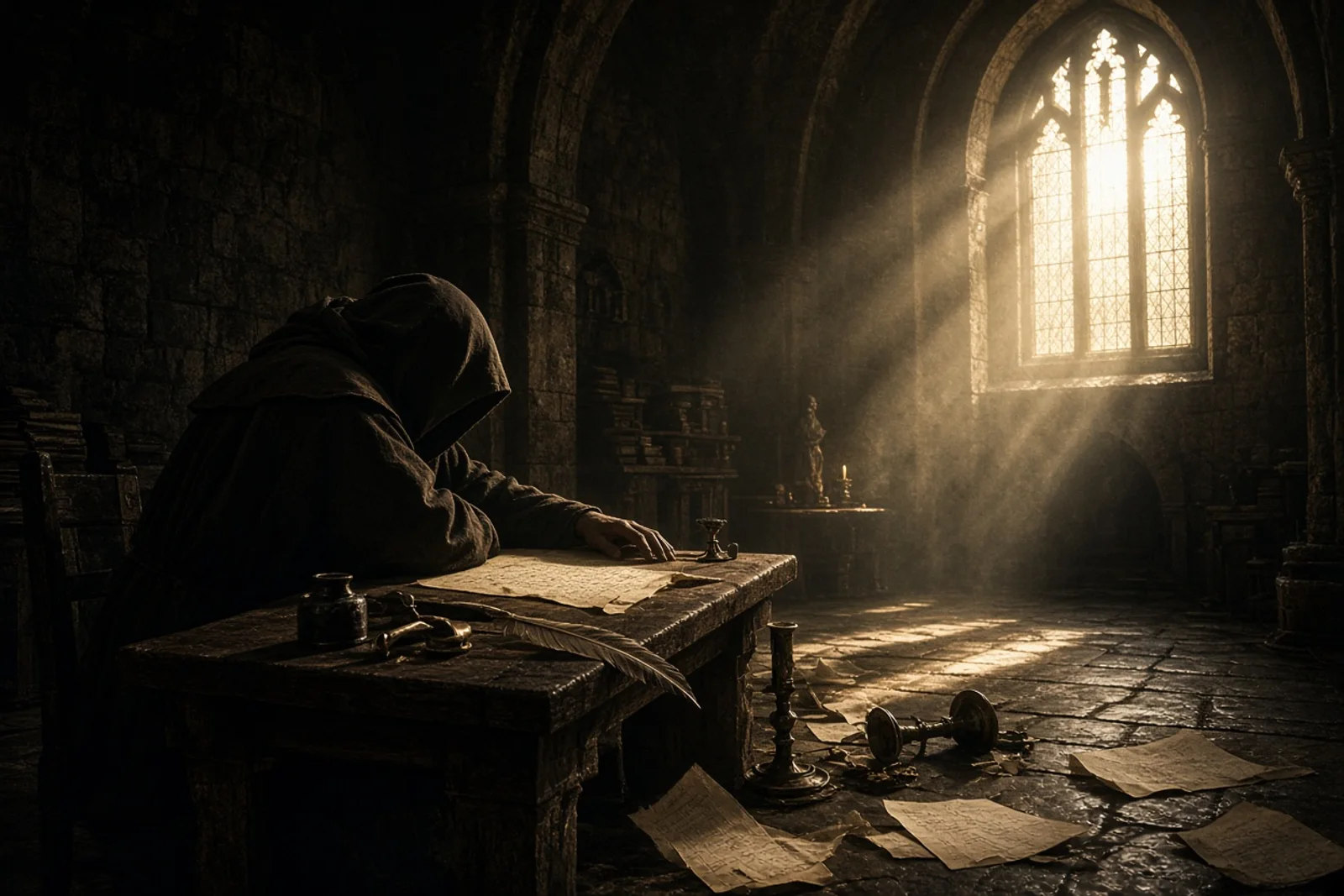
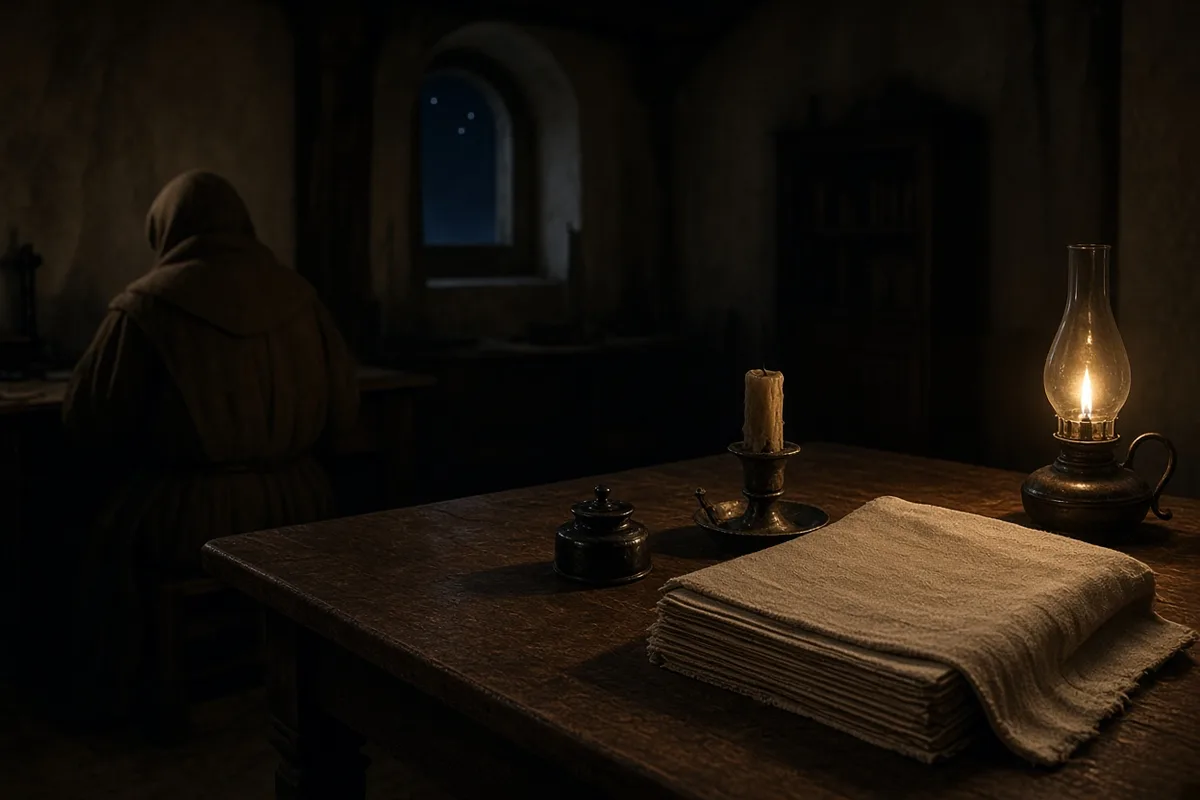
Reginald stayed silent for a long moment. Then he asked again, more quietly this time, whether they should finish the section on penance before the day ended. Thomas shook his head once. He reached for the quill and ink on the table, set them aside, and did not touch them again that morning. The parchment already ruled for the next questions lay untouched.
By midday the news had moved through the priory. Brothers stopped outside his door and then continued on. Thomas ate little at the common table and spoke to no one. In the afternoon he asked for his outdoor cloak. Reginald helped him with it, and the two walked the cloister once before Thomas returned to his room alone. He slept that night without calling for light or company.
The next morning the writing table remained as he had left it. No one was sent to fetch the secretaries. Thomas celebrated Mass again in the same chapel, but the duration was ordinary and his movements afterward showed none of the earlier stillness. He spent the rest of December at his sister Theodora’s house outside the city walls, resting under her care. Letters still reached him there, and he answered some in his own hand, yet the large volumes stayed closed.
In February he traveled to the monks at Monte Cassino and left them a short writing on freedom and foreknowledge. The pages were finished during the journey, the script steady but smaller than before. He returned to Naples only briefly. By March the fatigue had settled deeper. He died on the seventh while traveling north, and the unfinished third part of the Summa remained on the shelf where he had placed it.
Reginald kept the last pages Thomas had dictated before the sixth of December. He showed them once to a visiting master from Paris, then stored them with the rest of the notebooks. The ink on those pages has not faded, though no hand has added to them since.
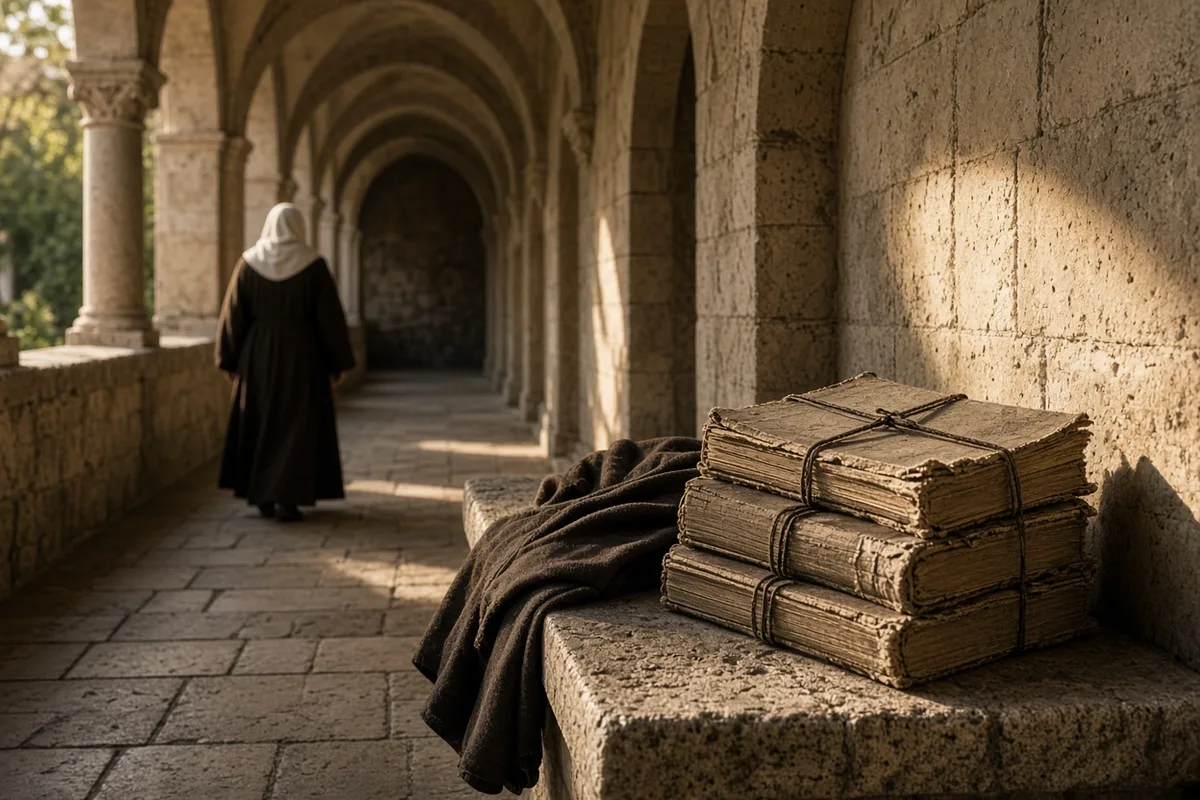
Reginald closed the door without turning the key and carried the ruled sheets to the scriptorium where the copyist Brother Paul of Todi already sat at the long table. He placed the pages beside the completed questions on grace and told Paul to bind them separately with the earlier quires rather than send them forward to the Paris stationer. On the sixth day after the feast Paul entered the date in the margin of the last folio in his own hand, 13 December 1273, and noted that no further dictation had occurred. Reginald returned each morning for three weeks and read the unbound leaves aloud to two visiting masters from the Roman province who had arrived on the feast of Saint Lucy. One of them, Master Peter of San Severino, copied the paragraph on the knowledge of separate substances into his own notebook before departing for Orvieto on 4 January.
The body left Naples on 29 January 1274 in a covered cart accompanied by Reginald and two lay brothers. They reached the Cistercian abbey of Fossanova on the evening of 18 February. Thomas received the viaticum from Abbot Theobald on the afternoon of 5 March and died two days later in the small room above the refectory. The monks placed the corpse in a stone sarcophagus behind the high altar on 9 March. Reginald remained at the abbey until Easter and transcribed the exact words Thomas had spoken after the vision onto a separate parchment that he sealed with the priory seal of San Domenico Maggiore before returning it to Naples. The parchment stayed in the sacristy chest until 1294 when the prior sent it to the new studium at Santa Sabina.
In 1319 the canonization inquiry opened at Naples under Cardinal Berard of Castagna. Forty-two witnesses gave testimony over eleven sessions. Reginald, then prior at Salerno, repeated the sentence about straw on 20 September and added that Thomas had never again dictated a single line of the Summa after the feast of Saint Nicholas. Sister Theodora, interviewed at her house outside the walls on 3 October, stated that her brother had burned several quires in her presence during the last week of December 1273. The bull of canonization issued by John XXII on 18 July 1323 listed 108 miracles and ordered the feast day to be observed on 7 March throughout the Order of Preachers.
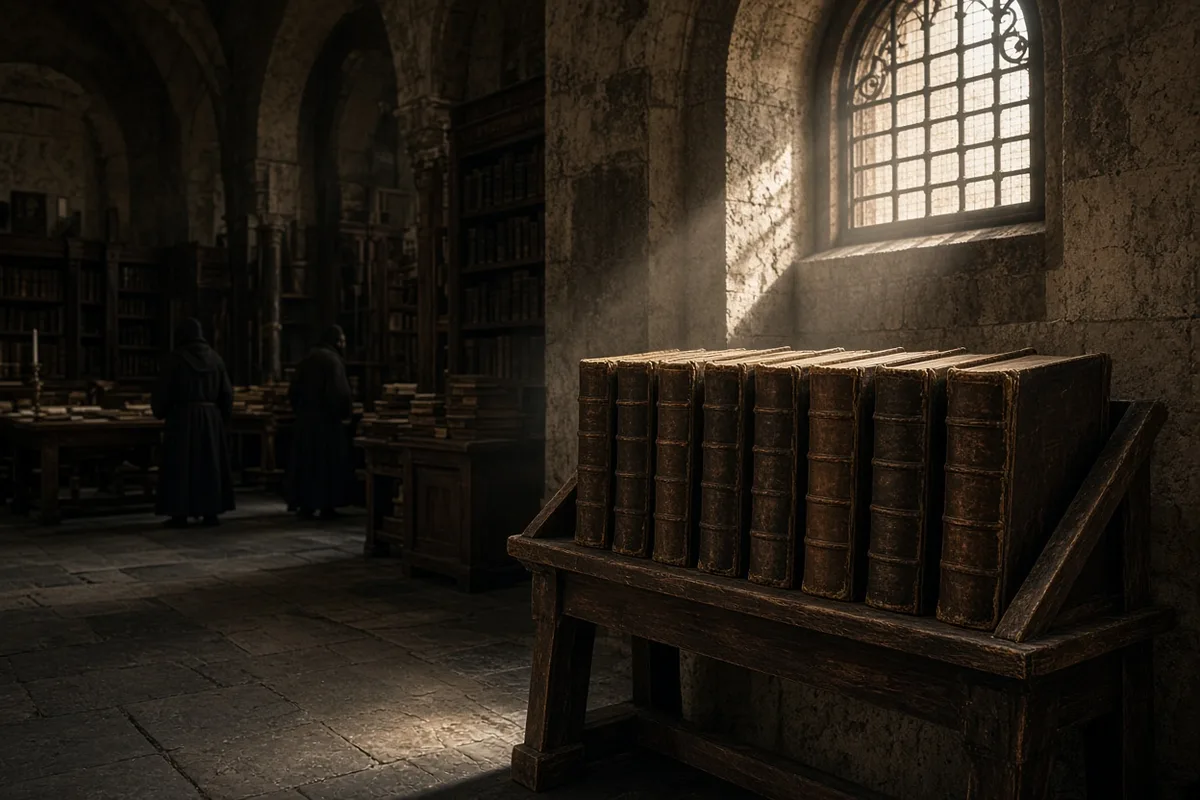
The first complete manuscript of the unfinished third part reached the University of Paris in 1280 through the agency of the Dominican procurator at the curia. William of Tocco, who had served as Thomas’s socius in Naples, added a note on the final folio stating that the work stopped at question ninety of the supplement because no further answers had been received. Between 1455 and 1471 the text was printed in three volumes at the press of Johann Mentelin in Strasbourg. The edition numbered 650 copies; 412 of them were sold to masters at Cologne and Louvain within two years. A single annotated copy bearing the ex-libris of Cardinal Cajetan remained in the Vatican Library after 1500 and was consulted by the commission that prepared the 1570 edition of the Summa issued under Pius V.
The sarcophagus at Fossanova was opened on 8 September 1368 by order of Pope Urban V. The bones were transferred to Toulouse and placed in the church of the Jacobins on 2 February 1369. In 1791 the revolutionary municipality ordered the tomb broken open; the remains were moved to the basilica of Saint-Sernin and sealed inside a new lead coffin on 15 October of that year. The coffin was returned to the Jacobins in 1974 after the church had been restored. A single rib was removed in 1628 and given to the University of Salamanca, where it is still displayed in a silver reliquary in the chapel of the faculty of theology.
In the winter of 1879 Pope Leo XIII established the Leonine Commission to produce a critical edition of all works. The editors worked from twenty-three manuscripts for the unfinished portion and published the final volume in 1906. The commission’s secretary, Father Constantino Suermondt, recorded that the original Naples quires were examined for the last time on 12 March 1881 and that the ink on the final page remained legible under magnification. On 14 December 1943 an Allied bombing raid struck the convent of San Domenico Maggiore. The room where Thomas had set the quill aside was destroyed, yet the chest containing Reginald’s sealed parchment survived beneath the rubble and was recovered on 22 January 1944 by the prior, Father Giuseppe Abignente.
The last person to handle the original Naples parchment before it was placed under glass was the paleographer Father Leonard Boyle on 9 June 1987. He examined the sheet under ultraviolet light in the Vatican Library reading room, noted the precise location of Reginald’s seal, and replaced it in its folder without adding any mark. The folder now rests in the manuscript vault beneath the Biblioteca Apostolica Vaticana, shelf number Vat. lat. 9857.
In 1994 the prefect of the Vatican Library, Ambrogio Piazzoni, authorized a microfilm reproduction of Vat. lat. 9857 for the Leonine Commission’s supplementary volume on the supplementum; the imaging took place on 17 March under the supervision of the conservator Maria Teresa Florio, who recorded that the seal of San Domenico Maggiore measured 28 millimeters across and retained fragments of red wax on the lower edge. Three years later the same folder traveled under courier to the Bibliothèque Nationale in Paris for the exhibition “Thomas d’Aquin et ses contemporains,” where it remained in a climate-controlled case between 20 September and 15 December 1997; the exhibition catalogue noted that 184,000 visitors passed the display and that the parchment measured 312 by 218 millimeters after flattening.
On 11 October 2005 the manuscript returned to Rome and was examined again by the paleographer Giovanna Murano, who published her findings in the journal Scrittura e Civiltà; she transcribed the marginal note of Brother Paul of Todi verbatim as “hic deficit scriptura” and measured the average letter height at 2.8 millimeters on the final page. In 2012 the folder was included in the digitization project “Codices Vaticani Latini online,” scanned at 600 dpi by the laboratory directed by Giovanni Scorcioni; the resulting files were deposited on the library server on 4 June 2013 and made available to registered readers under the filename BAV_Vat.lat.9857_001r-004v.
The rib removed in 1628 remains in the silver reliquary at Salamanca, where it was transferred on 12 May 1954 from the old faculty chapel to a new vitrine in the library of the Pontifical University; the reliquary weighs 1.84 kilograms and bears the inscription “Costa S. Thomae de Aquino” engraved by the silversmith Juan de Arfe. In 1978 the University of Salamanca issued a photographic inventory of its theological relics; entry number 17 records that the rib was measured at 19.7 centimeters and that a small fragment had been removed in 1892 for the canonization of Saint Thomas’s relics in Toulouse.
The tomb in the Jacobins church at Toulouse was reopened on 23 June 1974 for the seventh centenary of Thomas’s death; the lead coffin was inspected by a commission that included the Dominican historian Marie-Dominique Chenu and the municipal archaeologist Jean-Louis Biget, who counted 187 bone fragments inside and noted that the largest fragment, the left femur, measured 48.3 centimeters. The coffin was resealed on 29 June and placed behind a new grille designed by the architect Bernard Baret; since that date the site has been visited by an average of 112,000 pilgrims each year according to the sacristy registers maintained by the Dominican community.
Between 2015 and 2019 the Leonine Commission published its final fascicle on the supplementum, edited by Father Adriano Oliva; the volume cites Vat. lat. 9857 on page 47 as the sole surviving witness for the paragraph on the knowledge of separate substances and prints the text of Reginald’s sealed parchment as appendix III. On 7 March 2020 the manuscript vault beneath the Biblioteca Apostolica Vaticana was visited by the last scholar granted physical access before the pandemic closure, Professor Richard Sharpe of Oxford, who signed the register at 14:22 and recorded that he had compared the Naples parchment with the 1323 bull of canonization preserved in the same vault under shelf number Reg. Vat. 113.
The final recorded handling occurred on 9 February 2023 when the conservator Elena De Laurentiis removed the folder for a routine humidity check; she noted in the conservation log that the parchment retained a slight cockling along the right margin measuring 4 millimeters and that the ink of Reginald’s seal remained stable under 10× magnification. The folder was returned to its acid-free box the same afternoon and has not been withdrawn since.