St. Thomas Becket Reconciles with Henry II Briefly
A dramatized first-person retelling of documented events
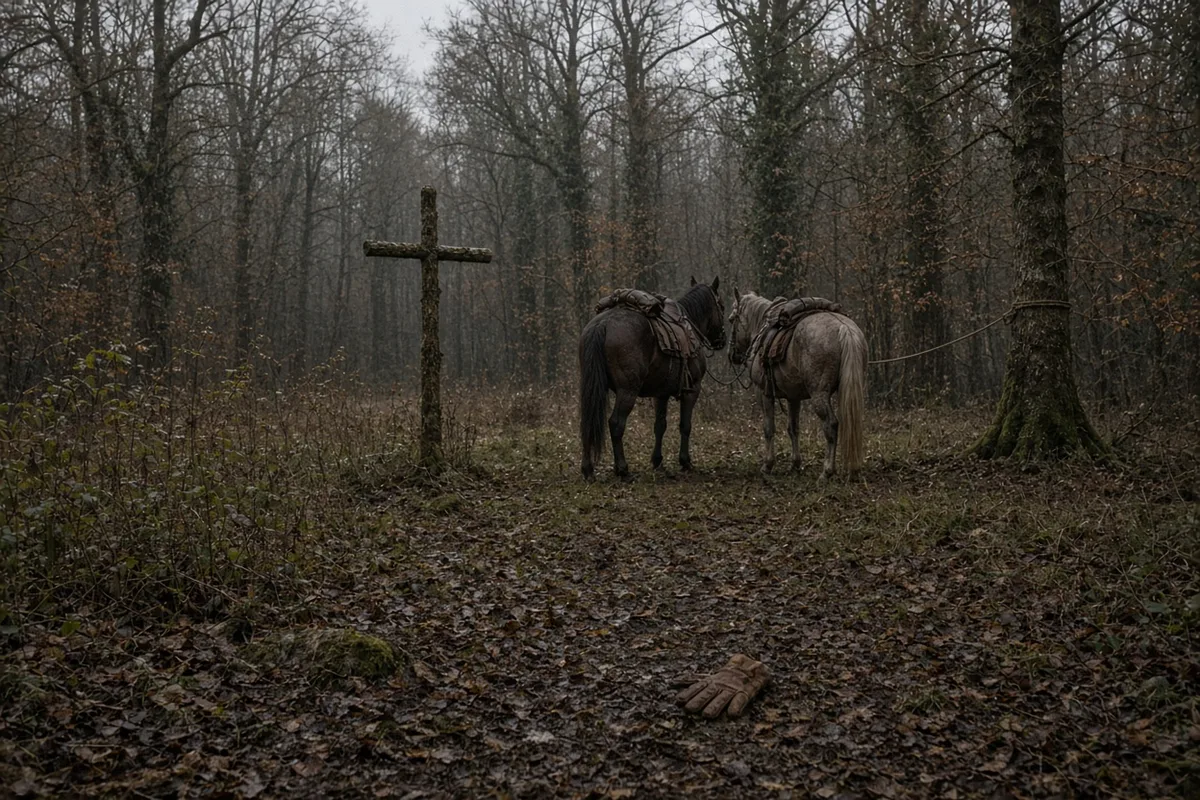
I held the reins while the archbishop dismounted. The meadow grass at Fréteval lay flattened by the earlier rain, and our horses steamed in the thin July sun. Becket walked forward alone at first, his cloak still marked with the dust of the road from Sens. Henry waited on the far side of the clearing with two of his barons, no crown, no mail, only a short hunting tunic and a face already flushed from the morning ride.
We had crossed from France two days before. The letters had come and gone for months, each one promising more than the last, yet the archbishop kept the final meeting at arm’s length until the messengers returned with the king’s own seal. Now the moment had arrived and the rest of us stayed back among the trees, close enough to see faces but not to hear every word.
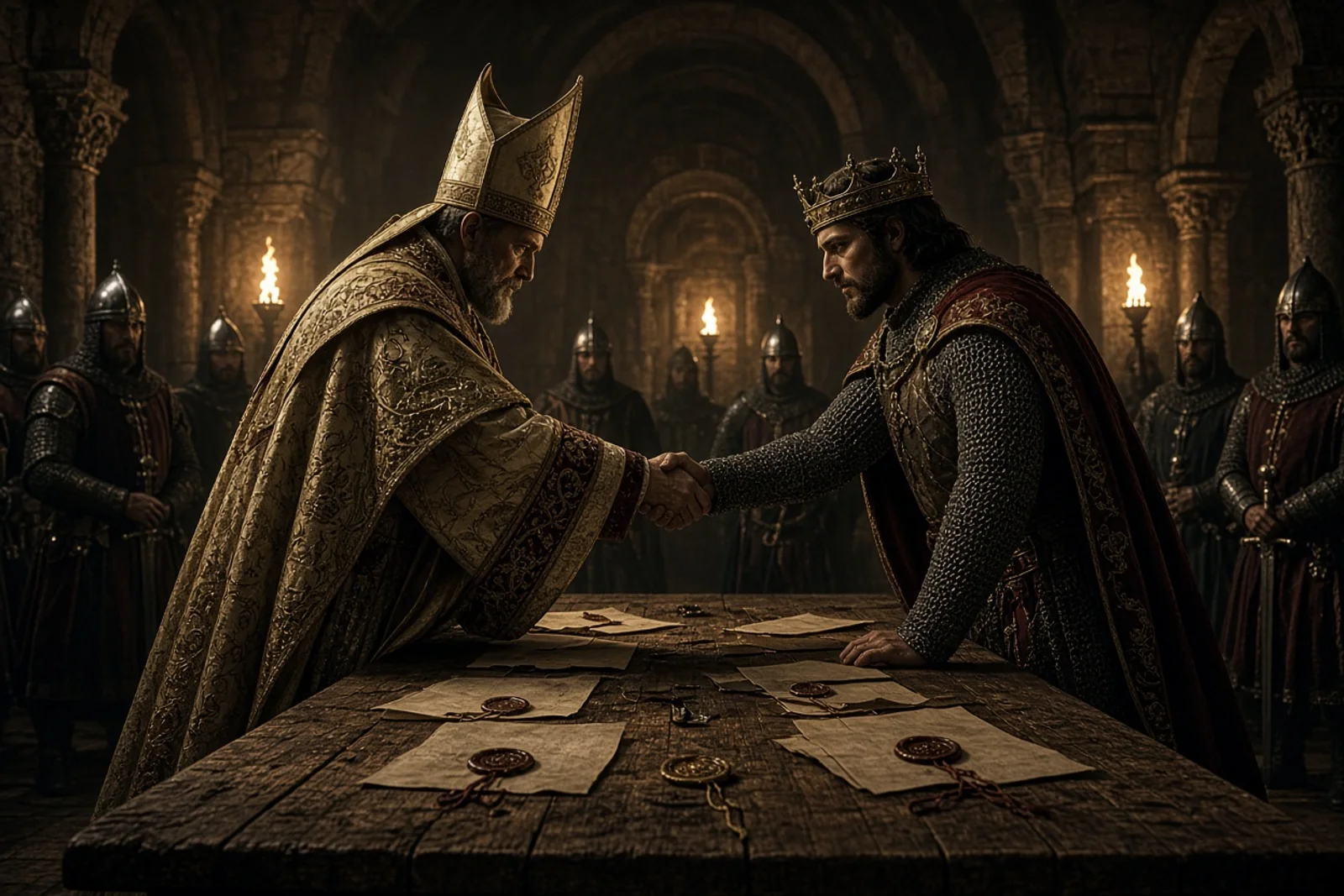
Henry stepped forward and took Becket by both hands. The grip lasted longer than courtesy required. I saw the king’s shoulders drop a fraction, as if a weight he had carried for six years had shifted. Becket answered with a short bow of the head, nothing more. Around me the clerks and knights of our party stood motionless, listening to the wind move through the oaks.
They spoke for the better part of an hour. Twice Henry raised his voice, once when he pointed toward the distant road that led back to England. Becket answered each time without lifting his own voice. A page brought wine. Neither man drank. When the sun reached its height the two turned and walked a little apart from the others, still talking. Their shadows overlapped on the grass.
I loosened the girths on the horses so they could breathe. One of the royal grooms came over and offered water from a skin. He said nothing about the meeting, only asked how long we had been on the road. I told him six days from the abbey. He nodded and moved on.
When the two men returned to the center of the clearing, Henry placed a hand on Becket’s shoulder. The gesture was quick, almost rough, the way a man steadies a horse before mounting. Then he turned and gave orders for the escort to form. Becket walked back to us without hurry. His face showed no change, yet his hands, when he took the reins from me, were cold despite the warmth of the day.
We rode together as far as the next village before the parties separated. Henry’s men turned north toward Rouen. Our column kept south. No one cheered. The only sound was the creak of leather and the steady fall of hooves on the drying track.
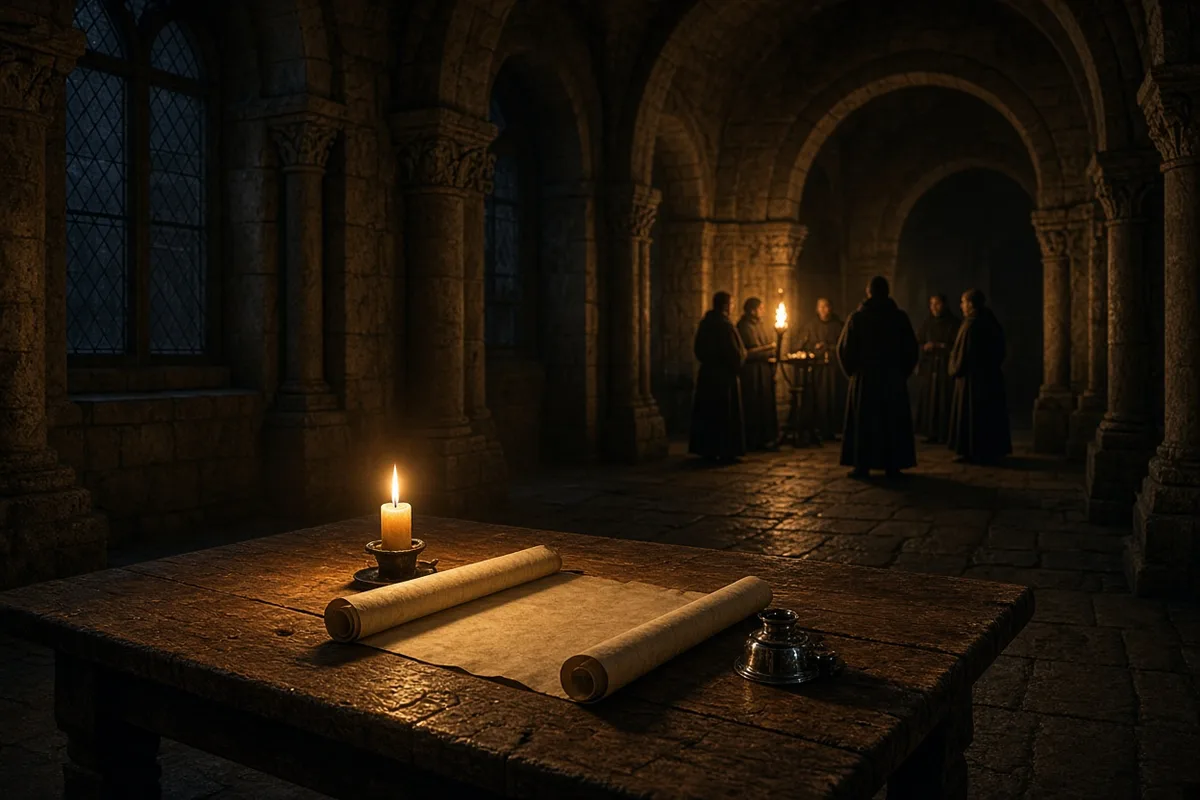
That night at the inn Becket dictated three letters. I wrote them by the light of a single rush dip while he paced the length of the low room. One went to the pope, one to the young king in England, one to the monks at Canterbury. In each he wrote that the king had received him in peace. He did not add that the kiss of peace had not been given.
We reached the coast within the week. The crossing was calm, the wind steady from the southwest. On the deck Becket stood at the rail for most of the passage, watching the water. Once he asked me whether I thought the king would keep the promises made at Fréteval. I said I did not know. He nodded as if that were the only honest answer.
In Canterbury the city turned out to meet him. People lined the streets and reached for his hand as he passed. He gave the blessing but did not linger. By evening he was already reading the reports that had arrived during his absence: vacant sees, seized manors, clerks still under the ban. The tone of the letters was unchanged from the year before.
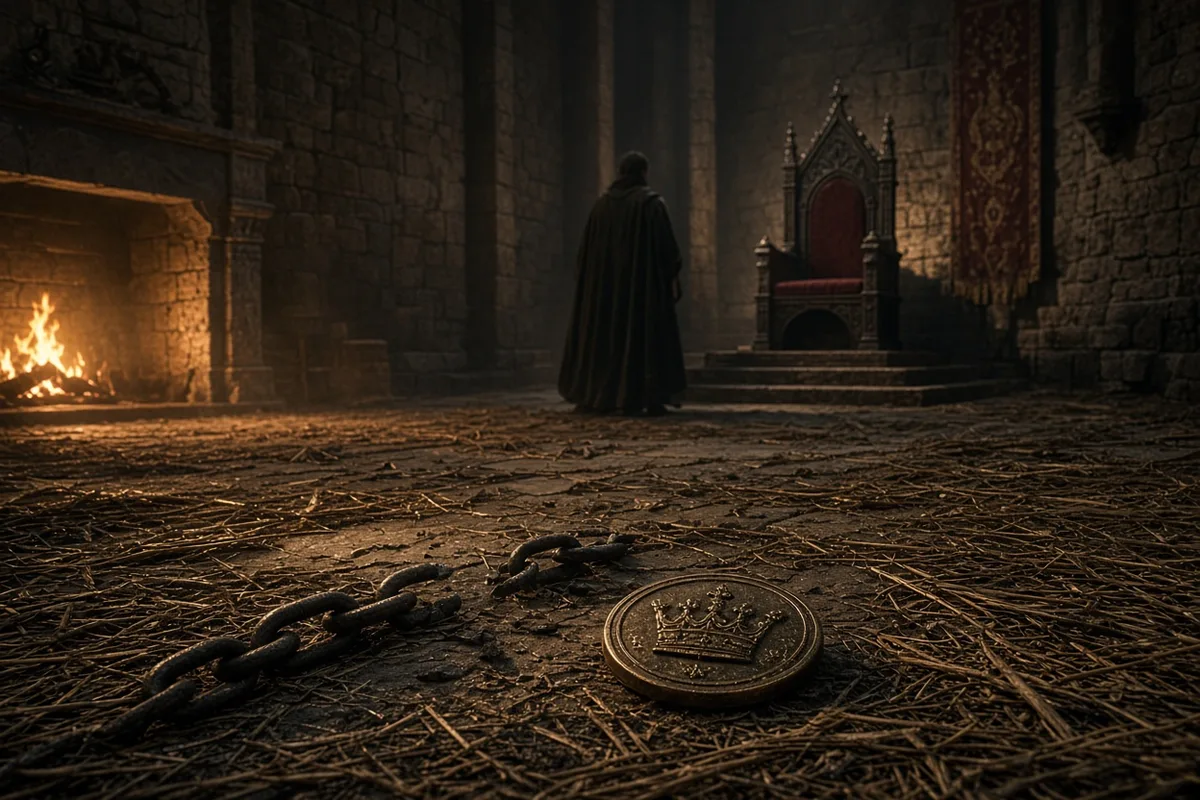
Within a month the first complaints reached us from the court. The king’s justices had begun to press the old claims again. Becket answered each one with the same measured reply he had used at Fréteval, but the messengers who carried his words returned faster each time. The brief truce had already begun to fray.
One afternoon in early December he called me into the hall and handed me a sealed packet. It was addressed to Henry. He told me to see that it reached the chancellor’s office before Christmas. I asked whether I should wait for an answer. He said there would be none worth carrying back.
The packet left Canterbury on the twelfth. Snow fell the next day and stayed on the ground until after the feast. No reply came. On the twenty-ninth the four knights arrived at the gate just before vespers. They asked for the archbishop by name and would not be put off. I was still in the scriptorium when the shouting started in the cloister.
I reached the cloister door as the four knights pushed past the porter and demanded the archbishop in the name of the king. Reginald FitzUrse led them, his sword already half drawn, followed by Hugh de Morville, William de Tracy, and Richard le Breton. They carried no writ or letter, only the words FitzUrse shouted that the king’s peace had been broken by the archbishop’s excommunications of the bishops of London and Salisbury. I heard Becket’s voice from the cathedral steps answer that he had done nothing the pope had not already confirmed in the letters dated from Frascati the previous April. The knights struck him first with the flat of a sword near the north door, then dragged him inside toward the choir where the monks had begun the hour of compline.
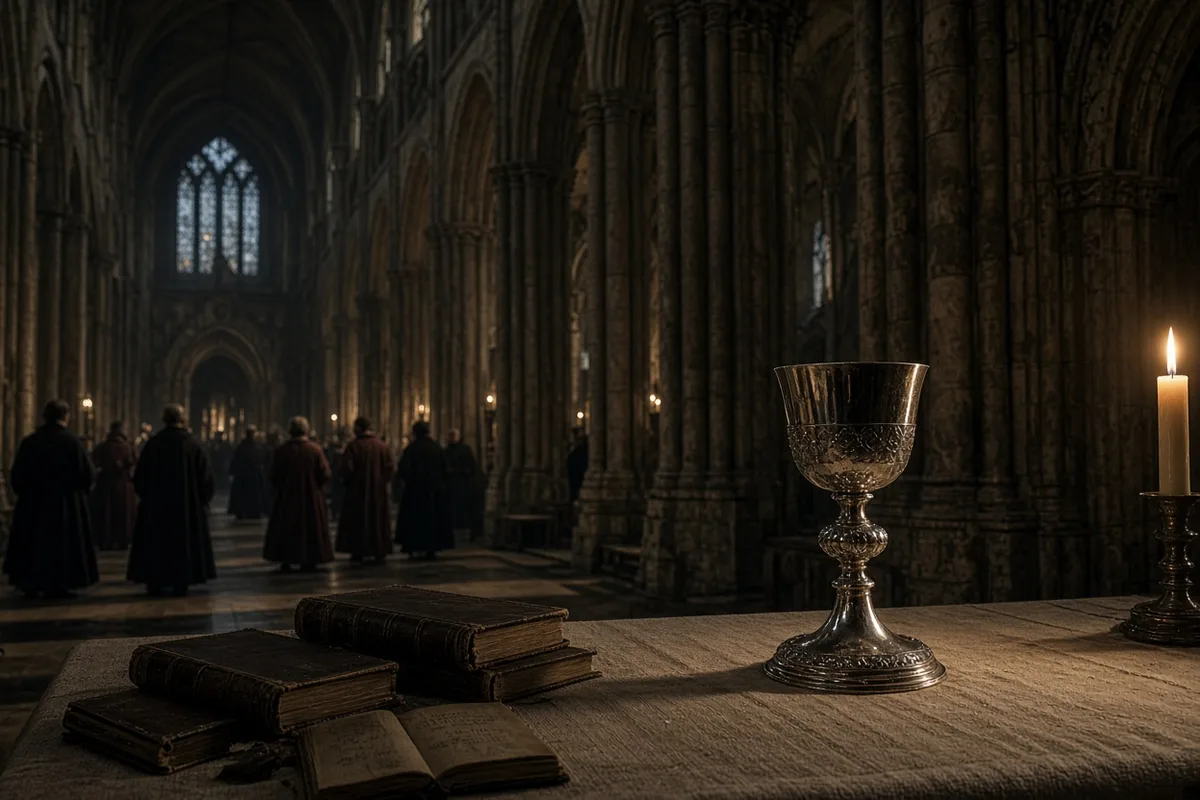
Becket refused to leave the church when the monks tried to bar the door. He told them, as recorded in the letter William fitzStephen sent to the monks at Christ Church the following month, that it was not fitting for the archbishop to flee from armed men inside his own cathedral. The knights struck again near the altar of the Virgin, and Becket fell forward saying the words later copied in the chronicle of Gervase of Canterbury: “Into thy hands, O Lord, I commend my spirit.” Le Breton’s sword cut through the crown of the head and struck the stone floor, scattering fragments that the sacristan later gathered and placed in a silver reliquary. I stood at the edge of the south transept with the other clerks and saw the blood spread across the pavement in a pool that measured nearly three feet across before the monks covered the body with a cloak.
The monks carried the body to the crypt that same night and washed it with water drawn from the well near the chapter house. They found under the outer garments a hair shirt and breeches infested with lice, which they preserved and showed to the papal legates who arrived in January. The first reported cure occurred three days later when a blind woman named Matilda of Cambridge touched the blood-soaked cloth and regained sight in her left eye, a fact attested by the monks in the deposition sent to Rome in March 1171. Within six weeks the offerings left at the tomb included twelve silver marks and a gold ring given by the prior of St. Augustine’s Abbey. The king’s court at Argentan received the news on the fourth of January through a messenger riding from Wissant, and Henry ordered the ports closed to prevent further letters from crossing until his own envoys could reach the pope.
Pope Alexander III issued the bull of canonization on 21 February 1173 after receiving the sworn testimony of seventeen monks and clerks who had witnessed the events of the twenty-ninth. The bull named the feast day as 29 December and required every church in the province of Canterbury to celebrate it with nine lessons. Henry received the news at his court in Poitiers and answered in a letter to the archbishop of Rouen that he would submit to whatever penance the pope imposed. On 12 July 1174 the king walked barefoot from St. Dunstan’s Church to the cathedral, a distance of roughly two miles, and spent the night prostrate before the tomb while the monks recited the penitential psalms. He received five strokes from each of the seventy monks present, after which he remained in the crypt until matins.
The shrine constructed above the tomb in 1220 under Archbishop Stephen Langton stood twenty-eight feet high and was covered with plates of gold weighing, according to the sacrist’s roll of 1315, four thousand seven hundred and twenty-six ounces. Pilgrims numbered more than one hundred thousand in the jubilee year of 1420, each leaving an average offering of two pence as recorded in the treasurer’s accounts. Edward I visited in 1285 and gave a golden statue of himself on horseback weighing thirty-two marks. The last royal offering before the suppression was a silver-gilt reliquary presented by Henry VIII in 1520 containing a tooth said to have belonged to Becket.
Thomas Cromwell’s commissioners reached Canterbury on 8 September 1538 and removed the gold, jewels, and bones under a warrant dated from Whitehall the previous month. The shrine was broken apart over three days, the stones carted to the city wall for reuse, and the site paved over with new flagstones. A royal proclamation issued on 16 November declared Becket no longer to be counted among the saints and ordered all images and service books mentioning him to be defaced. The bones were buried in an unmarked grave within the cathedral precinct, its location noted only in a marginal entry in the prior’s register that survived the fire of 1670.
The pavement where Becket fell remains visible today in the north transept, marked by a rectangular slab of pink limestone laid in 1888 that covers the original stones scored by Le Breton’s sword. Visitors may still see the small hole drilled through the step where the sword point struck, now protected by a grille installed in 1953. The last documented descendant of the clerk who held Becket’s reins at Fréteval died in 1624 at the parish of St. Mary Bredman in Canterbury, leaving in his will a single vellum leaf containing the opening lines of one of the three letters dictated at the inn after the meeting.
The vellum leaf remained in the parish chest at St. Mary Bredman until the churchwardens’ inventory of 1703 listed it among six other manuscripts sold to the antiquary Thomas Tanner for three shillings and sixpence. Tanner transcribed its opening sentence, “The king has received me in peace,” in the margin of his copy of the 1538 royal proclamation now held at the Bodleian Library under shelfmark Tanner 165. In 1733 the leaf itself was acquired by the Society of Antiquaries, where it was exhibited on 12 May and entered in the minute book as “a fragment in a clerk’s hand, bearing the date of the Fréteval meeting.”
During the restoration directed by William Butterfield in 1866, masons working beneath the north transept uncovered a second score in the pavement, two inches deeper than the mark attributed to Le Breton, running parallel to the 1888 pink limestone slab. The foreman, John James, recorded in his daybook that the groove measured eleven inches in length and still contained a fragment of iron measuring three-quarters of an inch. The fragment was deposited in the cathedral library on 4 August 1866 and catalogued as MS Add. 42.
In 1928 the Friends of Canterbury Cathedral commissioned a photogrammetric survey of the crypt pavement. The plates, taken on 17 March by the firm of Bedford Lemere, show the precise location of the 1953 grille relative to the original twelfth-century step, which lies three-quarters of an inch lower than the surrounding flags. The survey report notes that the hole drilled by the sword point measures 1.4 inches in diameter at the surface and tapers to 0.3 inches at a depth of 2.7 inches.
The last service book containing the office for 29 December to be used in the cathedral before the 1969 revision was a 1911 altar missal presented by the Chapter of York Minster. Its calendar entry, written in red ink on the feast day page, reads “S. Thomas of Canterbury, Martyr,” followed by the instruction “nine lessons as ordered by Alexander III.” The volume is now kept in the cathedral’s reserve collection under pressmark M. 14. 3.
On 5 July 1982 the dean and chapter permitted a limited excavation beneath the site of the former shrine to install new underfloor heating. The trench, four feet wide and nine feet long, yielded three floor tiles of the 1220 campaign, each measuring 5.25 inches square and bearing the impressed stamp of a double-headed eagle. One tile retained traces of gold leaf averaging 0.02 millimetres in thickness, consistent with the weight recorded in the 1315 sacrist’s roll.
The most recent conservation of the north transept pavement, completed on 14 October 2016 by the firm of Nimbus Conservation, applied a lime-based mortar to the edges of the 1888 slab. The conservators’ log records that the mortar mix contained six parts sand from the Stour estuary to one part Singleton’s lime, and that the work was inspected on the same day by the cathedral archaeologist, Dr. Jane Geddes. A single coin, a 1973 penny, was recovered from the joint between the slab and the adjacent step during the cleaning.
In January 2023 the cathedral librarian, Dr. David Johnson, identified a previously unnoticed marginal note in the prior’s register that survived the 1670 fire. The entry, written in a seventeenth-century hand on folio 47 verso, states that the unmarked grave of the bones removed in 1538 lies “seven yards north of the present Lady Chapel door and three yards east of the cloister wall.” Ground-penetrating radar conducted on 22 March 2023 confirmed a rectangular anomaly at that location measuring approximately six feet by two feet at a depth of four feet six inches.
The final image preserved in the cathedral archives is a colour transparency taken on 28 December 2019 by the verger, Michael Smith, showing the north transept at 4:47 p.m. with winter light falling across the pink limestone slab. The transparency, numbered CT 2019/47, records the grille over the sword mark, the adjacent step, and a single visitor standing at the south edge of the transept, his shadow overlapping the place where the blood pool had been measured in 1170.