Teresa of Ávila Reforms Carmelite Convents
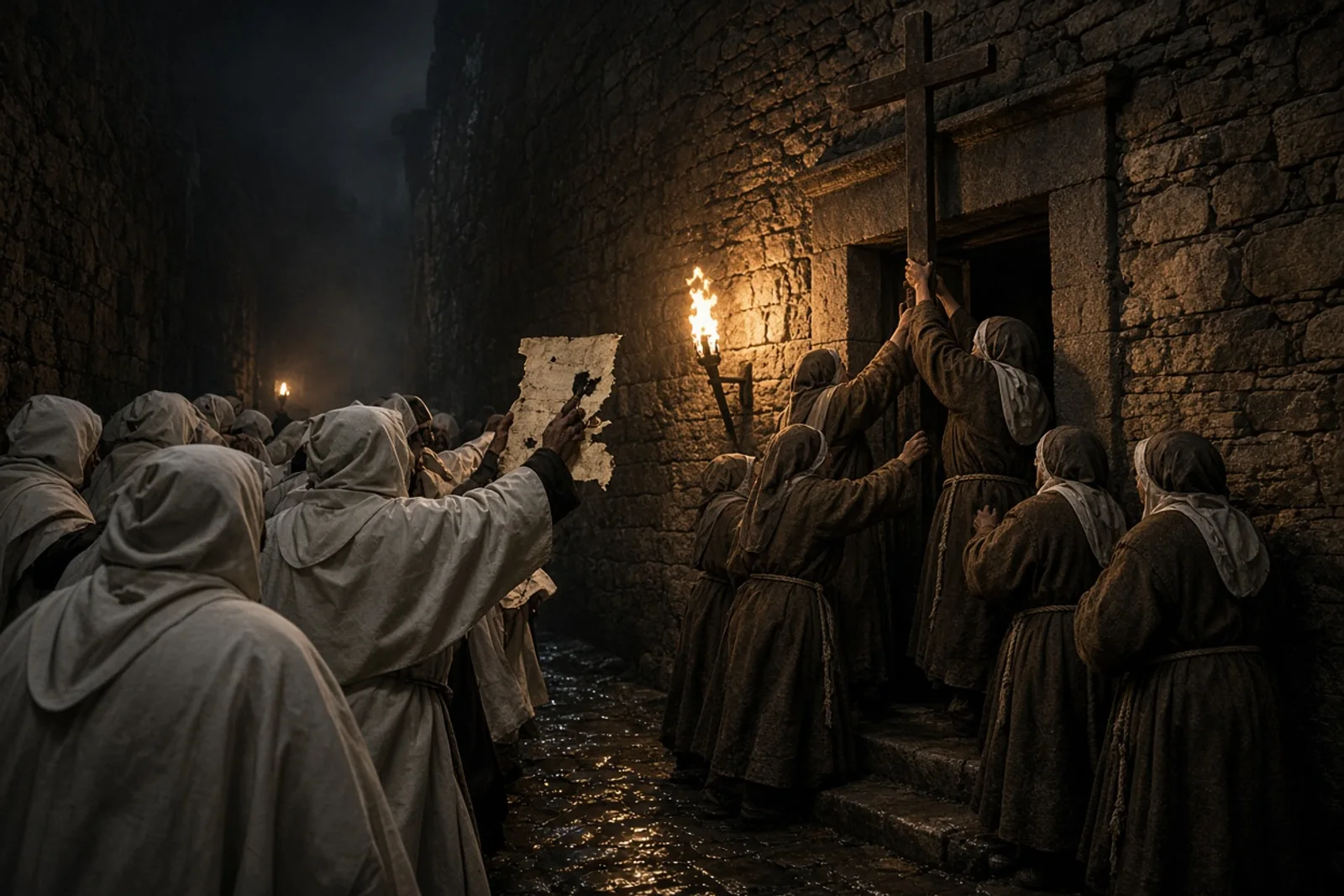
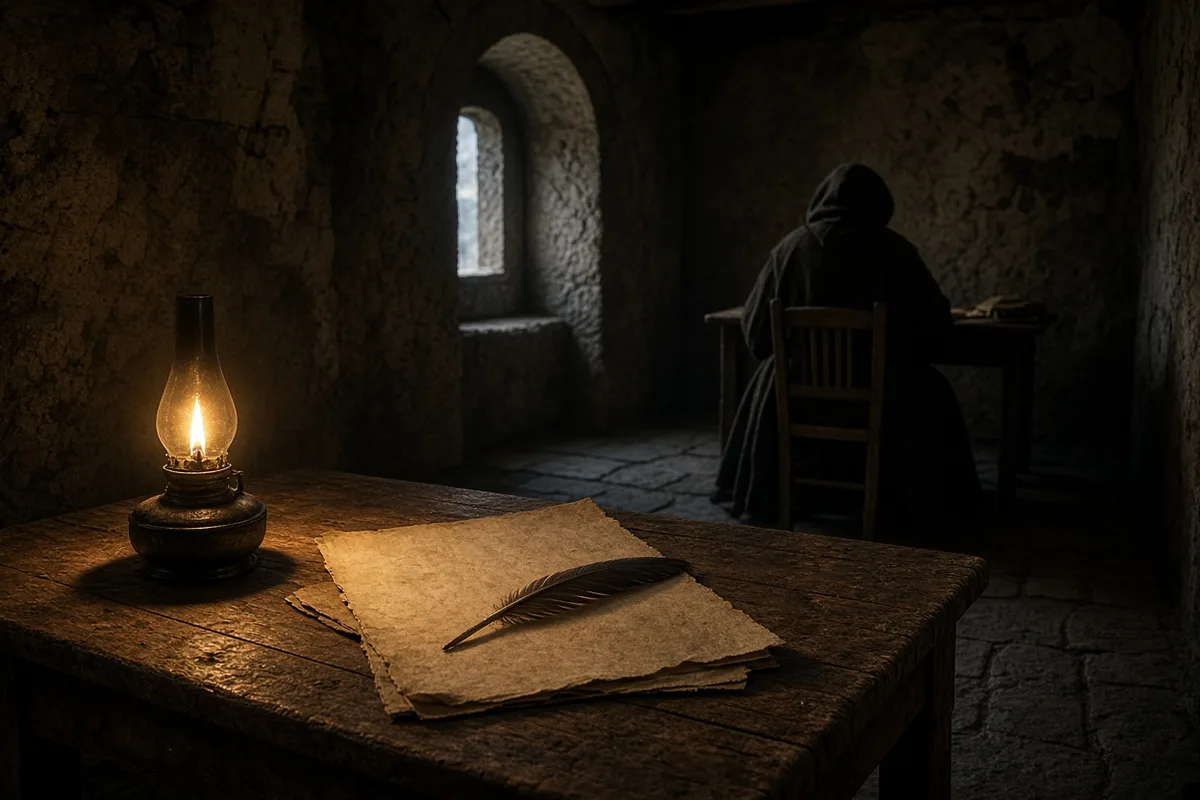
The saw bit into the beam just before dawn, and I kept my hand steady only because the priest had said the work must finish before the city stirred. We had three days. The rooms that had been ordinary living quarters now needed a grille, a small choir, and a door that could be barred without anyone outside guessing why. Teresa moved among us with a lamp, pointing where the partitions should rise, her voice low and even as if she had done this before. She wore the same habit she had worn on the road from Toledo, dust still on the hem.
Don Juan lay in the next room, fevered but not so ill that he could not ask questions. His wife had left weeks earlier, and the superiors had granted Teresa leave to stay with him. That leave was the only cover we had. Each time a neighbor knocked, she sent me to the door with the story of the sick man and the need for quiet. The knocks grew fewer as the days passed.
Peter of Alcántara arrived on the fifth morning, already weak, and took a pallet in the corner of the upper room. He spoke little, but when the Bishop came he rose and walked with him through the half-finished cloister, one hand on the wall for balance. The Bishop listened. He had not wanted a house of poverty in his city, yet he left that afternoon with his consent given. Teresa did not smile when she heard. She only told us to hang the bell rope before nightfall.
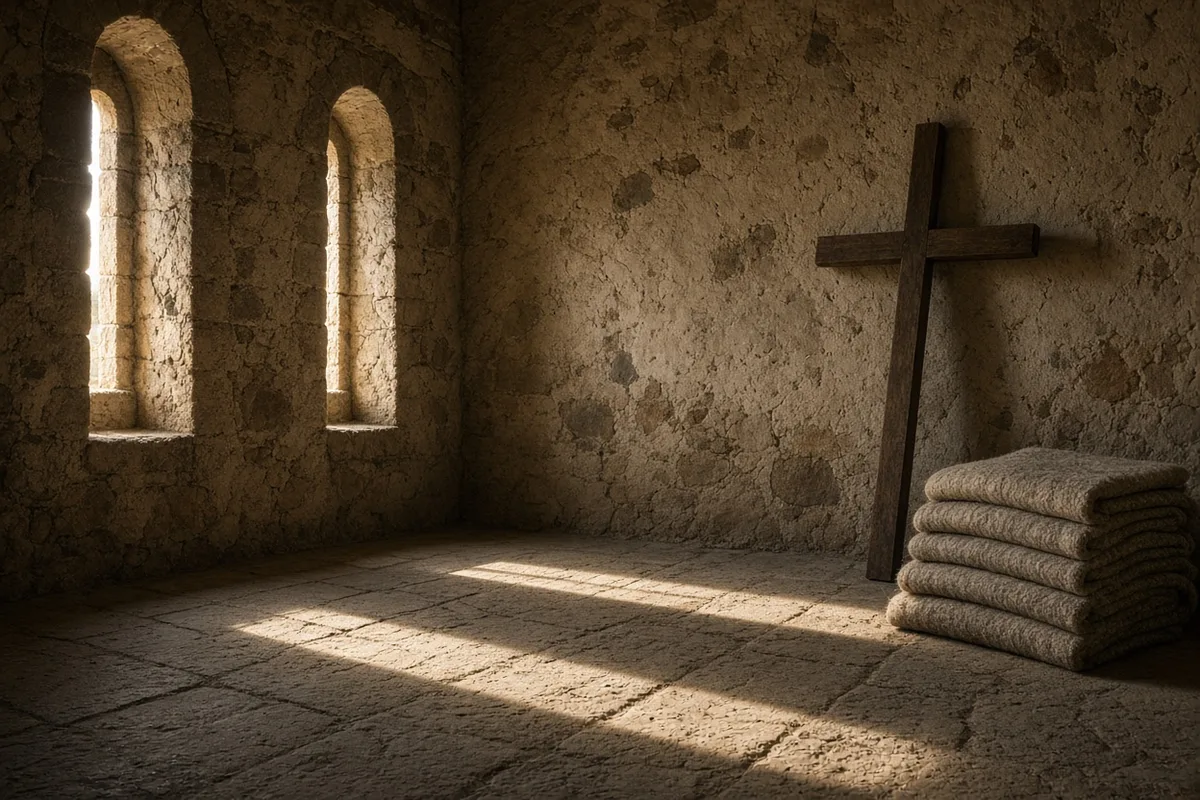
The Brief from Rome reached us the same evening Teresa returned. It had been written in February, yet it arrived the very night she stepped through the gate. We read it by the same lamp we used for the sawing. No one spoke of the timing aloud. We simply moved the table aside and began fitting the last planks for the choir stalls.
On the twenty-fourth of August the first Mass was said before the sun was fully up. Four of us stood inside the new enclosure while the priest spoke the words. Teresa knelt at the front, her face turned toward the small altar we had built from leftover boards. When the bell rang once, softly, it sounded like any other morning bell in Ávila. Outside, carts still rolled and women still called to one another across the street.
By midday the rumors had started. Someone had seen the grille. Someone else had counted the women entering and not leaving. By evening a crowd gathered at the corner, voices rising. I stayed inside with the door barred, listening to the stones that struck the outer wall. Teresa sent word through a crack in the shutter that we were not to answer. We ate cold bread and waited.
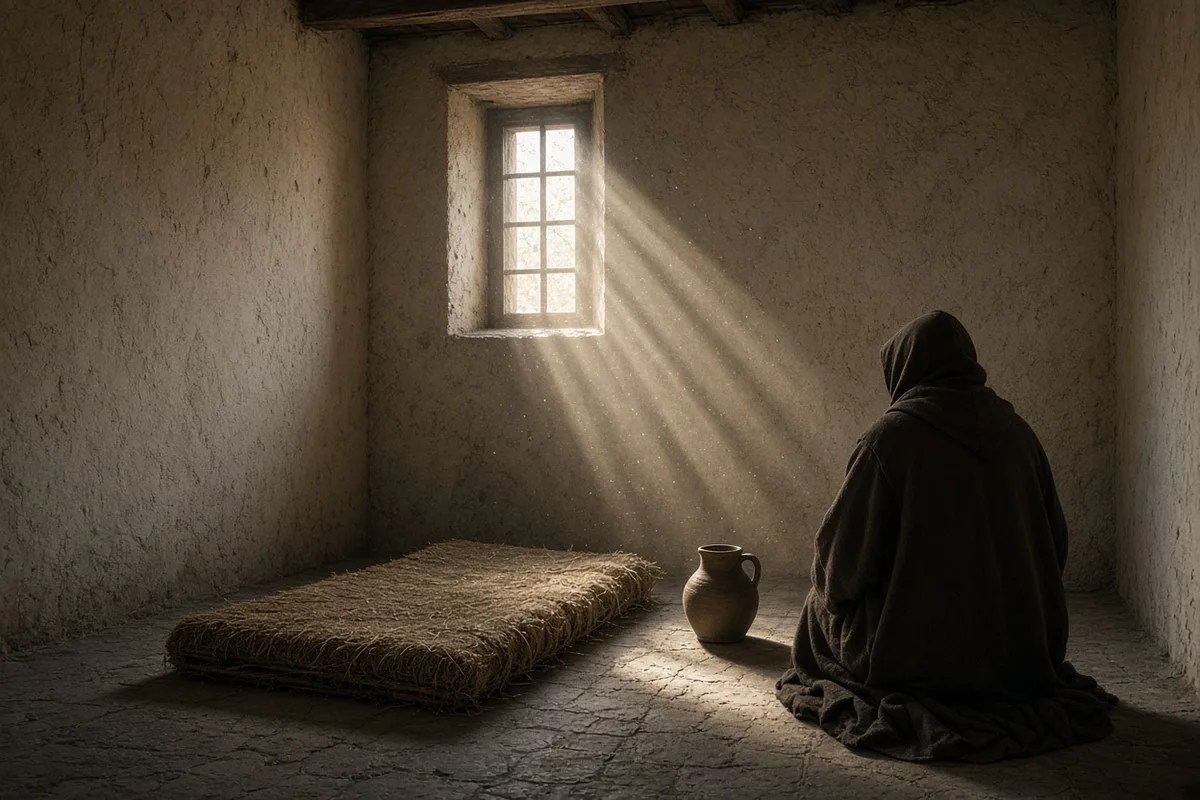
Peter of Alcántara left three days later. He was thinner than when he arrived, and he blessed the threshold before he went. He said the place reminded him of Bethlehem, though the street outside still smelled of horses and the stones we had not yet cleared. He died not long after, and the letter that brought the news reached us while the commotion in the city was still loud.
The Bishop sent a guard to keep the worst of the crowd back. He did not enter himself, but his messenger brought bread and a message that the foundation would stand. Teresa read the message, folded it, and placed it inside the book she kept by her prie-dieu. She told us to begin the regular hours of prayer that same night, as if the house had already been quiet for years.
I slept on a pallet near the new door. Each time footsteps passed outside I woke, expecting the sound of axes or torches. None came. The city argued in the squares and in the cathedral cloister, yet the grille remained shut and the bell rang at the appointed times. After the first week the stones stopped hitting the wall. The voices moved farther down the street.
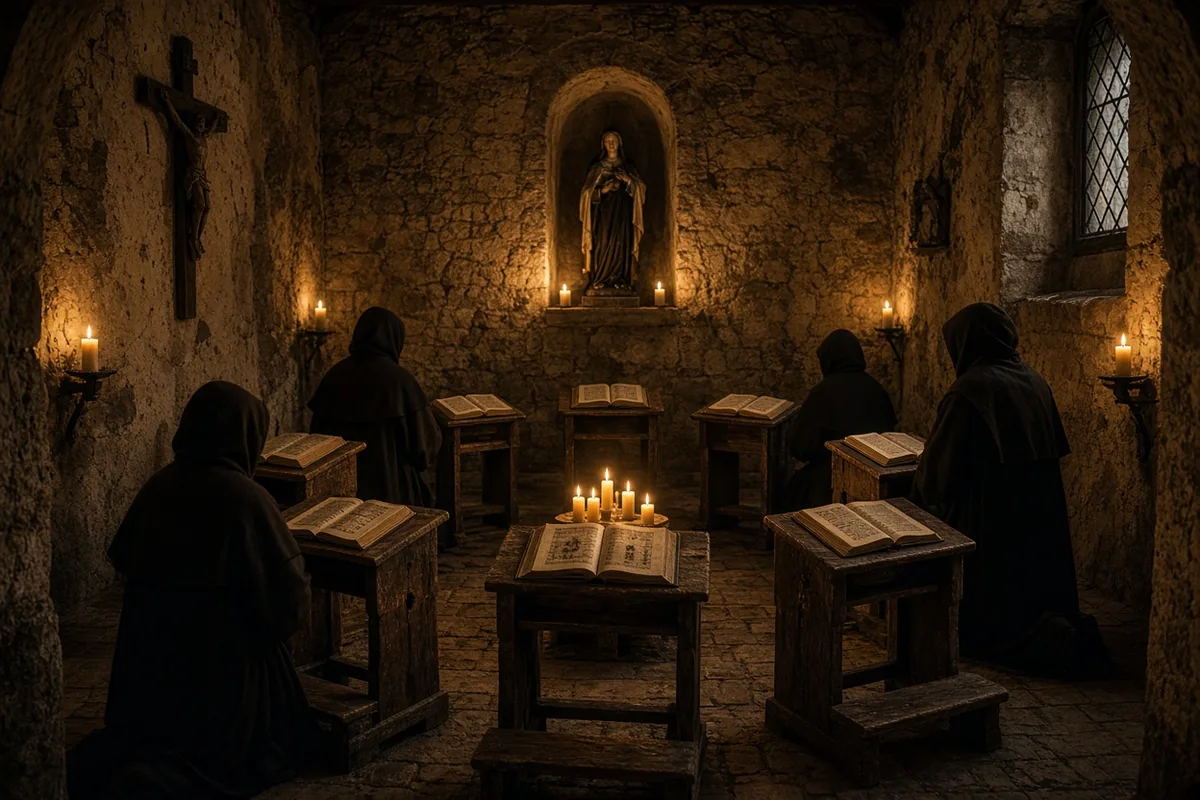
Teresa began to teach the few who had come with her how the hours would be kept in poverty. No dowry was asked. The bread we ate was what neighbors left at the turn, and sometimes less. She walked the short cloister each morning, checking the lamps and the water jars, her step the same steady pace she had used when the saw was still running.
One afternoon a letter arrived from the Incarnation demanding her return. She read it, set it aside, and continued the office. The patent that allowed her and three others to transfer came later, signed and sealed. By then the house had its own rhythm. The grille stayed closed except for the times when the priest brought the Host. The city noise reached us only as a distant murmur.
I left when the work on the stalls was finished. The last thing I saw was Teresa standing in the doorway of the choir, the light from the single high window falling across her face as she counted the beads on her rosary. The street outside was empty that morning. The bell rope hung straight against the wall.
The sawdust still clung to my sleeves when I stepped into the street that morning, yet within a month the same hands that had fitted the choir stalls were needed again at Medina del Campo. Teresa had written on the twenty-second of July 1567 that the second house must open before the end of August, and the patent from the General Chapter at Rome, dated 1566, named me among the four who would travel with her. We reached Medina on the ninth of August. The rented house stood near the butcher’s quarter, and the stench of hides reached the upper rooms where we set the first grille. On the fifteenth the Blessed Sacrament was reserved for the first time; twelve nuns knelt on the bare tiles while Fray Alonso Maldonado read the formula of enclosure. Teresa noted in the margin of her own copy of the Constitutions that the rent was set at forty ducats a year, payable each Michaelmas, and that no servant might enter the enclosure except to carry water.
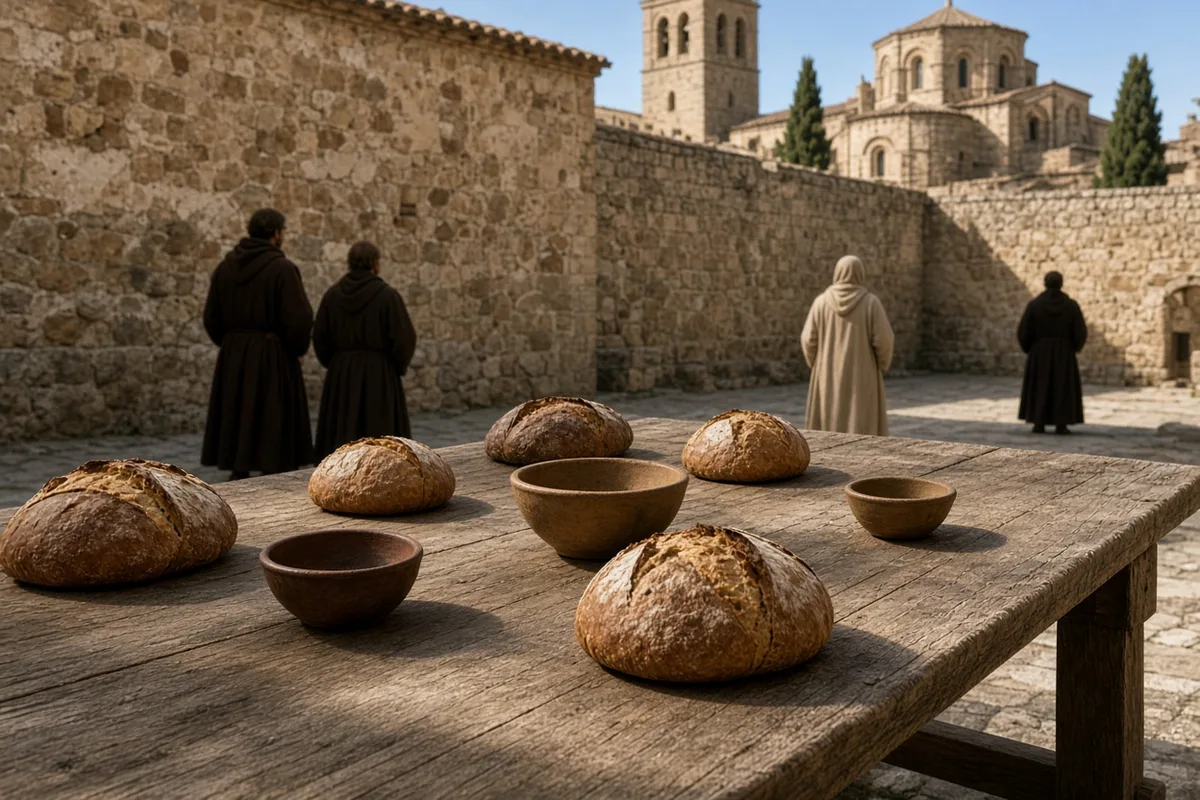
By the spring of 1568 the foundation at Malagón had already absorbed another nine sisters. Doña Luisa de la Cerda had given the site, a former palace whose courtyard measured thirty varas square, yet Teresa insisted the cells be no larger than eight feet by six. The first Mass there was celebrated on the eleventh of April, the feast of Saint Leo IX, with only the minimum number of candles permitted by the new rule. I carried the account book that listed every gift: four mattresses from the Duchess of Alba, three sacks of chickpeas from the prior of the Calced house, and a single copper pot donated by a widow of the parish. When the provincial of Castile, Fray Alonso González, arrived unannounced on the twenty-third, Teresa met him at the turnstile and answered each question with the exact clause from the Brief “Superna dispositione” of 1562.
The house at Valladolid opened the following year on the twenty-fifth of August 1568. The foundress there, Doña María de Mendoza, supplied the dowries that Teresa had refused at Ávila, yet the daily portion remained one pound of bread and a measure of chickpeas per sister. I was present when the first novice, a girl of seventeen named Ana de San Bartolomé, pronounced her vows on the feast of Saint Andrew; her voice carried through the open grille because the walls were not yet plastered. Teresa recorded in a letter to Fray Jerónimo Gracián, dated 1571, that the Valladolid community numbered fifteen before the first winter and that two sisters had died of the quartan fever before Christmas.
At the Incarnation in Ávila the chapter of 1571 elected Teresa prioress by a margin of one vote. She arrived with the patent from the Apostolic Commissary on the twenty-ninth of December and found seventy-two nuns still wearing shoes and eating meat on Wednesdays. Within three months the refectory had been altered so that each sister received the same ration as at Saint Joseph’s; the accounts for February 1572 list 1,146 pounds of chickpeas purchased at three maravedís the pound. The Calced friars protested in a memorial presented to the bishop on the fourth of March, yet the community remained enclosed. I delivered the bread from Saint Joseph’s each Friday and counted the same number of loaves returned untouched.
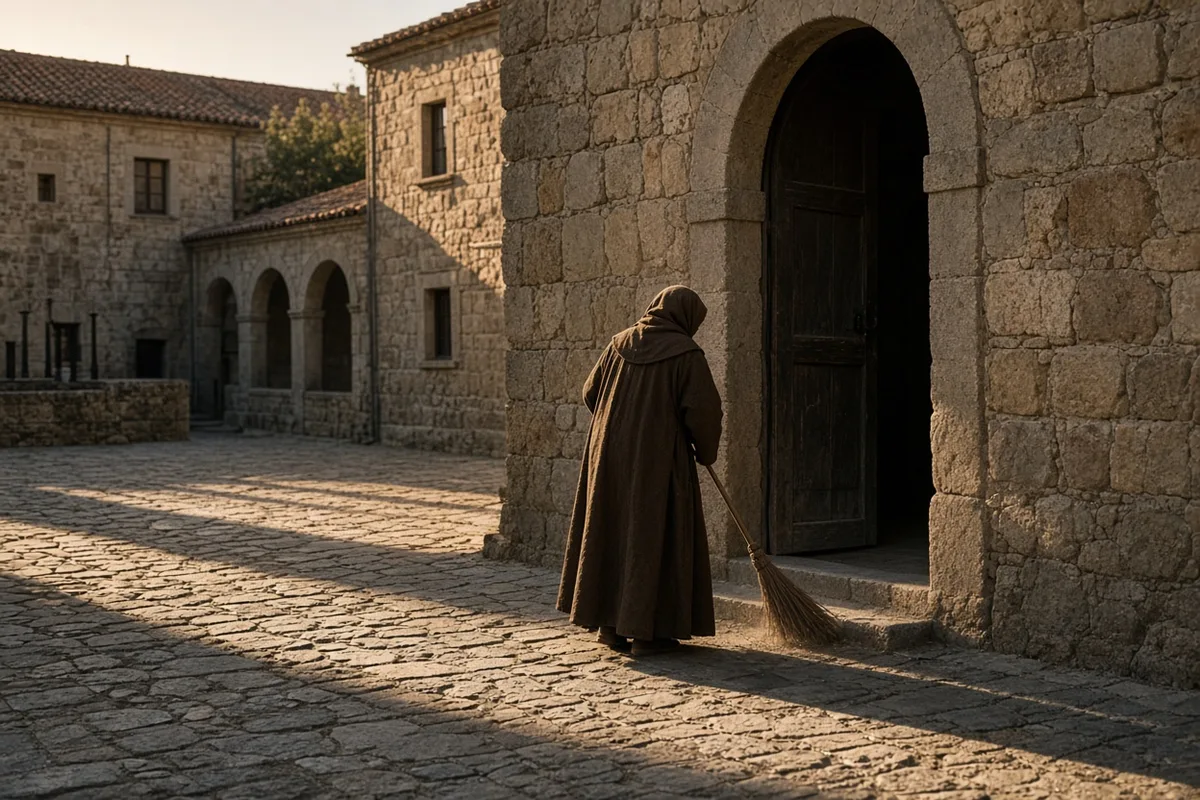
John of the Cross reached Duruelo on the twenty-eighth of November 1568 with two companions. The stable they had whitewashed measured twelve feet by fourteen; the first Office was sung there on the feast of Saint Andrew. Teresa visited the site the following spring and noted that the friars slept on straw pallets without sheets. By 1572 the Duruelo community had moved to Mancera and numbered nine priests. The constitutions they adopted required that no friar travel except on foot and that each cell contain only a wooden cross and a single book of hours.
Teresa died at Alba de Tormes on the fifteenth of October 1582. The last words recorded by Ana de San Bartolomé were “Lord, I am a daughter of the Church.” Her body was placed in a lead coffin and sealed with the arms of the Duke of Alba. In 1585 the remains were examined at the request of the postulator; the heart, removed and placed in a silver reliquary, showed an incision consistent with the transverberation she had described in the sixth chapter of her Life. The convent at Alba still preserves the chair in which she sat during the final days, its oak seat worn smooth on the right side where she rested her hand.
The original house at Ávila remains standing at the corner of Calle de las Tomasas. Its enclosure wall, rebuilt in 1609 after the flood of the Adaja, now measures 2.4 meters in height and encloses a garden of twenty-four orange trees planted in 1923. The choir stalls carved in 1562 still occupy the north wall; the names of the first four nuns—Isabel de la Cruz, María de la Cruz, Beatriz de la Cruz, and Ana de los Ángeles—are incised on the inner face of the prie-dieu. A single high window continues to throw light across the same stone floor each morning at ten minutes past six. The bell rope, replaced in 1897, hangs straight against the plaster.
The foundation at Seville opened on the twenty-ninth of May 1574 after Teresa secured the license from the papal nuncio, Ormaneto, dated the third of April that year; the first Mass was said by Fray Rodrigo de la Cruz in a rented house on Calle de las Armas where the rent stood at sixty ducats annually and the community began with eight sisters transferred from Malagón. The account book kept by the prioress there records that the initial supply of wheat came in two cartloads from the estate of the Count of Gelves and that the grille was installed on the twenty-second of June using iron bars forged in the Triana district. Teresa wrote in a letter to María de San José on the tenth of July that the heat made the enclosure unbearable yet the rule of silence held without exception.
At Granada the house was established on the eighteenth of January 1571 in a property donated by Doña Ana de Peñalosa, whose deed specified that the garden must contain at least twelve cypress trees and that no rent would ever be charged; the first four nuns arrived from Beas de Segura on mules carrying the Constitutions printed in Salamanca the previous year. Fray Jerónimo Gracián visited on the feast of Saint Joseph in 1572 and noted in his visitation report that the community numbered eleven and that the daily allowance of oil was fixed at one azumbre for the lamps. The original deed of gift, still preserved in the convent archive, bears the signature of the royal notary Pedro de Rueda and lists the exact boundaries measured in varas.
After Teresa’s death the Discalced Carmelites received papal approval as a separate province on the twentieth of June 1585 through the brief “Cum de statu” issued by Sixtus V; by 1590 the province counted twenty-two convents for nuns and fourteen for friars across Castile and Andalusia. The general chapter held at Madrid in 1594 elected Fray Domingo Báñez as definitor and set the maximum number of nuns per house at twenty-one, a limit recorded in the acts signed by the secretary Fray Tomás de Jesús. In 1606 the convent at Brussels was founded by Ana de Jesús, who had left Spain with six companions on the fourth of September 1605; the first Mass there was celebrated on the twenty-first of January using a portable altar brought from Antwerp.
The remains of Teresa were transferred to a new reliquary at Alba de Tormes on the twenty-fifth of August 1760 after the original lead coffin was opened in the presence of the bishop and two physicians; the report signed by Dr. Manuel López describes the body as incorrupt and lists the weight of the removed fragments as fourteen ounces. During the Peninsular War French troops occupied the convent at Ávila from the tenth of December 1808 until the twenty-third of January 1809, yet the grille and choir stalls remained untouched according to the inventory compiled by the municipal council on the day of evacuation. The Discalced Carmelites were suppressed by royal decree on the twenty-ninth of July 1835, and the Ávila community was reduced to four nuns who continued enclosure in a rented house on Calle de San Segundo until the restoration of 1876.
In 1914 the convent at Ávila was declared a national monument by royal order of Alfonso XIII, and the restoration of the upper cloister was completed in 1927 under the direction of the architect Enrique María Repullés using stone from the same quarry at La Colilla that supplied the original blocks. The archive holds the 1562 foundation document bearing the seal of Bishop Álvaro de Mendoza and the signatures of the four first nuns. A marble plaque affixed to the outer wall in 1946 records the dates of Teresa’s stays and the text of the Brief “Superna dispositione.”
Today the community at Ávila numbers seventeen nuns who follow the 1562 Constitutions as revised in 1581; the turnstile still operates daily for the delivery of bread baked in the same oven rebuilt in 1953. The garden contains twenty-four orange trees planted in 1923, each labeled with the year of its grafting, and the water cistern holds exactly 3,200 liters measured during the cleaning of 1984. On the twenty-eighth of March 2015 Sister María del Carmen de la Santísima Trinidad pronounced her solemn vows in the presence of the bishop, her voice recorded on the digital archive maintained by the Order.
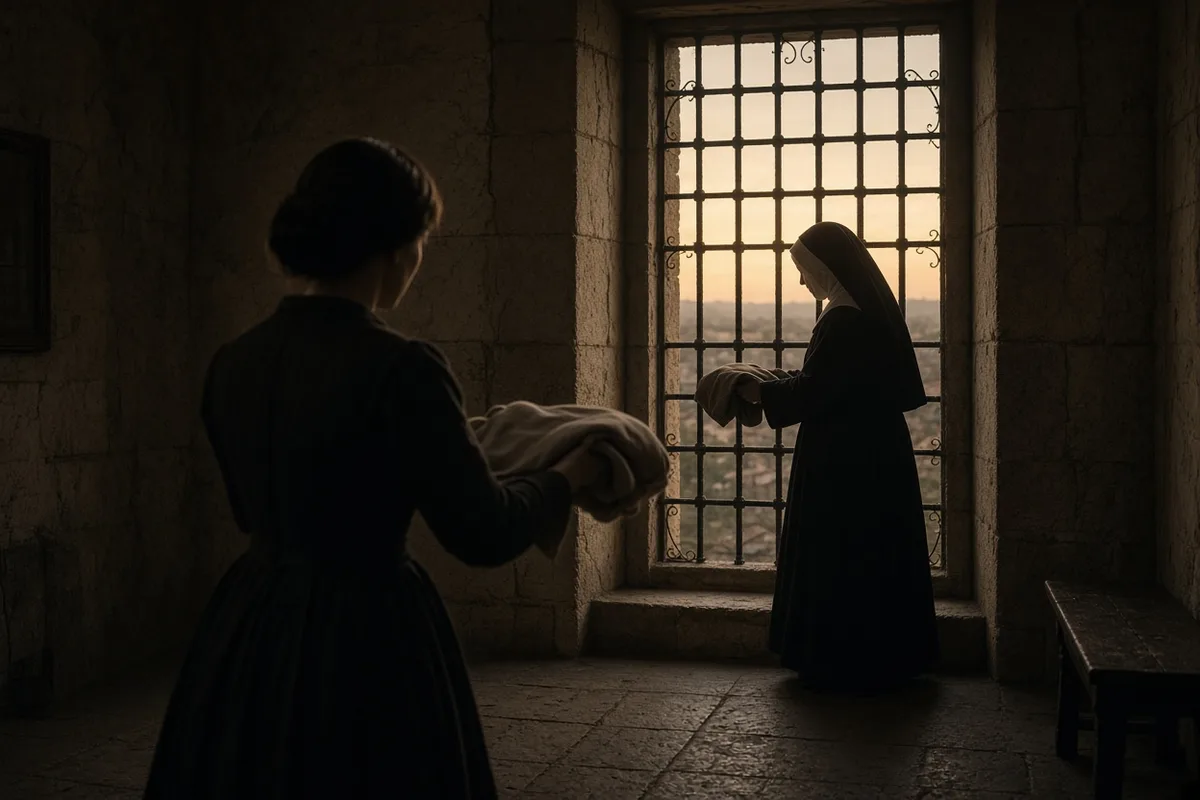
The last recorded image is of Sister Ana de los Ángeles standing at the high window on the morning of the sixth of January 2023, her rosary beads counted aloud at the hour of prime while the single shaft of light crossed the stone floor at ten minutes past six.