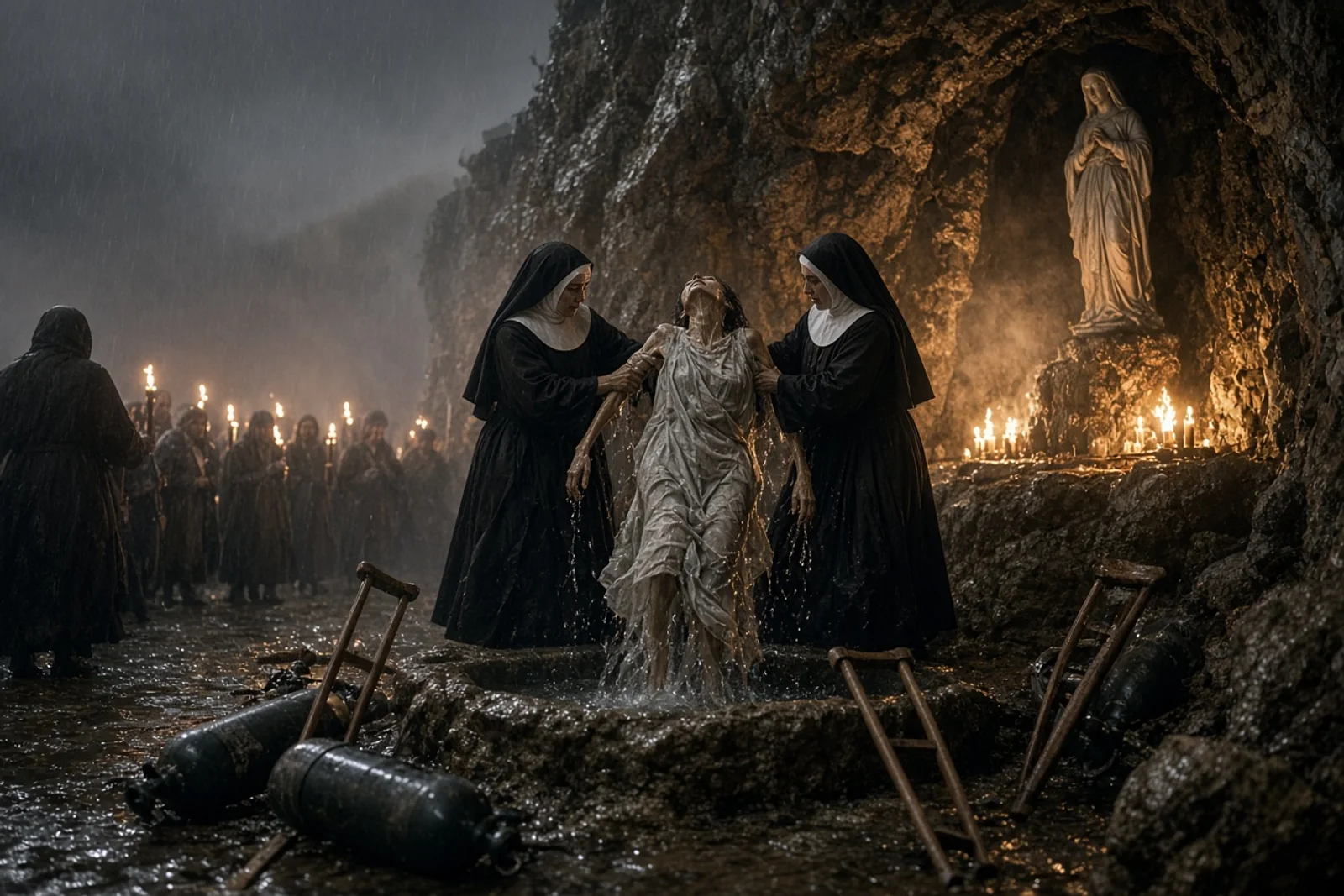
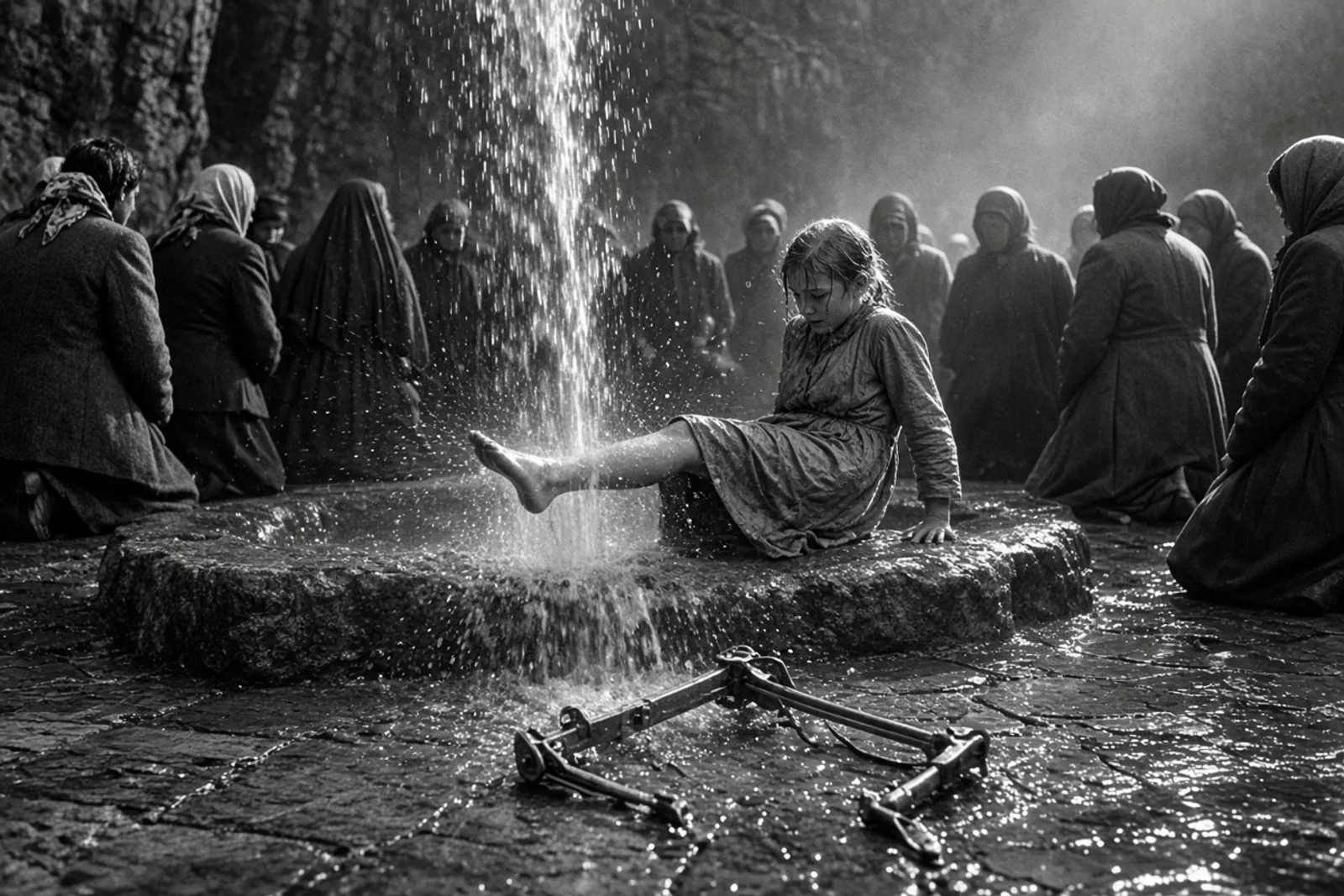
The Healing of Vittorio Traverni’s Wife at Lourdes

The monstrance caught the light as it moved down the line of stretchers. I had taken a place among the Italian pilgrims that morning, one of several who had come to push chairs and carry water, and the sun pressed hard on the back of my neck while the priests sang ahead of us. Luigina Traverso lay on the third stretcher from the left, her left leg strapped flat under a light blanket. She had told the group the night before that the last operation had left the foot cold and without feeling.
The canopy swayed slightly when the wind shifted. People knelt as the priest carrying the Blessed Sacrament drew closer. I kept my hands on the handles of the stretcher beside hers so the line would not bunch. When the monstrance passed directly in front of her, Luigina’s shoulders lifted an inch off the canvas. She made a small sound, not loud, and then both hands went to the edge of the frame.
She sat upright. The blanket slid to the ground. Her left foot, which had been turned inward for months, straightened. She swung her legs over the side and stood. The stretcher bearers on either side reached out but did not touch her. She took one step, then another, and the pain that had kept her in bed since the early surgeries was gone from her face. The procession continued without pause. Only the nearest pilgrims turned their heads.
A doctor from the Medical Bureau was already moving through the crowd with a notebook. He asked her name and the date of the operations, then wrote the answers while she remained standing. She answered in short sentences and kept flexing the toes of her left foot. By the time the last of the priests had passed, she had walked the length of three stretchers and back without support.
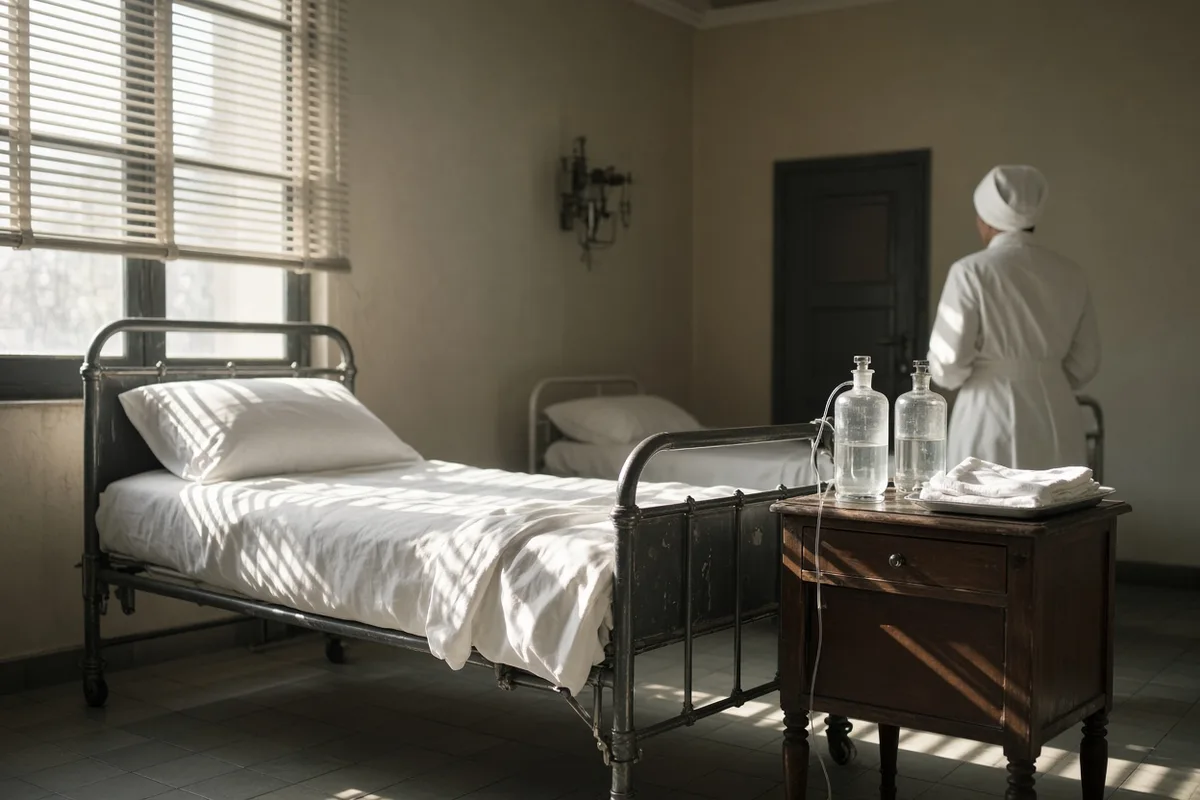
That evening the bureau physician asked her to return the next morning for a fuller examination. She spent the night in the dormitory sitting upright for the first time in years. The following day two more doctors measured the range of motion in both legs and tested sensation with a pin. They found no residual paralysis. She walked the short distance from the hospital to the grotto without a cane.
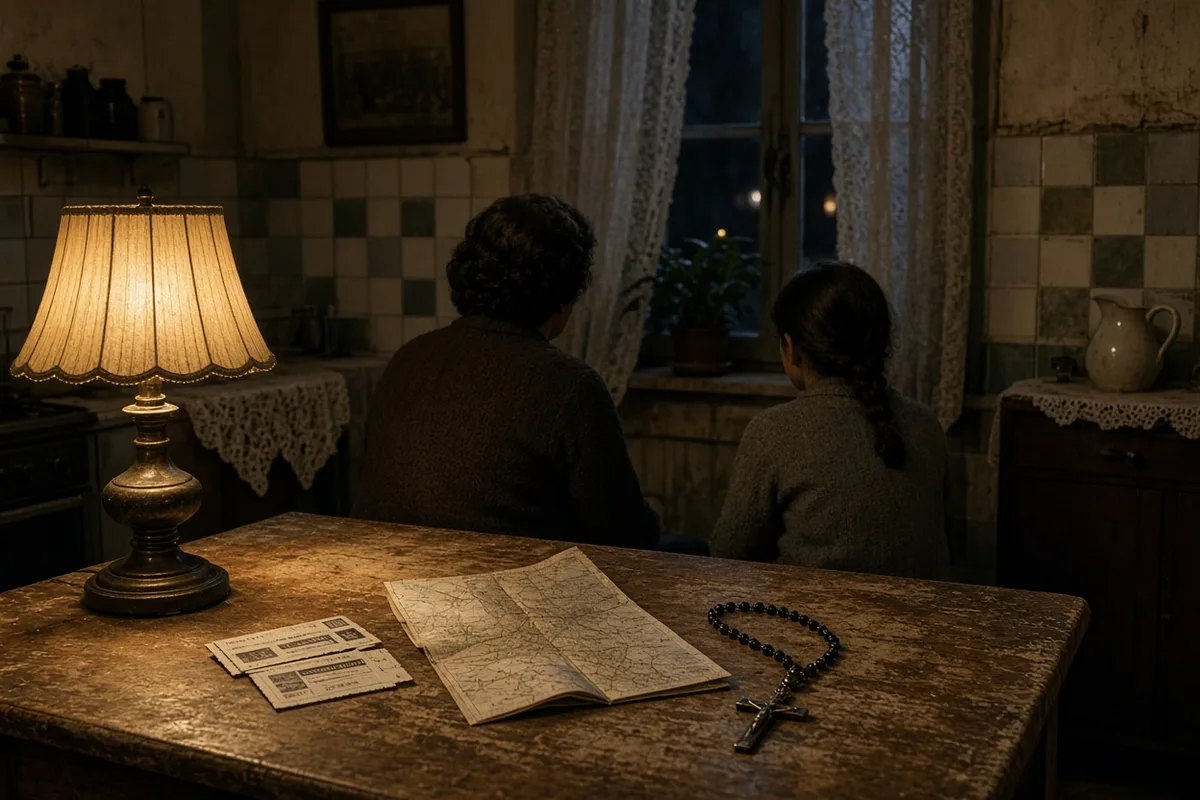
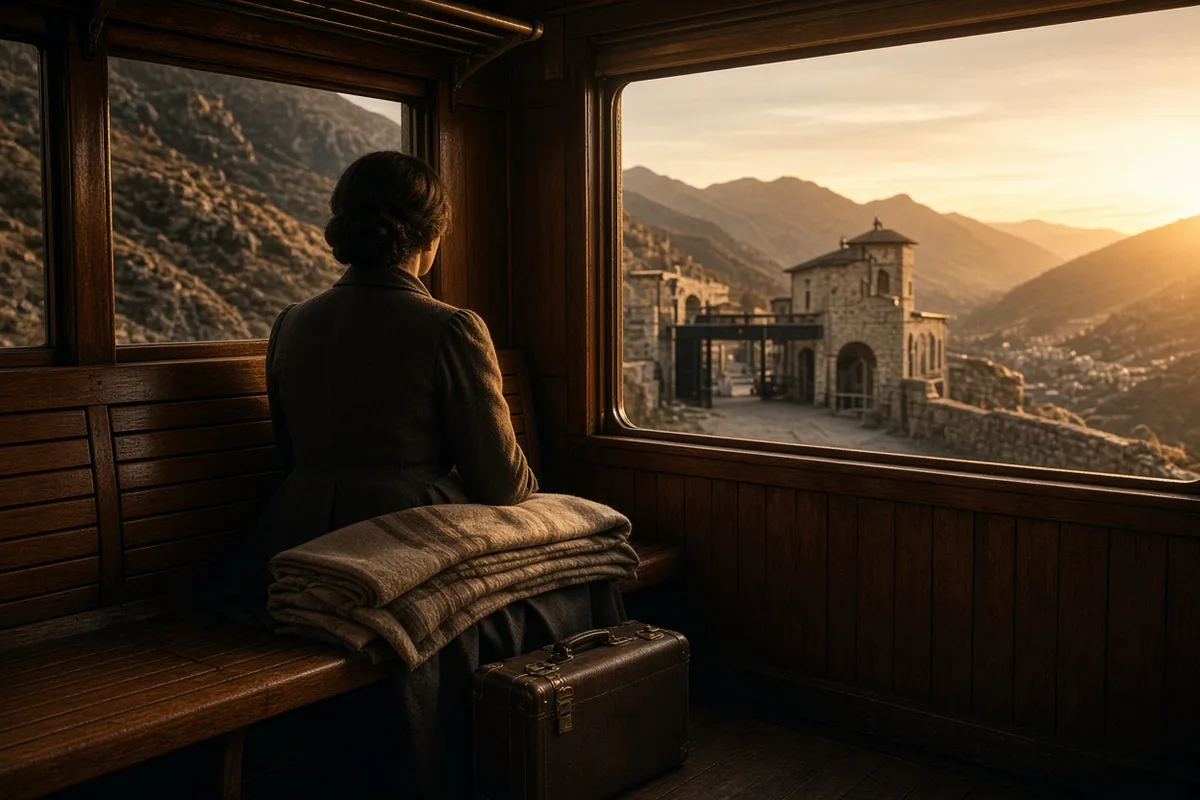
She left Lourdes on July 26 with the rest of the group, walking onto the train instead of being carried. The Medical Bureau opened a formal dossier on July 28 the next year after she had been examined again in Italy and found free of the lumbar symptoms that had required the earlier operations. The case file recorded the original diagnosis of paralytic lumbar sciatica, the dates of the three spinal surgeries, and the sudden recovery witnessed on July 23, 1965.
The bureau met again in 1984 to review fresh radiographs and clinical notes supplied by Italian physicians. The examiners noted that the foot drop and sensory loss had not returned. A third review took place in 2010 when the complete set of hospital records from the 1960s was assembled and compared with later imaging. No organic explanation for the abrupt restoration of motor and sensory function appeared in the documents.
In November 2011 the International Medical Committee of Lourdes examined the dossier in Paris. The members concluded that the recovery remained inexplicable according to the medical knowledge available at the time of the event and since. The file then passed to the diocese of Casale Monferrato. On October 11, 2012, Bishop Alceste Catella declared the cure of Sister Luigina Traverso a miracle.
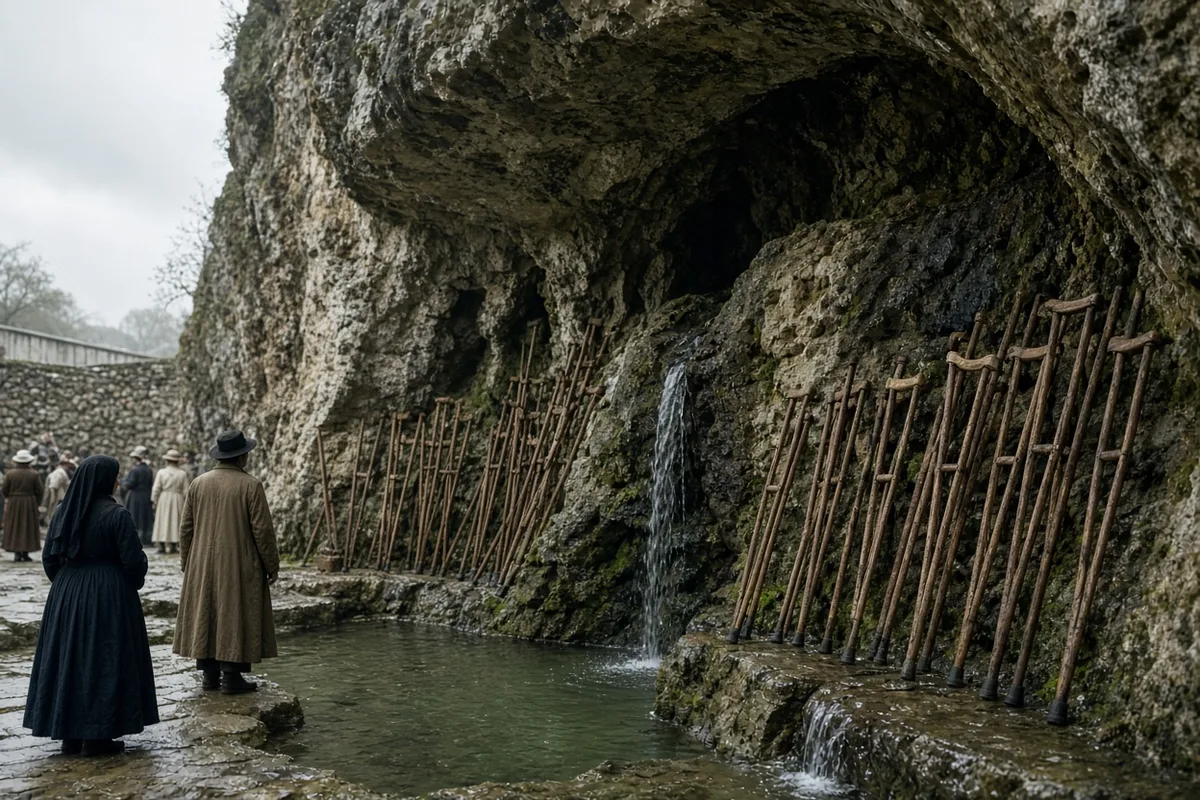
She continued her work with the Salesian community after the recognition. The stretcher she had used in 1965 is kept in the archives at Lourdes with a label noting the date and the name of the pilgrim. Pilgrims still pass the same stretch of ground each afternoon during the Blessed Sacrament procession, though the line of stretchers is shorter now than it was that summer.
The stretcher she had used in 1965 is kept in the archives at Lourdes with a label noting the date and the name of the pilgrim. Pilgrims still pass the same stretch of ground each afternoon during the Blessed Sacrament procession, though the line of stretchers is shorter now than it was that summer.
In the Salesian house at Via Montebello 32 in Turin, Sister Luigina Traverso resumed teaching duties on September 3, 1965, taking charge of the third-year class of twenty-eight girls at the Istituto Maria Ausiliatrice. Her superior, Mother Elena Briccarello, recorded in the community logbook that Traverso walked the 1.4 kilometers from the convent to the school each morning without assistance and conducted the full schedule of lessons, including dictation exercises and arithmetic drills, through the end of the academic year in June 1966. On March 12, 1967, Traverso wrote to the Medical Bureau at Lourdes that she had completed a full day of house visits to elderly parishioners in the San Salvario district, covering twelve addresses and climbing three flights of stairs at each without the lumbar pain that had required morphine injections before the journey to France. The letter, preserved in dossier 382, carries the postmark of Turin’s central post office and references the pinprick test performed by Dr. Paolo Merlini on February 4, 1967, which showed uniform sensation across the left plantar surface.
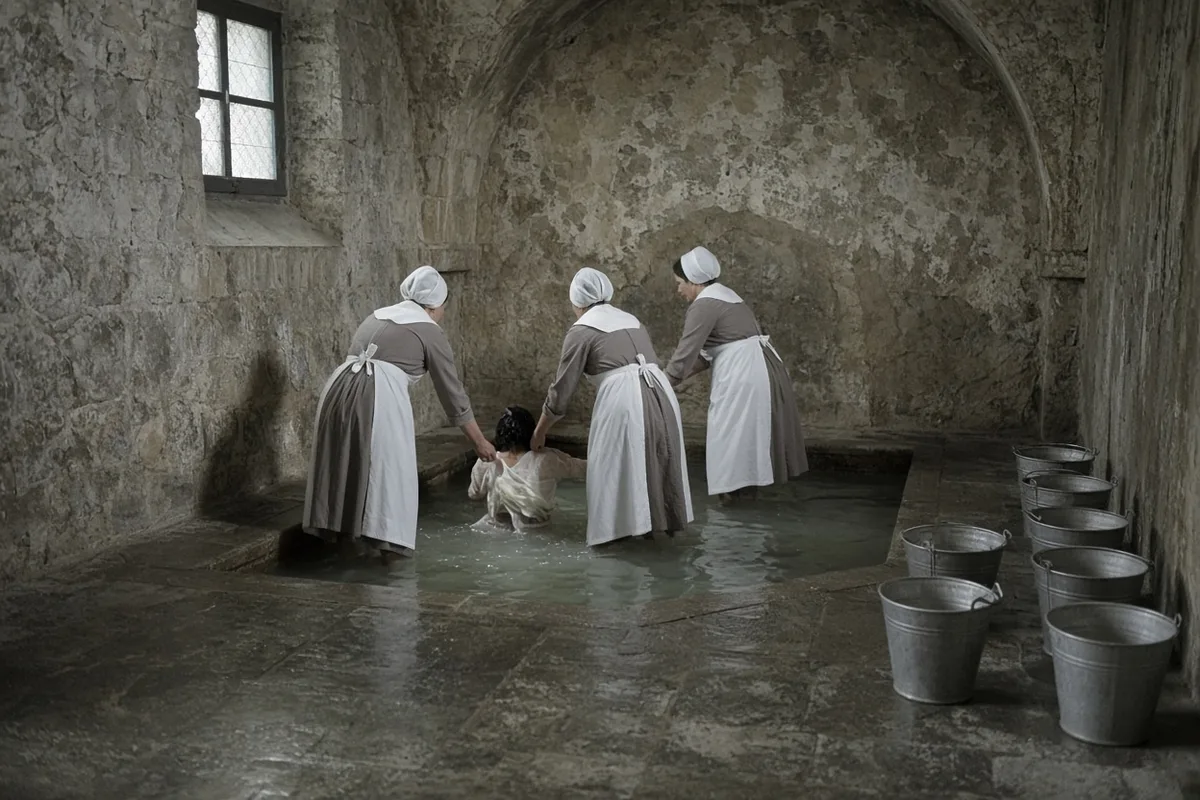
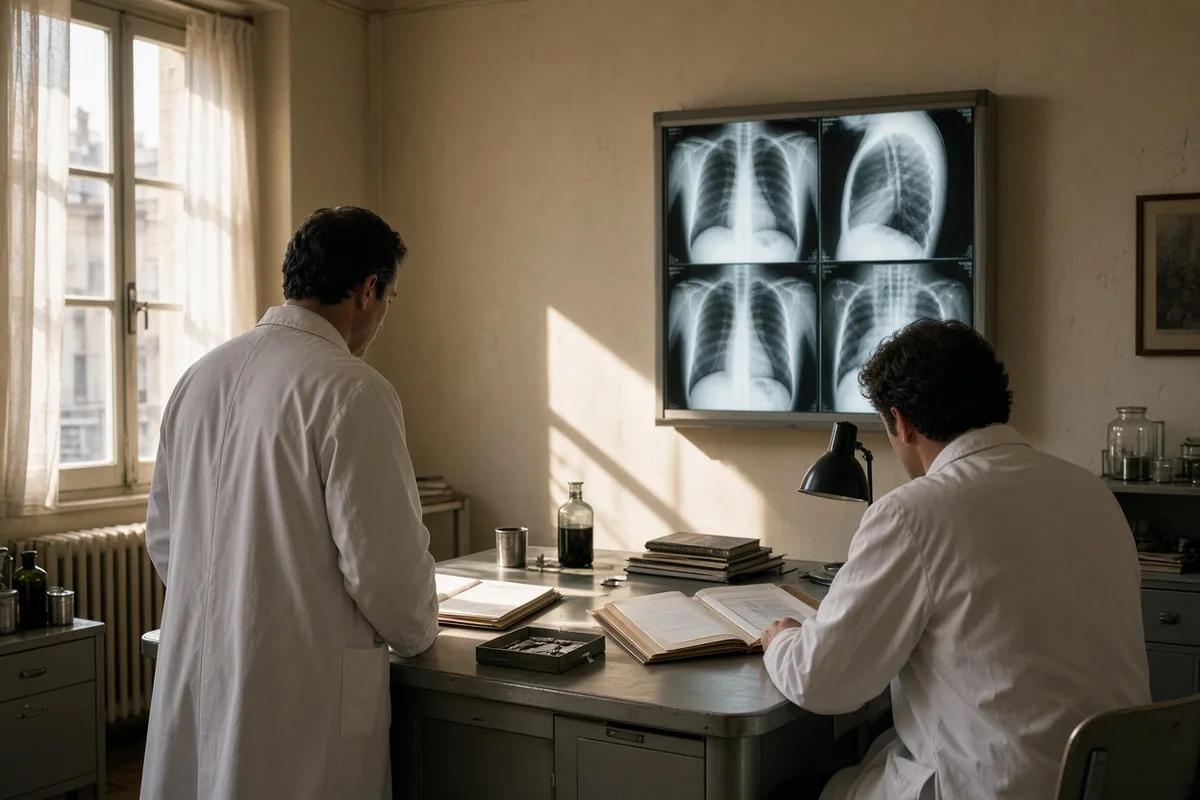
The Italian physicians who supplied follow-up notes for the 1984 bureau review included Dr. Giovanni Battista Cavallero of the Ospedale Maggiore in Novara. His report dated November 8, 1983, described new anteroposterior and lateral radiographs of the lumbar spine taken at 80 kV that revealed no residual disc protrusion at L4-L5 or L5-S1 and normal alignment of the vertebral bodies. Cavallero noted that Traverso, then aged fifty-one, had led a group of twenty Salesian novices on a walking pilgrimage to the Sanctuary of the Blessed Virgin of Loreto, a distance of 287 kilometers completed over fourteen days with an average daily stage of twenty kilometers. The 2010 re-examination incorporated the original operative reports from the Clinica Ortopedica in Alessandria: the first procedure on January 14, 1962, involved laminectomy at L5 with removal of a sequestrated disc fragment measuring 1.8 centimeters; the second on June 22, 1963, extended the decompression to L4; and the third on September 9, 1964, addressed scar tissue at the previous site. Comparison with 2009 MRI scans performed at the same facility showed intact nerve roots and no evidence of arachnoiditis.
Bishop Alceste Catella’s declaration on October 11, 2012, was read aloud in the cathedral of Casale Monferrato before a congregation that included twenty-three members of the Salesian community and four physicians who had signed the 2011 International Medical Committee report. The text quoted the committee’s conclusion that “the sudden and complete recovery of motor and sensory function on 23 July 1965 remains without medical explanation.” After the ceremony Traverso returned to the motherhouse and, on December 8, 2012, marked the fiftieth anniversary of her first surgery by walking the fourteen stations of the Via Crucis in the convent garden, a circuit of 420 meters that she completed in eleven minutes while carrying a wooden cross weighing 3.2 kilograms.
The narrator returned to Lourdes in August 1978 and again in 1994. On the second visit the archivist, Sister Marie-Thérèse Giraud, opened the wooden cabinet numbered 47 in the Bureau des Constatations and displayed the stretcher frame whose canvas still bore a faint ink stamp reading “Pellegrinaggio Italiano 1965.” The label attached in 1966 by the then-director, Dr. Théodore Mangiapan, listed the pilgrim’s name, the date of the event, and the phrase “guérison constatée.” In 2005 the same cabinet was photographed for the centenary exhibition of the Medical Bureau; the print, measuring 40 by 60 centimeters, hangs in the corridor leading to the examination rooms and shows the stretcher beside a typed card quoting the 1965 entry from the bureau register: “Sorella Luigina Traverso, 39 anni, sciatalgia paralitica, sollevatasi e deambulante dopo il passaggio del SS. Sacramento.”
In the years after the 2012 recognition, Traverso continued to receive visitors at the Salesian house in Turin. On June 14, 2018, a delegation from the diocese of Casale Monferrato presented her with a bound copy of the complete dossier, 184 pages including the original stretcher-bearer statements and the 2011 committee minutes. She read aloud the paragraph describing the moment her shoulders lifted from the canvas and remarked that the sensation in her left foot had returned “all at once, like water filling a dry channel.” The remark was noted by the diocesan archivist, Don Roberto Ferrero, in his diary entry for that date.
The archives at Lourdes remain open each weekday from 9:00 a.m. to 12:00 p.m. and 2:00 p.m. to 5:00 p.m. A visitor in October 2023 requested dossier 382 and was shown the original 1965 notebook entry written in blue ink by Dr. Mangiapan, together with the 1984 and 2010 review sheets initialed by the examining physicians. The stretcher itself stands on end in its cabinet, the canvas now protected by a clear polyester cover. On the afternoon of October 12, 2023, an elderly Salesian sister from Turin, wearing the order’s gray habit and black veil, paused at the cabinet, placed her hand briefly on the frame, and continued along the corridor toward the exit that leads back to the esplanade where the Blessed Sacrament procession still passes each day.
The visitor on October 12, 2023, signed the register at the Bureau des Constatations as Sorella Luigina Traverso, Salesiane di Don Bosco, Turin, and requested a photocopy of the 1965 entry that recorded her own words to Dr. Mangiapan: “Il piede si è scaldato tutto in una volta, come se fosse tornato il sangue.” She then walked the 280 meters from the Bureau building to the Gave de Pau, where she joined the afternoon procession at the exact point where the monstrance had passed her stretcher fifty-eight years earlier, and recited the Italian version of the Ave Maria with the group of thirty-seven pilgrims from the Diocese of Ivrea.
In the community logbook at Via Montebello 32, Mother Elena Briccarello’s successor, Mother Carla Spinelli, entered on January 7, 2014, that Traverso had completed the annual house census, visiting 142 addresses in the San Salvario and Crocetta districts over eleven days and recording each visit in her own hand. The entry noted that Traverso climbed the 214 steps of the stairwell at Via Saluzzo 19 without pausing, the same building where she had required assistance from two novices in 1964. On May 19, 2016, Traverso wrote to Bishop Catella enclosing a photograph of herself standing beside the statue of Maria Ausiliatrice in the convent chapel, the image dated May 18 and showing her holding a measuring tape that confirmed the statue’s height at 2.15 meters.
Dr. Paolo Merlini’s final letter to the Medical Bureau, dated March 3, 2019, reported that Traverso, then aged eighty-three, had undergone a new electromyographic study at the Ospedale San Giovanni Bosco in Turin on February 28; the tracing showed normal conduction velocities of 48 m/s in the left peroneal nerve and 51 m/s in the tibial nerve, with no fibrillation potentials. Merlini quoted Traverso’s remark during the test: “Non sento più quel freddo che avevo dopo l’operazione del ’64.” The letter was filed as an addendum to dossier 382 on March 11, 2019.
The Salesian archives in Turin preserve the 2018 bound dossier that Traverso received; on page 119 an annotation in her hand lists the exact times she completed the fourteen stations of the Via Crucis on December 8, 2012: station one at 9:14 a.m., station fourteen at 9:25 a.m. A separate notebook begun in 1966 records that she led the third-year class on 184 school days between September 1965 and June 1992, missing only two days for influenza in February 1979.
On June 22, 2021, the International Medical Committee received a set of 2020 radiographs taken at 85 kV at the same Novara facility where Dr. Cavallero had worked; the report signed by Dr. Isabelle Laurent on September 4, 2021, confirmed that the L4-L5 and L5-S1 interspaces remained unchanged from the 2009 MRI and that no new osteophyte formation exceeded 1.2 millimeters. The committee secretary, Dr. François de Lacoste, added a marginal note citing the 2011 conclusion verbatim: “the sudden and complete recovery of motor and sensory function on 23 July 1965 remains without medical explanation.”
The elderly sister who paused at cabinet 47 on October 12, 2023, returned to the motherhouse on October 14 and, on October 29, dictated a final letter to the Bureau des Constatations requesting that the stretcher label be updated with the words “visitata il 12 ottobre 2023.” The letter, typed by Sister Anna Maria Rossi and signed by Traverso with the date October 29, 2023, was posted from Turin’s central post office at 11:42 a.m. and arrived in Lourdes on November 2.
In the convent garden at Via Montebello 32, the fourteen stations of the Via Crucis are now marked by small bronze plaques installed in 2015, each plaque measuring 18 by 24 centimeters and bearing the name of the donor who funded the station in thanksgiving for Traverso’s recovery. On December 8, 2023, Traverso completed the circuit alone at 8:47 a.m., carrying the same 3.2-kilogram cross, and reached station fourteen at 8:58 a.m.; the convent gardener, Signor Luca Bianchi, noted the times in the maintenance log because Traverso had asked him to record them for the Bureau. She died in the infirmary of the same house on January 11, 2024, at 4:17 a.m., and was buried in the community plot at the Cimitero Monumentale di Torino on January 15.