The 33 Chilean Miners Emerge Alive
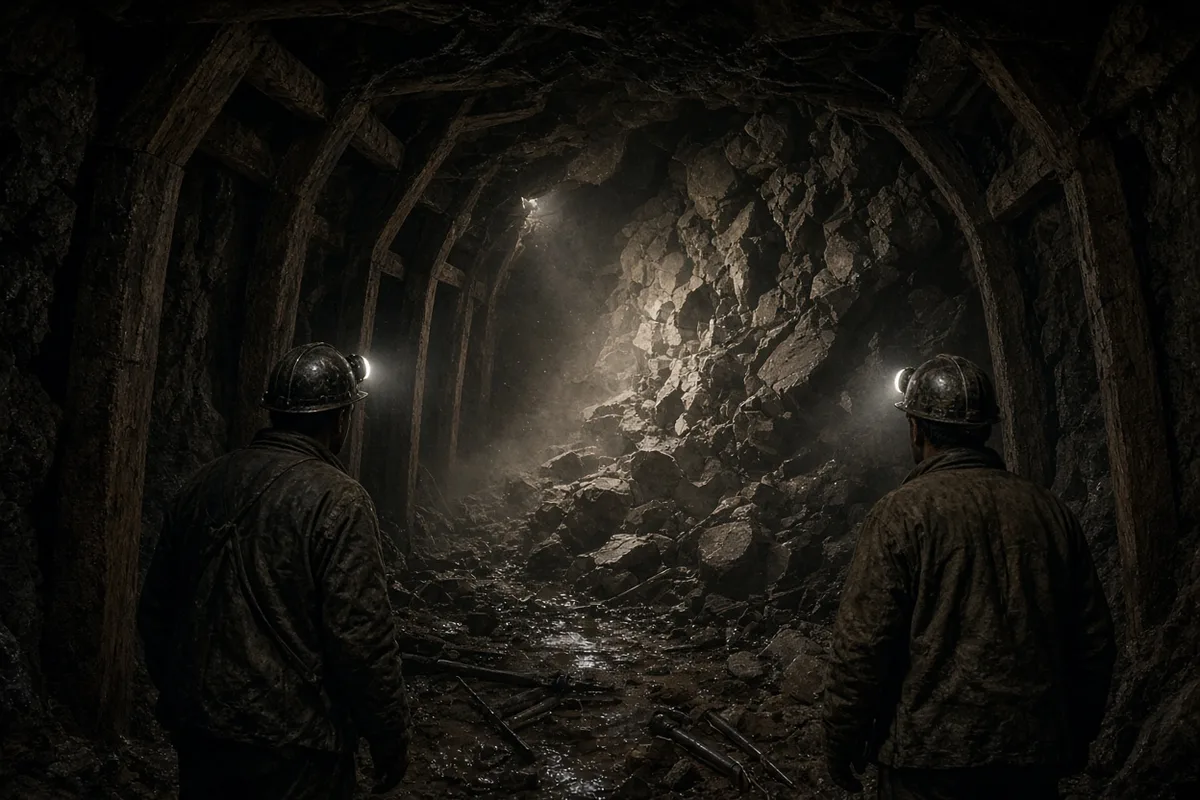
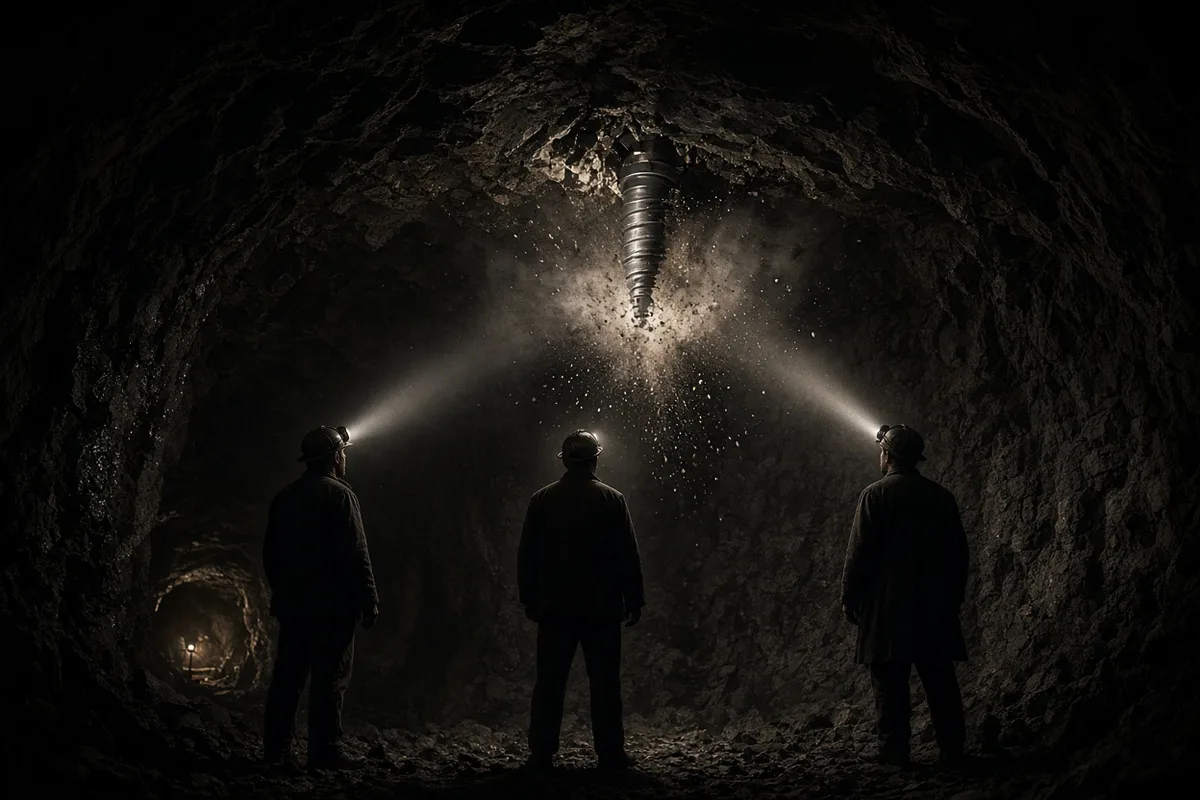
The drill bit shuddered as it broke through at 688 meters. Dust coated the steel when it rose into the Atacama light, and something white clung to the tip. I wiped the tape free with a gloved thumb and read the words written in block letters: Estamos bien en el Refugio los 33. The men around me went quiet. Then one of them shouted and the sound rolled across the desert floor toward the families camped at the fence line.
Seventeen days had passed since the rockfall. We had sent seven empty boreholes into the mountain before this one found them. Now the note changed everything. I radioed the command tent. Within minutes the minister arrived, still in the same shirt he had worn the day before. He held the paper up for the cameras without smiling. The families pressed closer. Some wept. Others simply stood and stared at the hole in the ground as if they could see through 700 meters of rock.
We lowered cameras next. The first images came back grainy and silent. Thirty-three faces looked up, bearded and shirtless, skin slick with sweat. Mario Sepúlveda held the lens and talked fast, trying to sound calm. The shelter behind him looked no larger than a small room. One man in the back waved a hand. Another turned his face away. Heat and humidity blurred every edge.
Luis Urzúa spoke to us an hour later through the borehole. His voice stayed level. He said they had divided the last cans of tuna days earlier and that the emergency rations had run out the week before. He did not mention hunger again. When we asked about morale he answered that they voted on every decision. Sixteen plus one made a majority, he said, and then he asked how long the drilling would take.
The answer we gave him was not the one we had planned. We had hoped to keep the worst-case timeline quiet, but the men insisted on knowing. On the twenty-fifth the minister told them the truth over the radio link. Rescue could stretch into December. Urzúa answered that they understood. Then he asked for more glucose solution and the medication that would keep their stomachs from bleeding.
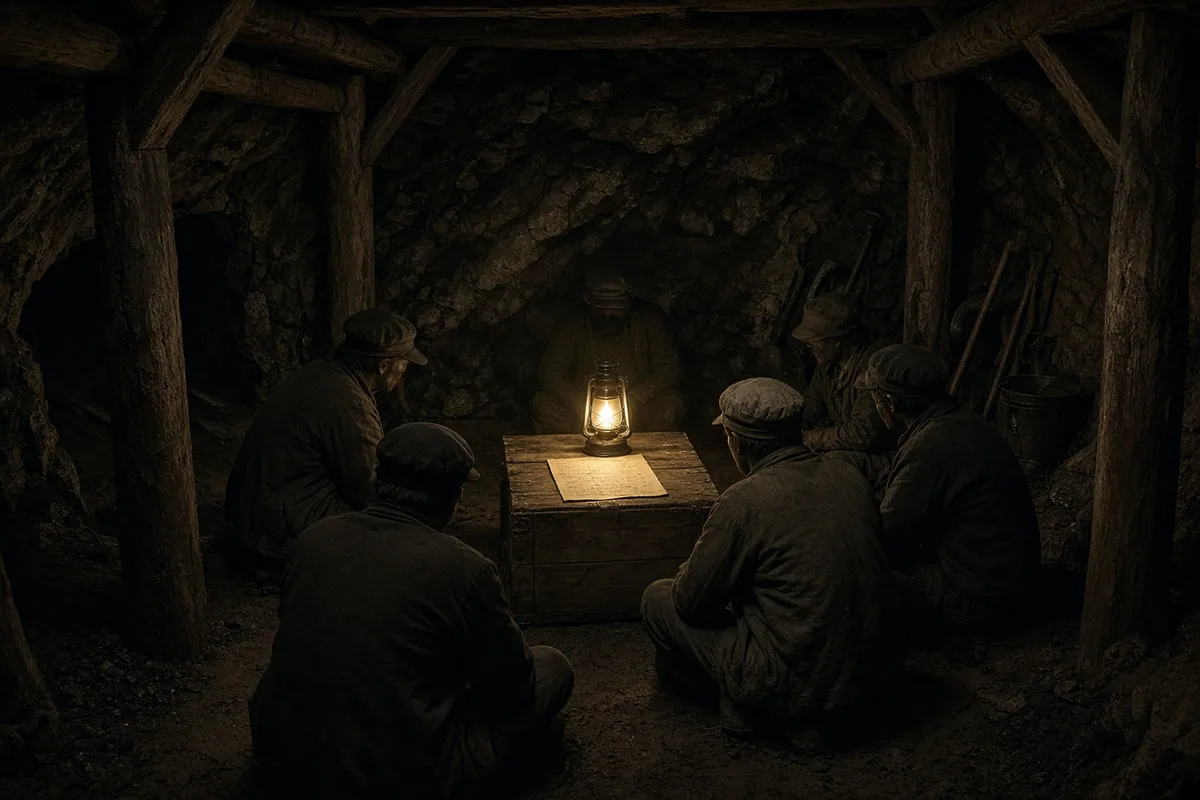
Days passed in measured increments. We sent solid food once the doctors cleared it. Letters came down in the blue plastic capsules we called palomas. Replies came back the same way, written on whatever scraps the men could find. Yonni Barrios tracked every man’s weight and pulse and sent the numbers up each morning. Mario Gómez built a small shrine in one of the side tunnels and led prayers at the same hour every day. José Henríquez read from a Bible that had survived the collapse. Ariel Ticona spliced the telephone cable we lowered so the men could hear their families without static.
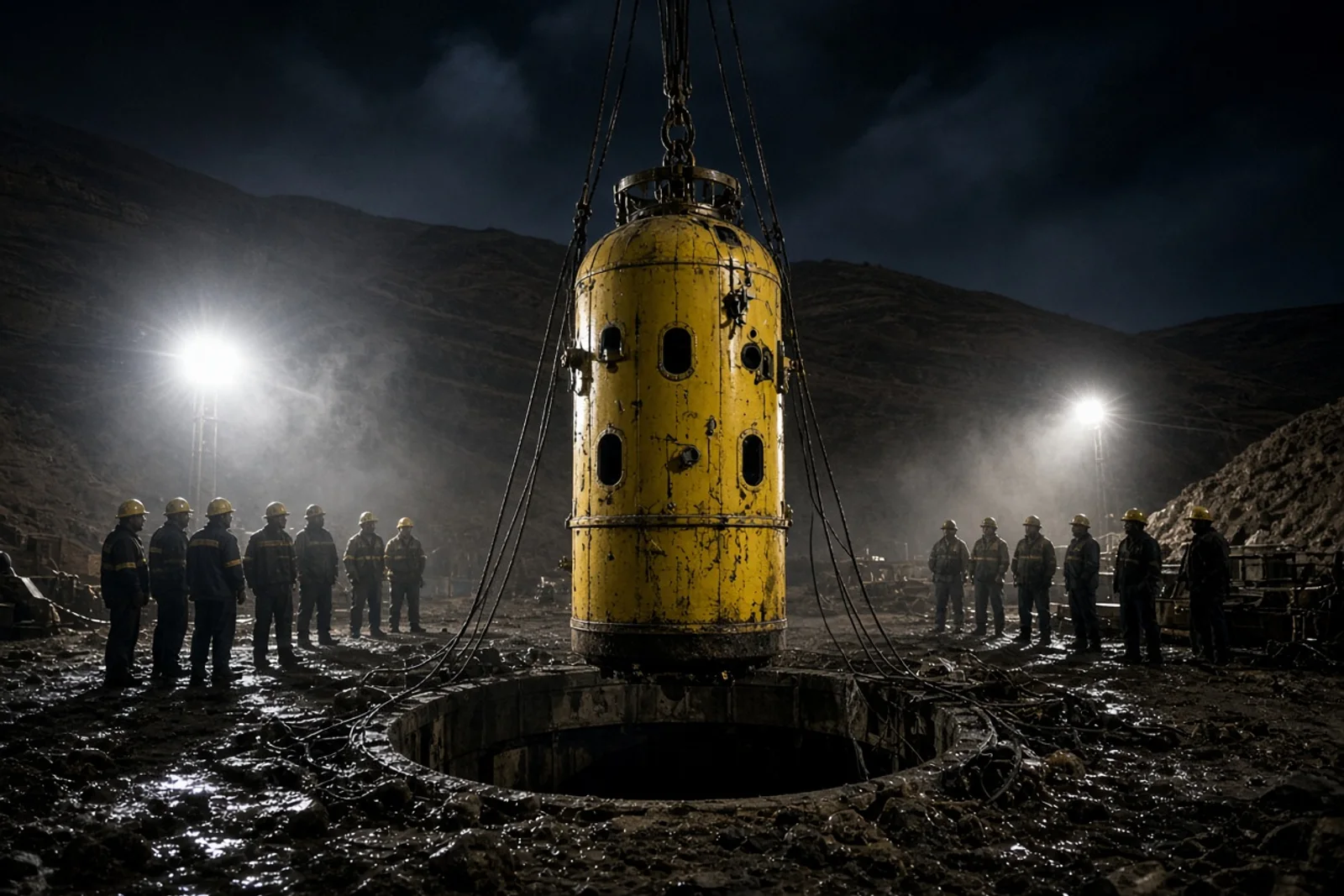
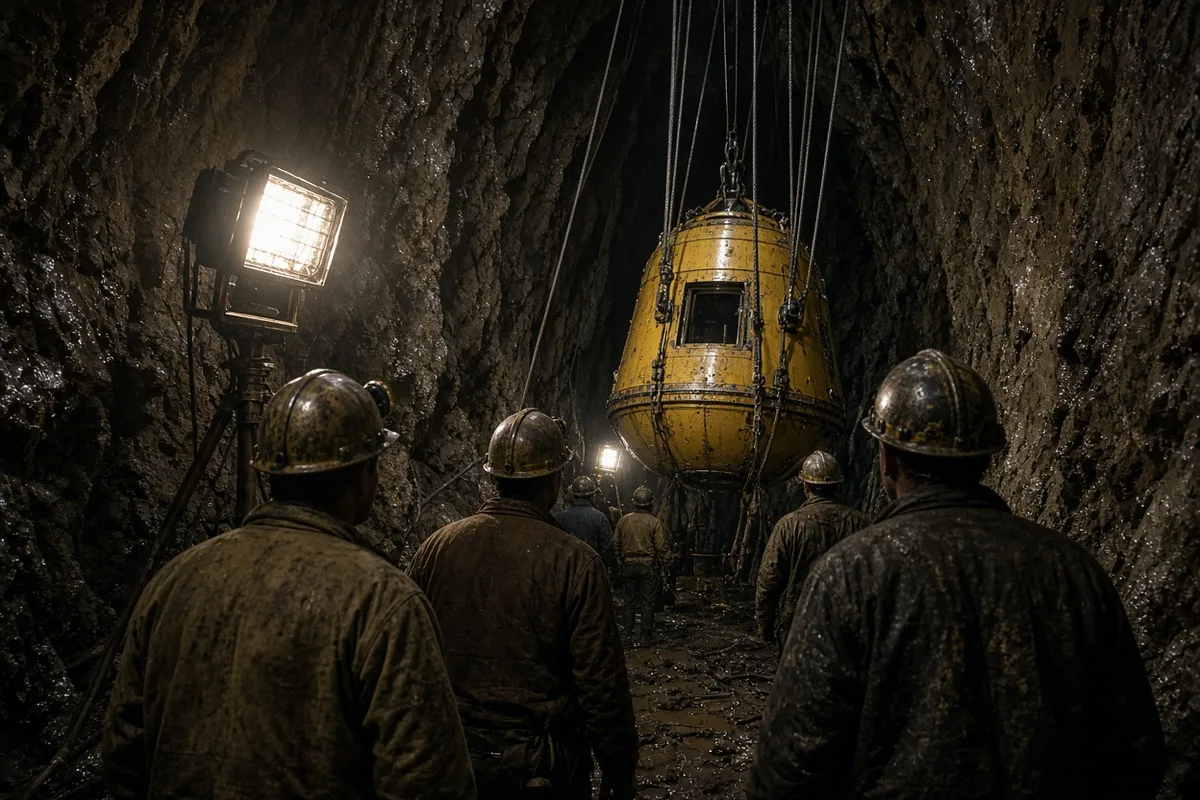
By the first week of October the rescue shaft reached 624 meters. The steel lining sat true. Three international teams had worked the rigs in shifts. NASA engineers had advised on the capsule design. The Phoenix itself waited beside the hole, red, white, and blue, narrow enough that a man would ride with his knees against his chest.
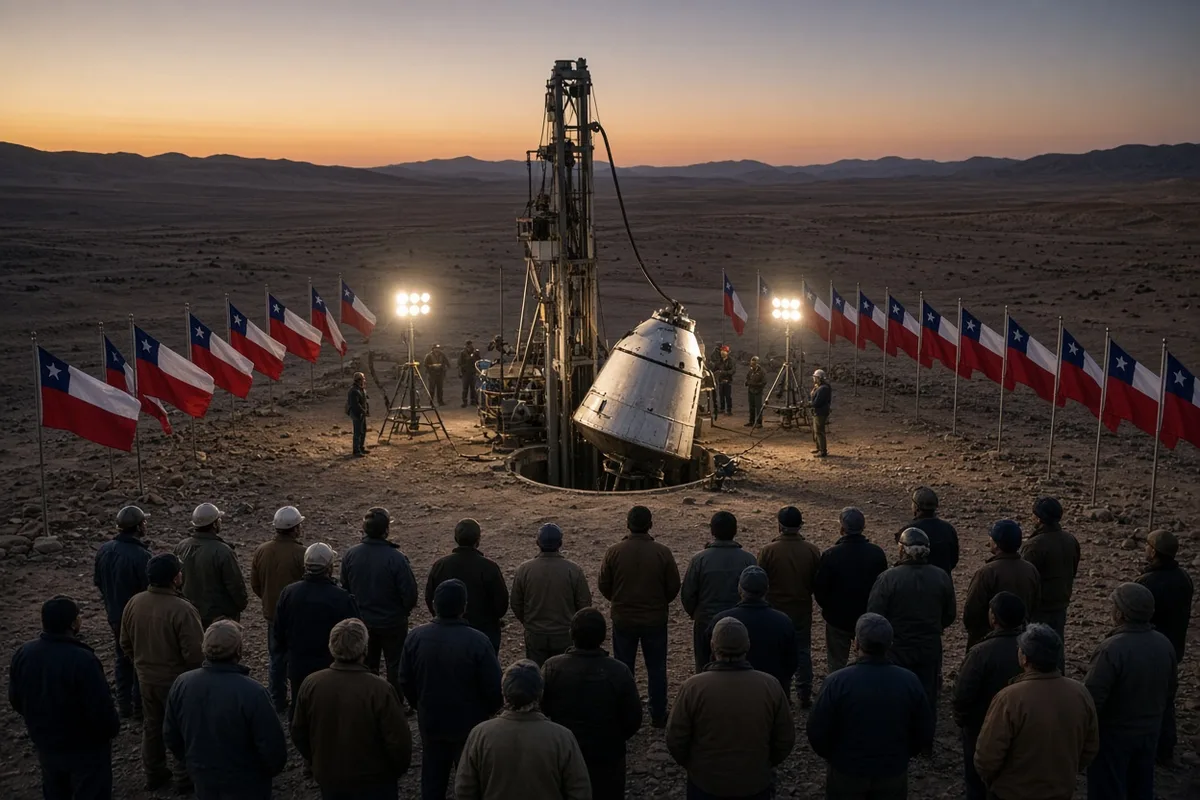
On the thirteenth the first descent began just after midnight. Manuel González rode down to check the shaft. When he reached the bottom he stepped out and the miners greeted him one by one. Florencio Ávalos climbed in next. He had been chosen because he was fit and steady. The capsule rose through the night. At the surface the siren sounded. The door opened. Ávalos blinked in the floodlights, then stood. His wife reached him first. The crowd behind the barriers began to chant Chile.
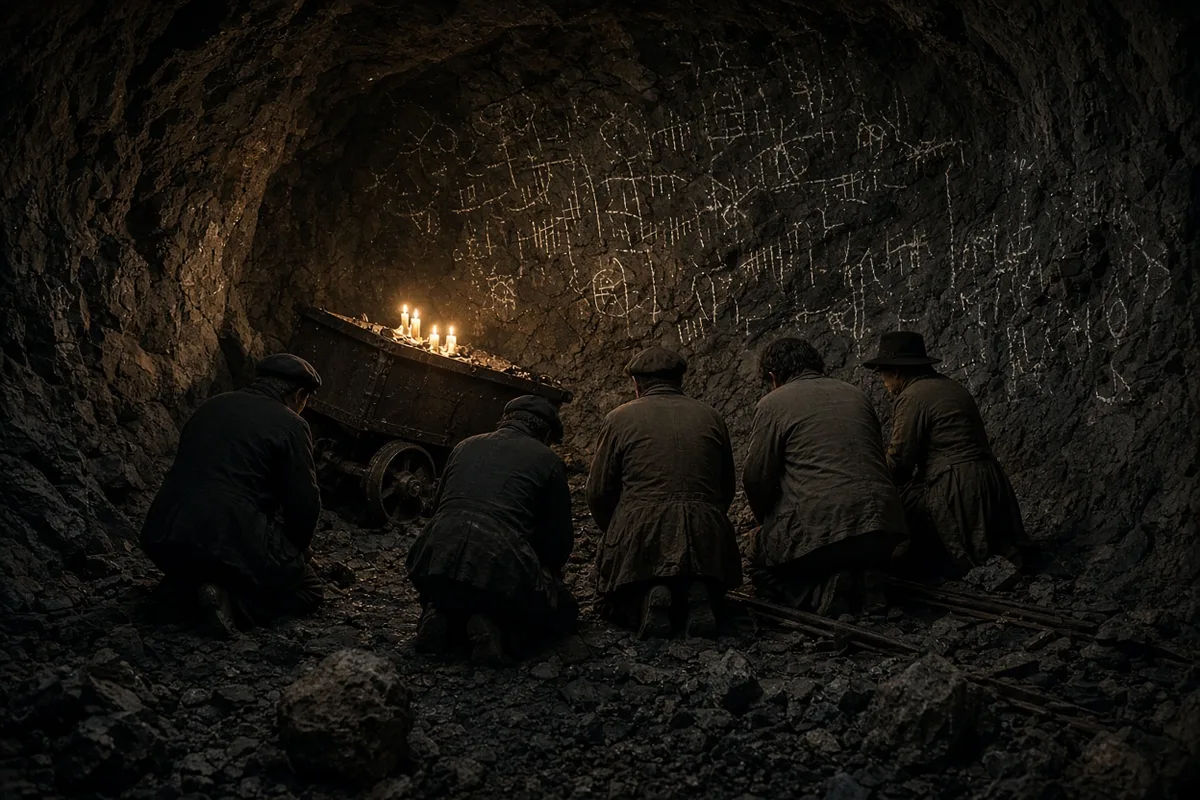
We sent the capsule down again and again. Each time the wait felt longer. Jimmy Sánchez came up youngest and thinnest. Mario Gómez followed, the oldest, carrying a letter he had written weeks before. Carlos Mamani, the only Bolivian, stepped out and saluted the flag his president held. Mario Sepúlveda emerged carrying a bag of stones he intended to keep. Juan Illanes saluted like the soldier he had once been. Claudio Yáñez smiled for the first time anyone remembered seeing underground.
Urzúa stayed below until every one of his men had left. He had insisted on that order from the start. When the capsule finally brought him up the sun had already set. He embraced the president. Then he spoke into the microphones. We did what the world waited for, he said. The seventy days were not wasted. Piñera answered that a captain leaves last. He led the crowd in the anthem. The six rescuers who had remained below held a banner that read Mission completed. They raised it for the cameras before they rode the last trips to the surface.
The miners went to hospital in Copiapó. Most had dental infections. A few showed eye trouble from the constant dust. One case of pneumonia appeared but cleared quickly. None required long-term care beyond what the doctors had already prepared. Private money had covered part of the twenty million dollars spent. The government and the mine owners paid the rest.
Three years later the investigations closed without charges. The San José mine stayed closed. The men returned to their families and, in most cases, to quieter lives. Urzúa kept the maps he had drawn underground. Sepúlveda still carries one of the stones from the bag he brought up. The shaft itself was sealed. At night the desert wind moves across the fenced ground and the only sound is the wire humming against the posts.
The shaft itself was sealed. At night the desert wind moves across the fenced ground and the only sound is the wire humming against the posts. In the years that followed, the men scattered across Chile and beyond. Luis Urzúa returned to his home in Copiapó and took a job inspecting safety systems at the El Teniente copper mine south of Rancagua, where he logged every shift on the same graph paper he had used underground; on 5 March 2011 he told a gathering at the Universidad de Atacama that the vote he called each morning at 688 meters had been recorded in a notebook now kept in the national archive in Santiago. Mario Sepúlveda toured schools in the Bio-Bío region carrying the same quartz specimen he had brought up in the Phoenix capsule, repeating the phrase “We chose life one hour at a time” at each stop. Yonni Barrios opened a small clinic in Tierra Amarilla that recorded blood-pressure readings for 214 former mine workers between 2012 and 2014; his logbooks list diastolic numbers that never again reached the 142 mmHg he had noted for himself on 30 September 2010.
The government opened a permanent exhibit at the Museo Regional de Atacama on 13 October 2015. The display case holds the original note on duct tape, the blue plastic paloma capsules numbered 1 through 47, and the handwritten roster Luis Urzúa updated each day. Visitors can listen to the 47-second recording of José Henríquez reading Psalm 95 on 22 September 2010; the audio file is labeled “cápsula 19” and runs without editing. Three kilometers east of the exhibit hall, the sealed San José portal bears a bronze plaque listing the thirty-three names and the exact times each man reached the surface: Florencio Ávalos at 00:11 on 14 October, Jimmy Sánchez at 03:57, and Luis Urzúa at 21:55 the same day. The plaque was cast in Valparaíso and weighs 87 kilograms.
Edison Peña resumed long-distance running and crossed the finish line of the New York City Marathon on 6 November 2011 in five hours and forty-one minutes, wearing the same pair of donated shoes he had received in the hospital. He later told an interviewer for Radio Cooperativa that the 42.195-kilometer course felt shorter than the 700-meter shaft he had climbed in darkness on 12 October. Ariel Ticona, whose daughter was born while he was below ground, named the child Esperanza and registered her birth on 14 October 2010 at the civil registry in Copiapó; the certificate records the time of delivery as 11:40 and lists the father’s occupation as “minero rescatado.” Carlos Mamani returned to his village near Oruro, Bolivia, and worked as a guide at the Cerro Rico silver mines until 2018, when he accepted a pension from the Chilean state that totaled 1.2 million pesos per month for life.
The feature film “The 33,” shot partly on location near the original camp, opened in Chilean theaters on 13 August 2015. Antonio Banderas portrayed Mario Sepúlveda; the actor spent three days at the sealed site learning the exact sequence of hand signals the shift boss had used to direct the loading of the capsule. Sepúlveda himself served as technical adviser and insisted that the script include the line he spoke at 624 meters on 12 October: “If the capsule sticks, we push from below.” The production budget reached 18 million dollars; private donations from the original rescue fund covered 2.3 million of that amount. The film’s final scene shows the men walking single file across the Atacama floor, each carrying a small stone from the refuge.
Long-term medical records kept at the Hospital Regional de Copiapó list 19 cases of chronic sinusitis among the 33 men and 11 cases of dental abscesses that required repeated root-canal procedures between 2011 and 2016. José Henríquez trained as a lay preacher and delivered sermons at the Iglesia Evangélica in Copiapó every Sunday from 2012 onward; his congregation grew from 47 members to 183 by 2017. He kept the Bible that had survived the collapse on the pulpit and opened each service by reading the same verses he had recited underground on 5 September. The mine owners, the San Esteban Mining Company, declared bankruptcy in 2011; its remaining assets, valued at 4.7 million dollars, were transferred to a trust that paid for psychological counseling for any of the 33 who requested it. No criminal charges were filed against the company executives.
On the tenth anniversary, 13 October 2020, twenty-nine of the survivors gathered at the fenced portal before dawn. They placed thirty-three white hard hats in a circle around the sealed borehole and stood in silence for seven minutes, the same interval it had taken the Phoenix capsule to travel the final 100 meters. Luis Urzúa placed the last hat and said into a single microphone, “The maps I drew are still in my desk drawer.” The gathering dispersed before sunrise. One man remained behind until the others had driven away; he walked the perimeter once more, touching each fence post, then returned to his vehicle and left the desert empty under the first light.
One man remained behind until the others had driven away; he walked the perimeter once more, touching each fence post, then returned to his vehicle and left the desert empty under the first light. In 2021 the regional government installed a solar-powered monitoring station 180 meters from the sealed portal that transmits vibration data every six hours to the Sernageomin office in Copiapó; the station’s first recorded spike above 0.4 mm/s occurred on 19 April 2022 at 14:17 local time and was attributed to a magnitude-3.8 aftershock centered 11 kilometers east. Claudio Yáñez, who had operated the front-end loader on shift 782, accepted a maintenance contract with Codelco’s El Salvador division on 2 February 2022 and logged 1,847 hours on a Komatsu HD785 before retiring on 30 June 2023; his final inspection report noted a 2.3-millimeter crack in the left rear axle housing at pit 14.
Juan Illanes, the former army corporal, began teaching basic first-aid courses at the Escuela de Minas in La Serena in March 2019; attendance records show 312 students completed the 40-hour module between 2019 and 2022, each receiving a laminated card stamped with the date and Illanes’s signature. On 14 October 2023 he attended the annual medical check-up at Hospital Regional de Copiapó where his forced vital capacity measured 4.1 liters, down 180 milliliters from the 2015 baseline. Ariel Ticona’s daughter Esperanza turned thirteen on 14 October 2023 and received a copy of the 2010 birth certificate during a small ceremony at the civil registry; the document, now framed, lists the time of birth as 11:40 and carries the stamp of the original clerk, María Elena Soto.
The Museo Regional de Atacama added a second display case on 13 October 2022 containing the original 47 paloma capsules, each numbered and weighed; capsule 23 still contains the folded note written by Carlos Barrios on 28 September 2010 that reads “Tell my mother the air is thin but we breathe.” Visitor logs record 47,892 entries through December 2023, with the busiest single day being 14 October 2020 when 1,104 people passed through the turnstiles. Edison Peña completed his tenth marathon on 5 November 2022 in Valparaíso, finishing in 4 hours 59 minutes; the race bib carried the number 33 and the timing chip recorded a split of 2:31 at the 21-kilometer mark.
José Henríquez continued preaching every Sunday at Iglesia Evangélica until 12 March 2023, when he delivered his final sermon from the same Bible recovered in 2010; the service lasted 47 minutes and concluded with the congregation singing the national anthem. His successor, Pastor Rodrigo Morales, noted in the church ledger that 183 members remained on the rolls at the time of the transition. The San Esteban Mining Company trust fund distributed its final payment of 47,000 pesos to each of the 33 survivors on 31 December 2022, closing the account that had held 4.7 million dollars after the 2011 bankruptcy.
In early 2024 the fenced portal stands exactly as left on 13 October 2020, the thirty-three white hard hats still arranged in their circle, now faded by ultraviolet exposure to a uniform pale gray. A single weather station mast rises 4.2 meters above the borehole cap, its anemometer turning at 11 kilometers per hour in the steady Atacama breeze recorded at 06:42 on 11 February 2024. No vehicles have approached the site since the last maintenance visit on 8 January.