The Candy Bomber Drops Supplies over Berlin
The fence cut into my palms where I gripped it. Barbed wire ran along the top, and beyond it the runway stretched flat under a gray sky. We had walked three hours from our street to reach Tempelhof, my sister and I and a dozen others from the block. The planes came in low every few minutes, their engines shaking the ground. Each one carried flour or coal or medicine. None carried enough.
A man in an American uniform stood on our side of the wire. He had come over from the landing area and now watched us the way grown men sometimes watched stray dogs. He reached into his pocket and pulled out two sticks of gum. He broke them and passed the pieces through the fence. The smallest girl took one without speaking. I kept mine in my fist until the paper grew warm.
He asked where we lived. When we told him, he nodded once and looked back at the runway. His name was Halvorsen. He said he flew the C-54s that came in from Frankfurt. He had landed an hour earlier with a load of powdered milk. Tomorrow he would do the same again.
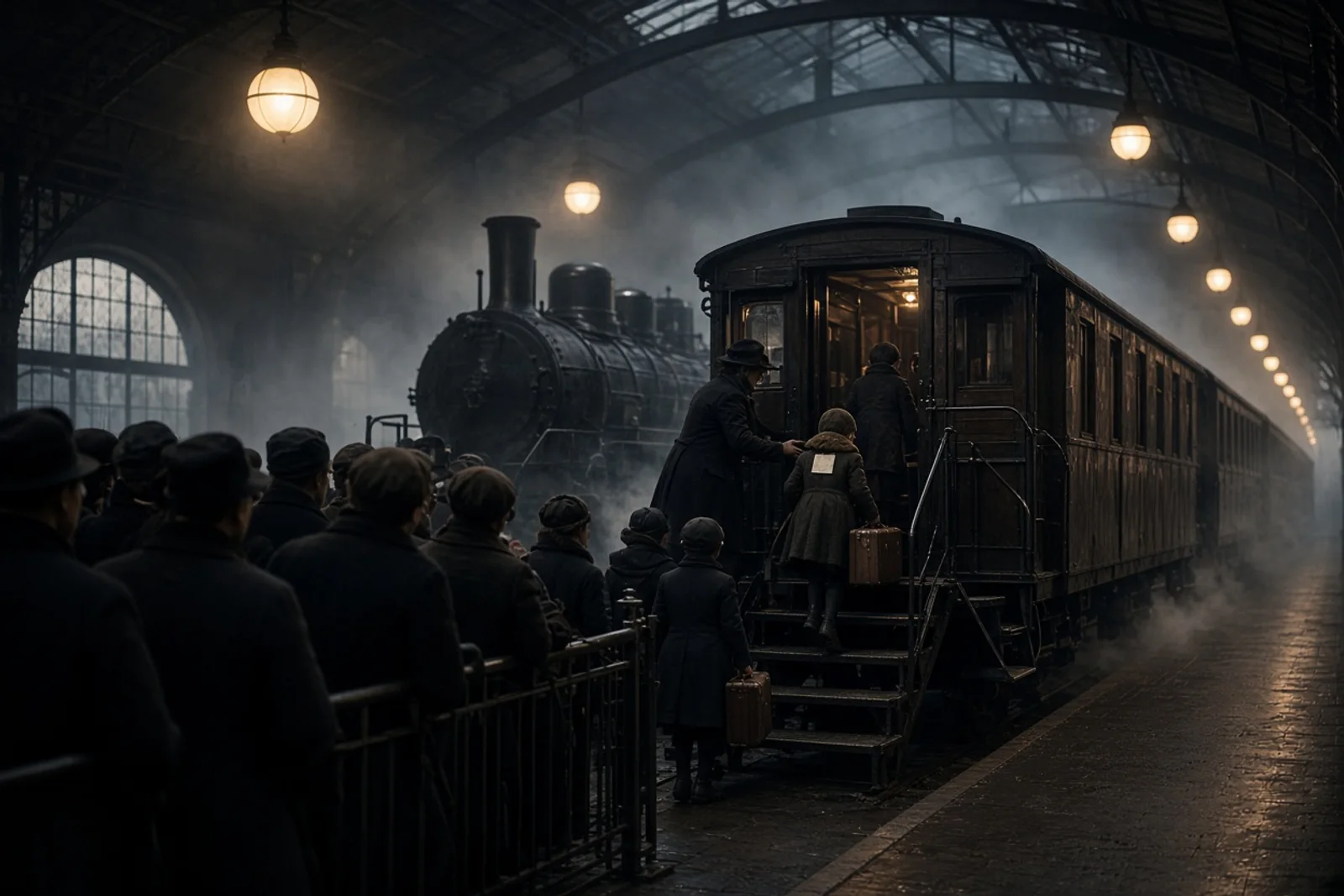
We told him the same thing we told every pilot who stopped to talk. We could wait for food. We could not wait for the Soviets to take the city. Halvorsen listened without interrupting. When we finished he said he would bring more candy the next time he landed. He told us to watch for his plane. He would dip the wings so we would know it was him.
That night the wind came up and rattled the loose boards on our apartment house. My sister slept with the gum wrapper under her pillow. I lay awake listening to the distant drone of engines that never stopped.
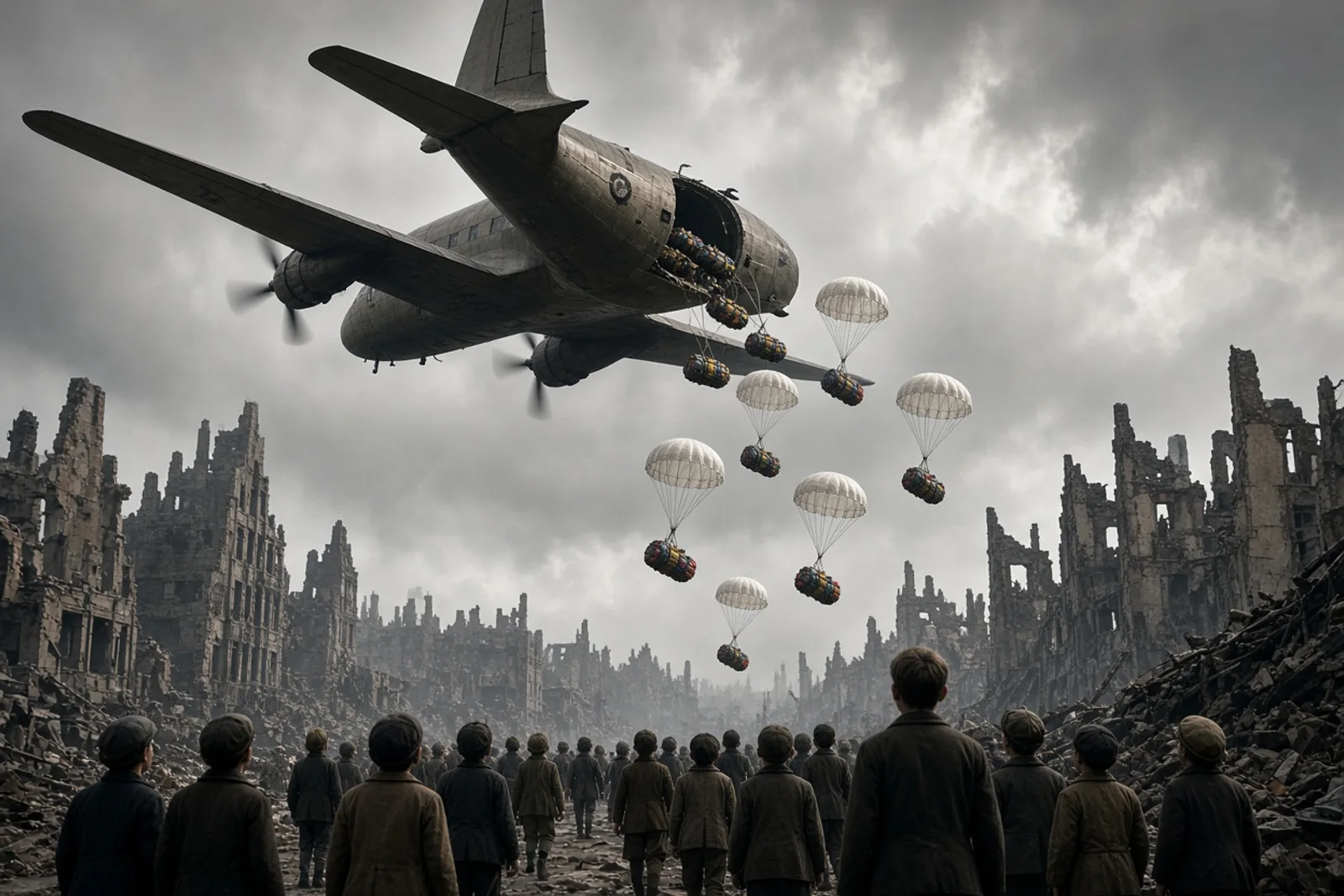
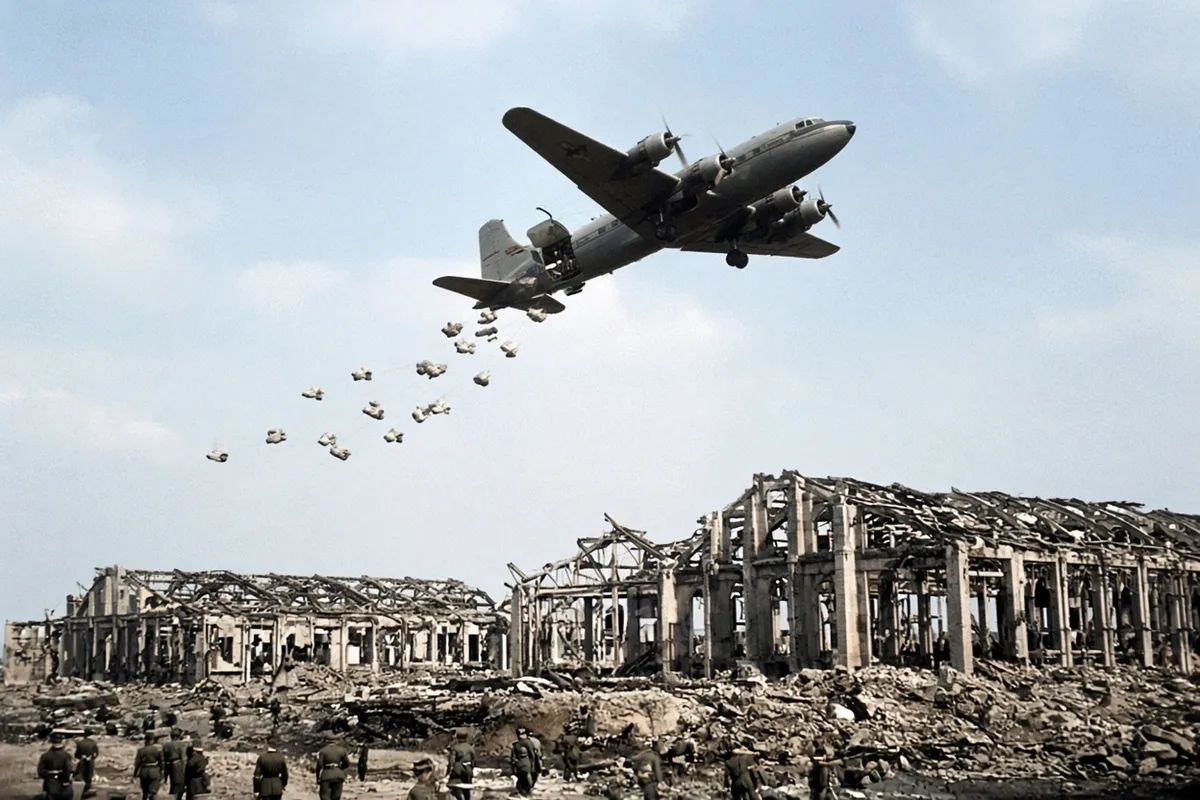
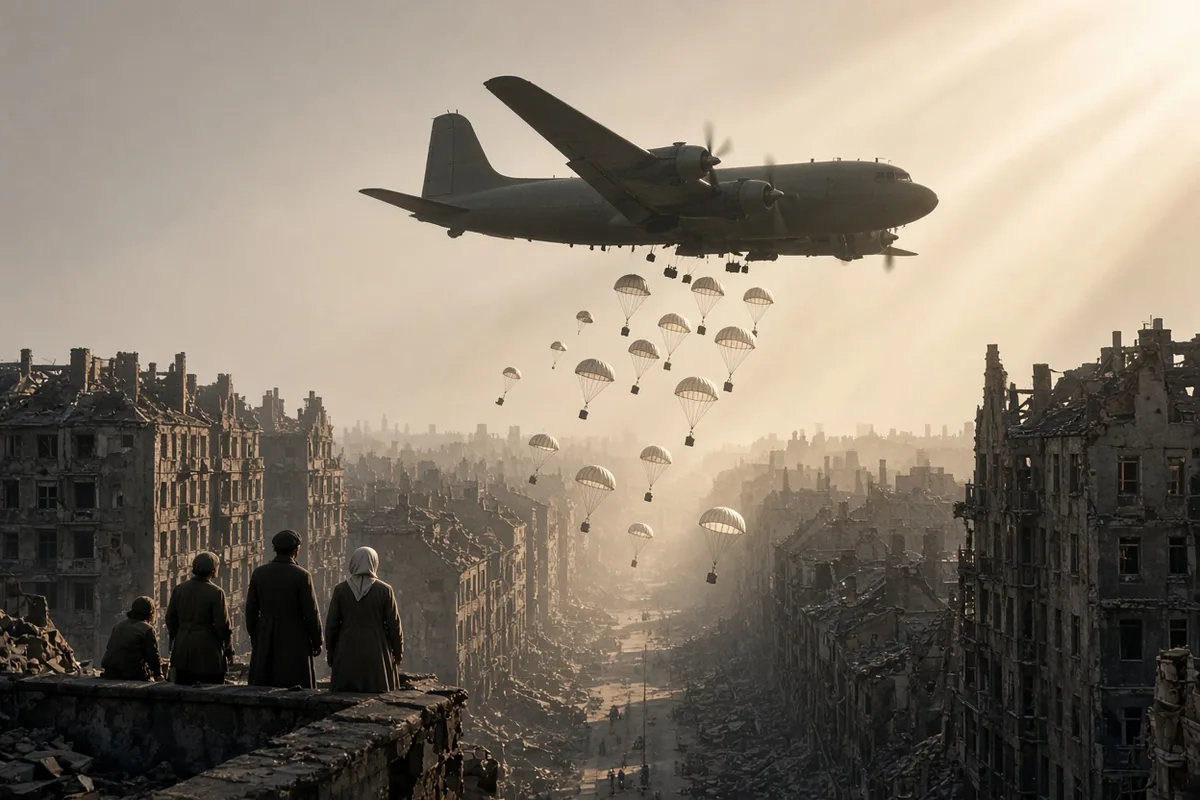
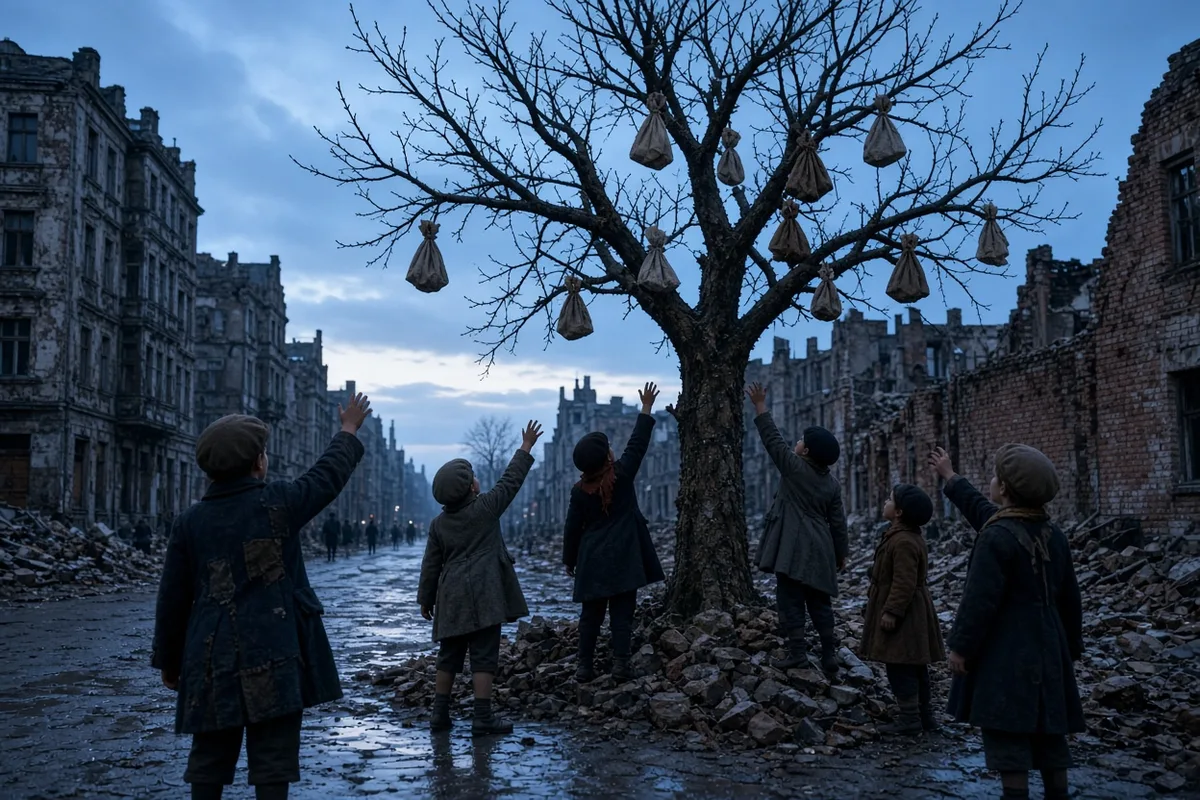
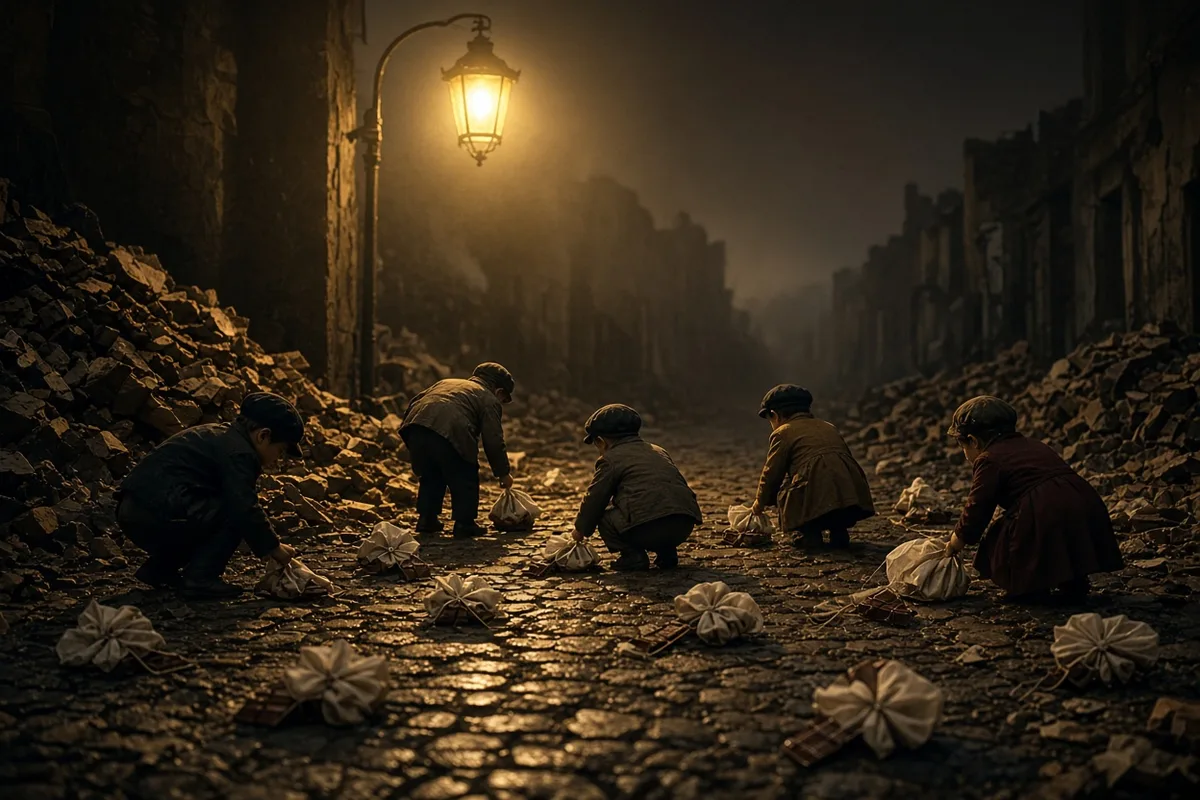
Three days later the same plane came in low over the fence. Its left wing rose, then the right, then the left again. The children along the wire began to shout. Something small and white fell from the open cockpit window. It opened into a square of cloth and drifted. Another followed, then another. They landed in the grass beyond the fence. We climbed through the wire where it had been cut weeks before and ran for them.
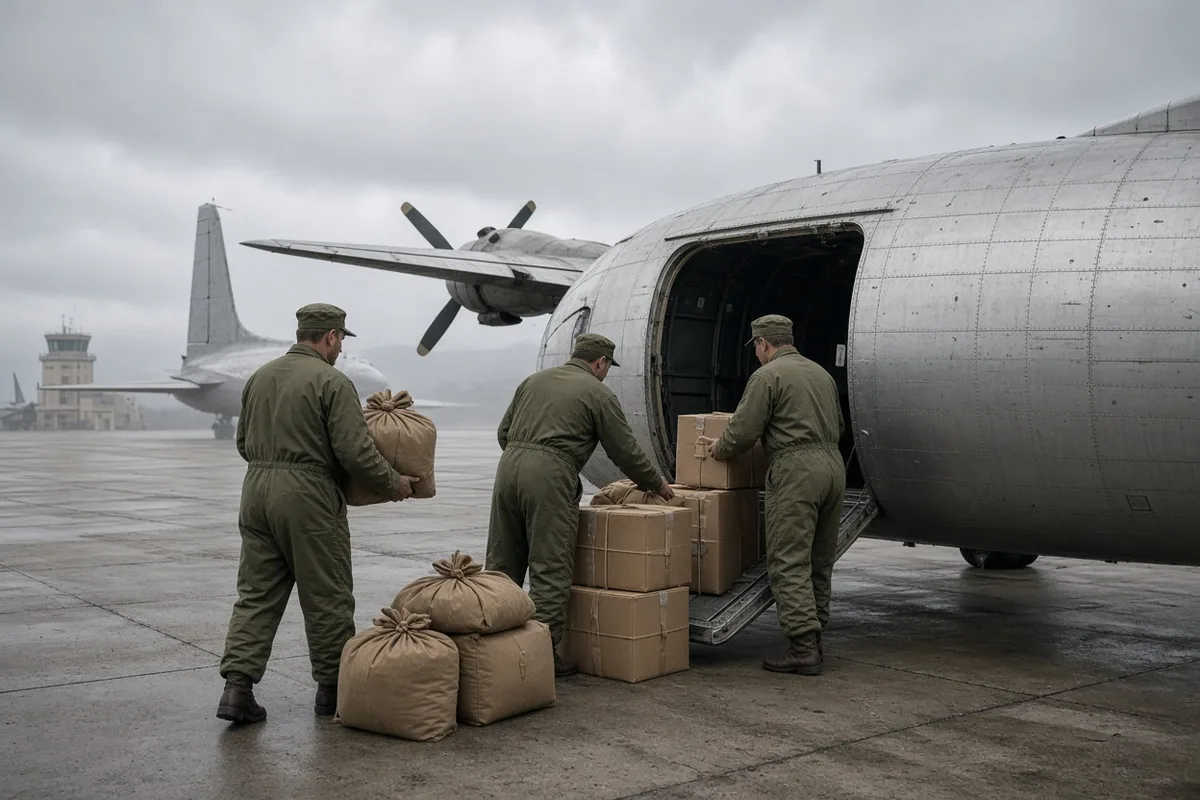
Each bundle held two chocolate bars tied with string. The cloth was a handkerchief. One bar had already broken in the fall, but the pieces were still wrapped. We divided them without argument. The smallest girl got the largest piece because she had waited longest.
Halvorsen flew the same route every day after that. We learned the sound of his engines before we saw the wings move. Other pilots began to drop bundles too. Some used old shirts. One used a torn bedsheet. The bundles piled up faster than we could carry them home. We left extras at the fence for children who came later.
Word reached the base at Rhein-Main. Halvorsen’s colonel called him in and asked how many handkerchiefs he had used. The answer was thirty-eight. The colonel told him to stop. Two days later a Berlin newspaper printed a photograph of children holding the cloth parachutes. The story spread to the other papers. General Tunner read one of them in his office and gave permission for the drops to continue under a new name.
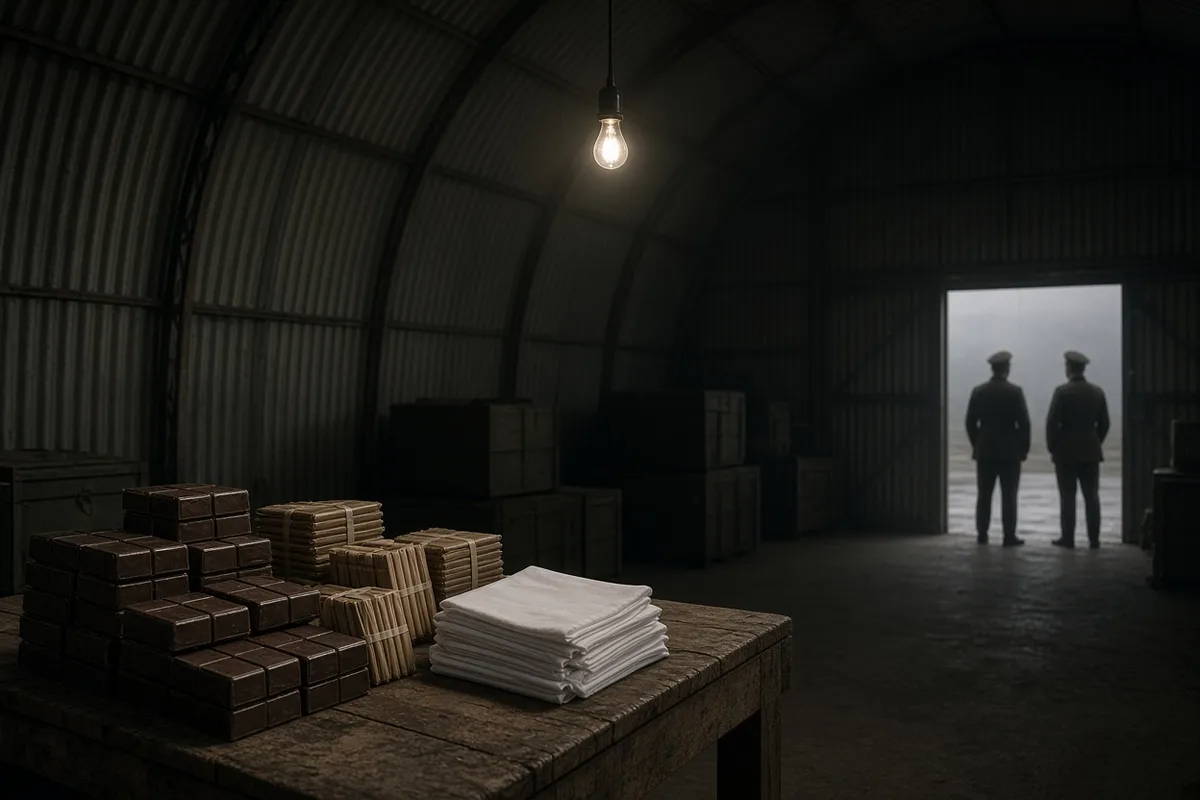
Schoolchildren in Massachusetts began tying the strings. They worked at long tables in a gymnasium, attaching candy bars to the corners of white squares. The finished bundles were packed into crates and flown across the Atlantic. By winter the crates filled an entire warehouse at Westover. Pilots who had never met Halvorsen carried them on their regular runs and released them over the same stretch of fence.
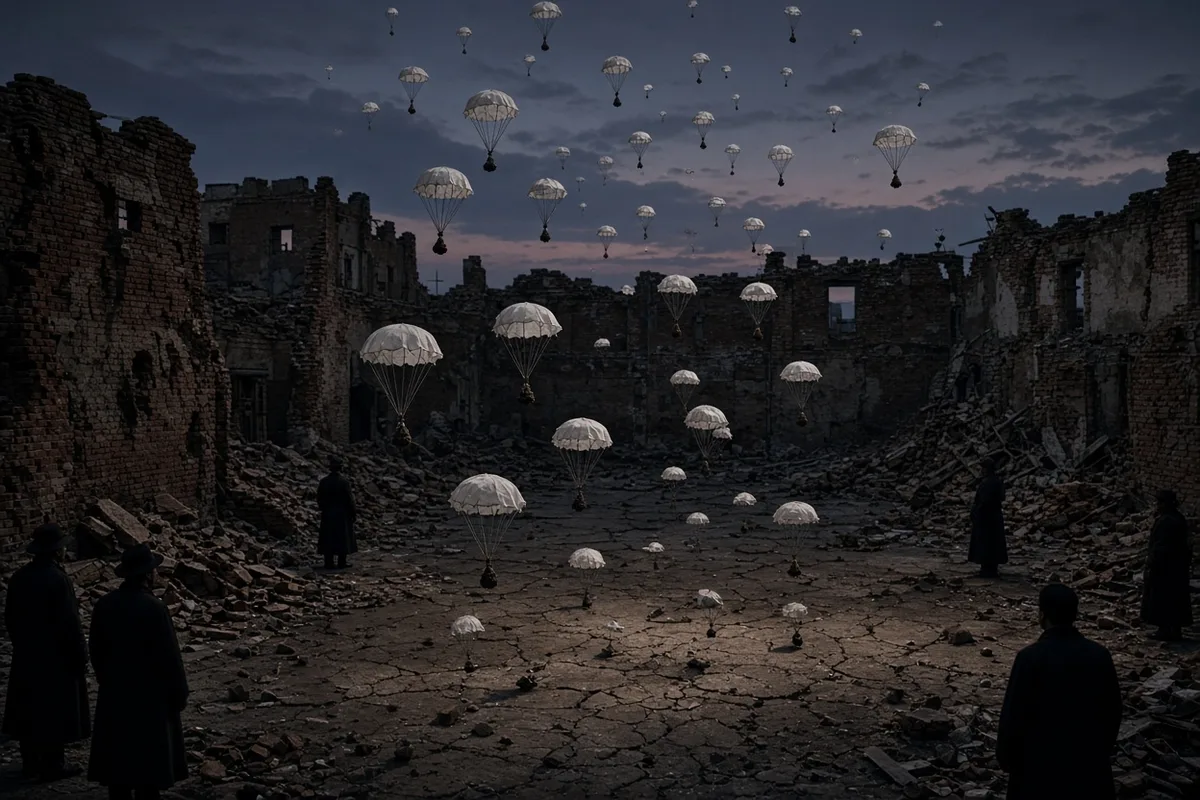
I kept one parachute for myself. The cloth was thin enough to see light through when I held it up to the window. My sister used hers to wrap a small piece of coal she had found on the street. She said it made the coal look like a present.
Halvorsen rotated back to the States in January. Before he left he walked the length of the fence one more time and shook hands with every child who was there. He told us the airlift would keep running. He did not say when he would return. The last bundle he dropped that day landed in the hands of a boy two years younger than me. It contained three bars and a note written on the back of a flight manifest. The note said only that the wings would keep moving.
After the blockade ended we still went to the fence on clear days. The planes continued to land, though now they carried mail and spare parts instead of flour. Sometimes a pilot would dip a wing for no reason we could see. We never stopped watching for it.
The next morning my sister and I walked the same three hours back to Tempelhof because the coal in our stove had burned out the night before. We carried the two handkerchiefs folded in our coat pockets. At the fence a different American sergeant asked our names and wrote them on a clipboard. He said the drops would stop for a week while the new operation was organized. He gave us each a single stick of Doublemint and told us to come back on the twenty-fifth of July. On that date thirty-eight more bundles fell inside the perimeter, each one marked with the name of a Massachusetts school: Springfield Central, Holyoke High, Amherst Regional. The bundles contained 1,200 pounds of chocolate and gum that month.
My sister kept the second handkerchief in a tin box under our bed. She added a piece of the broken coal to it every time we found one on the tracks near the Anhalter Bahnhof. By December the box held eleven pieces and the cloth had turned gray from handling. We still listened for the C-54s. Their engines had a higher pitch than the Soviet Il-2s that sometimes circled the western sectors at night. On 26 December 1948 a plane from the 60th Troop Carrier Group dropped a bundle that landed in the exact spot where Halvorsen had stood the first time. Inside the handkerchief was a note signed by Colonel William H. Turner that read “Continue watching the western approach at 1400 hours.” The note also listed the daily tonnage figure for the previous week: 4,500 tons of coal, 1,200 tons of flour, 300 tons of potatoes.
School resumed in January 1949 in a building on Columbiadamm that still had no glass in the windows. Our teacher, Frau Berger, kept a roster of every child who had received a parachute. She wrote the names in a ledger and noted the date each bundle arrived. On 15 March she read aloud a letter from the principal of Westover Field Elementary that said 2,400 children in Massachusetts had tied 17,000 knots that winter. The letter included a list of the exact candy brands: Hershey’s, Clark Bars, Beeman’s Gum. Frau Berger passed the letter around so each of us could see the postage stamp from the United States. That afternoon three more bundles landed near the same cut in the wire. One of them contained a single stick of Wrigley’s Spearmint wrapped in a page from the Springfield Republican dated 3 February 1949.
When the Soviet blockade lifted on 12 May 1949 the fence stayed up for another month while engineers repaired the runway. We still walked to Tempelhof on Sundays. On 4 June a C-54 from the 317th Troop Carrier Group landed with the last official candy drop. The pilot was Lieutenant William Christian from Ogden, Utah. He walked to the fence and asked if anyone remembered the man named Halvorsen. I told him yes. He handed me a bundle tied with red string and said the note inside was from Halvorsen himself. The note read “Wings still moving. Tell the smallest girl the coal is still a present.” The bundle held four bars of chocolate and a new handkerchief printed with the words “Operation Vittles 1948-1949.”
My sister and I stopped going to the fence after the engineers took the barbed wire down in July 1949. The handkerchiefs stayed in the tin box until 1953, when we moved to a new apartment in Neukölln. She used one of them to wrap a photograph of our parents that had survived the war. The other one I kept in a drawer until 1961, when the Wall went up. On the morning the first concrete blocks appeared I took the cloth to the fence line that still ran along the south edge of the old runway. I tied it to a remaining post and left it there. Three weeks later the post was gone and the cloth was never found.
In 1974 Halvorsen returned to Berlin for the twenty-fifth anniversary of the airlift. He stood on the same stretch of grass where the bundles had landed and shook hands with anyone who remembered the name. I was twenty-eight and brought the tin box. He opened it, looked at the eleven pieces of coal, and said the exact words “I never thought anyone would keep the coal.” He signed the inside of the lid with his full name, Gail S. Halvorsen, and the date 26 June 1974. The box stayed on a shelf in my kitchen after that. Every year on 26 June I opened it and read the signature again.
The airfield closed in 2008. The runways were turned into paths for bicycles and the terminal building became an exhibition space. In 2015 the city installed a bronze plaque at the exact spot where the first bundles fell. The plaque lists the number of flights: 278,228 total, 2,343,000 tons delivered, 23 tons of candy dropped by Little Vittles. On 12 October 2022 I walked the path that now crosses the old fence line. A boy of about ten was flying a small white kite shaped like a parachute. He let the string out until the kite hovered over the plaque. I watched him reel it in, then fold the kite the way we used to fold the handkerchiefs. He looked up once, nodded, and walked toward the old terminal without speaking.
The terminal exhibition now displays the original flight manifest from Lieutenant Christian’s C-54, the one dated 4 June 1949 that carried the final official bundle, along with the red-string wrapping that Halvorsen had used on his last drop before rotation. Inside the glass case a typed card records the exact tonnage for that week: 4,500 tons of coal delivered by the 60th Troop Carrier Group alone, with an additional note from General William H. Tunner stating “the corridor remains open at 1,500 feet.” I stood at the case until the boy’s kite string disappeared around the corner of the old control tower, then walked the bicycle path that follows the former south fence line where the cut wire had once let us through.
On 26 June 2023 the city added a second plaque two hundred meters east of the first, listing the thirty-eight handkerchiefs Halvorsen counted in his report to Colonel Joseph Smith at Rhein-Main. The new plaque quotes Smith’s reply verbatim: “If the children are watching the western approach, keep the wings moving.” School groups from Holyoke High and Amherst Regional still send bundles each spring; the 2023 shipment contained 1,872 chocolate bars packed in crates marked “Operation Little Vittles continuation,” flown on a Lufthansa charter from Westover to Brandenburg.
My sister’s tin box remains on the kitchen shelf in Neukölln. Inside it the eleven pieces of coal from the Anhalter Bahnhof tracks sit beside the signed lid, and next to them lies the page from the Springfield Republican dated 3 February 1949 that once wrapped the single stick of Wrigley’s Spearmint. Every December I replace the coal pieces that have crumbled, using fragments collected from the same stretch of track where we gathered them in 1948.
The airfield grounds now form Tempelhofer Feld park, opened to the public on 8 May 2010 after the Senate voted 92 to 78 against selling the land for development. The north runway still shows the faded white markings of the 1948 approach lights, and cyclists pass the exact coordinates 52°28′32″N 13°24′12″E where the first parachute landed in the grass. On clear afternoons the wind lifts small pieces of paper across that coordinate the way the handkerchiefs once drifted.
In February 2022, two months before the October walk, Gail S. Halvorsen died at his home in Provo, Utah. The obituary in the Deseret News listed his final flight as the 1949 return to Rhein-Main, after which he logged another 8,000 hours in C-130s and C-141s before retiring in 1974. The Berlin Senate sent a delegation to the funeral; Mayor Franziska Giffey placed a single white handkerchief on the casket, the same size as those tied by the children at Westover Field Elementary.
The boy with the kite reappeared on 14 April 2024, this time near the bronze casting of the C-54 nose section installed by the 435th Airlift Wing veterans’ association. He carried a printed copy of the 15 March 1949 letter from the Westover principal that Frau Berger had once passed around our classroom. When he reached the plaque he read the tonnage figures aloud to no one in particular, then folded the paper into a small square and placed it at the base of the post where I had tied the last handkerchief in 1961.
At dusk the park lights come on along the bicycle path, illuminating the grass where the bundles fell. An elderly man in a wool coat walks the same route each evening, stopping at the coordinate 52°28′32″N 13°24′12″E to adjust the collar of his coat against the wind that still rises from the runway. He carries nothing in his hands, yet each time he passes he looks once toward the western approach as though waiting for an engine note that has not sounded since the last C-54 touched down on 12 May 1949.