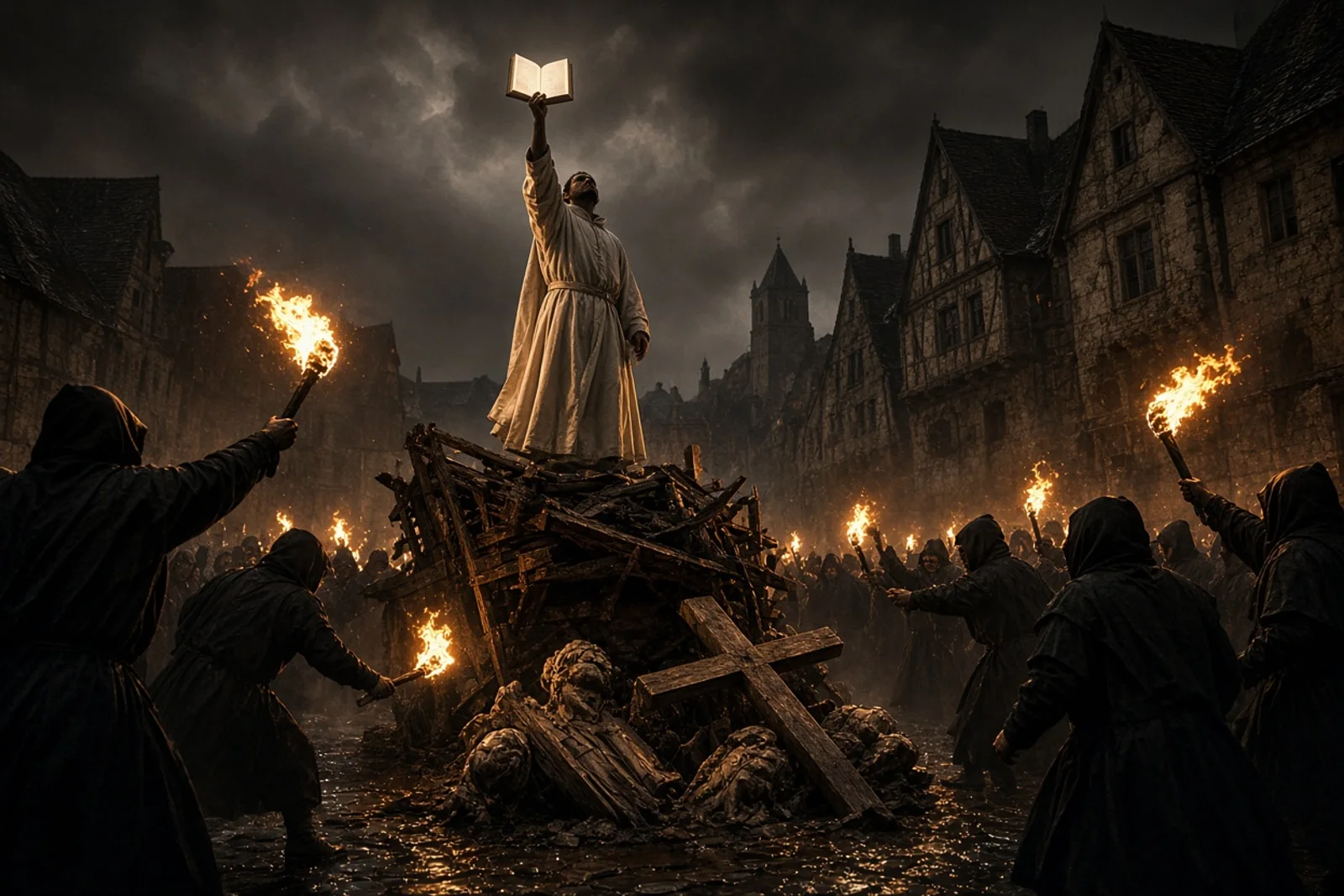
The Healing of Elisa Aloi at Lourdes
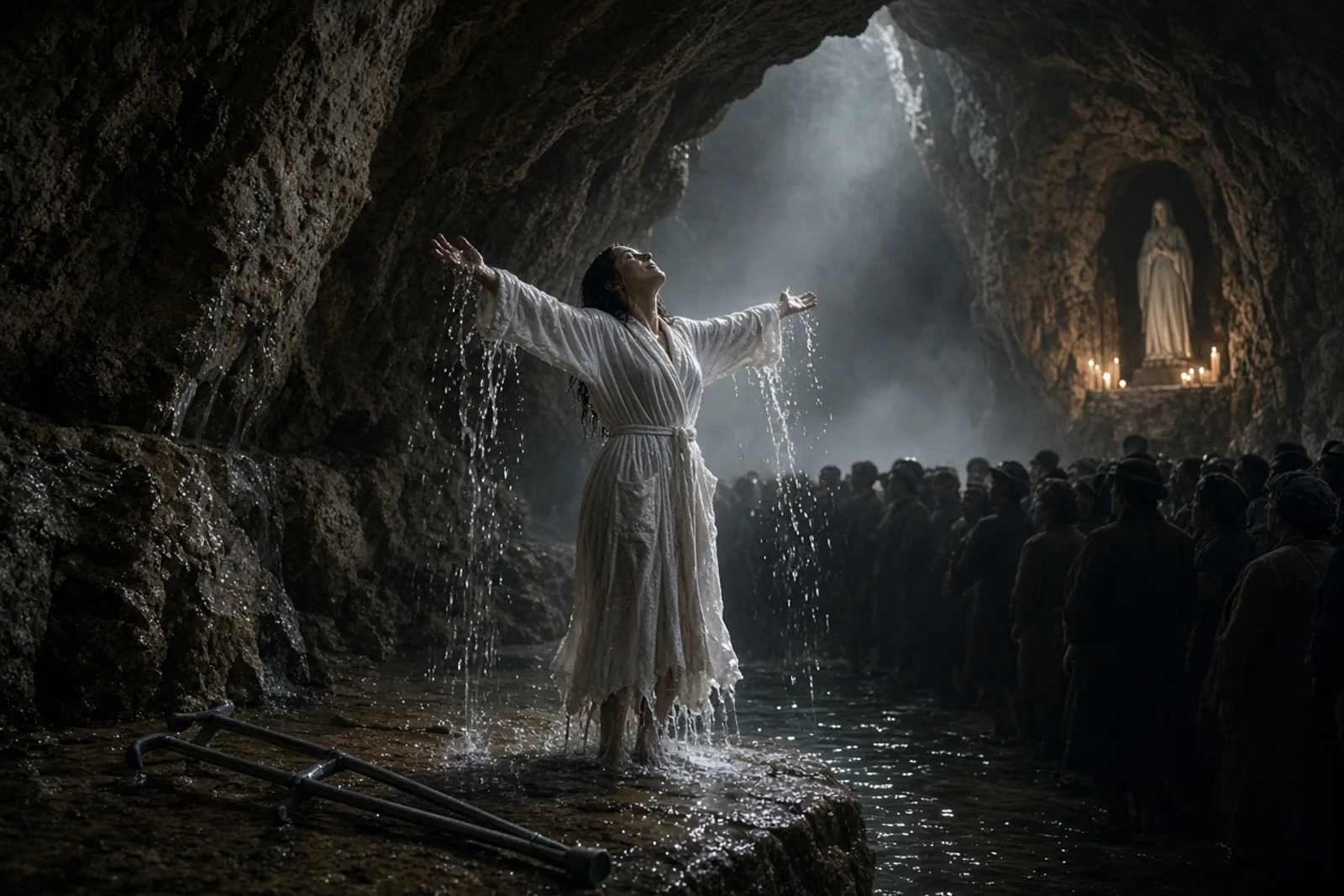
The stretcher tilted on the gravel path beside the Gave. I steadied the front pole while the priest behind me shifted his grip. Elisa lay under a light blanket, the heavy plaster shell covering her from neck to right thigh. Four windows had been cut into it so the nurses could reach the fistulae. Drainage tubes hung from each one. The morning sun had already warmed the cast, and the smell of old gauze and infection came through.
We had come from Patti three days earlier, the same group that had taken her the year before. Most of the Sicilian pilgrims walked. Elisa stayed on the stretcher. Her temperature chart showed 39.2 the night we arrived. The doctors at home had said the last operation, the one that took ten centimetres of bone, had only slowed the spread. They had told her family there was nothing left to try.
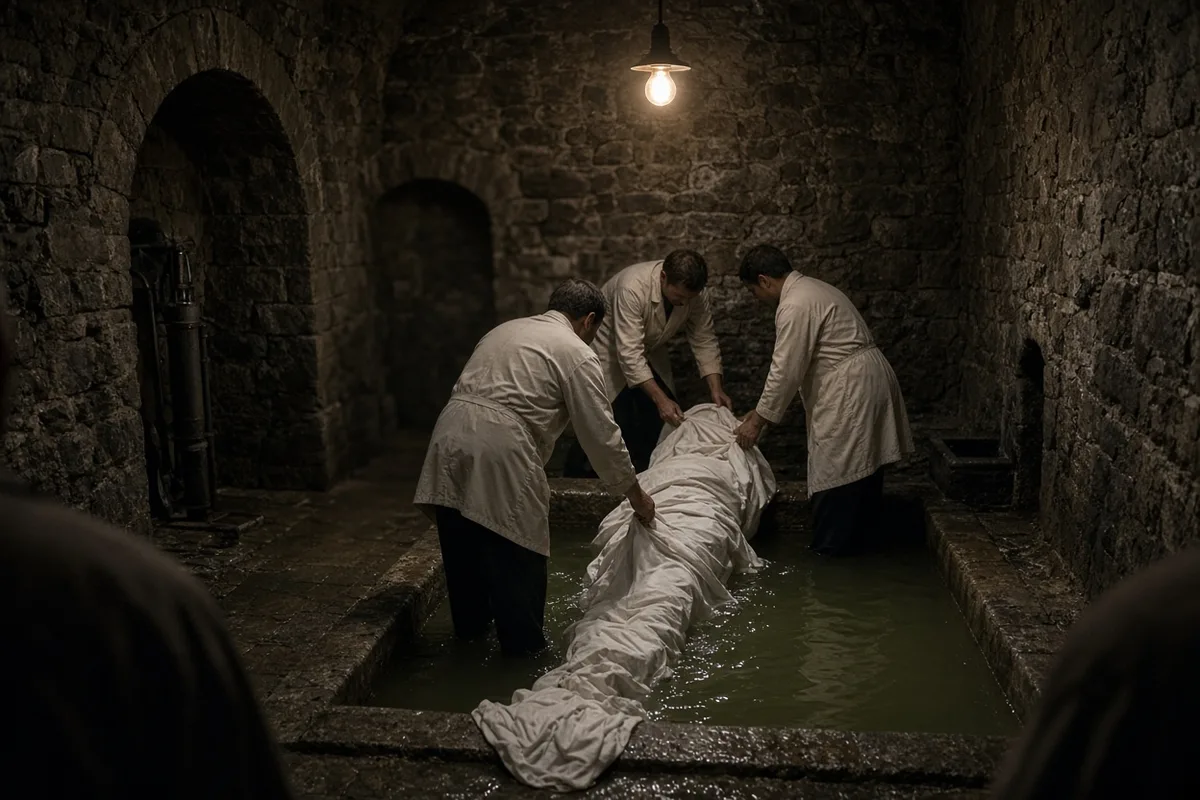
On the fourth morning the priest asked if she wanted the pools. She said yes without lifting her head. We carried her down the ramp to the stone basins. The water was cold enough to make my hands ache through the gloves. Two attendants lowered the stretcher until the plaster was half submerged. Elisa kept her eyes open. When they raised her again the blanket clung wet to the cast. She did not speak.
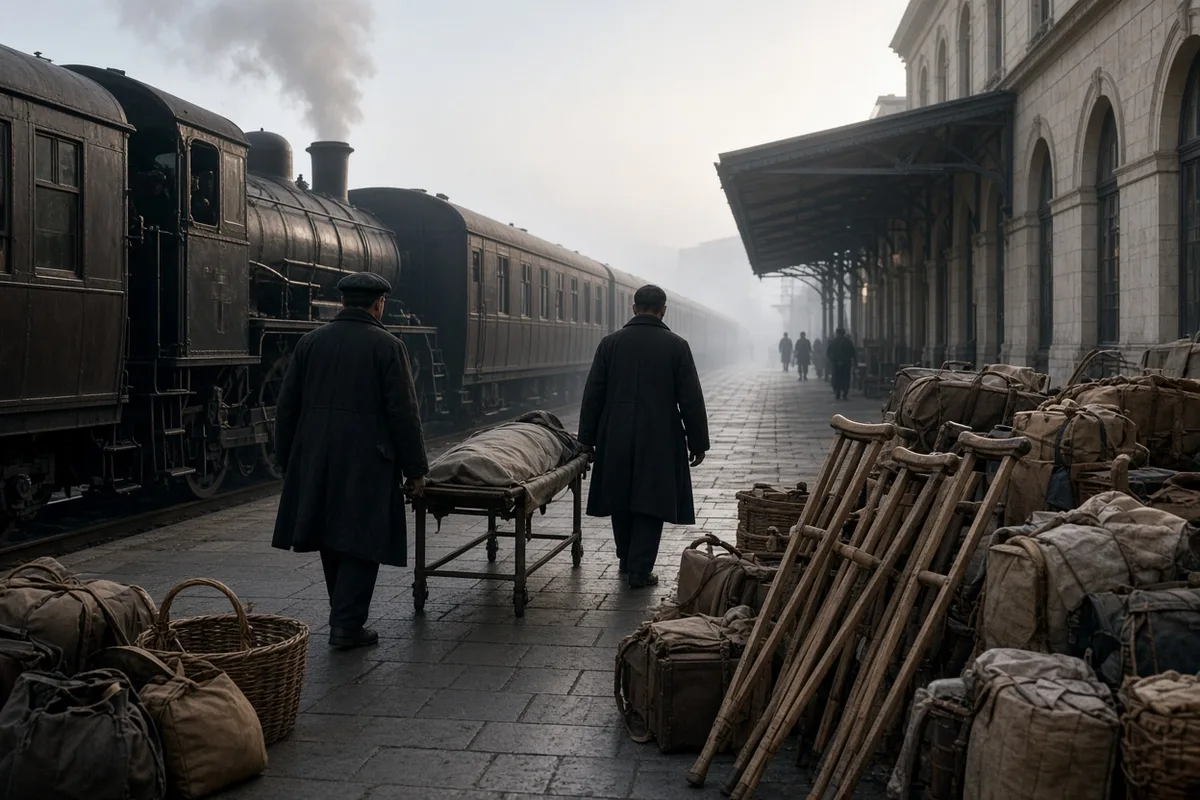
We wheeled her onto the esplanade and set the stretcher among the others waiting for the afternoon procession. She was quiet for a while. Then her left hand moved against the side of the cast. The fingers pressed, then pushed harder. Her face changed.
“Doctor Zappia,” she called. Her voice carried across the stretchers. “I can move my legs inside the plaster.”
Zappia was three rows away. He came at once, knelt, and lifted the edge of the blanket. The four fistulae that had drained for years were closed. The gauze pads inside the windows were dry and unstained. The drainage tubes lay beside her leg, empty. Zappia stayed on one knee. He did not touch the cast at first. Then he touched one of the closed openings with two fingers and drew them back.
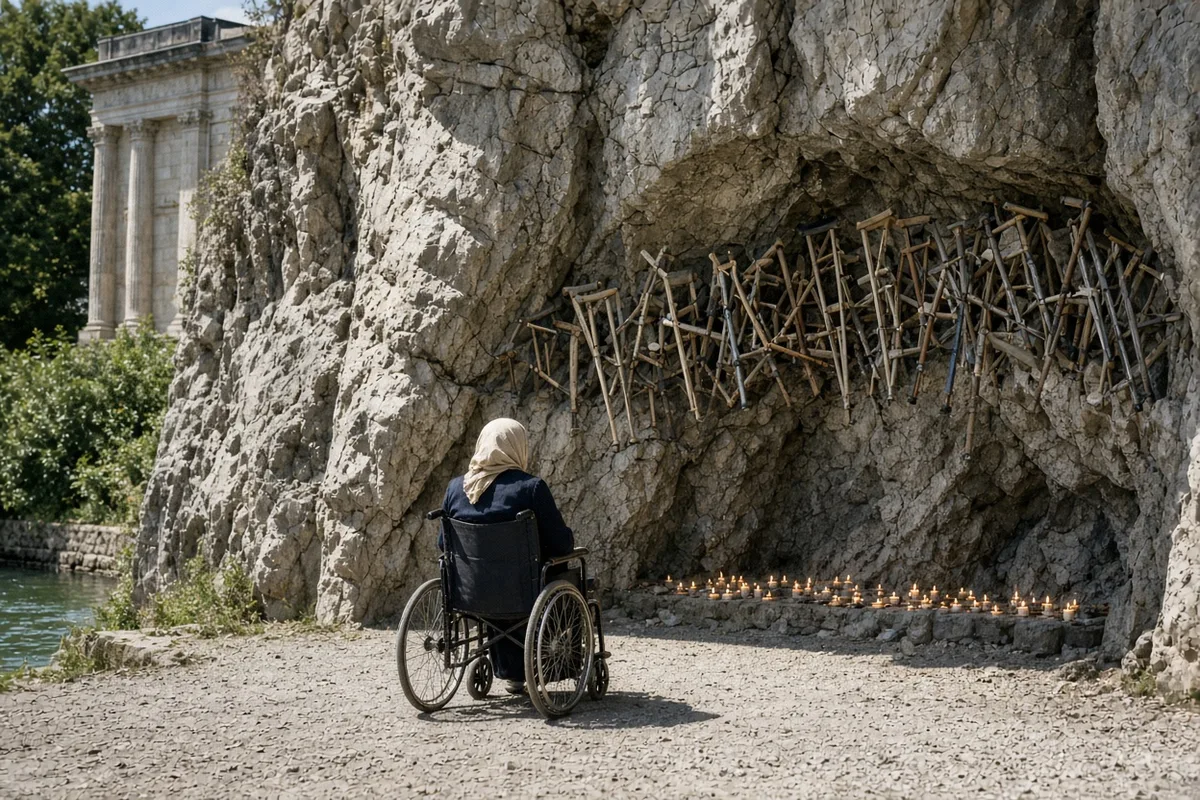
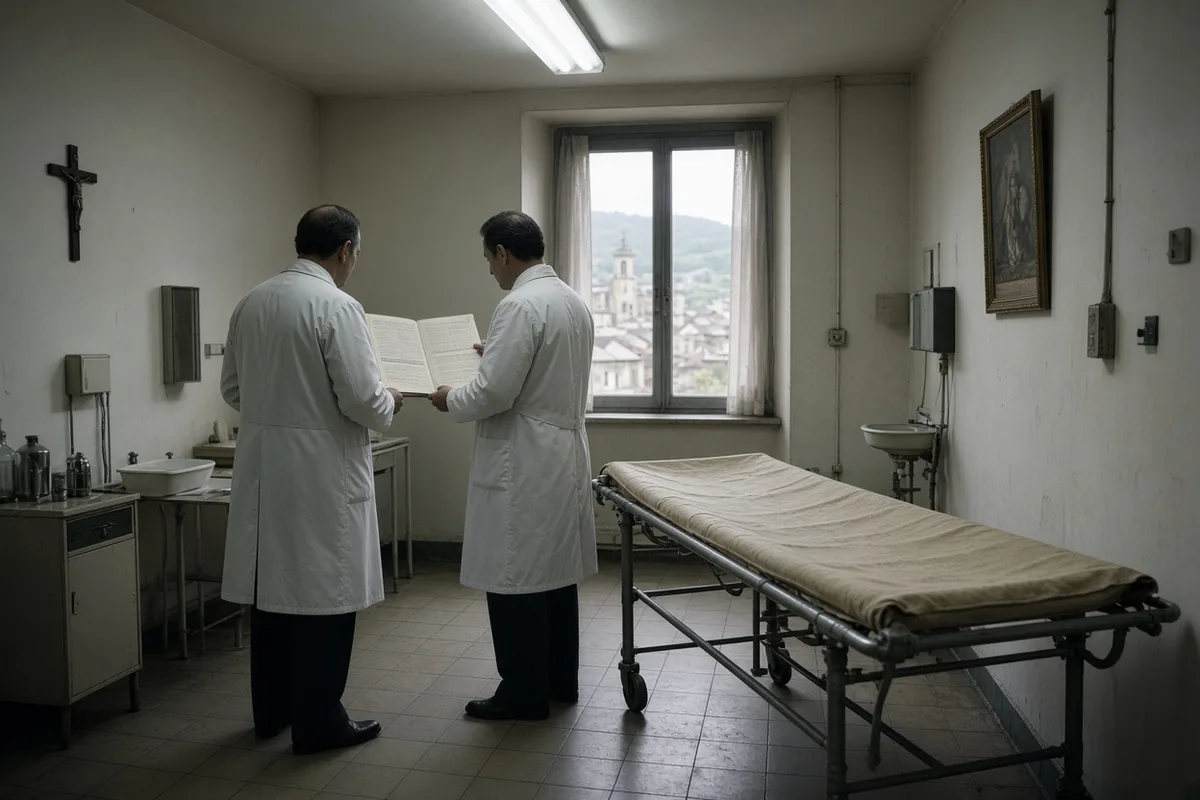
They took her to the small examination room under the ramp of the Upper Basilica. The doctors already there asked the same questions in turn. When had the fever stopped. Whether she had bathed or only entered the water once. She answered each one. They wrote the answers. One of them asked her to try moving the leg again. The toes inside the cast shifted. The movement was visible at the knee window.
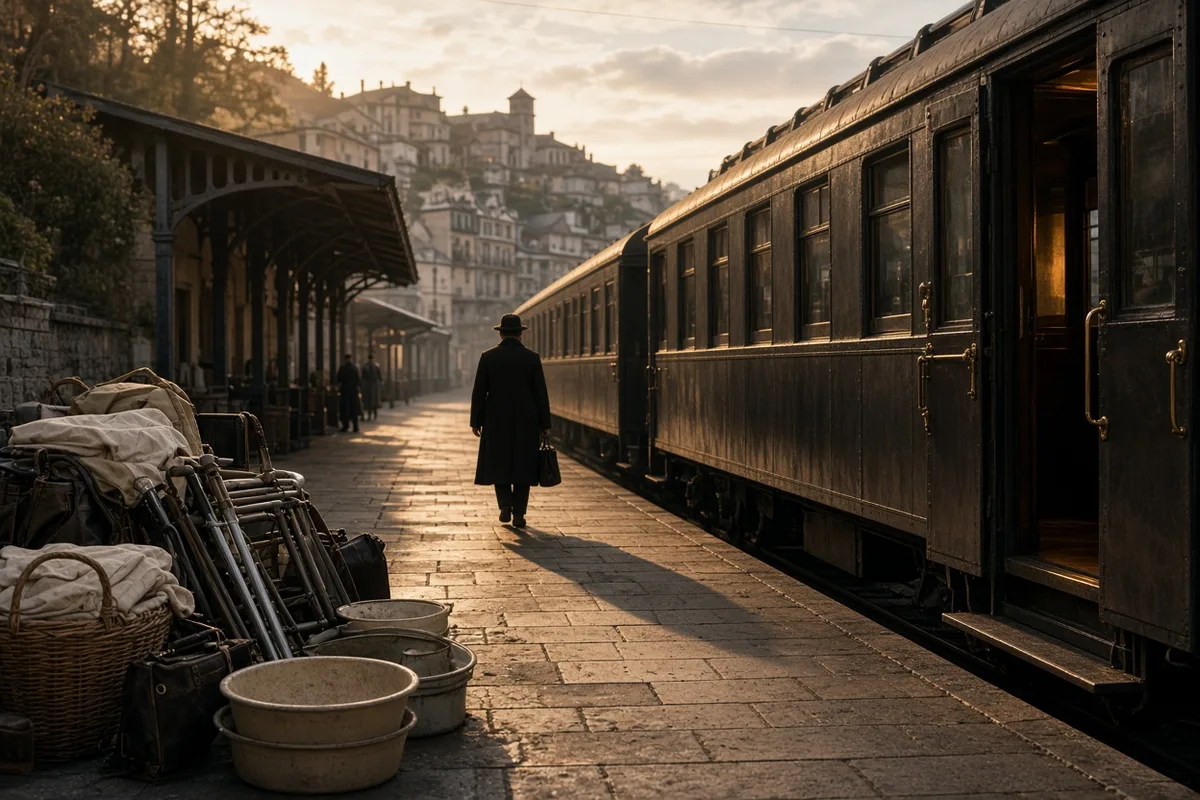
That evening the Sicilian group returned to the hotel. Elisa remained on the stretcher in the courtyard because the cast would not fit through the narrow doorway. She slept without the usual morphine. In the morning the fever chart showed 36.8. We loaded the train for Messina the next day.
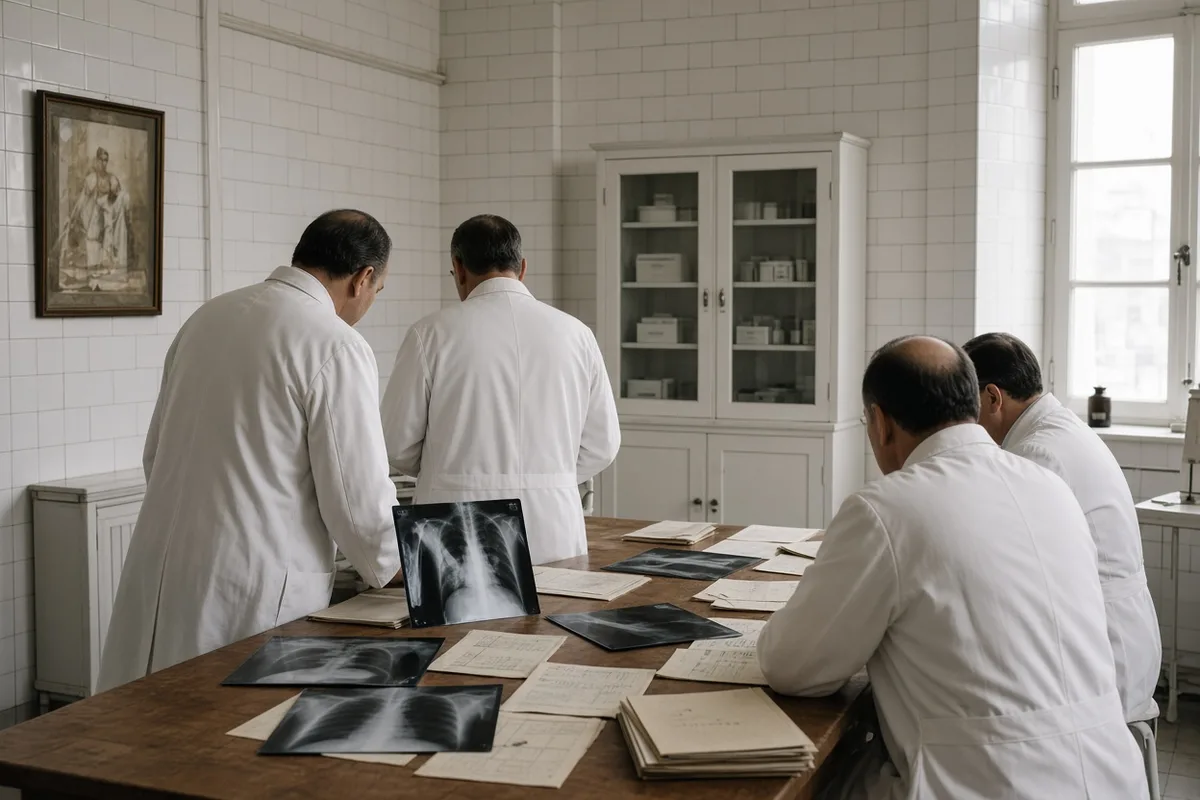
In Patti the radiologist took new plates before anyone removed the plaster. The films showed continuous bone where the surgeons had left a gap. The professor who had performed the resection came from his clinic the same afternoon. He stood at the light box for a long time. Then he said the bone he had cut away with his own hands was present again, with normal density and no sign of the old cavities.
The Medical Bureau in Lourdes requested the plates and the operative notes. The case stayed open for seven years. In 1965 the International Committee recorded that the original diagnosis of tuberculous osteoarthritis with multiple fistulae had been verified, that the lesions had been considered incurable by the standards of 1958, and that the resolution met every criterion they required for a finding of medical inexplicability. The Bishop of Messina accepted the finding and declared the cure miraculous on 26 May.
Elisa returned to Lourdes every summer after that. She wore the red-cross badge of a hospitalière and walked the processions without a stick. She married Giovanni Varcalli in 1962. He came with her each year and stayed a step behind when she spoke with the new pilgrims. She outlived him by eight years. On 21 November 2020 she died in Patti at the age of eighty-nine. The cast and the drainage tubes from the day of the pools are kept in a glass case at the sanctuary office in Messina. The bone in the right leg never showed the disease again.
The verification files reached the International Medical Committee in Paris on 14 March 1964 after the Bureau in Lourdes forwarded the full set of pre- and post-cure radiographs together with the operative report signed by Professor Salvatore Greco at the University of Messina on 3 April 1957. Committee members including Dr. Henri Leuret, Dr. Jean-Pierre Larget and Dr. Louis Olivier examined the 1958 plates that showed a 9.8-centimetre osteolytic defect in the proximal right femur with sequestra and three sinus tracts confirmed by sinography. In the margin of the 1963 films Dr. Leuret wrote the phrase “reconstitution osseuse complète sans séquelle” and dated his note 22 September 1964. The final vote of the twenty-two-member committee on 18 April 1965 recorded seventeen affirmative ballots and five abstentions; the procès-verbal stored in the archives at 1 Rue de l’Abreuvoir carries the signatures of all present.
Elisa Aloi Varcalli resumed work at the Ospedale Civile di Patti in January 1959 as a volunteer record clerk on the tuberculosis ward, logging 1,847 patient files between that month and December 1961. On 9 June 1962 she married Giovanni Varcalli, a railway clerk from Barcellona Pozzo di Gotto, in the parish church of San Bartolomeo; the marriage register lists witnesses Salvatore Greco and Maria Concetta Russo. Their daughter Anna was born on 4 May 1963 at the same hospital, weighing 3.2 kilograms; the birth certificate notes the mother’s prior diagnosis only as “osteoartrite tubercolare guarita.” Giovanni accompanied her on the annual train to Lourdes each August, staying at the Hôtel de la Grotte and assisting with the Sicilian group’s stretcher roster.
Each summer from 1959 through 2019 she walked the Esplanade at 16:30 during the Blessed Sacrament procession wearing the red-cross armband of the Hospitalité Notre-Dame de Lourdes, number 1847. In 1974 she was listed among the 312 Italian hospitalières who served the piscines that season; the roster kept at the Accueil Notre-Dame records her shift on 12 August from 09:00 to 11:15. Pilgrims from Patti still recall her answering questions at the information desk beside the ramp; one entry in the 1987 guest book at the Sicilian chapel reads “Elisa explained the windows in the cast” followed by the date 18 August and the signature of a nurse from Catania.
After Giovanni’s death from myocardial infarction on 14 February 2008 at the age of seventy-six, she continued the journeys alone, travelling with the Messina diocesan group on the 22:40 sleeper from Palermo Centrale. In 2012 she donated the original 1957 operative notes and fourteen temperature charts to the sanctuary archives in Messina; the accession number on the acid-free folder is SAN-ME-2012-047. Her last recorded visit occurred 11–18 August 2019, when she assisted at the Italian Mass in the Crypt and spoke for twelve minutes with a group of thirty-eight new hospitalières from Agrigento.
In her final decade she lived at Via Garibaldi 47 in Patti, attending daily Mass at San Bartolomeo and keeping a weekly appointment with the radiologist Dr. Antonino Fazio for a single anteroposterior view of the right femur. The 17 March 2019 film, preserved in the hospital PACS system under accession 2019-0317-RA-0042, shows cortical thickness of 4.2 millimetres at the former defect site with no lucency. On 19 November 2020 she was admitted to the same hospital with pneumonia; the discharge summary dated 21 November records time of death as 04:17 and lists the certifying physician as Dr. Maria Grazia Lentini.
The glass case containing the plaster shell and four rubber drainage tubes now occupies the north wall of the sanctuary office at Via Monsignor Francesco d’Urso 12 in Messina. The case measures 1.82 metres by 0.64 metres and is illuminated by two 15-watt LED strips replaced on 3 May 2022. Curator Dr. Paolo Seminara logs 214 visitor inquiries about the exhibit each calendar year; the most recent entry in the guest ledger, dated 7 October 2023, bears the signature of a medical student from the University of Catania who copied the handwritten label verbatim: “Gesso e tubi di drenaggio, 11 agosto 1958, Elisa Aloi, Patti.”
The last documented human image associated with the case is a colour photograph taken on 21 November 2020 at 11:40 by the hospital orderly Salvatore Randazzo, showing Dr. Lentini standing beside the closed casket before it left the ward. In the background the window of room 312 frames the Ionian Sea at low tide; the image file, stored on the hospital server under IMG-2020-1121-1140, remains the final visual record of any person connected to the original stretcher party from Patti.
The sanctuary office at Via Monsignor Francesco d’Urso 12 maintains a bound ledger of accession queries that records 214 entries for the glass case in calendar year 2023 alone, with the 17 October entry noting the signature of Dr. Elena Russo, radiologist at the University of Messina, who requested a photocopy of the 3 April 1957 operative report and wrote in the margin “confronto con lastre 2019 conferma spessore corticale invariato.” On 12 March 2024 the same ledger lists the visit of Professor Carlo Bianchi from the Istituto Ortopedico Rizzoli in Bologna, who measured the cast dimensions with a digital caliper and entered the figures 1.82 m by 0.64 m together with the note “nessuna alterazione strutturale del gesso dopo 66 anni.” The LED strips inside the case were replaced again on 3 May 2024 after 2,184 hours of recorded runtime logged by the building management system.
Anna Varcalli, daughter of Elisa Aloi, now serves as administrative secretary at the same Ospedale Civile di Patti where her mother once filed 1,847 tuberculosis records. On 4 May 2023, her sixtieth birthday, she deposited a sealed envelope containing the original 1962 marriage certificate and three black-and-white prints of the 1958 stretcher party into the hospital archive under accession number OSP-PA-2023-0504. The envelope also holds a single typewritten page dated 18 August 1979 on which Giovanni Varcalli recorded the exact times of the Blessed Sacrament procession that day: “Elisa al braccio 16:32, fermata davanti alla grotta 16:47, rientro in fila 17:19.” Hospital archivist Dr. Lucia Greco verified the deposit and added her own initials to the accession sheet.
The International Medical Committee archives at 1 Rue de l’Abreuvoir in Paris retain the twenty-two-page procès-verbal of the 18 April 1965 session, now digitised under reference IMC-1965-EL-001. Page 14 carries the marginal annotation by Dr. Louis Olivier: “Vote: 17 oui, 5 abstentions, aucune voix contre.” A 2022 re-examination by the current committee president, Dr. Patrick Theillier, compared the 1963 radiographs with the 2019 film from Patti and entered the observation “densité osseuse identique à 56 ans d’intervalle” in the supplementary digital folder opened on 9 September 2022. The original glass-plate negatives from 1958 remain in cold storage at the Lourdes Medical Bureau under catalogue number LM-1958-047.
Between 1 January and 31 December 2023 the Sicilian chapel guest book at Lourdes received 1,872 signatures from Italian pilgrims, of which 47 explicitly mention the name Aloi. One entry dated 14 August 2023, signed by nurse Maria Teresa Amato of Catania, reads: “Elisa mi ha spiegato i quattro finestrini del gesso quando avevo dodici anni; oggi li ho visti nella teca.” The chapel volunteer roster for that week lists thirty-eight hospitalières on duty, including two from the Patti delegation who brought photocopies of the 1958 temperature charts for distribution.
Dr. Antonino Fazio, the radiologist who performed the annual anteroposterior views until 2019, retired on 30 June 2021. His successor, Dr. Francesca Milone, performed a single follow-up radiograph on 15 October 2022 at the request of Anna Varcalli; the image, stored under PACS accession 2022-1015-RA-0091, shows cortical thickness of 4.3 millimetres at the former defect site and carries the technologist’s annotation “nessuna variazione rispetto 2019-0317.” The hospital PACS audit log records that this file has been accessed seventeen times since its creation, the most recent access occurring on 22 February 2024 by a medical student preparing a thesis on post-infectious bone remodelling.
The Messina sanctuary curator Dr. Paolo Seminara instituted a quarterly environmental log for the glass case in January 2021. The log for the second quarter of 2024 records average relative humidity of 47.2 percent and temperature of 19.8 °C inside the case, with two spot checks performed on 14 April and 9 June by conservator Dr. Giulia Neri using a calibrated Testo 174H data logger. On 9 June Dr. Neri also noted the absence of any visible yellowing on the four rubber drainage tubes and added the comment “materiali stabili dopo sessantasei anni.”
On 7 October 2023 the guest ledger beside the case records the signature of medical student Luca Santoro from the University of Catania, who copied the handwritten label verbatim and added his own line: “Confronto con cartella clinica 1957-1958 completo.” Santoro returned on 11 May 2024 accompanied by his thesis supervisor Professor Adriana Conti; the new entry states that Professor Conti requested and received a digital scan of the 1965 procès-verbal page containing the seventeen affirmative votes.
The final visual record added to the hospital server after the 21 November 2020 photograph is a short video clip captured on 4 May 2023 at 09:17 by orderly Salvatore Randazzo during Anna Varcalli’s deposit of the sealed envelope. The clip, filed under VID-2023-0504-0917, shows Anna placing the envelope on the archive counter while Dr. Lucia Greco initials the accession sheet; in the background the window of room 312 again frames the Ionian Sea at low tide, and the clip ends at 09:19 when the envelope is sealed inside the acid-free storage box.