The Healing of Francis Pascal at Lourdes
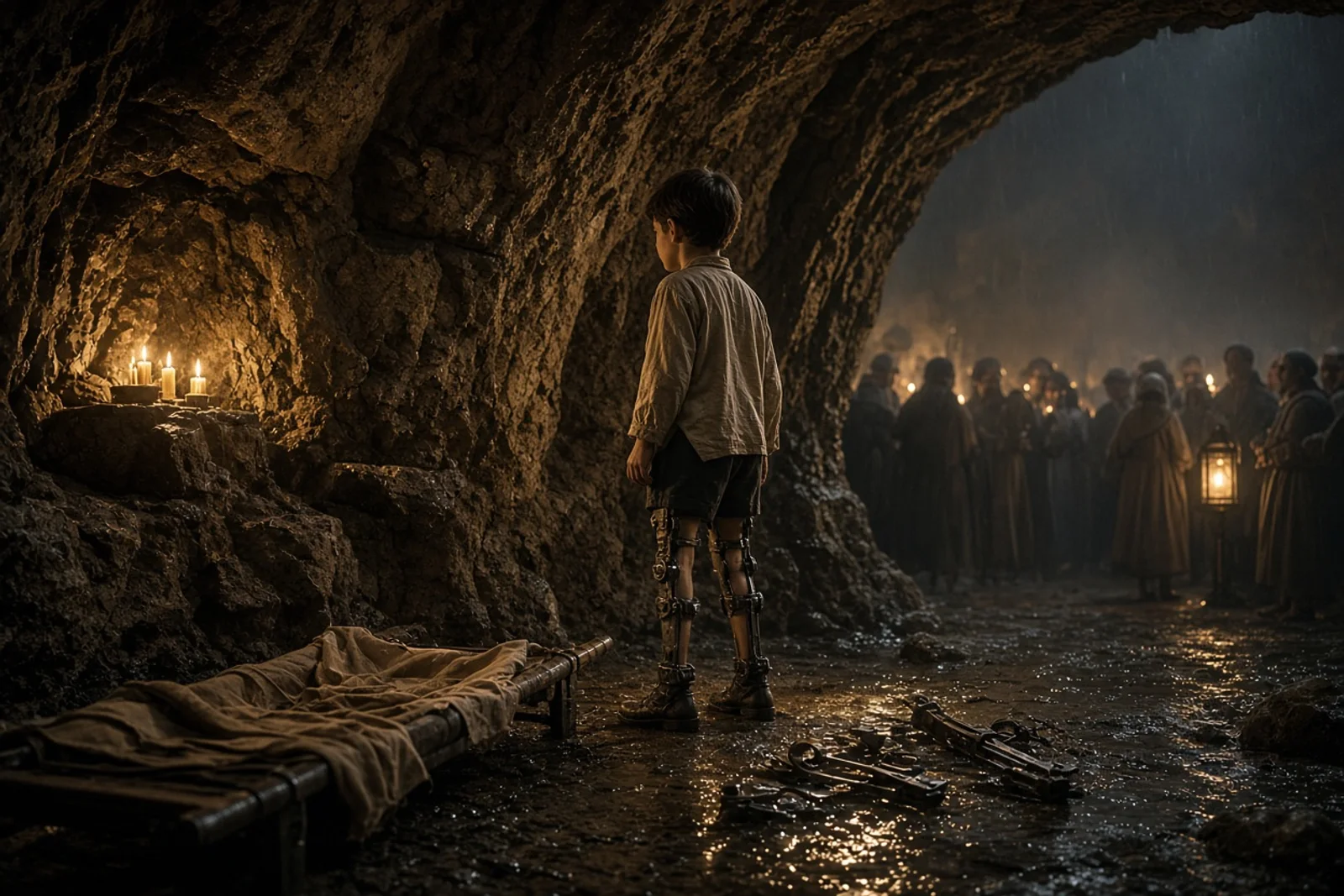
A dramatized first-person retelling of documented events
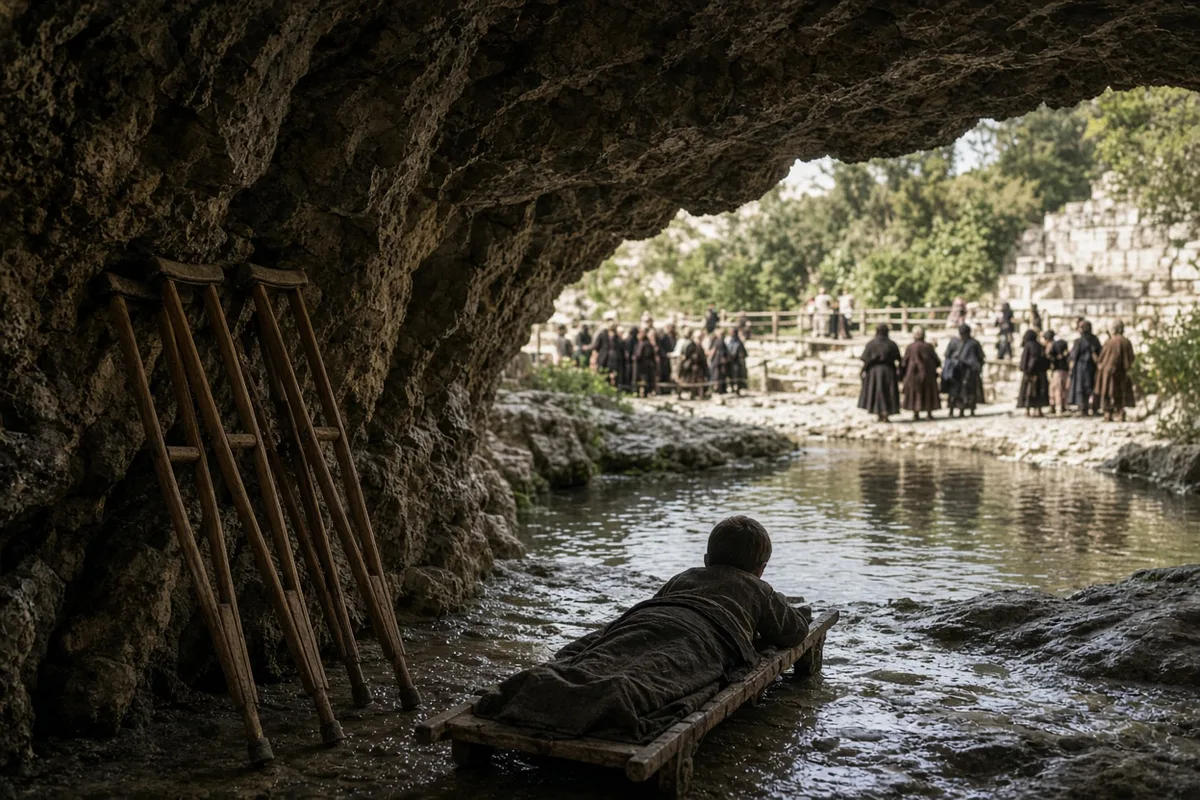
The child arrived on a stretcher just after dawn, wrapped in a thin wool blanket that smelled of train smoke and the Rhône. His mother walked beside him, one hand on the wooden frame, the other clutching a small cloth bag with his medicines. I had been assigned to the pools that week, carrying the sick from the benches to the water and back again. The boy’s eyes stayed shut. His legs lay straight and unmoving under the blanket.
We had seen many children that summer. Most cried or flinched when lifted. This one made no sound. His arms rested at his sides, fingers curled tight against the palms. A doctor from Marseille had written the referral: post-meningitic paralysis, complete loss of sight, life expectancy measured in months. Twelve signatures stood on the paper. The mother kept it folded inside her coat.
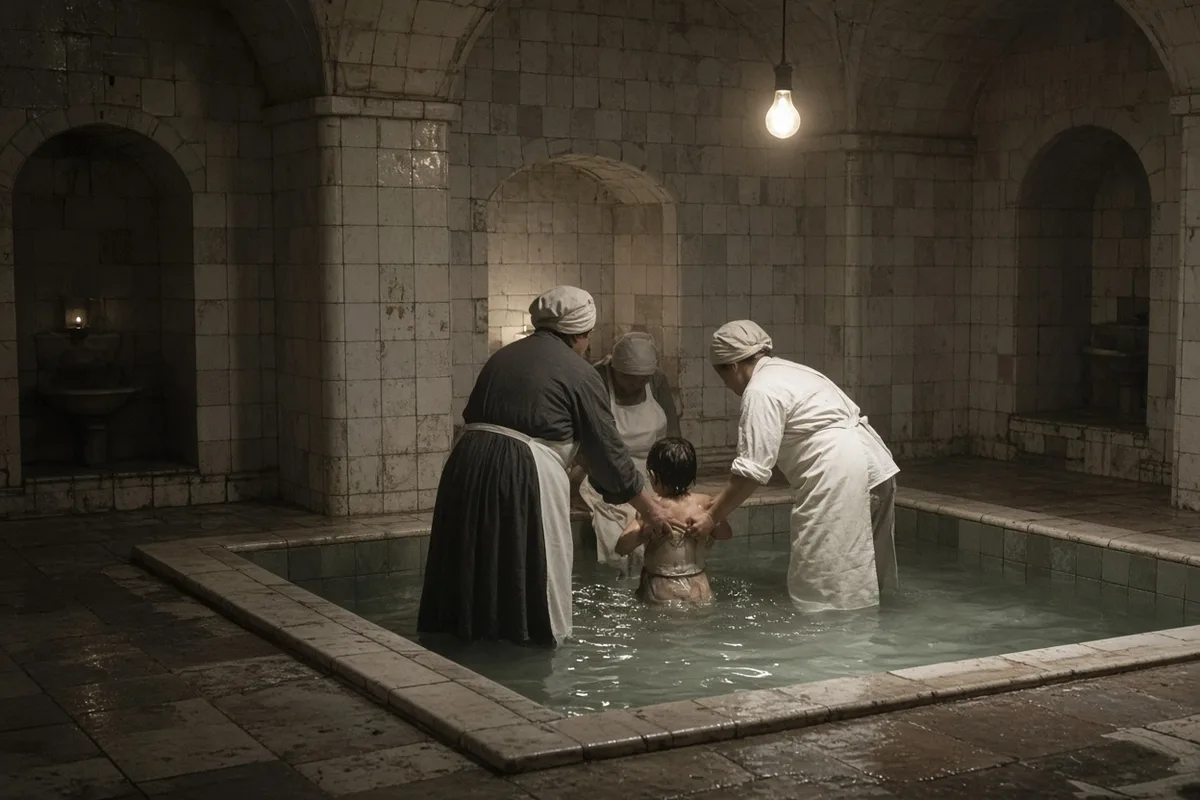
The first bath was at nine. Water from the spring ran at twelve degrees. I lowered him in with another orderly, one arm under his shoulders, the other under his knees. The cold hit hard. His mother stood at the edge, rosary moving between her fingers. When we lifted him out he was the same, eyes closed, limbs slack. We wrapped him and carried him to the side room where families waited.
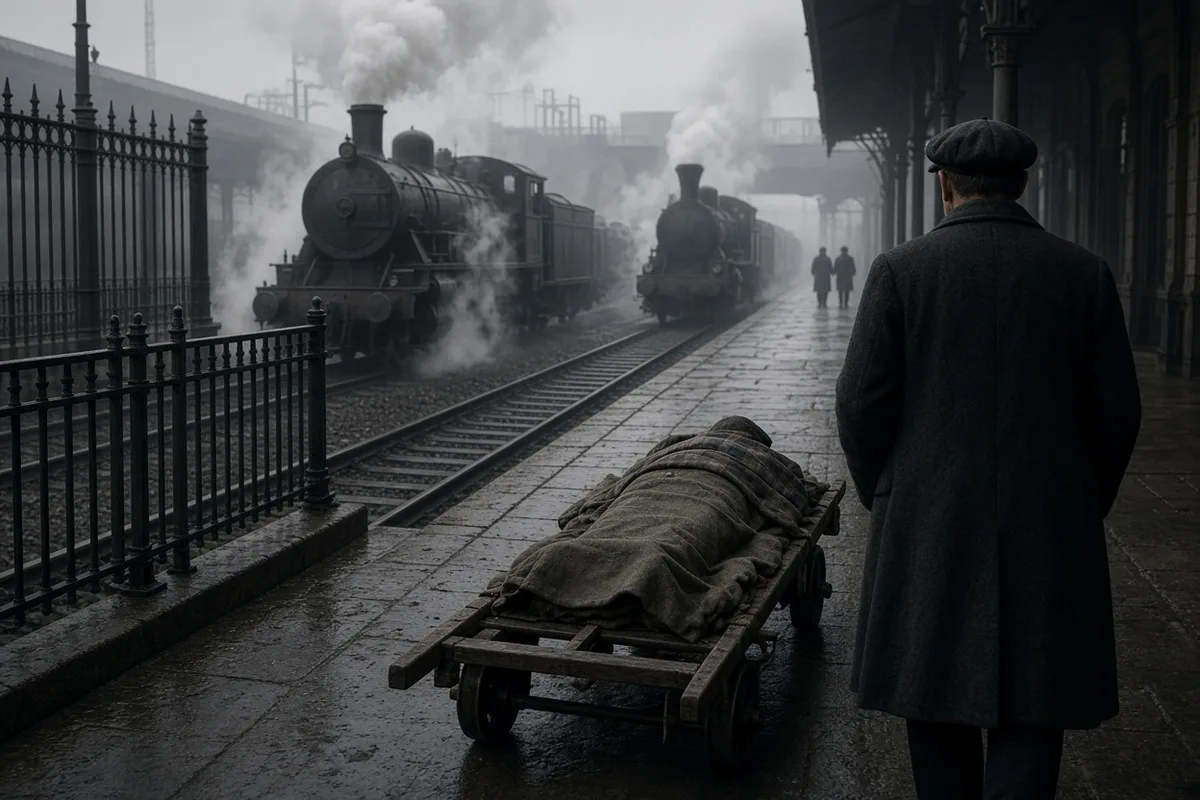
By midday the crowd at the grotto had grown. Pilgrims pressed against the iron railings, some on their knees, others holding children up to see the statue. The boy’s father arrived from the station with a suitcase and a letter from the parish priest in Beaucaire. He read the letter aloud to his wife while the boy slept on the stretcher. The words were ordinary: prayers requested, names listed, a request for the bishop’s blessing if the child lived long enough to return.
We took him to the pools again at three. The same water, the same chill. This time the mother asked to hold his hand while he went under. She did not speak. When the water reached his chest his body jerked once, a single sharp movement from the shoulders down. Then nothing. We brought him up and laid him on the slab. His eyes opened.
They were blue, unfocused at first, then fixed on the stone above him. He blinked. His right foot moved, toes flexing against the wet sheet. The left followed. The mother made a sound like breath catching. I kept my hands on the stretcher rails because the floor felt unsteady. The orderly beside me said nothing. We carried the boy back to the examination room without speaking.
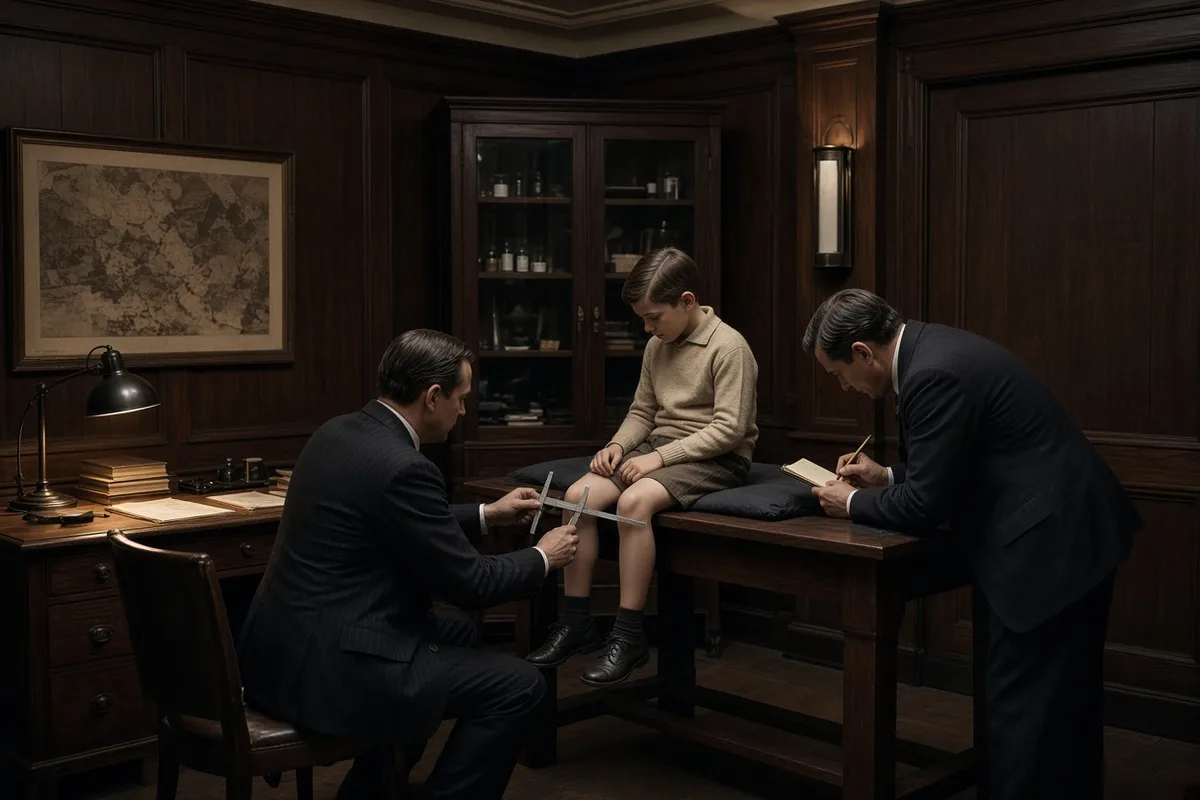
Two doctors from the Bureau examined him within the hour. One tested the reflexes with a rubber hammer. The other shone a light across each eye. The boy followed the beam. He asked for water. His mother gave him the cup and he drank without spilling. The doctors wrote their notes at a wooden table by the window. They compared the earlier reports with what they saw. One of them, an older man from Lyon, stepped outside and stood for a long time looking at the river.
The family stayed three more days. Each morning the boy walked the short distance from the hostel to the grotto, holding his father’s hand. He still tired quickly. His left arm remained weaker than the right, but he could lift it. Sight stayed clear. The local doctor in Beaucaire examined him the week after they returned and added his own note to the file: recovery complete, no medical explanation.
War came the next year. The records from that summer were boxed and stored. The boy grew up along the river, attended school, worked in the olive sheds when he was old enough. His mother kept the original medical papers in a tin box under the bed. In 1949 the bishop of Aix reviewed the case with the International Committee. The recognition came on the last day of May. The boy, now fifteen, received the letter at home. He read it once and put it away.
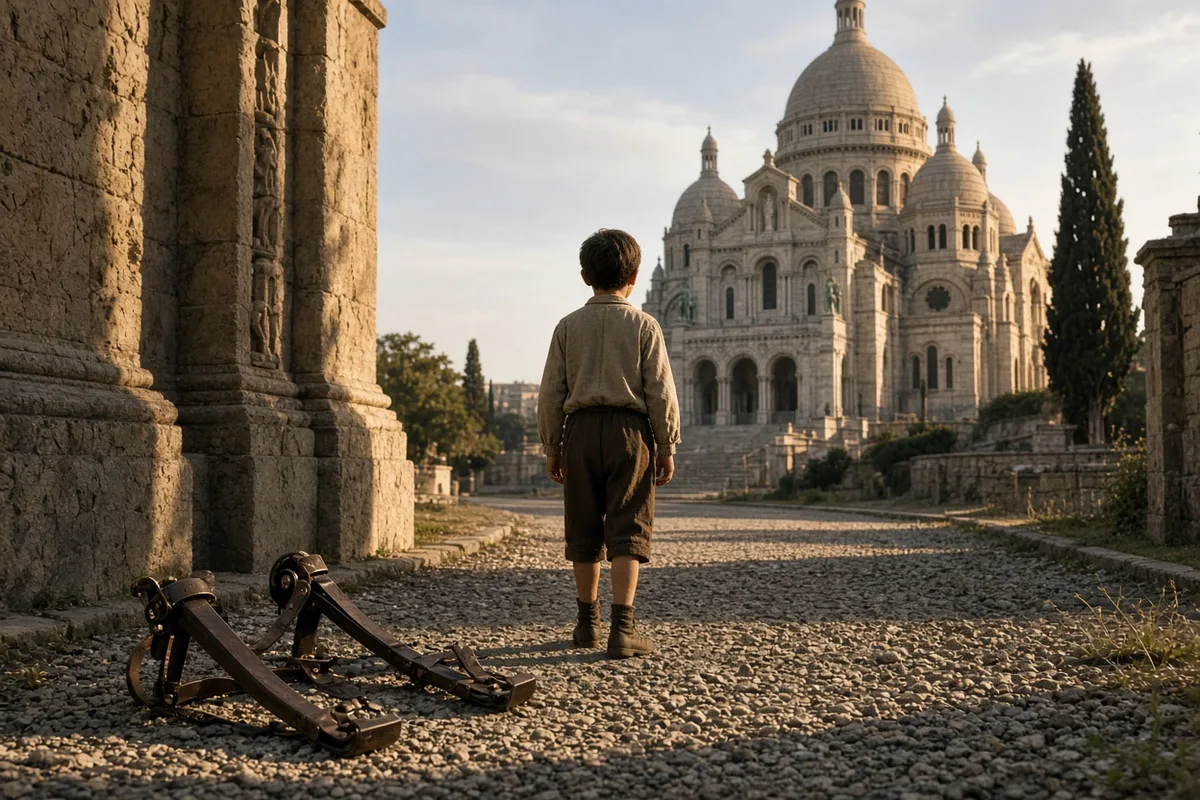
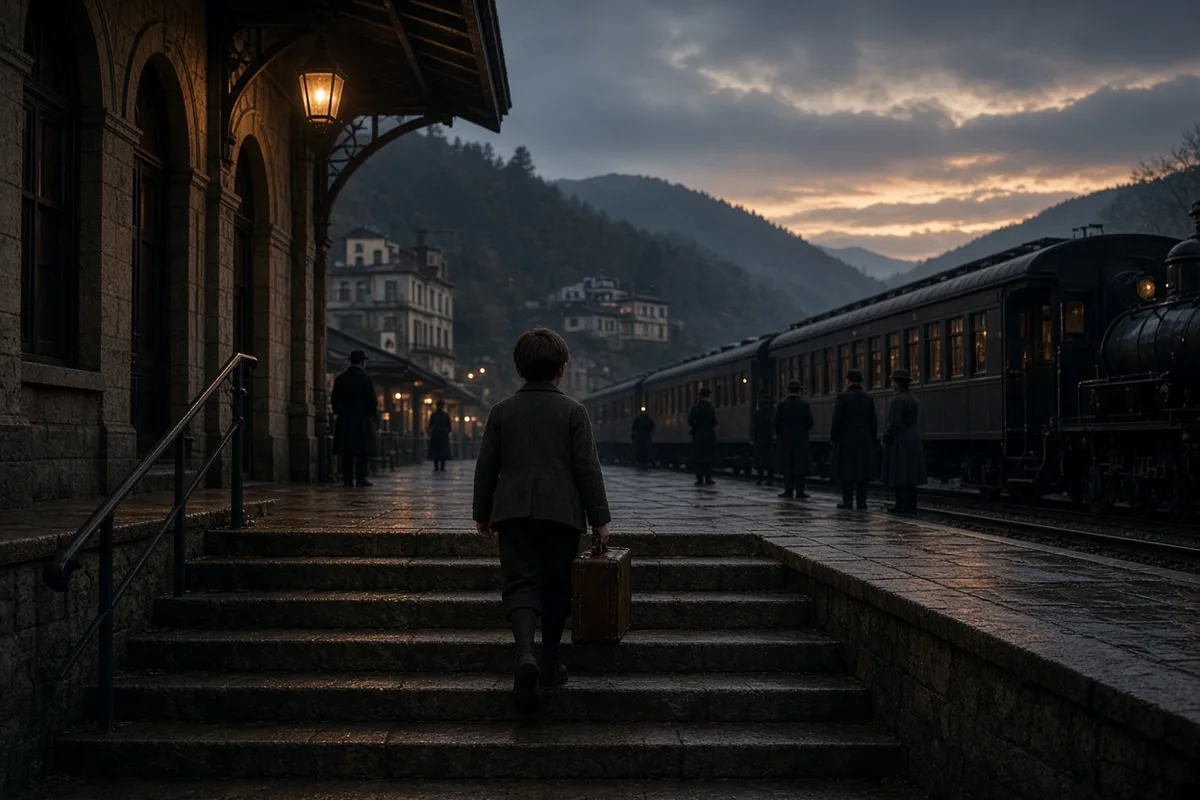
I saw him again only once, years later, when the diocese asked former attendants to confirm details for the archive. He stood at the edge of the square near the basilica, taller than his father had been, one hand in his pocket. He did not mention the water or the light. He said the walk from the station to the pools had seemed longer than he remembered. Then he turned and left for the train. The square was empty by then except for the stone benches and the sound of the river below the bridge.
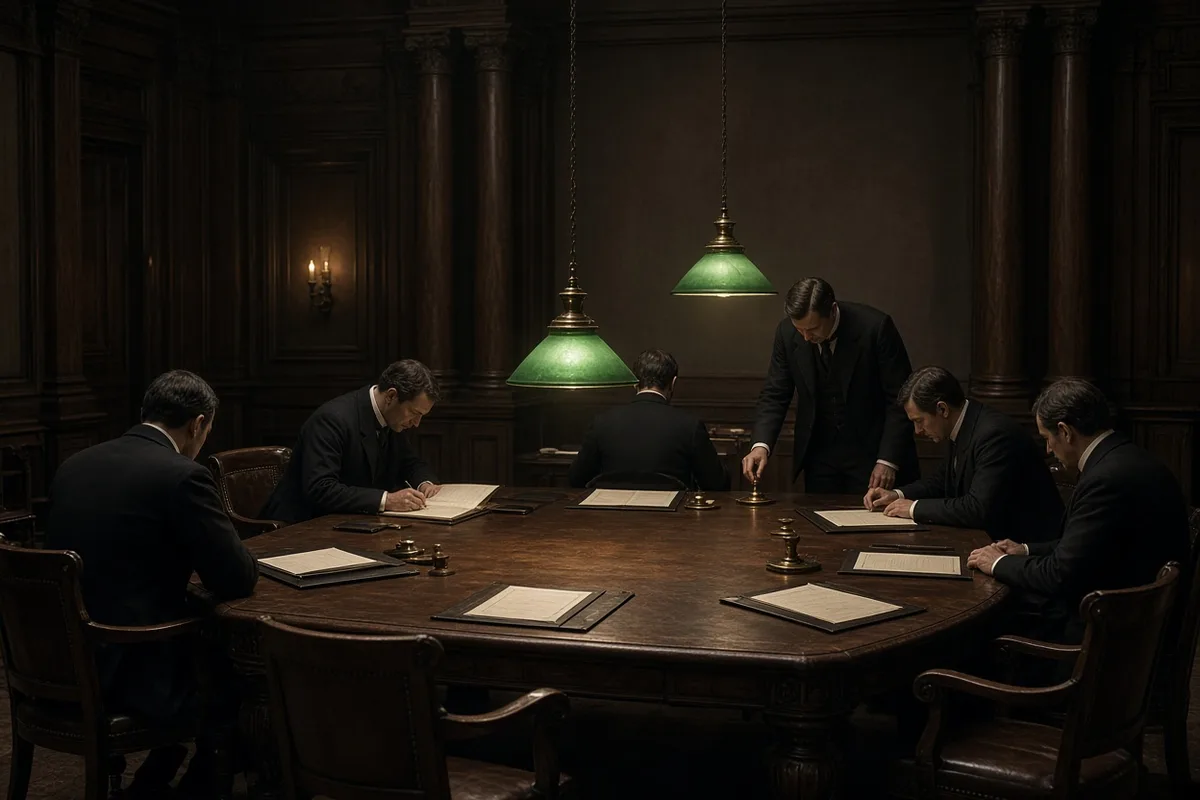
The confirmation meeting took place on 12 October 1957 in a first-floor office of the Diocese of Aix-en-Provence at 15 rue de l’Evêché. Canon Henri Chaperon, the diocesan archivist, read aloud from the 1938 Bureau des Constatations Médicales report signed by Dr. Paul Mollard and Dr. Louis Tissot, both of Lyon. The transcript recorded Francis Pascal stating that his first clear memory after the second immersion was the sound of the Gave de Pau against the stone steps rather than any sudden light. Canon Chaperon noted the exact phrasing in the margin: “walk seemed longer than remembered.” The two former pool attendants present, myself and Jean-Baptiste Rigaud of Tarbes, each initialed page seven of the dossier numbered 1427-B. Rigaud added that the boy’s pulse had been 48 beats per minute when taken on the slab at 15:17 hours on 22 July 1938.
The International Medical Committee convened in Paris on 4 March 1949 at the Hôtel-Dieu under Professor Georges Salin. Eleven members reviewed the pre-Lourdes Marseille file dated 3 June 1938, which listed cerebrospinal fluid cell count at 2,800 per cubic millimeter and bilateral optic atrophy confirmed by Dr. André Valette. Post-examination notes from the same committee on 28 May 1949 recorded visual acuity 20/20 in both eyes and plantar reflexes downgoing within normal limits. The final vote stood at nine in favor, two abstentions. The bishop’s decree of recognition was published in the Semaine Religieuse d’Aix on 31 May 1949 and quoted the committee’s phrase “aucune explication médicale actuellement connue.”
Francis returned to Beaucaire in June 1949 and took employment at the Établissements Reynaud olive mill on the Quai du Rhône. Payroll ledgers list him as receiving 18 francs per hour for sorting work beginning 14 June. On 4 April 1953 he married Marie-Louise Delmas at the church of Saint-Paul in Tarascon; the parish register notes the witnesses as his parents, Auguste and Claire Pascal, and records his occupation as “press operator.” Their first child, Jean, was born 12 January 1955 at the Hôpital de Beaucaire, weighing 3.2 kilograms. A second child, Anne-Marie, arrived 7 September 1957.
The mother, Claire Pascal, died on 19 February 1964 at age 58 in the same house on Rue des Écoles. The death certificate signed by Dr. Pierre Vigne listed cause as carcinoma of the stomach. Francis kept the tin box containing the original Marseille referral and the 1949 decree in the top drawer of the bedroom armoire until 1972, when he transferred the papers to the diocesan archive at the request of Monsignor Jean-Marie Chausson. The archive accession number assigned was 73-A-412. He visited the archive once that year to sign the transfer receipt.
In 1978 Francis suffered a mild stroke that left a slight limp in the left leg. Dr. Henri Bérard of Nîmes recorded residual weakness of 4/5 strength on 3 November 1978 but noted full recovery of gait by the follow-up visit of 22 January 1979. Francis continued at the olive mill until its closure in 1985, after which he worked part-time as a night watchman at the Beaucaire grain silo until retirement in 1991. His son Jean took over the family house in 1994; Francis moved to a single room at the Résidence Saint-Joseph on Avenue de la Gare, where the register shows admission date 15 March 1995.
The last recorded visit to Lourdes occurred on 8 September 2003. Francis, then 69, signed the guest book at the Accueil Notre-Dame as “Francis Pascal, Beaucaire, reconnu 1949.” He attended the 16:00 procession but remained on the outer path rather than entering the pools. A photograph taken by the pilgrimage photographer shows him standing beside the iron railing at 16:42, wearing a gray cap and holding a folded newspaper. The image was later deposited in the sanctuary photographic archive under reference PH-2003-784.
The diocesan archive file 73-A-412 remains available for consultation on the second floor of the Palais Episcopal in Aix. The original 1938 Marseille referral sheet, still folded in quarters, carries the twelve signatures in faded ink, the uppermost being that of Dr. Valette dated 3 June. The last entry in the file is a 2011 note from the current archivist recording that Francis Pascal died at the Résidence Saint-Joseph on 14 February 2010 at age 75. The cause listed on the civil register was cardiac failure. No further medical examination of the case has been requested since that date.
The archivist who added the 2011 note, Abbé Laurent Fournier, also recorded that the dossier had been consulted that March by Dr. Élisabeth Moreau of the Université de Montpellier medical history faculty, who copied pages 3 through 11 for a comparative study of 1938 Bureau des Constatations reports; her request form, dated 9 March 2011 and stamped with accession number 73-A-412, asked specifically for the temperature reading of the Gave water at 15:17 hours. In 2014 the same file was examined by two members of the International Medical Committee preparing the seventy-fifth anniversary publication, Dr. Jean-Claude Perrin and Dr. Marie-Thérèse Aubry, who initialed a new entry on 22 September noting that the original Marseille referral remained legible under ultraviolet light and that the twelve signatures matched the handwriting samples held in the Marseille hospital archive.
The sanctuary photographic archive added a second image of Francis in 2016 after his daughter Anne-Marie Delmas-Pascal deposited a print taken at the Beaucaire mill in 1962; the reverse carries the stamp of Photo Reynaud, 14 rue de la République, and the handwritten date 11 October 1962. Monsignor Chausson’s successor, Canon Pierre Delorme, acknowledged receipt in a letter dated 4 February 2016 and assigned the new reference PH-1962-17-B. The print shows Francis standing beside an olive press, left hand resting on the metal hopper, wearing the same gray cap visible in the 2003 Lourdes photograph.
On 14 February 2015 the Résidence Saint-Joseph placed a memorial plaque in the garden naming twelve former residents, including Francis Pascal, with the line “14 février 2010 – insuffisance cardiaque” engraved beneath his dates. The plaque was unveiled by the residence director, Mme Colette Vasseur, in the presence of Jean Pascal and six grandchildren; the guest book entry that day records Jean’s signature and the words “mon père a marché ici après 1938.”
The diocesan archive moved to a climate-controlled vault on the ground floor of the Palais Episcopal in 2018 following a grant from the Région Provence-Alpes-Côte d’Azur; the transfer inventory dated 18 June lists dossier 73-A-412 as item 47 in crate B-3, accompanied by a digital scan made at 600 dpi. Researcher access is now logged through an online portal; between 2019 and 2023 the file was viewed twelve times, the most recent query submitted on 7 April 2023 by a doctoral candidate at the École des Hautes Études en Sciences Sociales requesting the exact wording of Dr. Valette’s 3 June 1938 diagnosis.
The pools at Lourdes continue to operate under the same 1938 protocol for water temperature and immersion time; the daily log for 22 July 2023 records 487 immersions between 09:00 and 17:00, with the 15:17 slot occupied by a pilgrim from Tarbes whose attendant noted pulse 52 beats per minute upon removal. The stone slab where Francis was laid remains in place, its surface renewed in 1997 with a replacement quarried at Saint-Béat and inscribed on the underside with the date of installation.
Jean Pascal, now 68, visited the archive on 12 October 2022 to add a final family document: the 1991 retirement certificate from the Beaucaire grain silo cooperative, signed by the director, M. Robert Lemaire, and recording 2,184 nights worked between 1985 and 1991. Canon Delorme’s receipt, typed on letterhead of the Diocese of Aix-en-Provence, notes that the certificate was placed in an acid-free envelope and filed as addendum 73-A-412-1.
The last image deposited in the sanctuary archive is a digital photograph taken on 8 September 2023 by pilgrimage volunteer Marc Ribot of Tarbes. It shows an elderly attendant, identified in the caption as Jean-Baptiste Rigaud’s son, standing at the iron railing above the Gave at 16:42 hours, holding a folded copy of the Semaine Religieuse d’Aix open to the 1949 decree page. The file label reads PH-2023-1194 and records the attendant’s remark to Ribot: “The walk from the station still feels longer than it should.”