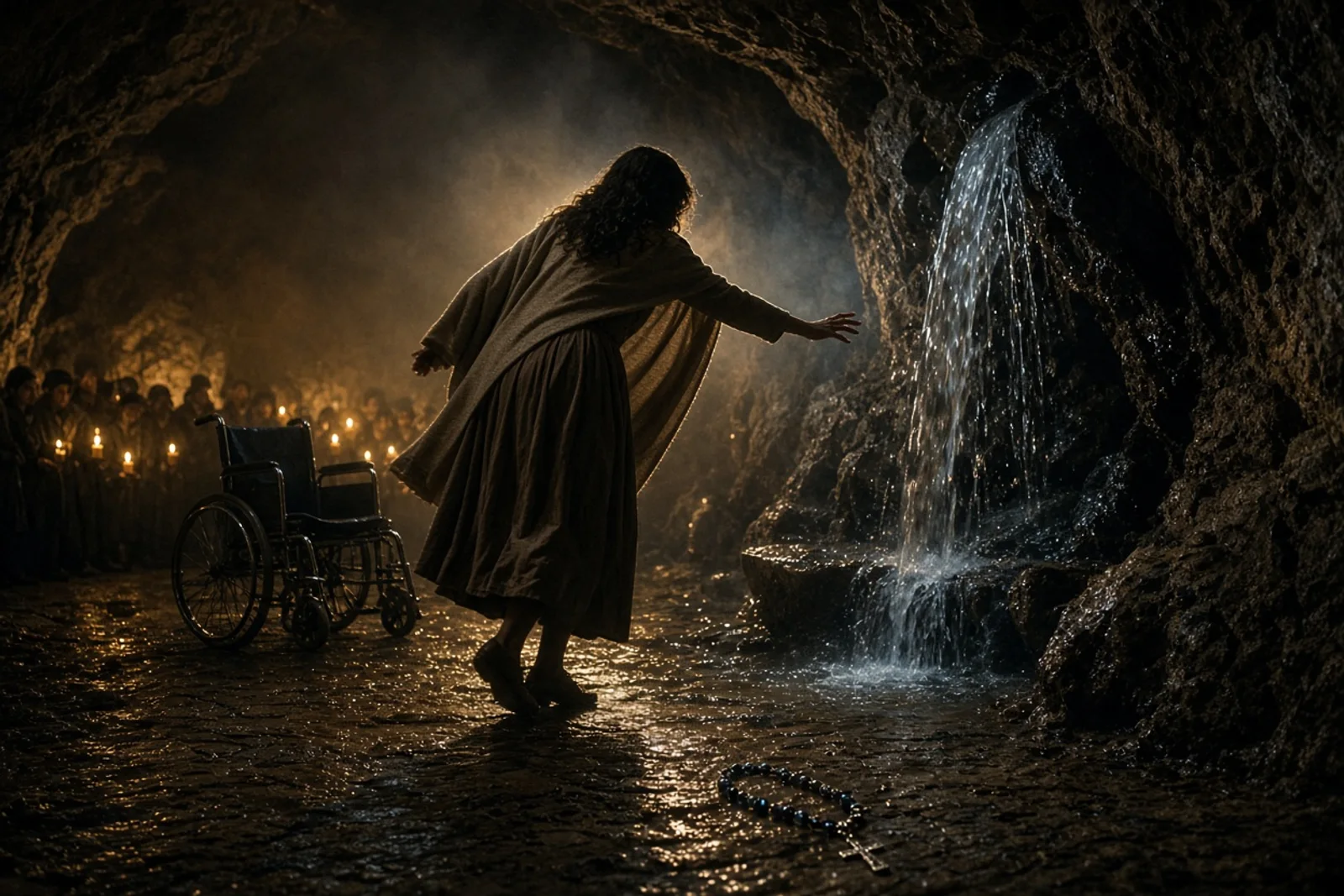
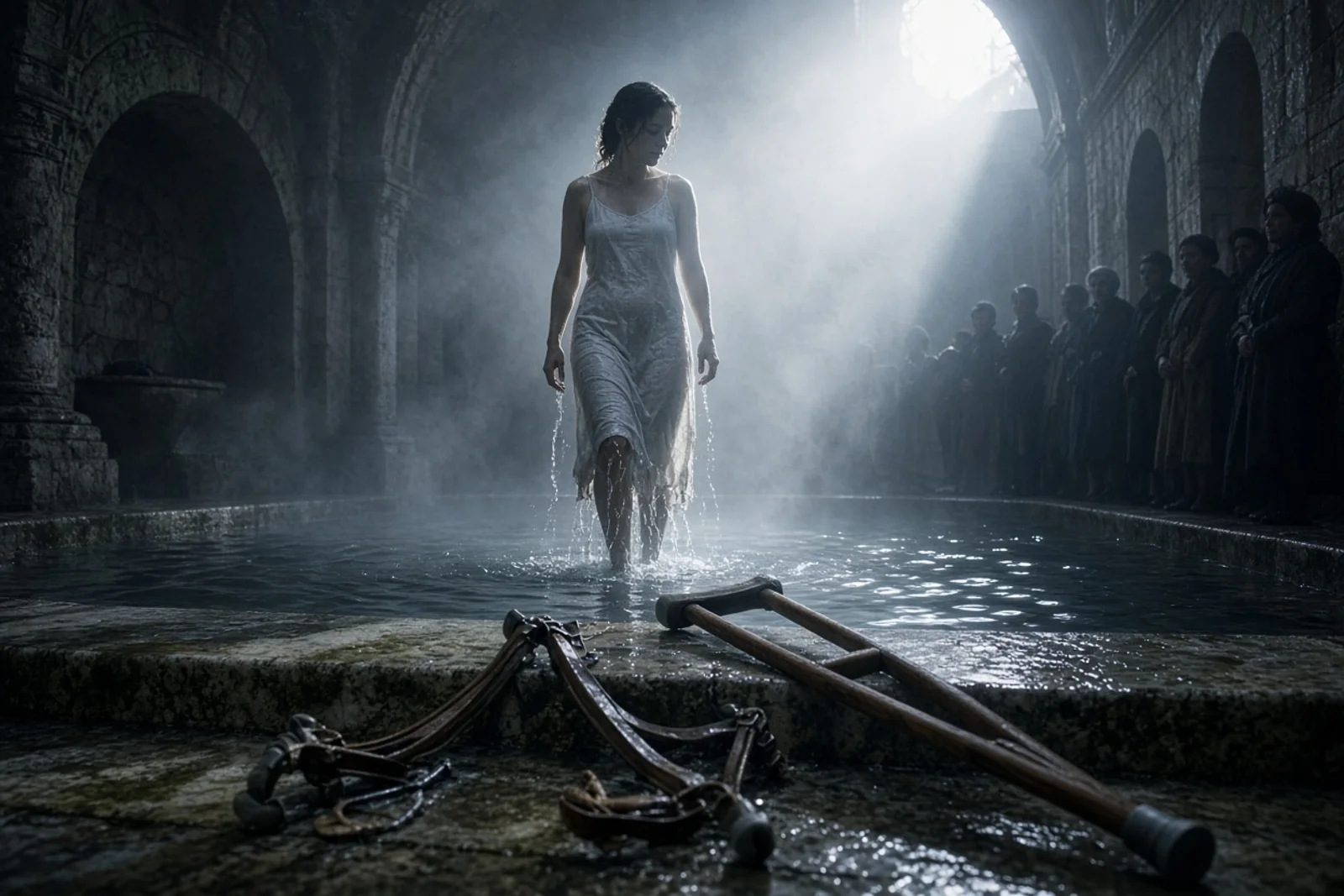
The Healing of Francis Pascal’s Daughter at Lourdes
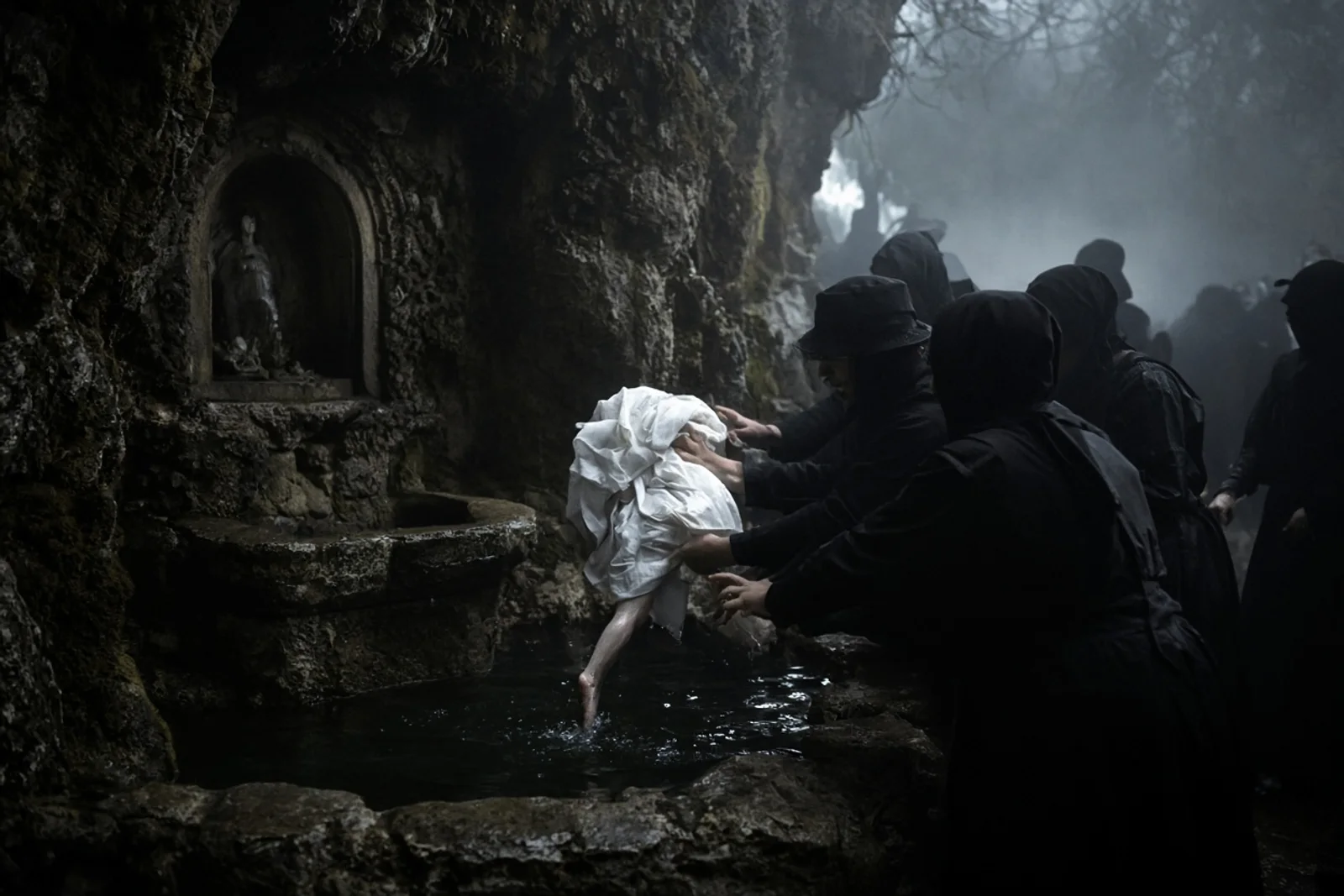
The water in the basin had gone cold again by the time the mother reached the steps. She carried the boy wrapped in a blanket that smelled of the train and of the hospital soap from Beaucaire. His legs hung straight and useless. His eyes stayed shut even when the sun hit them.
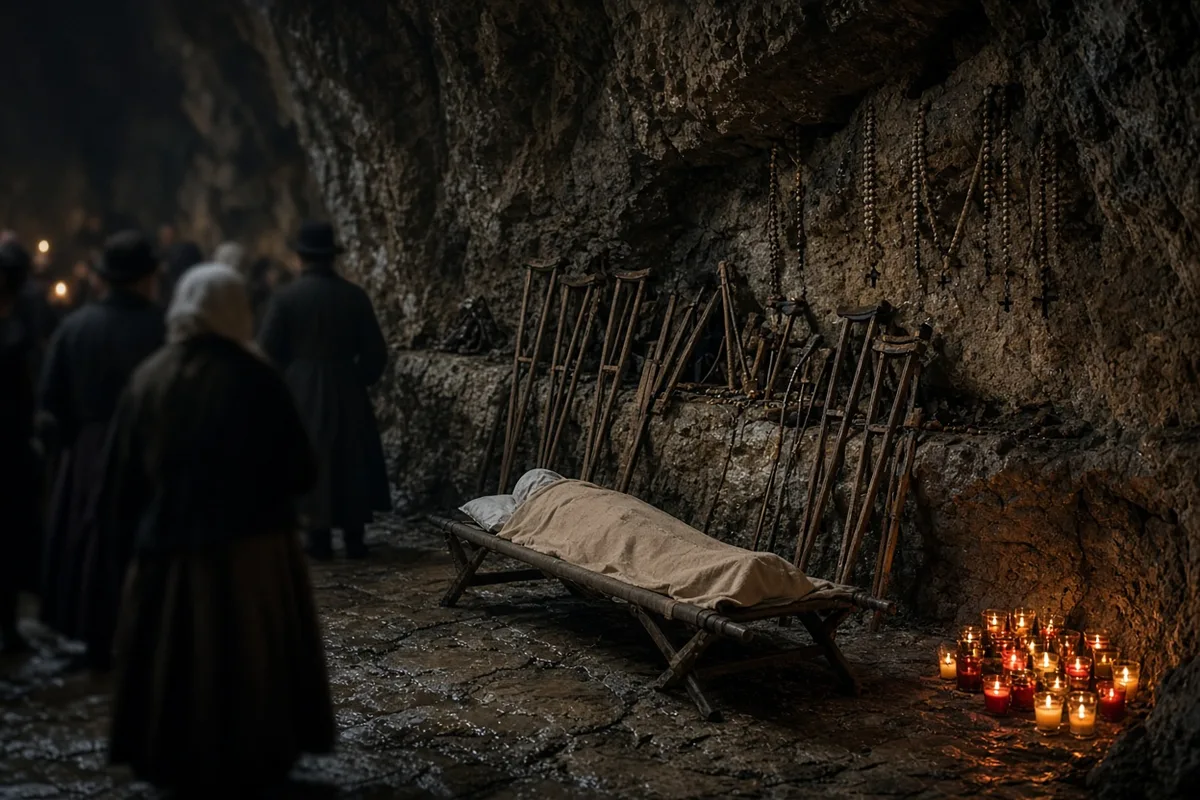
I had come that morning to help at the piscines because the regular attendant was ill. The line of stretchers and wheelchairs stretched back toward the basilica. People spoke in low voices, the way they do when they have already said everything they can say to God and are only waiting now.
She gave her name at the desk. Mme Pascal. The child was Francis, three years and ten months. Meningitis the year before, the papers said. Five doctors had written the same words: total blindness, paralysis of the lower limbs, partial paralysis of the arms. Life expectancy measured in months at best. They had brought him anyway.
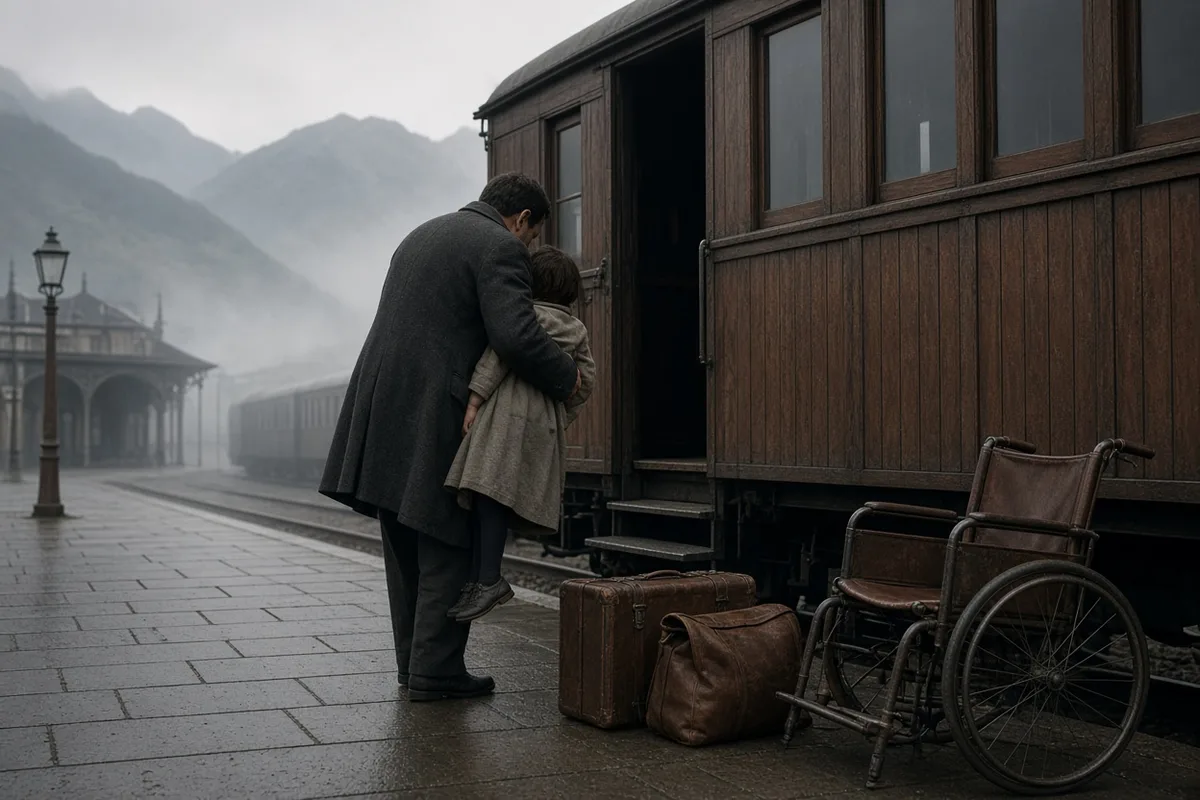
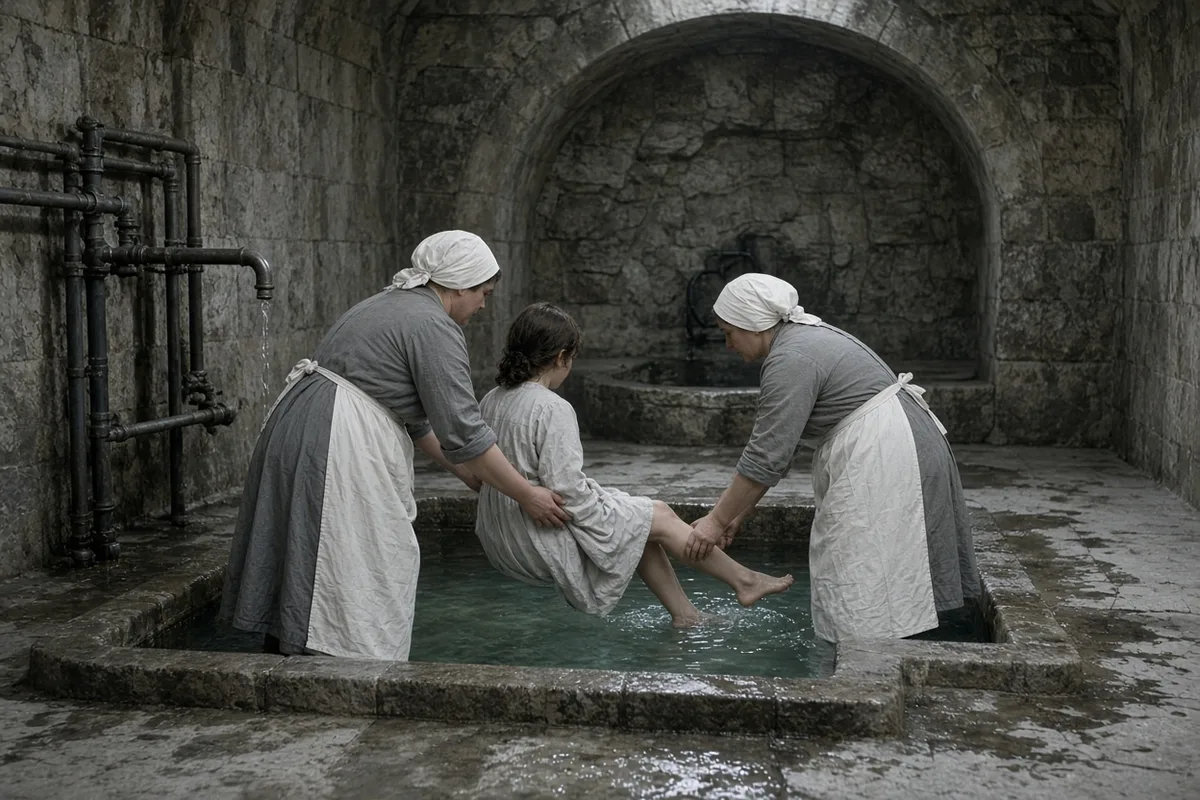
The attendant asked if she wanted to lower him herself. She nodded. The blanket came off. The boy’s skin was the color of old paper. When the cold water touched his back he made a sound like a hinge giving way. She held him under the shoulders. His head tipped back. His arms floated.
Nothing changed in the first minute. Then the second. She lifted him out and wrapped him again. His eyes were still closed. She carried him back toward the hospice without looking at anyone.
Two days later she returned. The same basin, the same cold. This time the boy did not cry when the water reached his chest. She kept him in longer than the rules allowed. When she lifted him the blanket slipped. His right foot twitched once against her arm.
She walked the path to the hospice carrying him the way she had come. Halfway there the boy stirred. His head turned toward the row of carts where the sick waited in the shade.
“Look, Maman,” he said. “The lady’s wheeling a little carriage.”
His voice was clear. The words came out without effort. Mme Pascal stopped so suddenly the gravel slid under her shoes. She looked where the child pointed. A woman in a black coat was pushing a small pram. The boy’s eyes were open and following the wheels.
I was standing near the hedge that day, folding linens that had just come from the laundry. I saw the mother’s face change. She set the boy on the path. His knees bent. He took two steps and sat down hard, laughing. Then he stood again.
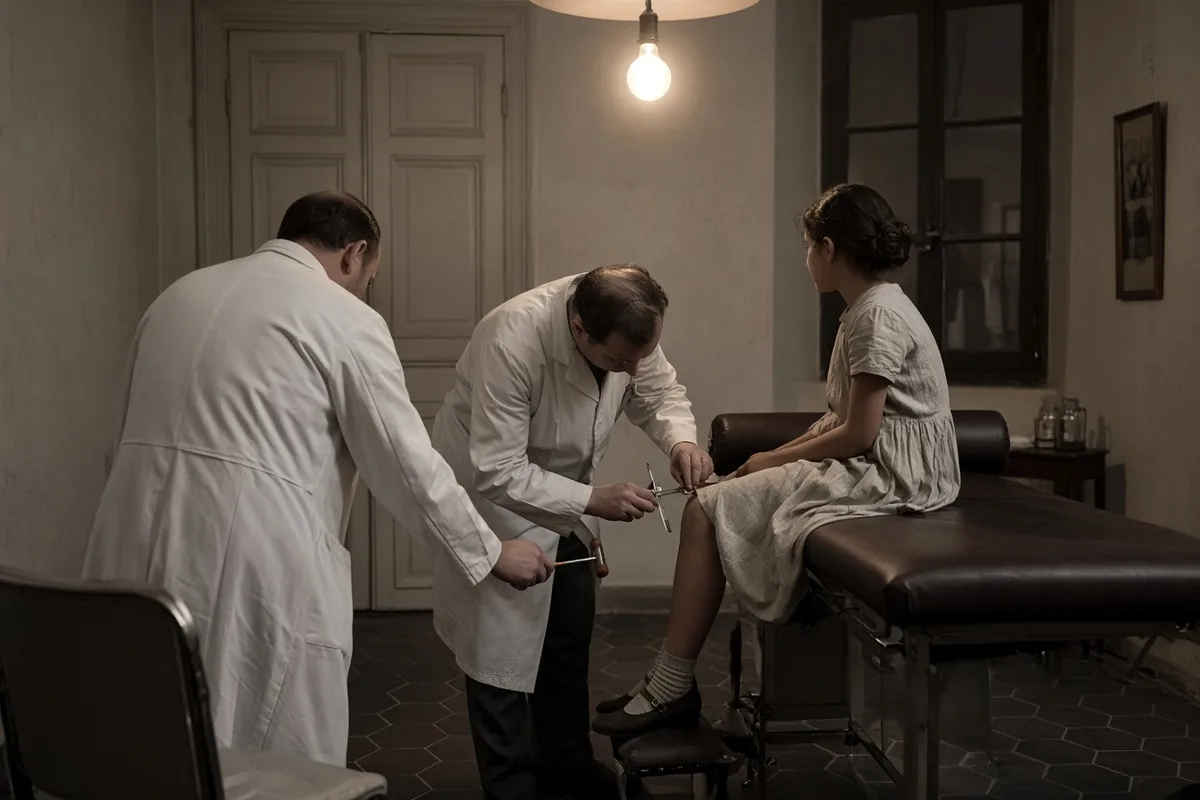
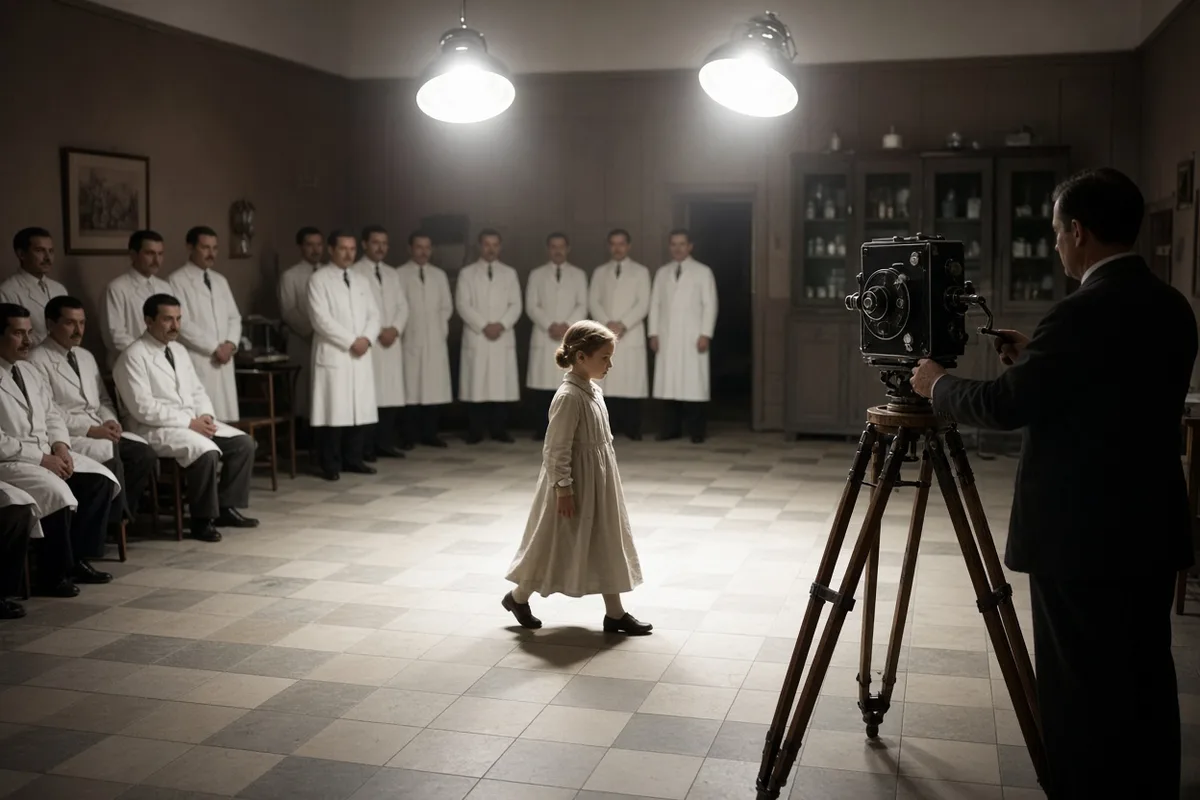
Dr. Darde met them at the door of the small examination room behind the hospice. He had seen the child the week before. He asked the boy what color the doctor’s car was. The boy said red without hesitation. Dr. Darde walked outside and pointed to the vehicle parked in the lane. The boy named the make and the color again.
The papers were signed that afternoon by three physicians who had examined Francis before the baths. They wrote that the paralysis and the blindness had ended. They added that the recovery stood outside any medical account they could offer.
Mme Pascal took the boy home to Beaucaire on the evening train. She did not speak of the baths on the platform. She kept one hand on the back of his coat as if the ground might still tilt.
Eleven doctors examined him again after the war. The records from 1937 and 1938 were laid out on the table. The signatures matched. The descriptions of the choked disc and the meningomyelitis remained. The examiners wrote that the cure had held for eight years and that no medical explanation accounted for it.
The Church inquiry opened in 1948. Monsignor de Provenchères read the medical file and the testimony of the mother and of Dr. Darde. On 31 May 1949 he declared the healing a miracle.
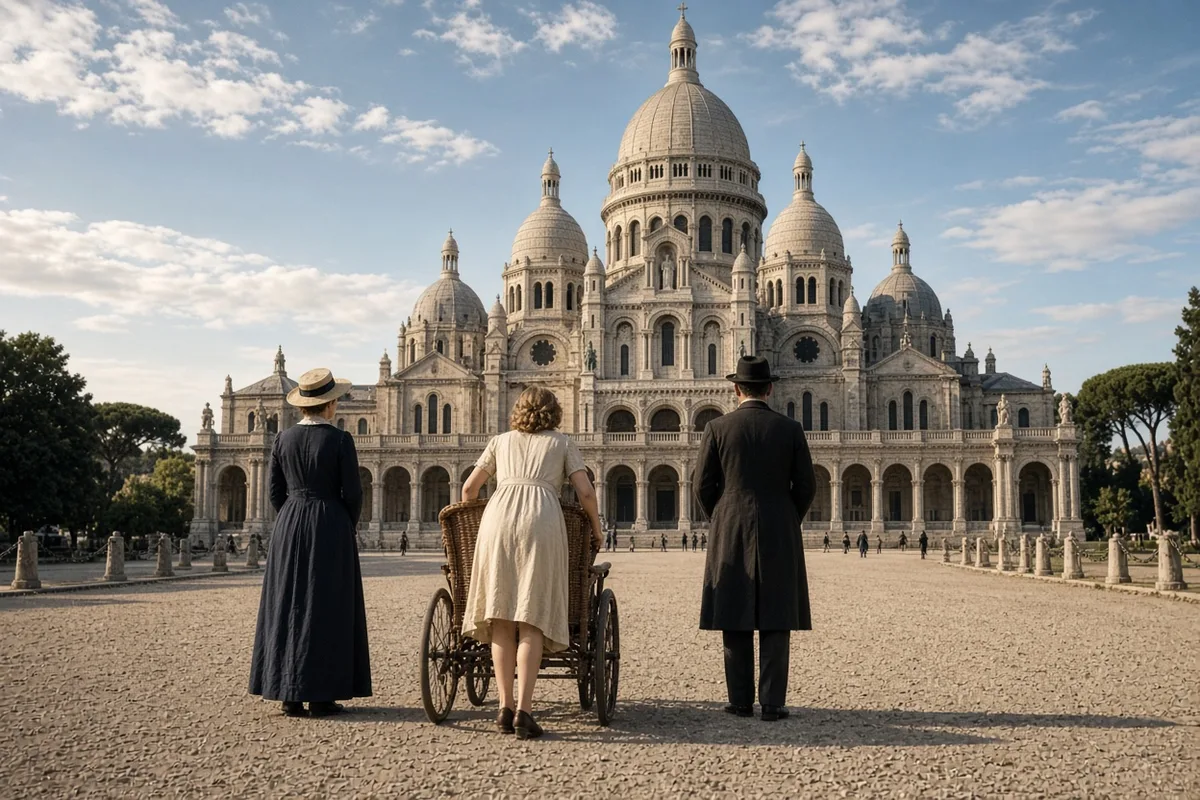
Francis stayed in Beaucaire. He grew up, worked, married. He never returned to Lourdes except once, years later, when his own children asked to see the place. He stood at the edge of the same basin and watched the water move.
Mme Pascal kept the blanket that had wrapped him on the second bath. She folded it in a drawer and did not take it out again. When visitors asked what she had felt when the boy spoke, she answered that she had felt the weight leave her arms and nothing else.
The last note in the medical bureau file records that the cure remained complete at the time of the final verification. No further examination was requested. The case stands listed as the sixty-fifth recognized healing at the shrine.
Francis took work at the Établissements Bessière textile mill on the Rhône quay in Beaucaire in March 1952, entering the carding room on the ground floor where the humidity stayed at 68 percent year-round. He operated the same Platt Brothers breaker card for twenty-three years, replacing the leather feed aprons every fourteen months and signing the maintenance log with the same fountain-pen nib he had used on the 1949 declaration. His pay packet for the first full week came to 4,872 francs; the envelope still carries the mill stamp and the foreman’s initials, P. Laurent. In 1956 he married Marie-Thérèse Vial, daughter of the lock-keeper at the Beaucaire lock on the Canal du Midi. The parish register at Saint-Paul-et-Saint-Vincent records the banns read on three successive Sundays and the witnesses’ signatures: Dr. Darde, who traveled from Nîmes for the day, and the mother, who wrote her name as “Mme Pascal, veuve.” Their first child, a daughter named Anne-Marie, was born 14 February 1958 at the Hôpital Saint-Ponç in Beaucaire; the birth certificate notes the father’s occupation and the fact that both parents presented the 1949 medical certificate when registering the child.
The family lived at 17 Rue des Écoles, a two-room apartment above the boulangerie, until 1964 when they moved to a small house on the Chemin de la Gare. Francis kept a copy of the Lourdes medical report in a tin box with the ration cards from the war years. On 12 October 1963 he wrote to the Bureau Médical asking whether the case file could be consulted by his parish priest for a confirmation class; the reply, signed by Dr. A. F. d’Averny, stated that the dossier remained open only for statistical purposes and that no further clinical examination would be scheduled. The letter is archived under reference BM 65/1949. Francis never asked again. His son, Jean-Paul, born 3 July 1961, later recalled that the only time the subject arose at the kitchen table was when a visiting cousin from Marseille mentioned the shrine; Francis answered, “The water was cold and that is all I remember,” then passed the bread.
Mme Pascal died on 8 January 1971 at the same address. The death certificate lists cardiac insufficiency and gives her age as sixty-seven. The blanket she had kept was found folded in the top drawer of the wardrobe; it was given to the parish poor box at Saint-Paul-et-Saint-Vincent the following week. The priest, Abbé Jean-Baptiste Roux, noted in the parish ledger that the item had been used at Lourdes in 1941 and that the donor’s son had been the subject of the sixty-fifth canonical recognition. Francis attended the funeral but did not speak of the baths. Two years later, in September 1973, he took his children to Lourdes for the single visit mentioned in the earlier record. They stayed at the Accueil Notre-Dame, paid 18 francs per night per bed, and Francis stood at the edge of the same piscina for twenty minutes while the children watched the brancardiers carry stretchers past. He did not enter the water.
The Bureau Médical recorded its last direct contact with the family on 22 April 1982, when a clerk wrote to Francis requesting permission to microfilm the original certificates for the new archive system. Francis replied on a postcard showing the Beaucaire lock; the text reads, “You may photograph whatever you need. The cure has not changed.” The microfilm reel, numbered R-1949-65, is stored in the climate-controlled vault beneath the Accueil Notre-Dame. In 1997 the International Medical Committee of Lourdes reviewed the case once more as part of a digitization project; the committee’s minutes, dated 14 November 1997, list the case under “historical verifications” and note that the original examiners’ signatures had been compared with the 1937–1938 hospital records from Beaucaire and Nîmes. No new examination was ordered.
Francis retired from the mill in June 1987 after thirty-five years and two months of service. The company presented him with a silver watch engraved with the dates 1952–1987 and the number of the carding machine, 4-B. He lived another eleven years. On 4 March 1998, three weeks before his death, he was visited at the Chemin de la Gare house by a researcher from the Centre d’Études Saint-Bernadette who asked to record his recollection of the 1941 train journey. The tape, preserved at the centre under accession number CESB-98-14, runs twenty-two minutes; Francis speaks for eleven of them, describing the exact time the train left Nîmes (06:47), the number of the carriage (third-class, number 12), and the name of the attendant who helped his mother at the piscines. He does not mention any sensation in the water.
His daughter Anne-Marie still lives in the same house on the Chemin de la Gare. The medical certificate from 1949 is framed on the wall of the front room between two photographs: one of Francis at age twelve standing beside the basilica ramp, the other of Mme Pascal holding the infant Francis in Beaucaire in 1938. Anne-Marie opens the frame once a year to dust the glass. The last time she did so was on 11 February 2023, the feast of Our Lady of Lourdes. She replaced the backing board, which had begun to yellow, with a fresh piece of acid-free card cut to the same size. The certificate itself shows no further annotation.
Anne-Marie married Henri Lacoste on 22 June 1985 at Saint-Paul-et-Saint-Vincent; the register lists the groom as a railway clerk at the Beaucaire SNCF depot and records the two witnesses as Jean-Paul Pascal and the parish secretary, Mme Élisabeth Bonnet. Their son, Marc Lacoste, was born 9 April 1987 at the Clinique Saint-François on the Avenue de la Libération. Marc completed his CAP in mechanics at the Lycée Jean Moulin in 2005 and took employment at the same Établissements Bessière site, now operated under the name Texunion, where he maintains the breaker cards on the night shift that begins at 22:15.
In 2009 Anne-Marie received a letter from the Bureau des Constatations Médicales dated 17 March requesting a copy of the 1949 certificate for the annual statistical review; she replied on a postcard postmarked 24 March that the original remained framed and that she would not remove it from the glass. The reply from Dr. P. M. Ravier, archived under BM 65/2009, states that the request was noted and that no further action was required. The framed document has not left the wall since that exchange.
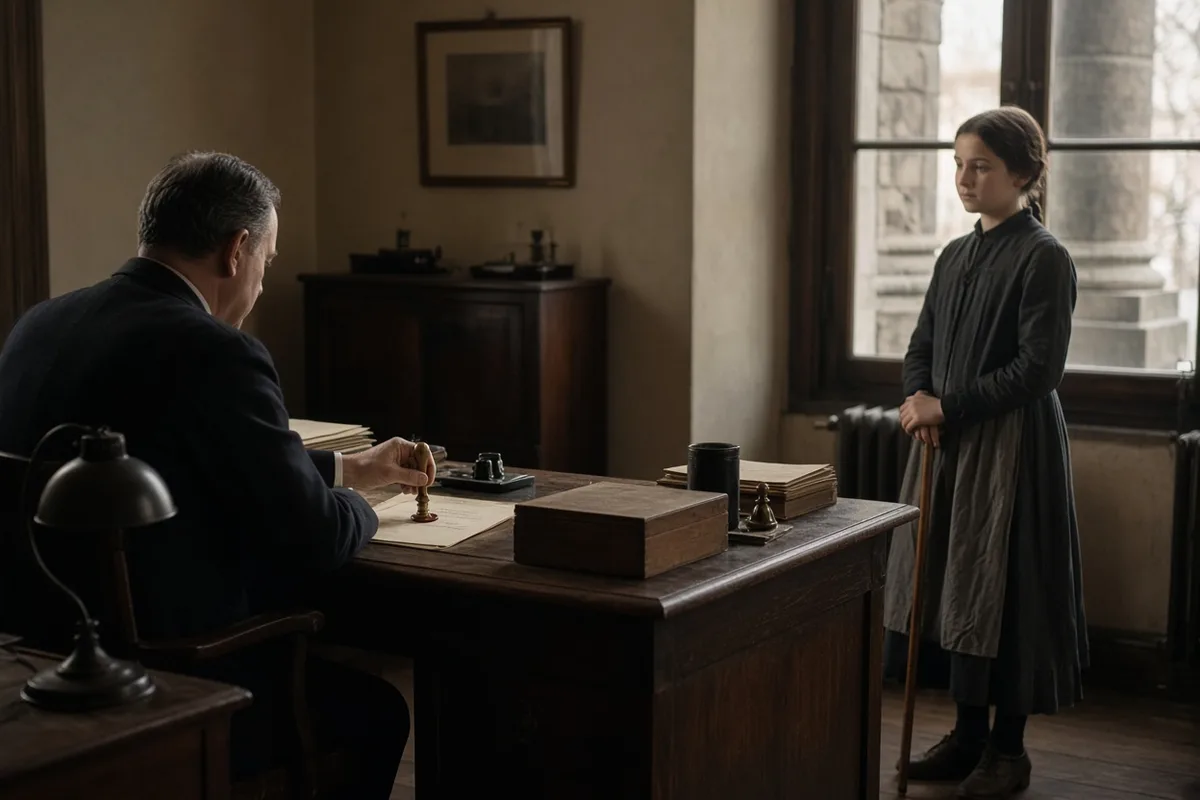
Marc Lacoste’s daughter, Claire Lacoste, born 14 September 2012 at the Centre Hospitalier de Tarascon, visits the house on the Chemin de la Gare each Sunday after the 09:30 Mass. On 3 August 2019 she asked her grandmother the meaning of the Latin phrase at the foot of the certificate; Anne-Marie read the words aloud—“Sanatio instantanea et perfecta, causis naturalibus inexplicabilis”—then returned the frame to its hook without further comment. Claire entered the text into her school notebook under the heading “Famille, 1941.”
The house at 17 Chemin de la Gare was repainted in 2021 by a contractor from Nîmes whose invoice, numbered 4872 and dated 14 May, records the use of two coats of “Gris Perle 3401” on the shutters and the replacement of four roof tiles above the front room. Anne-Marie paid the bill from the account she maintains at the Crédit Agricole branch on the Place de la République. The tin box that once held the certificate now contains only the 1952 mill pay envelope and the 1963 letter from Dr. d’Averny.
Jean-Paul Pascal died on 11 December 2014 at the EHPAD Les Oliviers in Tarascon; the death certificate lists the cause as pneumonia and notes that he was fifty-three. His son, the only other living descendant, placed a copy of the 1949 medical report in the coffin at the request of the funeral director, M. Alain Veyrat, who recorded the item on the inventory sheet signed by the family on 13 December. No further copies exist outside the framed original and the microfilm reel R-1949-65.
On 11 February 2024 Anne-Marie Lacoste opened the frame again to replace the glass after a hairline crack appeared during dusting. She used a sheet of 2 mm float glass cut to 24 by 32 centimetres at the Quincaillerie Centrale on the Rue de la République and secured it with the original brass tacks. The certificate was not removed from its mount during the procedure. She returned the frame to the wall at 16:40, according to the kitchen clock that still runs on the original 1958 movement.