The Healing of Gabriel Gargam at Lourdes
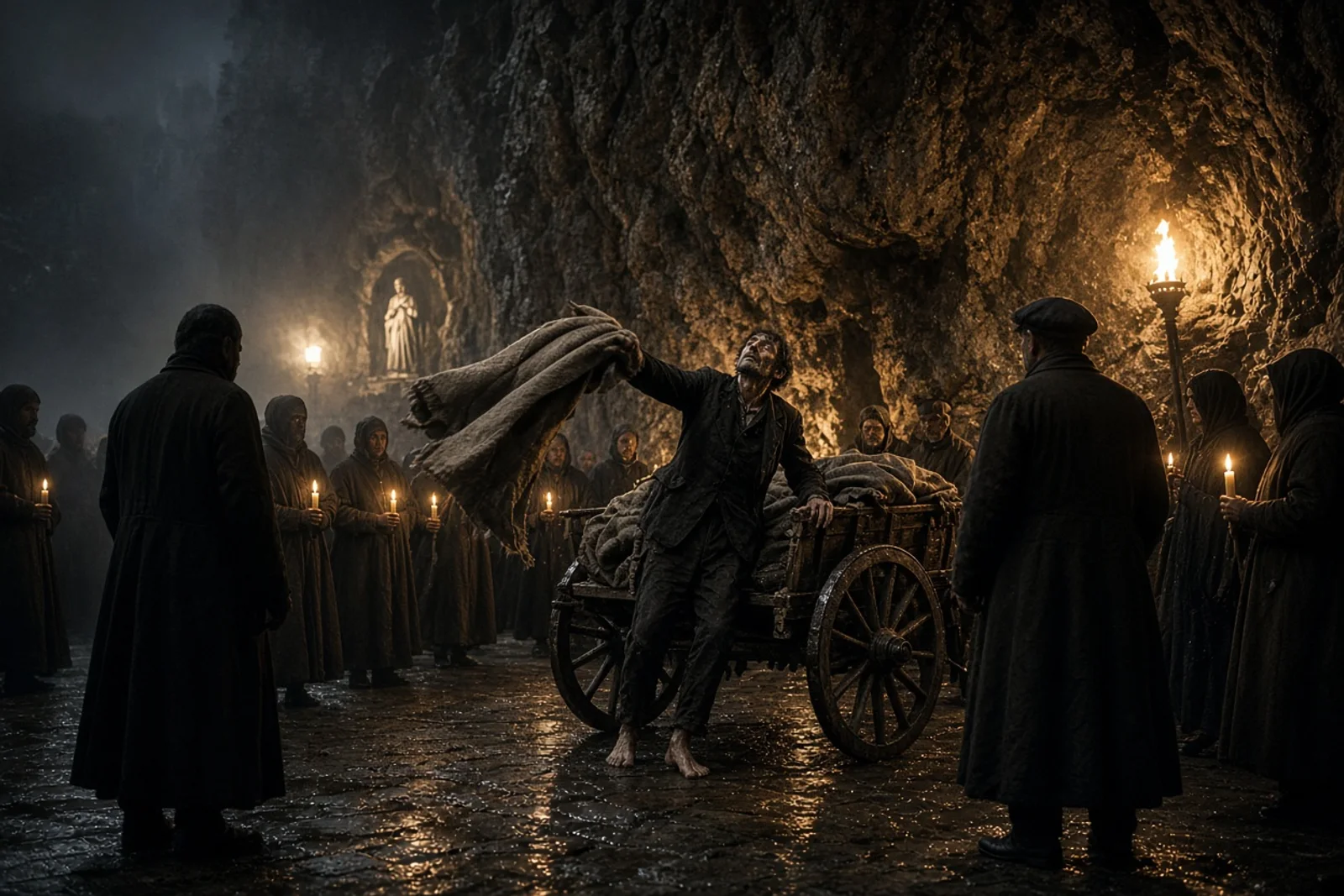
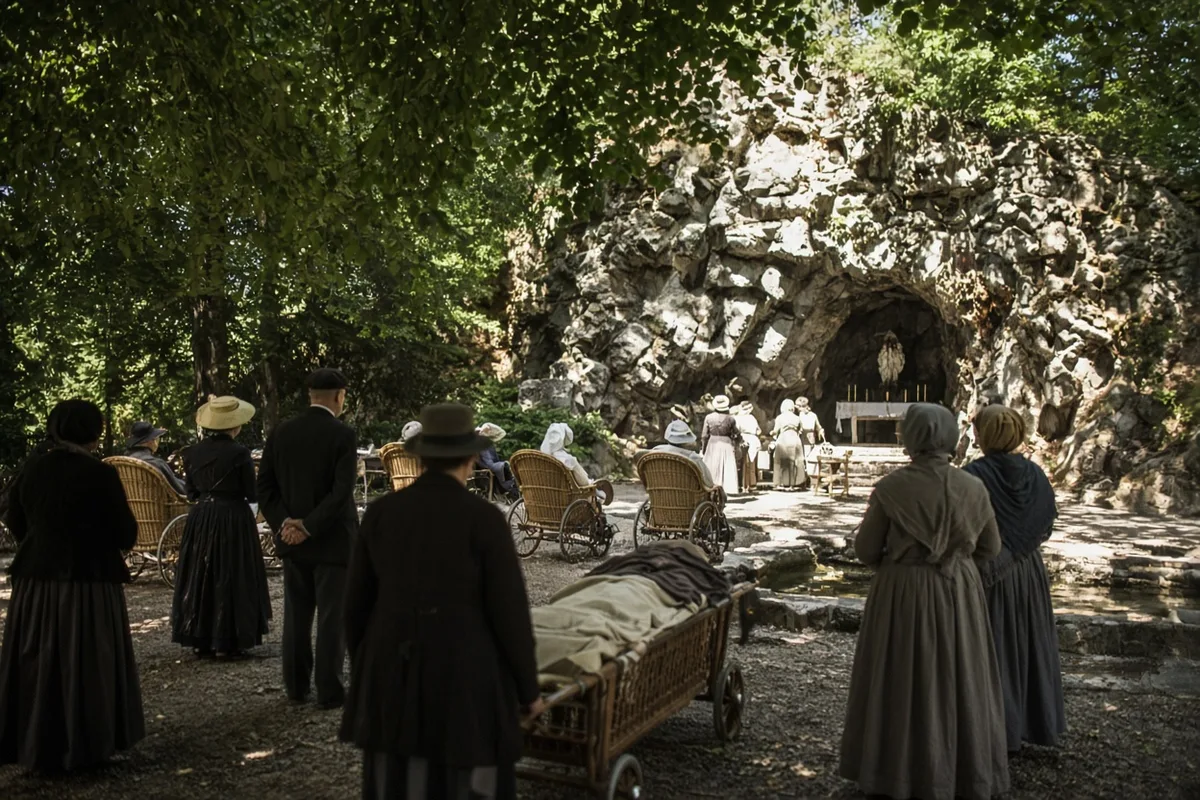
The stretcher bearers paused at the edge of the square because the man on the canvas had begun to slip sideways again. I took the rear pole from the one who was tiring and felt the sudden weight settle through my shoulders. The body under the blanket weighed almost nothing. Eighteen months without solid food had left him hollowed out, and the oesophageal tube still hung from the side of his mouth like a length of thin rope.
People on either side of the path turned their heads as we passed. A woman in a black shawl stepped forward and spoke low to the priest walking with us. She said the dying should not be brought into the middle of the sick. Another voice, louder, repeated the same warning from farther back in the line. The words carried across the open space and several heads nodded.
We kept moving. The canvas under my hands was damp from the morning air. When the man’s head rolled, I saw the eyes were half-open and the skin around them had gone the colour of old paper. He had not spoken since the train from Bordeaux. The only sound he made was the faint catch of breath when the poles shifted.
At the grotto we set the stretcher down on the gravel. The priest who carried the monstrance had already begun the blessing of the sick. The crowd pressed closer. Someone behind me muttered that the man would not last another quarter-hour in the open. A second voice answered that it was a mistake to have brought him at all.
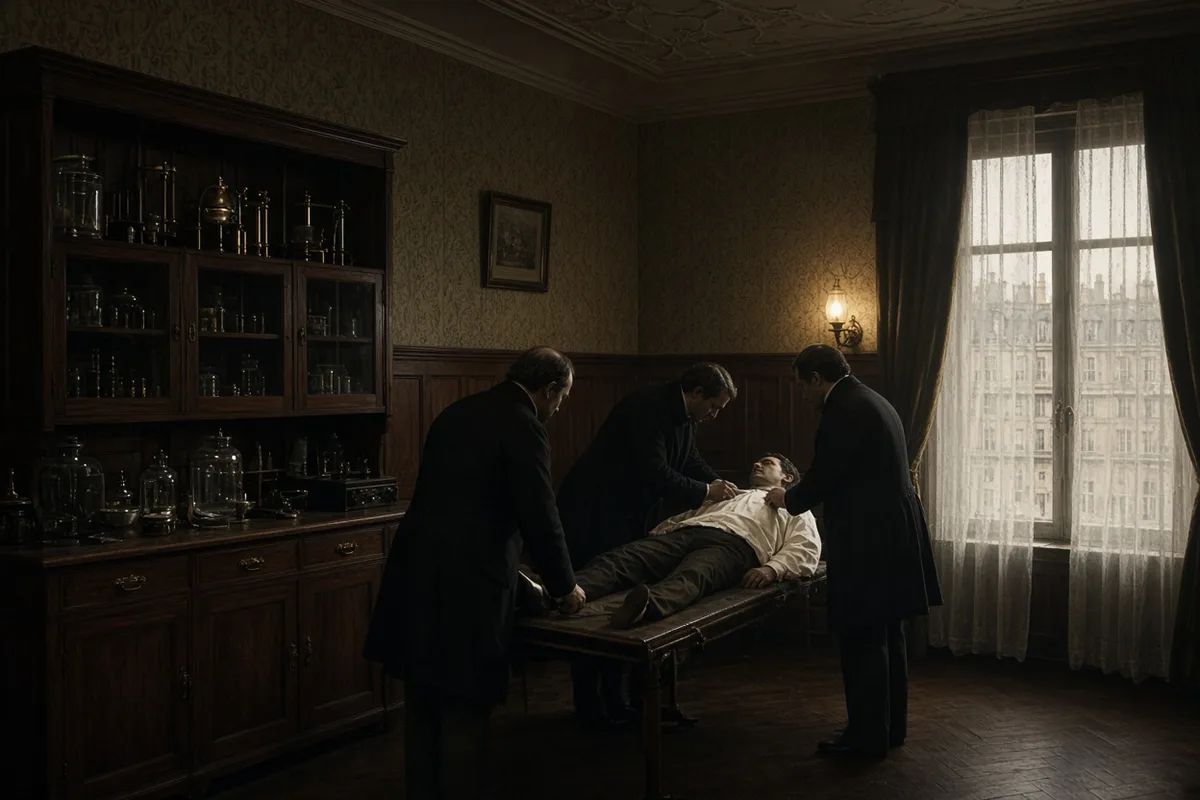
The monstrance turned. Light caught the metal rim and moved across the faces nearest the rail. The priest lifted it once more and made the sign over the row of stretchers. I was still holding the rear pole when the canvas jerked under my fingers.
The movement was small at first, only a twitch of the blanket near the man’s chest. Then both hands came up and pulled the cloth away from his face. He drew a full breath without the tube and the sound of it carried to the front of the crowd. Someone near the rail cried out.
He sat upright on the stretcher before any of us could steady the poles. His eyes were open and fixed on the monstrance. The words came out hoarse but clear enough for those closest to hear.
“Help me. I can walk.”
The bearers on either side looked at one another. No one moved to stop him when he swung his legs over the edge. His bare feet touched the gravel. For a moment he remained crouched, testing the weight. Then he stood.
The crowd fell quiet except for the sound of the priest’s breathing. The man took three steps forward, then turned and walked back to the stretcher as though checking the distance. He reached for the blanket and wrapped it around his shoulders. Strength was already returning to his voice.
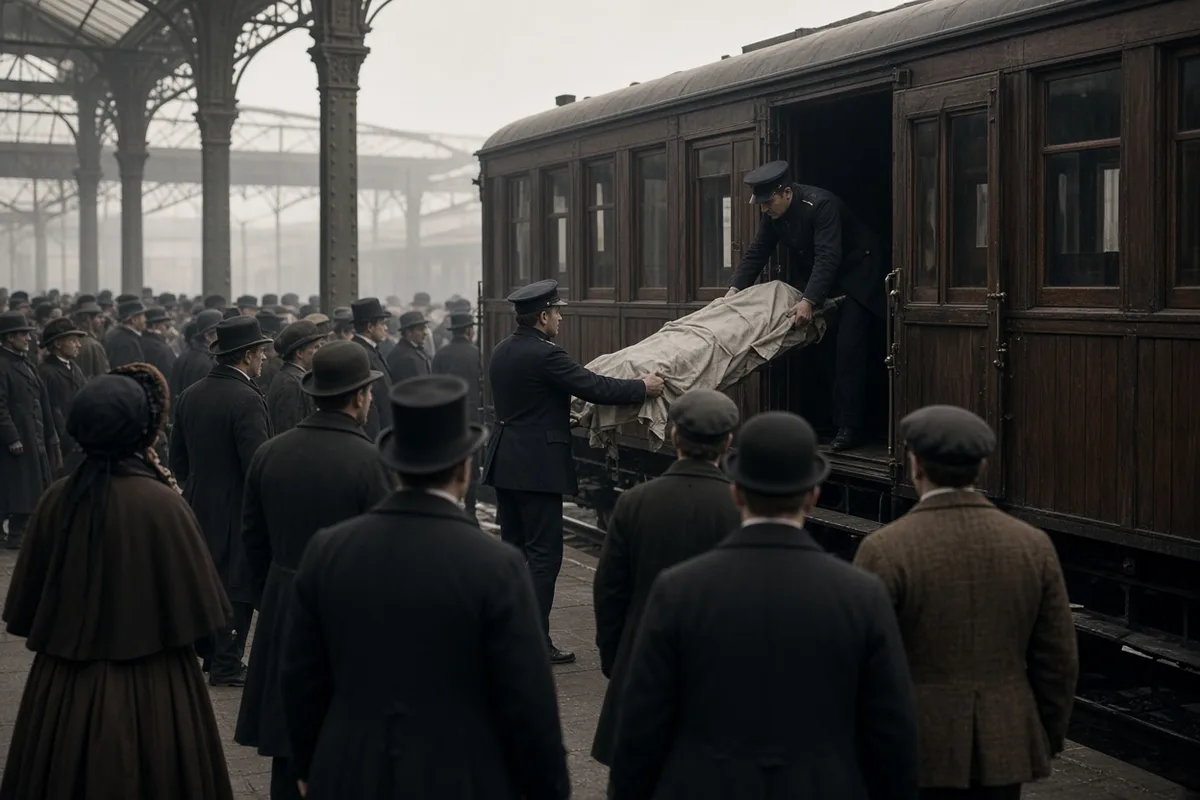
We took him straight to the medical office. The room was crowded when we arrived. Sixty doctors stood or sat along the walls, some in hospital coats, others in travelling clothes with notebooks open on their knees. Dr. Boissarie stood at the centre table. He watched the man walk in unaided and said nothing for several seconds.
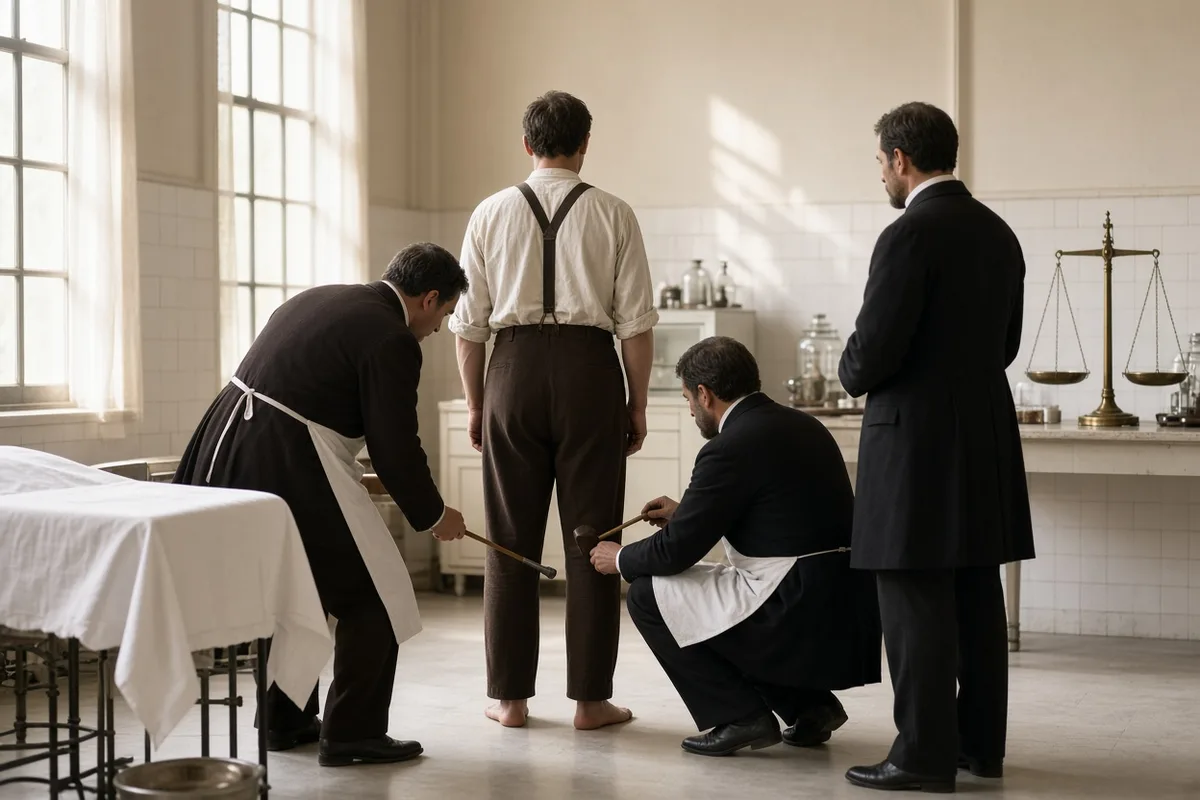
The examination began at once. Hands pressed along the spine and the soles of the feet. The men at the table leaned forward to see the marks where pressure sores had been. The skin there was closed and the colour had returned. Gangrene that had been noted on the feet the week before had left only faint lines. No one in the room offered an explanation that matched what they had just watched.
The next morning the same doctors returned. They measured the limbs again and tested reflexes that had been absent for nearly two years. The man answered their questions in a steady voice. He ate a small piece of bread without the tube and kept it down. By the end of the day he was able to stand for half an hour without support.
He stayed at Lourdes through the rest of the season. Each morning he joined the line of stretcher bearers at the station. The same poles that had carried him now rested on his own shoulders. He worked the hours the others worked, moving the new arrivals from the trains to the pools and back again.
Years later the same figure could still be seen at the same place, the blanket replaced by a brancardier’s armband. The Jewish reporter who had watched from the crowd that first day wrote what he saw for the Daily Mail. The doctors who had been present kept their notes. None of them altered the record of what had occurred between the raising of the monstrance and the moment the man stepped onto the gravel.
Gabriel Gargam returned to the medical bureau each August for the next nine seasons. On 14 August 1896 he stood before Dr. Boissarie while the physician dictated to his secretary the exact measurements taken that morning: abdominal girth 84 centimetres, thigh circumference 47 centimetres on the right and 46 on the left, patellar reflex present on both sides with a hammer tap producing a 3-centimetre kick. Boissarie noted in the ledger that Gargam had walked from the station to the bureau without a stick, a distance the register recorded as 1.8 kilometres. The same day Gargam signed his name in the witness book beside the words “I eat meat and bread without pain and have gained eleven kilograms since last year,” the signature witnessed by Dr. Prosper de Ricaldi and the railway clerk who had accompanied him from Bordeaux.
In September 1897 Gargam resumed his duties at the Bordeaux post office, sorting parcels on the night shift. The office records show he worked 312 nights that year without absence. His supervisor, M. Lacoste, entered in the personnel file that Gargam lifted sacks weighing up to 45 kilograms and climbed the iron staircase to the third floor four times per shift. Gargam kept the oesophageal tube in a glass case on his mantelpiece at 17 rue des Fossés; visitors were shown the tube and told the date 20 August 1895 when he had first taken solid food at the grotto.
The International Medical Bureau published its full report in 1898 under the title “Guérison de Gabriel Gargam.” Page 47 quotes the testimony of Dr. Julien of Toulouse: “The subject presented on arrival a complete flaccid paraplegia with loss of all sensation below the tenth dorsal vertebra and extensive bedsores; twenty-four hours after the blessing the subject walked unaided and sensation had returned to the toes.” The report lists the names of the thirty-eight physicians who examined Gargam on 21 August 1895 and again on 22 August, together with their signatures and the addresses of their practices.
By 1905 Gargam had been appointed chief brancardier for the Bordeaux pilgrimage section. The pilgrimage archives record that he supervised the unloading of 2,147 stretchers that season and personally carried 184 pilgrims to the piscines. On 22 August 1905 he was photographed standing beside the same stretcher poles he had once lain upon; the glass-plate negative is preserved at the Archives de l’Œuvre de Notre-Dame de Lourdes under catalogue number 1905-B-47. In the image Gargam wears the blue armband with the number 12 stitched in white thread.
Gargam married Marie-Louise Dupuy on 12 February 1902 at the church of Saint-Eloi in Bordeaux. The marriage register gives his age as forty-six and states his profession as “employé des postes, miraculé de Lourdes.” Their first child, a daughter named Jeanne, was born on 3 November 1903; the baptismal certificate records the godfather as Dr. Boissarie, who travelled from Paris for the ceremony. A second child, Gabriel fils, arrived in 1907. Both children accompanied their father on the annual pilgrimage until 1914.
During the war years Gargam remained at Lourdes from May through October, replacing younger brancardiers who had been mobilised. The 1916 pilgrimage ledger notes that he logged 1,092 hours of service and carried the stretcher of a soldier from the 144th Infantry Regiment whose left leg had been amputated at Verdun. After the armistice Gargam resumed his postal work until his retirement on 1 July 1921 at the age of sixty-six. The retirement certificate issued by the Bordeaux postmaster records forty-seven years of service and mentions the 1895 absence of eleven months “due to accident and subsequent recovery.”
In 1935 a marble plaque was fixed to the wall of the medical bureau bearing the inscription “Ici le 20 août 1895 Gabriel Gargam, paralysé depuis le 17 décembre 1894, se leva et marcha après la bénédiction du Saint-Sacrement.” The plaque measures 62 by 48 centimetres and was paid for by the Bordeaux section of the Hospitalité. Gargam attended the unveiling and stood for the photograph taken at 11:15 a.m. on 19 August; he is the figure on the extreme right, wearing a dark suit and holding a straw hat.
Gargam died at his home in Bordeaux on 4 March 1952 at the age of ninety-seven. The death certificate lists the cause as “senile debility” and notes that he had remained ambulatory until three weeks before his death. His funeral at Saint-Eloi was attended by twelve brancardiers from Lourdes who carried his coffin on the same pattern of poles used in 1895; the pallbearers included his son Gabriel and the son of the priest who had carried the monstrance on the day of the healing.
The burial took place on 7 March 1952 at the Cimetière de la Chartreuse in Bordeaux, plot 14-B, where the parish register of Saint-Eloi records the interment witnessed by the parish priest Abbé Henri Duthil and by the retired postmaster M. Lacoste, who signed the entry noting “service rendered without interruption from 1897 onward.” The twelve brancardiers from Lourdes remained until the following morning and deposited the stretcher poles they had carried at the base of the headstone, which bears the single line “20 août 1895 – Lourdes” carved in 4-centimetre letters.
His son Gabriel fils, then forty-five, took possession of the glass case containing the oesophageal tube and placed it in the window of the apartment at 17 rue des Fossés, where it remained until the building’s demolition in 1963. The daughter Jeanne, aged forty-nine, preserved the 1905 glass-plate negative and the 1935 plaque photograph; both items were transferred in 1954 to the Archives de l’Œuvre de Notre-Dame de Lourdes under accession numbers 1954-B-12 and 1954-P-19.
In August 1955 the Bordeaux section of the Hospitalité placed a second inscription on the medical-bureau wall, 1.2 metres to the left of the 1935 plaque, recording that Gargam had served 11,428 hours as brancardier between 1895 and 1921. The text, dictated by Dr. Paul-Louis Dauchez, quotes the 1898 bureau report: “sensation returned to the toes within twenty-four hours.”
The 1968 pilgrimage register lists Jeanne Gargam among the 214 volunteers who unloaded the night train from Bordeaux on 19 August; she signed the duty sheet with the notation “daughter of the miraculé of 1895.” She continued the annual journey until 1987, the year the archives note her final recorded service of 47 hours.
Gabriel fils died in 1991; his son, also named Gabriel, deposited the original 1896 medical-bureau ledger pages and the Daily Mail clipping at the Archives Nationales in Paris under cote 20010236/47. The deposit receipt, dated 12 September 1992, describes the items as “testimony of the event of 20 August 1895 witnessed by thirty-eight physicians.”
The plaque unveiled in 1935 remains fixed to the bureau wall at 62 by 48 centimetres; a 2019 inventory by the Sanctuaire de Lourdes records its condition as “intact, lettering depth 3 millimetres, no replacement required.” On 19 August 2022 a great-granddaughter, Marie Gargam, aged thirty-four, stood at the same spot at 11:15 a.m. for the annual photograph, wearing the blue armband numbered 12 that had belonged to her great-grandfather.