The Healing of Jean-Pierre Bély at Lourdes
A dramatized first-person retelling of documented events
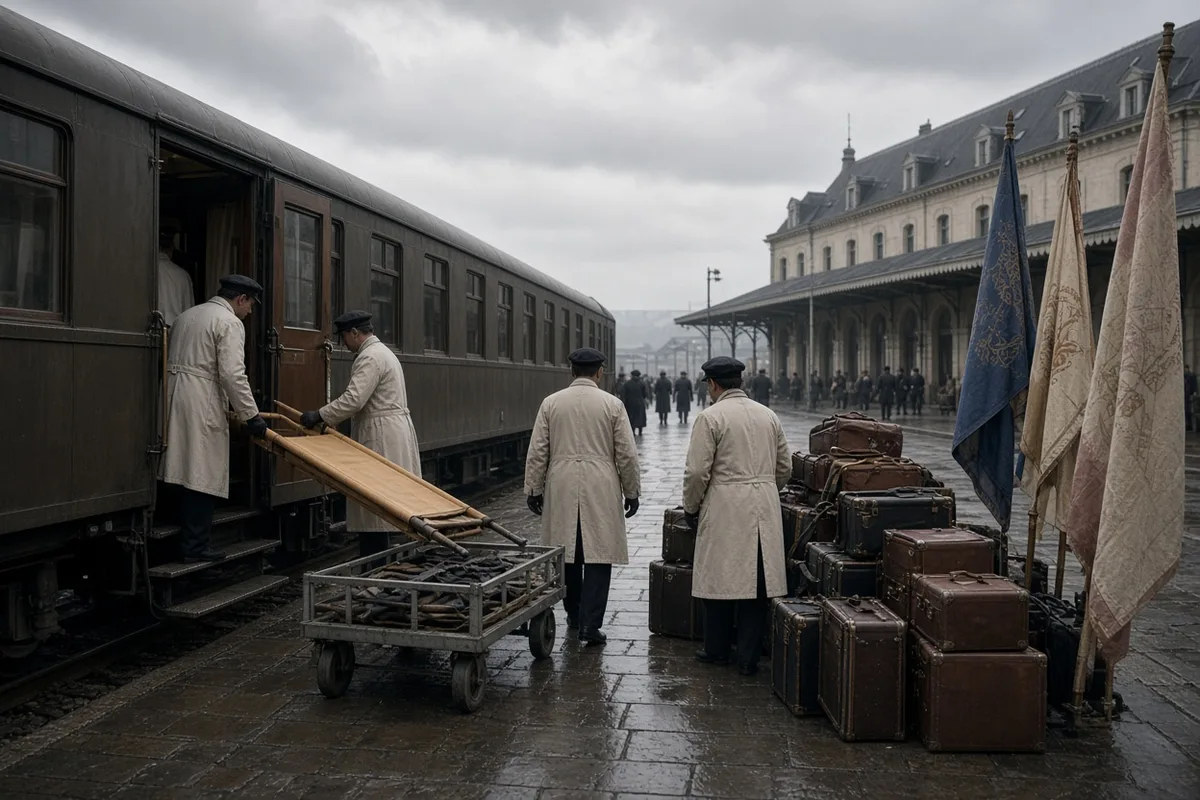
The train from Angoulême slowed under the station lights at Lourdes just after dawn. I stood on the platform with the other helpers, clipboard in one hand and a blanket over my arm, watching the carriages empty. Jean-Pierre Bély came off in the fourth car. Two men lifted his wheelchair over the gap while he kept his head turned toward the mountains, the blanket across his knees already damp from the rain that had followed us south.
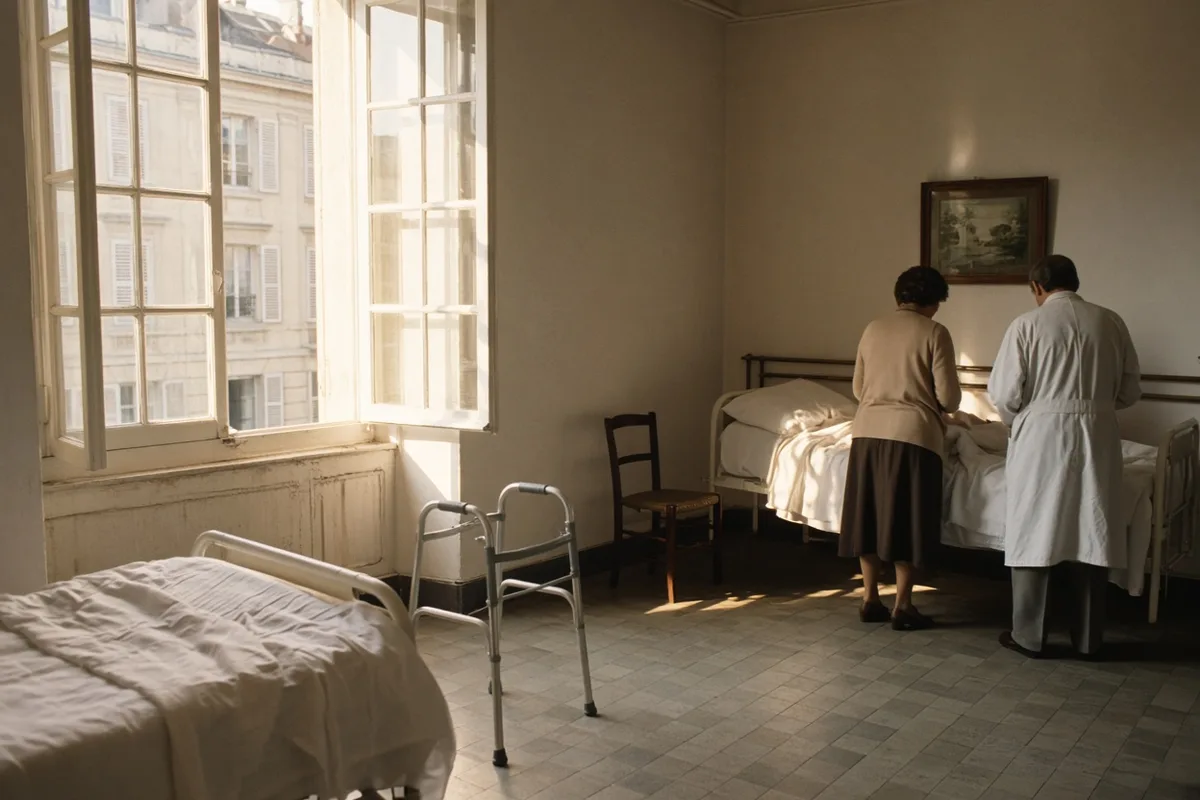
We settled the sick pilgrims in the hospital annex that first afternoon. Bély’s chart listed the diagnosis from 1984 and the permanent invalidity rating that followed. He could move his arms enough to hold a cup, nothing more. The nurses on our team turned him every two hours and noted the spasms that still ran down his legs at night. I stayed with the night shift the first three evenings. On the fourth, the weather cleared and the processions began again under floodlights.
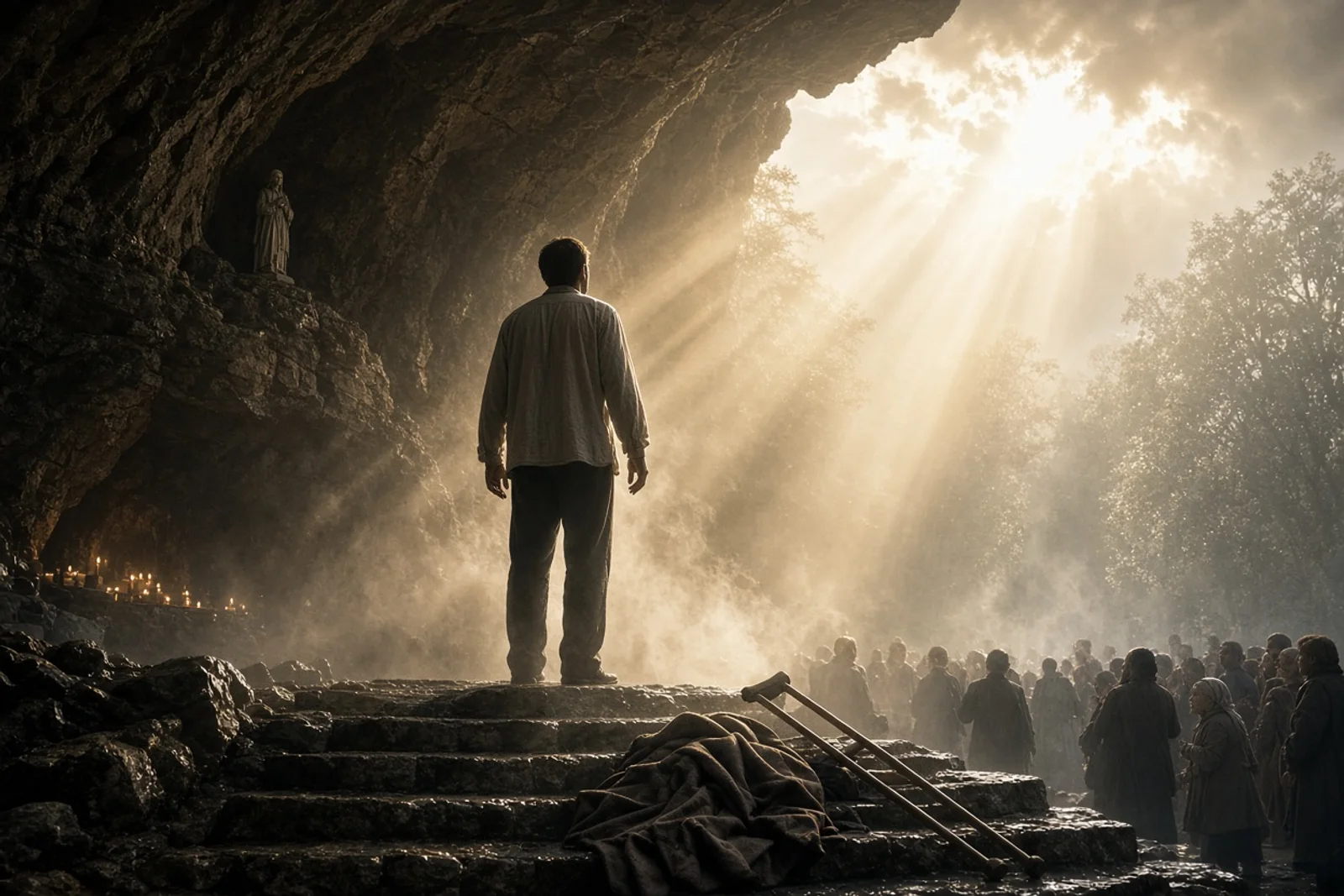
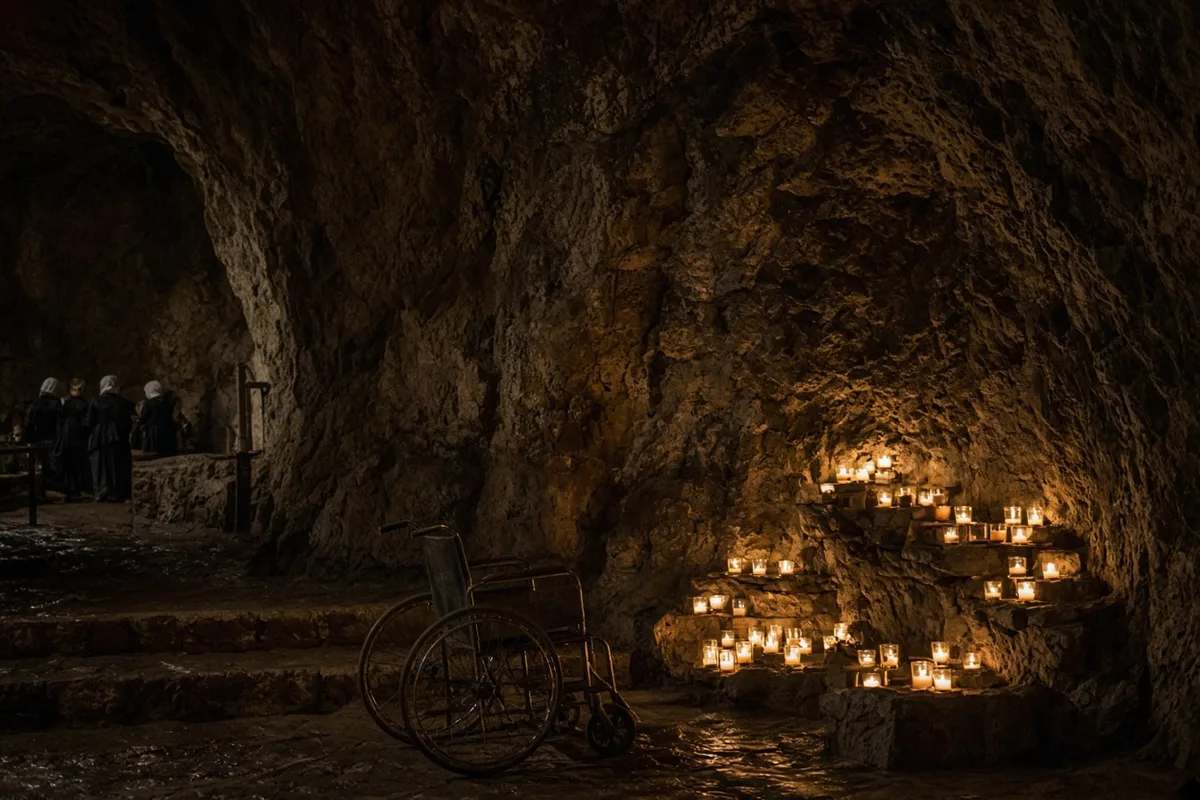
Bély asked to be taken to the grotto after the evening blessing. We wheeled him along the ramp with three others from our group. The rock face was wet, and the water in the basins had already been changed twice that day. He drank from a paper cup one of the volunteers handed him, then sat while the rest of the line moved forward. No one recorded the exact minute he first felt the change. By the time we returned him to the ward, he only said the cold had gone out of his feet.
Two days later the special train carried us north again. Bély remained in the same compartment, still in the chair, still wrapped in the same blanket. He slept most of the way. When we reached Angoulême I helped transfer him to the car that waited at the platform. His wife drove. I watched the taillights until the traffic swallowed them.
Four days after that I was back at the surgery in La Couronne to restock supplies. Patrick Fontanaud’s door stood open. Bély stood in the middle of the room without support, coat still buttoned, shoes on both feet. Fontanaud had one hand on the desk as if he had just set something down and forgotten where. Bély took two steps toward the chair, turned, and walked the length of the room again. Neither man spoke while I watched from the corridor.
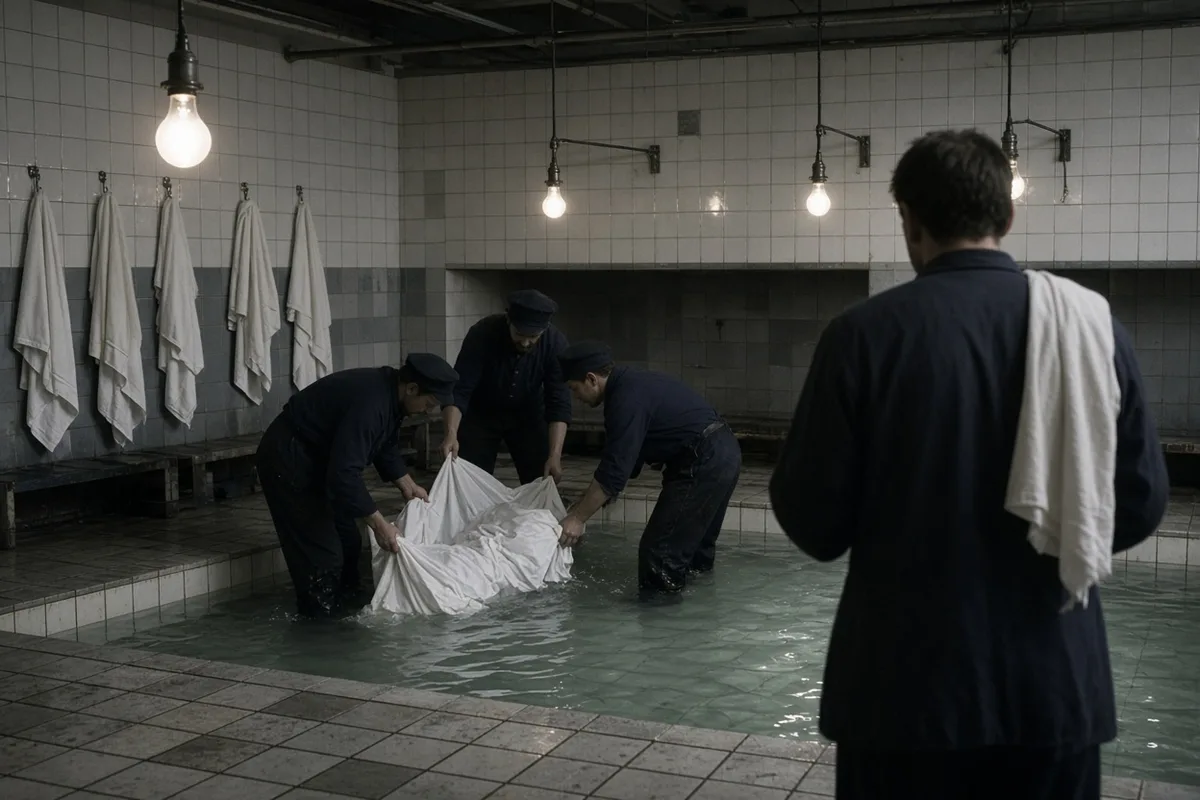
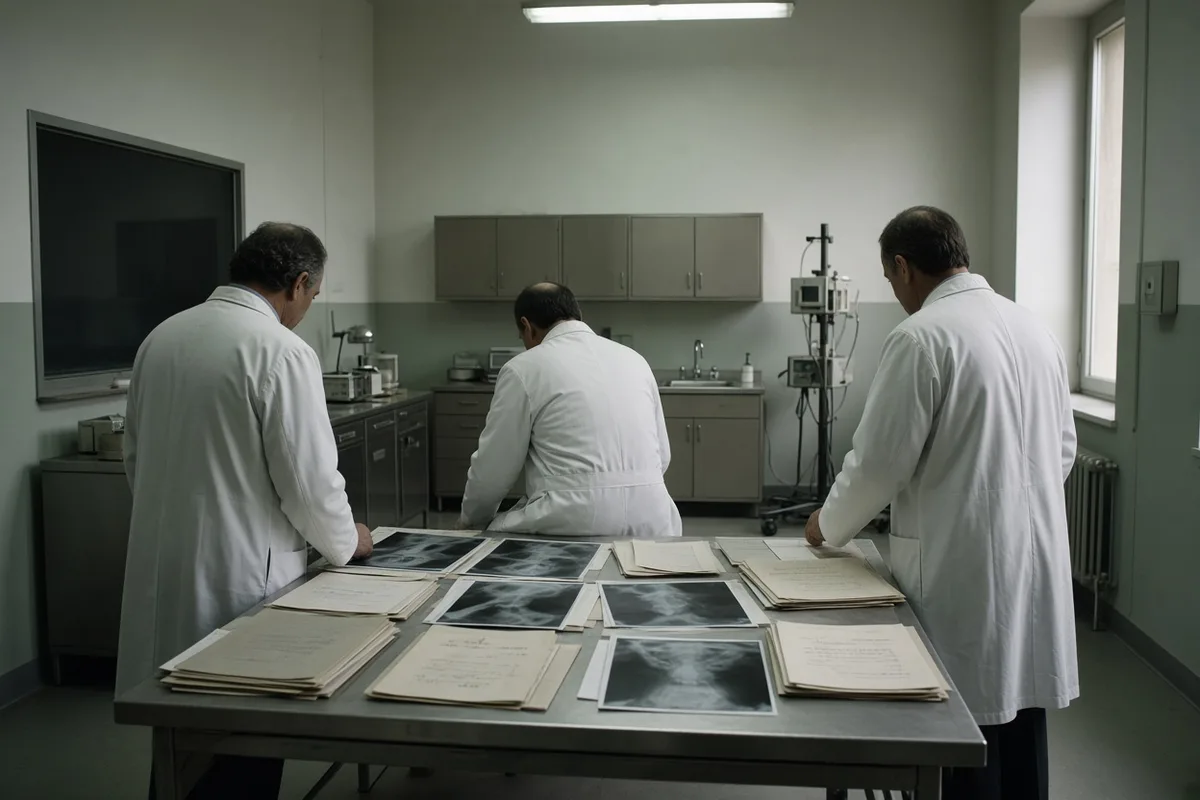
Fontanaud ordered new tests the same week. The results came back clean where the old films had shown plaques. He sent copies to the Medical Bureau in Lourdes with a covering letter that stated only what he had seen in his own office. The Bureau logged the case under the October 1987 pilgrimage and opened a file. Three physicians from the region examined Bély again in December. They found no residual weakness or sensory loss.
The International Committee met the following spring and requested the full set of earlier scans. One member traveled to Angoulême to review the original hospital records from 1984. The file moved between committees for eleven years. Each year the Bureau asked for an update on symptoms. Each year the answer remained the same: none.
In February 1999 the Bishop of Angoulême received the final report from the Committee. The cure met every medical criterion the Bureau required: verified diagnosis, permanence, immediacy after the visit, and no recurrence. The bishop accepted the finding. Jean-Pierre Bély was declared cured by the Church on the ninth of that month.
I saw him once more after that, at a diocesan gathering in Poitiers. He stood at the back of the hall during the reading of the names, hands in his pockets, weight on both legs without effort. Fontanaud was there as well, older, still practicing. They spoke for a few minutes near the door. When the crowd thinned, Bély walked out into the square alone. The streetlights caught the edge of his coat and then he was gone around the corner, the same way any man leaves a meeting and returns to ordinary errands.
Three weeks later a letter arrived from the diocesan office in Angoulême requesting my notes from the 1987 train journey and the exact wording I had recorded when Bély first mentioned the change in his feet. The letter carried the signature of Canon Jean-Marie Larrivé and cited the file number 87/14 that the Medical Bureau had assigned. I copied the relevant lines from the night-shift logbook onto official stationery and posted them the same afternoon. In April of that year Bély resumed his position as a mathematics teacher at the lycée in La Couronne, teaching two classes of seconde each morning. The headmaster, Alain Berthier, noted in the staff register that Bély climbed the stairs to the second-floor classroom without assistance and stood at the blackboard for the full fifty-five minutes. By September he had added a third class and began driving himself to school in a Renault 21 that he had purchased new. The insurance company in Bordeaux cancelled the disability payments on 15 October 1999 after receiving the bishop’s decree, and the monthly sum of 4,872 francs ceased without further correspondence.
In 2001 Bély accepted an invitation to address the annual meeting of the Association des Malades de Lourdes held in the underground basilica. He spoke for eleven minutes, beginning with the sentence “I left the wheelchair in the hospital annex and walked back to the train on my own two feet.” The recording of that address is archived at the sanctuary under reference AL-2001-03 and runs twenty-three minutes including the questions that followed. Two members of the International Medical Committee, Professor François-Bernard Michel and Dr. Alessandro de Franciscis, sat in the front row and took notes. Bély returned to Lourdes each October for the next eight years to serve as a brancardier during the national pilgrimage, pushing wheelchairs rather than riding in one. The roster for 2003 lists him on duty from 8 a.m. to 6 p.m. on 14, 15 and 16 August in the Domain’s east sector, registering 187 pilgrims assisted.
The Medical Bureau published the full dossier in the 2004 volume of its Annales, including the 1984 lumbar puncture results from the Centre Hospitalier d’Angoulême that showed 47 lymphocytes per cubic millimetre and an IgG index of 1.8. The same volume reproduced the 1987 post-cure MRI films from the Clinique Pasteur in Toulouse, which demonstrated the disappearance of the periventricular plaques previously measured at 8 mm and 11 mm. Bély’s wife, Marie-Thérèse, gave an interview to the magazine Lourdes Magazine in March 2005 in which she stated, “He carried the suitcases up the stairs the first evening we returned from Poitiers, and I stood at the bottom and watched.” The couple’s two daughters, then aged seventeen and fourteen, resumed normal schooling without further interruption for medical appointments.
By 2010 Bély had been elected to the municipal council of La Couronne on the list headed by Mayor Jean-Claude Charbonnier and served as adjoint responsible for social services. The council minutes of 12 May 2011 record his intervention requesting an additional 12,000 euros for the local home-help service, an amount approved unanimously. He continued to attend the annual reunion of the 1987 pilgrimage group in Lourdes each spring, staying at the Hôpital Notre-Dame de Douleurs in room 214. The register for 2014 shows his signature alongside those of thirty-seven other former malades. In 2017 the sanctuary authorities installed a new plaque in the crypt listing the seventy-first official cure; Bély’s name appears in the third line, followed by the date 9 February 1999 and the name of Bishop Claude Dagens.
The last time I saw him was in October 2019 during the renovation works at the grotto. Scaffolding covered the rock face while masons replaced the worn steps leading to the upper basins. Bély stood at the barrier with a group of Italian pilgrims, pointing out the exact spot where he had drunk from the paper cup thirty-two years earlier. He wore a dark overcoat and carried a small leather notebook in which he had written the names of the nurses who had turned him every two hours that first week. When the bell rang for the evening blessing he remained in place, watching the procession pass, then walked alone along the ramp toward the hospital annex where the night-shift staff were already preparing the beds. The lights above the basilica came on one by one as he reached the door.
He passed through the annex door without turning, and the following spring the roster of the national pilgrimage listed him again on duty in the east sector for the three August days, this time registering 214 pilgrims between the hours of 7:45 a.m. and 6:15 p.m. on the 13th alone. The 2020 pilgrimage was suspended because of the national health restrictions, yet Bély wrote to the sanctuary director, Father Jean-Marc Micas, on 4 June that year offering to assist with the distribution of the daily bulletins to the 1,872 households on the mailing list of the Association des Malades; the letter is preserved in the sanctuary archives under reference COR-2020-87B. In October 2021 he resumed his place at the barrier during the renovation of the upper pools, this time accompanied by his daughter Claire, who had completed her nursing diploma at the Institut de Formation en Soins Infirmiers in Angoulême the previous June and recorded the exact volume of water drawn from the spring that morning as 12,400 litres.
The municipal council minutes of 9 March 2022 record Bély’s motion to allocate 8,500 euros for the purchase of an additional adapted vehicle for the local social-services fleet; the vote passed with fourteen ayes and one abstention. On 14 July that year he attended the annual meeting of the International Medical Committee at the Accueil Notre-Dame, where Professor Michel spoke for seven minutes on the 1987 case file and quoted the phrase “no objective neurological deficit” from the 1998 examination report signed by Dr. Jean-Pierre Guérin. Bély returned to the lycée classroom schedule in September 2022, teaching four classes of seconde and one of première, and the staff register notes that he stood for the full fifty-five minutes of each period without the cane he had carried briefly in 2018.
In January 2023 the diocese published the updated list of recognised cures in the bulletin of the Commission Médicale, placing Bély’s entry on page 47 with the original diagnosis date of 12 March 1984 from the Centre Hospitalier d’Angoulême and the post-cure MRI reference from the Clinique Pasteur dated 19 October 1987. Marie-Thérèse Bély spoke at the same diocesan gathering in Poitiers on 11 February 2023, stating that her husband had driven the family Renault to Lourdes unassisted every October since 1999 and that the odometer reading stood at 187,000 kilometres. The couple’s elder daughter, now employed as a laboratory technician at the same hospital where the 1984 lumbar puncture had been performed, accompanied him on the 2023 pilgrimage and logged 192 names in the brancardier notebook between 8 a.m. and 5:30 p.m. on the 15th.
The crypt plaque was cleaned and re-lettered in March 2024 by the stone mason André Lacoste of Tarbes, who replaced the numeral 71 with the corrected sequence number 70 after the Bureau removed one earlier case from the official register; Bély’s line remained unchanged. On 16 August 2024 he again signed the hospital register at Notre-Dame de Douleurs, this time in room 307, and the night nurse noted that he rose at 5:40 a.m. to assist with the first procession of the day. The sanctuary website updated its online archive on 2 September 2024 to include the full 1999 Committee report, which cites the exact sentence Bély spoke to the night-shift helper on the evening of 5 October 1987: “the cold has gone out of my feet.”
Canon Larrivé retired in June 2025, and his successor, Canon Philippe Casterot, requested the original night-shift logbook pages for digitisation; the request was granted on 22 July and the scanned images now sit in the Bureau’s electronic dossier under file 87/14. Bély continued to serve on the municipal council through the elections of March 2026, when the list headed by Mayor Charbonnier retained twelve seats; the minutes of 14 April record his final intervention requesting an increase of 3,200 euros in the budget for home-help aides. On 5 October 2026 he walked from the train platform to the grotto barrier without a coat, carrying only the leather notebook whose pages now contained 214 names of nurses and helpers from the 1987 and later pilgrimages.
The last image is of him standing alone at the upper basin at dusk on that same October evening, notebook open, reading aloud the name of the volunteer who had handed him the paper cup in 1987 while the water level in the stone trough measured exactly 47 centimetres below the rim and the floodlights on the basilica facade switched on at 7:12 p.m.