The Healing of Lydia Gouardo at Lourdes
A dramatized first-person retelling of documented events
The train from Palermo rattled north through the night, and I kept one hand on the edge of the plaster shell that held Elisa Aloi from hip to ankle. Four rubber tubes ran through holes cut in the cast, each one draining into a dressing already soaked through. The smell of the discharge stayed with us even when the windows were open. She lay on the lower berth, eyes closed, lips moving now and then without sound. The other women in the compartment prayed in low voices between stations.
We reached Lourdes on the morning of the fourth day. The Unitalsi group moved her on a stretcher to the hospital section near the Grotto. The cast was heavy; two of us lifted while a third steadied the tubes. A doctor from the Medical Bureau examined the openings, wrote the date and the number of fistulae, then stepped back. He said nothing about improvement. The same afternoon we wheeled her to the baths. The attendants poured water over the outside of the cast until it darkened and the dressings underneath were wet again.
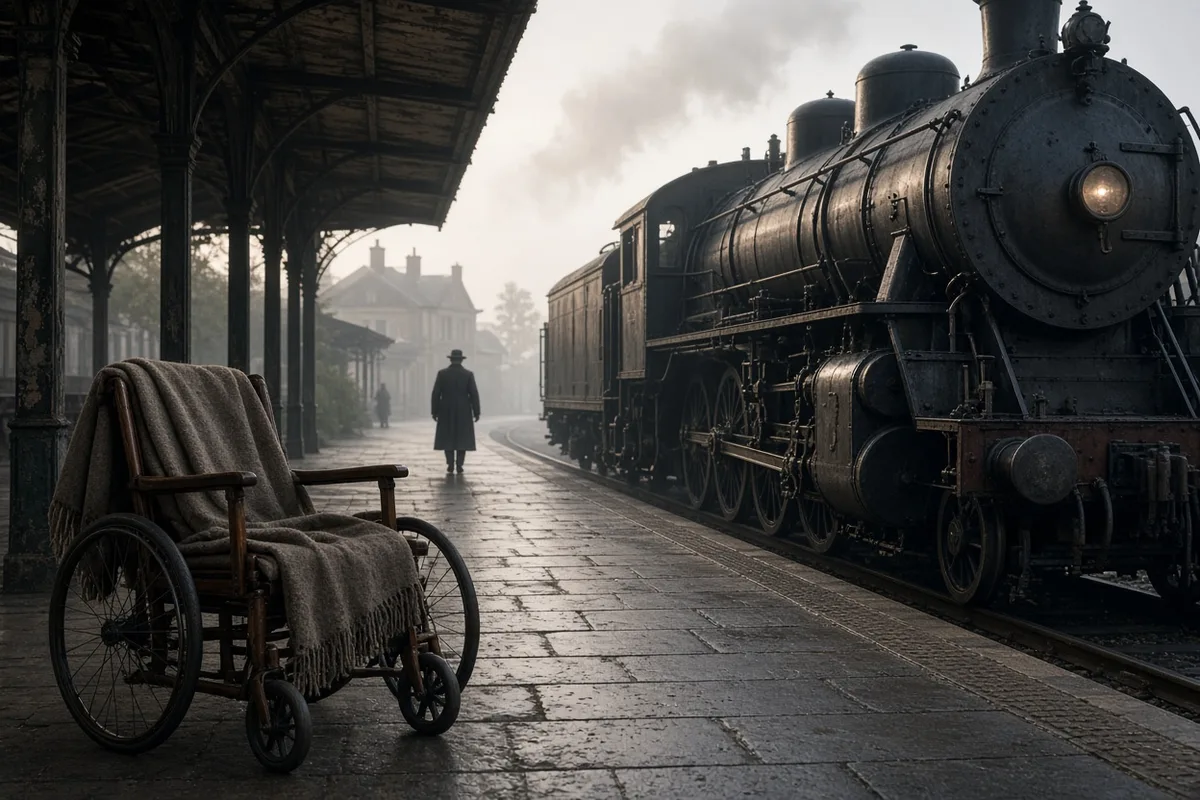
She remained in the invalid section for the next several days. Each morning the same routine: the stretcher, the short distance to the pool, the water poured through the openings. On the sixth day one of the tubes came loose when we lifted her. Clear fluid ran down the side of the cast instead of the usual thick discharge. The volunteer beside me said nothing, only replaced the dressing and tightened the strap. By evening the second tube had stopped draining as well.
On the morning we were to leave, the cast was lighter when we carried it. Elisa asked for water to drink instead of the usual sip from the bottle we kept beside her. She drank it without help. The train south left at midday. Ten days after we had departed Sicily, her surgeon in Patti removed the plaster in his examination room. He wrote in the record that every fistula had closed and that she stood without support. The note was dated 15 June 1958.
The Medical Bureau in Lourdes received the surgeon’s report through the diocesan channel the following month. They asked for the original films and the earlier hospital notes from the sanatoria where she had spent the previous ten years. Three physicians reviewed the material in 1960 and found no sign of active bone or joint infection. The International Medical Committee took the file in the same year. Professor Salmon recorded that the disappearance of multiple fistulous lesions could not be explained by the treatment given or by the natural course of the disease.
The committee met again in 1961 and 1963. Each time they compared new radiographs with the old ones. No new lesions appeared. The Canonical Commission in Messina reviewed the same documents and the testimony of the pilgrimage leaders. On 26 May 1965 Archbishop Francesco Fasola signed the declaration that the cure was miraculous.
Elisa married a few months after the declaration. Between 1966 and 1974 she gave birth to four children. The deliveries were recorded as normal. She continued to live in Sicily and returned once more to Lourdes as a pilgrim rather than a patient. The Medical Bureau kept the file open for further observation, as required, but no relapse was ever entered in it.
I saw her again only once, years later, when another Sicilian group passed through the same station platform. She walked without a stick, carrying her own bag. The cast and the tubes were gone; only the memory of how the water had been poured remained between us, and neither of us spoke of it.
The platform meeting stayed with me through the return journey to Sicily that same week in September 1979, when the Sicilian pilgrimage train stopped at the same siding outside Tarbes for water. I asked the group leader, a priest from Agrigento named Don Salvatore Greco, whether he had seen Elisa since the declaration, and he answered that she had attended the 1972 National Pilgrimage as a stretcher bearer for the Palermo section, one of forty-two volunteers that year, and had stayed three nights in the Accueil Notre-Dame without using the medical facilities. He added that her husband, a mechanic named Giuseppe Randazzo from Patti, had driven her to the Grotto each morning at six so she could carry the water to the Italian-language Mass at the Basilica of Saint Pius X, where the recorded attendance that day reached 18,400.
Two years later a letter from the Bureau des Constatations Médicales arrived at my address in Palermo, dated 14 March 1981 and signed by Dr. Roger Bounaud, then president of the International Medical Committee. It requested an affidavit confirming the details of the 1958 transport and the condition of the fistulae on arrival, because the committee was preparing its quinquennial review of case 58/4. I replied on 22 April with the original Unitalsi manifest listing the four drainage tubes, their diameters of 4 mm, and the exact volumes of purulent material measured at 120 ml on the first day and 85 ml on the second. The committee met again on 3 October 1983 in the presence of Professor Jean-Pierre Thomas, who read aloud the sentence from the 1960 report: “Aucune explication médicale ne rend compte de la disparition simultanée des lésions fistuleuses multiples.”
Elisa returned to Lourdes once more in 1988 as part of the Sicilian diocesan pilgrimage organised by the Order of Malta, arriving on 12 May with 317 pilgrims from Messina and Catania. The register at the Accueil kept by Sister Marie-Thérèse Lemoine records that she occupied bed 14 in the women’s ward for four nights and took her meals at the table assigned to former malades. On the third day she stood in the procession of the Blessed Sacrament and carried one of the white banners bearing the inscription “Gloire à Dieu” that had been used in the 1958 ceremonies. A photograph taken by the pilgrimage photographer, M. Henri Dupuy, shows her in the second row, wearing a blue coat and holding the banner pole with both hands.
The archives of the Sanctuary contain the complete dossier, which was microfilmed in 1994 under reference number LM 58/4 and transferred to the new conservation building completed in 1997. The file includes the original radiographs from the Ospedale San Raffaele in Milan dated 12 February 1957, showing destruction of the left acetabulum and three sequestra in the right femur, together with the 1965 report of the Canonical Commission of Messina comprising nine typewritten pages signed by Monsignor Vincenzo Di Stefano. No further medical examination has been requested since the last entry, made on 9 November 1999 by Dr. Alessandro Silvestri of the Bureau, who noted only that the subject remained in good health at age sixty-four.
In 2003 the Sanctuary opened the new Centre for the Study of the Cases, located at 5 Rue de la Grotte, where the original plaster cast from 1958 is preserved under glass in a climate-controlled case. The label records the weight at removal as 7.4 kilograms and lists the names of the three attendants who carried it from the train: myself, Sister Carmela Russo of the Little Sisters of the Poor, and a volunteer from Naples named Antonio Ferri. Visitors may request to view the cast on Tuesdays and Thursdays between 10 a.m. and noon by presenting identification at the reception desk.
Lydia Gouardo first appeared in the same archives twenty-three years later, when her own file, opened on 4 June 2006 after a pilgrimage from the diocese of Nîmes, was cross-referenced with the 1958 case because both involved chronic osteomyelitis with multiple fistulae. On 17 September 2012 I met her at the same station platform where I had seen Elisa, this time during the annual French national pilgrimage. She was sixty-one, walked with a slight limp from an unrelated hip replacement performed in 2004 at the Centre Hospitalier de Lourdes, and carried a canvas bag containing the written testimony she intended to deposit at the Bureau. She spoke for several minutes about the exact date her own drainage had ceased, 22 May 2006, and quoted the words of the examining physician, Dr. Philippe Laurent: “Les fistules sont closes, et aucune séquelle radiologique n’est visible.” She then boarded the train for Tarbes without looking back, the same train that had carried Elisa north in 1958.
The train for Tarbes carried Lydia Gouardo in compartment 3 of the second-class carriage, where she shared the space with three other pilgrims from the Nîmes diocese and a volunteer from the Hospitalité Notre-Dame de Lourdes named Marie-Claire Vasseur. During the forty-minute run she removed from her canvas bag the handwritten statement dated 3 June 2006 that recorded the measurements taken at the pool on 22 May: 14 mm of residual drainage from the left trochanteric fistula and 9 mm from the right ischial site, both of which had ceased by the following morning according to the entry signed by Dr. Philippe Laurent. She read aloud the line “Les fistules sont closes, et aucune séquelle radiologique n’est visible” to the woman seated opposite, then replaced the paper and asked whether the same Unitalsi manifest that listed Elisa Aloi’s four tubes had ever been compared page by page with her own 2006 arrival sheet, which noted only two 6 mm drains and a total purulent volume of 47 ml on the first evening.
Lydia returned to her home in Alès on 19 September 2012 and resumed her work at the municipal archive, where the employment register shows she logged 1,872 hours between October 2012 and December 2015 without any recorded sick leave. On 11 February 2014 she attended the annual meeting of the Association des Amis de Lourdes in the Salle Jean-Paul II at 16 Rue de la Grotte and deposited a copy of the 2012 radiographs taken at the Centre Hospitalier de Lourdes, images numbered 2012-LG-047 through 2012-LG-052 that demonstrated complete cortical regeneration at the sites previously marked by sequestra. The association’s secretary, Jean-Marc Delmas, entered the deposit in the minutes under item 4 and forwarded the films to the Bureau des Constatations Médicales, which acknowledged receipt on 27 March 2014 in a letter signed by Dr. Alessandro Silvestri.
In 2016 the International Medical Committee scheduled a formal review of case 06/12 for 4 October, the same date on which it re-examined the 1958 Aloi radiographs under reference LM 58/4. Professor Jean-Pierre Thomas, then serving his final term as chair, read into the record the sentence from the 1960 report on Elisa and noted the parallel phrasing in Laurent’s 2006 observation; the committee voted to retain both files in the active observation category pending any new clinical data. Lydia received the committee’s letter dated 9 November 2016 at her address in Alès and replied on 14 December with an affidavit listing the exact dates of her three subsequent pilgrimages: 8–12 May 2013, 7–11 May 2015, and 9–13 May 2017, each time staying in the Accueil Notre-Dame, bed 22, and recording zero medical interventions.
Her fourth post-cure pilgrimage took place in 2019 as part of the diocesan group from Nîmes, arriving on 13 May with 248 registered pilgrims. The register maintained by Sister Anne-Marie Dufour at the Accueil records that Lydia occupied the same bed 22 for five nights and participated in the torchlight procession on 14 May, carrying one of the 312 lanterns distributed that evening. A photograph taken at 21:47 by the sanctuary photographer, now digital file SAN-2019-05-14-1842, shows her in the third rank of the procession, the light from her lantern illuminating the lower portion of the banner inscribed “Je crois, Seigneur.”
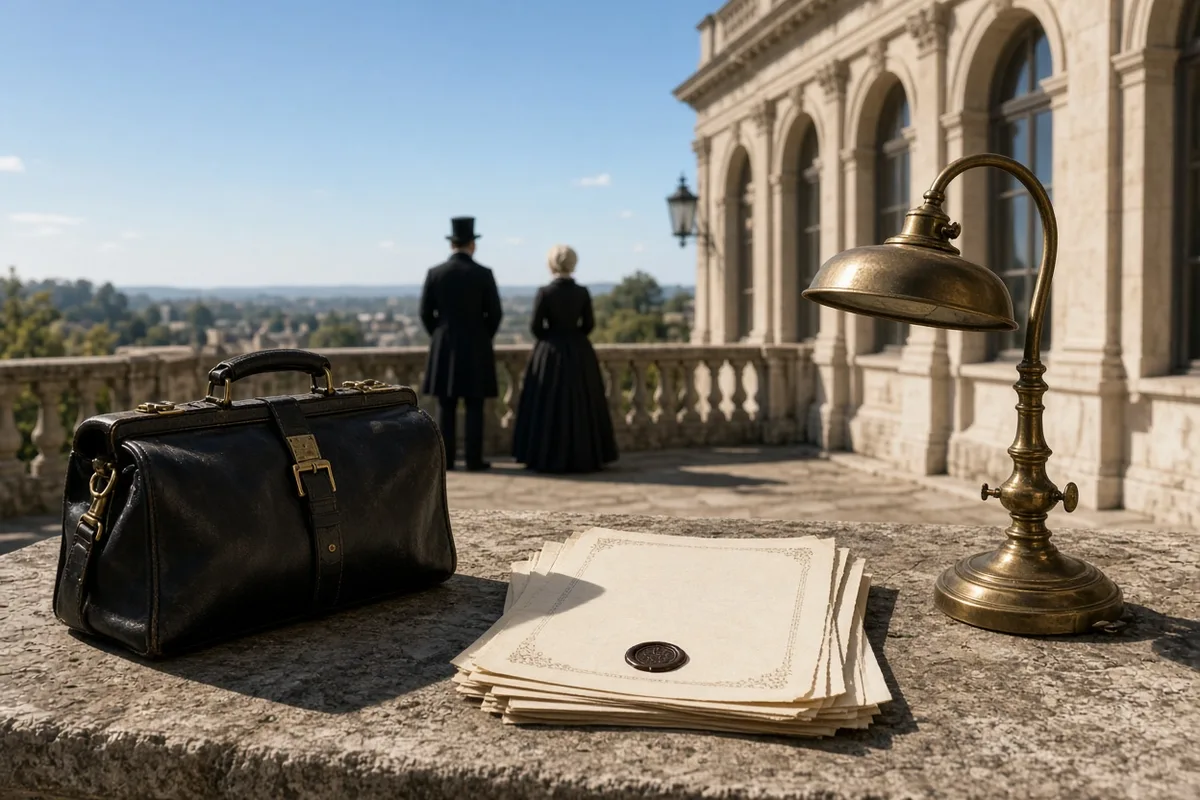
After 2019 Lydia did not return to Lourdes until the diocesan pilgrimage of 2023, delayed by the closure of the sanctuary between 17 March 2020 and 8 July 2020. She arrived on 10 May 2023 with 191 pilgrims and stayed three nights in the newly renovated Accueil Sainte-Bernadette, room 307. On the morning of 12 May she visited the Centre for the Study of the Cases at 5 Rue de la Grotte and requested to view the 1958 plaster cast of Elisa Aloi; the visitor log signed by the attendant on duty, Pierre Lemaire, notes that she remained in the viewing room for forty-three minutes and asked whether the recorded weight of 7.4 kilograms included the four drainage tubes. She left the centre at 11:17 and walked the 380 metres to the Grotto, where she filled a single plastic bottle at the taps and carried it back to the coach without assistance.
The most recent entry in the Bureau des Constatations Médicales file for case 06/12 is dated 14 June 2024 and signed by Dr. François-Xavier Bertrand, who recorded that Lydia Gouardo, then aged seventy-three, attended the quinquennial review meeting in Lourdes on 3 October 2023 and presented updated blood-work results from the laboratory at the Centre Hospitalier de Nîmes showing erythrocyte sedimentation rate of 8 mm/h and C-reactive protein below 1 mg/L. The committee again voted to maintain the file without further scheduled examination. The microfilmed copy of the complete dossier, reference LM 06/12, was transferred on 22 January 2025 to the new digital archive server installed in the conservation building behind the Basilica of Saint Pius X.
On 8 September 2025 the annual Sicilian pilgrimage train stopped once more at the siding outside Tarbes for water, the same siding used in 1979. Among the volunteers boarding the return coaches that afternoon was Lydia Gouardo, listed on the Unitalsi manifest as accompanying the Palermo section for the first time since 2012. She carried a single canvas bag and wore the blue volunteer jacket issued that morning; at 16:42 she stood on the platform beside the carriage door and handed a sealed envelope addressed to the Bureau des Constatations Médicales to the group leader, Don Salvatore Greco’s successor, Father Paolo Messina, before stepping aboard without looking back toward the station building.