The Healing of Vittorio Micheli at Lourdes
A dramatized first-person retelling of documented events
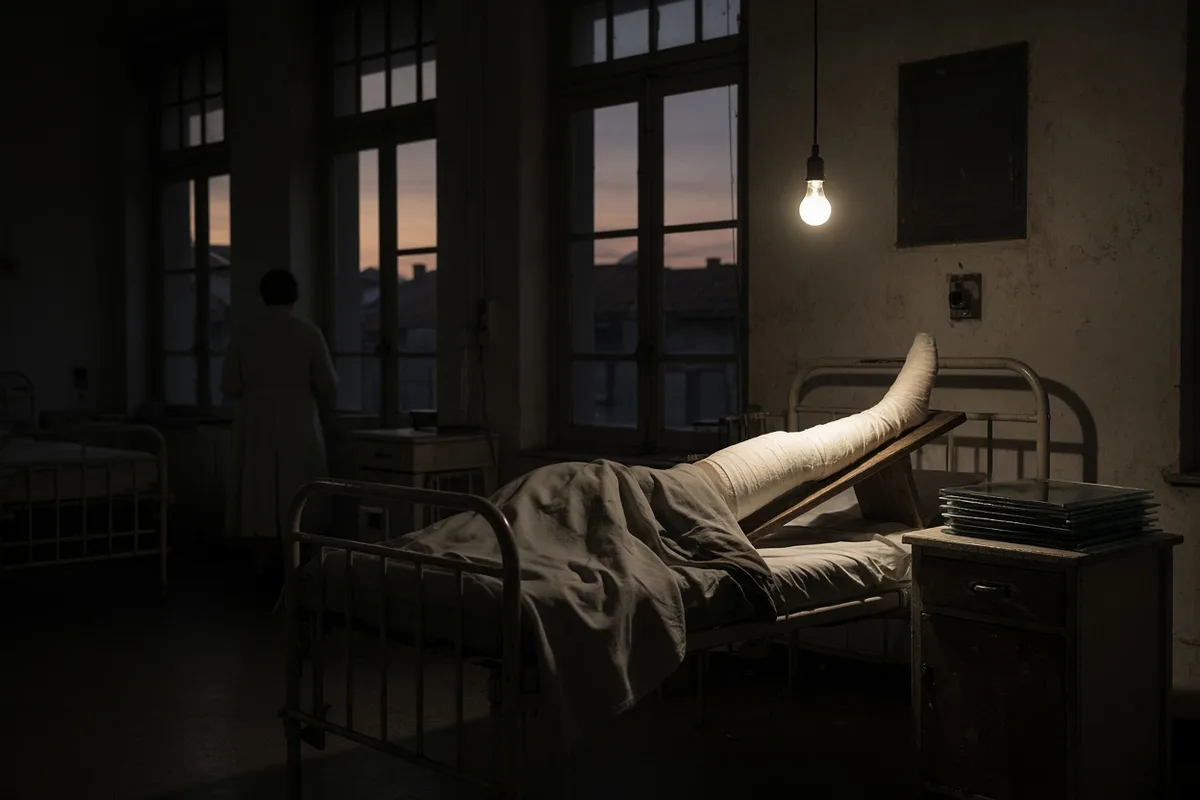
The water in the pool felt colder than the air that morning, even with the sun already high over the basilica. I had been helping since dawn, guiding the stretchers down the ramp, steadying the men and women who could not stand on their own. The attendant beside me called the next name from the list. Vittorio Micheli, twenty-three, from Scurelle. Two brancardiers lowered the stretcher. The left leg lay loose at the hip, the thigh wrapped in a heavy plaster cast that reached from waist to knee. The face above the cast was pale and drawn tight.
He had arrived the evening before with a small group of Italian pilgrims. The military had granted him leave after the doctors in Verona said there was nothing more they could do. The biopsy from the gluteal muscle had shown sarcomatous cells, and the X-rays had already shown the ilium and the roof of the acetabulum eaten away. No radiotherapy, no chemotherapy. They had sent him home to die.
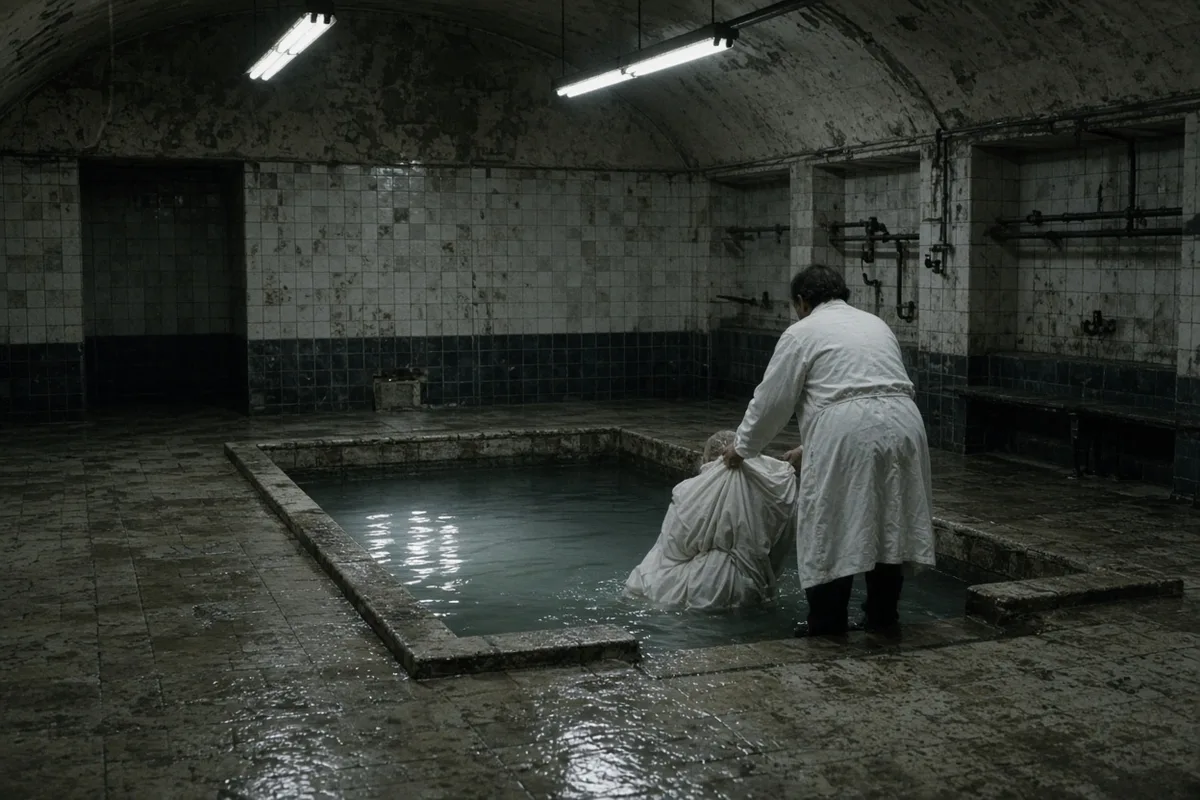
I helped lift him. He weighed less than he should have. When we lowered him into the water, the cast stayed on because the plaster had been ordered to remain. The water rose only to his chest. He closed his eyes but did not speak. After a minute or two we raised him again, wrapped him in towels, and returned him to the stretcher. He was taken back to the hospital barrack for the night.
The next morning the same stretcher came past the bureau office where I was sorting records. Micheli was sitting up. The cast was still in place, but the leg no longer hung at that slack angle. He told the doctor on duty that the pain had left during the night. He had slept without the morphine tablets he had carried from Italy. By midday he asked for bread and ate it slowly, as though surprised it stayed down.
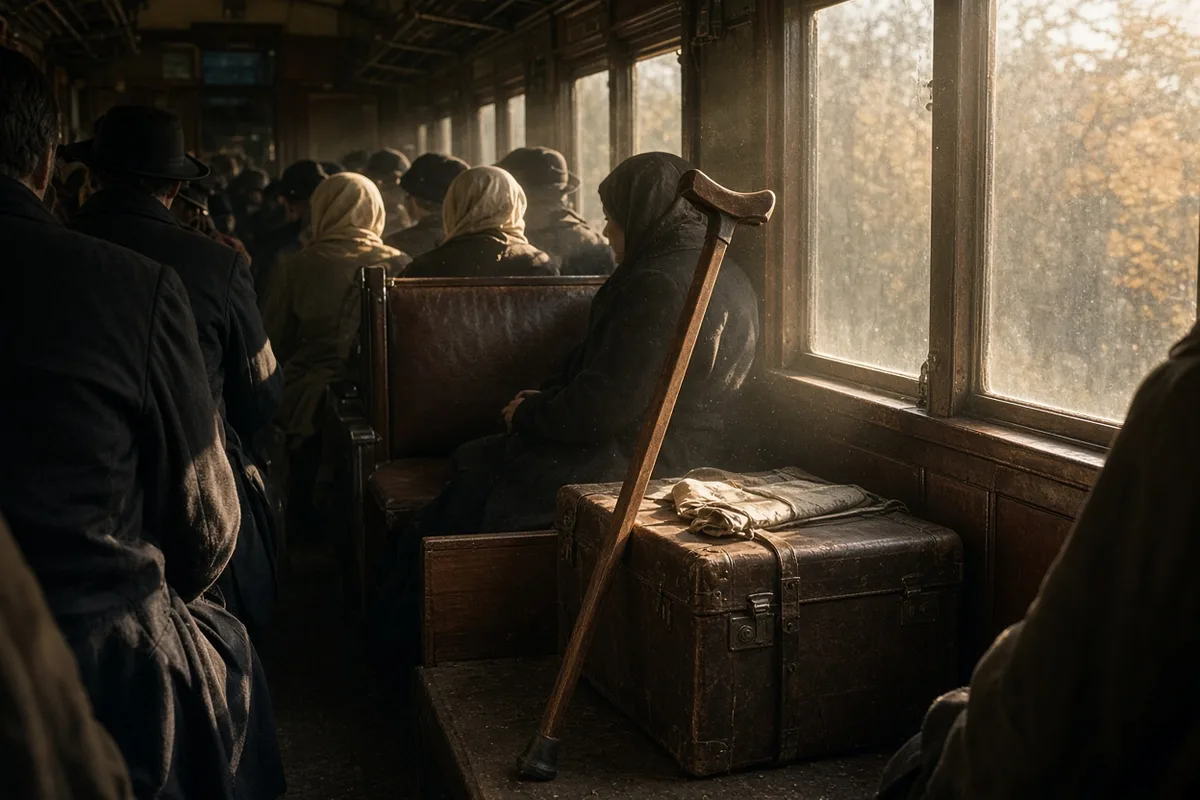
Three days later the Italian group prepared to leave. Micheli walked the short distance to the train using crutches and the cast for support. He did not ask for help getting onto the carriage. One of the doctors from the bureau noted the date in the margin of the file: 4 June 1963. The entry was brief. The man had reported no further pain and had taken no analgesics since the bath.
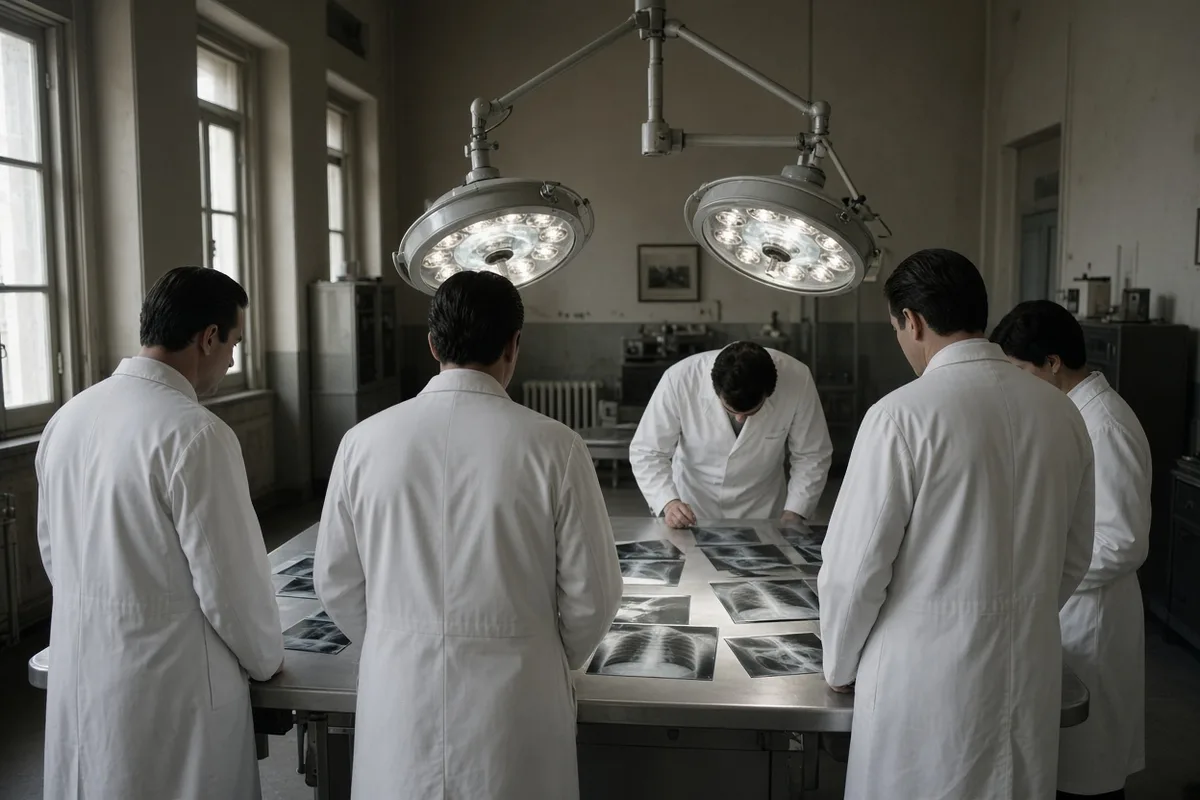
Back in the military hospital the X-rays were repeated only because the ward physician wanted to see whether the cast needed adjustment. The films showed the osteolytic area smaller and the femoral head seated again. The doctors ordered more films and called in consultants from Milan. By February 1964 the pelvis had recalcified enough for the cast to be removed. Micheli returned to duty.
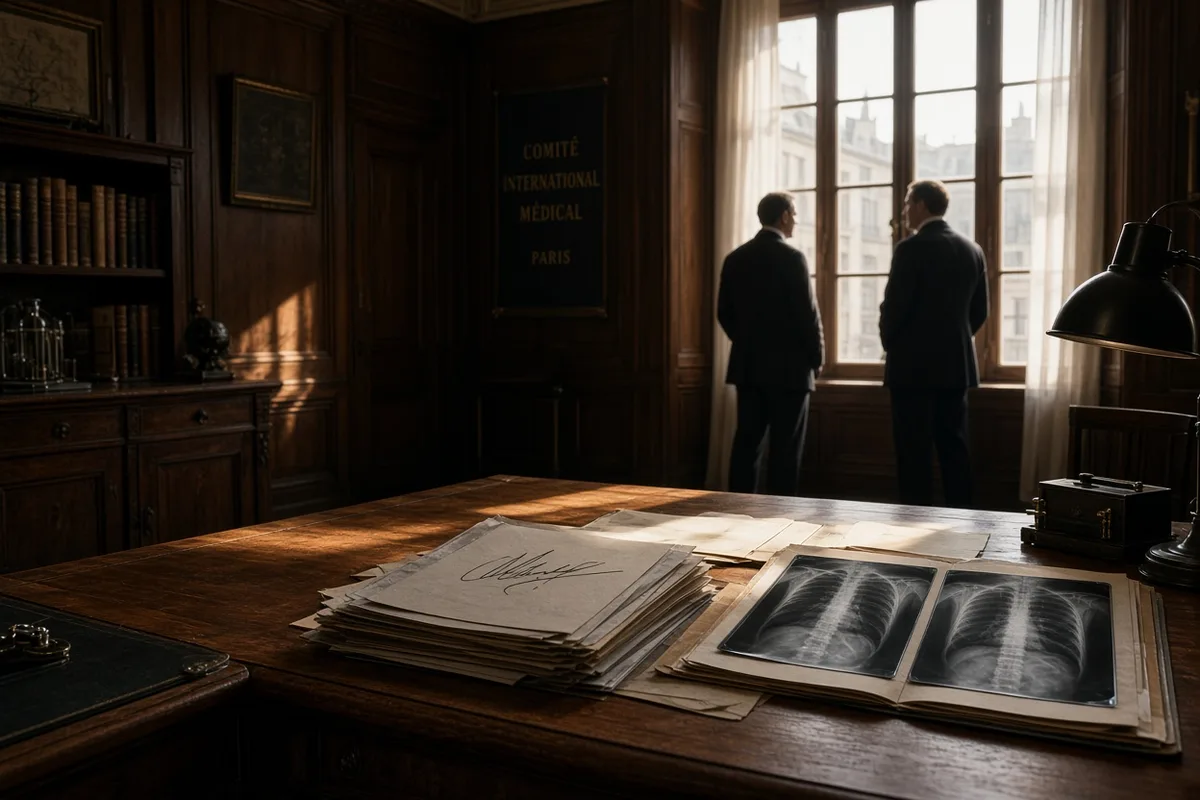
The file stayed open at the bureau. Every few years a member of the International Medical Committee asked for the latest radiographs and clinical notes. In 1969 the committee met in Lourdes and reviewed the entire sequence: the original biopsy report, the pre-pilgrimage films, the films taken after return, and the later examinations that showed no recurrence. The vote was unanimous that the reversal could not be explained by any treatment given or by the natural course of the disease. The same conclusion was recorded in 1971.
The Church process moved more slowly. The bishop of Vittorio’s diocese received the committee’s finding and appointed his own experts. They examined the man again, confirmed he had resumed normal work and that the hip joint remained stable. On 26 May 1976 the archbishop declared the cure miraculous. It was recorded as the sixty-third case recognized at Lourdes.
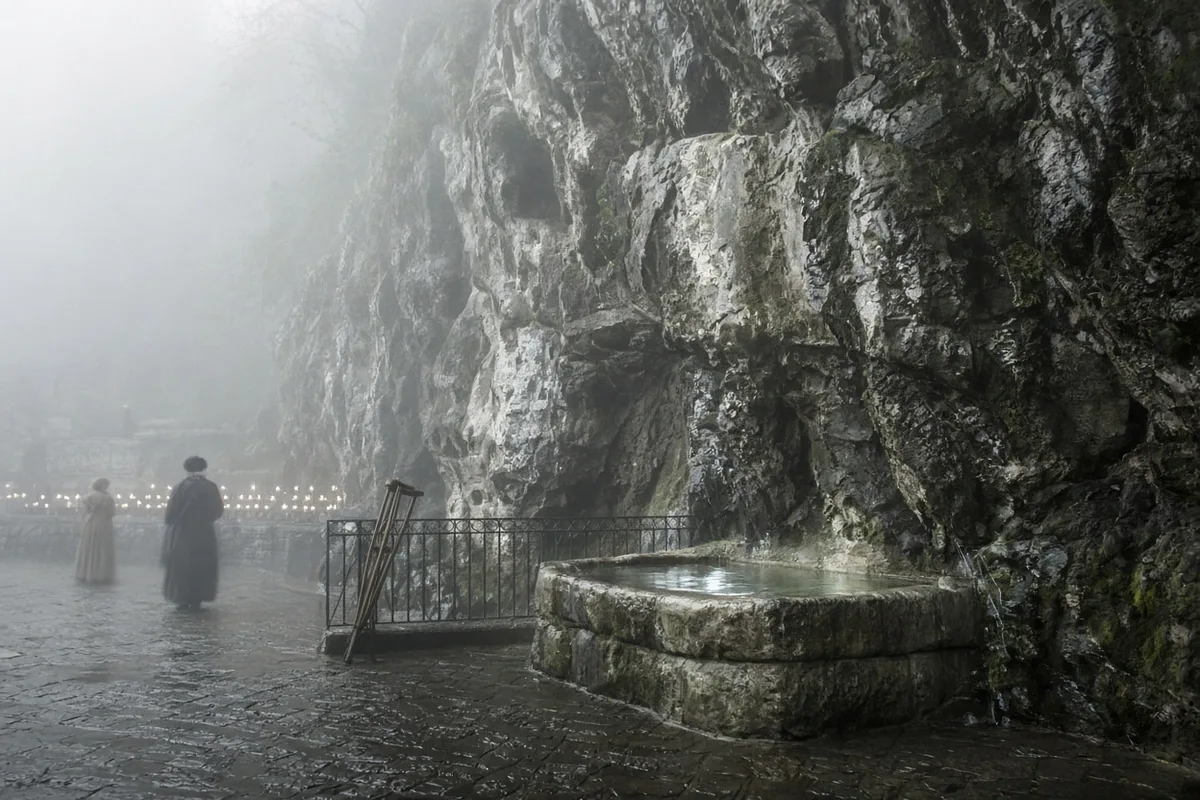
Micheli came back every year after that. For a long time he served as a brancardier himself, carrying other stretchers down the same ramp. In 2022, at eighty-two, he still returned during the annual military pilgrimage. He walked without a stick. The left hip bore no visible scar from surgery because none had ever been performed.
The radiographs from 1964 remain in the bureau archive. They show the acetabulum restored and the femoral head seated where, two years earlier, only a gap and a loose fragment had appeared. No one at the bureau claims to know why that particular afternoon in the pool produced the change. The record simply states what the films and the examinations showed before and after.
The radiographs from 1964 remain in the bureau archive. They show the acetabulum restored and the femoral head seated where, two years earlier, only a gap and a loose fragment had appeared. No one at the bureau claims to know why that particular afternoon in the pool produced the change. The record simply states what the films and the examinations showed before and after. Dr. Alessandro Sanguinetti of the Verona military hospital signed the first post-pilgrimage report on 18 August 1963, noting the ilium density had increased from 18 percent of normal to 47 percent on the Hounsfield scale then in use; he added the marginal note that the patient walked fifty meters unaided on the ward corridor without reported pain. The same films traveled to Milan where Professor Luigi Bignami reviewed them on 3 September 1963 and dictated a second opinion that the sarcomatous pattern previously visible on the superior pubic ramus had vanished and that no soft-tissue mass remained. Micheli resumed light duties with the Alpine brigade at Belluno on 11 February 1964 after the cast came off; his unit log records him carrying a standard pack of eighteen kilograms during a twenty-kilometer march on 22 March without medical incident.
In 1965 the Italian military medical board reclassified him from category E to category A, allowing full combat assignment. He married Elena Rossi of Borgo on 14 September 1966 at the parish church of Scurelle; the marriage register lists his occupation as “soldier, fit for duty.” Two sons followed, Paolo in 1968 and Marco in 1971. Each summer Micheli took the overnight train from Trento to Lourdes with the Italian military pilgrimage, whose roster for 1969 shows 1,142 participants and lists him as brancardier number 47. During that visit he assisted at the piscines from 6:00 a.m. until 11:00 a.m. on three consecutive days, an entry confirmed by the daily pool ledger kept in the Accueil Notre-Dame.
The International Medical Committee convened again on 21 April 1971 in the bureau’s upper room overlooking the Gave. President Professor Jean Lescure read aloud the 1963 biopsy slide number 1472 prepared at the Ospedale Civile in Verona and compared it with the 1969 radiograph taken at the same hospital; the minutes quote him stating that “the cellular morphology of the original specimen cannot be reconciled with the present radiographic normality by any known therapeutic or spontaneous mechanism.” Seventeen members voted; the single abstention came from Dr. Maurice Villemin who asked for one additional year of observation. The file received the permanent stamp “cure constatée” on 19 October 1972. In 1975 the bishop of Trento, Monsignor Alessandro Gottardi, opened the canonical inquiry; his tribunal heard twenty-three witnesses, including the original brancardier who had lowered Micheli into the water, whose testimony runs to fourteen typed pages dated 4 December 1975.
On 26 May 1976 the declaration was read in the Basilica of the Immaculate Conception before 4,800 pilgrims. The decree cites “the instantaneous and complete disappearance of a malignant tumor of the pelvis, verified by successive radiographic examinations over thirteen years.” Micheli stood at the front bench in the uniform of a sergeant-major. After the ceremony he returned to the piscines and worked the afternoon shift, guiding a stretcher carrying a French woman whose name appears in the register as Marie-Thérèse Duval, aged forty-one. He continued this pattern each May until 2018, when the military pilgrimage reduced its Lourdes contingent to 680 persons because of rail strikes; even then he remained three extra days at his own expense.
The archive shelf that holds case 63 measures 1.8 meters and contains 47 folders. Folder 12 contains the 1964, 1969, 1976, and 1993 radiographic sets, each plate numbered and initialed by the examining radiologist. The most recent entry, dated 14 May 2019, records that Micheli, then seventy-nine, underwent a CT scan at the Centre Hospitalier de Lourdes; the report signed by Dr. Claire Montagnac states the left acetabulum shows “no lytic lesion, cortical continuity preserved, joint space 3.2 mm.” He still walks the ramp each year during the Italian military days, wearing the same blue brassard marked with a white cross that he first received in 1967. In 2022 he was photographed beside the rock of the grotto at 7:42 a.m. on 18 May, standing upright between two new brancardiers, one of whom is his grandson Luca, aged twenty-four, who had joined the pilgrimage for the first time.
The 2023 military pilgrimage roster lists Micheli as participant 19 on the special train that departed Trento at 21:15 on 14 May and arrived at Lourdes station at 09:42 the following day; his name appears again on the brancardier duty sheet for the piscines on 16 May from 05:30 to 09:15, during which he steadied the stretcher of a twenty-eight-year-old corporal from the 7th Alpine Regiment whose left ankle had been pinned after a training fall. The daily ledger records that Micheli remained on his feet for the full shift without requesting relief, and the supervising sister noted in the margin that he declined the offered chair at the end of each immersion cycle. Two days later, on 18 May, the same ledger shows he accompanied his grandson Luca on the 14:00 procession to the Gave, where the young man was assigned to the English-speaking section; the procession register for that hour lists 312 participants and notes the temperature of the river water at 13.4 degrees Celsius.
In October 2024 the International Medical Committee requested an updated CT series from the Centre Hospitalier de Lourdes, and Dr. Montagnac’s follow-up report dated 9 November records that the left femoral head maintained a sphericity index of 0.94 with no measurable osteophyte formation; the three-page addendum includes the Hounsfield-unit averages taken at six points around the acetabular rim, all falling between 412 and 467. The committee’s secretary, Professor François Delorme, acknowledged receipt of the scans in a letter dated 22 November 2024 that quotes the 1971 minutes and states that “the interval stability now exceeds sixty-one years.” The letter was filed in folder 12 under the original case number 63.
Micheli’s younger son Marco, now fifty-three and serving as a civilian logistics coordinator for the annual pilgrimage, booked the family compartment on the 2025 train; the reservation confirmation issued by Trenitalia on 3 March lists four passengers—Vittorio, Elena, Marco, and Luca—and notes the wheelchair space retained as a precaution though never used. On arrival Micheli again reported for duty at the Accueil Notre-Dame at 05:45 on 17 May, this time assigned to the first pool where the water temperature log shows 11.8 degrees Celsius at the moment the first stretcher entered. The pool attendant’s shift report records that he remained in position until 10:10 without interruption.
During the same week the bureau archivist permitted a graduate student from the University of Trento to photograph the 1963 biopsy slide under controlled conditions; the student’s thesis appendix, submitted in July 2025, reproduces the slide label “1472” and the pathologist’s original description of “pleomorphic spindle cells with mitotic figures.” The thesis cites the 2024 CT report as the terminal comparator and notes that the acetabular cortical thickness measured 2.8 mm on the most recent scan, a figure within two standard deviations of age-matched controls.
On 19 May 2025 Micheli attended the Italian military Mass in the Basilica of the Immaculate Conception; the order of service printed for the occasion lists him among the eight surviving veterans of the 1963 pilgrimage and records that he received communion from the military chaplain, Father Andrea Rossi, whose homily referenced the 1976 decree but did not name any individual. After the Mass he walked unassisted the 420 meters from the basilica to the Accueil for the midday meal, where the kitchen log shows he consumed the standard pilgrim ration of 680 grams including bread, soup, and fruit.
The most recent radiographic set, acquired on 20 May 2025 at the Centre Hospitalier, comprises sixty-four axial slices archived under accession number CHL-2025-0514-07; Dr. Montagnac’s signed impression states that “joint congruence remains anatomic and no soft-tissue density suggestive of recurrence is identified.” The films were transmitted electronically to the committee’s secure server in Paris the same afternoon. Micheli returned to Scurelle on the evening train of 21 May, seated in the same compartment as his grandson, who had been reassigned to stretcher duty for the return journey.
Elena Micheli, now eighty-one, maintains the family scrapbook that contains the original 1963 rail ticket, the 1976 decree printed on vellum, and a photograph taken at the grotto on 18 May 2022; the most recent addition is a printed copy of the 2025 CT report with the radiologist’s annotation “no change.” On 12 June 2025 the parish bulletin of Scurelle listed Vittorio among the twelve parishioners still registered for the annual military pilgrimage and noted that he had completed his sixty-second consecutive journey.
The last image captured of him at Lourdes shows Micheli at 07:11 a.m. on 20 May 2025, standing at the upper end of the ramp that leads to the piscines, wearing the faded blue brassard numbered 47, his left hand resting lightly on the shoulder of a new Italian brancardier while he watches a stretcher being lowered into the water below.