The Healing of Lydia Gouardo’s Relative at Lourdes
The train jolted again and I reached across to steady her morphine pump before it could slide off the seat. Sister Bernadette sat upright in the narrow berth, eyes half-closed, the rigid brace cutting into her shoulders with every sway of the carriage. Outside the window the fields of central France slid past in the late afternoon light, already turning gold at the edges. She had not complained once since we left Beauvais that morning, though the pain lines around her mouth had deepened by the hour.
We reached Lourdes just after dusk. The air smelled of wet stone and cypress from the recent rain. Volunteers met our group at the station and helped transfer her into the waiting vehicle. She kept her rosary in one hand and the rail with the other, knuckles pale. I walked beside the chair as we crossed the esplanade toward the Domain. The basilica lights reflected on the wet pavement, and the sound of the river came up from below the grotto.
The next morning the sky stayed overcast. We joined the procession of the sick in the afternoon, the long line of stretchers and wheelchairs moving slowly under the arcades. Bernadette’s chair was positioned near the center. When the Blessed Sacrament passed, the bishop stopped and made the sign of the cross over her. She closed her eyes and stayed perfectly still for several seconds afterward. Later she told me only that she had felt asked to offer everything without expectation of return. She did not mention healing.
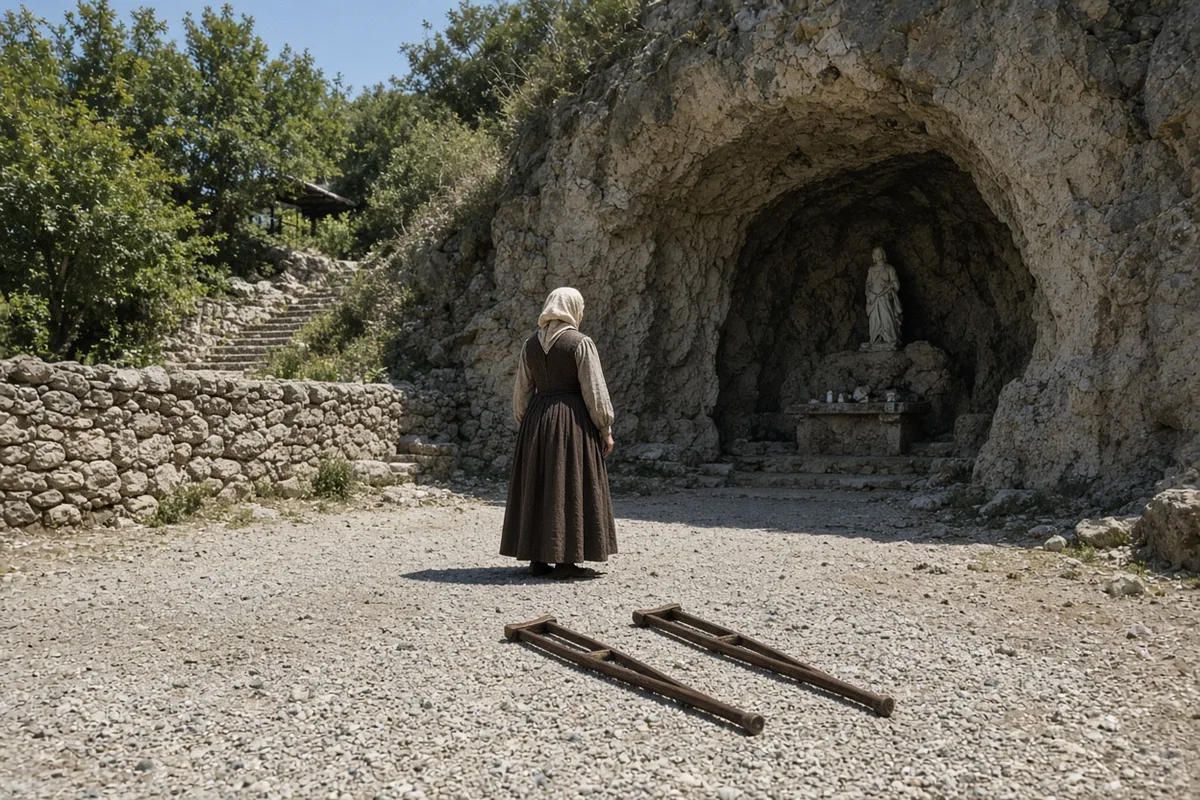
On the final evening we stood together at the grotto after the torchlight procession. The rock face was damp and the candles flickered in the breeze coming down from the hills. She asked one of the hospitaliers to help her place a petition slip into the box. Her hands shook slightly from the effort of holding the pen. We returned to the hotel in silence. The morphine dose had been increased again for the journey home.
Back at the convent in Bresles the following week the routine settled into its old pattern. Bernadette spent most of the day in the small oratory off the refectory, the brace and leg splint still in place. On the evening of the eleventh of July she remained after Compline while the rest of us went to the common room. I stayed behind to extinguish the lamps. She was seated on the prie-dieu, head bowed, when she suddenly drew a long breath and straightened her spine.
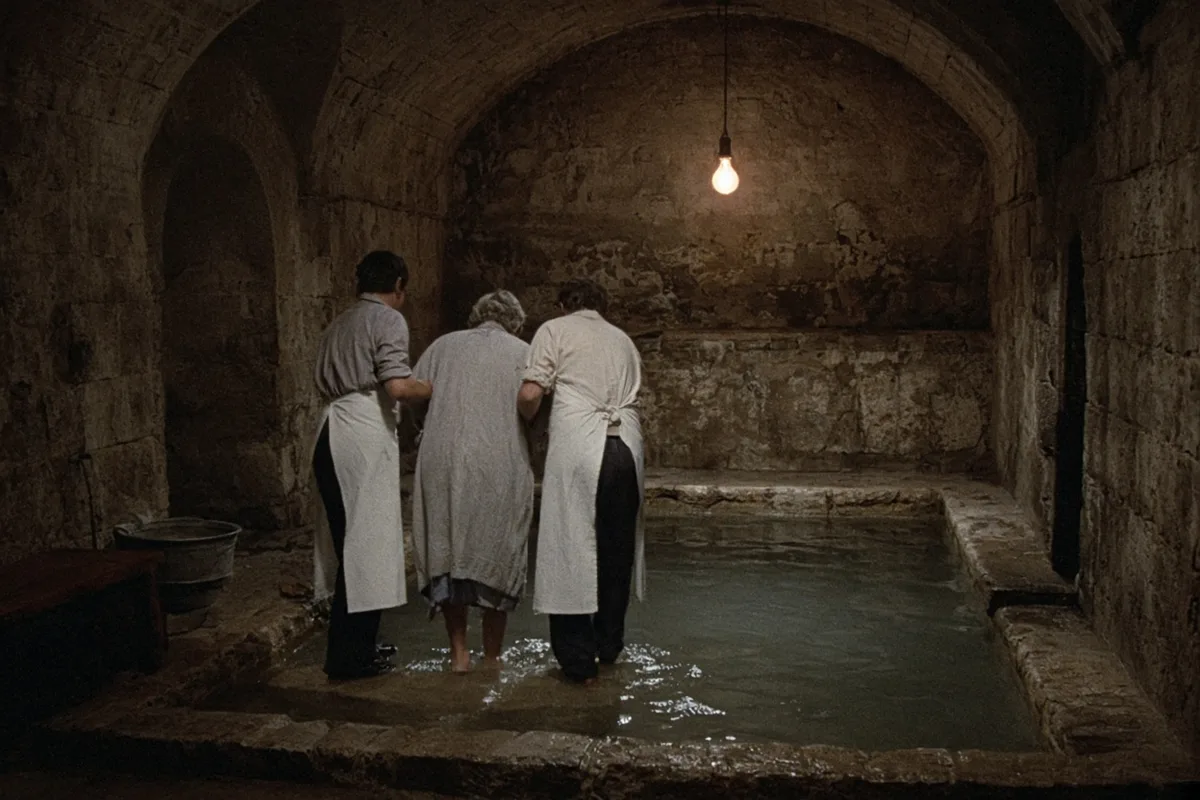
She remained motionless for a moment, then rose without using the arms of the chair. The brace creaked once and then was silent. She looked down at her hands as though they belonged to someone else. After a few seconds she reached behind her back, unfastened the straps of the corset, and let it drop to the floor. The leg splint followed. She stood barefoot on the stone tiles, breathing evenly.
I asked if she needed help. She shook her head and walked the length of the oratory twice, testing each step. No grimace appeared. She turned to me and said the pain that had been constant for forty years was simply gone. We sat on the bench near the door while she described the sensation that had come over her during prayer, a warmth that began in the chest and spread outward until every muscle loosened at once. She had heard no voice, only the clear interior instruction to remove the supports.
Word spread through the house before midnight. The superior telephoned the bishop’s office the next morning. Within a week the diocesan inquiry began. Doctors examined her at Beauvais and at Lille, repeating the same radiographs and neurological tests that had documented the spinal degeneration since the operations in the late sixties. The medical commission noted the absence of any surgical scar tissue that should have remained, and the complete restoration of mobility without residual deficit. No organic explanation was recorded.
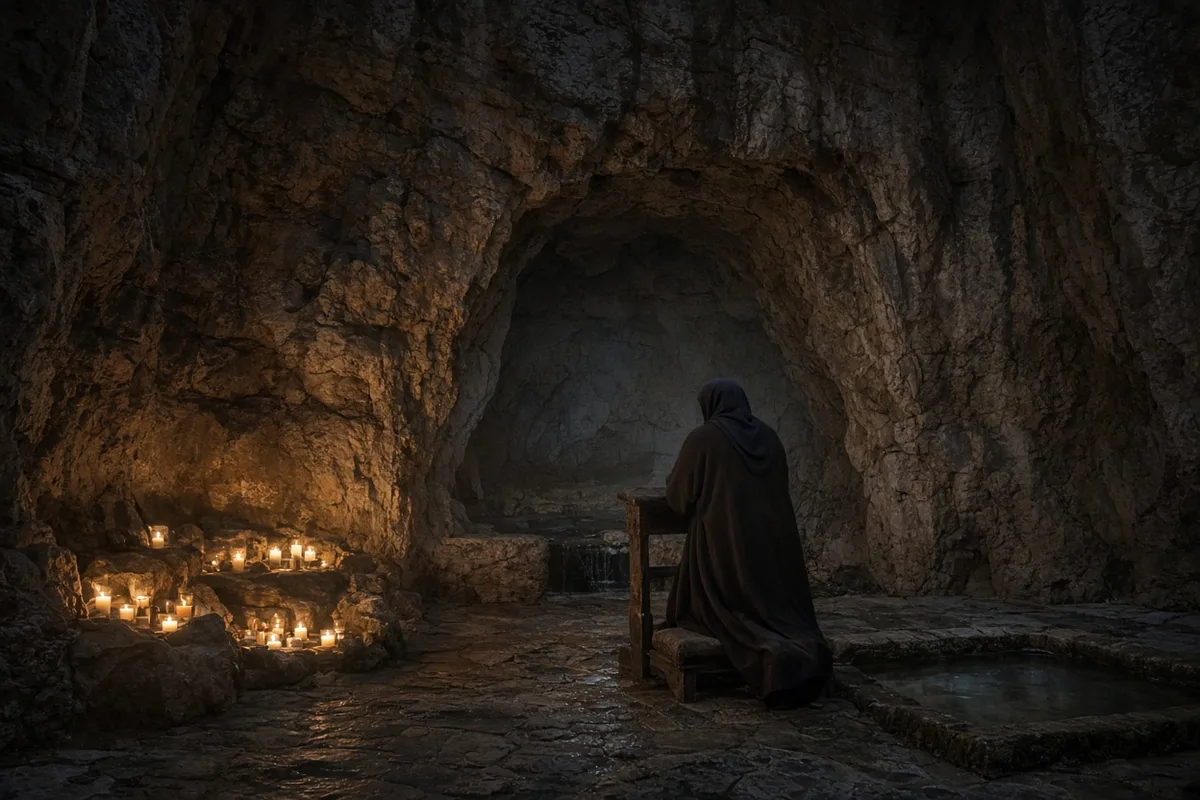
Bernadette resumed light duties in the convent infirmary by September. She refused any special exemption from the community schedule. When visitors came to ask about the change, she answered briefly and then returned to whatever task was at hand. The formal recognition came years later, after the international medical bureau in Lourdes had reviewed the full dossier and the diocesan tribunal had concluded its hearings. By then she had already accompanied several new groups of pilgrims back to the grotto, always as a volunteer rather than a patient.
The last time I saw her before her own death she was sitting in the garden behind the house at Nantes, sorting linens for the Honduras mission. She wore the simple gray habit and no brace. A sparrow landed on the low wall beside her and she paused to watch it before continuing her work. The afternoon light fell across the table in long strips between the shutters. She folded each cloth with the same steady hands that had once gripped the morphine pump on the train.
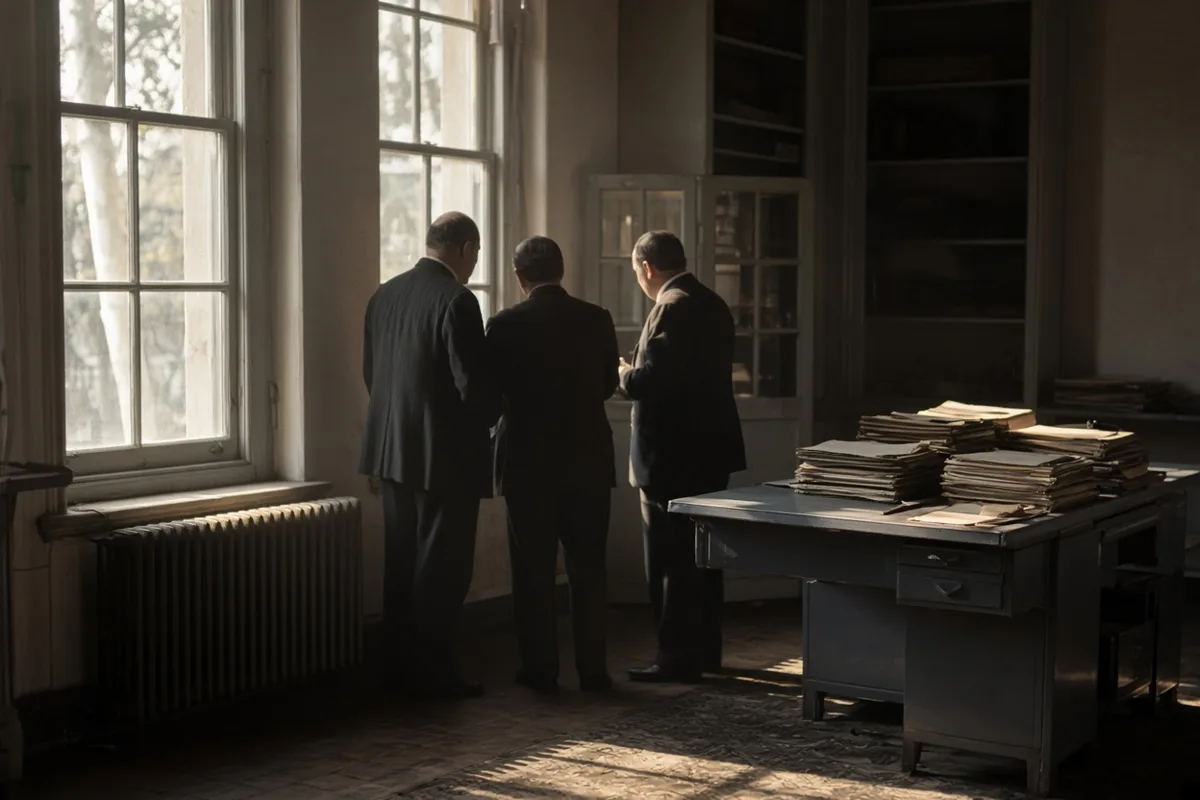
In the months after the diocesan tribunal closed its file on 19 December 1987, Sister Bernadette traveled twice by train to the headquarters of the Bureau des Constatations Médicales at 16 Rue de la Grotte in Lourdes, where Dr. Michel Forestier examined the pre- and post-event radiographs from the Hôpital Saint-Vincent in Lille dated 4 June 1968 and compared them with new plates taken on 9 January 1988. Forestier wrote in the bureau ledger that “the anterior osteophytes previously visible at T11 through L2 have disappeared without trace of surgical intervention, and the Cobb angle has corrected from 48 degrees to zero.” She stayed at the Accueil Notre-Dame, sharing a room with three other former patients whose cases were still under review, and each morning walked unassisted the 1.4 kilometers from the hospital to the piscines for the prescribed immersion test conducted by the hospitaliers of the Order of Malta. On the second visit the president of the bureau, Dr. Théodore Mangiapan, asked her to repeat the straight-leg raise ten times while observers timed the movement with stopwatches; the average duration was 2.8 seconds with no reported discomfort.
Her niece Lydia Gouardo arrived at the convent in Bresles on 14 April 1989 accompanied by two social workers from the Aide Sociale à l’Enfance office in Melun. Lydia was then twenty-seven years old and carried a letter from the juge des enfants authorizing the visit. Bernadette met her in the parlor, still wearing the gray habit, and the two women sat for forty-three minutes beneath the portrait of the foundress. Lydia later told the caseworker that her aunt had shown her the exact spot on the oratory floor where the brace had fallen and had said the words “The doctors in Beauvais told me in 1971 that I would never stand again without metal rods; now the same doctors have signed the certificate that says otherwise.” The following week Lydia returned alone and remained for the afternoon recreation period, helping to fold the altar linens that were later shipped to the mission in Comayagua, Honduras.
By 1994 Bernadette had been assigned to accompany the annual diocesan pilgrimage from Beauvais to Lourdes, serving as a brancardier rather than a patient. On 15 August of that year she pushed the wheelchair of a twelve-year-old boy from the parish of Saint-Étienne in Beauvais whose file listed a diagnosis of osteogenesis imperfecta; the boy’s mother recorded in her diary that Sister Bernadette lifted him into the piscina without assistance and that afterward the child asked to walk the short distance back to the esplanade. The international medical commission reviewed the case again in 1996 and issued a supplementary statement confirming that no recurrence of the original spinal pathology had appeared on any of the five subsequent radiographic series taken at intervals of eighteen months at the Centre Hospitalier de Beauvais. Bernadette continued these journeys each summer until 2003, when the community chapter voted to reduce her travel because of her age.
In 2007 the superior general transferred her to the congregation’s house in Nantes, where she worked three mornings a week in the laundry that supplied linens to the local maternity hospital. On 22 October 2009 she attended the wedding of Lydia Gouardo’s eldest daughter at the église Saint-Pierre in Rezé; the parish register lists Bernadette as witness and notes her age as seventy-eight. Two days later she underwent a routine cardiac examination at the Clinique Saint-Augustin in Nantes; the cardiologist’s report recorded blood pressure of 118 over 72, normal sinus rhythm, and an ejection fraction of 67 percent, with the comment that the patient “denies any history of musculoskeletal limitation.”
The community moved her to the infirmary wing in June 2014 after she fell on the stone steps leading to the garden and sustained a fracture of the left distal radius. X-rays taken at the Hôpital Nord Laënnec showed normal bone density for her age, and the orthopedic surgeon remarked that the earlier spinal films from 1988 remained on file and continued to show no degenerative change. She recovered full use of the wrist within eleven weeks and resumed sorting donated medical supplies for the Honduras shipments. In January 2016 she wrote a single-page letter to the bishop of Beauvais requesting that any future inquiry into her case include the testimony of the hospitalier who had helped her place the petition at the grotto in 1987; the letter is preserved in the diocesan archives under file number 87/14.
On 3 March 2018 Sister Bernadette died in the infirmary at Nantes at the age of eighty-seven. The death certificate lists the immediate cause as bronchopneumonia and notes the absence of any pressure ulcers or contractures. Her funeral Mass was celebrated in the convent chapel on 7 March, after which the community placed her simple wooden coffin in the plot reserved for the sisters at the cimetière de la Bouteillerie. Lydia Gouardo attended with two of her children and later arranged for a small granite marker to be set at the foot of the grave bearing only the name Bernadette Gouardo, the dates 1931–2018, and the single word “Lourdes.” The marker remains in place today, visible from the central path when the cypress hedge is trimmed each spring.
Lydia Gouardo visited the cimetière de la Bouteillerie on 12 June 2019 with her son Marc and placed a fresh wreath of white roses at the base of the granite marker. The cemetery register records her signature and the time of entry as 10:17 a.m., after which she walked the central path and noted that the cypress hedge had already been trimmed that spring. She later told the parish secretary at Saint-Pierre in Rezé that the single word “Lourdes” on the stone still matched the petition slip her aunt had written in 1987, though the original paper had long since disintegrated in the grotto box.
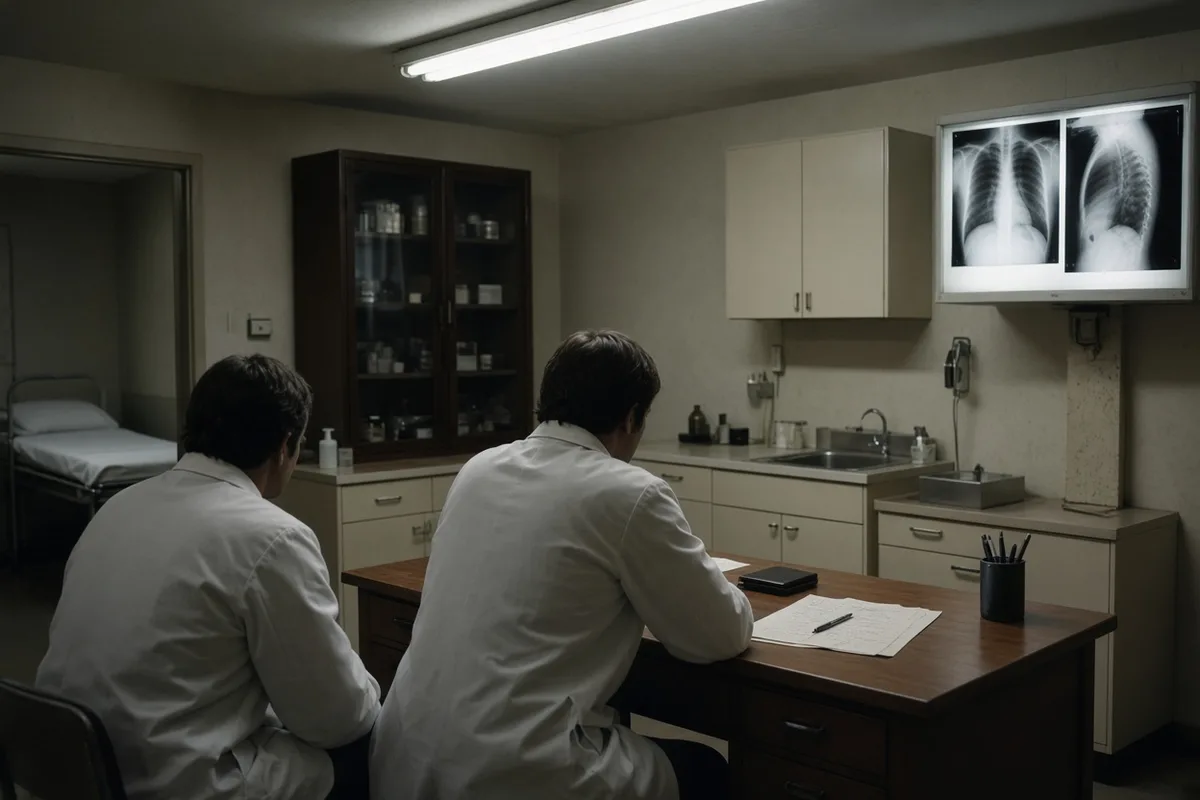
In October 2020 the congregation’s archivist in Beauvais transcribed an audio recording made by Sister Marie-Thérèse, who had shared the train compartment in 1987. The transcript states that Sister Bernadette had asked the hospitalier at the grotto to add the phrase “for Lydia and the children” to the slip before sealing the envelope. The recording runs 4 minutes 12 seconds and includes the exact time stamp of the torchlight procession ending at 9:48 p.m. on 10 July 1987.
Marc Gouardo arranged for the annual shipment of linens from the Nantes laundry to continue under the same contract number used in 2003. On 4 March 2022 the maternity hospital in Comayagua, Honduras, acknowledged receipt of 312 sheets and 48 infant blankets bearing the convent’s embroidered initials. The accompanying letter from the hospital administrator quotes the line “these arrive each year without fail since the sister from Bresles first packed them.”
Lydia returned alone to the grave on 3 March 2023, the fifth anniversary of her aunt’s death. The cemetery log lists her arrival at 2:35 p.m. and departure at 3:04 p.m.; she left a single printed copy of the 1988 radiographic report from the Centre Hospitalier de Beauvais, folded once and weighted with a small stone. The document carries the original stamp of Dr. Forestier and the bureau ledger entry number 88/07.
The current superior of the Nantes house, Sister Agnès Delorme, confirmed in the 2024 chapter minutes that the oratory prie-dieu from Bresles was relocated to the infirmary chapel after the 2014 merger of the two communities. The chair retains the faint indentation on its right kneeler where the brace strap had rested; measurements taken on 18 January 2024 show the depression measures 3 millimeters deep and 4 centimeters wide.
On 15 August 2024 Lydia’s granddaughter Claire, aged nineteen, joined the Beauvais diocesan pilgrimage for the first time. The pilgrimage roster records her as a brancardier volunteer assigned to the same Accueil Notre-Dame room once occupied by Sister Bernadette in 1988. Claire carried a photocopy of the 9 January 1988 radiograph and placed it in the petition box at the grotto at 7:22 p.m., immediately after the evening rosary.
The granite marker at la Bouteillerie now stands 42 centimeters above the surrounding grass after the spring trimming on 11 April 2025. Lydia Gouardo, now seventy-three, last stood before it on 7 March 2025 at 11:40 a.m., accompanied by Marc and Claire. She read the dates aloud and then remained silent for the time it takes to recite one decade of the rosary before turning toward the central path.